Last updated 2026-07-25
TL;DR
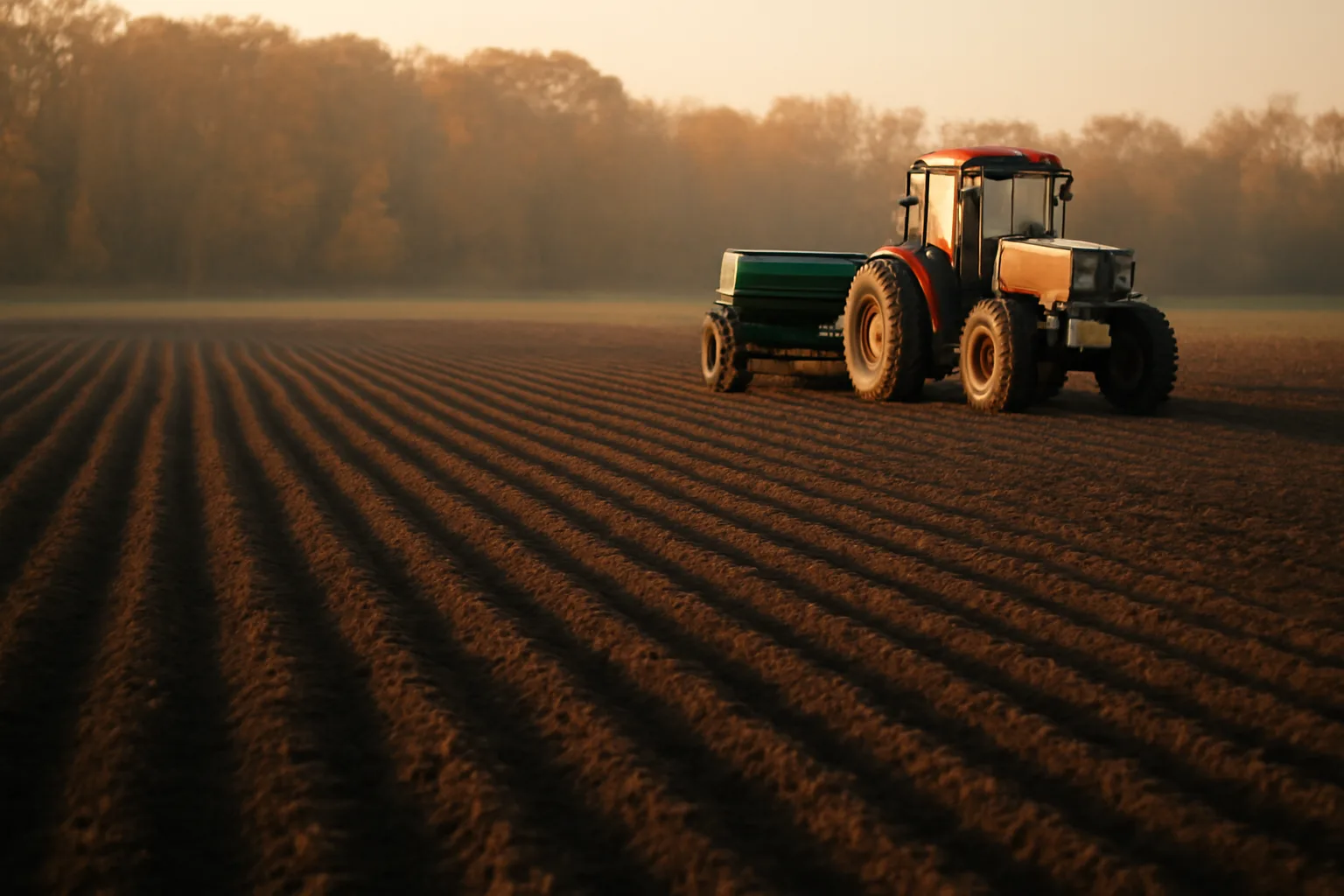
A seed drill plants seed at a set depth with real seed-to-soil contact, which matters most for small seeds like clover and brassicas that broadcasting often plants too deep or too shallow. For food plots under 5 acres, renting one for a weekend beats owning one outright for most hunters.
what is a food plot, and why does planting method matter so much
A food plot is a planted area on hunting land, usually somewhere between a quarter acre and several acres, seeded with forage that attracts and holds deer or provides nutrition through part of the year. That's the whole concept. The complexity comes later, in species choice, soil chemistry, and how you get seed into the ground. Planting method matters because most food plot failures aren't seed failures. They're depth failures. Clover, chicory, and brassica seed is tiny, often smaller than a grain of sand, and it needs to sit at 1/4 inch or shallower to germinate. Corn and soybeans need 1.5 to 2 inches. Broadcast a clover blend and drag it in with a chain harrow and you'll bury half of it too deep and leave half sitting exposed on top where it dries out and never sprouts. A drill solves this by metering seed through individual seed tubes at a set, repeatable depth, then closing the furrow behind it. The University of Tennessee Extension notes that seed-to-soil contact and correct planting depth are among the most common reasons food plot seedings fail, more often than variety choice or fertility [1]. That's a strong argument for owning or renting a drill if you plant more than an acre or two a year.
what does a seed drill actually do differently than broadcasting
A broadcast spreader (a handheld or ATV-mounted spinner) throws seed across the surface. You then need a separate pass, usually a cultipacker or drag harrow, to press seed into contact with soil. It works, and generations of plots have been grown this way, but it's a two-step process with a lot of room for error on depth and coverage evenness. A seed drill does it in one pass. It opens a narrow furrow with a disc or shoe, drops metered seed into that furrow at a set depth, and closes the furrow with a press wheel, all in one machine pulled behind a tractor or ATV. Row spacing on food plot drills usually runs 6 to 10 inches. Seeding rate is set by a metering box or plate, not by how heavy-handed you are with a bag. The practical difference shows up most on small-seeded species. Clover, chicory, and brassicas (turnips, radishes) germinate best from a shallow, firm seedbed, exactly what a drill is built to create. Corn, soybeans, and cereal grains are more forgiving and can be broadcast and cultipacked successfully, which is part of why a lot of small-acreage plotters skip drills entirely for those species.
do you actually need a drill for your food plot
Not always. If you're planting straight cereal grains like oats or winter wheat, or soybeans, into a clean, worked seedbed, a broadcast-and-cultipack approach works fine and plenty of state wildlife agency plot guides describe it as an acceptable method [2]. The seed is big enough and forgiving enough on depth that you don't need precision. Where a drill earns its keep is small-seeded blends, no-till situations, and larger acreage where consistency across multiple plots matters. If you're planting clover or a clover/chicory blend into a field you can't till (steep ground, erosion risk, or you just don't own a disc), a no-till drill lets you plant directly into existing sod or a killed cover crop without tillage at all. That's a real advantage broadcasting can't match, because you can't broadcast into thick thatch and expect good contact no matter how hard you drag it. For most hunters running under 5 acres of total plot ground, I'd rent before I'd buy. A lot of county extension offices, seed dealers, and farm co-ops rent drills by the day for somewhere in the $75 to $200 range depending on size and region, and that's usually cheaper than buying a used one that sits in a shed 50 weeks a year.
no-till drill vs conventional tillage: which is better for food plots
No-till drilling means planting directly into existing residue or sod without disturbing the soil first, other than the narrow slot the drill opens. Conventional tillage means disking or tilling the ground first to create a loose seedbed, then planting into that. No-till has real soil benefits. USDA's Natural Resources Conservation Service points to reduced erosion, better moisture retention, and improved soil structure over time as key reasons no-till and reduced-till systems are recommended on erosion-prone or sloped ground [3]. For food plots on hillsides or near water, that matters beyond just convenience. The tradeoff is upfront cost and weight. A true no-till drill needs enough down-pressure and disc-cutting ability to punch through sod and residue, which means heavier frames and higher price tags, often starting around $3,000 to $4,000 used for a small food-plot-sized unit and climbing well past $10,000 new for anything built to cut through heavy sod reliably. Conventional tillage plus a lighter drill or broadcast setup costs less upfront but costs you a tillage pass in time, fuel, and soil disturbance every season. If you're planting the same small plot year after year and can till it each fall, a simple pull-behind drill or even broadcast-and-cultipack is fine. If you're trying to convert marginal pasture, CRP ground, or steep timber openings into plots without tearing them up, no-till is worth the extra cost.
when to plant food plots for deer
Timing depends on your hardiness zone and whether you're planting a spring/summer plot or a fall plot, and it's the single biggest factor in food plot success, more than equipment. Get the calendar wrong and no drill will save you. Fall plots (clover, brassicas, cereal grains) generally go in from late August through mid-September in northern states (zones 3-5), and can run into October in the mid-South and warmer zones 6-7, timed so the plot has 6 to 8 weeks of growth before your first hard frost. Spring/summer plots (soybeans, corn, sorghum, cowpeas) go in after your last frost date, typically May in the North and April in the South. Your state wildlife agency and land-grant extension office publish frost date maps and planting windows specific to your county, and those are worth checking every year rather than going off a national chart, because a two-week difference in your local frost date changes everything. Penn State Extension, for example, publishes food plot planting date guidance broken out by region within the state, which is the level of detail you want to be working from.
when to plant turnips for deer
Turnips go in as a fall brassica, typically 60 to 90 days before your first expected hard frost, so most of the country is looking at a late July through early September window depending on latitude. Turnips need that runway because the tubers and leaves both need time to bulk up before cold weather, and deer often don't hit turnips hard until after a few frosts sweeten the starches into sugars. Plant turnip seed at 1/4 inch depth or shallower, which is exactly the kind of precision a drill handles better than a broadcaster. Seeding rate for pure turnip stands runs around 4 to 6 pounds per acre, lower if it's part of a brassica blend with radishes and rape mixed in. Don't plant turnips too early in warm climates. Extension guidance from Mississippi State notes that brassicas planted too far ahead of frost can bolt or get overly mature and woody before deer season even opens, which knocks down palatability right when you want it high [4].
do deer eat sorghum
Yes, deer eat grain sorghum, but it's more of a secondary or drought-tolerant option than a first-choice deer food. Sorghum (milo) is often planted as a summer annual in hot, dry regions where corn struggles, and it doubles as both a food source and standing cover through fall and winter. Deer will browse sorghum foliage some during the growing season, but the real value tends to come from the grain heads once they mature and deer, along with turkey and other wildlife, work the standing heads through fall and winter. It's a solid choice on marginal, drought-prone ground where corn just won't reliably make a crop, but on good ground with reliable rainfall, corn or soybeans usually out-produce it as a straight deer food. Sorghum is broadcast-friendly at typical rates of around 6 to 8 pounds per acre for grain types, or it can be drilled at a shallower, more even depth if you want tighter stand consistency.
do deer eat clover, and do deer like clover
Yes, and it's one of the most consistently preferred food plot forages available. Clover offers high crude protein, typically in the 20 to 30 percent range for well-managed stands, and it regrows after grazing, which lets a single planting feed deer for multiple seasons if it's maintained. Deer like clover because it's soft, digestible, and available early in spring when little else is green, then again through summer and fall until frost knocks it back. Perennial clovers like white clover (ladino types) and red clover can persist 3 to 5 years with proper mowing and occasional overseeding, which makes clover one of the better cost-per-year forages once it's established. Establishment is where clover lives or dies, and it's the clearest case for using a drill. Clover seed is tiny (roughly 350,000 to 750,000 seeds per pound depending on species) and needs to sit right at or just under the soil surface, ideally around 1/4 inch. Too deep and it never emerges. Too shallow and exposed, and it dries out before germinating. A drill with a clover/small-seed attachment or a properly calibrated broadcast-and-cultipack combo are really the only two methods that reliably hit that depth window.
when to plant oats for deer
Oats go in as a fall planting in most whitetail range, typically August through September in the North and into October in the South, following the same logic as other fall cereal grains: enough time to establish before frost slows growth. Oats are a fast, cheap, cool-season option, and deer often prefer them early in the fall before brassicas sweeten up and before other cereal grains like wheat or rye take over as the season gets colder. Oats are also less cold-hardy than winter wheat or cereal rye, so in the coldest zones (zone 3 and colder) oats may winterkill outright, while wheat and rye persist and keep growing into late fall and even green up again in spring. That's a real consideration if you want a plot that holds deer into late season versus one that's mainly an early-fall draw. Seeding rate for oats runs around 60 to 100 pounds per acre broadcast, or lower if drilled, since drilling improves seed placement efficiency enough that you can often cut the rate by 10 to 20 percent and still get comparable stand density. Oats are large-seeded and forgiving, so broadcast-and-cultipack works fine here; this isn't a species where you need a drill's precision.
what are deer's favorite foods, and do deer like honey
Deer are opportunistic browsers, and what counts as a favorite shifts by season and by region, but acorns consistently rank at or near the top wherever oaks are present, because of their high fat content going into winter. Beyond mast, agricultural crops like soybeans and corn, along with food plot staples like clover, are heavily used where available, and native browse like honeysuckle, greenbrier, and forbs fill in the rest of the diet, especially in areas without ag or plots nearby. As for honey: deer don't eat honey itself in any meaningful way. What deer are drawn to is the sweetness of certain plants and, more relevantly, some hunters have historically used sweet liquid attractants (including honey-based or molasses-based products) as scent or bait additives, not as forage. This is where it gets legally important: many states classify placing feed, minerals, or attractants of any kind, including sweet liquid attractants, as baiting, and it's regulated or banned outright for hunting purposes. Rules vary widely by state, and some states distinguish between food plots (legal almost everywhere) and bait piles or feeders (restricted or banned in many states), so check your state wildlife agency's current baiting and feeding regulations before using any attractant near a stand [5].
what size and type of drill fits a small food plot operation
Most food-plot-specific drills are built in the 4 to 8 foot width range, sized to pull behind a compact tractor (25 to 45 horsepower) or, for the smallest units, a UTV or ATV. That's a very different machine than a full-size farm drill built for 100-plus acre grain fields, and it's worth being specific when you're shopping or renting, because 'seed drill' as a search term returns a lot of equipment sized for row-crop farming, not food plots. Small food plot drills, often called no-till drills or plot drills depending on the brand, typically run somewhere between $2,000 for a basic pull-behind unit and $8,000 to $12,000 for a heavier no-till model capable of cutting through sod. Attachments matter too: a small-seed box or agitator kit lets one drill handle both large seed (beans, corn, oats) and tiny seed (clover, brassicas) by switching metering settings, which is worth paying for if you plant a mix of species across your property. If you're planning multiple plot types across a property, whether that's a fall brassica plot, a perennial clover plot, and a summer bean plot, a food plot plan that maps out species, acreage, and timing for your specific ground makes the equipment decision easier, because you'll know exactly which seed sizes and planting windows you actually need to accommodate before you buy or rent anything.
how do you calibrate a seed drill for food plot species
Calibration means confirming the drill actually delivers your target seeding rate, and it's a step a lot of first-time drill users skip, which leads to plots that are way too thick or way too thin. Most drills have a calibration procedure in the owner's manual: you turn the drive wheel or crank a set number of revolutions (simulating a measured distance), catch the seed that drops from one or more seed runs, weigh it, and compare against the chart for your target rate and row spacing. Land-grant extension guides on drill calibration, including material from Kansas State University's agronomy program, recommend calibrating every time you switch seed lots, more than seed types, because seed size and weight per unit volume can vary meaningfully between bags even of the same species. That's easy to forget when you're field-calibrated the drill for one bag of clover last month and grab a new bag this week. Depth calibration matters just as much as rate. Most drills adjust depth through a spring-loaded or mechanical stop on the gauge wheels or press wheels. Start shallow (around 1/4 inch for small seed) and check actual furrow depth by digging a few spots after the first pass, rather than trusting the dial setting alone, since ground firmness and soil moisture change how deep the opener actually cuts on a given day.
renting vs buying a seed drill: what actually makes financial sense
| Factor | Renting | Buying (used) | Buying (new) | |
|---|---|---|---|---|
| Typical cost | $75-$200/day | $2,000-$8,000+ | $4,000-$15,000+ | |
| Best for | Under 5 acres/year, occasional plots | 5-15 acres/year, multiple plots | 15+ acres, multiple properties or clubs | |
| Availability | Depends on local co-op/dealer | Anytime once purchased | Anytime once purchased | |
| Maintenance | None, it's the renter's problem | Yours (discs, bearings, meters) | Yours, under warranty initially | For most food plotters managing one property under 5 total acres of plots, renting wins on pure economics. You'll spend $150 to $400 a year renting for a weekend or two, versus tying up several thousand dollars in a machine that sits idle 50-plus weeks a year and still needs storage, maintenance, and eventually repair. The math flips once you're planting multiple plots across a bigger property, managing plots for a hunting club with several members, or you're the guy in your group who ends up drilling for three or four buddies' properties every fall anyway. At that point owning stops being a luxury and starts being the cheaper option per acre, especially if you can find a solid used no-till drill from a farm auction or dealer trade-in. One more real cost: towing capacity and hitch type. A lot of small food-plot drills need a category 1 three-point hitch and enough tractor weight and horsepower to pull them through firm or sod ground, so check your tractor's specs against the drill's pull requirements before you rent or buy, not after it's sitting in your driveway. |
what should your soil test tell you before you plant, drill or not
None of this matters much if your soil chemistry is wrong. A soil test tells you your pH and your phosphorus, potassium, and sometimes micronutrient levels, and most land-grant extension labs (Penn State, Mississippi State, Tennessee, and others) return a report with specific lime and fertilizer recommendations for the crop you tell them you're planting. Most food plot species, including clover, brassicas, and cereal grains, do best in a soil pH range of roughly 6.0 to 7.0. Below that, phosphorus and other nutrients become less available to the plant even if they're technically present in the soil, which is why acidic ground can grow a thin, yellow, disappointing plot even after you've spent real money on fertilizer. Your soil test lab is the authority here, not a blog article and not a bag label. Follow their specific lime and fertilizer rates for your results, not a generic 'apply 300 pounds of 19-19-19 per acre' rule of thumb you saw somewhere, because actual recommendations vary a lot based on your existing nutrient levels and the crop you're planting. If you want a broader framework for turning a soil test and acreage into an actual planting plan across a season, that's exactly what a Custom Food Plot Plan is built to do, a $99 one-time plan that maps species, timing, and rates to your specific test results and property, though it's general guidance built from your inputs, not a site visit or a substitute for your lab's specific agronomy recommendations.
Frequently asked questions
Do deer eat sorghum?
Yes. Deer browse sorghum foliage some during the growing season and eat the grain heads once mature, especially into fall and winter. It's most useful as a drought-tolerant option on marginal ground where corn struggles, and it works well as both food and standing cover for late season.
Do deer like clover?
Yes, clover is one of the most consistently preferred food plot forages available, offering 20-30% crude protein in well-managed stands. Deer favor it because it's soft, digestible, and available from early spring through fall. Perennial types like white and red clover can persist 3-5 years with mowing and overseeding.
When should I plant food plots for deer?
Fall plots (clover, brassicas, cereal grains) generally go in late August through mid-September in northern zones and into October farther south, timed for 6-8 weeks of growth before first hard frost. Spring/summer plots (beans, corn, sorghum) go in after your last frost date, usually April or May depending on latitude.
When should I plant turnips for deer?
Plant turnips 60 to 90 days before your first expected hard frost, generally late July through early September depending on your region. Plant at 1/4 inch depth or shallower. Deer often don't hit turnips hard until after a few frosts sweeten the tubers, so don't expect heavy use right at planting.
When should I plant oats for deer?
Oats go in as a fall planting, typically August through September in the North and into October in the South. Oats are less cold-hardy than winter wheat or cereal rye and can winterkill in the coldest zones, so they work best as an early-to-mid fall draw rather than a late-season food source.
What is a food plot?
A food plot is a planted area on hunting land, from a quarter acre up to several acres, seeded with forage like clover, brassicas, or cereal grains to attract deer and provide nutrition through part of the year. Success depends more on soil fertility and planting timing than on any single piece of equipment.
What are deer's favorite foods?
Acorns rank near the top wherever oaks are present, due to high fat content ahead of winter. Beyond mast, deer heavily use agricultural crops like soybeans and corn, food plot staples like clover, and native browse including honeysuckle and greenbrier. Preference shifts by season and by what's actually available locally.
Do deer like honey?
Deer don't eat honey as forage in any meaningful way. Sweet liquid attractants, including honey or molasses-based products, have been used by some hunters as scent or bait additives, but many states classify these as bait and restrict or ban them for hunting. Check your state wildlife agency's current rules first.
Do I need a seed drill for a small food plot?
Not always. Large-seeded crops like oats, wheat, corn, and soybeans can be broadcast and cultipacked successfully. A drill earns its keep with small-seeded species like clover and brassicas, which need shallow, precise depth, and in no-till situations where you're planting into sod or residue without tilling first.
What's the difference between a no-till drill and a regular seed drill?
A no-till drill uses heavier frames and disc openers built to cut through existing sod or crop residue without tillage, protecting soil structure and reducing erosion. A conventional drill or broadcast-and-cultipack setup works fine on ground you're already tilling, but can't punch through thick, undisturbed sod effectively.
How much does it cost to rent a seed drill for a food plot?
Rental rates typically run $75 to $200 per day depending on drill size and your region, often available through local farm co-ops, seed dealers, or extension offices. For most plotters planting under 5 acres a year, renting is cheaper overall than buying and maintaining a drill that sits unused most of the year.
What seeding depth is right for clover and brassicas in a drill?
Clover, chicory, and brassica seed should sit at roughly 1/4 inch deep or shallower. These seeds are tiny and need firm contact near the surface to germinate reliably; planted deeper, they often fail to emerge at all, which is the most common reason broadcast plantings of these species underperform.
Sources
- University of Tennessee Extension, food plot establishment guidance: Seed-to-soil contact and correct planting depth are among the most common reasons food plot seedings fail
- State wildlife agency food plot planting guidance: Broadcast-and-cultipack methods are an accepted planting approach for cereal grains and soybeans
- USDA Natural Resources Conservation Service, no-till and residue management: No-till and reduced-till systems reduce erosion and improve soil structure and moisture retention
- Mississippi State University Extension, brassica food plots: Brassicas planted too early relative to frost can bolt or become overly mature before deer season
- State wildlife agency baiting and feeding regulations: Many states regulate or ban placing feed, minerals, or attractants as baiting, distinct from food plots