Last updated 2026-07-24
TL;DR
"Deer seed" usually means clover, brassicas (turnips, radish), cereal grains (oats, wheat, rye), or annuals like sorghum planted to attract and feed deer. Timing depends on your zone: brassicas and perennial clover go in late summer, oats and cereal grains in fall, warm-season annuals in late spring. Soil test first; seed choice matters less than pH and fertility.
what is a food plot, exactly
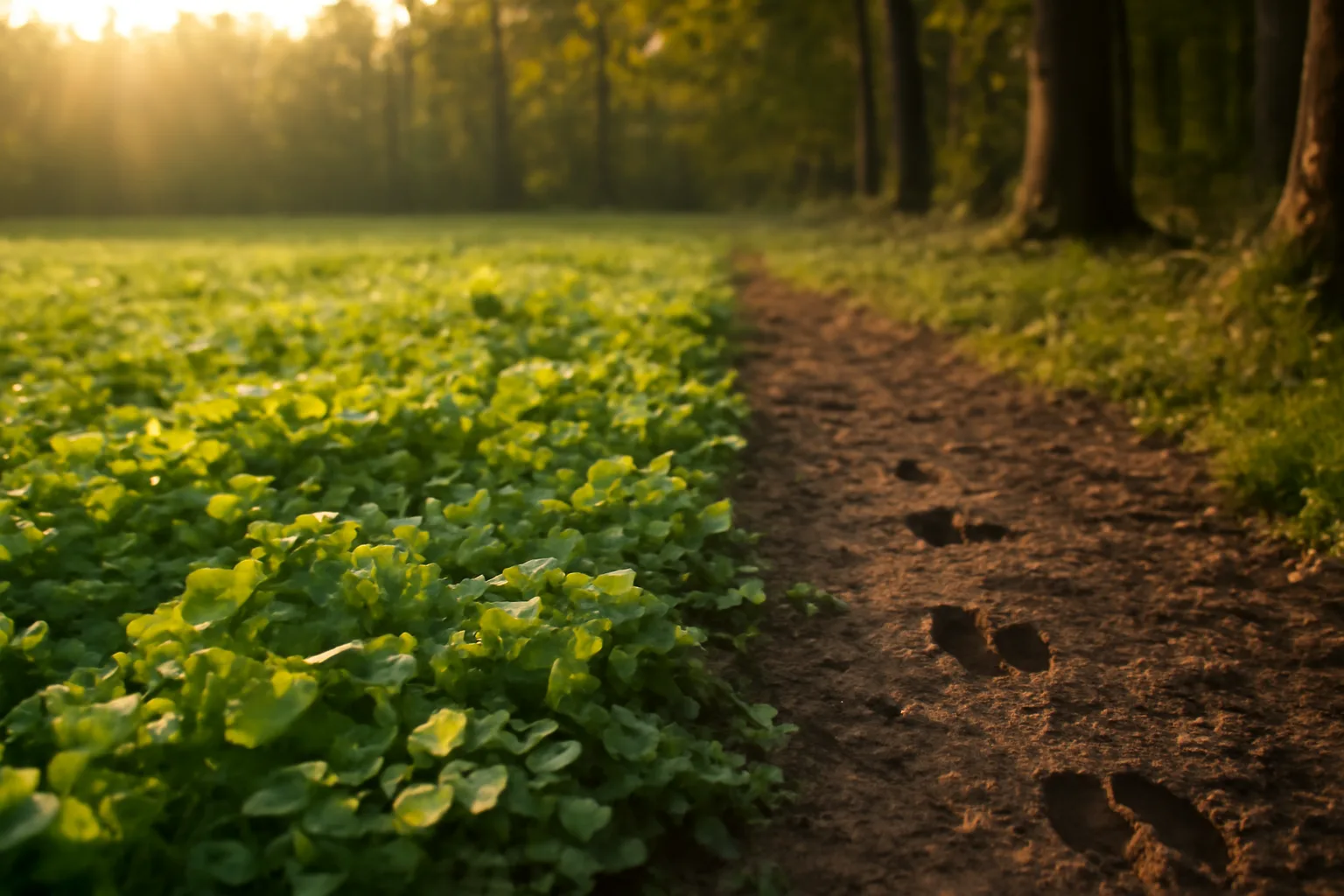
A food plot is a planted patch of ground, usually somewhere between a quarter acre and several acres, seeded specifically to feed and attract deer or other wildlife. It's not a crop field in the farming sense. Nobody is harvesting it for market. The whole point is standing forage that deer can browse through fall and winter, or in some cases spring and summer. Most hunters run two kinds of plots. A food source plot, planted with something deer will eat heavily like clover or brassicas, and a hunting plot, smaller and positioned near bedding cover so you can catch deer moving through on the way to bigger feed. Some folks run just one plot and let it do double duty. State wildlife agencies generally treat food plots as legal habitat management, separate from baiting, but the line gets blurry and rules vary a lot. Some states define baiting narrowly (grain or feed placed on the ground) and don't touch planted, standing crops at all. Others regulate hunting over any planted plot within a certain distance if it was seeded specifically to attract game rather than for general land use. Michigan, for example, prohibits hunting over bait but explicitly allows hunting over food plots, defining a plot as a minimum size and shape planted with agricultural crops [1]. Check your own state wildlife agency's regulations before you plant anything with hunting in mind, because a food plot in one state can functionally become a baited site in another if you graze it down to bare dirt and keep tossing seed on top. For a broader rundown on plot types and layout, see food plot whitetail and deer food plots.
what are deer's favorite foods, really
Deer are opportunistic browsers, and what they "prefer" changes by season, region, and what else is available. That said, extension research and rumen studies give us a decent picture. Acorns are a huge natural food source in fall wherever oaks are present, and deer will often ignore a food plot entirely during a heavy mast year. Soybeans and corn (as standing crops) rank near the top for total forage value when available. Among planted forages specifically for food plots, clover consistently tests as one of the most preferred and most nutritious options, often running 25 to 30% crude protein in the vegetative stage [2]. Brassicas (turnips, radish, rape) get eaten hard, but often not until after a frost, because cold temperatures convert starches to sugars and make the leaves and bulbs taste sweeter. This is a real, documented phenomenon in cool-season brassicas, more than deer camp folklore. There's no single "best" food. A property with acorns, ag fields, clover, and brassicas gives deer more of everything, and that diversity is usually a better strategy than betting the whole plot budget on one species.
do deer like clover, and why is it so popular
Yes. Clover is probably the single most planted food plot forage in North America, and for good reason. It's perennial (lasts 3 to 5 years with maintenance), it's high in protein, and it tolerates mowing and grazing pressure better than almost anything else you can plant [2]. White clover (Ladino types especially) and red clover are the two most common choices. White clover handles shade and repeated grazing well, which makes it a strong pick for smaller hunting plots that get hit hard. Red clover grows taller, tolerates poorer soil, and gives a bigger first-year yield, but it thins out faster, typically needing replanting after 2 to 3 years versus clover blends lasting longer with good pH management. Clover needs a soil pH of 6.0 to 6.5 to really perform and to let its nitrogen-fixing nodules do their job [2]. Below that, lime is non-negotiable, not optional. A soil test is the only honest way to know where you stand; guessing on lime rates wastes money and time either way. For species comparisons across a whole plot plan, see deer food plot seed and food plot seed.
do deer eat sorghum
Yes, deer will eat grain sorghum, but it's rarely planted as a primary deer attractant on its own. Sorghum (milo) is more commonly grown as a screening crop, a wildlife cover crop, or a component in dove and small-game plantings, with deer browsing the leaves and grazing dropped grain incidentally. Where sorghum earns its keep in a deer plot is as a nurse crop or structural component mixed with something like soybeans or cowpeas, giving standing cover through winter that also holds some feed value. It's drought tolerant and grows in poor soil where corn would struggle, which is part of why it shows up in wildlife mixes across the Southeast and parts of the Midwest. If your goal is maximum deer nutrition per acre, sorghum is not the top choice. Soybeans, clover, or brassicas will out-produce it on protein and palatability. If your goal includes screening cover, late-season standing grain, or turkey and dove use alongside deer, sorghum earns a spot in the mix.
when to plant food plots for deer
| Northern (zones 3-4) | early Aug to early Sept | mid-May to early June | |
|---|---|---|---|
| Mid (zones 5-6) | mid-Aug to mid-Sept | late April to late May | |
| Southern (zones 7-8) | mid-Sept to mid-Oct | March to April | These are starting points, not gospel. Local extension offices publish specific frost date tables for your county, and that's a better source than any national chart, including this one. |
Timing splits into two windows: spring/summer plantings for warm-season annuals and perennials, and late summer/fall plantings for cool-season annuals like brassicas and cereal grains. Which window applies depends entirely on what you're planting and your USDA Plant Hardiness Zone. Warm-season plots (soybeans, cowpeas, sorghum, corn, some clover establishment) generally go in after your last frost date, once soil temps hit the mid 60s Fahrenheit. In much of the Midwest and Upper South that's late April through May. In the Deep South it can be as early as March. Cool-season plots (brassicas, oats, wheat, rye, clover overseeding) go in 6 to 10 weeks before your average first fall frost, so the plants have time to establish before growth slows. In most of the whitetail range that lands somewhere between mid-August and mid-September, with northern states planting earlier and the Deep South planting into October [3]. Here's a rough planting window by region, based on typical USDA hardiness zone patterns: | Region (rough zone) | Cool-season plot window | Warm-season plot window |
when to plant oats for deer
Plant oats for deer 45 to 60 days before your area's average first fall frost date, which for most of the whitetail range falls between mid-August and late September. Oats are a fast-germinating cereal grain, up and grazable in as little as 10 to 14 days under good moisture, which is part of why they're such a popular fall food plot staple. Oats are not winter-hardy in most of the northern half of the country. They'll get grazed hard through fall, then die back after a hard freeze, usually somewhere in the 20-degree Fahrenheit range depending on growth stage. In the Deep South and mild-winter regions, oats can persist and even provide some green forage into winter. Because of that die-back, a lot of plotters mix oats with wheat or rye, which are winter-hardy cereal grains that keep providing forage after the oats are gone. It's a cheap insurance policy against an early hard freeze wiping out your fall food source. A seeding rate around 100 to 120 lbs per acre broadcast (less if drilled) is typical for oats in wildlife plantings, though your seed tag and local extension guidance should be the final word.
when to plant turnips for deer
Plant turnips for deer 60 to 90 days before your first expected fall frost, which usually means late July through early September depending on your zone. Turnips need that lead time to build bulb mass and leaf tonnage before cold weather hits and before deer start hammering them. Here's the thing about turnips specifically: deer often ignore them for the first month or two. The leaves and bulbs carry more bitterness and starch early on. After one or two hard frosts, cold converts starches to sugars, the plant sweetens up, and deer switch on almost overnight. This is well documented in cool-season brassica research and is one of the more consistent, repeatable food plot phenomena out there [4]. That delayed-attraction pattern means turnips work best as a late-season food source, not an early bow season draw. If you're hunting October 1st, don't expect turnips to be the reason deer show up. If you're hunting December, a well-established turnip plot can be one of the strongest food sources on the property, especially once snow covers other browse. Seeding rate for turnips alone runs 4 to 6 lbs per acre, broadcast into a firm, shallow seedbed (turnip seed is tiny and doesn't want to be buried deep). Blends with radish and rape are common and add some early-season interest since radish tends to get browsed sooner than turnip bulbs.
do deer like honey (or honeysuckle, and what does that mean for plots)
This question usually comes from confusion between two different things: honey the substance, and honeysuckle the plant, or sometimes "honey hole" as hunting slang for a great spot. Deer do not eat honey. It's not part of their diet, they have no particular attraction to it, and there's no research or wildlife agency guidance suggesting otherwise. If you've seen this claim on a forum, it's not grounded in anything. What deer do browse heavily is honeysuckle, specifically Japanese honeysuckle (Lonicera japonica) and native bush honeysuckle species. It's a preferred winter browse in a lot of the whitetail range because it stays semi-evergreen when other browse has dropped leaves, and multiple state forestry and extension sources document deer preference for it, sometimes to the point that heavy deer pressure suppresses honeysuckle regeneration in forest understories [5]. It's not something anyone plants as a food plot crop though, since it's an invasive species in most states and actively managed against, not cultivated.
cool-season vs warm-season deer seed: which to plant when
| Cool-season annual | oats, wheat, rye, turnips, radish | late summer to early fall | fast growth, frost-tolerant to varying degrees | |
|---|---|---|---|---|
| Cool-season perennial | white clover, red clover, chicory | early spring or late summer | 3-5 year stand life with maintenance | |
| Warm-season annual | soybeans, cowpeas, sorghum, corn | late spring after last frost | needs warm soil to germinate | |
| Warm-season perennial | alfalfa, some clover blends | spring | less common as pure deer plot, more as hay/forage crossover | A lot of the best plot plans mix categories: perennial clover as the anchor plot, brassicas for late season, and a warm-season annual like beans for summer antler growth and early fall protein. That's more work and more seed cost than a single-species plot, but it spreads risk across drought, frost timing, and deer pressure. For a rundown of seed options by strategy, see deer for food and domain food plot seed. |
The species you choose should follow the season you're planting in, not the other way around. Trying to force a warm-season annual into a cool-season window (or vice versa) is the single most common reason a food plot fails. | Category | Examples | Best planting window | Notes |
soil testing and fertility: does it matter more than seed choice
Yes, honestly, more than most people want to hear. A soil test costs somewhere between $10 and $20 through most land-grant university extension labs, and it tells you your pH and nutrient levels (phosphorus, potassium, and often organic matter) so you can lime and fertilize based on what your dirt actually needs, not a guess. Clover, for instance, wants pH 6.0 to 6.5. A lot of wooded, previously unmanaged ground runs 5.0 to 5.5 acidic straight out of the woods, and clover planted into that soil without lime will struggle or fail outright regardless of how good the seed is. Lime takes months to fully react in the soil, so testing and liming in fall for a spring planting (or vice versa) is far better than testing the week before you plant. Your soil test lab, whether it's a state university extension service or a private ag lab, is the real authority here. It knows your regional soil chemistry and gives site-specific lime and fertilizer recommendations in tons per acre and lbs of N-P-K per acre. Follow that report over any generic seed bag recommendation. If you've got a soil test in hand and want a general planting plan built around your zone, soil results, and equipment, that's exactly the kind of thing a $99 one-time Custom Food Plot Plan is built to do. It's general zone-and-soil-based guidance though, not a substitute for what your specific lab report says about your specific dirt.
equipment: what you actually need to plant deer seed
You don't need a tractor to plant a food plot, but the equipment you have does shape which species make sense. A hand-crank broadcast spreader and an ATV with a drag harrow can plant clover, brassicas, or cereal grains just fine on plots under an acre or two. Bigger warm-season crops like soybeans and corn generally want a planter or drill for even seed depth and spacing, especially soybeans, which are sensitive to planting depth (roughly 1 to 1.5 inches is standard). Broadcasting beans and hoping for the best usually gives spotty, uneven stands. A no-till drill is the single best piece of equipment upgrade for plot consistency if you can rent, borrow, or buy access to one. It handles seed-to-soil contact and depth control way better than broadcast-and-drag, especially for small-seeded species like clover and brassicas that fail badly if buried too deep. For smaller kill plots, a hand spreader, a bag of pelletized lime, and a rented disc or tiller from a local equipment rental shop covers 90% of what most hunters actually need.
how much seed do you actually need per acre
| White clover | 6-8 lbs/acre | |
|---|---|---|
| Red clover | 10-12 lbs/acre | |
| Oats | 100-120 lbs/acre | |
| Winter wheat | 90-120 lbs/acre | |
| Turnips (alone) | 4-6 lbs/acre | |
| Soybeans (broadcast, not drilled) | 90-120 lbs/acre | |
| Grain sorghum | 8-10 lbs/acre | Drilled rates run lower than broadcast rates across the board, usually by 20 to 30%, since drilling gets better seed-to-soil contact with less waste. Blends (like a clover-chicory mix or a brassica-radish-oat mix) will have their own rate printed on the bag, and that number accounts for the ratio of species in the mix, so don't just add up individual rates. |
Seeding rates vary a lot by species, and getting this number wrong (usually by seeding too heavy) wastes money without improving your stand. Here are typical broadcast rates pulled from common extension and seed industry guidance, understanding your specific seed tag is the final word: | Species | Typical seeding rate (broadcast) |
Frequently asked questions
Do deer eat sorghum?
Yes, deer will browse grain sorghum leaves and graze dropped grain, but it's usually planted as a cover or screening crop rather than a primary attractant. Soybeans, clover, and brassicas offer higher protein and palatability if maximum deer nutrition is the goal.
Do deer like clover?
Yes, clover is one of the most preferred and most planted food plot forages, often testing at 25 to 30% crude protein in the vegetative stage, according to extension forage research. It needs soil pH of 6.0 to 6.5 to perform well, so a soil test and lime program matter as much as the seed itself.
When should I plant food plots for deer?
It depends on the species. Warm-season plots (soybeans, corn, sorghum) go in after last frost, typically March to June depending on your zone. Cool-season plots (brassicas, oats, wheat, clover) go in 6 to 10 weeks before your first fall frost, typically mid-August through October.
When should I plant oats for deer?
Plant oats 45 to 60 days before your area's average first fall frost, generally mid-August to late September across most of the whitetail range. Oats germinate fast, often in 10 to 14 days, but they aren't reliably winter-hardy in colder zones and die back after a hard freeze.
When should I plant turnips for deer?
Plant turnips 60 to 90 days before your expected first fall frost, usually late July through early September. Deer often ignore turnips until after one or two hard frosts convert the plant's starches to sugar, so turnips work best as a late-season food source rather than an early bow season draw.
What is a food plot?
A food plot is a planted area, typically a quarter acre to several acres, seeded specifically to provide standing forage for deer or other wildlife. It's managed for wildlife attraction and nutrition rather than commercial harvest, and most state agencies treat it as legal habitat work separate from baiting, though rules on hunting over plots vary by state.
What are deer's favorite foods?
Acorns are often the top natural preference when available in fall, sometimes pulling deer off food plots entirely during a heavy mast year. Among planted forages, clover and soybeans consistently rank highest for palatability and nutrition, with brassicas becoming highly preferred after frost sweetens the leaves and bulbs.
Do deer like honey?
No, deer don't eat honey and have no documented attraction to it. People sometimes confuse this with honeysuckle, a plant that deer do browse heavily, especially in winter when it stays semi-evergreen after other browse has dropped its leaves.
What's the difference between a warm-season and cool-season food plot?
Warm-season plots use species like soybeans, corn, and sorghum planted after the last spring frost once soil warms into the mid-60s Fahrenheit. Cool-season plots use brassicas, oats, wheat, and clover planted in late summer, giving them 6 to 10 weeks to establish before the first fall frost.
Can I plant a food plot without a tractor?
Yes. A hand-crank or ATV-mounted broadcast spreader, a drag harrow, and a rented disc or tiller cover most small plot needs, especially for clover, brassicas, and cereal grains. Larger warm-season crops like soybeans do better with a drill or planter for consistent seed depth.
How much clover seed do I need per acre?
White clover is typically seeded at 6 to 8 lbs per acre broadcast, while red clover runs 10 to 12 lbs per acre. Drilled rates can run 20 to 30% lower than broadcast rates because of better seed-to-soil contact, so check your specific seed tag.
Do I need a soil test before planting a food plot?
It's strongly recommended. A soil test through a land-grant university extension lab typically costs $10 to $20 and tells you pH and nutrient levels so you can lime and fertilize based on actual soil chemistry rather than a guess. Clover and most forage species underperform badly in acidic soil below pH 6.0 without correction.
Is it legal to hunt over a food plot?
In most states, yes, food plots are treated differently from bait piles, but rules vary significantly by state wildlife agency. Some define minimum plot size and require standing, planted crops rather than piled grain; always check your specific state wildlife agency's current regulations before hunting over any planted plot.
Sources
- Michigan Department of Natural Resources, Baiting and Feeding Regulations: Michigan prohibits hunting over bait but allows hunting over food plots defined as planted agricultural crops
- University of Tennessee Extension, Clover and Forage Legumes for Wildlife: Clover crude protein content and soil pH requirements of 6.0 to 6.5 for optimal growth
- Mississippi State University Extension, Food Plots for Wildlife: Cool-season food plot planting windows relative to first fall frost dates
- University of Kentucky Extension, Brassicas for Deer: Brassica palatability increases after frost converts starches to sugars in leaves and bulbs
- USDA Forest Service, Fire Effects Information System: Lonicera japonica: Deer browse preference for Japanese honeysuckle, particularly as winter forage