Last updated 2026-07-25
TL;DR
A deer seed company sells everything from single-species bags (clover, oats, turnips) to proprietary blends. Deer eat clover, oats, and turnip tops readily; sorghum less so unless it's grain sorghum planted for late-season cover and seed. Planting windows depend on your zone: spring for clover and warm-season annuals, late summer (late July through September) for brassicas and cereal grains.
what is a food plot, exactly
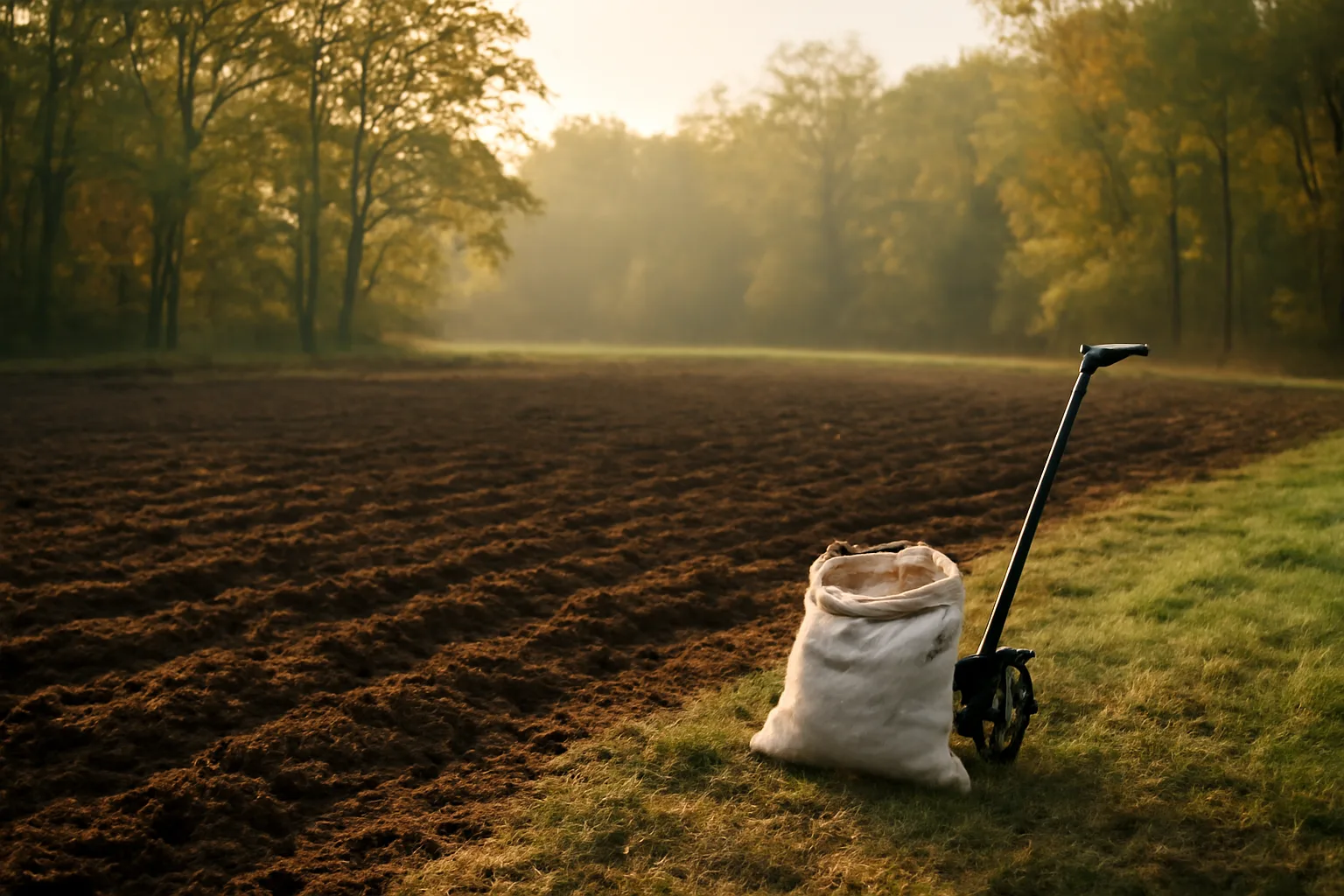
A food plot is a planted patch of forage on hunting land, usually somewhere between a quarter acre and several acres, meant to feed deer and hold them (or draw them into range) during hunting season and beyond. It's not the same as a wildlife opening or a fallow field. A real food plot involves soil testing, a seed choice matched to your climate and the deer's nutritional calendar, and some level of site prep: mowing, disking or no-till drilling, liming, and fertilizing. The USDA Natural Resources Conservation Service treats food plots as a wildlife habitat practice (Code 645, Upland Wildlife Habitat Management) that landowners can cost-share through programs like EQIP in some states [1]. That tells you something: this isn't just a hunting gimmick, it's recognized habitat work with real inputs and real management decisions behind it. Most plots fall into one of two categories. Annual plots get replanted every year (clover is a partial exception since it's a perennial). Perennial plots like clover or chicory can run 3 to 5 years before you need to till and restart. If you're deciding between plot types for the first time, the food plot whitetail overview breaks down the tradeoffs in more depth.
how does a deer seed company actually differ from buying straight seed at a farm store
A deer seed company packages forage seed specifically for deer attraction and nutrition, often blending multiple species (like clover with chicory, or oats with radish and turnip) and marketing by named products rather than agronomic species names. Farm co-ops and ag supply stores sell the same base seed (often the same varieties) at a lower price per pound, but without the blending, the marketing, or the deer-specific rate recommendations. Here's the honest version: a lot of what's in a bag from a deer-specific seed company is the same clover variety, the same brassica, the same oat you'd get from a farm supply store. You're paying partly for convenience (pre-mixed ratios), partly for smaller bag sizes suited to a 1 to 2 acre plot instead of a 40 acre farm field, and partly for marketing. That's not automatically a bad trade. If you don't want to buy four different 50 lb bags and mix your own blend by hand, a pre-mixed bag saves time and reduces the chance of getting ratios wrong. But if you're planting more than 3 to 5 acres, buying straight species seed from an ag retailer and mixing your own blend is usually cheaper per acre. Land-grant extension guides consistently recommend checking seed tags for variety name, germination percentage, and purity rather than relying on the brand name alone [2]. If you're comparing named products against each other, deer food plot seed and food plot seed go through specific product categories in more depth.
when to plant food plots for deer
Timing splits into two seasons almost everywhere in whitetail range: a spring planting window for warm-season annuals and perennials, and a late-summer window for cool-season annuals and brassicas. Spring plots (clover, chicory, soybeans, cowpeas, some sorghum and corn) go in after your last frost date, when soil temps are reliably above 50-55°F. In much of the Midwest and mid-South that's late April through May. In the Deep South it can be as early as March. Check your state extension's frost date tables, since a plot seeded into cold, wet soil just rots or germinates unevenly. Fall plots (brassicas, cereal grains, clover overseeds) go in 6 to 10 weeks before your first killing frost, which lets brassicas bulb out and cereal grains establish a root system before cold shuts down growth. That puts most of the Midwest and Northeast in a late July to early September window, and the Deep South more like September into early October. The simplest rule extension agronomists give: match planting date to the plant's growth habit, not to hunting season opening day. Plant too late and brassicas never bulb, oats never tiller, and you've burned seed and time for nothing. For a full month-by-month breakdown by climate zone, see the deer food plots calendar.
do deer like clover, and is it worth planting
Yes. Clover is one of the most consistently preferred food plot forages across whitetail range, and it's also one of the most forgiving to grow. White clover (especially ladino types) and red clover both show up repeatedly in state wildlife agency plot guides as top perennial choices [3]. Clover's advantage is season length. A well-maintained clover stand provides tender, high-protein forage from spring green-up through fall, and deer hit it hard in spring when does are lactating and bucks are rebuilding body mass after the rut. Crude protein in quality clover forage commonly runs 25-30%, which is well above what most native browse offers during the growing season [4]. The catch: clover needs decent soil pH (most varieties want 6.0-7.0) and it competes poorly with weeds in the establishment year. If your soil test comes back at pH 5.2, don't expect clover to thrive until you've limed and given it time to adjust, often a full season. Clover also needs mowing 2 to 4 times a year to keep it from getting stemmy and to knock back weed competition. One perennial stand, planted right, can run 3-5 years before you need to till it up again, which makes clover one of the better cost-per-year options in a plot rotation.
do deer eat sorghum
Deer will eat grain sorghum (milo) heads and some will browse young sorghum foliage, but sorghum is not a preferred deer forage compared to clover, soybeans, or brassicas. It's more valuable as cover and as a late-season energy source once the seed heads mature and other food sources thin out. Grain sorghum is drought-tolerant and grows well in hot, dry soils where corn struggles, which is part of why it shows up in food plot blends for the southern Great Plains and parts of the Southeast. But multiple state wildlife agency food plot guides list it as a secondary or cover-crop species rather than a primary attractant, often paired with something deer prefer more, like soybeans or cowpeas, to round out a plot's nutrition and screening value [5]. If your goal is pulling deer into bow range in October, sorghum by itself is a weak choice. If your goal is standing cover through winter plus a late-season food source when everything else is gone, sorghum earns its place.
do deer like honey (honey locust, honeysuckle, and the confusion around 'honey' plots)
Deer don't eat honey itself (bees make honey, and it's not part of any deer's diet), but they do heavily browse two very different plants that share the word 'honey': honey locust pods and honeysuckle foliage. Honey locust trees (Gleditsia triacanthos) drop sugary seed pods in fall that deer eat readily, and mature honey locust stands are sometimes managed as a mast source alongside oaks. Japanese honeysuckle, an invasive vine in much of the eastern U.S., is also heavily browsed and in fact over-browsing by deer is one reason honeysuckle can persist so aggressively in some forests, since deer knock back competing native plants but honeysuckle regrows fast [6]. Neither of these is something you'd plant in a food plot seed mix. If you searched for 'do deer like honey' hoping for a plot answer, the real answer is that honey isn't a food plot input at all. If you meant honey locust as a mast tree, that's a longer-term forestry decision, not a spring or fall seeding project.
when to plant oats for deer
Oats are a cool-season cereal grain, and the standard planting window is late summer to early fall, roughly 6 to 8 weeks before your first expected frost, so the plant can establish and tiller before growth slows. In most of the Midwest and Northeast that's late August into September. In the Southeast it stretches into October. Oats are one of the fastest-germinating, most palatable food plot grains available, often up and growing within 5 to 7 days of a good rain. Deer hit young oat shoots hard, especially in October and November when they're tender and high in carbohydrates ahead of winter. Oats also work well as a nurse crop mixed with clover, since they germinate fast and give clover some early cover from weed competition. One limitation: oats aren't very winterhardy. In the northern tier of states, a hard freeze can kill oats back to nothing by December, which is fine if your goal is October-November hunting season attraction, but means you shouldn't count on oats as a late-winter food source north of the Ohio River without overseeding something hardier alongside them, like winter wheat or rye.
when to plant turnips for deer, and do deer even like them
Turnips go in the ground in late summer, generally 80 to 90 days before your first fall frost, since turnips need that much time to bulb out and reach peak sugar content. In most whitetail range that puts planting in late July through mid-August. Do deer like turnips? Yes, but with a real timing catch that trips up a lot of first-time planters. Deer often ignore turnip tops and bulbs for the first several weeks after a hard frost, then switch on almost overnight once cold weather converts starches in the plant to sugars, making it taste sweeter. State wildlife agency and university extension food plot guides both note this same pattern: turnip plots that deer walk past in October get hammered in December and January once repeated frosts sweeten the bulbs. That makes turnips one of the better late-season food plot options, especially paired with a state's legal late season, but a poor choice if your only goal is early bow season activity. Check your planting date against your average first frost, and don't panic if deer aren't touching a fresh turnip plot in early fall. That's normal, not a failed plot.
what are deer's favorite food, really
There's no single universal answer, since deer preference shifts by season, region, and what's available, but a few forages show up as favorites across almost every study and state guide: acorns (especially white oak group acorns, which are lower in tannins than red oak group acorns), soybeans, clover, and standing corn. Acorns from the white oak group (white oak, bur oak, swamp white oak) are consistently preferred over red oak group acorns because they have less tannin and taste less bitter, and they're often the single largest natural food source driving deer movement in October and November across the eastern half of the country [7]. If you have mature white oaks on your property, deer are probably keying on them more than any plot you plant nearby. Among planted crops, soybeans rank at or near the top almost everywhere they're grown, both as a summer forage (deer browse the leaves hard through July and August) and as a fall/winter food source once pods mature and beans dry down. Clover is the top perennial choice for the reasons covered above. Corn, left standing, provides high-energy food through the toughest part of winter. The honest caveat: 'favorite food' studies mostly measure what deer eat most given local availability, not some fixed ranked preference list. A deer in an ag-heavy county with soybean fields everywhere behaves differently than a deer in a hardwood-dominated forest with no row crops nearby. Preference is relative to what's on the landscape.
how do i pick a seed mix for my property instead of guessing
Start with a soil test, not a seed catalog. Your county extension office or a private ag lab will run a soil test for somewhere between $10 and $25 depending on the state and the panel you order, and it tells you pH and nutrient levels that determine what will actually grow before you spend a dollar on seed. Once you know your pH and nutrient numbers, match species to what the soil test and your climate zone actually support, not what a bag label promises. Clover needs pH 6.0+ and won't perform on acidic soil until you've limed. Brassicas want fertile, well-drained ground and enough lead time before frost. Cereal grains are the most forgiving of the bunch and tolerate a wider pH range. This is also where a lot of hunters overspend. A $60-90 bag of a proprietary deer blend isn't inherently better than $35-45 of straight clover and oat seed bought separately from a farm supply store, if the straight seed is matched correctly to your soil and season. The blend name doesn't fix a pH problem or a bad planting date. If you'd rather have someone put your soil test numbers and property details into an actual planting plan instead of guessing at ratios, PlotSeason's $99 one-time Custom Food Plot Plan turns your soil test and zone into a specific seed list, rates, and planting window. It's general planning guidance built from your numbers, not a substitute for what your soil lab or a local agronomist tells you about your specific dirt.
do i need to worry about baiting or feeding laws before i plant
Yes, check your state wildlife agency's regulations before you plant anything near a stand or blind, because food plots and bait piles are regulated very differently state to state, and some states draw a legal line based on how the food is placed, more than what species it is. Most states treat a properly planted, growing food plot as legal hunting over standing crops, separate from bait (piled corn, mineral blocks, feeders). But a handful of states have specific distance rules, registration requirements, or outright restrictions in certain zones (often CWD management areas). For example, states with active chronic wasting disease management zones frequently restrict baiting and sometimes supplemental feeding specifically to slow disease spread through congregated deer [8]. This is genuinely not a one-size-fits-all answer. Pull up your state wildlife agency's current hunting regulations page before season, not a hunting forum thread from three years ago, since these rules change almost every year in CWD-affected states.
how big should a food plot be, and does that change what seed to buy
Plot size drives seed choice more than most people plan for. A quarter-acre bow plot tucked in timber behaves completely differently than a 5-acre field plot, and the species that work well in one often don't in the other. Small, secluded plots (a quarter acre to half acre) work best with high-preference, quick-hit forages like clover, oats, or a brassica blend, since the goal is pulling a deer into bow range for a short window, not feeding a whole herd through winter. Larger field plots (2 acres and up) can handle lower-preference, higher-tonnage crops like soybeans, corn, or grain sorghum, because there's enough acreage that deer pressure doesn't wipe out the plot in the first two weeks. A rough rule some extension wildlife biologists use: plan for at least 1-2% of total property acreage in food plots if the goal is measurable nutritional impact on a deer herd, though this varies heavily by region and existing native forage quality [3]. On a 40 acre property, that's less than an acre. Don't assume bigger is automatically better either; a poorly sited 5-acre plot with bad soil underperforms a well-limed, well-fertilized half acre. For a side-by-side on plot type and size tradeoffs, deer for food and domain food plot seed walk through specific acreage scenarios.
Frequently asked questions
Do deer eat sorghum?
Deer eat grain sorghum seed heads and will browse young foliage, but it's a secondary forage, not a top preference like clover or soybeans. It's most useful as drought-tolerant cover and a late-season energy source once heads mature, not as an early-season attractant.
Do deer like clover?
Yes, clover is one of the most consistently preferred food plot forages in whitetail range, with crude protein commonly running 25-30% in a healthy stand. It needs pH 6.0-7.0 and regular mowing, but a good perennial stand can last 3-5 years before replanting.
When should I plant food plots for deer?
Spring plantings (clover, soybeans, warm-season annuals) go in after your last frost, typically April-May in most of whitetail range. Fall plantings (brassicas, cereal grains) go in 6-10 weeks before first frost, usually late July through September depending on zone.
When do I plant oats for deer?
Plant oats 6 to 8 weeks before your first expected frost, typically late August through September in the Midwest and Northeast, later into October in the Southeast. Oats germinate fast, often within 5-7 days of rain, but aren't very winterhardy up north.
When should I plant turnips for deer?
Plant turnips 80 to 90 days before your area's first fall frost, generally late July to mid-August. Deer often ignore turnips until after several hard frosts convert starches to sugar, so don't judge a turnip plot's success until December or January.
What exactly is a food plot?
A food plot is a planted area of forage on hunting land meant to feed and attract deer, distinct from a fallow field or wildlife opening. It typically involves a soil test, species selection matched to climate, and site prep like disking, liming, and fertilizing before seeding.
What is a deer's favorite food overall?
There's no single fixed answer since preference shifts by region and season, but white oak group acorns, soybeans, clover, and standing corn consistently rank as top choices across studies and state wildlife guides. Preference is relative to what's actually available on the landscape.
Do deer like honey?
Deer don't eat honey itself. They do heavily browse honey locust seed pods in fall and honeysuckle foliage year-round, two unrelated plants that share the word 'honey.' Neither is a food plot seed you'd plant; honey locust is a mast tree decision, not a plot input.
Is a deer seed company blend better than buying straight seed?
Not automatically. Many blends use the same base varieties sold at farm supply stores, just pre-mixed and packaged in smaller bags. For plots over 3-5 acres, buying straight species seed and mixing your own ratio is usually cheaper per acre; blends save time on small plots.
How much does a soil test cost before planting a food plot?
A basic soil test through a county extension office or private ag lab typically costs $10 to $25 depending on the state and panel ordered. It's the single most useful thing to do before buying seed, since it determines lime needs and which species will actually grow.
Do I need to worry about baiting laws for food plots?
Check your state wildlife agency's current regulations before hunting near any plot. Most states treat a properly planted, growing plot as legal hunting over standing crops, separate from bait piles, but CWD management zones in several states add extra restrictions on baiting and feeding.
How big should my food plot be?
Small, secluded plots (quarter to half acre) work well with quick-hit forages like clover or brassicas for bow hunting. Larger field plots (2+ acres) can support lower-preference, higher-tonnage crops like soybeans or corn. Some wildlife biologists suggest 1-2% of total acreage in plots for measurable herd impact.
Sources
- USDA NRCS, Conservation Practice Standard: Upland Wildlife Habitat Management (Code 645): Food plots fall under recognized wildlife habitat management practices with cost-share potential
- University of Tennessee Extension, Establishing and Managing Wildlife Food Plots: Recommendation to check seed tags for variety, germination, and purity rather than relying on brand name
- Mississippi State University Extension, Guide to Successful Wildlife Food Plots: White and red clover listed among top perennial food plot forages for deer
- Noble Research Institute, Food Plots for White-Tailed Deer: Clover forage crude protein levels and seasonal deer nutrition role
- Auburn University Extension, Establishing and Managing Wildlife Food Plots: Grain sorghum listed as a secondary or cover-crop species for deer plots rather than a primary attractant
- USDA Forest Service, Invasive Plant Species Fact Sheet: Japanese Honeysuckle: Deer browsing pressure interacts with honeysuckle persistence and regrowth in eastern forests
- USDA Forest Service, Silvics Manual: Quercus alba (White Oak): White oak group acorns have lower tannin content and are preferred by wildlife over red oak group acorns
- Wisconsin DNR, Baiting and Feeding Regulations: State wildlife agencies impose baiting and feeding restrictions, particularly in CWD management zones