Last updated 2026-07-25
TL;DR
Sandy soil food plots need drought-tolerant species (clover, cowpeas, sorghum, buckwheat), split-applied fertilizer since sandy ground leaches nitrogen and potassium fast, and organic matter built up over years with cover crops. Test soil first. Brassicas and cereal grains like oats and winter rye also do well because they tolerate quick drainage and cooler soil temps better than corn or soybeans on the same ground.
What makes sandy soil so hard for food plots?
Sandy soil drains water fast, sometimes too fast. Water that would sit in loam or clay for days moves through sand in hours. That sounds good until you realize your seedlings dry out between rains, and any nitrogen or potassium you put down goes with the water instead of staying near the roots. The USDA's official texture definition puts sand at 85% or more sand particles by weight, with the rest silt and clay [1]. That particle size matters because sand grains are big and don't hold water film the way clay's flat, tiny particles do. Less surface area per volume means less water clinging around the roots. Cation exchange capacity, the soil's ability to hold onto positively charged nutrients like potassium, calcium and magnesium, runs low in sandy soil almost by definition. Sandy soils commonly have CEC values under 5 meq/100g, compared to 15-30 or higher in clay-rich soils, according to soil fertility guidance from Kansas State University Extension [2]. That's the real problem, more than water. Low CEC means fertilizer you apply this month may be gone by next month if it doesn't get used. The upside: sandy ground warms up early in spring, drains well enough that you rarely lose a plot to standing water, and it's easy to work with a disc or no-till drill even right after rain. You just have to manage it differently than you would a hardwood flat with real topsoil.
What is a food plot, and why does soil type change the plan?
A food plot is a planted area, usually somewhere between a quarter acre and several acres, seeded specifically to attract and feed deer or other wildlife rather than for human harvest. Landowners plant them on private or leased ground to concentrate deer activity, supplement natural forage, and in many cases support herd health through winter and stress periods. Soil type changes almost every decision after that. On loam or clay ground you might get away with a generic seed blend and a single fertilizer pass. On sand, species selection, fertilizer timing, and organic matter management all have to shift or you'll burn money on seed and fert that never turns into forage. The difference shows up most in nutrient timing. A university test might tell you a plot needs 40 pounds of nitrogen per acre. On clay you could put that all down at planting. On sand, splitting that into two or three applications through the season keeps more of it available to the plant instead of leaching past the root zone during the first hard rain. If you're picking species and blends for the first time, the general breakdown at food plot seed covers how blends are built for different soil and moisture conditions.
What grows well in sandy soil food plots?
Legumes handle sandy soil better than almost anything else because they fix their own nitrogen and tend to have deeper taproots that chase moisture down past the surface layer. Clover, cowpeas, and soybeans all fall in this category, though soybeans need more consistent moisture than the other two to establish well. Clover, especially white clover varieties like Ladino, tolerates sandy soil reasonably well once established, though it needs decent moisture in the first 60 days to get a stand going. Once roots are down, clover handles short dry spells better than a lot of annuals. The USDA NRCS plant guide for white clover lists it as adapted to a broad range of soil types including sandy loams, provided pH and drainage are managed [3]. Cowpeas (often called iron and clay peas in food plot mixes) are one of the better warm-season options for sand. They're bred for heat and drought tolerance and were historically grown across the sandy soils of the southeastern coastal plain as a forage and cover crop [4]. Brassicas, turnips and radishes in particular, also do surprisingly well. Their taproots break up compaction and reach moisture deeper in the profile, and they don't need the sustained rainfall that corn does. Buckwheat is another underused option: it grows fast, tolerates poor soil fertility, and works well as a short-season cover or nurse crop ahead of a fall planting. Cereal grains, oats, winter rye, and winter wheat, are some of the most forgiving choices for sandy ground because they germinate quickly in cool soil and don't demand much water to get going. Sorghum, particularly grain sorghum, also handles sandy, drought-prone ground better than corn, which is one reason it shows up so often in food plot mixes marketed for the Southeast and southern Midwest. What struggles: corn, most soybean varieties without irrigation, and anything with a shallow, fibrous root system planted in mid-summer heat. Corn's nutrient demand and moisture requirement make it one of the worst choices for unirrigated sandy ground unless you're in a region with reliable summer rain.
Do deer eat sorghum?
Yes, deer eat sorghum, both the grain heads and the young leafy growth, though it's generally considered secondary to clover, soybeans, and brassicas in preference studies and hunter observation. Sorghum's real value on sandy soil is agronomic, not palatability. It tolerates drought and poor fertility far better than corn while still producing a grain head deer will hit hard in fall and winter once it dries down. Grain sorghum is also commonly planted as a nurse crop or screen alongside other species because of its height and quick canopy closure, which helps sandy plots resist wind erosion and moisture loss in the weeks after planting.
Do deer eat clover, and do deer actually like it?
Yes, deer eat clover readily, and it consistently ranks as one of the most preferred food plot forages in university trials and hunter surveys. Clover is a favorite because it's high in protein (often 20-25% crude protein in vegetative growth stages) and stays palatable through most of the growing season, unlike a lot of annuals that get tough and fibrous as they mature. On sandy soil, clover's biggest limitation isn't preference, it's establishment and drought tolerance during the seedling stage. Once clover is rooted, it handles moderate dry spells fine, but a sandy plot that dries out completely in the first three to four weeks after seeding can wipe out a clover stand before it ever gets going. Irrigation isn't realistic for most hunters, so timing planting around a reliable rain window matters more on sand than on heavier soil.
When to plant food plots for deer, by region and soil type?
| Deep South (Zone 8-9) | March-April (warm season) | September-October | |
|---|---|---|---|
| Mid-South / Transition (Zone 7) | April-May | August-September | |
| Upper Midwest / North (Zone 4-5) | May-June | Late July-August | Sandy soil in the South and Southeast dries out fast in July and August, so a lot of experienced planters push fall brassica and cereal grain plantings a couple weeks earlier than the recommended date to catch the tail end of summer moisture, rather than waiting for the "ideal" fall window and gambling on rain. Check your state wildlife agency's food plot guidance for regional timing specifics, since planting dates recommended for row crop agriculture don't always match what works best for a small wildlife plot [5]. |
Planting windows depend more on your frost dates and rainfall pattern than on soil type directly, but sandy soil pushes you toward planting slightly earlier in spring (because it warms fast) and slightly later in fall for some species (because it holds less residual moisture through late summer droughts). General windows, adjust for your specific region using your state extension's frost date tables: | Region | Spring/summer plot window | Fall plot window |
When to plant oats for deer?
Oats are typically planted in late summer to early fall for a fall/winter food plot, generally August through September in northern and transition zones, and September through October in the Deep South. Oats germinate fast in cool soil, which makes them a strong choice for sandy ground where you want quick cover before fall rains. Some hunters also plant oats in early spring as a quick, cheap cover crop or nurse crop ahead of a summer planting, though spring-planted oats mature and die back with summer heat, so they're not a season-long forage option. Oats don't tolerate hard freezes as well as winter wheat or rye, so in the northern half of the whitetail's range they typically get grazed hard and then winterkill, while rye and wheat persist into spring.
When to plant turnips for deer?
Turnips go in the ground roughly 60 to 90 days before your average first fall frost, which usually lands in a window from late July in the far north to early September in the South and mid-Atlantic. Turnips need that runway to bulb up and reach peak palatability, which typically improves after the first hard frost converts starches to sugars in the tuber. On sandy soil specifically, turnips have an advantage: their taproot pushes down past the compacted or nutrient-poor surface layer and can access moisture and nutrients deeper in the profile than a shallow-rooted grass. Just don't plant them too early. Turnips seeded in the heat of midsummer on sandy ground with no rain in the forecast will often germinate poorly or bolt before bulbing.
What's the fertilizer and lime plan for sandy soil food plots?
Start with a soil test, every time, no exceptions. Sandy soil's low CEC means guessing at lime and fertilizer rates is riskier here than on heavier ground, because you can either underfeed the plot or waste money pushing nutrients past the root zone into groundwater. Your soil test report is the actual authority here, not a blanket recommendation from an article. Labs calibrate lime and fertilizer rates to your specific pH, buffer pH, and nutrient levels, and recommendations vary by state and by lab methodology. University extension soil testing programs, like those run through land-grant universities, typically return a report with a specific lime rate in tons per acre and N-P-K recommendations in pounds per acre . That said, a few things are close to universal on sandy ground: Lime moves slowly through soil, but sandy soil's low buffering capacity means pH can also swing faster than on clay once you do apply it, so retesting every 2-3 years instead of every 4-5 is a reasonable adjustment. Split nitrogen applications instead of putting it all down at planting. A portion at planting and a follow-up application 3-5 weeks later (timed with a rain event if possible) keeps more nitrogen available during the plant's growth window instead of leaching below the root zone in the first big storm. Potassium leaches on sandy soil too, more than most people expect. If your soil test shows low K, don't assume one application carries the plot through the season the way it might on loam. Organic matter is your long-term lever. Sandy soil with 1% organic matter behaves very differently than the same sandy soil built up to 3% over several years of cover cropping, no-till, and residue left in place. USDA NRCS soil health guidance points to cover crops and reduced tillage as primary practices for building organic matter over time, particularly on coarse-textured soils where it degrades fast under tillage . If you're weighing seed blends built for low-organic-matter ground, deer food plot seed breaks down which mixes are formulated with that in mind.
What are deer's favorite foods, and does sandy soil limit your options?
Deer preference studies and decades of hunter observation generally rank a handful of forages at the top: acorns and other hard mast when available, clover, soybeans, and cool-season brassicas rank highly among planted forages, with corn and grain sorghum valued more for their energy content in late fall and winter. Preference shifts seasonally too. A food deer ignores in September might get hit hard in December once other food sources are gone. Sandy soil doesn't rule out any of deer's top preferred forages, but it does change how reliably you can grow them without irrigation or extra management. Clover and soybeans are both high-preference forages that need more moisture management on sand than on loam. Brassicas handle sandy soil better naturally, which is part of why turnip and radish blends are so heavily marketed for exactly this soil type. If hard mast (acorns) is present on your property, understand that deer will often prefer it over any planted forage in a heavy mast year, which is one reason food plot success varies so much year to year even when your agronomy is dialed in.
Do deer like honey, and does it belong in a food plot conversation?
Deer don't have meaningful access to honey in a wild forage context, and it's not a realistic or legal food plot input in most states. There's no established use of honey as a deer attractant or food plot component in wildlife management literature. If you're looking at scent or mineral-based attractants instead of forage, check your state wildlife agency's baiting and feeding regulations first, since a lot of states restrict or ban the use of feed, minerals, and attractants placed for the purpose of hunting over them, and rules vary significantly by state, and sometimes by county . A planted food plot is generally treated differently under the law than a bait pile, but the line differs state to state, so confirm with your state agency before assuming.
How do I put together a full-season plan for sandy soil?
A workable approach on sandy ground usually runs something like: spring cover crop or clover establishment while soil moisture is highest, a summer warm-season planting of cowpeas, soybeans (if you can irrigate or count on rain), or sorghum, then a fall reseed or overseed of brassicas and cereal grains timed to your first frost window. The biggest mistake hunters make on sandy soil is treating it like a one-and-done planting. Sandy ground rewards a rotation because each planting builds a little organic matter and improves the next one's odds. A single-species monoculture planted year after year on light sand tends to get harder to establish over time, not easier, especially if you're not adding organic matter back in. If you've got a soil test in hand and want a planting sequence built around your specific numbers, region, and acreage rather than a generic template, that's the exact gap a $99 one-time Custom Food Plot Plan from PlotSeason is built to fill; you upload your soil test and property details and get a plan for your land instead of a national average. Start at /plot-plan-builder. For general species comparisons before you commit to a plan, food plot whitetail and deer food plots both cover broader selection criteria beyond just sandy ground.
What equipment actually works on sandy soil?
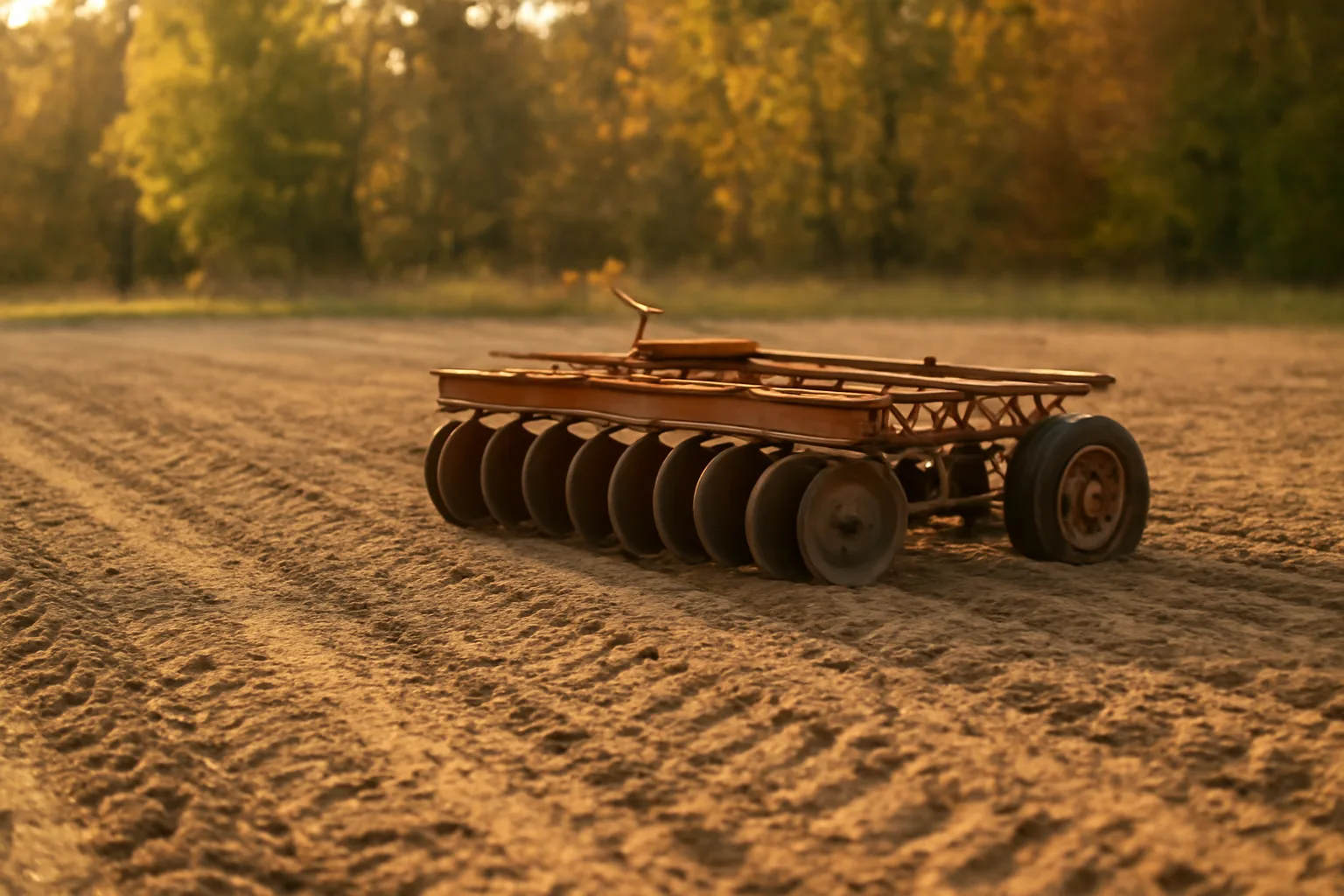
Sandy ground is some of the easiest soil to work mechanically, which is one of its few real advantages. A light disc or even a cultipacker-drag combo can prepare a decent seedbed without the horsepower needed to break up clay. The risk with sandy soil and tillage is erosion and moisture loss. Every pass with a disc dries the surface out more and exposes organic matter to oxidation. A no-till drill, even a basic one, tends to outperform conventional tillage on sandy ground specifically because it disturbs less soil, keeps residue on the surface as a moisture-conserving mulch, and gets seed to depth without drying out the seedbed in the process. If you're deciding between a full tillage program and no-till on light ground, that residue retention is usually the deciding factor, not cost.
Frequently asked questions
Do deer eat sorghum in food plots?
Yes. Deer eat both the leafy growth and the mature grain heads of sorghum, though it typically ranks below clover, soybeans, and brassicas in preference. Its real strength on sandy soil is drought tolerance; sorghum handles poor, fast-draining ground and heat far better than corn while still producing a fall/winter grain source.
Do deer like clover more than other food plot forages?
Clover consistently ranks among the most preferred food plot forages because of its high crude protein content (often 20-25%) and season-long palatability. On sandy soil, the limiting factor isn't preference, it's getting a stand established before the soil dries out in the first few weeks after seeding.
When should I plant food plots for deer on sandy soil?
Timing depends on your region's frost dates, not soil type directly, but sandy soil warms early in spring and dries fast in summer. Deep South planters generally start spring plots in March-April; northern planters wait until May-June. Fall plots run August-October depending on latitude. Check your state extension's frost tables for exact local dates.
When is the best time to plant oats for deer?
Oats are usually planted in late summer to early fall, August through September in the North, September through October in the Deep South, for a fall/winter forage plot. Some hunters also plant oats in early spring as a fast cover crop, though spring oats die back with summer heat and don't persist as a season-long food source.
When should I plant turnips for deer food plots?
Plant turnips 60 to 90 days before your area's average first fall frost. That's roughly late July in the northern whitetail range and early September in the South. Turnips need that runway to bulb properly, and palatability generally improves after the first hard frost sweetens the tuber's starches into sugar.
What exactly is a food plot?
A food plot is a planted patch of forage, usually a quarter acre to several acres, seeded specifically to feed and attract deer or other wildlife rather than for human crop harvest. Hunters plant them on owned or leased ground to concentrate deer activity and supplement natural browse, especially through stress periods like late winter.
What are deer's favorite foods overall?
Acorns and other hard mast typically top the list when available, followed by clover, soybeans, and cool-season brassicas among planted forages. Preference shifts by season; a forage deer ignore in early fall can become a top choice in December once other food sources are gone. Corn and sorghum are valued more for late-season energy.
Do deer like honey or is that a myth?
There's no real-world scenario where wild deer encounter or seek out honey as forage, and it has no established role in food plot or attractant literature. If you're considering feed or attractant products instead of planted forage, check your state wildlife agency's baiting rules first, since many states restrict or ban feeding for hunting purposes.
What food plot species handle sandy soil best?
Clover, cowpeas, buckwheat, brassicas (turnips, radishes), and cereal grains like oats and winter rye all tolerate sandy soil reasonably well because of drought tolerance, quick germination, or deep taproots. Corn and most soybean varieties struggle on unirrigated sandy ground because of high water and nutrient demand paired with poor water-holding capacity.
Why does sandy soil need different fertilizer timing than clay or loam?
Sandy soil has low cation exchange capacity, often under 5 meq/100g compared to 15-30 in clay, per Kansas State University Extension soil fertility guidance. That means it holds far less nutrient reserve, so nitrogen and potassium leach past the root zone quickly. Splitting fertilizer applications across the season keeps more nutrient available when the plant actually needs it.
How often should I soil test a sandy food plot compared to clay ground?
Every 2-3 years is a reasonable interval for sandy soil, compared to the standard 3-4 years often recommended for heavier soils. Sandy soil's low buffering capacity means pH and nutrient levels can shift faster after lime and fertilizer applications, so more frequent testing catches those swings before they hurt a planting.
Can I build up organic matter in sandy food plot soil over time?
Yes. Cover cropping, reduced tillage, and leaving crop residue in place are the main levers, according to USDA NRCS soil health guidance. Sandy soil starting around 1% organic matter can improve measurably over several seasons of this approach, which increases both water-holding capacity and nutrient retention for future plantings.
Sources
- Kansas State University Extension, Soil Test Interpretations and Fertilizer Recommendations: Sandy soils commonly have CEC values under 5 meq/100g compared to 15-30 in clay soils
- USDA NRCS Plant Guide, White Clover (Trifolium repens): White clover is adapted to a wide range of soil types including sandy loams
- USDA NRCS Plant Fact Sheet, Cowpea: Cowpeas are historically grown as a heat- and drought-tolerant forage and cover crop on sandy soils of the southeastern coastal plain
- Oklahoma State University Extension, Establishing and Managing Wildlife Food Plots: Clover forage crude protein content commonly runs 20-25% in vegetative growth stages
- Pennsylvania Game Commission, Feeding and Baiting Regulations: State wildlife agencies restrict or regulate feeding and baiting for hunting purposes, with rules varying by state