Last updated 2026-07-25
TL;DR
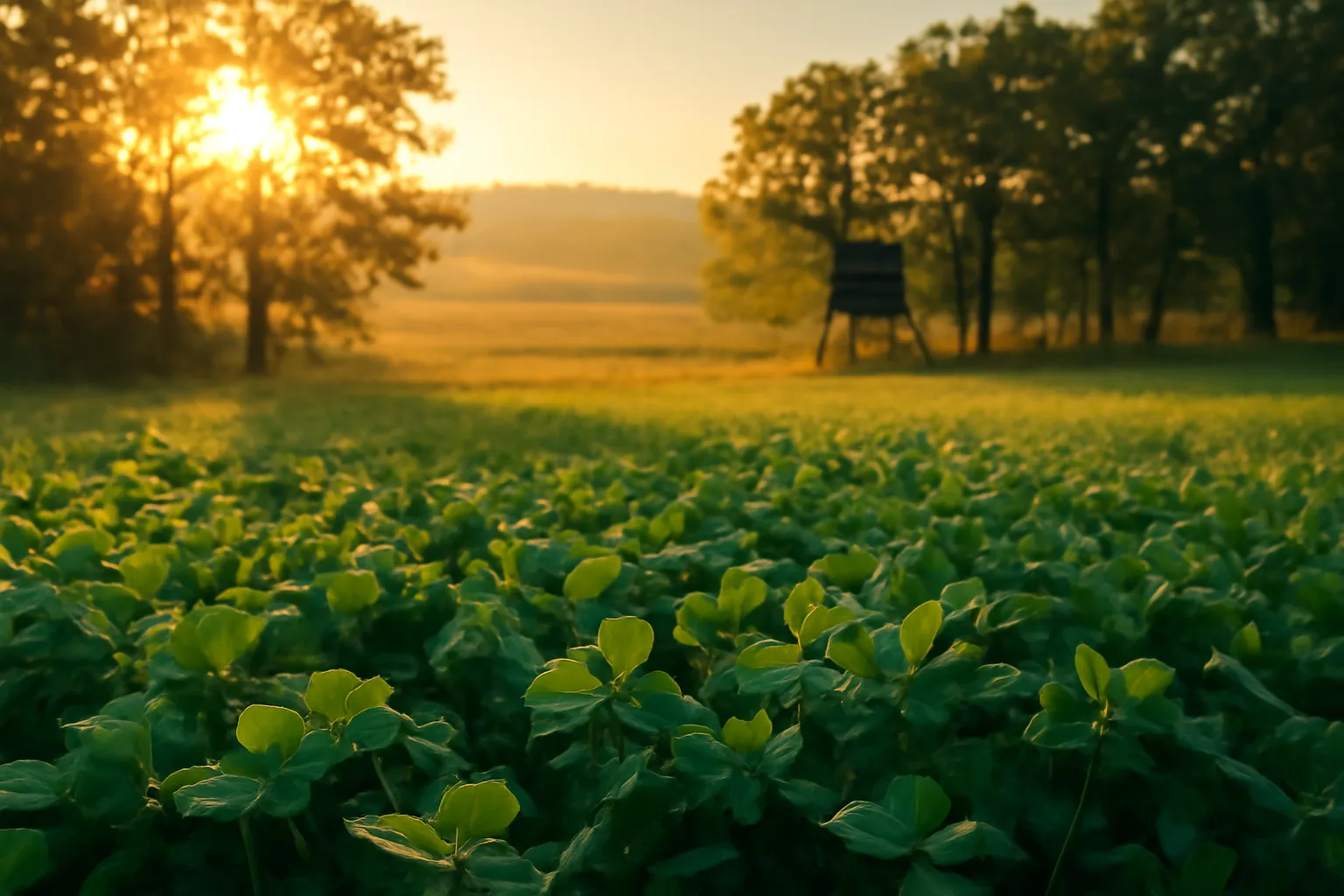
Yes. Missouri allows hunting over standing food plots planted and grown in the ground. What's illegal is hunting over bait, meaning grain, salt, minerals, or other feed placed to attract deer. A plot you planted, fertilized, and let grow is not bait under Missouri Department of Conservation rules, even if you top-dress it with fertilizer.
can you legally hunt over a food plot in missouri?
Yes. Missouri's baiting regulation targets placed feed, not standing crops. The Missouri Department of Conservation defines a baited area as one where salt, minerals, grain, fruit, vegetables, hay, or other food has been placed, exposed, deposited, distributed, or scattered to attract deer or turkey. A food plot that's planted in the soil and grown naturally does not meet that definition, so hunting over it is legal statewide [1]. The distinction MDC draws is between a crop grown in place and feed that's hauled in and dumped. Corn standing in a field is a crop. Corn poured out of a bag onto the ground next to your stand is bait. Same species, completely different legal status. This rule matters because a lot of hunters get nervous about food plots after hearing stories from states with stricter feeding bans. Missouri isn't one of them. You can plant, fertilize, spray, and hunt over your plots without violating baiting law, as long as you're not also dumping loose feed nearby.
what actually counts as baiting in missouri?
Baiting in Missouri means placing grain, salt, minerals, or other consumable products to attract deer or turkey for hunting purposes. MDC's own language: a baited area is any place where feed capable of attracting deer or turkey "has been placed, exposed, deposited, distributed, or scattered" [1]. This covers corn feeders, mineral licks poured on stumps, apple piles dumped in the timber, and similar setups. The rule also has a waiting period. Even after bait is removed, the area stays legally baited for 10 days, according to MDC guidance on baiting for deer and turkey hunting [1]. So if you dump corn on Monday and pull it Wednesday, you can't legally hunt that spot until the following week. Mineral sites deserve a separate mention. A mineral block or loose mineral placed to draw deer in counts as bait under this same rule. That's a different question from food plots, but hunters often lump them together. If you run mineral sites on your property, treat them with the same 10-day rule and keep them well away from any stand you plan to hunt soon.
what's the difference between a food plot and bait?
| Standing clover, brassica, or grain plot | Yes [1] | |
|---|---|---|
| Fertilizer or lime applied to a growing plot | Yes, it's a normal ag input, not feed [1] | |
| Corn or soybeans left standing after harvest | Yes, it's a crop, not placed bait | |
| Corn feeder or pile dumped on the ground | No | |
| Mineral block placed to attract deer | No, treated as bait [1] | |
| Apples or vegetables dumped in the woods | No | The cleanest way to stay compliant is to never haul in loose feed near your plot. If you want supplemental minerals for herd health outside hunting season, that's a management choice, but understand it triggers the bait rule and the 10-day clearance window once season approaches. |
A food plot is a planted crop grown in soil, using normal farming inputs like fertilizer, lime, and herbicide. Bait is loose feed placed on the ground or in a feeder to draw animals in. Missouri law protects the first and prohibits hunting over the second [1]. Here's a simple table that covers the common gray areas hunters ask about. | Practice | Legal to hunt over in Missouri? |
what is a food plot?
A food plot is a planted area, usually somewhere between a quarter acre and a few acres, seeded with forage or grain crops specifically to feed and hold deer or other wildlife. Common food plot species include clover, brassicas (turnips, radishes, rape), cereal grains (oats, wheat, rye), soybeans, and grain sorghum. Food plots serve two jobs on hunting ground. They provide nutrition during stress periods (late summer, winter, antler and fawn development) and they concentrate deer movement in predictable spots you can hunt. A well-placed plot near bedding cover with good wind options can become the single best stand location on a property. Plots fall broadly into two categories: annuals, which you replant every year (oats, brassicas, sorghum), and perennials, which regrow for multiple seasons if maintained (clover, alfalfa, chicory). Most serious plot programs run a mix of both, since perennials save labor and annuals let you target specific seasons like early bow season or the late-season lull. For a broader rundown on species and mixes, see food plot whitetail.
do deer eat sorghum?
Yes, deer eat grain sorghum (milo), both the standing seed heads and the leaves, though it's generally considered a lower preference food compared to soybeans, corn, or brassicas. Sorghum's real value in a food plot program is as a nurse crop and as standing cover that holds up through winter, giving deer a food source and screening cover at the same time. University extension work on wildlife forages notes that grain sorghum is more drought tolerant than corn and can be a practical substitute in dry regions or on marginal soils [2]. Deer will hit it hard in late season once softer, more preferred foods are gone, similar to how they work standing corn. If you're choosing between sorghum and corn for a fall/winter standing plot, corn generally wins on tonnage and deer preference, but sorghum costs less to plant, tolerates drought better, and needs less nitrogen. It's a good second-tier choice, not a first pick if budget and rainfall aren't limiting factors.
do deer eat clover, and do deer like clover?
Yes, deer eat clover readily, and it's one of the most consistently preferred food plot forages available. White clover and red clover are staples across whitetail range because they're high in protein (often 20 to 25 percent crude protein in vegetative stages, per extension forage testing) and they regrow quickly after grazing pressure, unlike a lot of annuals that get mowed to the dirt and stall out. Clover's popularity with deer isn't just anecdotal. It shows up constantly in preference studies and browse surveys as a top choice, especially in spring and early summer when deer need protein for antler growth and lactation. The tradeoff is that clover needs decent soil pH (most extension guides recommend 6.0 to 6.5) and won't tolerate standing water or heavy shade [3]. A well-maintained clover plot, mowed a few times a season and kept weed-free, can produce for 3 to 5 years before it needs to be reseeded. That makes it one of the better cost-per-year options in a food plot program. For seed blend options built around clover and other perennials, check deer food plot seed.
do deer eat turnips, and when should you plant turnips for deer?
Yes, deer eat both the leaves and the bulbs of turnips, though bulb consumption usually doesn't ramp up until after the first hard frost, when cold temperatures convert starches in the bulb to sugars and make it more palatable. Turnips are a brassica, planted in late summer for fall and winter grazing. Most extension guidance and seed suppliers recommend planting turnips 60 to 90 days before your first expected hard frost, which in Missouri generally means a planting window from mid-July through mid-August depending on your region of the state. Southern Missouri can push a little later than the northern tier. A common mistake is expecting deer to hit turnip bulbs early in the fall. They usually go for the leaves first and don't touch the bulbs seriously until after a freeze or two sweetens them up. If you're planting turnips as a late-season food source, don't panic if the plot looks untouched in October. That's normal.
when to plant food plots for deer in missouri (by type)
| Spring clover/chicory establishment | Late March to early May | |
|---|---|---|
| Soybeans (forage plot) | Mid-May to mid-June | |
| Oats (fall plot) | Mid-August to mid-September | |
| Brassicas/turnips | Mid-July to mid-August | |
| Winter wheat or cereal rye | September to early October | Always check your own soil temperature and local frost dates rather than going strictly by calendar date. A soil test taken before planting tells you what fertility work needs doing regardless of timing, and your soil test lab's specific lime and fertilizer recommendations should be the final word over any general calendar. |
Timing depends entirely on whether you're planting a spring/summer plot or a fall plot, and on which region of Missouri you're in. Missouri spans two USDA hardiness zones for practical planting purposes, roughly zone 6a in the north and zone 7a in the southern Bootheel and Ozark border areas [4]. Spring/summer plots (soybeans, clover establishment, chicory, cowpeas) generally go in after your last frost date, which runs from early April in the Bootheel to early May in far northern Missouri, per NOAA climate normals data reflected in USDA zone guidance [4]. Fall plots (brassicas, oats, wheat, cereal rye) go in during late summer, targeting 60 to 90 days before your first fall frost so plants have time to establish before cold shuts down growth. That generally lands in a mid-July to early September window across the state, with northern Missouri planting earlier and southern Missouri having a bit more room to wait. Here's a simplified planting calendar. | Crop type | Missouri planting window |
when should you plant oats for deer?
Plant oats for a fall deer food plot in late summer, typically mid-August through mid-September in most of Missouri, so they have time to establish before the first killing frost while staying tender enough that deer hit them hard through fall and into early winter. Oats are one of the faster-germinating cereal grains, often showing green growth within 7 to 10 days of planting given adequate moisture. Oats don't survive hard winters as well as wheat or cereal rye, so they tend to get grazed down and die off after a few good freezes, which is fine if your goal is an early-to-mid season draw rather than a food source that lasts into February. If you want plot food surviving deep winter, blend oats with wheat or rye, or lean more heavily on brassicas and standing grain. A lot of successful fall plot mixes in Missouri combine oats with a brassica like turnips or radish. The oats germinate fast and give deer something to eat almost immediately, and the brassica leaves and bulbs come on strong later in the season as the oats fade.
what are deer's favorite foods?
Deer preference varies by season, region, and what's available, but consistent standouts across research and field observation include soybeans, clover, chicory, standing corn, and acorns, particularly white oak acorns which deer strongly prefer over red oak acorns due to lower tannin content [5]. Soybeans in the vegetative growth stage are especially attractive during summer stress periods. Seasonally, spring and summer favorites lean toward high-protein green forage: clover, soybeans, and chicory. Fall favorites shift toward energy-dense foods as deer prepare for winter and the rut: acorns, standing corn, soybean pods, and brassica tops. Late winter favorites become whatever's left standing: corn, sorghum, and brassica bulbs after a hard freeze. There's no single universal favorite food, and preference studies from wildlife agencies generally show it's driven heavily by local availability and nutritional need at that time of year rather than one crop being king everywhere. That's part of why a diverse plot program, mixing perennials and annuals across a property, tends to outperform a single-species plot. See deer food plots for planning a mix across a whole property.
do deer like honey?
There's no real evidence deer seek out honey, and it's not a food plot or attractant with any research or extension backing behind it. Deer are herbivores built to process plant fiber, forbs, and mast, not concentrated sugar sources like honey. Some hunters use honey-based or sweet liquid attractant sprays on mock scrapes or drip systems, but that's a scent lure product, not a food source, and it has nothing to do with actual deer diet or food plot planning. If you're trying to draw deer with a sweet scent, understand that's a different tool than a food plot, and depending on how it's used (dripped onto the ground versus sprayed on vegetation or a licking branch), it could brush up against your state's baiting definition if it involves placing edible material. Missouri's bait rule covers food products placed to attract deer, so pouring liquid feed attractants on the ground is worth double-checking against MDC's baiting guidance rather than assuming it's automatically fine [1].
do you need a permit for a food plot in missouri, and are there other rules to know?
No special state permit is required to plant a food plot on private land in Missouri. Normal agricultural activity, including planting, liming, fertilizing, and spraying a food plot, is not regulated as a hunting activity by MDC. The rule you need to watch is the baiting definition covered earlier, not a separate food plot permit [1]. A few practical notes. If you're on leased ground, check your lease terms, since some landowners restrict food plot size or species for farm management reasons. If your property borders public land, be aware MDC prohibits baiting on public conservation areas even more strictly, and some public land rules restrict any supplemental feeding regardless of the private-land baiting definition [1]. Also worth knowing: Missouri's Chronic Wasting Disease management zones carry feeding and mineral restrictions in some counties that go beyond the general baiting rule, aimed at limiting deer congregation and disease spread. Check MDC's current CWD regulations for your county before setting up any mineral site or supplemental feed station, even outside hunting season .
how do you build a food plot plan for your property?
Start with a soil test. Every serious food plot program begins there, because pH and nutrient levels determine what will actually grow, and guessing wastes seed money and a planting season. University extension soil testing labs, including the University of Missouri, offer affordable testing that gives you specific lime and fertilizer recommendations for your exact soil [3]. Once you have soil data, match species to your goals and your calendar. A quarter-acre clover plot near thick bedding cover serves a different purpose than a five-acre brassica field along a field edge. Think about sunlight, drainage, deer access routes, and your own stand or blind placement before you ever pick seed. If you want a starting point without guessing on species mix or acreage, PlotSeason's $99 one-time Custom Food Plot Plan builds a general plan around your region, soil test results, and property goals. It's general guidance built from your inputs, not a site visit or a substitute for your soil test lab's specific lime and fertilizer numbers, but it gives you a real starting framework instead of picking a bag off a shelf and hoping.
Frequently asked questions
is it legal to hunt over a food plot in missouri?
Yes. Missouri's baiting regulation prohibits hunting over placed feed like grain piles, minerals, or feeders, but a standing food plot grown in the soil is not considered bait. You can plant, fertilize, and hunt over food plots throughout the state under current MDC rules [1].
can you use a feeder over a food plot in missouri?
No. A feeder dispensing corn or other grain counts as bait under MDC's definition, regardless of whether it sits in or near a food plot. Hunting near an active feeder, or one used within the past 10 days, violates Missouri's baiting rule even if the surrounding plot itself is legal [1].
do deer eat sorghum in food plots?
Yes, deer eat both sorghum leaves and seed heads, though it ranks below corn and soybeans in preference. Sorghum's main advantages are drought tolerance and lower input cost, making it a solid late-season standing crop choice on marginal or dry ground [2].
do deer like clover better than other food plot crops?
Clover is consistently one of the top-preferred food plot forages, especially in spring and summer when deer need high protein (often 20 to 25 percent crude protein) for antler growth and lactation [3]. It's not universally 'the favorite,' since preference shifts seasonally toward acorns and grain in fall and winter.
when should you plant food plots for deer in missouri?
Spring/summer plots (soybeans, clover) go in after last frost, roughly early April in southern Missouri to early May up north. Fall plots (oats, brassicas, wheat) go in mid-July through September, timed 60 to 90 days before first fall frost so they establish before cold weather stops growth [6].
when do you plant turnips for a deer food plot?
Plant turnips 60 to 90 days before your area's first expected hard frost, generally mid-July through mid-August in Missouri. Deer usually eat the leaves first and don't hit the bulbs hard until after a freeze converts starches to sugar, so don't expect heavy bulb use before late fall [5].
when should oats be planted for deer food plots?
Plant oats mid-August through mid-September in most of Missouri for a fall food plot. Oats germinate fast, often within 7 to 10 days, but don't survive hard winters as well as wheat or rye, so they work best as an early-to-mid fall draw rather than a food source meant to last into deep winter.
what exactly is a food plot?
A food plot is a planted area of forage or grain crops, typically clover, brassicas, cereal grains, or soybeans, established specifically to feed wildlife and concentrate deer activity in a huntable location. Plots range from small perennial clover patches under an acre to larger annual grain fields of several acres.
what is a deer's favorite food?
There's no single universal favorite. Deer strongly prefer white oak acorns over red oak acorns, and they favor soybeans and clover during spring and summer growth stages. Preference shifts by season and local availability, which is why diverse food plot programs generally outperform single-species plots [7].
do deer like honey or sweet attractants?
There's no research support for deer seeking out honey as a food source; they're herbivores adapted to plant fiber and forage, not concentrated sugars. Sweet liquid attractant products marketed for scrapes are scent lures, not food, and are a separate category from food plot planning entirely.
does fertilizing a food plot count as baiting in missouri?
No. Fertilizer and lime are normal agricultural inputs used to grow a crop, not feed placed to attract deer, so applying them doesn't trigger Missouri's baiting rule. The rule targets loose grain, minerals, or other consumable products placed on the ground to draw animals in [1].
how long does a baited area stay illegal to hunt in missouri after bait is removed?
Missouri considers an area baited for 10 days after all bait has been completely removed, per MDC guidance on baiting for deer and turkey hunting. That means pulling a feeder or bait pile doesn't make the spot legal to hunt again immediately; you need to wait out the full 10-day window [1].
are mineral sites considered bait in missouri?
Yes. Mineral blocks or loose mineral placed to attract deer fall under Missouri's baiting definition the same way grain does. If you run mineral sites for herd health, plan to stop well before season and observe the same 10-day clearance rule that applies to grain bait [1].
Sources
- Missouri Department of Conservation, Baiting Regulations for Deer and Turkey Hunting: Definition of a baited area and the 10-day post-removal waiting period for hunting over bait in Missouri
- University of Georgia Extension, Wildlife Food Plots: Grain sorghum as a drought-tolerant, lower-input alternative to corn in wildlife food plots
- University of Missouri Extension, Soil Testing: University of Missouri offers soil testing services that generate site-specific lime and fertilizer recommendations, and clover generally needs pH 6.0-6.5
- USDA Forest Service, Wildlife Habitat Management: Oaks and Mast Production: White oak acorns have lower tannin content and are more preferred by deer than red oak acorns
- Missouri Department of Conservation, Chronic Wasting Disease Management: Missouri CWD management zones carry additional feeding and mineral restrictions beyond the general statewide baiting rule