Last updated 2026-07-25
TL;DR
Yes. Pennsylvania allows hunting over food plots because a planted, growing crop is not considered bait under state law. Baiting (piles of corn, apples, minerals, etc.) is illegal statewide. The key legal distinction is whether the food is a standing agricultural planting versus feed placed or exposed on the ground.
Can you hunt over a food plot in PA?
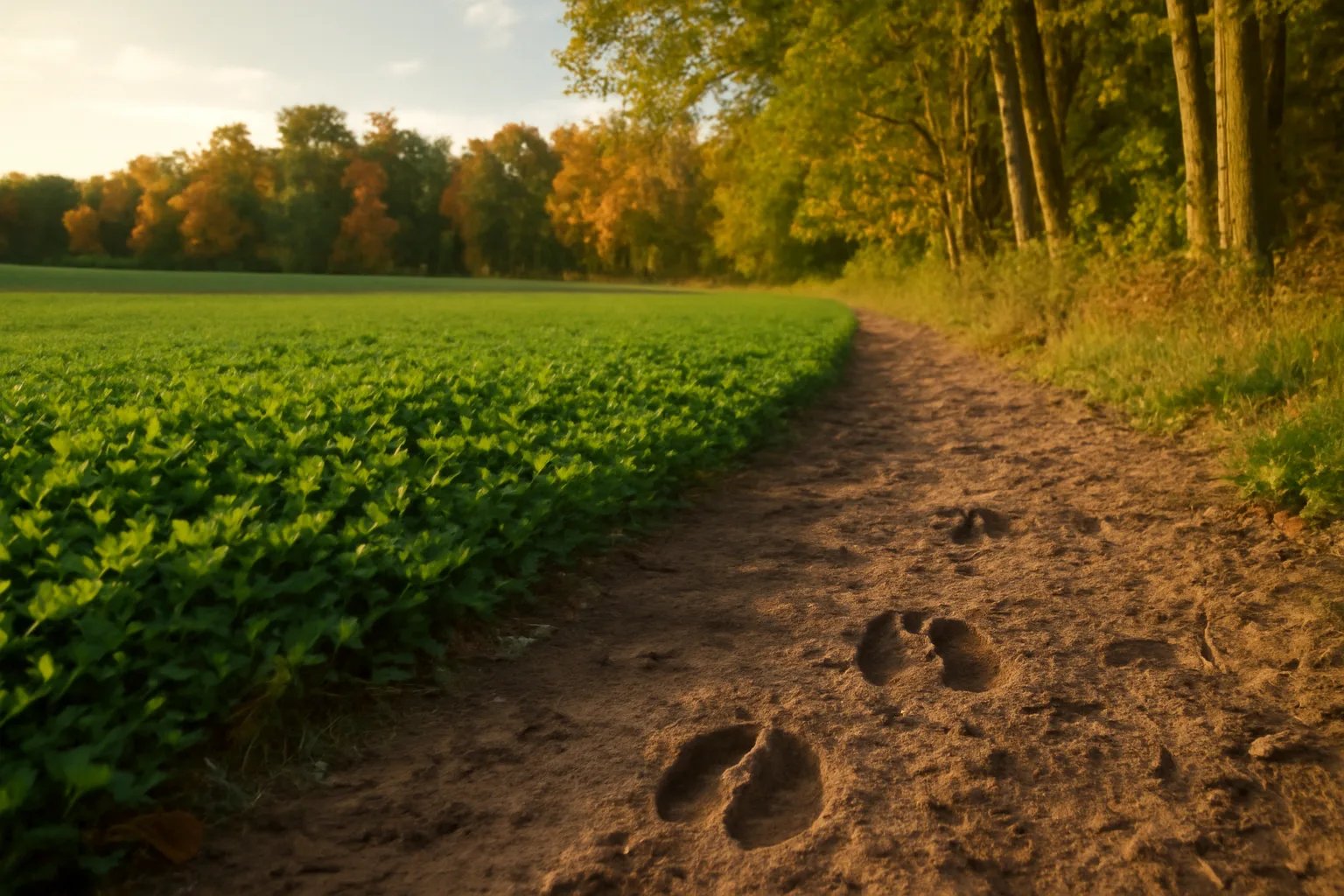
Yes. Pennsylvania's baiting law specifically exempts standing crops and food plots from the definition of illegal bait. The Pennsylvania Game Commission defines baiting as placing or scattering feed, salt, minerals, or other consumable attractants to lure game, and its regulations explicitly separate that activity from normal agricultural practices, including planted food plots left standing in a field. The relevant law is Title 34 of the Pennsylvania Consolidated Statutes, the Game and Wildlife Code, and the Game Commission's regulations under Title 58 of the Pennsylvania Code. Under 58 Pa. Code Section 141.1, hunting over agricultural crops, including food plots planted for wildlife, is legal, while hunting by the aid of bait (grain, minerals, or other food placed by hand) is not [1]. So if you drilled clover, planted a brassica blend, or put in a soybean plot for deer, you can hunt over it exactly like you'd hunt a standing cornfield or alfalfa field. The crop growing in the ground is the difference maker. Nobody hauled a bag of corn out there and dumped it by a stump. That's the line PA draws, and it's consistent with how most Midwest and Northeast states treat plots versus bait. For a rundown on plot types that work well in PA soils and season lengths, see food plot whitetail.
What counts as illegal baiting in Pennsylvania?
Baiting in Pennsylvania means placing, exposing, distributing, or scattering feed, salt, minerals, or other food to attract game to a specific spot for the purpose of hunting over it. This covers corn piles, apple piles, salt or mineral blocks, commercial deer attractant powders scattered on the ground, and gravity feeders. The Game Commission's baiting regulation (58 Pa. Code Chapter 141) prohibits hunting big game, small game, or furbearers by the aid of bait, and it defines bait broadly enough to include any food placed for the purpose of attracting wildlife within legal hunting range [2]. Violating the baiting law is a summary offense that can carry fines, and repeated or aggravated violations can trigger license revocation. The practical test wildlife officers use isn't really about intent, it's about placement. If you carried it in and put it somewhere it wouldn't otherwise grow, that's bait. If it's rooted in the ground where you planted it, that's a crop. A pile of shelled corn under a tree stand is bait. A standing food plot of corn, even a small quarter-acre patch, is not.
What is a food plot, exactly?
A food plot is a planted area, usually somewhere between a quarter acre and several acres, seeded with forage crops specifically to feed and hold deer or other wildlife on a property. Common food plot species include clover, chicory, brassicas (turnips, radishes, rape), cereal grains (oats, wheat, rye), soybeans, and grain sorghum. Food plots serve two jobs on hunting land. They give deer a consistent, higher-quality food source than what they'd naturally forage, and they concentrate deer activity in a predictable spot so hunters can set stands nearby. Food plots work as a supplemental habitat tool, not a replacement for natural browse, and they perform best paired with broader habitat work like forest stand improvement and edge feathering. The legal status of a plot (versus bait) comes from the fact that it's an agricultural planting, grown in place, not a food source hauled in and dumped. That's true whether you're running a 40-acre lease or a half-acre kill plot tucked into timber. For seed selection across different plot goals, check deer food plot seed and food plot seed.
Do deer eat clover?
Yes, and it's one of the most reliable food plot crops available. Clover is high in protein (often 20 to 30 percent crude protein depending on variety and growth stage) and deer hit it hard from spring green-up through fall, then again in early spring the following year since most clovers are perennial [3]. White clover (including ladino types) and red clover are the two most common choices. Ladino clover tolerates some shade and holds up to grazing pressure well, which matters if you've got a heavy deer herd hammering a small plot. Red clover grows a bit taller and handles poorer, more acidic soils better, but it's shorter-lived, usually two to three years before you need to reseed. Clover plots need decent soil fertility to perform. Extension soil fertility guidance points to a target pH near 6.0 to 6.5 for clover, with phosphorus and potassium levels adjusted based on a soil test [4]. If your test comes back needing 2 tons of lime per acre, that's not unusual for a lot of PA's naturally acidic soils, especially in the ridge and valley region.
Do deer like honey?
Deer don't eat honey itself in any meaningful way as a food source, but they're drawn to sweet, sugary scents and some hunters use honey-based or molasses-based attractant sprays for that reason. There's no real food plot angle here since honey isn't a plantable crop. If you're thinking of commercial "honey hole" attractant products, those typically use sugar, molasses, or anise scent to draw deer to a mock scrape or licking branch rather than functioning as a food plot ingredient. Keep in mind that pouring liquid attractant on the ground or a stump crosses into bait territory in a lot of states, PA included, if it functions as a food attractant placed for hunting purposes. Stick to plot crops for feeding and legal attractants used according to label directions and state regulation for scent work.
Do deer eat sorghum?
Yes. Grain sorghum (milo) is a solid late-season food plot option because deer eat the seed heads through fall and winter, and the standing stalks provide cover at the same time as food, which is a nice two-for-one in open PA farmland. Sorghum handles drought and poor soil better than corn, and it costs less per acre in seed. The USDA NRCS plant guide for grain sorghum notes the crop tolerates a wider soil pH range and lower fertility than corn while still producing a reliable grain yield [5], which makes it a forgiving choice if you're working thin ridge-top soil that struggles to hold moisture. The tradeoff is time. Sorghum needs a full growing season, generally planted late May through June in Pennsylvania depending on your zone, and it needs 100 to 120 frost-free days to mature grain heads. Plant it too late and you get green stalks with no grain by first frost.
When to plant food plots for deer in Pennsylvania
| Clover (perennial) | Early spring or late summer | High once established | |
|---|---|---|---|
| Soybeans | Mid-May to early June | Low, frost kills | |
| Grain sorghum | Late May to mid-June | Low | |
| Oats | Mid-August to early September | Moderate, dies hard freeze | |
| Brassicas/turnips | Mid-August to early September | Very high, improves with frost | |
| Cereal rye/wheat | Late August to October | Very high | For a broader seasonal planting breakdown across regions, see deer food plots. |
Timing splits into two windows: spring plots (May through early June) for warm-season annuals and perennials, and late-summer plots (mid-August through early September) for fall annuals and brassicas. Pennsylvania spans two USDA plant hardiness zones for most agricultural land, roughly zone 5b to 6b depending on elevation and latitude, which shifts planting dates by a week or two across the state. Spring plantings (clover, chicory, soybeans, corn, sorghum) generally go in after your last frost date, which runs from early May in southeastern PA to late May or even early June in the higher elevations of the north-central counties. Perennial clover seeded in spring gives you a full season to establish roots before winter. Late-summer plantings (brassicas, oats, wheat, cereal rye) go in 6 to 10 weeks before your first hard frost so the plants have time to grow enough leaf mass before cold weather hits and sugar content in brassicas spikes (which is what makes deer suddenly hit them hard in late October and November). For most of Pennsylvania that means planting brassicas and cereal grains between mid-August and early September. | Plot type | Planting window in PA | Frost tolerance |
When to plant oats for deer
Plant oats in Pennsylvania between mid-August and mid-September for a fall food plot, giving them 60 to 90 days to establish before hard frost shuts down growth. Oats are a fast-germinating cereal grain, often showing green shoots within 5 to 7 days of planting, and deer will hit young oat plots almost immediately. Oats don't survive hard winters as well as wheat or cereal rye. They'll take a light frost fine and actually get sweeter with cool weather, but a sustained hard freeze typically kills the plant back for good, unlike rye which can survive into a second spring. That makes oats a great short-term, high-attraction fall plot but not a long-season option if you want green forage into late winter. A lot of hunters blend oats with brassicas or with cereal rye/wheat in the same plot. The oats come up fast and give deer something to eat right away while the slower brassicas bulb up, and the rye or wheat in the mix carries the plot's food value into winter after the oats die off.
When to plant turnips for deer
Turnips go in the ground in Pennsylvania between mid-July and late August, roughly 80 to 90 days before your expected first hard frost, since the plant needs that much time to grow both leaf mass and a usable bulb. Plant too late and you get leaves but no bulb; plant too early in hot, dry August weather and germination can be spotty without rain. Turnips are a brassica, and deer often ignore the bulbs early in fall, focusing on the leafy tops instead, then switch to digging up and eating the bulbs after a few hard frosts convert starches to sugars. This delayed-attraction pattern trips up first-time plot planters who check their turnip plot in October, see untouched bulbs, and assume the plot failed. Give it until late November or December. Extension forage trial data on brassicas shows crude protein in turnip tops commonly running 15 to 25 percent, with bulbs adding a starchy energy source once frost sweetens them. Seeding rate matters more with turnips than a lot of hunters realize. Broadcasting turnip seed too heavy wastes seed and produces spindly bulbs from overcrowding; most extension guidance recommends 4 to 6 pounds of pure turnip seed per acre when planted alone.
Do deer like clover, and is it deer's favorite food?
Clover ranks as one of deer's most consistently preferred food plot forages, but it's not accurate to say deer have one single favorite food since preference shifts by season, region, and what's available naturally. Deer are opportunistic browsers, and research on whitetail diet composition shows forbs, woody browse, mast (acorns), agricultural crops, and food plot forages all show up in stomach content studies depending on time of year [6]. That said, if you forced a ranking based on food plot performance and consistent deer use across the whitetail range, clover, soybeans, and standing corn usually top most surveys and extension recommendations for attraction and nutrition combined. Acorns often beat all of it in years with a strong mast crop, since deer will abandon plots entirely to hammer a good white oak drop. So the honest answer: clover is a top-tier, reliable, high-use food plot crop, but calling anything a deer's single favorite food ignores how much natural mast and regional forage availability change deer behavior year to year.
How does PA's baiting law affect where you place a plot and stand?
The food plot itself is legal to hunt over regardless of size or location, but you still need to keep any separate bait (mineral licks, corn piles, feeders) off your property entirely if you plan to hunt there, since PA law doesn't allow hunting anywhere on a property where bait has been placed within a certain proximity and timeframe in some interpretations, so the safest practice is simply not baiting at all if you hunt. Under 58 Pa. Code Chapter 141, the law prohibits taking or attempting to take game by the aid of baiting, and defines a baited area broadly [2]. Wardens have discretion on enforcement, and a lot of complaints in PA come from mineral sites or feeders left up during archery or firearms season, not from food plots. If you run trail cameras over a plot, treat it the same as you would over standing corn: totally fine. One gray area worth knowing: leftover grain from a harvested agricultural field (like a combined cornfield with scattered kernels on the ground) is generally treated as normal agricultural practice, not bait, in most state interpretations, but check with your regional PGC office if you're unsure about a specific field situation, since local wardens can clarify how a particular scenario reads under current guidance.
Building a plot plan for your ground
None of this legal clarity matters much if the plot itself fails because of bad soil, wrong species for your shade and moisture, or a planting date that missed the window for your zone. A soil test from your county extension office or a private ag lab is the real starting point, not a seed bag label. Your lab's lime and fertilizer recommendations are specific to your soil, and they're the authority on rates, not a general guide like this one. Once you know your pH and nutrient levels, matching species to your site (shade tolerance, drainage, deer pressure, plot size) is where a lot of PA properties get it wrong. A north-facing half-acre plot boxed in by hardwoods needs different species than a sunny 3-acre ag field opening. If you want a structured starting point instead of guessing, PlotSeason's $99 one-time Custom Food Plot Plan builds a species and planting-date plan around your soil test results and property specifics through the plot-plan-builder. It's general guidance built from your inputs, not a site visit or a guarantee of deer activity, but it saves the trial-and-error a lot of first-time plotters go through. For picking between annual and perennial mixes for your specific setup, deer for food and domain food plot seed break down species tradeoffs in more depth.
Frequently asked questions
Can you hunt over a food plot in PA?
Yes. Pennsylvania law treats a planted food plot as a standing agricultural crop, not bait, so hunting over it is legal statewide. The distinction is that the food is rooted in the ground where it grew, not placed or scattered by hand. Illegal baiting (corn piles, mineral licks, scattered feed) is a separate, prohibited activity under PGC regulation.
Is baiting deer illegal in Pennsylvania?
Yes, baiting is illegal statewide in Pennsylvania. State regulation under 58 Pa. Code Chapter 141 prohibits hunting big game, small game, or furbearers with the aid of bait, including corn, minerals, salt, or other placed feed. Violations are summary offenses that can carry fines and potential license consequences.
Do deer eat sorghum?
Yes, deer readily eat grain sorghum (milo) seed heads, especially in late fall and winter once other food sources thin out. Sorghum tolerates drought and poor soil better than corn, making it a solid late-season plot option on thin or sandy Pennsylvania ground, though it needs 100 to 120 frost-free days to mature.
Do deer eat clover?
Yes, clover is one of the most reliable and heavily used food plot crops for deer, offering 20 to 30 percent crude protein depending on variety. White (ladino) and red clover are the most common choices, with deer using clover from spring green-up through fall and again the following spring since it's perennial.
When should you plant deer food plots?
Spring plots (clover, soybeans, corn, sorghum) go in after last frost, generally early May to early June in Pennsylvania. Fall plots (brassicas, oats, cereal rye) go in mid-August through early September, timed 6 to 10 weeks before first hard frost so plants establish enough growth before cold weather arrives.
Do deer like clover more than other food plot crops?
Clover ranks near the top for consistent deer use and nutrition, but deer don't have one single favorite food. Preference shifts seasonally; acorns often outcompete any food plot crop during a strong mast year, and soybeans or standing corn can pull deer away from clover in late summer and fall.
When should you plant oats for deer?
Plant oats in Pennsylvania between mid-August and mid-September, giving 60 to 90 days before hard frost. Oats germinate fast, often within a week, and deer hit young shoots quickly. They don't survive hard winters like cereal rye does, so they work best as a fast fall attraction crop, often blended with slower brassicas.
When should you plant turnips for deer?
Plant turnips in Pennsylvania between mid-July and late August, about 80 to 90 days before first hard frost, so bulbs have time to develop. Deer often ignore turnip bulbs early in fall and switch to eating them heavily after several hard frosts sweeten the starches, typically late November into December.
What is a food plot?
A food plot is a planted patch, typically a quarter acre to several acres, seeded with forage crops like clover, brassicas, cereal grains, or soybeans specifically to feed and concentrate deer or other wildlife on a property. Plots supplement natural browse and give hunters a predictable spot to place a stand nearby.
What is deer's favorite food?
There's no single favorite; whitetail diets shift by season and region. Acorns and other mast often top preference when available, followed by agricultural crops like soybeans and corn, then food plot forages like clover and brassicas, and woody browse and forbs the rest of the year based on state and university diet studies.
Do deer like honey?
Not as a food source in any real sense. Deer are drawn to sweet scents, which is why some commercial attractant sprays use honey or molasses bases to pull deer to a scrape or licking branch. There's no food plot application for honey itself since it isn't a plantable crop.
Does a food plot count as bait under Pennsylvania law?
No. Pennsylvania's baiting regulation exempts standing agricultural crops, including food plots, from the definition of bait. The Game Commission distinguishes between planted crops grown in place and feed that's been placed, scattered, or exposed by hand to attract game, with only the latter classified as illegal baiting.
Can you use a game feeder along with a food plot in PA?
No. Feeders that dispense corn or other feed are considered baiting under Pennsylvania regulation and are illegal to hunt over, regardless of whether a legal food plot exists nearby on the same property. Keep feeders and mineral sites off any land where you plan to hunt.
Sources
- Pennsylvania Code, Title 58, Section 141.1 (Definitions, Baiting): Food plots and standing agricultural crops are legal to hunt over, while placed bait is not
- Pennsylvania Code, Title 58, Chapter 141 (Hunting and Trapping): Baiting is defined and prohibited under state hunting regulation
- Penn State Extension, Wildlife Food Plots publication (Agronomy Guide): Food plots are a supplemental habitat tool, not a replacement for natural browse and habitat management
- Penn State Agronomy Guide, Forage Legumes (Clover): Clover crude protein content and use as a food plot forage
- Penn State Extension, Soil Fertility Management for Agronomic Crops: Recommended soil pH range of roughly 6.0 to 6.5 for clover establishment
- USDA NRCS, Grain Sorghum Plant Guide: Grain sorghum tolerates a wider pH range and lower soil fertility than corn
- Penn State Agronomy Guide, Brassica Forage Crops: Turnip crude protein content in tops and bulb sugar conversion after frost
- Pennsylvania Game Commission, 2023-2024 Pennsylvania Hunting & Trapping Digest: Whitetail diet composition shifts seasonally among forbs, mast, browse, and agricultural crops