Last updated 2026-07-26
TL;DR
Cereal grains (oats, rye, wheat) and forage soybeans handle sandy soil best because they tolerate drought and low fertility better than clover or brassicas alone. Cowpeas and sorghum also do well. Sandy ground needs more frequent, lighter fertilizer applications since nutrients leach fast, and a current soil test matters more here than on loam.
What food plot seed grows good in sandy soil?
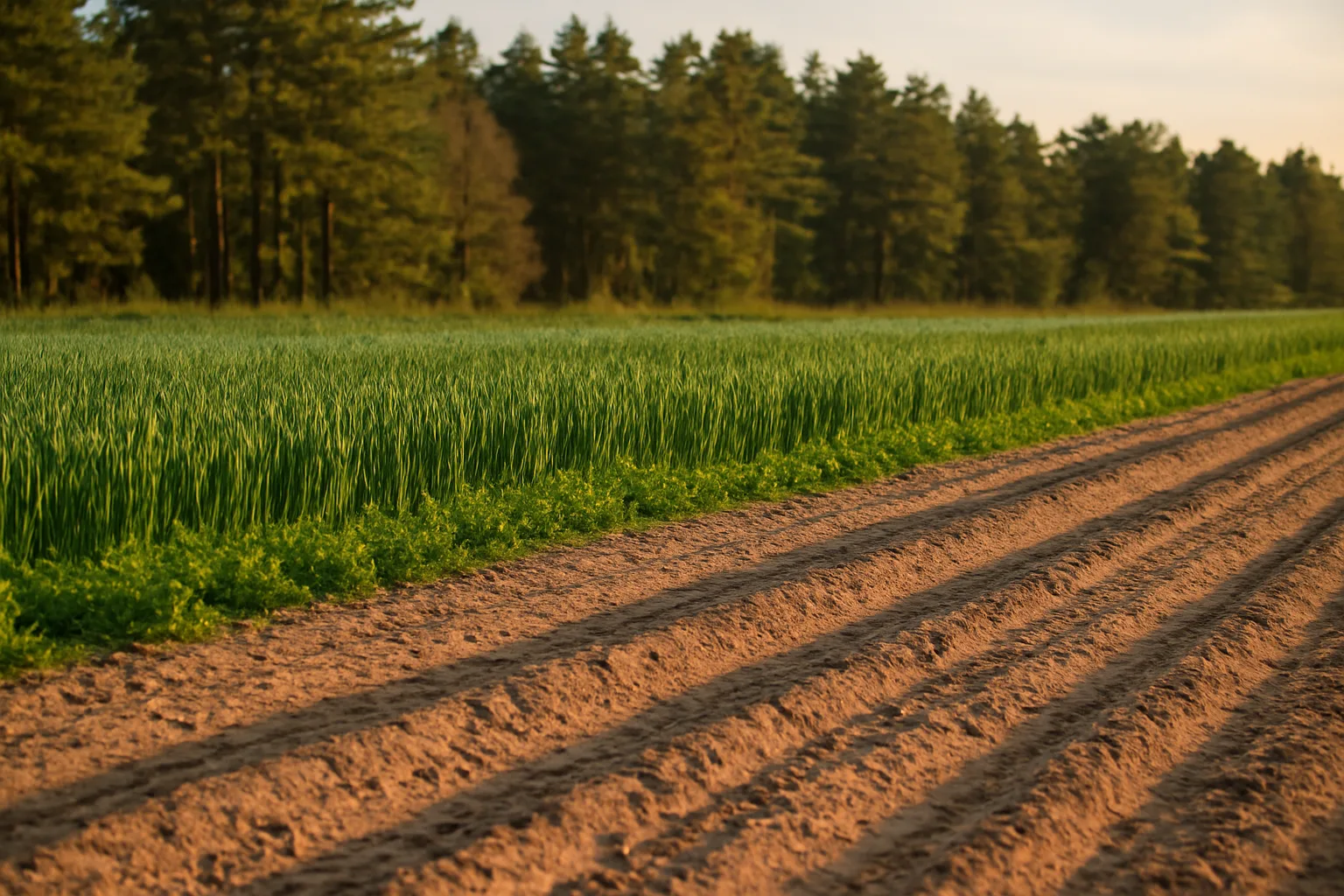
Cereal rye, oats, and wheat are the most forgiving seeds for sandy soil because they germinate fast, root deep enough to chase moisture down, and don't demand much from a soil that can't hold nutrients well. Forage soybeans and cowpeas also do fine once established, and grain sorghum tolerates drought better than almost anything else you'd plant for deer. Sandy soil drains water fast, which means whatever you plant needs to either root deep quickly or tolerate short dry spells between rains. It also means fertilizer and lime leach through the profile faster than on clay or loam, so nutrients you apply this spring might not still be there in August [1]. That changes how you think about seed selection. You're more than picking what deer like best. You're picking what will actually survive the swings between soaked and bone dry that sandy ground goes through. Clover, chicory, and brassicas can all grow in sandy soil, but they need more attention: more frequent light fertilizer splits, irrigation if you have it, and realistic expectations about stand thinning during dry months. If you want a lower-maintenance option, lean toward the cereal grains and legumes below. A lot of guys hunting sandy river-bottom ground or pine country in the Southeast or Upper Midwest sand belts run into this exact problem. The fix isn't a magic seed, it's matching species to what sandy soil can and can't hold onto.
Do deer eat sorghum?
Yes, deer eat grain sorghum, both the standing grain heads and the young green growth, though it's usually planted as much for its drought tolerance and cover value as for its palatability. Sorghum roots deep and handles poor, sandy, low-fertility ground about as well as any food plot crop available. Sorghum (milo) isn't at the top of most deer preference lists compared to soybeans or acorns, but it earns its place in a sandy-soil rotation because it survives conditions that would wipe out corn or clover. It's often used as a nurse crop or mixed with other species to add structure and screening cover, which matters if you're also trying to keep a plot from turning into an open feeding station visible from the road. USDA's plant guide for sorghum notes it's adapted to a range of soils including sandy and droughty sites, and it needs less water than corn to produce a grain crop [2]. If your main goal is tonnage of highly attractive forage, sorghum isn't the first choice. If your goal is something that survives August on sand with zero irrigation, it's worth a look.
Do deer eat clover and do deer like clover?
Yes, deer eat clover readily and it's consistently one of the most preferred food plot forages, but on sandy soil it needs real management: more frequent fertilization, careful pH correction with lime, and acceptance that stands may stress harder in dry summers than on heavier soil. Clover is a legume, so it fixes its own nitrogen once established, which is a real advantage on sandy ground where nitrogen leaches fast. The catch is that clover needs decent soil moisture to germinate and establish, and sandy soil dries out quickly at the surface. Extension programs commonly recommend frost-seeding or drilling clover shallow, no deeper than a quarter inch, since deep planting in loose sandy soil kills germination rates. Clover also needs soil pH in the 6.0 to 7.0 range to perform well, and sandy soils in a lot of regions run naturally acidic. Lime is the fix, but it moves slowly, so get a soil test done well ahead of planting and apply lime months in advance if you can. Your soil test lab's recommendation is the real authority here. Sand composition varies a lot between, say, Wisconsin's sand plains and Georgia's coastal flatwoods, and a generic rule of thumb won't account for that. Once clover is established on sandy soil, split your nitrogen (if you're using any beyond what the legume fixes) and potash applications into two or three smaller doses through the season rather than one heavy shot in spring. That matches nutrient release to what the plant can use before it leaches past the root zone.
What is a food plot?
A food plot is a planted area of forage crops on hunting land, managed specifically to feed deer or other wildlife and to concentrate their activity in a spot a hunter can watch or hunt. Plots range from quarter-acre kill plots tucked in timber to multi-acre agricultural-style fields. Food plots aren't a wildlife feeding program in the same legal sense as bait piles, spin feeders, or mineral licks, though state rules on what counts as "baiting" versus a legitimate planted crop vary a lot and matter here. Standing food plots are generally legal everywhere and treated differently from bait, but always check your state wildlife agency's current regulations before hunting over or near one, since definitions of baiting differ by state and can include distance requirements from stands or specific banned substances [3]. The basic idea behind a plot is simple: give deer a reliable, nutritious food source, ideally one that fills gaps in natural forage during stress periods (late summer drought, post-rut winter, or early spring green-up), and place it where wind, access, and stand setup let you hunt it without blowing your best deer's pattern. For a broader rundown on food plot basics and setup, see food plot whitetail.
What are deer's favorite foods, and does that change on sandy soil?
Deer strongly prefer acorns, soybeans, and clover among plot and natural forage options, but preference doesn't override what a site can actually grow. On sandy soil, the smart move is picking from the preferred list that also tolerates drought and low fertility, more than chasing the single most palatable species on paper. Whitetail deer are generalist browsers, and studies tracking rumen contents and forage use consistently show acorns and other hard mast are heavily selected in fall when available, with agricultural crops like soybeans and clover ranking high where accessible [4]. But a perfect clover stand that thins out and dies in a July dry spell on sand feeds nothing. A slightly less "favorite" but tougher stand of forage soybeans or a cowpea-sorghum mix that survives the summer feeds deer all season. So the real answer for sandy ground: soybeans (forage type, not necessarily grain type) are both highly preferred and reasonably drought-tolerant once past the seedling stage, making them one of the better matches between what deer want and what sand can support. Cowpeas are similar. Straight brassica turnip or radish stands rank lower on drought tolerance and are better as a fall-focused planting after summer heat breaks.
Do deer like honey (honeysuckle, honey locust, and other 'honey' plants)?
Deer don't eat honey itself, but they do browse several plants with "honey" in the name: honeysuckle vine and shrub leaves are a preferred browse in many regions, and honey locust pods are a favorite fall and winter food where the trees grow. Neither is a typical food plot seed, but both matter for habitat context. Japanese honeysuckle, an invasive vine in much of the eastern U.S., is heavily browsed by deer and can actually indicate high deer density in an area since deer will hammer it down to a low browse line. Honey locust trees drop long, sugary pods in fall that deer, along with other wildlife, eat readily. Some land managers plant honey locust as a mast tree specifically for this reason, though it's a multi-year investment, not a seasonal plot crop. If you're asking this question because you've heard of "honey hole" plots or honey-based deer attractants, note that commercial molasses or sugar-based deer attractants are a different category from food plot seed entirely, and some states restrict their use under baiting rules [3]. Stick to planted forage for a legal, sustainable food source rather than leaning on attractant products.
When to plant food plots for deer (and how sandy soil changes timing)?
Spring plots (soybeans, cowpeas, sorghum, spring clover) generally go in after your last frost date, typically April through June depending on latitude. Fall plots (brassicas, cereal grains, clover overseeds) go in roughly 60 to 90 days before your first fall frost, often August through early October across most of the whitetail's range. Sandy soil shifts these windows slightly because it warms up faster in spring (good, lets you plant a little earlier) but also dries out faster (bad, so timing around actual rain rather than the calendar date matters more). If you're drilling or broadcasting into sand right before a dry stretch, you can lose the whole planting to poor germination even if you hit the "right" calendar week. Check your county's average frost dates through NOAA's climate normals data, since these vary widely. First frost in northern Minnesota can hit by mid-September while parts of the Gulf Coast don't see frost until December [5]. Watching the ten-day forecast for a real rain window is worth more on sandy ground than sticking rigidly to a printed calendar date.
When to plant oats for deer?
Oats are almost always planted as a fall food plot crop, typically 6 to 8 weeks before your average first frost date, so most of the country is looking at late August through September. Oats germinate fast, often within 7 to 10 days in warm soil, which makes them a strong early-attraction crop on sandy ground where you want quick cover of bare dirt before it erodes or weeds take over. Oats aren't very cold-hardy compared to cereal rye or winter wheat, so in far northern climates they'll often die back hard after the first serious freeze, while rye keeps growing into winter. That's actually fine for a lot of hunters, since oats peak in palatability during early fall bow season exactly when you want deer using the plot most. On sandy soil, oats benefit from a starter dose of nitrogen and phosphorus at planting since sand holds so little residual fertility from a prior crop. University of Georgia Extension guidance on small grain forage production generally recommends 40 to 60 pounds of nitrogen per acre split between planting and a fall topdress for grain and forage oats, though your specific soil test numbers should drive the real rate . Oats work well seeded with a companion clover as a fall nurse crop combo too.
When to plant turnips for deer?
Turnips are a fall brassica, planted roughly 80 to 100 days before your first expected hard frost so the bulbs and tops have time to mature before deer start hitting them hard, usually meaning a July through early August planting window in most whitetail range. Turnips need that long runway because their palatability actually improves after a couple of frosts convert starches to sugars in the leaves and bulbs, which is why plots planted too late (or too early, and past their prime by frost) both underperform. On sandy soil, turnip seed is tiny and needs good seed-to-soil contact at a very shallow depth, generally a quarter inch or less. Too deep in loose sand and germination drops fast. Turnips also want decent fertility, particularly phosphorus and potassium, to bulb out well, and sandy soil's poor nutrient holding capacity means a light, split application often outperforms one heavy dose that partly leaches away before the plant can use it. If your soil test shows sandy ground running low pH, correct that with lime months ahead since brassicas struggle in acidic soil below about pH 5.5.
Which seed mixes actually work on sandy soil? A quick comparison
| Species | Drought tolerance on sand | Deer preference | Best planting season | Notes | |
|---|---|---|---|---|---|
| Cereal rye | Very high | Moderate | Fall | Most cold and drought tolerant cereal grain, great erosion cover on loose sand | |
| Oats | Moderate-high | High (fall) | Fall | Fast germination, dies back hard after freeze | |
| Forage soybeans | Moderate (once established) | Very high | Spring/summer | Needs decent moisture at germination, tough once rooted | |
| Cowpeas | High | High | Spring/summer | Legume, fixes nitrogen, handles heat and sand well | |
| Grain sorghum | Very high | Moderate | Spring/summer | Best pure drought crop, doubles as screening cover | |
| Clover (white/red) | Low-moderate | Very high | Spring or fall | Needs consistent moisture and pH correction, more maintenance on sand | |
| Brassicas (turnip/radish) | Low-moderate | High (post-frost) | Late summer for fall | Tiny seed, shallow planting depth critical, needs fertility | This isn't a ranked "best to worst" list, it's a matching exercise. If you've got irrigation or a plot in a low spot that holds moisture, clover and brassicas become much more viable even on sandy soil. If you're working dry upland sand with no irrigation, lean hard toward rye, sorghum, and legumes like cowpeas and soybeans. A lot of the best-performing sandy-soil plots aren't single species at all, they're blends: a cereal grain for structure and erosion control, mixed with a legume for nitrogen and palatability. That combination spreads risk if one component struggles in a given year's weather. |
How do you improve sandy soil for a food plot before you even plant?
Soil test first, every time, because sandy soil's low nutrient and water holding capacity means guessing at lime and fertilizer rates wastes money faster here than on any other soil type. Organic matter is the next lever: adding compost, manure, or leaving crop residue on the surface improves sand's ability to hold both water and nutrients over a few seasons. Cooperative extension soil testing programs, run through your state's land-grant university, typically cost somewhere in the range of $10 to $20 per sample and turn results around in one to two weeks, giving you actual pH and nutrient levels rather than a guess. That test result, not a generic online chart, should drive your lime and fertilizer rates, since sand composition and existing fertility vary a lot even within the same county. Lime takes months to fully react and raise pH, so if your test comes back needing lime, apply it as early as possible, ideally the fall before a spring planting. On sandy soil specifically, splitting fertilizer into two or three smaller applications through the growing season, rather than one big shot, keeps more of it in the root zone where your plants can actually use it before it leaches [1]. Cover cropping between plot seasons, even with something cheap like cereal rye as a green manure crop, adds organic matter and helps hold the sandy structure together. It's a slow fix, but it's the difference between fighting the same battle every single year and actually improving the ground over time. If you want help translating a soil test into an actual seed and fertilizer plan for your specific plot, that's the exact gap a Custom Food Plot Plan is built to fill. It's a $99 one-time plan, though your soil test lab's recommendations remain the final word on lime and fertilizer specifics for your ground.
What planting depth and rate mistakes are most common on sandy soil?
Planting too deep is the single most common mistake on sandy soil, since loose sand lets seed fall deeper than it looks and small-seeded species like clover and brassicas simply won't emerge from more than a half inch down. The second most common mistake is skipping a soil test and guessing at fertilizer, which on sandy ground either wastes money on nutrients that leach away or leaves the crop starved. Use a cultipacker or roller after broadcasting small seed on sandy soil to firm the seed-to-soil contact without burying it, rather than relying on a disc or tiller pass that can bury seed too deep in loose ground. For drilled crops like soybeans, sorghum, or cereal grains, a quarter to one and a half inch depth is typical depending on species and seed size, and most seed tag or extension planting guides list the exact depth for that specific variety. Overseeding rate is another spot where sandy soil plots go wrong. Because germination rates on sand can run lower than on loam (drying out faster, less consistent moisture at the seed), bumping your seeding rate 10 to 15 percent above the bag's standard recommendation is a reasonable insurance move on tough sandy sites, though it's not a substitute for planting into an actual rain window. For more on seed selection generally across soil types, see deer food plot seed and food plot seed.
Frequently asked questions
Do deer eat sorghum?
Yes. Deer eat both the grain heads and young green growth of sorghum, though it's usually planted more for drought tolerance and screening cover on tough sites than for top-tier palatability. USDA notes sorghum is adapted to sandy and droughty soils and needs less water than corn to produce grain.
Do deer like clover, and do deer actually eat it?
Yes, clover is one of deer's most preferred food plot forages. It's high in protein and stays palatable most of the growing season. On sandy soil it needs more frequent fertilization and reliable moisture to establish well, since sand dries out fast at the surface.
When should you plant food plots for deer?
Spring plots (soybeans, cowpeas, sorghum) go in after your last frost, roughly April through June. Fall plots (brassicas, cereal grains, clover) go in 60 to 90 days before first fall frost, often August through early October. Check your county's average frost dates through NOAA's climate normals data.
When do you plant oats for deer food plots?
Plant oats in late summer or early fall, about 6 to 8 weeks before your average first frost, so most regions are looking at late August through September. Oats germinate within 7 to 10 days in warm soil and peak in palatability during early fall bow season.
When do you plant turnips for a deer food plot?
Plant turnips roughly 80 to 100 days before your first expected hard frost, usually July through early August in most whitetail range. The extra runway lets bulbs mature before frost sweetens the leaves and bulbs, which is when deer really start hammering the plot.
What exactly is a food plot?
A food plot is a planted patch of forage crops on hunting land, managed to feed deer and concentrate their activity somewhere a hunter can watch or hunt effectively. Plots range from small hidden kill plots in timber to large agricultural-style fields, and they're legally distinct from bait piles in most states.
What are deer's favorite foods overall?
Acorns and other hard mast top most preference studies when available, with soybeans and clover ranking high among planted crops. On sandy soil, forage soybeans and cowpeas are a strong pick since they're both highly preferred and reasonably drought-tolerant once established.
Do deer like honey or honey-related plants?
Deer don't eat honey itself, but they do browse honeysuckle leaves heavily and eat honey locust pods readily in fall and winter. Neither is a standard food plot seed. Commercial honey or molasses-based deer attractants are a separate product category, and some states restrict them under baiting rules.
What's the best cheap food plot seed for sandy soil with no irrigation?
Cereal rye and grain sorghum are the toughest, cheapest options for dry sandy ground with no irrigation. Both handle drought stress far better than clover or brassicas, and rye doubles as erosion control on loose sand between plantings.
Can clover even grow in sandy soil?
Yes, but it needs more management: correct soil pH to 6.0-7.0 with lime well ahead of planting, seed no deeper than a quarter inch, and expect more fertilizer splits since sandy soil holds nutrients poorly. Irrigation or a moist low spot in the plot improves clover's odds a lot.
How often should you fertilize a food plot on sandy soil?
Split fertilizer into two or three smaller applications through the growing season rather than one heavy spring dose. Sandy soil leaches nutrients fast, especially nitrogen and potash, so matching smaller doses to what the crop can use before rainfall moves it past the root zone works better.
Do brassicas like turnips and radishes need special handling on sand?
Yes. Brassica seed is tiny and needs shallow planting, a quarter inch or less, since sandy soil lets seed sink too deep otherwise. They also need decent phosphorus and potassium to bulb properly, so a soil test-driven fertilizer plan matters more on sand than on richer soil types.
Sources
- USDA NRCS Plant Guide, Sorghum (Sorghum bicolor): Sorghum is adapted to a range of soils including sandy, droughty sites and needs less water than corn to produce grain
- University of Wisconsin-Madison Extension, Establishing and Managing Clover for Wildlife Food Plots: Small-seeded species like clover and brassicas should be planted shallow, around a quarter inch, for good germination
- USDA Forest Service, Fire Effects Information System - White-tailed Deer: Whitetail deer diet studies show strong seasonal selection for hard mast like acorns when available, along with agricultural forages
- NOAA National Centers for Environmental Information, U.S. Climate Normals: Average first and last frost dates vary widely by region, affecting fall and spring food plot planting windows
- University of Georgia Extension, Small Grains for Forage, Bulletin B1216: Fall-planted small grain forages like oats typically need 40 to 60 pounds of nitrogen per acre split between planting and fall topdress
- North Carolina Department of Agriculture and Consumer Services, Agronomic Services Soil Testing: Cooperative extension and state soil testing typically costs a modest per-sample fee and returns pH and nutrient results within one to two weeks