Last updated 2026-07-25
TL;DR
There's no single best deer feed. Clover is the best all-around perennial for spring through fall. Brassicas like turnips beat everything for late-season energy. Oats work as a fast, cheap fall draw. Corn and soybeans feed deer year-round but cost more and take more equipment. Pick based on season, soil, and budget, not hype.
what is the best deer feed, really
There's no single answer, and anyone who tells you one seed does it all is selling something. "Best" depends on what month it is, what your soil can grow, and whether you're trying to hold deer through hunting season or just keep them healthy in summer. For most food plot guys, clover is the closest thing to a universal answer. It's a perennial, it feeds deer from spring green-up through fall frost, and it handles grazing pressure better than almost anything else you can plant. University extension programs consistently rank clover among the top plot choices because of its protein content and season-long availability [1]. But clover isn't the best choice for late December in the Midwest when deer need carbs, not protein. That's where brassicas (turnips, radishes) and cereal grains (oats, wheat) take over. And if you're feeding out of a feeder instead of a plot, corn and commercial pelleted feeds are a different conversation entirely, with different rules depending on your state. So the real question isn't "what's the best deer feed." It's "what's the best deer feed for this specific window, this soil, and this goal." We'll break that down piece by piece.
what is a food plot
A food plot is a planted area, usually somewhere between a quarter acre and several acres, seeded specifically to attract and feed deer and other wildlife. It's not a farm field left over from row-crop agriculture, though old ag fields make great plot ground. It's a purpose-built patch designed around deer nutrition and hunting strategy. Most plots fall into two categories: annuals and perennials. Annual plots (oats, brassicas, soybeans) get replanted every year and often produce more tonnage per acre in their first season. Perennial plots (clover, chicory, alfalfa) get planted once and can last three to five years with proper mowing and fertility maintenance, per Purdue Extension's food plot forage guidance [1]. Plot placement matters as much as plot species. A half-acre clover plot tucked into thick cover and set up with the right wind will outperform a five-acre plot in the wrong spot every time. If you're trying to figure out plot type and placement together, that's a bigger topic than seed selection alone. Check out food plot whitetail for how plot design and hunting strategy fit together.
do deer like clover, and is it worth planting
Yes. Clover is one of the most consistently preferred food plot species across whitetail range, and it's not close. White clover varieties (like Ladino) and red clover both show up as top choices in university deer forage trials because of high crude protein, typically 25 to 30 percent in vegetative growth stages, according to Noble Research Institute forage analysis [2]. Clover's biggest strength is duration. Plant it right and a single seeding can feed deer for three to five years, spring through fall, with mowing to keep it from going to seed and choking out with weeds. That's a huge cost advantage over annuals you replant every single year. The catch: clover needs decent soil fertility and drainage. It does not like standing water, and it struggles below a soil pH of 6.0. If your soil test comes back at 5.4, you'll need lime before clover has any shot, and that lime takes months to fully react in the soil, per Penn State Extension's liming guidance. Clover also takes a beating in droughty, sandy soils without irrigation. Bottom line: if your soil can support it, clover is the backbone of a good plot program. It's just not the whole program.
when to plant food plots for deer
Timing splits into two windows: spring plots and fall plots, and your zone determines the exact dates. Spring plots (clover, chicory, soybeans, alfalfa) generally go in after your last frost date, when soil temps hit consistently 50 degrees F or warmer. In the Upper Midwest and Northeast that's often late April through May. In the Southeast it can be as early as March. Fall plots (brassicas, cereal grains, some clover overseeding) go in 60 to 90 days before your first expected hard frost, which gives brassicas time to bulb up and cereal grains time to establish before cold shuts down growth. In much of the whitetail's range that lands somewhere between mid-August and mid-September, according to University of Tennessee Extension's food plot planting guidance [3]. Here's the trap: too many hunters plant fall plots too late because they're waiting for the weather to "feel right" for hunting season. Brassicas planted in October in a zone that needs a July or August seeding will get frost-killed before they ever bulb. Plant on the calendar, not on your hunting schedule. If you want dates matched to your specific zip code and frost dates instead of a general range, that's exactly the kind of thing a $99 Custom Food Plot Plan is built to solve. It's general guidance based on your zone and goals, not a replacement for your own soil test results.
when to plant oats for deer
Oats are a fall-plot workhorse. Plant them 60 to 75 days before your first fall frost so they get several weeks of growth before cold slows them down. In most of the whitetail's range that's late August through mid-September, per Purdue Extension's cereal grain forage timing recommendations [1]. Oats germinate fast, often within 7 to 10 days in warm soil, and they're one of the cheapest, most forgiving cereal grains you can plant. Deer hit young oat shoots hard in early fall, which makes oats a great "draw" plot for opening weeks of archery season in states where that lines up with the growing window. The downside: oats aren't very cold-hardy compared to winter wheat or rye. A hard freeze can kill oat foliage back completely, though the plant often has already served its purpose by early season if timed right. If you want a plot that holds up better into December, wheat or rye is the better call for straight cold tolerance. Oats also work well mixed with brassicas or clover in a blend, giving you fast early cover and food while the slower-growing species establish underneath.
when to plant turnips for deer, and do deer even like them
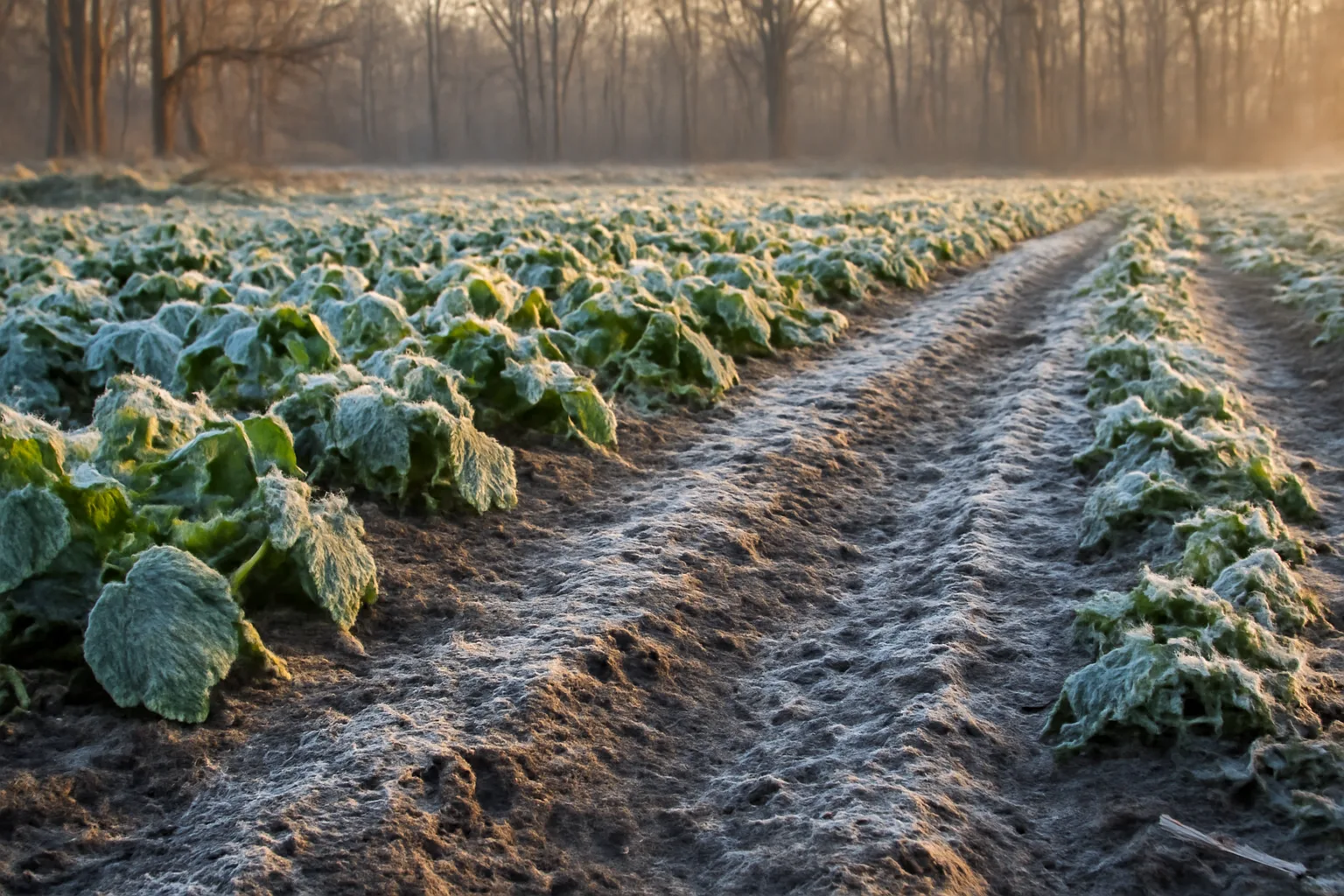
Turnips go in the ground in mid to late summer, generally 80 to 90 days before your average first frost, because turnips need that long runway to grow both leaf mass and a swollen bulb before cold weather hits, according to University of Tennessee Extension [3]. In most northern and mid-latitude whitetail zones that lands in late July through August. Wait too long and you get leaves with no bulb. Deer preference for turnips is interesting and it's not constant. Early in the season, deer often ignore turnip leaves almost entirely, especially if there's other food around. Then a hard frost hits, cold converts starches in the bulb and leaves to sugars, and deer suddenly switch on and hammer the plot. This is one of the most well-documented patterns in food plot management: frost-sweetened brassicas become a late-season deer magnet almost overnight. That means turnips are a specialist tool. They're not a great August or September draw plot in most cases. They're a December and January energy source, which is exactly when deer need dense carbs to get through winter cold. Pair turnips with something deer will eat earlier (oats, clover) if you want plot activity across more of the season. Radishes and other brassica cousins follow a similar pattern, with the same frost-triggered sugar conversion driving the late-season hit.
do deer eat sorghum
Yes, deer eat sorghum, but it's not a top-tier food plot choice on its own. Grain sorghum produces a seed head deer will feed on, similar to how they hit standing corn, and it's more drought-tolerant than corn, which makes it a useful option in dryer regions or sandy soils where corn struggles. The practical issue is competition and cost of production relative to payoff. Sorghum is more commonly grown as a wildlife food source in mixed plantings (often with soybeans or cowpeas) rather than as a monoculture deer plot, and it's more associated with dove field and upland bird management than dedicated deer plots, per the USDA NRCS practice standard for Wildlife Food Plot (Code 646) [4]. If you're deciding between corn and sorghum for a standing-grain winter plot, corn generally wins on tonnage and deer preference where soil and rainfall support it. Sorghum earns its spot in drought-prone areas or as part of a diverse mix rather than as your go-to deer feed.
do deer eat clover, or is that a myth
Not a myth at all. Clover is one of the most heavily grazed food plot species there is, and deer will return to a healthy clover plot repeatedly across an entire growing season, more than once. The reason clover gets hit so hard is nutritional timing. Lactating does in late spring and early summer need high protein to support milk production, and bucks growing antlers need the same. Clover's 25 to 30 percent crude protein in its vegetative stage lines up perfectly with that biological demand window, based on forage quality data from Noble Research Institute [2]. Where clover struggles is grazing pressure on small plots. If you've only got a half acre of clover and a heavy local deer population, they can graze it down to nothing and stunt regrowth, especially in dry years. That's a real management problem, not a species failure. The fix is usually more acreage, rotational plot design, or supplementing with a second food source so pressure isn't concentrated on one plot.
what are deer's favorite foods overall
| Clover | Spring through fall | High protein (25-30%) | 3-5 year perennial stand | |
|---|---|---|---|---|
| Soybeans | Summer through fall | High protein, then pods late | Annual, spring planting | |
| Oats | Early fall | Fast carbs, early draw | Annual, 60-75 days pre-frost | |
| Turnips/Brassicas | Late fall to winter | Energy after frost sweetens bulb | Annual, 80-90 days pre-frost | |
| Standing corn | Winter | Very high energy density | Annual, full season crop | |
| Acorns (white oak) | Fall | High energy, low tannin | Natural, not planted | If you're building a plot program from scratch and trying to string several of these together across the calendar, deer food plots and food plot seed cover how to layer species by season rather than picking just one. |
Deer are opportunistic browsers, and their actual favorite food shifts by season and region more than most hunters expect. That said, several themes show up consistently in deer diet studies. Acorns are arguably the single most preferred natural whitetail food where oaks are present, especially white oak acorns, which have lower tannin content and higher palatability than red oak acorns, according to Purdue Extension's forestry and wildlife publication on oak mast and deer [1]. In good acorn years, deer will bypass food plots entirely to hit a dropping white oak. Among planted forages, clover, soybeans, and alfalfa consistently rank at the top for preference and use, and brassicas take over as a preferred choice specifically after frost. Standing corn and soybeans left unharvested are massive late-season draws in ag country because of the sheer caloric density. Here's a rough comparison of common plot options and where each one earns its keep: | Food Source | Peak Season | Protein/Energy Role | Plant-to-Use Window |
do deer like honey, and does it actually attract them
There's no research support for honey as a meaningful deer attractant, and it's not something wildlife agencies or extension programs recommend or study as a food source. Deer are drawn to sugar and carbohydrate-dense foods, so it's plausible a deer would investigate spilled honey out of curiosity, but there's no scientific literature establishing honey as an effective attractant, and it's impractical and expensive compared to actual attractant products or forage. If you're looking for something in that sweet, high-carb category that deer genuinely rely on at scale, frost-sweetened brassicas and mineral/sugar-based commercial attractants (where legal) are the realistic options, not raw honey poured on the ground. Save the honey for your coffee. More relevant: in a lot of states, using any bait or attractant, including honey, molasses products, or mineral blocks, to hunt over is flatly illegal or restricted by season. This is a state-by-state issue and it varies a lot, so check your state wildlife agency's regulations before using any attractant near a stand.
corn, soybeans, and feeders: what about supplemental feed and bait laws
Feeders and bagged deer feed are a different animal than food plots, and the legal landscape is genuinely a patchwork. Some states allow baiting and feeding deer with almost no restriction. Others ban it outright, and a growing number restrict it specifically because of chronic wasting disease (CWD) concerns, since concentrating deer at a feed pile increases nose-to-nose contact and disease transmission risk. Michigan, for example, restricts baiting and feeding deer statewide with limited exceptions as part of its CWD response, under the Michigan Wildlife Conservation Order, according to the Michigan Department of Natural Resources' baiting and feeding regulation summary [5]. Wisconsin similarly restricts baiting and feeding in counties within its CWD-affected zones, per Wisconsin Administrative Code NR 19 [6]. Meanwhile, states like Texas allow baiting for hunting in most situations. This is not a topic where you can assume your neighbor's state rules apply to you. If you do feed legally, commercial pelleted deer feeds (often corn, soybean meal, and mineral blends around 16-20 percent protein) are formulated more precisely than raw corn alone, and raw corn is mostly carbohydrate with very little protein, which limits its value as a standalone nutrition source outside of pure calorie-loading before winter. Before you set a feeder or plant a bait-adjacent plot near a stand, check your state wildlife agency's current regulations directly. Rules change year to year, especially around CWD zones.
how soil test results change what "best" means for your land
Your soil test is the single most useful piece of information you have before picking a species, and it should override any generic "best deer feed" list, including this one. Clover and alfalfa want a pH in the 6.0 to 7.0 range and will underperform badly below that without lime correction. Brassicas are more forgiving of lower pH but still respond strongly to adequate phosphorus and potassium levels. A soil test from your local extension lab or a private ag lab will tell you your current pH, and your phosphorus (P) and potassium (K) levels, plus a lime and fertilizer recommendation specific to the crop you tell them you're planting, per Ohio State University Extension's soil fertility fact sheet [7]. This is also where a lot of hunters waste money. Buying premium clover blend seed and planting it into unlimed 5.2 pH dirt is close to throwing money away. Lime takes months to fully change soil pH, so testing in late winter or early spring, ahead of a summer or fall planting, gives the lime time to work per University of Missouri Extension guidance [8]. Your soil-test lab is the authority on your specific lime and fertilizer numbers, not a blog article, and not us. A general plot plan can point you toward species that fit your zone and goals, but the exact pounds of lime and fertilizer per acre come from your test results.
how to actually pick species for your property
Start with three questions: what's your soil test say, what season are you hunting hardest, and how much equipment and time do you actually have. If your soil is decent (pH 6.0+) and you want a low-maintenance plot that feeds deer most of the year, clover is the default answer and it's hard to go wrong there. If you're specifically building a late-season plot for December and January hunts, brassicas planted correctly in late summer are the better fit. If you want a fast, cheap early-fall draw and don't want a multi-year commitment, oats do that job for not much money. Most serious plot programs end up running two or three species across a property rather than betting everything on one. A perennial clover field for spring through fall, plus an annual brassica or cereal grain plot timed for late season, covers a lot more of the calendar than either one alone. If you want help translating your soil test and zone into an actual species and planting-date plan instead of guessing, that's the whole point of the $99 Custom Food Plot Plan. It's a general planning tool based on your inputs, not a substitute for your soil lab's specific lime and fertilizer recommendation. For species-specific seed selection once you've settled on a plan, deer food plot seed and domain food plot seed break down individual product options.
Frequently asked questions
What is the best deer feed for food plots?
There isn't one best option for every situation. Clover is the strongest all-around perennial for spring-through-fall feeding. Brassicas like turnips win for late-season energy after frost. Oats work as a cheap, fast fall draw. Pick based on your season goals and soil test, not a single universal answer.
Do deer eat sorghum?
Yes, deer eat grain sorghum, particularly the seed head, similar to how they use standing corn. It's more drought-tolerant than corn but is more commonly used in mixed wildlife plantings or dove fields than as a standalone deer food plot, per USDA NRCS wildlife food plot practice standard guidance.
Do deer eat clover?
Yes, heavily. Clover is one of the most consistently preferred food plot species, with crude protein around 25 to 30 percent in its vegetative stage, according to Noble Research Institute forage data. Deer return to healthy clover plots repeatedly through spring, summer, and fall.
When should you plant food plots for deer?
Spring plots (clover, soybeans, alfalfa) go in after last frost when soil hits about 50 degrees F. Fall plots (brassicas, cereal grains) go in 60 to 90 days before your area's first hard frost. Exact dates depend heavily on your zone, so check local extension planting calendars.
Do deer like clover more than other food plot options?
Clover consistently ranks at or near the top of deer preference studies because of its high protein content and long season of availability. It's not the single best option in every month (brassicas beat it after frost), but across a full growing season, clover is hard to beat.
When should you plant oats for deer?
Plant oats 60 to 75 days before your area's first fall frost, generally late August through mid-September in much of whitetail range. Oats germinate quickly, often in 7 to 10 days, making them a good fast, cheap early-fall draw plot.
What is a food plot exactly?
A food plot is a planted area, typically a quarter acre to several acres, seeded specifically to feed and attract deer or other wildlife. Plots are either annuals (replanted yearly, like oats or brassicas) or perennials (planted once and lasting several years, like clover).
When should you plant turnips for deer?
Plant turnips 80 to 90 days before your average first fall frost, usually late July through August in most whitetail zones. That runway lets the plant build both leaf mass and bulb size before cold weather triggers the sugar conversion deer respond to.
What are deer's favorite foods overall?
White oak acorns are arguably the top natural preference where available, due to low tannin content. Among planted forages, clover, soybeans, and alfalfa rank highest for preference, with brassicas becoming a strong draw specifically after frost sweetens their bulbs and leaves.
Do deer like honey?
There's no research establishing honey as an effective deer attractant, and no wildlife agency recommends it. Deer respond to sugar and carbohydrate-dense foods generally, but frost-sweetened brassicas and legal mineral or attractant products are the realistic, studied options, not raw honey.
Is corn or soybeans better as deer feed?
Soybeans offer much higher protein during the growing season and remain a strong food source as dried beans into winter. Corn is mostly carbohydrate with high energy density, useful for late-season calorie loading but low in protein. Many plot programs use both for different seasons.
Is it legal to use a deer feeder or bait deer in my state?
It depends entirely on your state, and rules change based on CWD management zones. Some states allow baiting broadly, others ban it statewide or in specific counties. Michigan and Wisconsin both restrict feeding and baiting in CWD-affected areas. Check your state wildlife agency's current regulations before setting a feeder.
How much does soil pH affect which deer feed grows best?
Significantly. Clover and alfalfa need a pH of 6.0 to 7.0 to perform well and struggle badly below that without lime correction. Brassicas tolerate lower pH better. A soil test tells you your exact pH and the lime needed, and that should drive species selection more than preference lists.
Sources
- Purdue University Extension, Food Plots for Wildlife (FNR-428-W): Clover ranks among top food plot choices for protein content and season-long availability
- Noble Research Institute, Clover Management for White-tailed Deer: Clover crude protein content of roughly 25-30 percent in vegetative stage
- University of Tennessee Extension, Establishing Wildlife Food Plots (PB1769): Fall plot and brassica planting windows relative to first frost date
- USDA NRCS Conservation Practice Standard, Wildlife Food Plot (Code 646): Sorghum use in mixed wildlife plantings versus standalone deer plots
- Michigan Department of Natural Resources, Baiting and Feeding Regulations Summary: Michigan restricts baiting and feeding deer statewide with limited exceptions for CWD management
- Wisconsin Administrative Code, NR 19 (Wild Animals) baiting and feeding rules: Wisconsin restricts baiting and feeding in counties within CWD-affected zones
- Ohio State University Extension, Soil Fertility (AGF-515): Soil tests provide pH, phosphorus, and potassium levels with crop-specific lime and fertilizer recommendations
- University of Missouri Extension, Soil Testing for Lawns, Gardens, and Wildlife Plots (G9110): Testing soil ahead of planting season gives lime time to react before the growing window