Last updated 2026-07-25
TL;DR
Yes, overseeding clover works and it's often cheaper than tearing up a plot and starting over. Frost-seed in late winter (freeze-thaw cycles work seed into cracked soil) or drill/broadcast in early fall at 4-6 lbs/acre for ladino/white clover. Mow and soil test first; thin stands usually need nitrogen-free fertilizer and a pH near 6.0-6.5 to hold.
Can you overseed a clover food plot?
Yes. Clover thins out over time from drought, heavy grazing, weed pressure, and winterkill, and overseeding into an existing stand is a normal maintenance step, not a sign of failure. Most established perennial clover plots (ladino, white Dutch, red clover) benefit from a top-up of fresh seed every 2 to 4 years even under good management, according to guidance from university forage programs [1]. The two most reliable windows are late winter (frost-seeding) and late summer into early fall. Frost-seeding works because repeated freezing and thawing of the soil surface cracks it open and closes it around the seed, pulling it into good seed-to-soil contact without any equipment beyond a spreader. Fall overseeding works because cooler temperatures and, usually, more consistent rain give new clover seedlings time to root before summer heat stress hits. What overseeding will not fix is a plot that's failing because of pH or fertility problems. If clover is thin because soil pH has drifted below 6.0, dumping more seed on top just wastes seed. A current soil test is the only way to know if you're dealing with a stand-thinning problem or a chemistry problem, and your soil test lab is the right authority on exact lime and fertilizer rates for your dirt, not a blanket internet number.
When is the best time to overseed a thin clover plot?
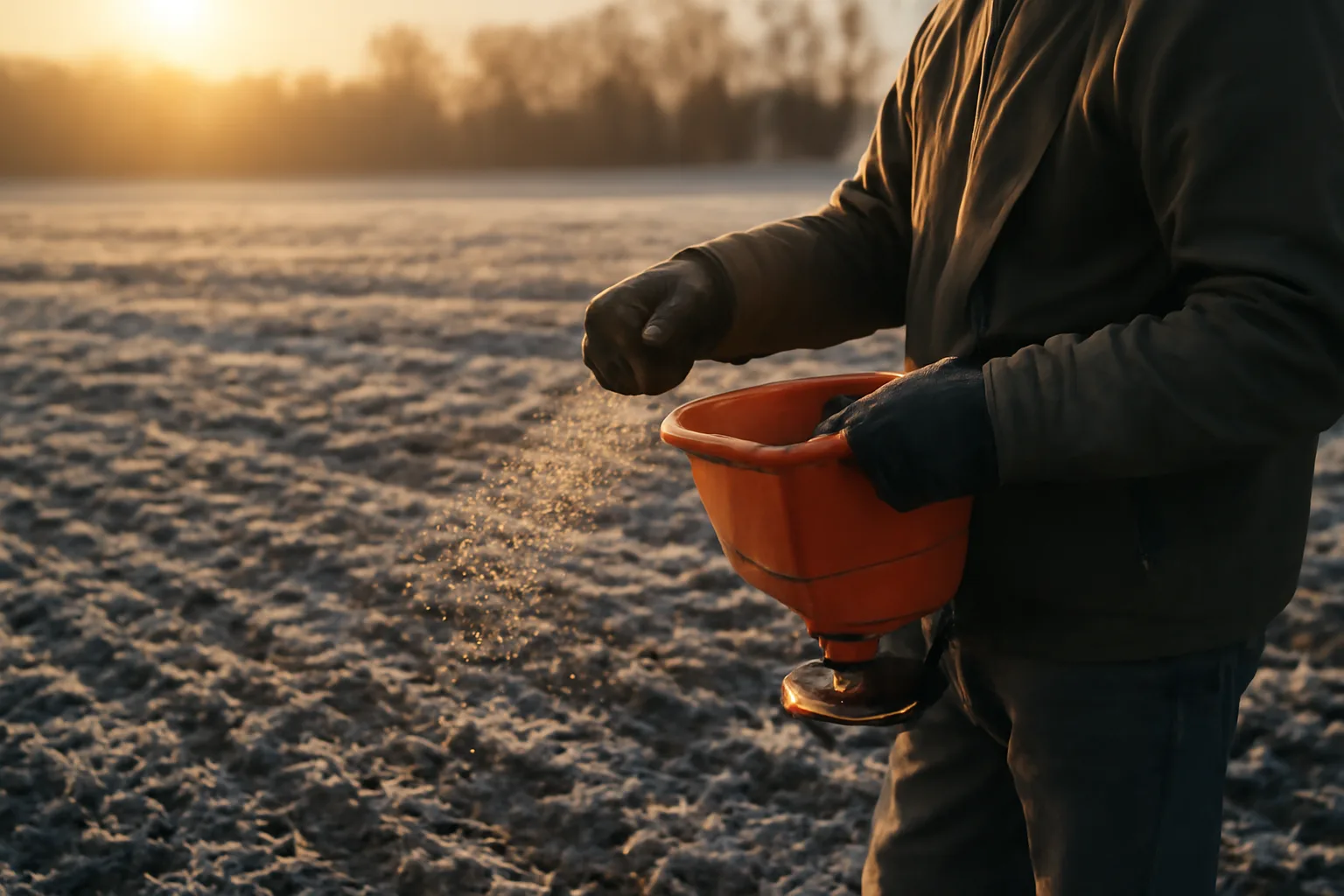
Frost-seeding in late winter (roughly February through early March across most of the Midwest and mid-South) is the cheapest and most forgiving method. You broadcast clover seed onto existing sod or dormant plot ground while nighttime temps are still dropping below freezing and daytime temps climb above it. No drill, no disking, no cultipacker required. Early fall overseeding (late August into September in northern zones, into early October in the South) is the second-best window. Mow the existing stand down hard first, to 2-3 inches, so new seedlings get sunlight instead of getting shaded out by mature clover and grass. Broadcast seed and, if you have a cultipacker or ATV drag, run over it once to improve seed-to-soil contact. Spring overseeding after green-up (April-May) works too but is riskier. Weed pressure is higher, summer annual grasses germinate fast, and new clover seedlings have less time to establish a root system before hot, dry weather stresses them. If spring is your only option, mow tight and consider a light application of a grass-selective herbicide labeled for clover to knock back competition before seedlings emerge.
How do you overseed clover step by step?
First, mow the existing stand short, 2 to 3 inches, to open the canopy. Second, pull a current soil sample if you haven't tested in the last 2 to 3 years; clover holds a stand best at a soil pH of 6.0 to 6.5 [2]. Third, broadcast fresh clover seed at 4 to 6 lbs per acre for ladino or white clover, or 6 to 8 lbs per acre for red clover, using a hand or ATV spreader. Fourth, improve seed-to-soil contact. A drag harrow, cultipacker, or even driving over the plot with an ATV and chained drag helps press seed into the soil surface. Clover seed is tiny and needs to sit at or near the surface, roughly 1/4 inch deep or less; burying it too deep kills germination. Fifth, apply fertilizer based on your soil test results, not nitrogen. Clover fixes its own nitrogen through rhizobia bacteria in root nodules. A straight nitrogen application is wasted money here, full stop, and it can push weed and grass competition harder instead of helping your clover. Phosphorus and potassium are usually what a thinning clover stand actually needs, per extension guidance on clover fertility [3]. If your seed hasn't been used on that ground before, or the plot is new, use a clover-specific inoculant on the seed before spreading it; established fields usually carry enough native rhizobia already. One more practical note: overseeding rates are lower than a full new planting. A fresh clover plot from bare dirt typically goes in at 6 to 8 lbs per acre for ladino clover; overseeding into an existing stand uses less seed because you're filling gaps, not planting from scratch.
Do deer like clover?
Yes, clover is one of the most consistently preferred forages for whitetail deer across the growing season. It's high in protein, often 25-30% crude protein in vegetative growth stages, and stays digestible and palatable from spring green-up through fall, which is why it shows up in food plot mixes more than almost any other species [4]. Clover's real strength is duration. Corn and soybeans get hammered hard for a few weeks around maturity, but a well-maintained perennial clover plot gets grazed all season long, spring through late fall, and often gets browsed lightly through winter in southern climates. That's a big reason hunters keep clover plots going year after year instead of replanting annuals.
Do deer eat sorghum?
Yes, deer eat sorghum, particularly the grain heads once they mature, and sorghum (including grain sorghum and forage sorghum types) is sometimes used in food plot blends as a summer annual or a standing grain crop for fall and winter. It's more drought-tolerant than corn in many soils, which is part of its appeal on marginal ground. That said, sorghum isn't a top-tier deer attractant compared to clover, soybeans, or brassicas during the growing season. Deer will browse the leaves some, but the real draw is the grain head late in the year, similar to how deer use standing corn. If your goal is season-long browse pressure, sorghum works better as a cover or screening crop mixed with something deer actually prefer, rather than a stand-alone attractant plot.
What are deer's favorite foods?
There's no single universal answer here because it shifts by season and region, but deer consistently favor high-protein, high-digestibility forages: clover, soybeans (both the leaves in summer and the beans in fall), and brassicas like turnips and radishes especially after a hard frost. Acorns, when available, often outcompete planted food plots entirely during a heavy mast year, which is a real frustration for plot owners who wonder why deer suddenly ignore a plot in October. Agricultural crops like corn and soybeans dominate deer diets in farm country simply because of sheer volume on the landscape. On timbered or leased ground without row-crop neighbors, a food plot of clover, brassicas, or cereal grains can genuinely become the highest-quality food source available for miles, which is exactly the situation food plots are built to fill. For species selection across acreage and soil types, see food plot whitetail and deer food plot seed.
Do deer like honey?
There's no real evidence deer seek out honey in the wild or that it functions as a meaningful food plot attractant; this isn't a question backed by wildlife research, and it's more of an internet curiosity than a practice with agronomic support. Deer are herbivores built to digest cellulose and plant sugars through a four-chambered rumen, not to forage for animal-produced sugars like a bear would. If you've seen this claim attached to a commercial attractant spray, treat it as marketing, not science. There's no research establishing honey as a deer food source, and nothing here should be confused with legitimate mineral or forage attractants.
When should you plant food plots for deer?
Timing depends on region and species, but the two broad windows are spring/early summer for warm-season annuals (soybeans, sorghum, cowpeas) and late summer into early fall for cool-season annuals and perennials (clover, brassicas, cereal grains). Most of the Midwest plants warm-season plots May through early June, after the last frost date, and cool-season plots late July through September. Southeastern and Gulf Coast states run later on both ends because of longer growing seasons and hotter summers; fall plantings there can push into October. Northern tier states (upper Midwest, Northeast) need to plant cool-season plots earlier, often by mid-August, to get enough growth before hard frost locks things down. Your state wildlife agency and land-grant extension office both publish regional planting calendars, and it's worth checking both since baiting and supplemental feeding rules for deer vary by state and can affect what counts as a legal food plot practice near a stand [5]. For a full walkthrough by zone, see deer food plots.
When should you plant oats for deer?
Oats are a cool-season annual, best planted in late summer to early fall, generally August through September in most whitetail range, so they have time to establish before the first hard frost. Oats germinate fast, often visible in 5-7 days under good moisture, and put on a lot of tonnage quickly, which makes them a favorite in fall blend mixes with clover, brassicas, or wheat. Oats aren't reliably winter-hardy in the northern half of the country; they'll typically die back after repeated hard freezes, unlike winter wheat or cereal rye, which survive and green back up in spring. That's not a flaw, it's just how they're used: oats are a fall attraction and early cover crop, not a stand meant to overwinter and carry into spring.
When should you plant turnips for deer?
Turnips go in the ground in late summer, typically late July through early September depending on latitude, so the bulbs and tops have 60 to 90 days to mature before the first hard frost. Turnips are a classic brassica food plot choice because deer often ignore the leaves and bulbs early in the fall, then hit them hard after a few frosts convert starches to sugars, making the plant sweeter and more palatable. That late-season spike in interest is well documented anecdotally by deer managers and extension forage specialists alike, and it's the reason turnip and radish blends are marketed specifically as late-season plots rather than early-season draws. Plant too late in short-season climates and you risk bulbs that never size up before the ground freezes.
What exactly is a food plot?
A food plot is a planted area, usually somewhere between a quarter-acre and several acres, established specifically to provide supplemental forage for deer or other wildlife on hunting property. It's different from a farm field in that the goal isn't yield for sale, it's attraction, nutrition, and holding deer on a property through the season. Food plots range from small "kill plots" tucked near a stand and planted mainly to draw deer into range, to larger "destination" or "nutrition" plots of several acres meant to support herd health and antler growth through spring and summer. Both approaches show up constantly in modern deer management, and most serious plot programs run a mix of both types across a property. If you're building a first plan and aren't sure what mix of plot types and species fits your acreage, soil, and region, a $99 Custom Food Plot Plan from PlotSeason gives you a starting point built around your specific ground; you can start one at /plot-plan-builder. For background on plot sizing and layout, see food plot seed and domain food plot seed.
How do you know if overseeding worked, or if it's time to start over?
Give a frost-seeded or fall-overseeded plot a full growing season before judging it. Check germination about 3 to 4 weeks after seeding; you should see new, small clover leaves scattered through the existing stand, distinct from the older, larger leaves of established plants. If coverage is still thin the following year, less than 30-40% clover with heavy grass or weed encroachment, it's usually more efficient to terminate the plot with a glyphosate application and start fresh rather than overseed a third time. Perennial clover stands generally have a productive life of 3 to 5 years before weed pressure, soil compaction, and stand thinning make a full reset the better economic choice, a pattern consistent with extension forage lifespan guidance for red and white clover stands [1]. Reference deer for food for planning the next rotation if a full reset is the right call.
Frequently asked questions
Can you overseed clover without tilling?
Yes. Frost-seeding is specifically designed to work without tillage; you broadcast seed onto existing sod during freeze-thaw cycles in late winter and the soil's natural cracking and closing pulls seed into contact with dirt. Mowing the stand short beforehand and using a drag or cultipacker afterward both improve results, but neither requires breaking ground.
How much clover seed do you need to overseed an existing plot?
For ladino or white clover, use 4 to 6 lbs per acre when overseeding into an existing stand, less than the 6 to 8 lbs per acre used for a fresh planting. Red clover overseeding rates run 6 to 8 lbs per acre. Always check the specific product label since blends and seed purity vary by brand.
Do you need to mow before overseeding clover?
Yes, mow the existing stand down to 2 to 3 inches before overseeding. This opens the canopy so new seedlings get sunlight instead of getting shaded out by taller, established clover and grass, which is one of the most common reasons overseeding attempts fail to take.
Should you fertilize when overseeding clover?
Base it on a current soil test, but skip nitrogen. Clover fixes its own nitrogen via rhizobia bacteria, so nitrogen fertilizer mostly feeds weeds and grass competition instead. Phosphorus and potassium are usually the actual limiting nutrients in a thinning clover stand, and pH should sit around 6.0 to 6.5 for clover to hold well.
Do deer eat sorghum in food plots?
Yes, deer eat sorghum, mainly the grain heads once mature, and it's sometimes planted as a drought-tolerant summer annual or standing grain crop. It's not a top attractant compared to clover or soybeans during the growing season, but works as a late-season grain source or as cover mixed with more preferred forage species.
Do deer actually like clover more than other food plot options?
Clover is consistently one of the most preferred forages because of its high protein content, often 25-30% crude protein, and season-long palatability from spring through fall. Corn and soybeans draw heavier pressure for shorter windows around maturity; clover's advantage is that deer use it consistently across nearly the entire growing season.
When is the best time to plant food plots for deer overall?
Warm-season annuals like soybeans and sorghum go in after the last spring frost, typically May into early June in most of the Midwest. Cool-season plots (clover, brassicas, cereal grains) go in late summer to early fall, generally late July through September, timed so plants establish before the first hard frost.
When should oats be planted for deer food plots?
Plant oats in late summer to early fall, typically August through September in most whitetail range, giving them time to establish before a hard frost. Oats germinate quickly, often within 5 to 7 days, and provide fast fall tonnage, but they generally aren't winter-hardy and die back after repeated hard freezes.
When should turnips be planted for deer?
Plant turnips late July through early September depending on your latitude, giving bulbs 60 to 90 days to mature before a hard frost. Deer often ignore turnip tops and bulbs early on, then hit them hard after a few frosts sweeten the plant by converting starches to sugars, making late summer timing important.
What is a food plot, exactly, in hunting terms?
A food plot is a planted area on hunting land, established specifically to provide supplemental forage that attracts deer and supports herd nutrition, rather than a crop grown for sale. Plots range from small kill plots near a stand to larger nutrition plots of several acres meant to hold deer through the season.
What do deer prefer to eat most in food plots?
There's no single universal favorite since preference shifts by season, but clover, soybeans, and brassicas (turnips, radishes) rank consistently high due to protein content and digestibility. Acorns during a heavy mast year often outcompete any planted food plot entirely, which is a common reason deer activity on a plot drops suddenly in fall.
Do deer like honey as a food source or attractant?
No credible wildlife research supports honey as a meaningful deer food source or attractant. Deer are herbivores with digestive systems built around plant cellulose, not animal-produced sugars. Any product marketing built around this claim isn't backed by established research and should be treated skeptically compared to established forage-based attractants.
How often does a clover plot need to be overseeded to stay productive?
Most established perennial clover stands benefit from overseeding every 2 to 4 years, even with good management, as extension forage programs note stands naturally thin from drought, grazing, and weed competition over time. If a stand drops below 30-40% clover coverage despite overseeding, terminating and replanting fresh is usually the better move.
Sources
- University of Wisconsin-Madison Extension, Forage Legumes (NCH-13, National Agricultural Library reprint of UW forage legume management guidance): Perennial clover stands typically last 3-5 years and benefit from periodic overseeding to maintain density
- University of Missouri Extension, Soil pH and Liming for Forage Crops (G4306): Clover holds a stand best at a soil pH of 6.0 to 6.5
- Oklahoma State University Extension, Fertilizing Clover and Other Legumes (PSS-2258): Clover fixes its own nitrogen and thinning stands typically need phosphorus and potassium rather than nitrogen fertilizer
- USDA NRCS Plant Guide, White Clover (Trifolium repens L.), PLANTS Database: Clover forage is high in crude protein and remains palatable to deer throughout the growing season
- Congressional Research Service, Baiting and Supplemental Feeding of Game Wildlife Animals (R42952): Baiting and supplemental feeding rules for deer vary by state and can affect food plot practices near stands
- University of Georgia Extension, Soil Fertility and Liming for Forage Crop Production (Circular 1029): Regular overseeding and fertility maintenance extend the productive life of established clover stands