Last updated 2026-07-26
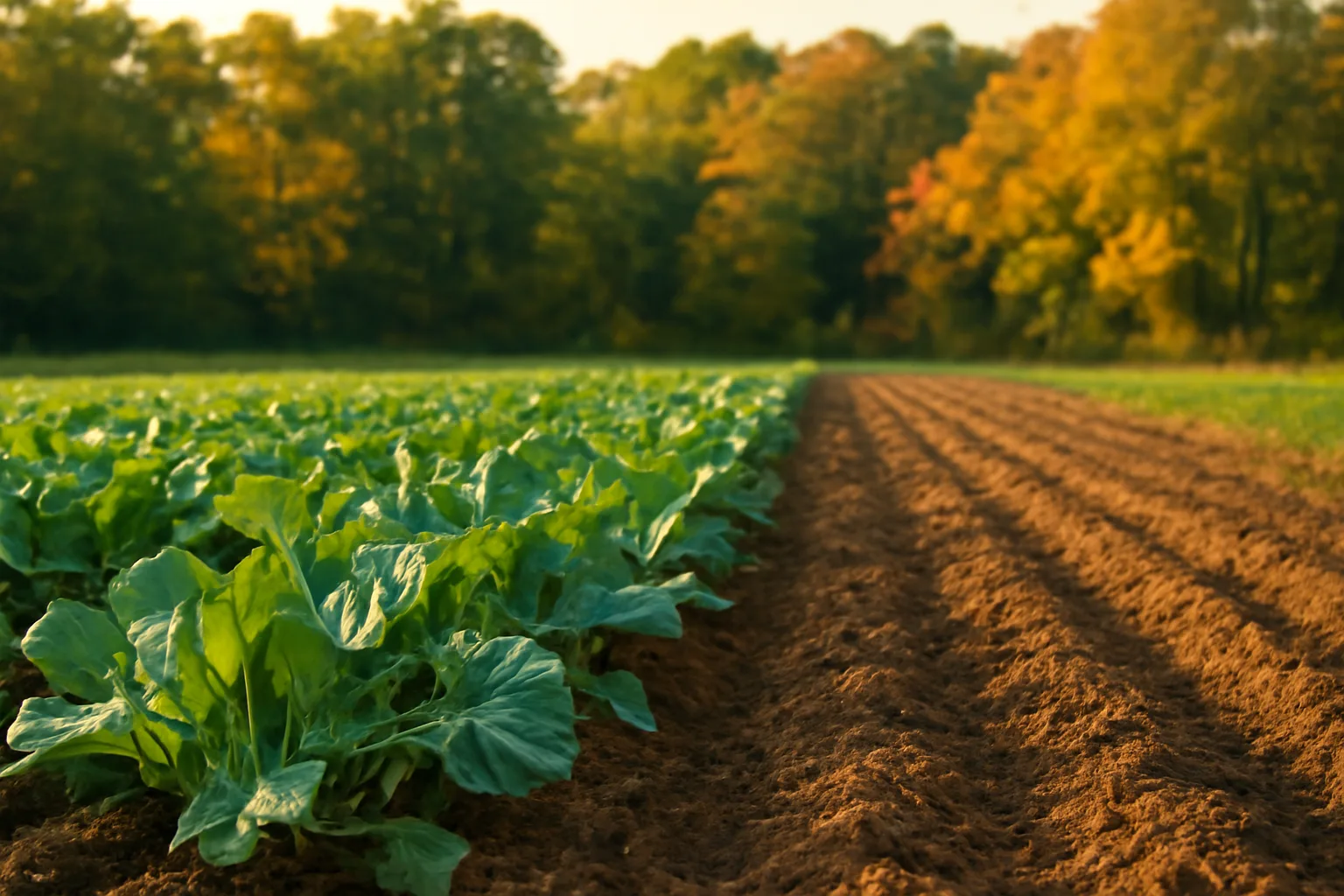
TL;DR
There's no single best annual, it depends on region and season, but for most hunters a brassica/oat blend for fall and a clover/oat mix for spring cover the most ground. Deer eat sorghum, clover, oats, and turnips readily; timing runs from late July (brassicas) to September (cereal grains), always tied to a current soil test.
What is a food plot, exactly?
A food plot is a planted area, usually somewhere between a quarter acre and several acres, seeded specifically to feed and hold deer or attract them during hunting season. It's not the same as a wildlife opening left to grow up in weeds, and it's not a garden. Food plots use agricultural seed, usually annuals or perennials bred for forage quality, planted with the same basic tools a farmer uses: a disk, a drill or broadcast spreader, sometimes a cultipacker. The goal shifts depending on the plot. Some are "destination" plots meant to hold deer through fall and give hunters a shot opportunity near a stand. Others are "nutrition" plots meant to grow bigger bodies and better antlers over a season, planted in spring and early summer away from hunting pressure. Annual plots (planted fresh each year) differ from perennials (clover, chicory) that come back for two to five years if maintained. The USDA's Natural Resources Conservation Service funds wildlife habitat plantings, including food plots in many states, through its Environmental Quality Incentives Program, established and reauthorized under the federal farm bill framework at 16 U.S.C. 3839aa [1]. That matters if you're weighing whether to fold plot work into a broader conservation plan. If you're planning your first plot, food plot whitetail is a good starting point for the basics before you pick species.
When to plant food plots for deer?
Timing depends on what you're planting and where you live, but the two big windows are late summer for fall annuals (brassicas, cereal grains) and spring for warm-season annuals and perennials (clover, soybeans, cowpeas). Nothing in food plotting is more region-dependent than this question, so treat every date below as a starting point, not gospel. In the Upper Midwest and Northeast (roughly USDA zones 3 to 5), brassicas and cereal grains go in late July through August, timed so plants have 60 to 90 days of growth before a hard frost. In the Mid-South and transition zone (zones 6 to 7), you've got more room, late August into September works for fall plots. In the Deep South (zones 8 and warmer), you can push cereal grains and brassicas into October and still get a good stand, since frost comes late or not at all. Spring plantings for clover, soybeans, and other warm-season forages generally go in after your last frost date, which your state extension office publishes county by county. Frost dates swing hard even inside one state, and NOAA's climate normals data shows spring freeze dates can differ by three weeks or more between the northern and southern edges of a single state like Indiana or Illinois [2]. That's the kind of local variation that makes a one-size calendar useless. Check deer food plots for a broader planting calendar breakdown by region.
Do deer eat sorghum?
Yes, deer eat grain sorghum (milo), both the standing plant and the seed heads, and it holds up well as a fall and winter food source because the seed stays on the stalk into cold weather. It's more common as a deer-attractant crop in the Midwest and South than as a primary forage plot, often planted in blocks or strips as much for cover and standing grain in December and January as for early-season browse. Sorghum isn't a nutrition powerhouse compared to legumes like clover or soybeans. Its protein content runs lower, generally in the 8 to 11% crude protein range for grain sorghum forage according to Oklahoma State University Extension's forage quality reference data [3], versus 20-plus percent for good clover. Where sorghum earns its place is late-season standing grain when most everything else is gone or buried in snow. It's drought-tolerant too, which matters in sandy or dry ground where corn struggles. If you're picking one crop to feed deer in December, sorghum next to standing corn is a reasonable combo. As a stand-alone summer nutrition plot, it's not the first choice.
Do deer eat clover and do deer like it?
Deer eat clover readily and it's one of the most consistently preferred forages across whitetail range, which is why it shows up in nearly every food plot mix on the market. Both white clover (Ladino types especially) and red clover get hit hard. Clover regrows after grazing, unlike a lot of annuals that get mowed down once and don't come back that season, which makes it efficient on small acreage where deer pressure is heavy. University research backs up the preference. White clover routinely tests among the highest-quality forages available to deer, with crude protein commonly landing in the 25 to 30% range under good growing conditions, a range consistent with forage legume quality data published by land-grant extension forage programs [4]. That's well above most grain crops and most native browse. That protein level matters most in spring and summer when does are lactating and bucks are growing antlers. The tradeoff is clover needs decent soil fertility and drainage to perform. It doesn't like standing water or a pH below 6.0, and Ladino clover in particular sulks in acidic, compacted dirt. It's a perennial too, meaning a well-established stand can produce for three to five years with annual maintenance mowing and spot fertilizing, rather than a full replant. That's a real cost advantage over annuals replanted every single year. For seed blend options built around clover, see deer food plot seed.
When to plant oats for deer?
Oats go in as a late-summer to early-fall planting, generally 6 to 10 weeks before your area's first killing frost, so deer get tender, high-protein growth right as archery season opens. In the northern half of whitetail range, that's typically mid-August to early September. In the transition zone and Mid-South, late August into mid-September works. In the Deep South, growers often wait until late September or October since oats don't tolerate extended heat well and can burn up if planted too early. Oats are a cool-season annual grain, and deer prefer them young and leafy, before the plant matures and gets tough and stemmy. That's part of why oats pair so well with brassicas or clover in a blend. The oats grow fast and give deer something green within two to three weeks of a good rain, while the slower brassicas bulk up their roots and leaves for a late fall and winter food source. One planting mistake worth flagging: oats planted too early in warm soil in the Deep South can get hammered by fall armyworms before deer ever get a bite. Scout for worm damage in the first two weeks after emergence, especially in Southeastern states. The University of Georgia Extension's forage pest guidance describes fall armyworm as capable of destroying a newly seeded forage stand within days if scouting is skipped during warm, humid weather [5].
When to plant turnips for deer, and do deer eat them?
Turnips go in the same late-summer window as other brassicas, generally 60 to 90 days before your first expected frost, so the bulbs have time to size up before deer start eating them heavily in late fall and winter. In most of the whitetail range that's a planting window from late July through late August, pushed into September in the Deep South. Deer absolutely eat turnips, but there's a well-documented pattern: they often ignore the plant almost entirely for the first month or two, then hit it hard once a frost sweetens the leaves and bulbs by converting starches to sugars. This is one of the most misunderstood things about brassica plots. Hunters get discouraged in September when deer walk right past a lush turnip plot, then watch it get eaten to the dirt by December. That's not a failed plot. That's turnips working exactly as they're supposed to. Turnip tops (the leafy greens) get eaten first, generally starting a few weeks after emergence, and the bulbs come later, often not until after a couple of hard frosts. In far northern climates with heavy snow, turnip bulbs can stay available under snow cover longer than most other food sources, which is part of their value as a true winter plot rather than an early-season attractant.
What is the best annual food plot for deer overall?
| Clover (white/Ladino) | April to May, or Aug | 25-30% [4] | Spring/summer nutrition, perennial | |
|---|---|---|---|---|
| Oats | Mid-Aug to early Sept | 15-20% (young growth) | Early bow season attraction | |
| Brassicas (turnips/radish) | Late July to Aug | Bulb sugar rises post-frost | Late fall/winter food source | |
| Soybeans | Late May to June | 30-40% (leaf) [6] | Summer nutrition, needs low deer pressure | |
| Grain sorghum | May to June | 8-11% [3] | Late-season standing grain | Most experienced plotters end up running at least two plot types on a property: a spring/summer nutrition plot and a fall/winter hunting plot, rather than betting everything on one species. That's the honest answer, not a cop-out. If you're trying to figure out which combination fits your specific acreage, soil, and region, that's exactly the kind of decision a Custom Food Plot Plan is built to sort out for $99, a one-time plan rather than a subscription. |
There's no single best annual for every property, but if you're planting one plot to cover the most ground, a brassica and cereal grain blend (something like forage turnips or radish mixed with oats or winter wheat) covers early bow season through late winter better than almost anything else. It gives deer green browse within weeks of planting, then a sugar-loaded, high-energy food source once frost hits, right when deer need calories most. If your priority is spring and summer antler and body growth rather than a fall hunting draw, a clover and chicory perennial mix or a warm-season annual like soybeans or cowpeas wins instead. Soybeans in particular test extremely high in protein, commonly 30 to 40% crude protein in the leaf during the growing season according to agronomic forage data compiled by university extension programs [6], though deer can hammer young soybeans hard enough to wipe out a small plot before it ever matures if deer density is high relative to plot size. Here's a rough comparison to work from. | Species | Planting window (Midwest) | Crude protein (approx.) | Best use |
What do deer prefer to eat, and do they like honey?
Deer's actual diet is dominated by whatever's most available and digestible in a given season: forbs, tender browse, acorns, agricultural crops, and in food plot settings, clover, soybeans, and brassica greens rank among the most consistently preferred plantings. Acorns deserve a mention too. White oak acorns especially are lower in tannins and higher in preference than red oak acorns, and in a heavy mast year deer will often bypass a food plot entirely in favor of a good white oak flat. As for honey, no. Deer don't eat honey and it's not a real food plot or attractant question in any practical sense, though it occasionally comes up because of confusion with molasses-based mineral licks or sweetened deer attractant products sold at hunting retailers. Deer are herbivores built to digest cellulose and plant sugars through a four-chambered rumen, not the simple sugars in honey, and there's no wildlife agency or extension guidance recommending it as bait or feed. What deer actually favor changes by season. Spring and early summer favor high-protein green growth (clover, soybeans, forbs) as does recover from winter and lactate, fawns are born, and antler growth ramps up. Late summer and fall shift toward acorns and any standing grain. Winter, deer key on whatever's left standing and highest in energy: brassica bulbs, corn, sorghum, and woody browse if nothing else is available.
How does soil testing change what you should plant?
Your soil test is the single biggest variable in whether any of these species actually perform, and it should be pulled before you buy seed, not after. Most land-grant extension soil labs charge somewhere in the range of $8 to $20 per sample for a standard test covering pH, phosphorus, potassium, and organic matter; check your own state's extension lab fee page since pricing varies by state and by the panel you request. Results usually take one to two weeks. Clover and soybeans (legumes) are the most pH-sensitive of the common food plot species. Most extension guidance recommends a soil pH of 6.0 to 6.5 or higher for clover to fix nitrogen efficiently and take up available phosphorus and potassium. University forage agronomy guidance consistently notes that clover stands thin out and lose stand density fast once soil pH drops well below that range, which is exactly why a lime application ahead of planting matters more than the seed blend itself in a lot of failed plots . Brassicas and cereal grains tolerate slightly more acidic soil, but they still respond strongly to lime and fertilizer applied according to actual test recommendations rather than a bag's generic label rate. Your soil test lab, not this article and not a seed bag, is the authority on how much lime and fertilizer your specific dirt needs. A test from a field in the Blacklands of Texas and a test from a sandy ridge in Michigan can call for completely different amendment rates even for the identical seed blend. Skipping the test and guessing is the single most common reason food plots fail to perform, more common than picking the wrong species. For a deeper look at building a soil program around your test numbers, see soil and fertility resources, and for choosing seed once your soil's dialed in, deer food plot seed covers blend options.
What equipment do you actually need to plant an annual plot?
At minimum you need a way to kill existing vegetation (herbicide and a sprayer, or a disk for tillage), a way to get seed-to-soil contact (a disk, drill, or hand broadcaster followed by a cultipacker or drag), and a way to apply lime and fertilizer per your soil test. None of this requires a tractor, though one makes bigger plots faster. ATV and UTV-mounted implements (small disks, cultipackers, tow-behind spreaders) handle plots up to a couple acres just fine, and that's the setup most hunters on leased or owned ground actually run. Brassicas and clover have tiny seeds and need shallow planting, often a quarter inch deep or less, broadcast on a clean, firm seedbed and lightly cultipacked, not buried with a disk. Cereal grains like oats and soybeans want deeper placement, around an inch to an inch and a half, which is where a grain drill earns its keep over a broadcaster. Planting depth mistakes, especially burying small brassica seed too deep, is one of the more common reasons a plot comes up thin. If equipment budget is tight, a hand-crank broadcaster, a pull-behind cultipacker, and a four-wheeler run maybe $300 to $600 total secondhand, and that's enough to plant a solid half-acre to acre plot correctly. For a full rundown on gear by plot size, domain food plot seed and food plot seed both cover species-specific planting depth and equipment needs.
Do state rules affect what and how you can plant?
Some states regulate what counts as a legal food plot versus illegal baiting, and the line matters because hunting over an illegal bait pile is a real citation risk. Generally, a planted, growing food plot is legal everywhere in the U.S. as agricultural or wildlife habitat practice, the baiting concern is about piled feed, mineral, or grain placed on the ground rather than grown in place. That said, definitions of "baiting" and minimum distance rules from a planted plot to a stand or blind vary by state, and some states have specific restrictions tied to chronic wasting disease management that affect feeding and baiting more than plots themselves. Michigan is one of the states that has leaned hardest into this. Michigan's Wildlife Conservation Order restricts baiting and feeding of deer statewide, with the Natural Resources Commission tightening rules further in counties under active bovine tuberculosis or chronic wasting disease surveillance, a framework described in Michigan's baiting and feeding regulation summary maintained by the Department of Natural Resources . Before you plant, and especially before you hunt over a plot near a supplemental feeder or mineral site, check your state wildlife agency's current baiting and feeding regulations. These rules change year to year based on disease surveillance, and a plot that was fine to hunt over last season isn't automatically fine this season if your state has added new restrictions.
Frequently asked questions
Do deer eat sorghum in food plots?
Yes. Deer eat both the young sorghum plant and the mature seed heads, and standing grain sorghum holds up well into winter, making it a solid late-season food source. It's lower in protein than clover or soybeans (roughly 8 to 11% crude protein), so it works best paired with a higher-protein plot rather than standing alone.
Do deer like clover more than other food plot options?
Clover, especially white Ladino clover, is one of the most consistently preferred forages in food plot research, commonly testing at 25 to 30% crude protein. It's not automatically better than every option in every season, but for spring and summer nutrition it's a top-tier choice most hunters plant somewhere on their property.
When should you plant food plots for deer?
Fall annuals like brassicas and cereal grains go in roughly 60 to 90 days before your area's first frost, generally late July through September depending on latitude. Spring plantings like clover and soybeans go in after your last frost date, which varies by county; check your state land-grant extension's frost date tables for local timing.
When do you plant oats for deer?
Oats go in 6 to 10 weeks before the first expected killing frost in your area, generally mid-August to early September in northern regions and late September into October in the Deep South. Planting too early in hot climates risks armyworm damage before deer get a chance to browse the new growth.
When do you plant turnips for deer food plots?
Turnips go in the same window as other brassicas, roughly 60 to 90 days before your first fall frost, generally late July through August in most of whitetail range, pushed into September in the Deep South. Deer often ignore turnips until after a frost sweetens the leaves and bulbs.
What is a food plot exactly?
A food plot is a planted patch of forage crops, usually a quarter acre to several acres, seeded specifically to feed and attract deer. It uses real agricultural seed and equipment (a disk, drill, or spreader), unlike a natural wildlife opening left unmanaged. USDA's EQIP program funds wildlife habitat plantings, including food plots, in many states.
What are deer's favorite foods overall?
Deer favor whatever's most digestible and available: tender forbs and browse, white oak acorns (lower in tannins than red oak acorns), and in food plot settings, clover, soybeans, and brassica greens rank among the most preferred plantings. Preference shifts seasonally, protein-rich greens in spring and summer, acorns and standing grain in fall, energy-dense bulbs and grain in winter.
Do deer eat honey or honey-based attractants?
No, deer don't eat honey in any meaningful practical sense. They're herbivores with a four-chambered rumen built for cellulose and plant sugars, not simple sugars like honey. The confusion usually comes from molasses-based mineral licks or sweetened commercial attractants, which are a different product entirely.
How much soil testing do you need before planting a food plot?
One standard soil test per plot, pulled from several spots and mixed into one sample, is enough. Land-grant extension labs typically charge $8 to $20 per sample and return results in one to two weeks. Your test results, not a seed bag's generic label, should set your lime and fertilizer rates.
Can you plant clover and brassicas together in one plot?
Yes, though they have different pH and fertility preferences, so it's a compromise rather than an ideal setup for either species. Many hunters instead run separate plots, a perennial clover plot for spring and summer and a brassica/cereal grain plot for fall and winter, since it lets each crop get soil conditions tuned to what it actually needs.
Is it legal to hunt over a food plot, or does that count as baiting?
A planted, growing food plot is legal to hunt over in every U.S. state; baiting laws target piled feed, grain, or minerals placed on the ground, not crops grown in place. Some states add restrictions near supplemental feeders or in chronic wasting disease management zones, so check your state wildlife agency's current baiting and feeding rules before you hunt.
What's the minimum equipment needed to plant a small food plot?
A sprayer or disk to kill existing vegetation, a broadcaster or drill for seed, and a cultipacker or drag for seed-to-soil contact covers it. An ATV or UTV can pull all of this on plots up to a couple acres. Budget gear (broadcaster, tow-behind cultipacker) runs roughly $300 to $600 secondhand and handles a solid half-acre to one-acre plot correctly.
Sources
- Environmental Quality Incentives Program, 16 U.S.C. 3839aa: Food plots and wildlife habitat plantings are recognized conservation practices fundable under USDA's EQIP program
- NOAA National Centers for Environmental Information, U.S. Climate Normals: Last spring frost dates vary by three weeks or more across a single state
- Oklahoma State University Extension, PSS-2585, "Forage Quality Interpretations": Grain sorghum forage crude protein generally runs 8 to 11 percent
- University of Georgia Extension, Circular 1350, "Fall Armyworm in Forages": Fall armyworm outbreaks can destroy a newly seeded forage stand within days if scouting is skipped
- Iowa State University Extension and Outreach, PM 1688, "Soybean Growth and Development": Soybean leaf crude protein commonly runs 30 to 40 percent during the growing season
- University of Missouri Extension, IPM1030, "Soil Testing for Lawns, Gardens and Crops": Standard soil test fees at land-grant labs generally run in the range of $8 to $20 per sample