Last updated 2026-07-26
TL;DR
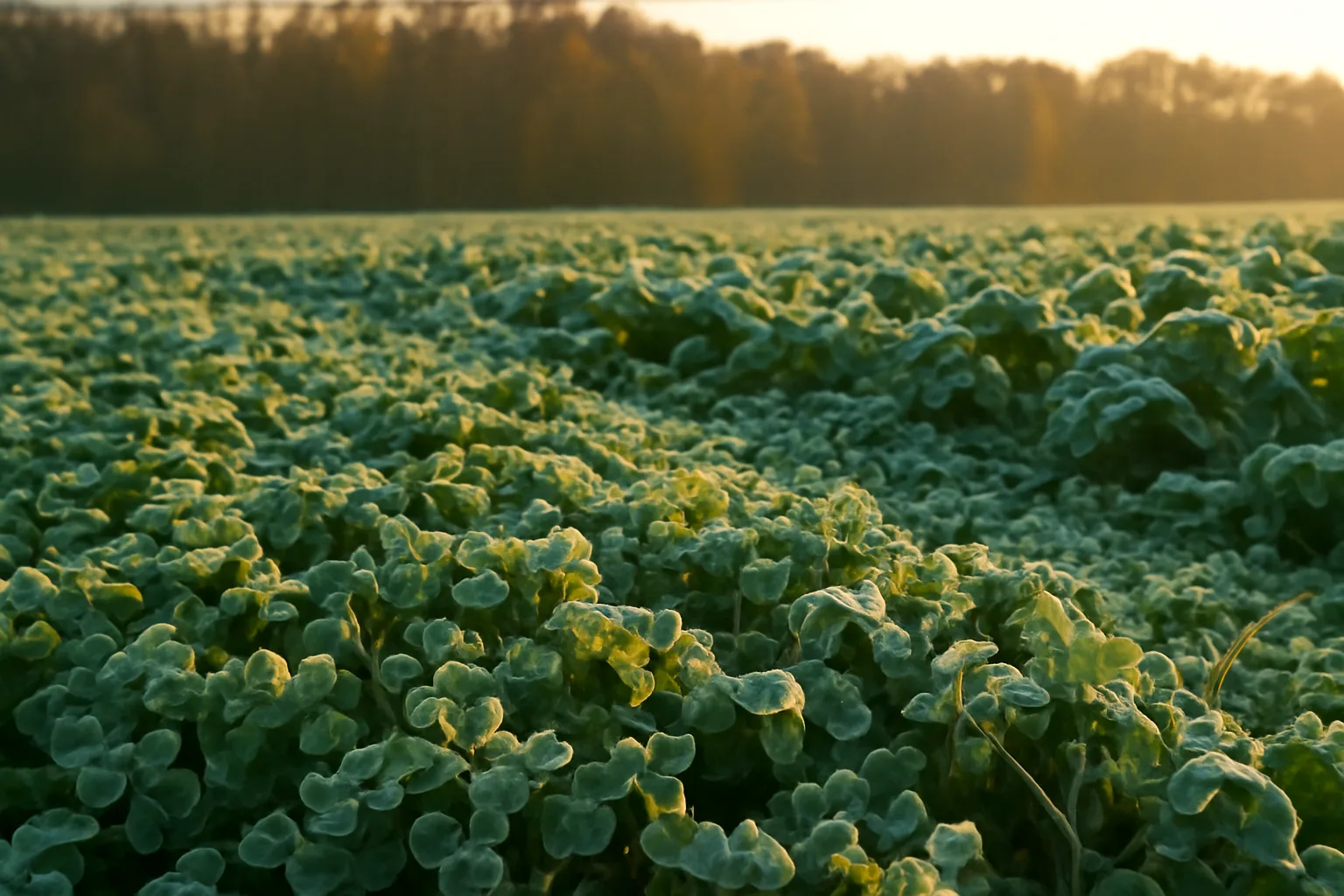
There's no single plant that feeds deer 12 months straight in most of the country. The closest thing is a perennial clover base (lasting 3 to 5 years) paired with fall annuals like brassicas and oats, and a spring/summer annual like soybeans or sorghum worked into rotation. Plan two or three plot types, not one.
Is there really one best all year food plot for deer?
No, and anyone selling you a single bag of seed that feeds deer January through December is stretching the truth. Deer nutrition needs change by season: they want protein-heavy forage in spring and summer for antler growth and lactation, then they shift hard toward carbohydrates and fat reserves in fall as they prep for winter. No single plant species covers both ends of that spectrum well. The real answer is a system, not a seed. Most experienced plot managers run a perennial clover or clover-chicory blend as their year-round anchor, then layer in seasonal annuals around it. Clover regrows after grazing and stays palatable spring through fall. It goes semi-dormant in cold winter months in the northern half of the country, which is why you need a fall annual working alongside it. If you only have room or budget for one plot, white clover (or a clover/chicory mix) gets you the closest to true year-round coverage, because it produces from spring green-up through late fall and often survives 3 to 5 years before needing renovation [1]. But even that plot goes quiet under snow or during a hard summer drought, which is why serious plot programs plant more than one field.
What is a food plot, exactly?
A food plot is a planted area, usually somewhere between a quarter acre and several acres, established specifically to grow forage that deer and other wildlife will eat. It's not a crop field left over from farming; it's planted and managed on purpose for wildlife nutrition and hunting access. Food plots serve two jobs at once. First, they add real nutrition to the landscape, which matters most on properties surrounded by hardwoods or agriculture that doesn't leave much behind after harvest. Second, they concentrate deer activity in a spot you control, which is why plot placement relative to bedding cover and wind direction matters as much as what you plant. State wildlife agencies generally treat food plots differently from bait piles or feeders. Baiting and feeding rules vary a lot by state, and some states classify large stationary plots differently than piles of corn or mineral. Michigan, for example, regulates baiting and feeding of deer under its Wildlife Conservation Order, with specific volume limits and exceptions, while standing food plots are treated separately from bait piles under that order [2]. Check your state wildlife agency's regulations before you plant near a stand if you're unsure how your state defines baiting versus planted forage, since rules on this range from no restriction at all to seasonal bans in specific counties. For a broader rundown of plot categories and what each type is built for, see food plot whitetail.
When should you plant food plots for deer?
| Northern (MN, WI, MI, ME) | Mid May to early June | Early to mid August | |
|---|---|---|---|
| Midwest/Mid-South (IA, IL, MO, KY) | Late April to mid May | Mid August to mid September | |
| Southeast (GA, AL, SC, FL) | April through May | Late September to October | |
| Deep South/Gulf | March through April | Early October to November | These windows are general guidance, not a guarantee tied to your specific ground. Local extension offices publish planting date guides tuned to your county, and they're worth pulling up before you buy seed [3]. |
Timing depends entirely on what you're planting and your USDA hardiness zone, but two windows cover almost everything: a spring/summer planting for warm-season annuals and perennials, and a late-summer to early-fall planting for cool-season annuals like brassicas, oats, and cereal grains. Spring plots (clover, chicory, soybeans, cowpeas) generally go in after your last frost date, once soil temps hit the mid-50s and stay there. For most of the Midwest and Upper South that's late April through May. Fall plots (brassicas, oats, wheat, cereal rye) get planted roughly 60 to 90 days before your first hard frost, so the plants have time to establish before growth slows. A rough national breakdown: | Region | Spring/summer plant window | Fall plant window |
When to plant oats for deer
Plant oats for deer in late summer to early fall, timed so they reach 6 to 8 inches of growth before the first hard freeze, since oats are a cool-season annual that deer hit hard in the fall and again in early spring if they overwinter. In most of the Midwest that means late August into September; in the Deep South you can push into October. Oats are one of the most attractive fall annuals available, often outcompeting wheat and rye for early palatability because of their sugar content. The tradeoff is winter hardiness. Standard oat varieties suffer serious winterkill well before wheat or rye do in hard freezes, so in northern zones oats function mainly as a fall attractant rather than a plant that reliably carries into late winter. If you want a grain that survives brutal cold, cereal rye or winter wheat holds up better. A lot of plot mixes blend oats with brassicas or clover specifically because oats germinate fast and give deer something to eat within a couple weeks, while the slower brassicas and clover catch up later in fall.
When to plant turnips for deer
Turnips go in the ground 80 to 90 days before your area's first fall frost, because the plant needs that much time to bulb out and the leaves need cold exposure to sweeten up before deer will hammer them. In the Midwest that's usually late July through mid August; further south you can wait into September. Here's the thing nobody tells you upfront: deer often ignore turnip plots for the first month or two. Turnip leaves are bitter until a couple of hard frosts convert starches to sugars, a documented response in brassica crops generally as cold triggers starch-to-sugar conversion in the leaf tissue. That means turnips planted in August often don't get eaten hard until November or December, well after a frost has hit. If you're expecting deer to swarm a turnip plot in early October, you'll likely be disappointed; the payoff comes later in the season. Turnips also work well mixed with radishes and clover rather than planted alone, since a straight turnip monoculture leaves nothing for deer to eat before that frost-sweetening kicks in.
Do deer eat sorghum?
Yes, deer eat both the grain and the young leaves of sorghum, and grain sorghum (milo) is planted in some regions as a warm-season food plot option, particularly in the South and parts of the Midwest where it tolerates heat and drought better than corn. Deer will browse sorghum seedlings early and come back for the grain heads once they mature in late summer and fall. Sorghum isn't a top-tier deer attractant compared to soybeans or corn, and it's used more often as a cover crop or a drought-tolerant filler in a blend than as a standalone destination plot. It's also worth knowing that sorghum and sudangrass can develop dangerous levels of prussic acid (cyanogenic compounds) under stress conditions like frost damage or drought, a well-documented livestock hazard that can carry real risk for browsing deer too if concentrations get high enough [4]. If you plant sorghum, avoid grazing pressure right after a frost event. For most whitetail programs, sorghum plays a supporting role, not the lead. If you want a warm-season grain plot, soybeans generally outperform sorghum for both tonnage and deer preference where soil and rainfall support them.
Do deer like clover, and do deer eat it?
Yes, deer eat clover readily and it's one of the most consistently preferred forages in whitetail food plot research, ranking high in both preference studies and in raw popularity among plot managers. White clover and red clover both show up as reliable, retested favorites across university extension guidance [5]. Clover's real strength is duration. A well-established white clover stand can produce palatable forage from March through November in much of the whitetail range, and a properly maintained stand can last 3 to 5 years before you need to till it under and start over [1]. That's a huge cost advantage over annuals you replant every single year. The catch with clover is establishment and maintenance. It needs a soil pH close to 6.0 to 6.5 to thrive, and it needs regular mowing (to prevent weeds and grass encroachment) plus occasional light nitrogen and consistent potassium and phosphorus based on your soil test. Your soil test results are the real authority here, not a generic bag recommendation; get one done through your local extension office before you plant clover as a long-term investment . Fescue and other grasses will choke out a clover stand fast if you skip mowing. For a deeper look at species options beyond clover, check deer food plot seed and food plot seed.
What are deer's favorite foods overall?
Deer preference isn't fixed; it shifts by season, region, and what's available naturally, but several foods consistently rank at the top across research and field observation: acorns (especially white oak acorns, which are lower in tannins and more palatable than red oak), soybeans, clover, and standing corn. Acorns are arguably the single most preferred natural food where they're available, and deer will often abandon a food plot entirely during a heavy acorn drop. That's not a plot failure; it's just deer doing what deer do when a better calorie source shows up. Soybeans rank extremely high too, both as a growing-season forage and later as a high-fat pod crop deer hit hard in late fall and winter. Beyond those, brassicas (turnips, radishes, rape), clover, chicory, cowpeas, and cereal grains round out the list most managers rely on. Preference also depends heavily on local food availability. In agricultural country surrounded by corn and soybean fields, deer may barely touch your plot until the surrounding crops get harvested. In heavy timber with no ag nearby, a well-placed plot becomes a much bigger draw.
Do deer like honey, or anything sweet?
Deer don't seek out honey itself in any meaningful way; that's mostly an internet myth and not something reflected in wildlife nutrition research. What is real is that deer are drawn to sugar content in plants, which is exactly why frost-sweetened brassicas and turnips become so attractive late in the season, and why certain mineral and attractant products use sweet-smelling additives to draw deer in. Some commercial attractant products do include sugar-based or molasses-based ingredients, and deer will investigate them, but that's a scent-and-taste lure product, not a food plot strategy. It's also worth noting that supplemental feeding, baiting, and mineral use rules vary sharply by state, with some states banning baiting outright and others allowing it with restrictions on timing or location. Check your state wildlife agency's current regulations before using any attractant product near a stand [2]. Bottom line: skip the honey myth. If you want a plot deer will hit hard late in the season, plant brassicas or turnips and let a couple frosts do the sweetening naturally.
How do you build a true year-round plot system, more than one field?
Think in layers instead of one plot. A realistic year-round system usually has three components working together across your property. First, a perennial clover or clover-chicory field as your spring-through-fall anchor. This is the plot deer use daily from green-up through most of fall, and it's the lowest annual cost per acre once established since you're not replanting it every year. Second, a fall annual plot (brassicas, oats, cereal rye, or a blend) planted in the same rotation each year, timed to peak in late fall and early winter when hunting pressure and cold weather push deer toward carbs. This is often planted in a separate field from your clover, or in a portion of a larger field you rotate. Third, if you have the acreage, a warm-season annual (soybeans, cowpeas, or a sorghum/legume blend) that gives deer a high-protein option through summer stress and antler growth, especially useful in areas without much nearby agriculture. A three-plot rotation like this costs more upfront than a single clover field, but it spreads your risk. If a drought wrecks your summer beans, the clover and fall plot are still working. If deer ignore your turnips until December, the clover carried them through October and November. This kind of layered planning is exactly what a Custom Food Plot Plan is built to map out for a specific property, soil test, and region for a flat $99, but you can absolutely build this yourself using extension guides and a soil test if you'd rather DIY it. For plot type comparisons and which combos work best together, see deer food plots and deer for food.
How much does soil testing and fertility actually matter for a year-round plot?
It matters more than seed selection, honestly. A soil test costs somewhere between $10 and $20 through most land-grant university extension labs, and it tells you exactly what your pH and nutrient levels look like before you spend money on seed and fertilizer . Skipping this step is the single most common way plot budgets get wasted. Clover in particular is unforgiving about pH. Below about 5.5, clover struggles to fix nitrogen properly and yields drop hard, no matter how good the seed genetics are [1]. Brassicas and cereal grains are more tolerant of a wider pH range but still respond strongly to correct phosphorus and potassium levels. Your soil test results and lab recommendations are the actual authority on lime and fertilizer rates for your specific field; nothing generic online, including this article, should override what your test says for your dirt. Extension offices in nearly every state will run this test for you and mail back county-specific recommendations.
What equipment do you actually need to run a year-round plot system?
For a small plot system (under 2 acres total), a lot of guys get by with an ATV or UTV, a small disc or tiller, a broadcast spreader, and a cultipacker or drag to firm the seedbed. That setup handles clover, brassicas, and cereal grains without much trouble. For larger acreage or if you're planting soybeans or corn at scale, you're looking at a tractor with a disc, drill or no-till planter, and a sprayer for herbicide, since weed control becomes a much bigger issue in warm-season row crops than in fall brassica blends. No-till drills in particular are worth renting if your budget won't stretch to owning one, since they dramatically improve germination rates on clover and small grains compared to broadcasting alone. Whatever equipment tier you're working with, matching it to a realistic planting calendar matters more than owning the fanciest gear. A guy with a hand spreader and a good fall planting window will out-produce a guy with a full tractor rig who plants three weeks late.
Frequently asked questions
Do deer eat sorghum?
Yes. Deer browse young sorghum leaves and eat the mature grain heads, and it's sometimes used in warm-season plot blends, especially in drought-prone areas. It's not as attractive as soybeans or corn though, and it carries a prussic acid risk after frost damage, so most managers use it as a supporting crop rather than a standalone plot.
Do deer like clover, and is it worth planting?
Yes, clover ranks among the most consistently preferred deer forages in university trial data. It's worth planting because a good stand lasts 3 to 5 years, produces spring through fall, and costs less annually than replanting a food plot every year. It needs pH near 6.0 to 6.5 and regular mowing to stay productive.
When should I plant food plots for deer?
Spring/summer annuals go in after your last frost, generally April through May depending on region. Fall annuals like brassicas and oats go in 60 to 90 days before your area's first hard frost, typically August through October depending on latitude. Check your local extension office's planting date guide for your specific county.
When is the best time to plant oats for deer?
Plant oats in late summer to early fall, roughly late August through September in the Midwest and into October in the Deep South, so they reach 6 to 8 inches of growth before a hard freeze. Standard oat varieties suffer serious winterkill in hard freezes compared to wheat and rye, so treat them as a fall attractant rather than a plant that overwinters reliably.
When should I plant turnips for deer?
Plant turnips 80 to 90 days before your area's first fall frost, usually late July through mid August in the Midwest. Turnip leaves are bitter until a couple hard frosts convert starches to sugar, so deer often don't hit turnip plots hard until November or December, well after planting.
What is a food plot?
A food plot is a planted area, typically a quarter acre to several acres, established specifically to grow forage for deer and other wildlife. It's planted on purpose, unlike leftover ag fields, and serves both a nutrition function and a hunting access function by concentrating deer activity somewhere you control.
What are deer's favorite foods?
Acorns, especially white oak, rank among the most preferred natural foods where available. Among planted crops, soybeans and clover consistently top preference research, followed by brassicas, chicory, cowpeas, and cereal grains. Preference shifts by season and by what other food sources are available nearby.
Do deer like honey?
Not meaningfully. That's largely an internet myth without real support in wildlife nutrition research. Deer do respond to sugar content in plants, which is why frost-sweetened brassicas and turnips become highly attractive late in the season. Some commercial attractants use sweet additives, but that's a lure product, not a food source deer naturally seek.
Is there really one plant that feeds deer all year?
No. Deer nutritional needs shift by season, from protein in spring and summer to carbs and fat reserves in fall and winter, and no single species covers both well. The closest option is a perennial clover base paired with fall annuals like brassicas or oats planted in a separate field or rotation.
How big should a year-round food plot system be?
There's no fixed number since it depends on property size and deer density, but many managers run 1 to 3 percent of total acreage in food plots, split across a perennial clover field and one or two annual plots. A local extension wildlife specialist or your state agency can help scale this to your specific ground.
Do I need a soil test before planting a year-round plot?
Yes, and it's cheap insurance. Most land-grant extension labs charge $10 to $20 per sample and return pH and nutrient recommendations specific to your soil. Clover especially struggles below pH 5.5, so skipping this step is one of the most common reasons plot budgets get wasted on seed that never establishes well.
Are food plots legal, or do they count as baiting?
Food plots are generally treated differently from bait piles or feeders, but rules vary sharply by state and some states restrict hunting over any planted or supplemental food source within certain distances or dates. Always check your state wildlife agency's current baiting and feeding regulations before planting near a stand.
Sources
- University of Georgia Extension, Establishing and Managing Clover for Wildlife Food Plots (Circular 1043): White clover stands can persist several years and require pH near 6.0-6.5 for good nitrogen fixation
- Michigan Department of Natural Resources, Wildlife Conservation Order Chapter III, Baiting and Feeding of Deer: Michigan's Wildlife Conservation Order sets specific rules distinguishing baiting and feeding from other land management practices
- Penn State Extension, Wildlife Food Plots publication: Regional planting date windows for warm-season and cool-season food plot species
- Oklahoma State University Extension, Prussic Acid Poisoning (PSS-2904): Sorghum and sudangrass can develop toxic prussic acid levels under frost or drought stress
- University of Missouri Extension, Soil Testing for Lawns, Gardens, and Wildlife Food Plots (G9111): Soil testing costs roughly $10-$20 per sample through university extension labs and guides lime/fertilizer rates