Last updated 2026-07-25
TL;DR
September's best food plots are brassicas (turnips, radish), cereal grains (oats, wheat), and clover, but the right pick depends on your first frost date. Brassicas need 60-90 days before a hard freeze, oats can go in later since deer eat them young, and clover works if you plant early enough in the month to get roots established before cold shuts growth down.
what is a food plot, and why does timing matter so much in September?
A food plot is a planted area on hunting land, usually a half acre to a few acres, meant to feed deer and hold them on your property during hunting season. It's not the same as agricultural farming for yield. The goal is attraction and nutrition, not bushels per acre. September is the single most important planting month for fall food plots across most of whitetail range, because it's the last real window before soil temperatures drop and growing season ends. Miss it by two or three weeks in the north and you're planting into a frost that kills seedlings before they root. Miss it in the south and you might still be fine into October. The reason timing gets so much attention isn't superstition. Brassicas like turnips and radish need a real window of warm soil to bulb up and build sugar content before frost sweetens them. Clover and cereal grains need enough fall growth to survive winter and come back or hold through hunting season. Plant too late and you get thin, spindly plots that don't do much of anything.
when should you plant food plots for deer, generally?
| Northern (MN, WI, MI, ME) | mid-late Sept | July 15 to Aug 15 | Aug 15 to Sept 15 | Aug 1 to Sept 1 | |
|---|---|---|---|---|---|
| Mid (IA, IL, OH, PA, VA) | early-mid Oct | Aug 1 to Sept 1 | Sept 1 to Oct 1 | Aug 15 to Sept 15 | |
| Southern (AL, GA, TX, FL) | mid-late Nov | Aug 15 to Oct 1 | Sept 15 to Nov 1 | Sept 1 to Oct 15 | These are general ranges, not guarantees. Always check your own county's extension data before you commit seed to the ground. |
Most food plot seed falls into two windows: spring (April to June) for warm-season annuals and summer perennials, and late summer to early fall (August through September, sometimes into early October in the south) for fall annuals and perennials. September is the workhorse month for fall plots in the majority of the whitetail's range. The actual date depends entirely on your average first frost, not the calendar month. A hunter in central Wisconsin might need brassicas in the ground by August 15 to hit a 90-day maturity window before a late September frost. A hunter in central Alabama can wait until mid-October for the same seed and still be fine. NOAA's National Centers for Environmental Information maintains the 30-year climate normal records that most frost date estimates are built from, and many state land-grant extension offices turn that raw data into county-level frost date tables or lookup tools [1]. Work backward from your frost date using the days-to-maturity number on the seed bag, then add a couple weeks of buffer for a dry spell or slow germination. Here's a rough framework by zone: | Zone | First frost (avg) | Brassica planting window | Cereal grain window | Clover window |
do deer eat sorghum, and does it belong in a September plot?
Yes, deer eat sorghum, particularly grain sorghum heads and the seed once it matures, and they'll browse the leaves some when young. But sorghum is a warm-season crop planted in late spring, not something you plant in September. By the time September rolls around, sorghum should already be standing in the field from a May or June planting, working as a fall and winter food source. If you're looking at bare ground in September, sorghum isn't your answer. It won't mature before frost in most of the country if planted this late. Save it for next year's spring plot list and focus your September dollars on brassicas, cereal grains, or clover instead.
do deer eat clover, and do deer actually like it?
Yes, deer eat clover heavily, and it's one of the most consistently preferred forages across food plot research. Clover is a legume, meaning it fixes nitrogen in the soil, and it stays palatable and high in protein through much of the growing season. Do deer like clover specifically, as opposed to tolerating it? The research and decades of field observation say yes. Clover regularly ranks at or near the top of forage preference studies, and it's one of the few plantings that gets hit hard in spring, summer, and fall once established. A rumen content and preference study published in the Journal of Wildlife Management found legumes and forbs made up a large share of preferred whitetail diets where available, consistent with clover's reputation as a season-long draw rather than a one-time attraction [2]. The catch with clover in September is establishment time. Clover needs roughly 60 to 90 days of decent growing conditions to get a root system established before winter dormancy, so a September planting only works if you're early in the month and in a zone with a late frost. Plant clover in the far north in mid-September and you're gambling. Plant it in the deep south in mid-September and you've got a good shot at a plot that carries into next spring and beyond, since clover is a perennial that can last 3 to 5 years with maintenance.
when should you plant oats for deer, and are they worth it?
Plant oats for deer roughly 60 to 90 days before your first killing frost, which in most of the whitetail's range lands somewhere between mid-August and mid-September. Oats are a cereal grain, cheap, fast-germinating, and deer hit them hard as soon as the leaves come up, often within two to three weeks of planting. Oats are one of the more forgiving fall plantings because deer eat them at almost any growth stage. You don't need a mature grain head like you would with sorghum or corn. Deer will browse young oat shoots the moment they're a few inches tall, which makes oats a good pick for hunters who want plot activity fast rather than waiting on a slower brassica bulb to form. The downside is oats don't survive hard winter cold the way winter wheat or cereal rye do. In northern zones, oats will get browsed hard through fall and then die back completely with a real freeze, so they're often blended with wheat or rye to extend the plot's life into late season. If you want something standing through January in cold country, add winter wheat or cereal rye to the mix rather than planting oats alone.
when to plant turnips for deer, and do deer eat them?
Turnips should go in the ground 80 to 90 days before your average first frost date, which for most of the country lands in a window from late July through early September. Deer absolutely eat turnips, both the leafy tops early in the fall and the bulbs later once a few hard frosts convert starches to sugars and make them sweeter. This frost-driven sweetening is the reason turnip plots often look ignored in September and October, then get hammered in December. Deer are browsing the greens all fall, but the real bulb feeding frenzy typically doesn't kick in until after several frosts, sometimes not until food gets scarce in late winter. If your hunting season ends in November and you're expecting big turnip-bulb activity, you may be disappointed. Turnips shine as a late-season plot, not necessarily an early-bow-season draw. Extension forage agronomy work on brassicas describes how cold exposure converts starches to soluble sugars in turnip and radish tissue, which is what drives the sharp jump in deer use during late fall and winter [3]. If your goal is a plot that peaks in late-season gun or muzzleloader hunts, turnips planted in early-to-mid September (adjusted for your frost date) are one of the better choices available.
what's the single best food plot to plant in September, overall?
There isn't one universal best answer, because the right choice depends on your frost date, soil, and what part of the season you're hunting. But if forced to pick one blend for most of the whitetail range in September, a brassica and cereal grain mix (turnips or radish combined with oats or winter wheat) covers the most ground. The cereal grain component gives you fast early growth and quick deer attraction, often visible browsing within a few weeks. The brassica component gives you a late-season payoff once frost sweetens the bulbs and leaves. Together they bridge early bow season through late gun season in most zones. If you're planting where the growing season allows it (September 1 to 10 in most mid-latitude zones), clover is worth adding to a separate plot as a perennial investment. It won't be ready to hammer this season the way oats will, but it sets you up with a plot that comes back every year with far less replanting cost. Soil testing matters more here than seed selection. A $99 Custom Food Plot Plan from PlotSeason can turn your soil test results and property details into a specific planting recommendation and calendar for your zone, but your soil test lab is still the authority on exact lime and fertilizer rates for your dirt. Check out the plot plan builder if you want that turned into an actual planting schedule rather than guessing off a seed bag.
what are deer's favorite foods, and how do food plot species compare?
| Oats | 14-21 days to browse | High early | Low, dies with hard freeze | Early season attraction |
|---|---|---|---|---|
| Winter wheat/rye | 14-21 days to browse | Moderate | High, survives winter | Late season, food into spring |
| Turnips/radish | 60-90 days to bulb | Low early, very high after frost | High for foliage, bulb sweetens with cold | Late season |
| Clover | 60-90 days to establish | Very high, season-long | High once established (perennial) | Multi-year plot, spring through fall |
| Soybeans | Planted spring, not fall | Very high | None, annual, killed by frost | Summer/fall standing crop |
Deer preference isn't fixed. It shifts by season, region, and what's available naturally, but certain crops consistently rank high across food plot research and observational studies. Soybeans, clover, and brassicas repeatedly show up near the top of forage preference work, alongside natural browse like acorns, which deer will often choose over planted crops when mast is abundant. Acorns in a good mast year can pull deer off food plots entirely for weeks at a time. That's not a food plot failure, it's just deer being efficient foragers going after the highest-calorie, easiest option nearby. A widely cited whitetail food habits analysis published in the Journal of Wildlife Management ranked mast crops and legumes among the highest-use forage categories across seasons, with grasses and browse making up more of the diet only when preferred items were scarce [2]. Here's a rough comparison for September planting decisions: | Species | Days to usable forage | Deer preference | Frost tolerance | Best plot use |
do deer like honey, and does it matter for food plots?
Deer don't seek out honey the way they seek forage crops. There's no established food plot use for honey, and it's not part of any legitimate deer nutrition or attractant research that this piece could verify. If you've heard about honey-based deer attractants or scent products, that's a separate category from food plots entirely and isn't backed by the same kind of university research as clover, brassica, or cereal grain forage studies. Worth a mention here mostly because it's a common search question, but it doesn't factor into a September planting decision. Stick to proven forage species.
what soil prep matters most before a September planting?
A soil test is the cheapest insurance you can buy for a food plot, typically $10 to $20 through your state's land-grant university soil lab, and it tells you exactly how much lime and fertilizer your specific ground needs rather than guessing off a bag's generic recommendation. Penn State's Agricultural Analytical Services Laboratory, for example, runs a standard soil test for a modest per-sample fee and returns pH along with phosphorus, potassium, and lime recommendations specific to your crop choice [4]. Most food plot species, brassicas and clover especially, want soil pH in the 6.0 to 7.0 range, and a lot of hunting ground runs more acidic than that without amendment. Lime takes months to fully adjust soil pH, so if you're testing in September for a September planting, you're behind on lime timing already. That's fine for this season's plot; just know you're working with the soil you've got, and plan lime application for after this season so next year's plot performs better. Nitrogen, phosphorus, and potassium rates should come straight from your test results, not a one-size-fits-all bag rate, since your test lab knows your dirt better than any general planting guide can. Beyond soil chemistry, a firm seedbed and proper seed depth matter as much as species choice. Brassica and clover seed is small and needs to be planted shallow, often 1/4 inch or less, or broadcast onto a firm bed and lightly dragged. Planting too deep is one of the most common reasons a good seed choice still produces a thin stand.
how does equipment change what you can plant in September?
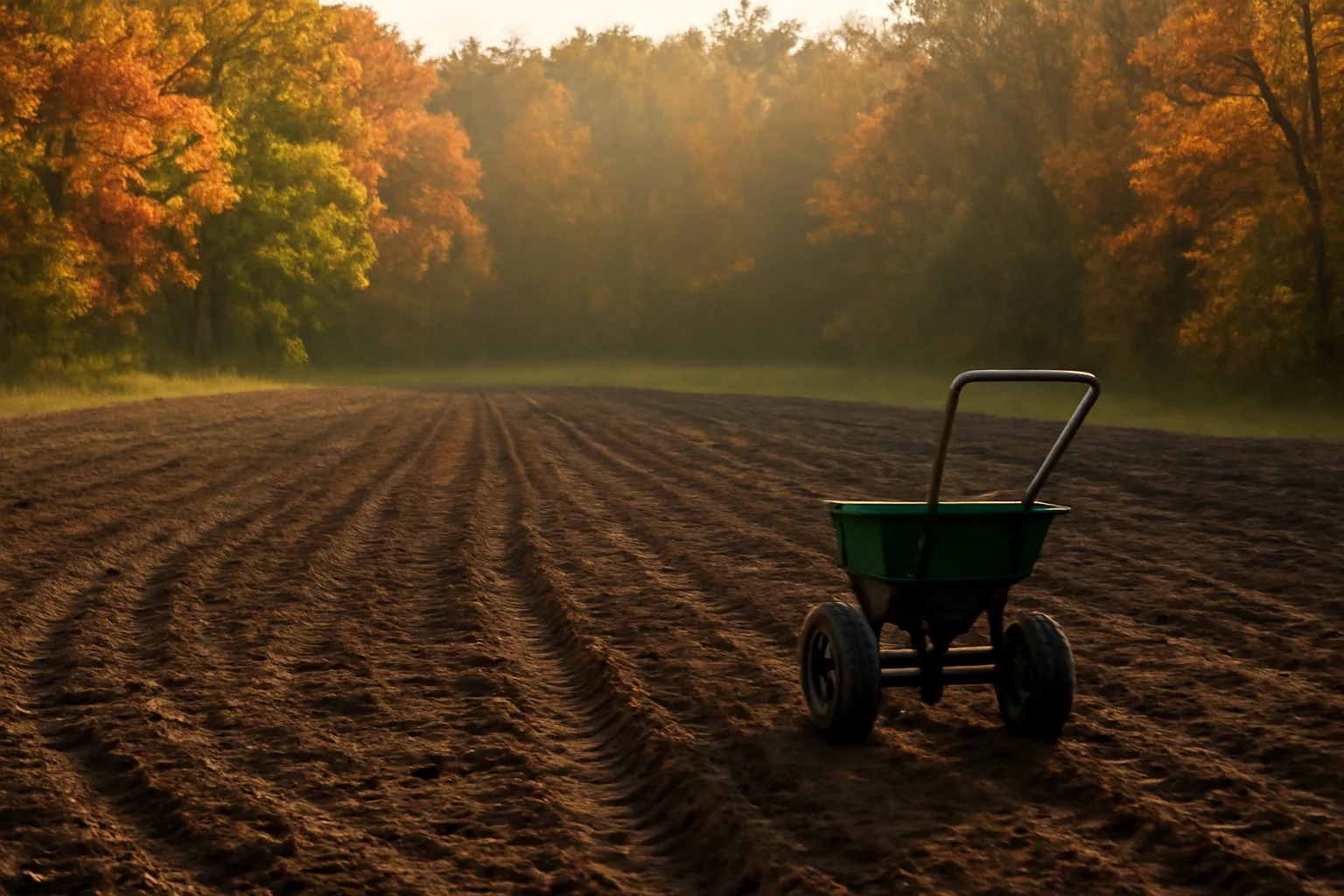
If you've got a tractor with a disc, drill, or no-till drill, you've got the most flexibility, since you can work compacted or weedy ground and get better seed-to-soil contact than broadcasting. If you're working with just an ATV, a pull-behind spreader, and hand tools, you can still get a good plot, but you'll want to lean toward forgiving species like oats, wheat, or brassica blends that tolerate broadcast-and-cultipack planting better than something finicky. No-till drills matter most for clover and small-seeded brassicas, since seed-to-soil contact drives germination rates more than almost anything else in the planting process. If you're broadcasting into a firm, weed-free seedbed and can drag a section harrow or cultipacker over it, you can get solid results without owning a drill. For readers weighing seed choice against the ground and gear they've actually got, it helps to look at how different food plot seed blends handle broadcast planting versus drilled planting before buying. Some deer food plot seed mixes are formulated specifically for broadcast establishment, which matters a lot if a drill isn't in your equipment shed.
do you need to worry about baiting or feeding rules with food plots?
Food plots are generally legal everywhere and treated differently from bait piles or supplemental feeding under most state wildlife regulations, but the rules genuinely vary by state and sometimes by whether you're talking about a standing crop versus a pile of loose grain or minerals. Some states restrict feeding but explicitly exempt normal agricultural food plot plantings; others have specific distance-from-stand rules or seasonal restrictions on supplemental feed that don't apply to plots at all. Check your state wildlife agency's regulations directly before assuming your plot is treated the same everywhere, since the legal line between a food plot and a bait pile isn't always obvious and enforcement varies. Most agencies publish this in their hunting digest or a specific baiting and feeding regulation page, and it's worth five minutes to confirm before season.
Frequently asked questions
Do deer eat sorghum?
Yes, deer eat sorghum, especially the grain heads once mature, and will browse young leaves too. Sorghum is a warm-season crop planted in late spring, though, so it's not a September planting option. Plant it May or June for a fall and winter standing food source instead.
Do deer eat clover?
Yes, and heavily. Clover is a legume high in protein and consistently ranks among the top-preferred forages in whitetail research. It stays palatable through spring, summer, and fall once established, making it one of the most reliable food plot investments available, provided it's planted early enough to establish before frost.
When should you plant food plots for deer?
Most fall food plots go in August through September, with exact timing set by your local first frost date rather than the calendar. Northern zones need seed in by mid-August for slower brassicas; southern zones can plant into October. Spring plots for warm-season crops go in April through June instead.
Do deer like clover more than other food plot options?
Clover regularly ranks at or near the top in forage preference studies alongside soybeans, and it holds that preference across most of the growing season rather than just right after planting. Acorns can still pull deer off clover during a heavy mast year, but as planted forage goes, clover is a consistent favorite.
When should you plant oats for deer?
Plant oats 60 to 90 days before your average first frost, which lands roughly mid-August to mid-September across most of the whitetail range. Oats germinate fast, often browsed within two to three weeks, but they don't survive hard freezes, so northern hunters often blend them with winter wheat or rye for late-season persistence.
When is the best time to plant turnips for deer?
Plant turnips 80 to 90 days before your first frost, typically late July through early September depending on zone. Deer eat the leafy tops through fall, but bulb feeding usually peaks after several hard frosts convert starches to sugar, making turnips more of a late-season plot than an early-bow-season draw.
What is a food plot, exactly?
A food plot is a planted area, usually a fraction of an acre to a few acres, established on hunting land to provide deer forage and hold animals on the property. It's built for attraction and nutrition rather than commercial yield, and species choice depends heavily on the season you're hunting and your local climate.
What are deer's favorite foods?
Acorns and soft mast top most preference rankings when available, followed by legumes like soybeans and clover, then brassicas, then cereal grains. Preference shifts by season and region, and deer will often choose natural mast over planted food plots entirely during a heavy acorn year, which isn't a sign the plot failed.
Do deer like honey?
There's no established food plot or forage research showing deer specifically seek out honey. It's not part of standard whitetail nutrition studies and doesn't factor into food plot planning. If you've encountered honey-based attractant products, that's a separate scent/attractant category unrelated to planted forage crops.
What's the best food plot to plant in September if I only have broadcast equipment?
Oats, winter wheat, or a brassica blend broadcast onto a firm, weed-free seedbed and dragged or cultipacked afterward all establish reasonably well without a drill. Clover and very small brassica seed benefit most from drilled seed-to-soil contact, but broadcasting still works if the seedbed is prepped well.
Can I plant clover and brassicas together in the same September plot?
Yes, this is a common and effective blend. Clover establishes as a perennial base while brassicas and cereal grains add fast-growing annual tonnage and late-season sweetness after frost. Just check seeding rates on the label, since combining species usually means reducing each individual rate to avoid overcrowding.
How do I know my exact planting window if I don't know my frost date?
Your state's land-grant university extension office publishes average first and last frost dates by county, often through climate lookup tools or extension fact sheets. Search your state name plus extension frost date map, or call your county extension office directly. Working backward from that date using the seed bag's maturity window gets you close.
Do food plots count as illegal baiting in any states?
Standing food plots are treated differently from bait piles in most states and are generally legal, but rules vary and some states have specific distance or scent-elimination requirements near stands. Always check your state wildlife agency's current baiting and feeding regulations before season, since enforcement and definitions differ by state.
Sources
- NOAA National Centers for Environmental Information, U.S. Climate Normals: Average first and last frost dates are derived from 30-year climate normal records maintained by NOAA
- Journal of Wildlife Management, whitetail deer food habits and forage preference research: Legumes and mast crops consistently rank among the highest-use forage categories in whitetail deer food habit studies
- University of Georgia Extension, Brassicas for Deer Food Plots (Bulletin 1362): Brassica bulbs increase in sugar content after frost exposure, increasing palatability to deer
- Penn State Agricultural Analytical Services Laboratory, Soil Testing: Soil testing through university labs typically costs a modest fee and provides site-specific lime and fertilizer recommendations
- USDA Natural Resources Conservation Service, Soil pH and Nutrient Availability (NRCS Soil Health guidance): Soil pH in the 6.0 to 7.0 range supports optimal nutrient availability for most forage legumes and brassicas