Last updated 2026-07-25
TL;DR
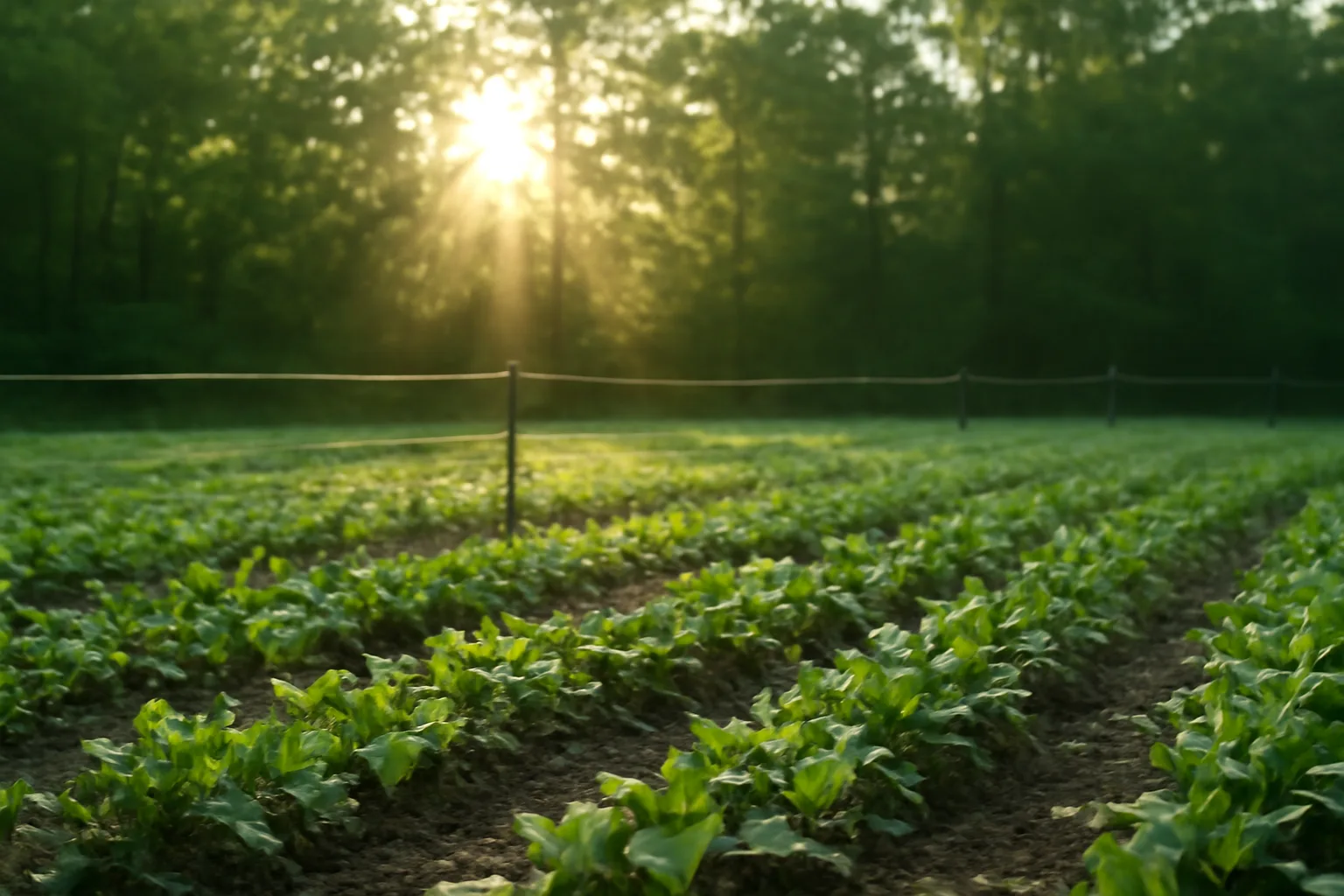
You can't keep deer out permanently and usually shouldn't want to, but you can protect a young plot until it's established using temporary electric or poly fencing, staggered planting dates, and sacrifice plots nearby. Fencing 4 to 6 feet tall with a poly mesh or double-strand electric setup is the most reliable low-cost option while seed germinates and grows past the vulnerable seedling stage.
why would you want to keep deer out of a food plot in the first place
This sounds backwards. The whole point of a food plot is to feed deer, so why would anyone want to keep them out? The answer is timing, not exclusion. A newly planted plot is most vulnerable in the first 3 to 6 weeks after seeding, when tender seedlings are pushing through the soil and have almost no root reserve to recover from repeated browsing. Deer will hammer a young brassica or clover stand right down to the dirt if they're hungry and nothing else is growing yet. Once plants get past that seedling stage and build some root mass, they can handle grazing pressure and keep bouncing back. So the real goal for most hunters isn't permanent exclusion. It's protecting the plot long enough to let it establish, then opening it up. If you've got a small plot (under an acre) surrounded by heavy deer density, this early browse pressure can wipe out a planting before it ever gets a chance. Extension research on food plot establishment consistently points to this early window as the make-or-break period.
what actually works to keep deer out temporarily
| Poly mesh fence (6-7 ft) | $150 to $400 | Season-long if maintained | Moderate, 2-4 hours | |
|---|---|---|---|---|
| Electric poly-wire (single/double strand) | $80 to $200 | 4-8 weeks, needs monitoring | Low, 1-2 hours | |
| Woven wire permanent fence | $800+ | Multi-year | High | |
| Repellent sprays | $30-60 per application | Days, rain washes off | Low but repeated | |
| Noise/scare devices | $20-100 | Days, deer habituate fast | Low | Repellent sprays and scare tactics are the weak links here. Deer habituate to noise and motion devices within days in most reported field use, and there's no strong land-grant research showing consistent, lasting effectiveness of taste or scent repellents on food plot acreage specifically (most repellent research is done on ornamental landscaping and orchards, not plots). |
Physical exclusion is the only method with real, repeatable results. Everything else (sprays, noise, human urine, hanging soap) has weak or no controlled data behind it for whitetail deer specifically, and most wears off in days. Temporary electric fencing is the standard approach among food plot specialists and it's what most experienced plotters actually use. A single-strand or double-strand poly wire fence baited with peanut butter on foil tabs (deer touch it with their nose, get a mild shock, and learn to avoid the area) can protect a plot through germination and early growth. Companies that sell these kits report needing them up for roughly 4 to 8 weeks depending on how fast the plot establishes, though there's no independent university trial giving a hard number on effectiveness percentage. Woven poly mesh fencing, 6 to 7 feet tall, is a step up in reliability because it's a physical barrier rather than a psychological one. Deer can jump it, but most won't bother if there's food elsewhere and the fence has no obvious gaps. Here's a rough comparison of what's actually available: | Method | Typical cost per acre | How long it holds | Labor to install |
when should you plant food plots for deer
Timing itself is one of the best exclusion tools you have, because it avoids the conflict entirely. If you plant when deer have plenty of other forage, they won't hammer your new seedlings as hard. General windows across most of the whitetail range: spring plots (clover, chicory, soybeans) go in after last frost, typically April through May depending on your zone. Fall plots (brassicas, cereal grains, winter peas) go in roughly 60 to 90 days before your first hard frost, which lands anywhere from late July in the northern Midwest to September in the South. Your local NRCS plant hardiness zone and your state extension's planting calendar are the right starting points, not a national blanket date. The USDA Plant Hardiness Zone Map is the standard reference for frost timing across regions [1]. Extension services in states like Wisconsin and Mississippi publish specific fall planting windows, and they differ by 6 to 8 weeks depending on latitude. Planting into a moisture window matters more than hitting a calendar date. A brassica plot seeded into dry soil in early August in a drought year will sit there ungerminated while deer browse whatever green groundcover they can find, plot or not.
when to plant oats for deer
Oats are a fall annual, planted 6 to 8 weeks before your first frost date so they can establish a few inches of growth before cold really sets in. In most of the Midwest that lands in the August to early September window; in the Deep South it can push into October. Oats germinate fast, often within 5 to 7 days in warm, moist soil, which is part of why they're popular in fall blends. That speed is also why they're at high risk from browse pressure right out of the gate. A pure oat plot next to heavy deer density can get grazed to nothing before it hits 4 inches tall. Mixing oats with a slower brassica like turnips or a cereal rye can spread out the grazing pressure and give you a longer window of usable forage instead of one quick flush that gets wiped out. Extension guidance on cereal grain forage plots generally recommends this blended approach for exactly that reason [2].
when to plant turnips for deer
Turnips are planted in late summer, generally 80 to 100 days before your average first frost, since they need that runway to bulb out and reach peak tonnage. For most of the whitetail range that's late July through mid-August. Turnips are a classic example of a plant deer often ignore early and then hit hard once a frost sweetens the starches into sugars. That means your "protection window" for turnips isn't just germination, it's the whole growing season until the first freeze, because deer may not touch the tops seriously until late fall and won't dig the bulbs until after a couple of hard frosts have converted starch to sugar. This is well documented in university brassica variety trials [3]. If deer are hammering your turnip tops in September before they've had a chance to bulb up, that's usually a sign of high local deer density relative to plot size, and it's a case where temporary fencing during the first 30 to 45 days genuinely pays off.
do deer eat clover, and do they actually like it
Yes, and it's one of their preferred food plot forages nearly everywhere they're found. Clover (white clover, red clover, and various blends) is high in protein, typically 20 to 30 percent crude protein in vegetative growth stages, and it regrows quickly after grazing because of its perennial root structure [4]. That regrowth ability is exactly why clover handles grazing pressure better than annuals like oats or brassicas. A well-established clover stand can take repeated browsing all season and keep coming back, which is part of why it's a go-to for hunters planting multi-year perennial plots rather than something replanted every year. The catch: clover is just as vulnerable as anything else in its first year during establishment. A brand new clover seeding can get grazed out before it roots deeply enough to survive, especially in small plots. Once it's through that first summer and fall, though, it's one of the more resilient plot options long-term. If you're weighing clover against other options for a new plot, the food plot whitetail guide breaks down species selection by region and soil type.
do deer eat sorghum
Yes, deer will eat sorghum, particularly grain sorghum heads once they mature, but it's not typically a preferred browse crop the way clover or soybeans are. Sorghum is more commonly planted as a screening or standing grain crop, valued for cover and winter grain availability rather than as the primary attractant. Deer tend to hit sorghum heads hardest in late fall and winter when other food sources are scarce, similar to how they use standing corn. It's a reasonable component in a diverse plot mix but rarely the headline species, and it's slower to establish and more drought-tolerant than most plot staples, which is why it shows up more in southern and drier western food plot programs.
what are deer's favorite foods, really
There's no single universal answer because it changes by season, region, and what's locally available, but a few patterns hold up across most whitetail research and extension guidance. Soybeans and clover consistently rank near the top for warm-season preference because of high protein content and palatability. Acorns, when they're dropping, often outcompete any planted forage entirely; deer will abandon a food plot for a good white oak acorn drop almost every time. In late fall and winter, brassicas (turnips, radishes, rape) become highly attractive after a hard frost converts starches to sugars, and standing corn or grain sorghum becomes important for raw calories. State wildlife agency deer management guides, like those published by state fish and wildlife departments, generally list soft mast, acorns, agricultural crops, and browse (woody stems and leaves) as the bulk of a wild deer's actual diet, with food plots supplementing rather than replacing natural forage . If you're building out a full plot plan, the deer food plot seed and food plot seed pages cover species-by-species options.
do deer like honey, and does it work as an attractant
Deer aren't attracted to honey specifically, but they will investigate and consume it because it's a sugar source, similar to how they're drawn to any sweet, high-energy food when available. There's no meaningful body of wildlife research treating honey as a food plot additive or attractant, and it's not something extension or state wildlife guidance addresses because it isn't agriculturally practical at any scale. Sweet feeds, molasses-soaked grain, and mineral licks get far more real-world use and have more anecdotal track record among hunters, but check your state's baiting and feeding regulations before using any of these near a hunting area. Baiting laws vary enormously by state, some ban it outright for hunting purposes, some allow it with distance restrictions from a stand, and some restrict it seasonally for chronic wasting disease concerns. Your state wildlife agency's hunting regulations booklet is the only reliable source here, not a hunting forum.
what is a food plot, exactly
A food plot is a planted area, typically anywhere from a quarter acre to several acres, established specifically to provide supplemental forage for deer and other wildlife, usually on hunting land, whether owned or leased. It's distinct from agricultural cropland in that the goal is wildlife nutrition and hunting opportunity, not harvest for sale. Food plots generally fall into two broad categories: annual plots (replanted every year, things like brassicas, cereal grains, and soybeans) and perennial plots (clover, chicory, alfalfa blends that can last 3 to 5 years with proper maintenance). Most land managers run some combination of both, using perennials as a stable food base and annuals to target specific hunting seasons. State extension services and USDA NRCS both publish general food plot establishment guidance covering seedbed prep, soil testing, and species selection as part of broader wildlife habitat management programs . If you're starting from scratch, the deer food plots overview page is a good next stop before you get into specific species.
how do you protect a plot without fencing it entirely
Fencing every plot on your property isn't realistic or affordable for most hunters managing multiple acres. A cheaper and often more effective strategy is planting a decoy or sacrifice plot. The idea: put in a large, cheap, fast-growing plot (winter wheat or oats are common choices) somewhere else on the property, timed to green up right when your primary plot is at its most vulnerable seedling stage. Deer will generally hit the easiest, most accessible food source first. If that's your sacrifice plot instead of your prized clover or brassica plot, you've bought your main plot the time it needs. This works best on larger properties with more than one plantable field. On a single small food plot property, temporary fencing is usually the more reliable option because there's nowhere else to redirect deer pressure. Staggering plot maturity dates across your property (some plots peaking in September, others in November) also spreads out browse pressure naturally instead of concentrating it all on one stand at one time.
does soil fertility affect how fast a plot can outgrow deer pressure
Yes, and this is one of the most overlooked factors in the whole exclusion conversation. A plot growing in correctly limed, properly fertilized soil establishes faster and develops root reserves sooner, which means it gets through the vulnerable seedling window quicker. A soil test is the starting point, not a guess. Most land-grant extension soil labs (Penn State, Mississippi State, University of Missouri, and others) will tell you your exact pH and nutrient deficiencies for around $15 to $20 per sample, and that report is the actual authority on what lime and fertilizer your specific ground needs, not a generic blend recommendation . Deer forage species like clover and brassicas are particularly sensitive to soil pH; clover struggles badly below pH 6.0, and correcting that with the lime rate your soil test specifies can be the difference between a plot that gets grazed out and one that outgrows the pressure. This is genuinely site-specific work. A soil report from a field in the Mississippi Delta and one from a rocky Pennsylvania ridge are going to call for completely different lime and fertilizer rates even for the same seed blend. If you want a general starting framework based on your zone, soil test numbers, and equipment on hand before you finalize species and rates, PlotSeason's $99 Custom Food Plot Plan builds that out at /plot-plan-builder, though your soil test lab's specific recommendations should always be the final word on lime and fertilizer amounts for your ground.
Frequently asked questions
Do deer eat sorghum?
Yes, deer eat grain sorghum, especially mature heads in late fall and winter, but it's usually planted for cover and standing winter grain rather than as a top attractant. Clover, soybeans, and brassicas typically draw more consistent browse pressure earlier in the season.
Do deer eat clover?
Yes, clover is one of the most preferred whitetail food plot forages, running roughly 20 to 30 percent crude protein in vegetative stages. It regrows well after grazing once established, though first-year seedings are vulnerable to being grazed out before they root deeply.
When should you plant food plots for deer?
Spring plots (clover, soybeans, chicory) go in after your last frost date, generally April to May. Fall plots (brassicas, cereal grains) go in 60 to 100 days before your first hard frost. Exact dates depend heavily on your USDA hardiness zone and local extension planting calendar.
Do deer like clover?
Yes, clover is consistently one of the highest-preference food plot species for whitetail deer, largely due to its high protein content and season-long availability once established. It's a common perennial base plot species across most of the whitetail range.
When should you plant oats for deer?
Plant oats 6 to 8 weeks before your area's average first frost date, generally August to early September in the Midwest and later in the South. Oats germinate quickly, often within 5 to 7 days, which makes early-stage browse pressure a real risk if deer density is high.
When should you plant turnips for deer?
Turnips need 80 to 100 days before your first expected frost to bulb properly, putting most planting windows in late July through mid-August. Deer often ignore the tops until after a frost sweetens the plant, so real grazing pressure often doesn't hit until late fall.
What is a food plot?
A food plot is a planted area on hunting land, usually a quarter acre to several acres, established to provide supplemental deer forage rather than a crop grown for sale. Plots are generally either annual (replanted yearly) or perennial (lasting multiple years with upkeep).
What are deer's favorite foods?
It changes by season and region, but soybeans, clover, and acorns rank consistently high. Deer will typically abandon a food plot for a good acorn drop. In late fall, frost-sweetened brassicas and standing grain crops become more attractive as calorie sources.
Do deer like honey?
Deer will eat honey if they find it because it's a sugar source, but it's not a documented or practical food plot attractant. There's no meaningful research or extension guidance treating honey as a wildlife feeding tool, unlike mineral licks or grain.
What's the best way to keep deer out of a new food plot?
Temporary electric poly-wire fencing or 6 to 7 foot poly mesh fencing are the most reliable options, used for the first 4 to 8 weeks after planting while seedlings establish. Repellent sprays and scare devices have weak, short-lived effects by comparison.
Will a sacrifice plot really keep deer off my main plot?
It can help significantly on larger properties with more than one plantable field, since deer tend to hit the easiest food source available. On single-plot properties with no alternative planting area, physical fencing is usually the more dependable option.
How long does a new food plot need protection before it can handle grazing?
Most annual plots need 3 to 6 weeks of reduced pressure to get past the seedling stage and build enough root reserve to tolerate browsing. Perennials like clover may need a full first growing season before they're truly resilient.
Is it legal to use bait or feed to distract deer from a plot?
It depends entirely on your state. Baiting and feeding regulations vary widely, some states ban it for hunting purposes entirely, some allow it with distance restrictions, and some restrict it seasonally due to chronic wasting disease concerns. Check your state wildlife agency's current regulations before doing this.
Sources
- University of Wisconsin-Madison Extension, Food Plots for Deer: Fall food plot planting windows vary by 6 to 8 weeks depending on latitude
- USDA NRCS, Plant Fact Sheet: White Clover: White clover crude protein content in vegetative growth stages
- Pennsylvania Game Commission, White-tailed Deer Management: Wild deer diet is dominated by natural browse, mast, and agricultural crops, with food plots as supplemental forage
- Penn State Extension, Agricultural Analytical Services Lab Soil Testing: Standard cost range for a land-grant university soil test
- University of Georgia Extension: Best practices for establishing and protecting deer food plots without full fencing