Last updated 2026-07-25
TL;DR
WHS food plot seed refers to seed blends (clover, brassicas, oats, sorghum) sold for deer food plots. Deer readily eat clover, oats, and turnips; sorghum is more of a screen and late-season filler than a preferred forage. Planting timing depends on your zone: spring for clover and warm-season annuals, late summer (roughly 60-90 days before first frost) for brassicas and oats.
What is a food plot?
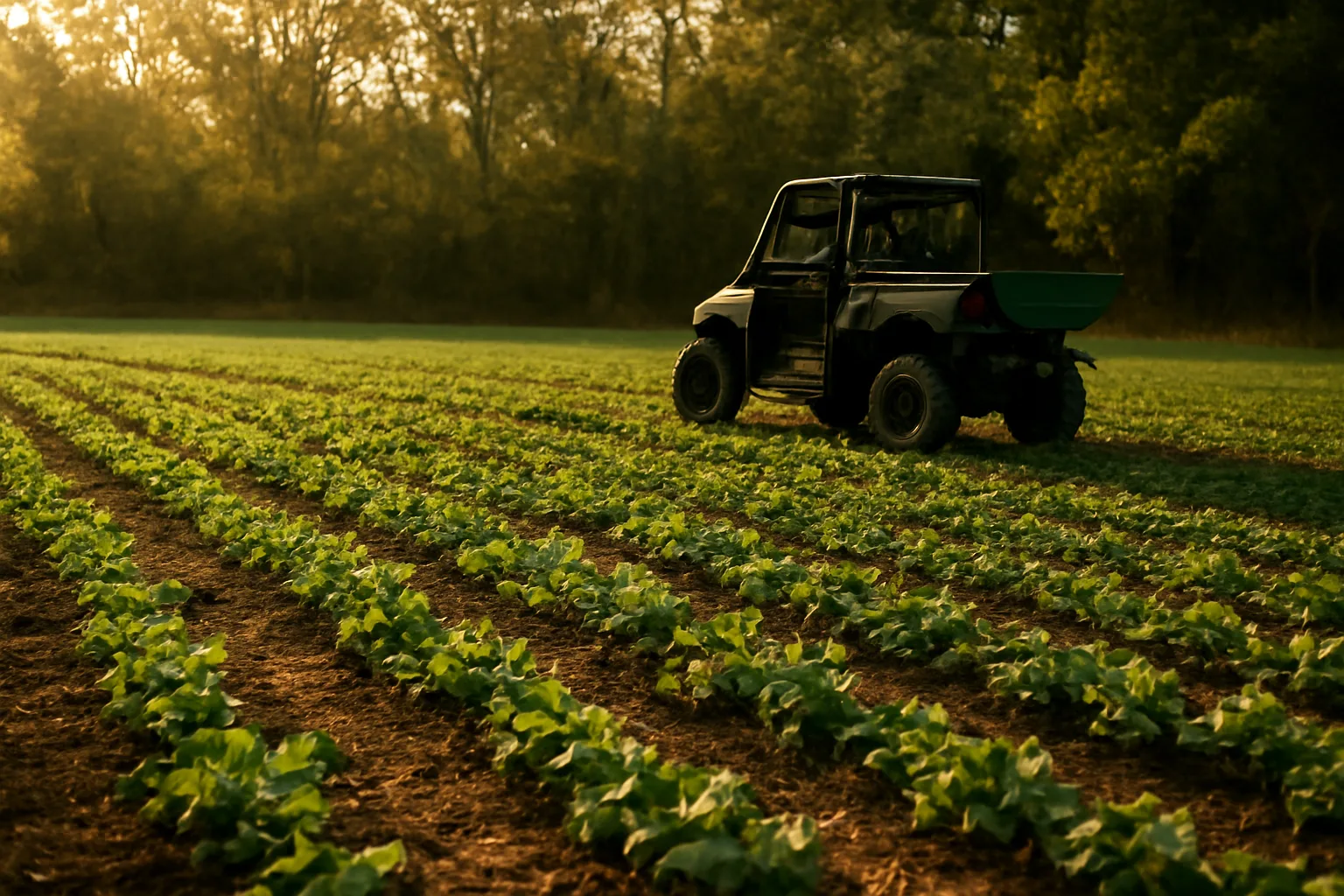
A food plot is a planted patch of forage, usually somewhere between a quarter acre and a few acres, put in specifically to feed and hold deer or other wildlife on a property. It's not a garden and it's not a lawn. The goal is nutrition and attraction, not looks. Most hunters plant food plots for one of two reasons: to improve deer nutrition through the spring and summer growing season (antler growth, fawn rearing, body condition going into winter), or to create a hunting opportunity in fall by putting a food source where a stand or blind can cover it. Some plots do both. A clover plot planted in spring can feed deer all summer and still be green enough in October to hunt over. The USDA Natural Resources Conservation Service and most state wildlife agencies treat food plots as a wildlife habitat practice, similar to native warm-season grass plantings or timber stand improvement. The Mississippi State University Extension describes food plots plainly as "a planted area of a field that provides supplemental forage for wildlife" [1]. That's really the whole definition. Everything else, species choice, soil work, timing, is just execution. "WHS food plot seed" isn't a single species. It's a brand or product line name attached to blended seed bags, typically mixes of clover, brassica, cereal grain, and sometimes sorghum or sunflower, marketed for deer plots. When you buy a bag labeled that way, check the tag. By law, seed sold in the US has to carry a label listing species, percentage by weight, germination rate, and test date, per the Federal Seed Act [2]. That tag tells you more than the marketing copy ever will. For background on how food plots fit into a whole-property plan, see food plot whitetail and deer food plots.
Do deer eat sorghum?
Yes, deer eat sorghum, but it's not their first choice and it's rarely the main event in a plot. Grain sorghum (milo) produces a seed head deer will hit hard in late fall and winter once softer, more palatable food is gone, and standing sorghum makes excellent cover and a windbreak for a plot. Whitetail deer are primarily browsers with a strong preference for broadleaf plants (forbs), soft mast, and legumes over grain crops most of the year. Sorghum is a warm-season grass, agronomically similar to corn, and deer treat it the way they treat standing corn: useful in the cold months when energy needs are high and other forage has gone dormant or been buried by snow. A lot of "deer plot" blends include sorghum for structure, not preference. Tall sorghum stalks (often 4 to 7 feet) break wind, hide deer movement, and give a plot some visual screening from roads or neighboring stands. If you're seeing sorghum in a WHS or similar blend, that's probably why it's there, not because it out-competes clover or beans for palatability. If you want grain in the plot for late-season energy, standing corn or soybeans generally pull harder than sorghum where deer have a choice. Sorghum earns its spot on marginal, dry, or sandy ground where corn struggles, and as a screening plant along field edges.
Do deer eat clover, and do they actually like it?
Deer eat clover readily, and yes, they like it. Clover (white clover, red clover, ladino) is one of the most consistently preferred food plot forages across whitetail range, and it's a workhorse for a reason: it's high in protein (often 20 to 25% crude protein in good stands), it regrows after grazing, and it's perennial, so one planting can produce forage for 3 to 5 years with maintenance. The Penn State Extension notes that clover "is highly palatable to deer and other wildlife and provides high-quality forage from spring through fall". That spring-through-fall window is the real advantage over annuals. A clover plot is doing work in May when fawns are being raised and again in September when bucks are finishing antler growth, all from one seeding. White clover (including ladino types) tends to handle grazing pressure better than red clover, which grows taller and is more often cut for hay than browsed short. For a hunting-focused perennial plot, ladino or a ladino/red clover blend is a common, reliable choice recommended by extension programs across the whitetail's range. The tradeoff: clover needs decent soil pH (most guidance targets 6.0 to 6.5) and some fertility to really produce, and it can get out-competed by weeds and grass without mowing or occasional herbicide. A soil test is the cheap insurance here; guessing at lime rates is how clover stands fail in year one. See deer food plot seed for more on species selection.
When to plant food plots for deer
| Northern (MN, WI, MI, ME, VT) | Mid-May to early June | Late July to mid-August | |
|---|---|---|---|
| Mid-South (KY, TN, VA, MO) | Late April to mid-May | Mid-August to mid-September | |
| Deep South (AL, GA, MS, LA) | Mid-April to mid-May | Early September to early October | For a full month-by-month breakdown by state, deer food plot seed and deer for food go deeper on regional calendars. |
Timing depends entirely on what you're planting and where you are. There's no single planting date for "food plots" because a spring clover planting and a fall brassica planting are on completely different calendars. As a rule of thumb: perennials (clover, chicory, alfalfa) go in spring, once soil temps warm and frost risk has passed, so they can establish roots before summer stress. Warm-season annuals (soybeans, sorghum, sunflower, cowpeas) also go in late spring after the last frost date for your area. Cool-season annuals (brassicas, oats, wheat, rye) go in late summer, timed so they mature going into fall when deer traffic and hunting pressure pick up. A widely cited planting rule from extension and wildlife agency guidance is to plant fall brassica and cereal grain plots 60 to 90 days before your area's average first hard frost, which gives the plants enough of a growing window to bulk up before cold sets in [3]. In much of the whitetail's range that lands somewhere between early August (far north) and mid-September (mid-South). Here's a rough national breakdown. Always confirm against your local extension office and your own frost dates, since "zone" tables like this smooth over a lot of local variation. | Region (rough) | Spring planting (clover, beans, sorghum) | Fall planting (brassicas, oats, wheat) |
When to plant oats for deer
Oats go in the ground in late summer to early fall for a hunting-season plot, typically 6 to 10 weeks before your first expected frost. That timing lets the oats put on tender, leafy growth right as deer shift into heavier feeding ahead of winter. Oats are a cool-season annual grain, and deer hit them hard while the plant is young and leafy, less so once it's headed out and gone to stem. Oats also tolerate a wider range of soil conditions than a lot of other cool-season options and germinate fast, often in 5 to 10 days with adequate moisture, which makes them a forgiving choice if your fall planting window is tight. Oats can also go in during early spring in northern climates as a quick, cheap green forage before summer heat kills them off, but the far more common use in deer plot programs is fall planting, timed to coincide with hunting season and the fall nutritional push. Many blends pair oats with a brassica (like turnip or radish) so the plot gives fast, early cover and forage from the oats while the brassica bulbs size up for late season. A killing frost (commonly cited around 20°F for a hard freeze) will eventually take oats down, but oats actually get sweeter and more palatable to deer after a light frost because the plant converts starches to sugars, similar to what happens with brassicas.
When to plant turnips for deer
Turnips are planted in late summer, generally 60 to 90 days ahead of your average first frost, so the plant has time to grow a full canopy of leaves and size up the root bulb before cold weather hits. Planting too early in hot, dry conditions can lead to poor germination; planting too late means the bulb doesn't have time to bulk up. Deer typically eat turnip leaves first, often within a few weeks of germination, then shift to the roots after one or more hard frosts convert starches in the bulb to sugars, making them noticeably sweeter and more palatable. This is why turnip and other brassica plots often look "untouched" in October and then get hammered in December. The plant hasn't changed; the deer's preference and the sugar content have. According to guidance from university extension brassica research, deer use of turnip forage tends to increase substantially after the first hard frost of the season, which is the basis for the standard advice to plant brassicas for a late-season, not early-season, food source. Turnips need a firm, well-drained seedbed and a very shallow planting depth (about a quarter inch, sometimes just broadcast on a prepared bed and cultipacked). They're also one of the cheaper seeds by the pound, and a little goes a long way since turnip seed is small and germination rates run high in fresh seed.
What are deer's favorite foods?
There's no single universal "favorite," but wildlife research and decades of extension observation point to a consistent preference pattern: deer favor high-protein forbs and legumes, soft mast (fruit), and acorns over grasses and mature grain crops, when given a choice. In food plot contexts specifically, clover and other legumes (soybeans, cowpeas, alfalfa) are consistently among the most preferred and most researched forages, largely because of protein content and digestibility. Native soft mast like apples, persimmons, and various browse species also rank very high, which is why orchards and mast-producing trees show up so often in whole-property deer management plans alongside plots. Acorns deserve a specific mention. Multiple wildlife agency studies, including work summarized by state agencies like the Georgia Department of Natural Resources, note that acorns from white oak group trees are generally preferred over red oak group acorns because they're lower in tannins and more palatable, and in a big mast year deer will often ignore food plots almost entirely in favor of a good acorn drop. Seasonally, preference shifts. Spring and summer favor high-protein forbs and clover for growth and lactation. Late fall favors mast, standing grain, and brassicas as fat reserves become the priority going into winter. A well-designed plot program, like the kind covered in food plot seed, tries to have something in the ground that matches whatever the deer's priority is at that point in the year, rather than betting everything on one species.
Do deer like honey?
There's no real research or wildlife agency guidance suggesting honey has any meaningful role in whitetail deer diet or attraction, and it's not a food plot input at all. This question likely comes up because some scent and attractant products use honey or sugar-based ingredients as a base, separate from anything planted in a plot. Worth being direct here: using bait, honey, syrup, mineral, or scent products to attract deer is regulated, and it varies a lot by state. Baiting is legal in some states and illegal in others, and some states that allow it still restrict it by season, distance from a public road, or type of material. Michigan, for example, has specific baiting restrictions tied to chronic wasting disease management in certain counties, adjusted periodically by the Michigan DNR [4]. Always check your state wildlife agency's current regulations before using any bait, mineral, or attractant product, since rules change year to year and enforcement is real. Food plots themselves are generally treated differently from bait piles under most state law, since they're a growing agricultural planting rather than a placed food source, but that distinction has specific legal definitions in some states. If you're unsure whether a practice on your land counts as baiting, your state wildlife agency's regulations page is the authority, not a seed bag or a forum post.
What does WHS food plot seed usually contain, and how do you choose a blend?
Seed sold under names like "WHS" or similar branded deer plot lines is typically a blend rather than a single species, mixing something from each of three categories: a legume (clover, usually ladino or a clover/chicory mix), a brassica (turnip, radish, or rape), and a cereal grain or grass (oats, wheat, or sorghum) for quick cover and early-season attraction. The smart way to shop any bagged blend, WHS or otherwise, is to read the tag, not the marketing name. Under the Federal Seed Act, every bag has to disclose the actual species and percentage by weight, along with germination rate and the date it was tested [2]. A bag that's mostly annual ryegrass filler with a small percentage of clover by weight is a very different product than one that's 80% actual clover seed, even if both say "deer clover blend" on the front. A few practical checks before buying any blend: 1. Does the region and soil match what's in the bag? A blend heavy on brassicas won't do much in deep sand with no organic matter and no lime history. 2. Is the germination rate current? Seed loses viability over time; a tag tested more than a year or two ago is worth a discount, not full price. 3. Does the blend match your planting window? A spring blend with warm-season annuals planted in September is just going to freeze out before it establishes. If you'd rather skip the guesswork on species mix and timing for your specific property, that's exactly the gap a soil-test-based plan fills. PlotSeason's $99 Custom Food Plot Plan takes your soil test results, region, and equipment on hand and builds out a species and timing plan around them, at /plot-plan-builder. It's general guidance built from your numbers, not a replacement for what your soil lab tells you about lime and fertilizer needs specific to your dirt.
How much does soil pH and fertility actually matter for these blends?
It matters more than the seed choice itself, honestly. Clover in particular is sensitive to soil pH; most extension guidance targets a pH of 6.0 to 6.5 for clover and alfalfa, and stands planted into acidic soil (below 5.5) without lime correction often fail to thrive regardless of how good the seed is [5]. Brassicas are a bit more forgiving but still respond strongly to correct pH and adequate phosphorus and potassium. A soil test costs very little (often $10 to $20 through a university extension lab) and tells you exactly how much lime and what fertilizer analysis your specific plot needs, which is money better spent than an extra bag of premium seed on ground that can't support it. Your soil test's recommendations are the actual authority here, not a generic bag rate or a national average. Extension soil labs calibrate recommendations to your regional soil type and crop, which a seed tag or blanket guide can't do. Lime takes time to work, often 3 to 6 months to fully adjust pH depending on how fine it's ground and how well it's incorporated, so testing and liming well ahead of a spring clover planting (ideally the previous fall) gives it time to actually move the needle. Planting clover into unlimed acidic soil the same week you spread the lime is a common and avoidable mistake. For more on reading a soil test and building fertility into a plot plan, see deer food plots and domain food plot seed.
Equipment and prep: what do you actually need to plant these blends?
For most bagged deer blends, you need a way to kill or clear existing vegetation, a way to work or firm the seedbed, a way to get seed in at the right depth, and a way to pack it in for good soil contact. You don't need a full-size tractor with a grain drill to plant a half-acre clover plot, but you do need each of those four steps covered somehow. Small plots (under an acre) are commonly handled with an ATV or UTV, a disc or cultipacker attachment, and a broadcast spreader, sometimes a hand-crank spreader for very small plots. Larger acreages usually justify a compact tractor with a disc, drag harrow, and a drill or seeder attachment, since drilling gets more consistent depth control than broadcasting, especially for small seeds like clover and brassica that need shallow, firm placement. A common mistake with broadcast seeding, brassicas and clover especially, is planting too deep. Both want to be barely covered, roughly a quarter inch or less, and a cultipacker or light drag after broadcasting is often enough. Cereal grains like oats and wheat tolerate deeper planting, around 1 to 1.5 inches, and grain drills handle that depth well. Whatever blend you're working with, matching seed depth and seedbed prep to what's actually in the bag (check that tag again) matters more than which brand name is on the front.
Frequently asked questions
Do deer eat sorghum?
Yes, but it's a secondary food source, not a first choice. Deer eat sorghum grain heavily in late fall and winter once preferred forages like clover, soft mast, and acorns are gone. Many blends include it more for cover and wind screening than for palatability, since deer generally prefer soybeans or standing corn over sorghum when given a choice.
Do deer eat clover?
Yes, clover is one of the most preferred and most planted food plot forages for whitetail deer. It's high in protein (often 20-25% crude protein), regrows after grazing, and provides forage from spring through fall as a perennial, according to Penn State Extension guidance on clover food plots [3].
When should you plant food plots for deer?
It depends on species. Perennials like clover go in spring after frost risk passes. Warm-season annuals (soybeans, sorghum) also go in late spring. Cool-season annuals (brassicas, oats, wheat) go in late summer, typically 60 to 90 days before your area's average first frost, so they mature into fall.
Do deer like clover more than other food plot options?
Clover ranks among the top preferred food plot forages in most extension research, largely because of its high protein content and season-long availability. Preference does shift seasonally, though; in a heavy acorn year or during late-season cold, deer may favor mast or brassicas over clover instead.
When should you plant oats for deer?
Plant oats 6 to 10 weeks before your area's first expected frost for a fall hunting-season plot. Oats germinate quickly (5 to 10 days with moisture) and deer prefer them while young and leafy, before the plant heads out. Spring plantings are also possible but less common in deer plot programs.
When should you plant turnips for deer?
Plant turnips 60 to 90 days before your area's average first frost. Deer eat the leaves first, then switch to the root bulbs after a hard frost converts starches to sugars, making them sweeter. Planting too late means the bulb won't have time to size up before the season ends.
What exactly is a food plot?
A food plot is a planted area, often a quarter acre to a few acres, established specifically to provide supplemental forage for deer or other wildlife, per Mississippi State University Extension's definition [1]. It's distinct from a bait pile since it's a growing agricultural planting, though state rules on what counts as baiting still vary.
What are deer's favorite foods overall?
Deer generally favor high-protein forbs and legumes (like clover and soybeans), soft mast (apples, persimmons), and white oak acorns over grasses and mature grain. Preference shifts seasonally: spring and summer favor protein-rich forage, fall and winter favor mast, standing grain, and frost-sweetened brassicas.
Do deer like honey?
There's no wildlife research supporting honey as a meaningful deer food or attractant; it's not used in food plots. It may come up because some scent or bait products use honey or sugar bases. Check your state wildlife agency's baiting regulations before using any attractant, since rules on baiting vary widely by state.
What's actually in a WHS or similar branded deer food plot blend?
Most branded deer plot blends mix a legume (usually clover), a brassica (turnip or radish), and a cereal grain (oats or wheat), sometimes with sorghum added for cover. The Federal Seed Act requires the bag tag to list actual species, percentage by weight, and germination rate, which is more reliable than the marketing name.
Do I need a soil test before planting a food plot blend?
It's strongly recommended. Clover and most blend components respond heavily to correct soil pH, generally 6.0 to 6.5 for clover per extension guidance, and a $10 to $20 soil test tells you the specific lime and fertilizer needs for your ground rather than guessing off a bag label.
Is planting a food plot considered baiting under state law?
Generally no, since it's a growing planting rather than a placed food source, but the legal distinction and any related restrictions vary by state and sometimes by county (disease management zones, for example). Check your state wildlife agency's current regulations directly before assuming any practice on your land is exempt from baiting rules.
Sources
- Mississippi State University Extension, food plot planning publication: Definition of a food plot as a planted area providing supplemental forage for wildlife
- USDA Agricultural Marketing Service, Federal Seed Act: Seed sold in the US must be labeled with species, percentage by weight, germination rate, and test date
- University of Tennessee Extension, wildlife food plot planting dates: Fall brassica and cereal grain plots should be planted 60-90 days before first frost
- Michigan Department of Natural Resources, baiting and feeding regulations: Michigan restricts baiting and feeding of deer in specific counties as part of chronic wasting disease management
- University of Kentucky Cooperative Extension, establishing clover food plots: Clover requires soil pH of 6.0 to 6.5 for good establishment and productivity