Last updated 2026-07-25
TL;DR
Winter food plot seed usually means brassicas (turnips, radish), cereal grains (oats, wheat, rye), or clover blends planted 60-90 days before your average first frost so plants mature into cold weather. Most of the whitetail range plants brassicas and oats in August, and clover or winter wheat into September. Check your soil test first; brassicas especially need decent pH and phosphorus to bulb out.
what is a food plot, exactly
A food plot is a planted area, usually a fraction of an acre up to a few acres, put in specifically to feed deer and other wildlife and to concentrate animal activity somewhere a hunter can watch or hunt it. It is not pasture and it is not a garden. Most plots run somewhere between a quarter acre and two acres on private or leased hunting ground, though some ag-heavy properties run food plots that look more like small farm fields. The basic idea is simple: plant something deer want to eat, at a time when it will be ready when deer need it most, in a spot deer will actually walk to. The complicated part is picking the right species for your soil, your climate, and your season. Winter food plot seed is a specific subset of that: seed chosen to still be green, or at least still be food, when November and December turn everything else brown. Most land-grant extension programs treat food plots as a wildlife management tool, not agriculture in the commercial sense, but the agronomy underneath it (soil pH, fertility, planting dates, seed-to-soil contact) is identical to row-crop farming on a tiny scale. That means a soil test still matters more than the seed bag. If you haven't pulled one, do that before buying anything. For background on plot types and how they fit into a whole-property plan, see food plot whitetail and deer food plots.
when to plant food plots for deer
| Zone 3-4 (northern MN, ND, upper MI) | July 15-Aug 1 | Aug 1-15 | Late Aug | |
|---|---|---|---|---|
| Zone 5-6 (IA, IL, PA, southern NY) | Aug 1-15 | Aug 15-Sept 1 | Sept 1-15 | |
| Zone 7 (KY, TN, VA, NC piedmont) | Aug 15-Sept 1 | Sept 1-15 | Sept 15-Oct 1 | |
| Zone 8 (deep South, GA, AL, MS) | Sept 1-15 | Sept 15-Oct 1 | Oct 1-15 | These are general windows, not guarantees. Local extension offices publish more precise last-frost and first-frost dates for your county, and that's the better source if you want exact numbers. See deer food plot seed for a broader planting calendar across seasons. |
Timing depends entirely on what you're planting and where you live, not on a single calendar date. Spring plots (clover, chicory, soybeans, cowpeas) go in after your last frost, typically April through June depending on latitude. Fall and winter plots (brassicas, cereal grains, winter peas) go in 60 to 90 days before your average first killing frost so they have time to establish before growth slows. The Mississippi State University Extension Deer Nutrition and Food Plot publication recommends planting brassicas roughly 80 to 100 days before the first hard frost, which in most of the Midwest and mid-South lands somewhere in late July through August [1]. Cereal grains like oats and wheat are more forgiving; they can go in a few weeks later than brassicas and still bulk up fast because they germinate quickly in cool soil. A rough regional breakdown for fall/winter plots: | Region (USDA zones) | Brassicas/turnips | Oats/wheat | Clover |
when to plant turnips for deer
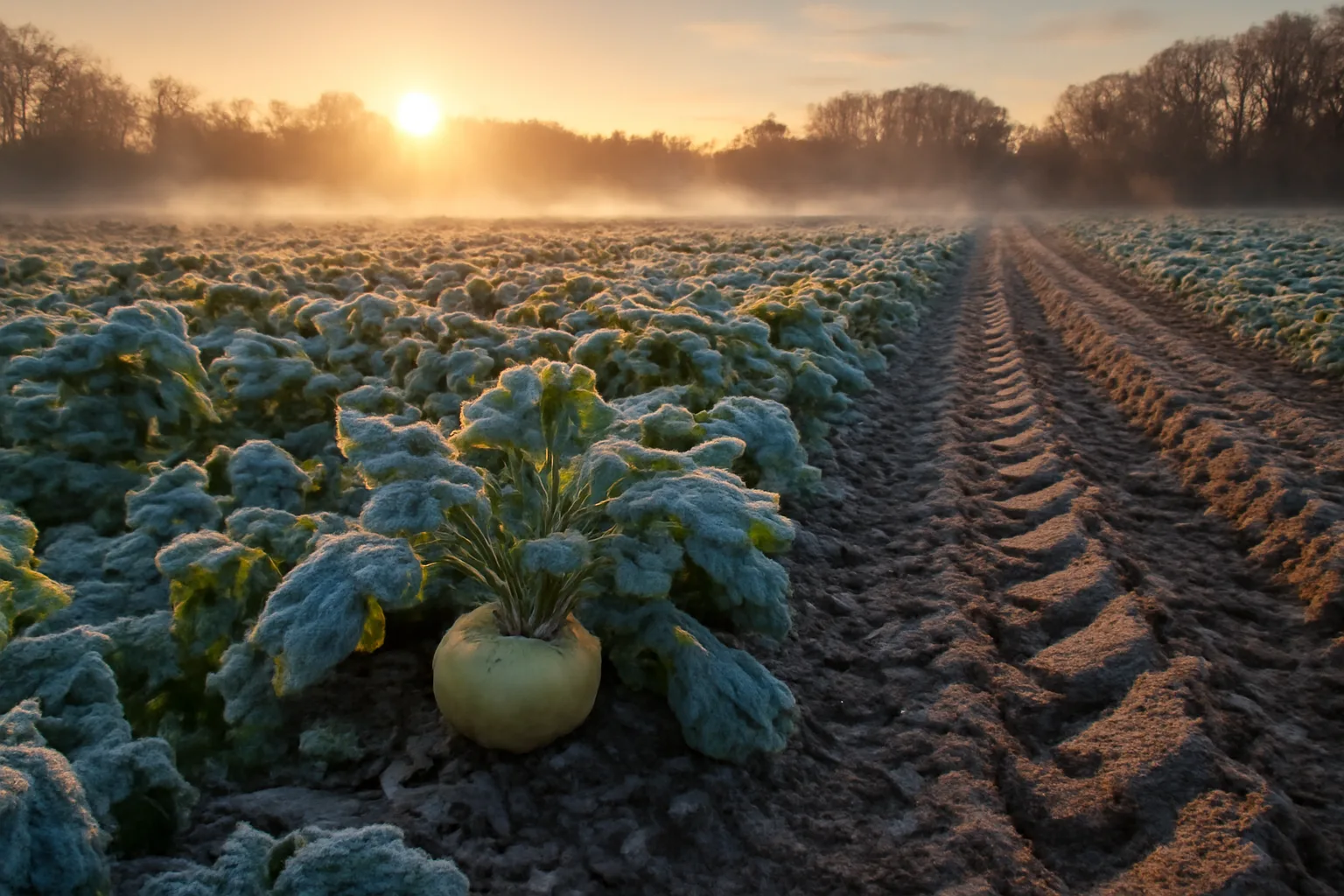
Turnips need 80 to 90 days from planting to reach full bulb size, and they taste better to deer after a hard frost converts starches to sugars. That means most of the whitetail range plants turnips in late July or August, so bulbs are mature and sweetened by the time frost hits in October or November. Purdue University Extension's brassica forage guidance notes that brassica crops like turnips should be planted in late summer for fall and winter grazing, and that a frost improves palatability rather than hurting the crop [2]. Deer often ignore turnip tops and bulbs early in the season, then hammer them hard once cold weather sets in, sometimes not touching the plot heavily until December or January. Seeding rate for turnips alone runs about 4 to 6 pounds per acre. Most hunters plant them in a blend with radish and rape rather than as a monoculture, since a mixed brassica blend spreads out palatability and reduces the risk of deer ignoring the whole plot if one species isn't hitting yet. Turnips also want a pH close to 6.0 to 6.5 and decent phosphorus; a soil test is the only way to know if you need lime before you drill seed. One real risk: planting too early. Turnips planted in June in a Zone 6 climate can bolt to seed and get woody before deer season even opens, wasting the whole plot.
when to plant oats for deer
Oats are one of the most forgiving winter food plot seeds you can plant, and they germinate faster than almost anything else in the cereal grain category, often showing green in 5 to 7 days under good moisture. Most hunters plant oats 6 to 8 weeks before first frost, which lands in the same August-to-September window as brassicas depending on region. Oats are highly palatable to deer and grow fast enough to provide early-season grazing while other plots are still establishing, which is why a lot of mid-South and Midwest guidance places the planting window from mid-August to mid-September. Oats are not as cold-hardy as wheat or rye though; a hard freeze in the teens can kill oat foliage outright, while wheat and cereal rye keep growing through much colder temperatures and green back up in spring. That's the tradeoff. Oats taste great to deer, especially early, but they check out earlier in winter in northern climates. If you're in Zone 5 or colder and want something still green in January, blend oats with winter wheat or cereal rye so you get the early palatability of oats and the cold tolerance of the small grains later. Seeding rate for oats alone is typically 100 to 130 pounds per acre broadcast, less if drilled.
do deer eat sorghum
Yes, deer eat grain sorghum, but it's a minor food plot player compared to corn, soybeans, brassicas, or clover, and it's used more as a screening or standing-grain crop than a primary attractant. Sorghum (milo) produces a seed head deer and other wildlife will feed on once it matures, and its tall, dense growth also works well as bedding cover or a visual screen along plot edges. Some food plot mixes use grain sorghum as a component in a fall diversity blend alongside soybeans, sunflowers, and millet, mostly because it's drought tolerant and cheap insurance if other components fail. It isn't a first-choice winter food plot seed on its own; brassicas and cereal grains outperform it for late-season nutrition and tonnage per acre in most trials. If you want cover more than food, sorghum earns its spot. If you want a dedicated winter attractant, put your money into brassicas or a grain like corn instead.
do deer eat clover, and do deer like clover
Yes, deer eat clover heavily, and most wildlife biologists rank it among the top perennial food plot forages available, both for tonnage and for protein content. Clover regrows after grazing (unlike brassicas, which don't come back once the bulb or leaf is eaten off), which makes it one of the few plantings that can feed deer from spring through fall in the same plot, year after year. White clover and red clover are among the most reliable perennial food plot species, and properly limed and fertilized stands can provide 20 to 25% crude protein forage through the growing season. That protein level matters most in spring and summer for antler growth and lactation, but clover also holds some green forage into early winter in milder climates, though it goes dormant and less palatable once hard frosts hit repeatedly. Clover isn't really a "winter" food plot seed on its own in northern climates; it's a three-season workhorse that fades once snow covers it. In the South it can stay grazable much later. If your goal is specifically late-season, post-frost nutrition, pair clover with a brassica or cereal grain planting rather than relying on clover alone. For species comparisons and blend ideas, see food plot seed and deer for food.
what are deer's favorite foods
There's no single official ranking, but repeated browse studies and extension forage-preference work point to a consistent short list: acorns (especially white oak family), soybeans, clover, and native forbs top most preference studies, with agricultural crops like corn and soybeans pulling deer hard whenever they're available in the landscape. Acorns are consistently the most preferred fall food where available. A Mississippi State University Extension deer nutrition publication notes acorns can make up over half of a deer's fall diet in years of good mast production, because they're calorie-dense and require little digestive effort compared to browse [1]. That's part of why food plots planted near oak stands, or acting as a secondary draw once acorns run out, tend to hold deer better than plots isolated in open fields. Among planted forages, soybeans and clover routinely rank at the top of preference trials for palatability and protein, while brassicas rank lower in preference early in the season but rise sharply after frost sweetens them. Deer are also creatures of habit and local conditioning; a plot that's the only green thing available in a dry, brown December will get hit hard regardless of species, because options are limited, not necessarily because that species is a universal favorite.
do deer like honey (and other odd attractant questions)
Deer don't seek out honey as a food source in any meaningful way; it isn't part of natural whitetail diet and there's no wildlife research showing deer are drawn to it as a food plot or attractant ingredient. The question usually comes up because some commercial deer attractant sprays and mineral products use sweet, fermented, or molasses-based scents to draw deer in, and honey gets lumped into that same "sweet smell" category by hunters. Molasses shows up legitimately in some mineral lick products and as a sweetener/binder in protein pellets, and deer will readily eat molasses-treated feed. But straight honey poured on the ground or used as a plot additive isn't a documented food plot practice and isn't backed by any extension or wildlife agency guidance. If you want a proven sweet draw, a well-timed brassica plot post-frost does more real work than any bottled attractant, and it's legal everywhere plots themselves are legal, which isn't always true of bait and mineral products (more on that below).
how do i pick between brassicas, cereal grains, and clover for a winter plot
Pick brassicas if you want maximum tonnage of late-season, post-frost nutrition and you're willing to accept that deer may barely touch the plot until November or December. Pick cereal grains (oats, wheat, rye) if you want something deer hit early and often, with less risk of a slow start, and better cold tolerance if you choose wheat or rye over oats alone. Pick clover if you want a plot that also feeds deer all spring and summer, more than winter, and you don't mind that it fades in hard winter conditions up north. Most experienced plot managers don't pick just one. A common winter blend is oats or winter wheat mixed with a brassica like turnip or radish, sometimes with a little clover seeded in as an understory that will take over the plot the following spring once the annuals are grazed out or winterkill. This kind of blend planting spreads risk (if deer ignore one component early, another one is usually drawing them) and spreads the feeding window across more of the fall and winter. Soil matters as much as species choice here. Brassicas are heavier feeders, wanting decent phosphorus and a pH near 6.0-6.5; clover fixes its own nitrogen but still wants lime if your soil is acidic, which a lot of eastern and southern soils are. None of this substitutes for an actual soil test from your county extension office or a private ag lab; the lab's recommendation on lime and fertilizer rates for your specific field is the real authority, not a seed bag label. If you want a structured plan built around your specific soil test results, region, and acreage, that's exactly what our $99 one-time Custom Food Plot Plan is built to do, but the species logic above works whether you use a paid plan or not.
seeding rates and rough costs for common winter plot species
| Turnip/brassica blend | 4-6 lbs | $15-30 | |
|---|---|---|---|
| Oats | 100-130 lbs | $25-45 | |
| Winter wheat | 100-120 lbs | $30-50 | |
| Cereal rye | 100-120 lbs | $25-40 | |
| Clover (white/red blend) | 6-10 lbs | $25-50 | These numbers move with commodity prices and whether you're buying bulk ag seed versus a bagged "food plot" branded blend, which usually costs more per acre for identical species. Buying straight ag-variety seed from a farm co-op instead of a licensed hunting brand often cuts costs significantly, though blended proprietary mixes can save time on figuring out ratios yourself. Don't skip lime if your soil test calls for it. Extension data consistently shows that correcting soil pH before planting does more for yield than any seed choice; a field at pH 5.0 will underperform even the best brassica blend regardless of fertilizer rate, because nutrients become less available to the plant as pH drops. |
Costs vary by region and by year, but rough per-acre seed costs as of recent seasons run something like this for straight seed (not counting lime, fertilizer, or equipment): | Species | Typical seeding rate (lbs/acre) | Rough seed cost/acre |
how much equipment do you actually need for a winter plot
For brassicas and cereal grains you need less equipment than most first-timers assume. A disc or tiller to break ground, a way to spread seed (a hand-crank broadcaster works fine on plots under an acre), a cultipacker or even just driving an ATV over the seed to firm soil contact, and that's genuinely most of it for small grains and brassicas, which don't need to be planted deep. Clover is pickier; it wants a firm, fine seedbed and shallow planting depth (1/4 inch or less), so a cultipacker before and after broadcasting genuinely helps germination rates. A no-till drill is nice to have but isn't required for winter annuals if you're willing to broadcast and cultipack instead. For equipment comparisons and setup guidance by plot size, see domain food plot seed.
check your state's baiting and feeding rules before you plant
Food plots themselves are legal everywhere in the United States as a land management and hunting practice, but supplemental feeding and baiting (piles of grain, mineral licks, feeders) are regulated very differently state by state, and some states blur the line around what counts as "baiting" near a planted field. A standing food plot is generally treated differently from a bait pile under most state statutes, but not always, and the definitions vary. Michigan is a useful example of how strict some states have gotten. Michigan's Wildlife Conservation Order restricts baiting and feeding of deer across the Lower Peninsula and in parts of the Upper Peninsula because of chronic wasting disease and bovine tuberculosis concerns, defining bait broadly as "a material composed of grains, minerals, salt, fruits, vegetables, hay, or any other food materials" placed to attract deer, while standing crops planted and left in place for wildlife are generally treated as food plots rather than bait under the order [3]. Other states, including several in the whitetail-heavy Midwest and South, have their own CWD-related feeding bans that don't apply to plots but do apply to feeders and mineral sites. Always check your state wildlife agency's current regulations before assuming a practice is legal; rules change year to year, especially in CWD management zones.
Frequently asked questions
When is the best time to plant winter food plots for deer?
Most of the whitetail range plants winter food plot seed (brassicas, oats, wheat) 60 to 90 days before the average first frost, which typically lands in August in northern and mid-latitude states and into September in the deep South. Check your county extension office for exact frost-date averages rather than relying on a single national date.
Do deer eat sorghum in food plots?
Yes, deer eat grain sorghum seed heads once mature, but it's a minor food plot species compared to brassicas, corn, or soybeans. It's more commonly used for cover, screening, or as one component in a diverse fall blend than as a dedicated winter attractant on its own.
Do deer like clover, and is it good for winter plots?
Deer eat clover heavily and it ranks among the top perennial forages for protein, often reaching 20 to 25% crude protein when properly limed and fertilized. It's better as a spring/summer/fall plot than a true winter plot, since it fades in cold climates; pair it with brassicas or cereal grain for late-season nutrition.
When should I plant oats for deer food plots?
Plant oats 6 to 8 weeks before your area's first frost, typically mid-August to mid-September in most of the mid-South and Midwest. Oats germinate fast (5-7 days) but aren't as cold-hardy as wheat or rye, so they may die back earlier in northern winters.
When do you plant turnips for deer food plots?
Plant turnips 80 to 90 days before your first hard frost, usually late July through August depending on latitude. Turnips need that time to bulb out fully, and their palatability actually improves after a frost converts starches to sugars, per Purdue Extension guidance on brassica forages.
What exactly is a food plot?
A food plot is a planted patch, usually a quarter acre to a few acres, put in specifically to feed deer or other wildlife and concentrate their activity for observation or hunting. It uses the same basic agronomy as farming (soil testing, liming, seeding) but at wildlife-management scale rather than commercial scale.
What are deer's favorite foods overall?
Acorns top most fall preference data, sometimes making up over half a deer's fall diet in good mast years per Mississippi State Extension. Among planted forages, soybeans and clover consistently rank highest in palatability trials, with brassicas rising in preference specifically after frost.
Do deer like honey or sweet attractants?
No, honey isn't a documented deer food or attractant; it isn't part of natural whitetail diet and no extension or wildlife research supports it as effective. The idea likely comes from confusion with molasses-based mineral products, which deer will eat readily but which serve a different purpose than honey.
Can I plant brassicas and cereal grains together in the same plot?
Yes, and many experienced plot managers prefer it. A blend of oats or wheat with turnip or radish spreads out the feeding window; deer often hit the grain earlier in fall and shift to the brassica bulbs and leaves after frost sweetens them in November or December.
Do I need a soil test before planting a winter food plot?
Yes. Brassicas and clover especially need a pH near 6.0-6.5 and adequate phosphorus to perform well, and a soil test from your local extension office or a private ag lab is the only reliable way to know your lime and fertilizer needs. Skipping this step is the most common reason plots underperform.
Is baiting or feeding deer legal in my state if I have a food plot?
Food plots (standing planted crops) are legal everywhere in the U.S. as a hunting and land management tool, but separate baiting and feeding rules (piled grain, mineral sites, feeders) vary a lot by state and often tighten in chronic wasting disease zones. Check your state wildlife agency's current regulations before adding bait or minerals near a plot.
How many pounds of turnip seed do I need per acre?
Turnips alone are typically seeded at 4 to 6 pounds per acre. Most hunters plant them in a blend with radish and rape rather than as a monoculture, since a mixed brassica blend spreads out palatability timing and reduces the risk of deer ignoring the whole plot early in the season.
Will deer eat a winter food plot right away after I plant it?
Not always, and that's normal. Brassicas especially are often ignored until after the first hard frost sweetens them, which can mean deer barely touch a turnip plot until November or December even though it was planted in August.
Sources
- USDA Natural Resources Conservation Service, Wildlife Habitat Management Institute, Food Plots for Wildlife: Food plots are treated as a wildlife management tool with agronomy fundamentals shared with commercial cropping
- Purdue University Extension, AY-357-W, Brassicas for Forage: Brassica forages should be planted in late summer and frost improves palatability rather than harming the crop
- USDA Natural Resources Conservation Service Plant Guide, White Clover (Trifolium repens): White clover is a high-protein perennial forage widely used in wildlife plantings
- Michigan Department of Natural Resources, Wildlife Conservation Order, Chapter III (Baiting and Feeding): Michigan's Wildlife Conservation Order defines bait broadly and restricts feeding and baiting of deer in CWD-affected areas while treating standing planted crops differently
- Purdue University Extension, Forage Field Guide reference, Winter Wheat and Cereal Rye Cold Tolerance: Winter wheat and cereal rye tolerate much colder temperatures than oats and can green up again in spring