Last updated 2026-07-26
TL;DR
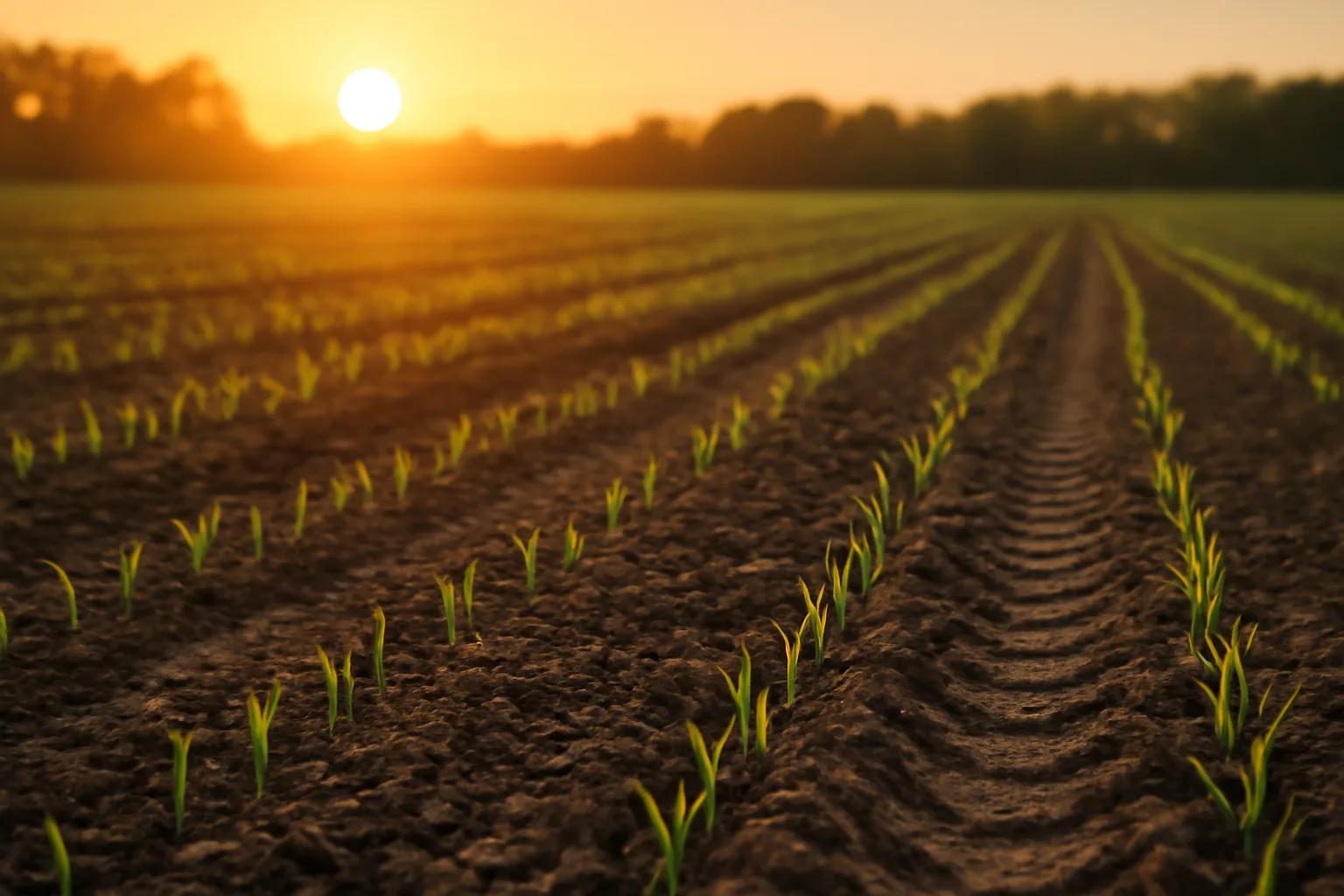
Plant oats for deer food plots 60 to 90 days before your first killing frost, usually late August through September in most whitetail country. Drill 80 to 100 lbs per acre (or broadcast at the higher rate) into a soil-tested seedbed. Oats germinate fast, draw deer hard in early fall, and pair well with brassicas or clover.
What is a food plot, and why do oats fit so well?
A food plot is a planted patch of forage on hunting land, built to feed deer, hold them longer, and give hunters a predictable place to set up. Plots range from quarter-acre kill plots tucked in timber to multi-acre destination fields planted for tonnage. Either way, the goal is the same: put something deer want to eat where you want them to be. Oats fit that job better than almost any other cereal grain for a few practical reasons. They germinate fast (often in 5 to 7 days under good moisture), tolerate a wider pH range than clover or alfalfa, and put out tender, sugar-rich leaves that deer hit hard the moment cold weather starts converting starches to sugars. The USDA NRCS plant guide for oats (Avena sativa) notes the crop is widely used for forage and cover because of its rapid establishment and broad adaptation across soil types [1]. Oats aren't a permanent food source. They're an annual, and in most of the whitetail's range a hard freeze eventually kills the plant back. That's fine. Their job is to be a high-value, fast-growing forage during the exact weeks bow season opens, not a year-round anchor. For that, you want a perennial like clover in the mix or in a nearby plot. If you want a second opinion on which species combination makes sense for your specific dirt and region, a food plot whitetail planning resource can help you sort options before you buy seed.
When to plant oats for deer?
The short answer: plant oats for a fall food plot 60 to 90 days before your area's average first killing frost. In much of the Midwest and Upper South that lands somewhere between mid-August and late September. In the Deep South and Texas, growers often wait until September or even October since summer heat can burn young oat seedlings and deer pressure on tender shoots is lower once temperatures drop. Oats can also be planted in early spring, roughly 2 to 4 weeks before your last frost date, as a quick-growing spring forage or nurse crop, but most food plotters plant them in fall because that's when deer are keying hard on carbohydrates and sugars ahead of winter. Spring-planted oats mature and head out fast in warm weather, which reduces their tenderness and palatability compared to a slow, cool fall grow-out. Check your local frost dates through your state's cooperative extension service before locking in a date. Oklahoma State University Extension recommends planting oats for fall forage from late August through mid-September in that state, with earlier dates for northern counties [2]. Iowa State University Extension similarly notes that fall-seeded oats for forage should go in by early-to-mid September in most of Iowa to allow adequate growth before frost [3].
When to plant food plots for deer in general?
Food plot timing splits into two windows: spring plots (clover, chicory, soybeans, alfalfa) go in after your last frost, typically April through May depending on latitude. Fall plots (oats, wheat, rye, brassicas) go in 60 to 90 days before your first frost, typically August through September. The reason for that 60 to 90 day fall window is root and leaf development. Brassicas like turnips need close to 80 to 90 days to bulb properly. Cereal grains like oats need less, sometimes as little as 45 days to produce grazeable forage, but more time still means more tonnage and better cold tolerance before the plant goes dormant or dies. A lot of hunters make the mistake of planting fall plots too late because they're focused on the opener instead of the calendar. If you wait until three weeks before archery season to plant oats, you'll get thin, immature growth right when you want it thick. Work backward from your local frost date, not forward from opening day.
How do you prepare the seedbed and what rate should you plant oats?
| Drilled seeding rate | 80-96 lbs/acre (2.5-3 bu/ac) |
|---|---|
| Broadcast seeding rate | 100-130 lbs/acre |
| Planting depth | 1-1.5 inches |
| Ideal soil pH | 6.0-7.0 |
| Days to grazeable forage | ~45-60 days |
| Fall planting window (most whitetail range) | 60-90 days before first frost |
Start with a soil test. This is not optional if you want oats to actually perform. Oats tolerate a pH range down to about 5.0 but grow best between 6.0 and 7.0, per Penn State Extension's agronomy guide on small grains. Your soil test lab is the authority on how much lime and fertilizer your specific field needs; a food plot plan can point you toward general rates but it can't replace an actual lab reading of your dirt. For seeding, drill oats at 2.5 to 3 bushels per acre (roughly 80 to 96 lbs, since a bushel of oats weighs about 32 lbs) into a firm, weed-free seedbed at a depth of 1 to 1.5 inches. If you're broadcasting instead of drilling, bump the rate up 25 to 50% higher (aim for 100 to 130 lbs per acre) to compensate for uneven seed-to-soil contact, and drag or cultipack after broadcasting to press seed into the soil. A basic starter fertilizer application (commonly 19-19-19 or similar, applied per your soil test recommendation) at planting helps oats get up fast, since they're heavy nitrogen users early in growth. If your test comes back low on phosphorus or potassium, address that before or at planting rather than waiting until later; oats don't recover well from a rough start. | Practice | Rate/Detail |
What's the best oat mix for a deer food plot?
Straight oats work, but most experienced plot growers mix them with something else to extend the plot's usefulness and hedge against weather. Oats and brassicas (turnips or a turnip/radish blend) is a strong combo because oats provide immediate green forage in the first 3 to 4 weeks while the brassicas bulb out for late-season, post-frost feeding. Oats and winter wheat or cereal rye stretch the plot's life since wheat and rye are more cold-hardy and will often survive into spring when oats have died back. Oats and clover work as a nurse-crop combination: the oats come up fast, shade out early weed competition, and give the slower-establishing clover a head start, then die back and let the clover take over as a perennial base. If you're planning a multi-species plot, check out deer food plot seed options built around these combinations, and compare blends at food plot seed before you commit acreage to one mix.
When to plant turnips for deer, and how do they compare with oats?
Plant turnips for deer 80 to 90 days before your first fall frost, generally a few weeks earlier than you'd plant oats alone in the same region, since turnips need more time to develop a bulb. In much of the whitetail's range that's late July through mid-August. Turnips and oats serve different roles in the same plot. Oats feed deer early, in the first month or so after emergence, while turnip tops (leaves) become palatable around the same time but the bulbs don't reach peak sweetness until after a couple of hard frosts convert starches to sugars. That's why turnip plots often get hit hardest in December and January, well after the oats in a mixed planting have already died back. Seed turnips at 4 to 6 lbs per acre if planted alone, or 2 to 4 lbs per acre in a mix with oats or other cereal grains, according to standard cooperative extension forage brassica guidance [4]. Turnips share the same pH preference as oats (roughly 6.0 to 7.0), which makes them easy to combine in the same seedbed prep pass.
Do deer like clover, and does it belong in an oat food plot rotation?
Yes. Clover is consistently one of the most preferred food plot forages for whitetail deer, and it belongs in almost every plot rotation as the perennial backbone, with oats used as an annual nurse crop or fall supplement around it. Mississippi State University Deer Lab research and extension work on food plot forages consistently ranks clover among the top preferred plantings, largely because of its high crude protein content, often in the 20 to 25% range during active growth, and its long growing season compared to annuals [5]. Clover also comes back year after year (2 to 5 years typically depending on variety and management), which spreads your cost over multiple seasons instead of replanting every fall. A common, well-tested approach: plant a perennial clover plot as your anchor food source, then use oats (alone or with brassicas) in a rotational or secondary plot to add fall tonnage and variety. Oats broadcast into a thinning clover stand in late summer can also rejuvenate an aging clover plot by adding structure and out-competing weeds for a season.
Do deer eat sorghum, and how does it compare to oats?
Deer will eat sorghum, particularly the grain heads and, to a lesser extent, the leaves, but sorghum is used far more often as a screening or bedding cover crop than as a primary deer forage. Grain sorghum (milo) is planted more for its tall, thick growth habit, which blocks wind and sightlines, than for its palatability compared to something like oats or soybeans. Where sorghum does get real attention from deer is standing grain in late fall and winter, when the seed heads mature and other food sources thin out. Compared to oats, sorghum has a much longer growing season (roughly 100 to 120 days to maturity) and is a warm-season crop, planted after soil temperatures reach 60°F, versus oats which are a cool-season crop planted in spring or fall. If your goal is early archery season forage, oats do that job far better than sorghum. If your goal is thick screening cover with a late-season bonus food source, sorghum earns a spot.
What are deer's favorite foods, and where do oats rank?
There's no single scientifically ranked list of deer's single favorite food, because preference shifts by season, region, and what's locally available, but research and field data consistently point to a handful of standout categories: acorns (especially white oak group acorns, which are lower in tannins and more palatable than red oak acorns), soybeans, clover, and other legumes, along with agricultural crops like corn during the growing season. A well-cited whitetail food habits study from the Georgia Department of Natural Resources and similar state wildlife agency research found that whitetail deer diets shift heavily toward mast (acorns) in fall when available, sometimes making up over half of fall diet content in oak-heavy habitat. In food plot settings without abundant mast, cereal grains like oats and wheat, along with clover and brassicas, become the go-to preferred plantings because they're consistently available and easy to establish compared to trying to manage a mast crop. Oats specifically rank as a strong early-season food plot choice, not because deer prefer them over clover or soybeans in a taste-test sense, but because oats deliver fast, tender, high-carbohydrate forage exactly when hunters need a plot to be productive, in the weeks bow season opens. For a broader look at how oats stack up against other annuals and perennials by season, see deer food plots.
Do deer like honey, and does it belong anywhere near a food plot?
Deer are not known to actively seek out or eat honey in the wild, and there's no meaningful wildlife research supporting honey as a deer food or attractant. Deer are herbivores built around forbs, browse, mast, and forage grasses; honey isn't part of their natural diet or foraging behavior. The confusion likely comes from scent and mineral attractant products that use sweeteners, molasses, or sugar-based additives to draw deer to a specific spot, which is a different category from food plot forage entirely. Before using any scent, mineral, or supplemental attractant product near a food plot, check your state wildlife agency's baiting and feeding regulations, since rules vary widely. Some states classify mineral licks and scent products as baiting, others don't, and enforcement details differ by state. Michigan's DNR, for example, maintains explicit baiting and feeding regulations that define what's legal and where, which is worth checking against whatever your state agency publishes for your specific county or unit [6].
Do deer eat sorghum leaves and stalks, or just the grain?
Deer browse sorghum leaves and stalks to some extent, especially young plants, but the heaviest use comes on the grain heads once they mature and dry down in fall. Young sorghum shoots are more attractive to deer than mature, coarse stalks, which is part of why some food plotters see early browse pressure on newly emerged sorghum that tapers off as the plant matures and toughens up. If deer pressure on young sorghum is heavy enough to stunt the stand, that's usually a sign of high deer density relative to available forage elsewhere on the property, not a flaw in the plant choice. In that scenario, adding more early-season forage acreage (oats, clover, soybeans) elsewhere on the property can relieve pressure on a sorghum screening plot so it has a chance to grow to full height.
How much does an oat food plot cost to plant, and is it worth it?
Oat seed typically runs somewhere in the range of $15 to $25 per 50 lb bag depending on region, variety, and whether you're buying bin-run oats from a local elevator (cheaper) or a bagged food plot blend (pricier, often with brassica or clover seed mixed in). At a drilled rate of 80 to 96 lbs per acre, that puts raw seed cost for a straight oat plot somewhere around $25 to $50 per acre, before fertilizer, lime, or fuel. Compared to soybeans or perennial clover establishment, oats are one of the cheaper, lower-risk plantings in a food plot rotation. They germinate reliably, don't require inoculant like legumes do, and give a visible stand within a couple of weeks, which makes them a good choice for a hunter who's short on time or working a new plot for the first time. If you're trying to figure out the right acreage split between oats, clover, and brassicas for your specific property, that's exactly the kind of decision a soil test and a written plan solve faster than trial and error. PlotSeason's $99 one-time Custom Food Plot Plan (built at /plot-plan-builder) walks through species selection and timing based on your region and soil test results, though your soil test lab remains the final word on lime and fertilizer rates for your ground.
What equipment do you actually need to plant oats?
At minimum: a way to kill or knock down existing vegetation (herbicide and a sprayer, or a disk), a way to work the seedbed (disk, tiller, or no-till drill), a way to place seed at the right depth (drill is ideal, broadcast spreader works with a cultipacker pass), and a way to firm the seedbed after seeding (cultipacker, roller, or even driving over it with a four-wheeler and drag). A no-till drill is the single best piece of equipment for oats specifically, because it places seed at a consistent 1 to 1.5 inch depth with good soil contact in one pass, even into existing sod or crop residue. If you don't own one, plenty of county extension offices, co-ops, and equipment rental outfits offer drill rental or custom planting services, which is often cheaper than buying a drill for a food plot under 10 acres. If you're broadcasting by hand or with a spreader (common on small or hard-to-reach plots), don't skip the cultipacking or dragging step. Oat seed left on the soil surface without good contact germinates poorly and unevenly, and you'll waste a meaningful chunk of your seed to birds and drying out.
Frequently asked questions
When should I plant oats for a deer food plot?
Plant oats 60 to 90 days before your area's average first killing frost, which lands roughly mid-August through late September across most of the whitetail's range. Check your state's cooperative extension frost date charts for your specific county before locking in a date, since the window shifts by latitude and elevation.
How many pounds of oats per acre should I plant?
Drill oats at 80 to 96 lbs per acre (2.5 to 3 bushels). If broadcasting instead, increase the rate to 100 to 130 lbs per acre to make up for uneven seed-to-soil contact, and cultipack or drag the plot after seeding to press seed into the soil.
Do deer eat sorghum?
Yes, deer eat sorghum, especially the mature grain heads in late fall and winter, though sorghum is more commonly planted as screening or bedding cover than as a primary forage. Young sorghum leaves get some early browse pressure, but sorghum isn't a substitute for a fast, tender forage like oats during early bow season.
Do deer like clover?
Yes, clover is one of the most consistently preferred food plot forages for whitetail deer, largely because of its high protein content (often 20 to 25% crude protein) and long growing season compared to annuals like oats. Most experienced plot managers use clover as a perennial anchor plot alongside annual grains.
When should I plant food plots for deer in general?
Spring plots (clover, soybeans, chicory, alfalfa) go in after your last frost, typically April or May. Fall plots (oats, wheat, rye, brassicas) go in 60 to 90 days before your first frost, typically August through September. Work backward from your local frost date rather than from opening day of hunting season.
When should I plant turnips for deer?
Plant turnips 80 to 90 days before your first fall frost, typically late July through mid-August in most whitetail regions, a bit earlier than a straight oat planting since turnips need more time to bulb. Turnip bulbs sweeten most after a couple of hard frosts, making them a strong late-season food source.
What exactly is a food plot?
A food plot is a planted patch of forage, grain, or browse on hunting land, designed to feed deer and other wildlife while giving hunters a predictable, huntable location. Plots range from small kill plots under half an acre to large destination fields planted for tonnage and can use annuals, perennials, or a mix of both.
What is a deer's favorite food?
There's no single ranked favorite; preference shifts by season and region, but acorns (especially white oak group), soybeans, clover, and other legumes consistently rank as top preferred foods across whitetail research. In food plot settings without heavy mast, clover, soybeans, oats, and brassicas are the most reliable preferred plantings.
Do deer like honey?
No, honey isn't part of a whitetail deer's natural diet, and there's no wildlife research supporting it as a deer attractant. Deer are herbivores focused on forbs, browse, and forage grasses. Some scent or mineral products use sugar-based additives, but that's a different category from honey itself or food plot forage.
Can I plant oats and clover together?
Yes, oats and clover are a common nurse-crop combination. Oats germinate fast and shade out early weed competition, giving the slower-establishing clover a head start. The oats die back with cold weather, leaving the clover to take over as the plot's perennial base for future seasons.
How long do oats take to grow to a huntable stand?
Oats typically germinate in 5 to 7 days under good soil moisture and reach a grazeable, huntable stand within 45 to 60 days of planting. Cooler fall temperatures slow growth compared to a warm spring planting, so plan on the longer end of that range for late-summer plantings.
Do oats survive winter, or do I need to replant every year?
Standard spring oat varieties are not winter-hardy and die back after a hard freeze in most of the whitetail's range, which means replanting each fall. If you want a cereal grain that survives into spring, pair oats with winter wheat or cereal rye, which tolerate much colder temperatures and often green up again after winter dormancy.
Sources
- USDA NRCS Plant Guide, Common Oat (Avena sativa): Oats are widely used for forage and cover due to rapid establishment and broad soil adaptation
- Oklahoma State University Extension, Forage Oats: Recommended fall oat planting window of late August through mid-September in Oklahoma
- Iowa State University Extension and Outreach, Oats: Fall-seeded oats for forage should be planted by early-to-mid September in most of Iowa
- University of Tennessee Extension, Forage Brassicas: Standard seeding rates for forage turnips, alone and in mixes with cereal grains
- Mississippi State University Deer Lab, Food Plot Forages: Clover ranks among top preferred food plot forages due to high crude protein content
- Michigan Department of Natural Resources, Baiting and Feeding Regulations: State wildlife agencies set specific baiting and feeding rules that vary by location