Last updated 2026-07-25
TL;DR
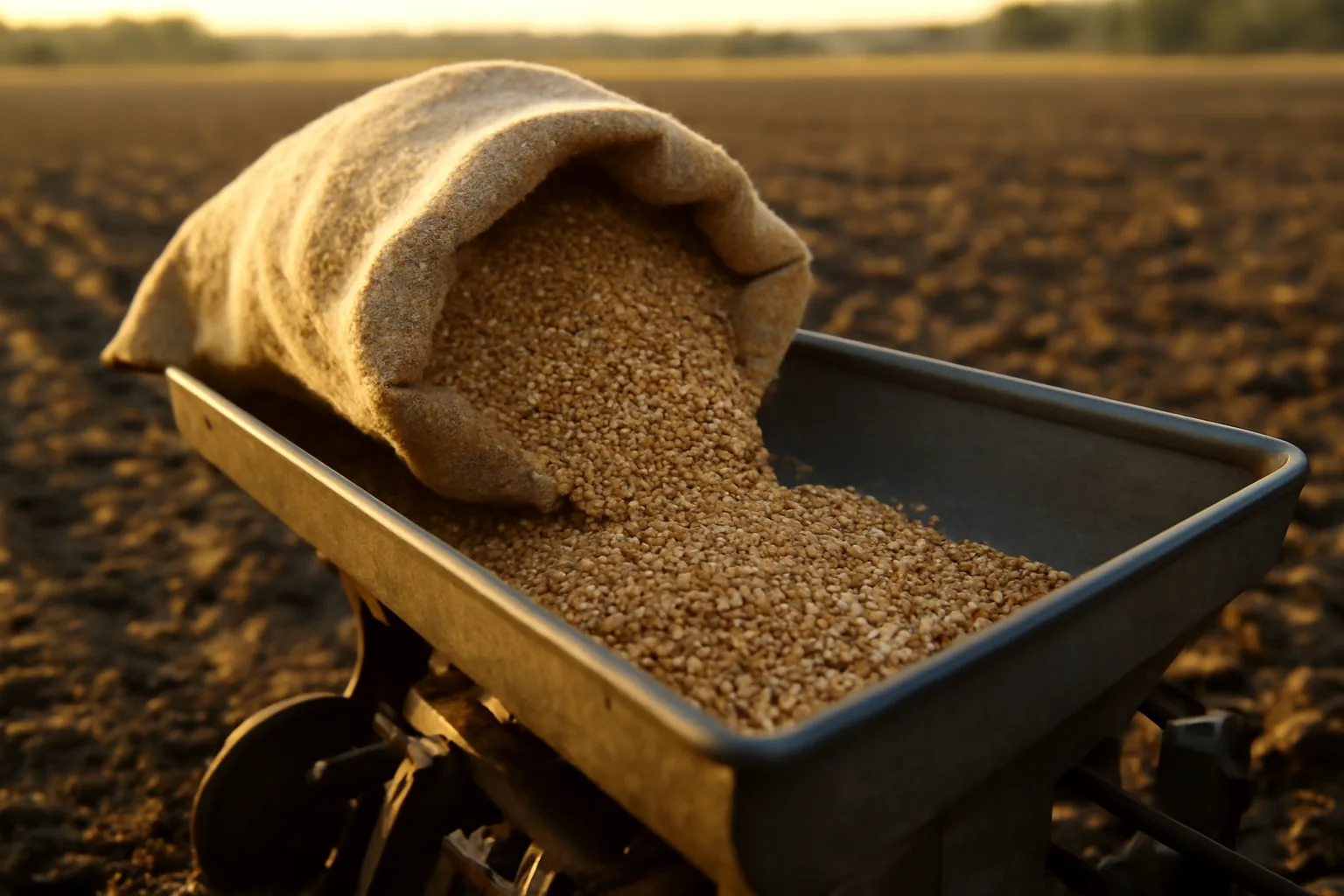
Bulk food plot seed (25-50 lb bags or totes) usually cuts cost per acre 20-40% versus small retail bags, but only pays off if you match species to your soil, region, and planting window. Clover, oats, and brassicas like turnips dominate bulk mixes because they're cheap, palatable, and forgiving of mistakes.
what is a food plot, and why does bulk seed matter
A food plot is a planted patch of land, usually a fraction of an acre to a few acres, seeded with forage that deer and other wildlife will eat. Landowners and hunters plant them to improve nutrition on a property, concentrate deer activity for observation or hunting, and hold animals through stress periods like late summer drought or winter. Most plots run somewhere between a quarter acre and five acres. The math on seed only starts making sense in bulk once you're planting more than an acre or two, or you're managing multiple plots across a lease. A 50 lb bag of oats or a 25 lb bag of clover blend covers a lot more ground per dollar than the 5 lb bags sold at farm stores, and the seed itself is usually identical, just packaged differently. Buying in bulk isn't just about saving money though. It also means you're not stuck buying three small bags to hit a five-acre seeding rate, which gets expensive fast and often leaves you short or wildly over-seeding because the bag sizes don't divide evenly. If you're planning several plots this season, check out food plot whitetail for a broader look at plot design before you buy seed. State wildlife agencies regulate what counts as a legal food plot versus baiting in some states, especially around timing relative to hunting season and whether the plot is broadcast versus left as a standing crop. Check your state wildlife agency's regulations before you plant if you're at all close to a season date, since rules vary widely and violations can affect your hunting privileges.
when to plant food plots for deer
Timing depends entirely on your USDA plant hardiness zone, your region's first and last frost dates, and whether you're planting a spring/summer plot or a fall plot. There is no single national planting date, and any article that gives you one is guessing. Spring plots (clover, chicory, soybeans, cowpeas) generally go in after your last frost date, when soil temps have warmed into the mid-50s or better. In the upper Midwest and Northeast that's often late April through May. In the South, March through April works for many warm-season plantings. Fall plots (brassicas, cereal grains, clover overseed) are timed backward from your first frost date. Brassicas like turnips need 80 to 100 days before a killing frost to bulb out, so most extension guides recommend planting them roughly late July through August in northern climates and August through early September further south. Cereal grains like oats and wheat can go in later, often August into October, since they don't need as long to become attractive forage. The honest answer to when to plant food plots for deer is: pull your average first frost date from your state climate office or the USDA extension office for your county, then count backward using the days-to-maturity number on your specific seed bag. That number matters more than any calendar date someone gives you online.
when to plant oats for deer
Oats are one of the most forgiving fall plot crops, and most hunters plant them as a late-summer to early-fall crop timed 60 to 75 days before their first hard frost. That puts most of the country somewhere between mid-August and late September. Oats germinate fast, often in 5 to 10 days with decent soil moisture, and deer will hit young oat shoots hard within a couple weeks of emergence. Because oats aren't very frost-hardy compared to wheat or rye, a lot of guys in the Midwest and South treat them as a fall-only, one-shot plot rather than something that regrows heavily in spring. If you want a plot that lasts into winter and holds up better against hard freezes, blend oats with a small percentage of winter wheat or cereal rye, which tolerate cold better and will often green back up in spring. Seeding rate for pure oats usually runs 100 to 128 lbs per acre when drilled, or higher (up to 150+ lbs) if broadcast, according to university agronomy guides for forage oats [1]. That's a good example of where bulk bags actually pay off: a single acre of drilled oats can eat most of a 50 lb bag by itself.
when to plant turnips for deer
Turnips are a fall brassica, and timing is tighter than most people think. Plant them too early in hot weather and they bolt or get hammered by insects before they bulb; plant them too late and they never size up before frost locks the ground. Most extension recommendations put turnip planting at roughly 80 to 90 days before your average first killing frost. For much of the Midwest and mid-South, that lands in the last two weeks of July through mid-August. In the Deep South, growers often wait until late August or early September since first frost comes so much later. Deer usually ignore turnip bulbs and even the leaves until after the first hard frost, when cold temperatures convert starches in the plant to sugars and make the whole plant sweeter and more palatable [2]. This is why turnip plots that look untouched in October suddenly get hammered in December. If you're planting turnips specifically as a late-season draw, don't panic if deer aren't in them yet in early fall. That's normal, not a failure. Seeding rate for turnips alone runs light, usually 4 to 6 lbs per acre broadcast, which is one of the few food plot species where a 5 lb bag might actually cover more than an acre. Bulk turnip seed mostly makes sense when it's blended into a larger brassica mix with radishes and rape, which is how most bulk brassica blends are sold anyway.
do deer eat clover, and do deer like it
Yes, and it's arguably the single most planted food plot species in North America for good reason. Clover (white clover, red clover, and various ladino types) is high in protein, often tested at 25 to 30% crude protein in vegetative growth stages, and it's available across almost the entire growing season once established [3]. Do deer like clover? Relative to almost anything else you can plant, yes, especially in spring and early summer when deer need protein for antler growth and lactation. It's consistently ranked among the highest-preference forages in deer feeding studies and food plot literature, competing mainly with soybeans and alfalfa for palatability. The tradeoff with clover is establishment time and maintenance. It takes a full growing season to really thicken up, it needs a soil pH close to 6.0 to 6.5 to perform well, and it needs mowing a few times a season to keep weeds down and encourage new growth [4]. If your soil test comes back with a pH under 6.0, expect clover to struggle no matter how good the seed is, since clover is particularly sensitive to acidic soil and poor nodulation without adequate lime. Good clover blends are also where bulk seed is smart money, since a solid perennial clover plot might run 3 to 4 years before you need to reseed, and the per-acre seeding rate (usually 6 to 8 lbs per acre broadcast for ladino/white clover blends) means one bulk bag can plant several acres over multiple seasons if stored properly in a cool, dry place. For species comparisons across a whole plot rotation, deer food plot seed breaks down how clover fits alongside grains and brassicas.
do deer eat sorghum
Yes, deer eat grain sorghum, but it's not typically planted as a primary deer attractant on its own. Sorghum (milo) is more commonly used as a screening crop, a drought-tolerant summer grain for dove fields, or a component in wildlife blends aimed at multiple species including turkey, quail, and deer. Deer will browse young sorghum plants and will eat the grain heads once they mature and dry down, especially late in the season when other food sources thin out. It's not considered a preferred forage compared to soybeans, clover, or standing corn, but it holds up well in poor soil and drought conditions where more finicky species fail. If you're in a hot, dry region with sandy or marginal soil, sorghum is a reasonable fallback or a good component in a diverse summer blend rather than a plot you'd plant by itself expecting it to be the main draw.
what are deer's favorite foods
There's no single universal answer, since deer preference shifts by season, region, and what's locally available, but research and field data point to a consistent short list: acorns, soybeans, clover, and other legumes usually top deer preference studies when available [3]. Acorns are arguably the most important natural food in whitetail range across most of the country in fall, often preferred over planted forage entirely when a good mast year hits. That's out of a food plotter's control, but it's worth knowing your plots are competing with oaks, not replacing them. Among planted crops, soybeans (as a standing forage crop, more than for grain) and clover consistently rank at the top for palatability and use, followed by cowpeas, alfalfa, and brassicas once frost sweetens them up. Corn is high in energy but relatively low in protein and less preferred as a browse crop compared to legumes, though whole corn left standing is a strong late-season energy source. The practical takeaway: if you want one plot type that reliably gets used across the most of the year, clover and soybeans are the safest bets nationally. Brassicas are a strong complementary late-season plot, not a stand-alone answer.
do deer like honey (and other odd forage myths)
Deer don't seek out honey in any meaningful dietary sense, and it's not part of natural whitetail forage. Deer are herbivores built to digest plant fiber through a four-chambered rumen system, and honey (essentially concentrated flower nectar processed by bees) doesn't factor into their diet in the wild [5]. This question usually comes up because of scent and attractant products, some of which use sweet, sugary smells (including honey-based or molasses-based scents) as cover scent or curiosity attractants rather than food. Deer may investigate a strong sweet smell out of curiosity, but that's a scent response, not evidence they're seeking out honey as forage. If you're looking for a genuine sugar-driven attraction in a food source, that's closer to what happens with frost-sweetened brassicas or late-season standing corn, where natural starches convert to sugars and make the plant more palatable. That's a real, documented physiological response in plants after a freeze, not a marketing claim.
bulk seed vs small bags: what actually changes cost per acre
| Oats (drilled) | 100-128 lbs | $15-25 | $35-50 | |
|---|---|---|---|---|
| Clover blend | 6-8 lbs | $20-35 | $45-70 | |
| Brassica blend | 4-6 lbs | $15-25 | $35-55 | |
| Soybeans (forage) | 50-60 lbs | $25-40 | $50-80 | These are rough, regionally variable estimates based on typical ag co-op and farm store pricing patterns, not a fixed national price list, since seed cost swings with commodity markets and region. Call a local ag co-op or seed dealer for current pricing before you budget a big plot. The catch with bulk buying is storage and waste. Buying a 50 lb bag of clover you'll use over three seasons only saves money if you store it properly (cool, dry, sealed against moisture and rodents) and it stays viable. Clover seed generally holds decent germination for 2 to 3 years if stored well; test old seed's germination rate before planting a big plot on faith. |
Bulk seed usually means bags in the 25 to 50 lb range, or in some ag co-op cases, seed sold by the ton or in bulk totes. Small retail bags marketed specifically as "food plot" blends often run 3 to 10 lbs and carry a premium because of packaging, marketing, and the convenience of a pre-mixed blend. The actual seed inside a lot of small bags is agriculturally identical to bulk ag seed of the same variety, just repackaged with a deer on the label. That's not always true for proprietary blends with specific cultivar traits (some brassica and clover cultivars are bred and patented specifically for deer forage use with claims about palatability or cold tolerance), but for straight oats, wheat, and standard clover varieties, bulk ag seed from a farm co-op is often the same product at a fraction of the price per pound. Here's a rough sense of how the math plays out for a 2-acre plot, using typical per-acre seeding rates: | Species | Seeding rate/acre | Bulk cost/acre (approx) | Small-bag cost/acre (approx) |
how do I pick the right species mix for my property
Start with a soil test, not a seed catalog. Your local extension office or a private soil lab will tell you your existing pH and nutrient levels, and that result is the actual authority on what amendments your ground needs, not a blog article or a bag label. Lime takes months to fully adjust soil pH, so testing early, ideally months before planting, gives it time to work [6]. Once you know your soil chemistry, match species to your region and goals: clover and brassicas for a diverse perennial-annual combo, cereal grains for fast cover and fall attraction, soybeans or cowpeas if you've got the acreage and deer density low enough that browse pressure won't wipe out young plants before they establish. This is genuinely where a lot of hunters overspend or underperform, buying the wrong species for their soil type, planting window, or deer density, then blaming the seed. If you want a specific plan built around your zone, soil test results, and acreage rather than guessing off a general seed chart, that's exactly the kind of thing a $99 Custom Food Plot Plan is built to sort out, matching species, timing, and rates to your actual property instead of a national average. For a deeper look at how different species stack up against each other for specific goals (early season, late season, screening, tonnage), deer food plot seed and food plot seed both go into more comparison detail.
how much bulk seed do I actually need per acre
Seeding rate depends on species and whether you're drilling (planting seed into the ground at a controlled depth) or broadcasting (spreading seed on the surface, which usually needs a higher rate to compensate for uneven coverage and seed that doesn't make good soil contact). As a rough guide across common food plot species: clover blends run 6 to 8 lbs per acre broadcast, brassica blends run 4 to 6 lbs per acre broadcast, oats run 100 to 128 lbs per acre drilled (up to 150+ broadcast), and forage soybeans run 50 to 60 lbs per acre drilled, higher broadcast [1] [4]. Always check the specific bag or blend, since a mixed blend of grains, brassicas, and legumes will have a different combined rate than any single species alone. One mistake worth flagging directly: broadcasting seed meant for drilling, at drill rates, almost always under-seeds the plot, since surface broadcast has lower germination success than drilled seed placed at proper depth. If you don't have a drill, bump your broadcast rate up from the drill rate rather than using it as-is, and try to drag or cultipack the seed in for better soil contact.
equipment considerations for planting bulk seed
Bulk seed is only worth buying if you have a way to plant it efficiently. A 50 lb bag of oats spread by hand over an acre is possible but slow and uneven. A broadcast spreader, even a basic ATV-mounted or handheld crank spreader, makes a real difference in coverage consistency. For small plots under an acre, a handheld or backpack broadcast spreader and a hand rake or drag harrow to work seed in is often enough. For larger plots or multiple fields, an ATV or tractor-mounted spreader, a cultipacker or drag to firm the seedbed, and ideally a no-till or conventional drill for grain crops will get you dramatically better germination rates. The equipment question matters more with bulk seed specifically because you're now planting more acreage per purchase, and inconsistent broadcast on a bigger area wastes more seed in absolute terms than the same mistake on a quarter-acre plot. If you're scaling up plot size because bulk seed made the economics work, budget for the spreader and packer upgrade at the same time, not after a bad first season.
Frequently asked questions
Do deer eat sorghum?
Yes, deer eat both young sorghum plants and mature grain heads, especially late season when other food sources thin out. It's not a top preference forage compared to soybeans or clover, but it's drought-tolerant and works well in poor soil or as a screening/dove-field crop that also feeds deer.
Do deer eat clover, and do deer like it?
Yes, clover is one of deer's most preferred forages, often tested at 25 to 30% crude protein in vegetative growth. It's consistently ranked near the top of food plot preference studies, especially in spring and summer when deer need protein for antler growth and lactation.
When should I plant food plots for deer?
It depends on your region and plot type. Spring/summer plots go in after your last frost date; fall plots (brassicas, cereal grains) are timed backward from your first frost date using the days-to-maturity listed on the seed bag. Check your local USDA extension office for exact frost dates in your county.
When should I plant oats for deer?
Most hunters plant oats 60 to 75 days before their first hard frost, which lands roughly mid-August through late September across much of the country. Oats germinate in 5 to 10 days and deer often browse young shoots within two weeks of emergence.
When should I plant turnips for deer?
Plant turnips 80 to 90 days before your average first killing frost, usually late July through mid-August in the Midwest and mid-South, or late August into September in the Deep South. Deer typically ignore turnips until after the first hard frost sweetens them.
What is a food plot?
A food plot is a planted area, from a fraction of an acre up to several acres, seeded specifically with forage crops to feed deer and other wildlife, improve herd nutrition, and concentrate animal activity for observation or hunting on a property.
What are deer's favorite foods?
Acorns typically top the list when available, followed by soybeans and clover among planted crops. Preference shifts seasonally: legumes and clover dominate spring and summer, while frost-sweetened brassicas and standing corn or soybeans become more important in late fall and winter.
Do deer like honey?
No, honey isn't part of a deer's natural diet. Deer are herbivores that digest plant fiber, and honey doesn't factor into wild forage. Sweet-smelling attractant products sometimes use honey or molasses as scent, which may draw curiosity, not genuine dietary preference.
Is bulk food plot seed actually cheaper per acre than small bags?
Usually yes, often 20 to 40% cheaper per pound for the same species, since small retail bags carry packaging and marketing costs. The savings only pay off if you plant more than an acre or two and store leftover seed properly to keep it viable for future seasons.
How long does bulk food plot seed stay viable in storage?
It varies by species, but clover and most small-seeded legumes hold reasonable germination for 2 to 3 years if kept cool, dry, and sealed against moisture and pests. Test old seed's germination rate on a damp paper towel before planting a large plot on faith.
Should I drill or broadcast bulk food plot seed?
Drilling generally gives better germination since it places seed at a controlled depth with good soil contact, and it uses less seed per acre than broadcasting. If you're broadcasting instead, increase the seeding rate above the drill rate and drag or cultipack afterward to improve soil contact.
Do I need a soil test before buying bulk seed?
Yes. Your soil test result, not a seed bag or blog article, is the real authority on what pH and nutrient corrections your ground needs. Clover especially struggles below pH 6.0, and lime takes months to adjust soil chemistry, so test early.
Is planting food plots considered baiting under state law?
It depends on the state and the specific rules around timing, broadcast versus standing crop, and proximity to hunting. Rules vary significantly, so check your state wildlife agency's current regulations before planting close to a season date.
Sources
- University of Kentucky Cooperative Extension, Forage Oats: typical oat seeding rates run 100-128 lbs per acre drilled, higher if broadcast
- University of Tennessee Extension, Wildlife Food Plots: frost converts starches to sugars in brassicas, making them more palatable to deer after a freeze
- NRCS/USDA Plant Fact Sheet, White Clover: clover needs soil pH near 6.0-6.5 and periodic mowing to perform well as a forage crop
- USDA Wildlife Habitat Management Institute, Whitetail Deer Nutrition: deer are herbivores with a four-chambered rumen digestive system suited to plant fiber, not concentrated sugars like honey
- University of Missouri Extension, Soil Testing for Food Plots: lime takes months to adjust soil pH, so soil testing well ahead of planting is recommended
- USDA Farm Service Agency, State and County Offices: county-level USDA extension offices provide local frost date and planting window guidance