Last updated 2026-07-25
TL;DR
The easiest food plot for deer combines a cheap, forgiving seed (oats, clover, or a brassica blend) with minimal ground prep: mow, spray, broadcast, and drag. Plant clover in early spring or late summer, oats and brassicas 60 to 90 days before your first hard frost. A soil test still matters more than any seed choice.
what is a food plot, really
A food plot is a planted patch of forage on hunting land meant to feed deer and concentrate their activity somewhere you can hunt or watch. That's it. It doesn't need to be an acre of perfectly disked ground with a soil pH meter and a tractor with a seed drill. Some of the best plots in the country are quarter-acre clearings a guy broadcast seed into with a hand-crank spreader. The USDA and land-grant extension programs generally describe food plots as a wildlife habitat tool, not a farming operation. That framing matters if you're new to this: a plot is one tool, not the whole plan. Cover, water, and natural browse all matter as much or more than what you plant. For someone leasing 40 acres or hunting the back forty of the family farm, easy usually means three things: cheap seed that tolerates mistakes, ground prep you can do with a UTV or a rented disk, and a planting window you actually hit. Skip any of those three and the plot fails regardless of what's in the bag. If you want a broader look at plot styles before committing to one, the food plot whitetail overview breaks down the main categories.
what's the actual easiest food plot to plant
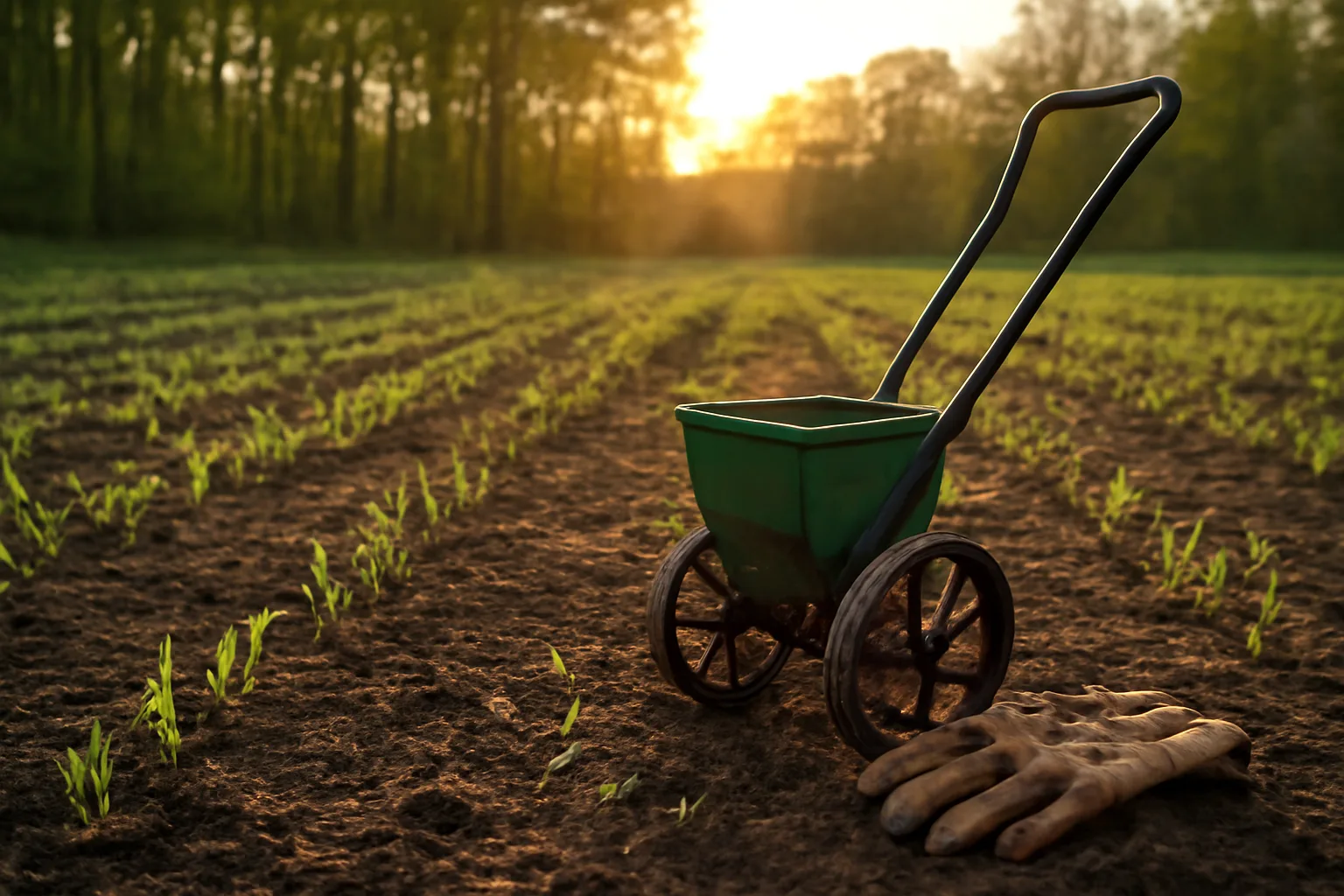
For most first-timers, a broadcast blend of oats and a clover (or a cheap brassica mix like turnips) beats anything that requires precision planting depth. Oats germinate fast, tolerate rough seedbeds, and give visible green-up in 7 to 14 days under decent moisture. Clover is a perennial, so once it's established you get 3 to 4 years of forage from one planting if you keep mowing it and it doesn't get shaded out. Here's the practical ranking, from least to most fuss: 1. Broadcast oats or a cereal grain blend into worked or sprayed ground. No drill needed, just a cultipacker pass or ATV tire drag to press seed into contact with soil. 2. Clover (white or red) broadcast in early spring frost-seeded into existing sod, or drilled shallow (1/4 inch) in late summer. 3. Brassica blend (turnips, radish, rape) broadcast into a clean, tilled or sprayed seedbed, ideally with some starter fertilizer. All three tolerate hand-broadcasting far better than corn or soybeans, which need real planting depth and spacing to perform. If you own or can rent a disk and cultipacker, you'll get better stands. If all you've got is a leaf rake and a bag of seed, oats and clover are still your best bet. One honest caveat: "easy" doesn't mean "guaranteed." Drought, deer browsing pressure before establishment, and poor soil pH can wreck any plot regardless of species. Extension programs consistently point back to a soil test as the first step, not seed selection [1].
do deer eat sorghum
Yes, deer eat grain sorghum, but it's more of a fall standing-grain option than a go-to forage plot, and it isn't the easiest choice for a beginner plot. Sorghum (milo) works well as a screening or standing-crop food source that holds up into winter, and deer will hit the grain heads once they dry down. Some state agencies list sorghum among crops that qualify as food plots versus illegal baiting distinctions, so check your state's specific definition before planting it near a stand [2]. The tradeoff: sorghum needs warmer soil to germinate (generally above 60°F), row spacing or drilled seeding for a good stand, and it's more input-heavy than oats or clover. If your goal is truly the easiest plot, sorghum isn't it. If your goal is a tall screen plus late-season grain, it earns a spot in the plan, just not as your first planting.
do deer eat clover, and do deer like clover
Deer eat clover readily and it's consistently one of the most preferred forages in food plot research. White clover and red clover both rank high in deer preference studies and provide roughly 20 to 30 percent crude protein during the growing season, which is why it's a staple recommendation from wildlife biologists [3]. Clover shows up again and again in university extension guidance for its combination of forage quality and low cost once established [3]. The catch is establishment: clover needs decent soil pH (ideally 6.0 to 6.5) and it competes poorly with weeds in the first year. A soil test before planting isn't optional here, it's the difference between a thick stand and a weed patch by August. Deer do like clover, but they also hammer it hard in spring when it's young and tender, sometimes to the point where new seedings get grazed down before they can root well. Fencing a small section temporarily, or planting a larger acreage than you think you need, helps offset that pressure.
when to plant food plots for deer
| Clover (frost-seeding) | Late Feb to early April | Northern/transition zones | |
|---|---|---|---|
| Clover (drilled) | Aug to Sept | Anywhere with fall moisture | |
| Oats | 60-90 days before first frost | Varies widely by latitude | |
| Brassicas/turnips | Late July to early Sept | Northern zones plant earlier | |
| Soybeans/corn | May to June | Frost-free soil required | Your local cooperative extension office and state wildlife agency both publish region-specific planting calendars, and those numbers beat any generic national guide because frost dates swing by 6 to 8 weeks between, say, Minnesota and Alabama. University of Minnesota Extension's food plot guidance recommends timing fall plantings of brassicas and cereal grains 60 to 90 days ahead of the area's average first frost, which in much of Minnesota falls in the August window rather than September [4]. Compare that to Gulf Coast states where growers can wait into late September. If you're mapping out plantings across your whole property and season, the seasonal-calendars hub style planning (checking your specific zone) beats guessing from a bag label written for the whole country. |
Timing depends entirely on what you're planting and your region, but the two big windows are spring (April through May in the North, March through April in the South) for warm-season annuals and perennials, and late summer (mid-August through September) for fall annuals like brassicas, oats, and cereal grains. Here's a simplified seasonal breakdown: | Species type | Planting window | Region note |
when to plant oats for deer
Plant oats 60 to 90 days before your area's average first fall frost date so they have time to establish, tiller out, and reach peak attraction before killing frost slows growth. In most of the whitetail's range that lands somewhere between mid-August and mid-September. Oats are a cool-season annual grass, and deer favor them most in the first 6 to 10 weeks after germination when the leaf blades are tender. Once oats mature and get stemmy, palatability drops, which is part of why fall planting timed to peak during hunting season works better than a spring oat planting for hunters (though spring oats do work fine as a soil-builder or early-season forage plot in some regions). Oats also tolerate poorer seedbeds better than most food plot seed. A rough disking or even a heavy drag after broadcast is often enough. That forgiveness is a big part of why oats show up in so many "beginner plot" recommendations, including university extension basic plot guides [5].
when to plant turnips for deer, and do deer eat brassicas well
Plant turnips 90 to 100 days before your first expected hard frost, typically late July through early September depending on latitude, because brassicas need a long growing season before the bulbs and leaves reach peak size and sweetness. Here's the thing about turnips that trips people up: deer often ignore them for the first several weeks after they green up, then hit them hard after the first frost or two. Frost converts starches in the plant to sugars, which is why brassica plots often look untouched in October and get hammered in December. If you're expecting activity opening week of bow season on a turnip plot, you may be disappointed. If you're hunting late season, turnips can be some of the most reliable forage left standing when everything else is gone. Turnips need a fairly clean seedbed (broadcast into tilled or well-sprayed ground) and light coverage, no more than 1/4 to 1/2 inch. Too deep and germination drops hard. A blend with oats or cereal rye alongside turnips gives you both early-season green-up and late-season bulb forage in one planting.
what are deer's favorite foods overall
Deer preference research consistently ranks a handful of foods above the rest: white clover, soybeans (both forage and grain stage), acorns (especially white oak group), and cultivated brassicas after frost. Native browse like honeysuckle, greenbrier, and forbs also rank high depending on season and region, and often gets overlooked because it's not something you plant. Extension research on deer forage consistently rates soybeans and clover among the top selected forages in cafeteria-style preference trials, with corn ranking lower relative to its planting popularity [3]. Acorns, when available, often out-compete any planted food plot species because of the fat content, which matters more to deer nutrition in fall than raw protein. The honest answer to "what's the single best food plot species" doesn't exist. It depends on season (spring protein needs versus fall energy needs), your soil, and what's already growing wild on your property. A property loaded with white oaks doesn't need the same plot strategy as one with none. For picking species suited to your specific setup, a deer food plot seed comparison is a reasonable next stop, and if you want blends built around your actual soil and region rather than a generic bag mix, that's exactly the gap PlotSeason's $99 Custom Food Plot Plan is built to fill: you get a plan based on your ZIP code, soil test results, and equipment, not a one-size-fits-all label. Check it out at /plot-plan-builder.
do deer like honey, or is that a myth
There's no credible wildlife research showing deer specifically prefer honey or seek it out as a food source, and it's not something wildlife agencies or extension programs mention in deer diet studies. Deer are herbivores built around browsing plants, forbs, mast, and agricultural crops, not foraging for insect byproducts like honey or honeycomb. The confusion likely comes from "honey hole" hunting slang, or from products marketed as deer attractants using sweet or sugary scents, which is a different thing from actual dietary preference. Some commercial deer attractant sprays include sugar-based or molasses-based ingredients meant to appeal to a deer's taste for sweetness in general, but that's not the same as deer eating honey in the wild. If you see a product claiming deer go crazy for honey specifically, take it with skepticism. There's no peer-reviewed feeding study backing that as a meaningful food plot or attractant strategy.
how much ground prep does an easy plot actually need
The minimum viable prep for an easy plot is: kill or knock down existing vegetation, get seed-to-soil contact, and don't bury small seeds too deep. That can mean spraying with glyphosate 2 to 3 weeks ahead, or it can mean disking twice and dragging a section of chain-link fence or a cultipacker behind an ATV. A lot of "easy" plot failures come down to skipping the kill-down step. Broadcasting clover or brassica seed into standing grass and weeds without spraying or tilling first almost always results in a thin, weed-choked stand, because your seedlings are now competing with established perennial weeds that have a head start. Even a rough disking pass that just breaks up sod helps enormously versus throwing seed onto untouched ground. For seed depth: oats and cereal grains want about 1 to 1.5 inches of coverage, clover and brassica seed want 1/4 inch or less (some sources say just a light press with no cover at all, since both are tiny seeds that need light to germinate). A cultipacker or a drag made from box-spring wire works for both jobs. If you're planting under an acre, a hand broadcast spreader and an ATV drag can genuinely replace a full planting rig.
do i need a soil test before an easy plot
Yes, and this is the step people skip that causes the most plot failures. A soil test costs somewhere between $10 and $20 through most state extension labs and tells you your pH and nutrient levels (phosphorus, potassium, sometimes micronutrients), which determines how much lime and fertilizer you actually need [1]. Most food plot species want a soil pH between 6.0 and 7.0. Below 5.5, clover and brassicas especially struggle to take up nutrients regardless of how much fertilizer you throw down, because acidic soil locks up phosphorus. Lime takes months to fully react in soil, so if your test comes back at 5.0, you're not fixing that overnight with a bag of 10-10-10. Your soil test lab, not this article, is the authority on how much lime and fertilizer your specific field needs. Recommendations vary by crop, current pH, and existing nutrient levels, and a lab report tailored to your dirt will always beat a generic "apply X pounds per acre" rule of thumb. If you skip the test entirely, a reasonable fallback for genuinely easy plots is pelletized lime at a moderate rate (roughly 1 to 2 tons per acre on average clay soils, per extension guidance) plus a balanced starter fertilizer like 19-19-19, understanding you're guessing without lab data.
what equipment do you actually need for an easy plot
For a true low-effort plot under an acre, you need: a way to kill existing vegetation (sprayer, or a disk/tiller), a broadcast spreader (hand-crank ones cost $30 to $50), and something to press seed into the soil (a cultipacker, drag, or even driving over it slowly with an ATV works in a pinch). You do not need a no-till drill, a tractor, or a soil probe kit to get a plot in the ground, though all of those help with consistency on bigger acreage. Plenty of successful small plots get planted with a UTV, a tow-behind sprayer, and a hand spreader. If you're deciding between building out gear versus renting or borrowing for one plot a year, renting a disk or drill from a local co-op or equipment rental yard is usually cheaper than buying if you're under 2 to 3 acres total. For gear-buying decisions and what's actually worth owning, the equipment-and-methods side of plot planning covers that tradeoff in more depth.
check your state's rules before you plant near a stand
Baiting and supplemental feeding laws vary significantly by state, and some states draw a legal line between a planted food plot and a pile of corn or mineral block, even though both attract deer. Michigan's baiting and feeding regulations, for instance, restrict baiting in parts of the state tied to chronic wasting disease management, while other states allow baiting broadly but restrict feeding during certain seasons [2]. A planted food plot is almost universally legal (it's literally agriculture), but supplemental feed, mineral licks, and bait piles are regulated separately and often more strictly, especially in states managing chronic wasting disease. Don't assume your neighbor's rules apply to your state. Check your state wildlife agency's current regulations directly before combining a food plot with any additional feed or mineral station near your stand.
Frequently asked questions
Do deer eat sorghum?
Yes, deer eat grain sorghum, particularly the seed heads once they dry down in fall. It works better as a standing late-season grain crop or screening cover than as a beginner's easy plot, since it needs warmer soil and more seeding precision than oats or clover.
Do deer eat clover?
Yes, clover is one of the most preferred food plot forages for deer, offering roughly 20 to 30 percent crude protein during the growing season according to extension research. White and red clover both rank consistently high in deer preference studies and are a common recommendation from wildlife biologists.
When should I plant deer food plots?
It depends on species: spring plantings (March through May) suit warm-season annuals and frost-seeded clover, while late summer (mid-August through September) suits fall annuals like oats, brassicas, and cereal rye. Always check your specific region's frost dates through your state extension office, since windows shift by 6 to 8 weeks across latitudes.
Do deer like clover more than other forages?
Deer show strong preference for clover in feeding studies, often ranking it alongside soybeans as a top choice when given free selection. It's especially valuable in spring and summer when deer need higher protein, though deer browsing pressure on young clover seedlings can be intense enough to slow establishment.
When should I plant oats for deer?
Plant oats 60 to 90 days before your area's average first fall frost, generally mid-August to mid-September in most of the whitetail range. Oats germinate quickly, tolerate rough seedbeds, and are most attractive to deer during the first 6 to 10 weeks of growth before they get stemmy.
When should I plant turnips for deer?
Plant turnips 90 to 100 days before your first expected hard frost, usually late July through early September. Deer often ignore turnips until after a frost or two converts starches to sugars, so they're primarily a late-season food source rather than an early-bow-season draw.
What exactly is a food plot?
A food plot is a planted area of forage crops on hunting land meant to supplement natural deer browse and concentrate deer activity in a huntable location. Extension programs describe it as a supplemental habitat tool, not a replacement for broader habitat and forest management.
What are deer's favorite foods?
Research consistently ranks white clover, soybeans, acorns (especially white oak), and frost-sweetened brassicas among deer's most preferred foods. Preference shifts seasonally: deer favor high-protein forage like clover in spring and summer, and high-energy foods like acorns and grain in fall.
Do deer like honey?
No credible wildlife research shows deer seek out honey as a food source. Deer are plant-based browsers, and there's no peer-reviewed feeding study supporting honey as a meaningful attractant. The idea likely comes from hunting slang ("honey hole") or marketing for sugar-based scent attractants, not actual deer diet data.
What's the easiest food plot to plant with no equipment?
A broadcast blend of oats and clover into a sprayed (not tilled) seedbed is the lowest-effort option. Spray existing vegetation with glyphosate, wait 2 to 3 weeks, broadcast seed by hand, and drag the area with a chain or ATV tire to press seed into the soil.
Do I need a soil test for an easy food plot?
Yes. A soil test costs roughly $10 to $20 through most state extension labs and tells you your pH and nutrient levels, which determines lime and fertilizer needs. Most food plot species want pH between 6.0 and 7.0; skipping this step is the most common cause of thin or failed plots.
Is planting a food plot considered baiting in most states?
No, a planted food plot is generally legal everywhere since it's an agricultural planting, not a bait pile. However, supplemental feed, mineral blocks, and bait piles are regulated separately and vary a lot by state, especially where chronic wasting disease management restricts feeding. Check your state wildlife agency's current rules before combining tactics.
Sources
- Purdue Extension, Woodland Wildlife Habitat Evaluation Guide: Food plots are one part of a larger habitat plan alongside cover, water, and natural browse, not a stand-alone fix
- University of Tennessee Institute of Agriculture, Wildlife Food Plots (PB1769): Soil testing determines lime and fertilizer needs and is a foundational first step for food plot success
- Michigan Department of Natural Resources, Baiting and Feeding Deer FAQ: States regulate baiting and supplemental feeding separately from planted food plots, with rules varying and tied to CWD management
- Mississippi State University Extension, Publication 2111: Clover and soybeans rank among top deer forage preferences in feeding studies, providing high protein forage
- University of Minnesota Extension, Food Plots for Deer and Other Wildlife: Fall plantings of brassicas and cereal grains are recommended 60 to 90 days ahead of the average first frost date
- University of Georgia Extension, Establishing and Managing Wildlife Food Plots (Bulletin 1358): Oats and cereal grains tolerate rough seedbeds and are recommended as beginner-friendly food plot species