Last updated 2026-07-24
TL;DR
Duck food plots use moist-soil annuals like Japanese millet, smartweed, and grain sorghum planted in shallow, drawn-down impoundments or wet ground, not upland clover or brassica mixes built for deer. Plant millet and sorghum in late spring to early summer so seed matures before fall flooding. Timing and hydrology matter more than the seed bag.
What is a food plot, and how is a duck plot different from a deer plot?
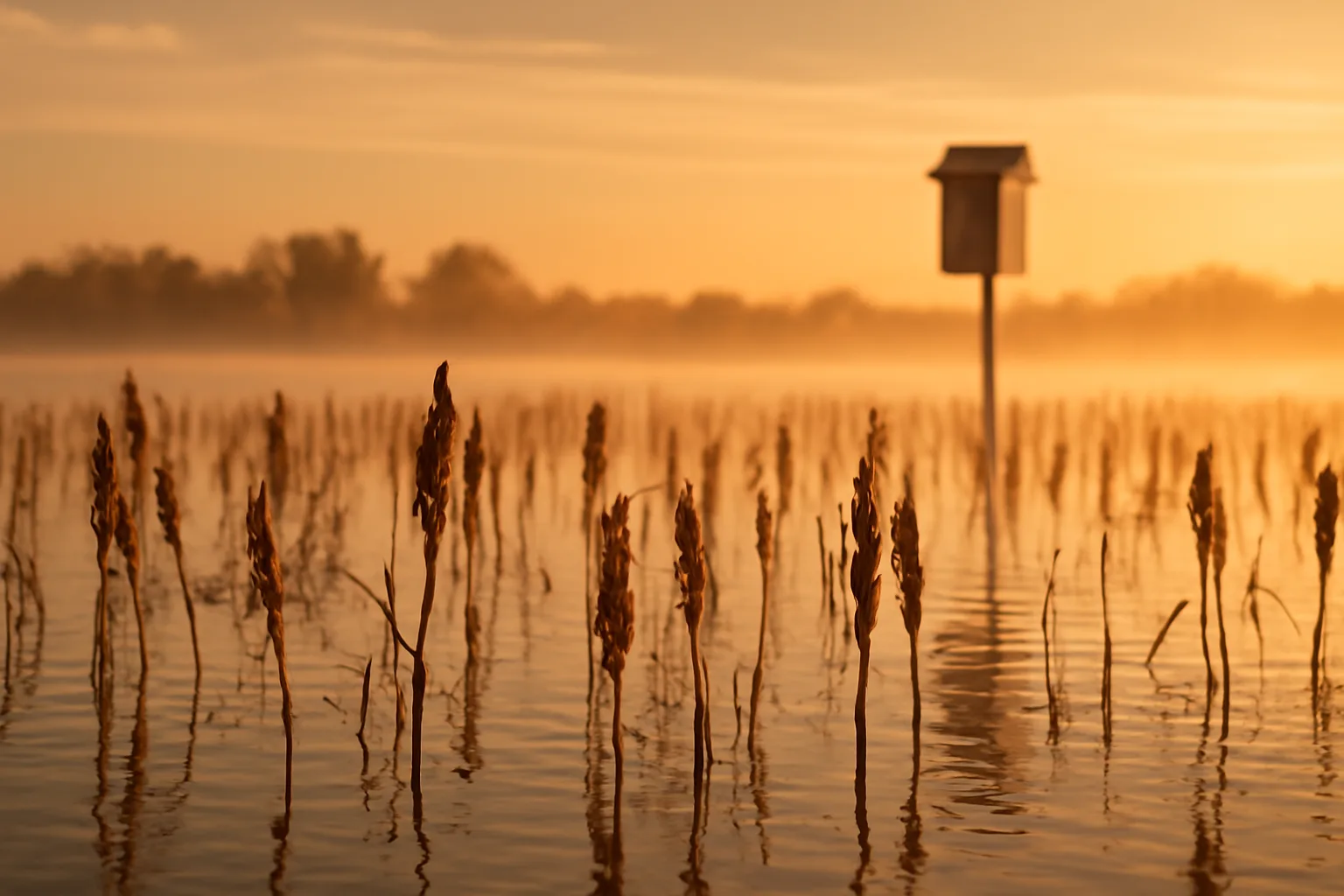
A food plot is any planted patch of ground meant to draw and hold wildlife by giving them food they wouldn't otherwise find nearby. For deer, that means upland fields of clover, brassicas, cereal grains or beans planted in soil that stays dry. For ducks, the whole game changes, because ducks feed in shallow water, not on dry ground. A duck food plot is usually a moist-soil unit or a shallow impoundment planted with seed-producing annuals like Japanese millet, grain sorghum (milo), or smartweed, then flooded in fall to a few inches to about a foot deep once the seed heads have matured and dropped. The USDA Natural Resources Conservation Service describes moist-soil management systems where soil is drawn down in spring to expose mudflats, natural or planted seed germinates through summer, then the unit is reflooded in fall for waterfowl [1]. So if you're picturing a turnip plot for deer that ducks might wander into, that's not really how duck plots work. Ducks want water over food, generally 4 to 12 inches deep for dabbling ducks like mallards and teal. Without that shallow flood, even a great stand of millet just sits there ungrazed by puddle ducks. If your ground doesn't hold water or you can't control a water level with a levee and water control structure, you're better off running a deer food plot instead and letting ducks use it incidentally on the edges.
When should you plant food plots for deer versus duck plots for waterfowl?
Deer food plot timing runs on frost dates and forage type: spring plantings for warm-season annuals like soybeans and sorghum, late summer for fall brassicas and cereal grains, as covered in most land-grant Extension planting calendars [2]. Duck plots run on a different clock entirely, tied to summer growing season length and a fall flood date. For duck plots, you're aiming to plant moist-soil annuals in late spring to early summer, after the spring drawdown exposes bare mud and soil temperatures warm enough for germination, generally once soils hit the mid-60s Fahrenheit. Land-grant waterfowl habitat guidance generally recommends planting Japanese millet and grain sorghum from mid-May through June in the mid-South, timed so the crop matures with seed heads ready to drop before your planned fall flood-up, usually October or November [3]. A deer guy plants brassicas around Labor Day for a November hunt. A duck guy plants millet in May or June for a November flood. Both are chasing a fall payoff. But the duck plot's whole season happens earlier and depends on getting water off the field in spring and back on in fall, more than a fertilizer schedule.
Do deer eat sorghum?
Yes. Deer will eat grain sorghum (milo), both the young growing plant and the mature grain heads, and it's a legitimate deer food plot crop in the South and parts of the Midwest where corn struggles with drought or poor soil. Sorghum tolerates heat and lower rainfall better than corn, which is part of why it shows up in both deer plot mixes and duck moist-soil plantings. The catch for deer hunters is that sorghum's stiff stalk and grain head sit higher than a turnip or clover leaf, so deer often hit it hardest after frost softens the plant and after other food sources thin out in late winter. For ducks, that same grain sorghum, planted in a moist-soil unit and later flooded, becomes a major energy food. Waterfowl research consistently ranks sorghum and millet among the higher-energy moist-soil foods for dabbling ducks compared to lower-energy natural seeds like sedges [1]. If you're planting sorghum specifically as a deer food plot seed, treat it like a grain crop: full sun, decent drainage, and enough acreage that deer browsing pressure early on doesn't wipe out the whole stand before it heads out.
Do deer eat clover, and do deer actually like it?
Deer eat clover heavily, and most Extension forage trials rank clover among the most preferred, most digestible food plot forages available, especially white clover and red clover blends. It's not a maybe. Clover is consistently one of the top picks in preference studies and one of the most planted perennial food plot species in North America. Clover's appeal comes down to protein and digestibility. Good clover stands run 20 to 25 percent crude protein in vegetative growth, which lines up with what a lactating doe or an antler-growing buck needs in spring and summer, per University of Tennessee Extension forage guidance [4]. It also regrows fast after grazing, unlike a brassica leaf that doesn't come back once it's stripped. The downside: clover needs decent soil pH (most Extension guides target 6.0 to 6.5) and it can get grazed into the ground on small plots with high deer density, especially in the first year before roots establish. That's a soil test question more than a seed question, and it's why your soil-test lab's lime and fertilizer recommendation matters more than which clover blend you buy. If you want a full-season plan comparing clover against other options for your specific ground, that's the kind of thing a Custom Food Plot Plan is built to sort out for 99 dollars, but any decent Extension soil report will get you the pH and nutrient numbers you need either way.
When to plant oats for deer
Oats go in the ground in late summer to early fall for a fall and winter deer food plot, typically 60 to 90 days before your average first hard frost, which lines up with late August through September across most of the whitetail's range, per state Extension fall planting calendars [2]. In the Deep South, oats can go in as late as October since frost comes later. Oats are a fast-germinating cereal grain, often up in 5 to 7 days under decent moisture, and they're one of the most reliably attractive fall annuals for deer because the young leaf blades are sweet and easy to digest. They also work well mixed with a brassica or clover so you get quick fall cover from the oats while the clover establishes underneath for the following spring. One real limitation: oats aren't very winter-hardy in northern climates. A hard freeze below the mid-teens Fahrenheit can kill oats outright, while winter rye or wheat will keep going. If you're planting north of, say, Kentucky or Missouri and want food standing into late winter, winter rye is usually the safer cereal grain choice, with oats reserved for early-fall attraction in a mix.
When to plant turnips for deer
Turnips go in 80 to 90 days before your first expected hard frost, which for most of the whitetail's range means planting between late July and mid-August. That timing gives the plant enough of the growing season to bulb out and build sugar reserves before cold weather, because turnips (like other brassicas) get sweeter and more attractive to deer after a hard frost converts starches to sugars. That frost-driven sugar spike is why turnip plots often sit untouched in September and October, then get hammered in December and January. It's a normal pattern, not a failed plot. Deer are opportunistic, and until natural browse and other food plots run thin, they'll often bypass turnips for something easier to digest. Planting turnips too early in warm soil can also invite flea beetle damage on young seedlings. Flea beetles are a common brassica pest, and damage tends to run worse in warm, dry conditions right after planting, a pattern well documented in general Extension entomology guidance on brassica pests. A light insecticide seed treatment or just timing the planting to cooler, wetter late-summer weather cuts down on that risk.
When to plant food plots for deer, by region and species
| Deep South (Gulf Coast) | March - May | September - October | |
|---|---|---|---|
| Mid-South / Transition zone | April - June | August - September | |
| Midwest / Upper Midwest | May - June | Late July - August | |
| Northeast / Upper Great Lakes | Late May - June | Late July - Mid-August | These are starting points, not guarantees. Local microclimate, elevation, and rainfall patterns shift things by a couple weeks either direction. Your state Extension office publishes frost-date tables by county, and that's a better source than a bag tag's generic zone map. For a broader look at which species fit which slot in your rotation, deer food plot seed options break down by season, and food plot seed covers blends versus straight species. |
There's no single planting date for deer food plots, because it depends on your frost dates and what you're planting. The general rule from most state Extension planting guides: warm-season annuals (soybeans, cowpeas, sorghum, sunn hemp) go in after your last spring frost, usually April through June depending on latitude, while cool-season annuals and perennials (clover, brassicas, cereal grains) go in 60 to 90 days before your first fall frost, usually late July through September [2]. Here's a rough regional breakdown many Extension calendars use as a starting point. | Region | Warm-season planting window | Cool-season/fall planting window |
What are deer's favorite foods, really?
Ranked by preference studies and forage quality data, deer generally prefer, in rough order: soft mast (apples, persimmons, acorns from white oak family trees), clover and other legumes, then brassicas and cereal grains, with corn and soybeans in the grain/pod stage rounding things out. Acorns specifically are a huge natural preference, and white oak acorns are generally lower in tannins and more palatable to deer than red oak acorns, a pattern documented in wildlife nutrition research on acorn tannin content and deer selection [5]. Within food plot species specifically, most Extension and wildlife agency guidance points to clover and soybeans (in the vegetative stage) as consistently high-preference, high-protein options, while standing corn and grain sorghum become more important as fall and winter energy sources once temperatures drop and deer need calories more than protein. It's worth saying plainly: preference shifts by season, region, and what's available naturally. A deer that's hammering clover in June may barely touch it in October if acorns are dropping heavy that year. That's normal, and it's one reason a single-species plot is riskier than a mix of complementary plantings across the property, something covered in more depth in deer food plots.
Do deer like honey, or is that even a real question hunters ask?
Deer don't naturally forage for honey, since they're not built to raid beehives the way bears are, but they will occasionally lick or chew on exposed honeycomb or sugary substances if they stumble across them. Some hunters have experimented with sugar-based or molasses-based mineral and attractant products marketed loosely under a 'honey' or sweet-scent branding. There's no Extension or wildlife agency research establishing honey as a meaningful deer attractant, and it's not a food plot input at all. If you see products referencing honey or sugar as a deer draw, that's an attractant or mineral supplement claim, not a planting recommendation, and it sits in a completely different category from actual forage seed like clover or brassicas. More relevant to actual deer nutrition: deer do seek out sodium and mineral sources seasonally, especially in spring when does are pulling calcium and phosphorus for lactation, which is the real biological driver behind commercial mineral licks, not sugar cravings.
What seed mixes actually work for a duck food plot?
For a duck-focused plot in a shallow impoundment, Japanese millet is usually the easiest starting point. It germinates fast, tolerates wet soil better than most grains, and produces seed within about 60 to 70 days, which fits a late-spring planting and fall flood schedule well. Grain sorghum and browntop millet are common companions, and many state wildlife agencies' waterfowl habitat guides recommend a mix rather than a monostand, since it spreads risk if one crop fails to a wet spring or an early frost [3]. Smartweed and other natural moist-soil plants often come in on their own once you draw down water in spring and expose mudflats; you don't always need to plant them. USDA NRCS guidance on moist-soil management notes that drawing down in spring and letting natural seed-producing plants respond to exposed soil often produces more total duck food per acre than planted millet, at a fraction of the input cost, though it takes longer to establish and depends heavily on your existing seed bank [1]. For a straight comparison of what's a food plot for deer versus what a moist-soil duck unit actually needs, it helps to think of them as two separate disciplines that occasionally overlap on flooded ag fields (like flooded corn or milo stubble), which is a completely different setup than a planted moist-soil unit.
What do you need to know about baiting and feeding rules before planting near water for waterfowl?
Waterfowl baiting rules are federal, more than state, and they're strict. Under 50 CFR 20.21(i), it's illegal to hunt waterfowl over an area where bait has been placed, but planting a crop and hunting it in its natural place of growth, including flooding standing crops, is legal manipulation, not baiting, as long as the seed wasn't scattered or moved to attract birds . The distinction matters a lot for duck food plots specifically. Planting millet or sorghum in a field, letting it mature, and flooding it in place is legal manipulation under federal law. Combining standing corn, then flooding the stubble, is also generally legal manipulation. But if you top-dress that field with extra grain after harvest to sweeten it up, that crosses into baiting territory and can carry federal charges. States layer their own rules on top of the federal baseline, and some states also regulate deer feeding and baiting separately with their own definitions and seasonal restrictions, so check your state wildlife agency's current regulations before combining any feeding or supplemental placement with a planted plot, whether it's for deer or ducks.
How do you actually plan a mixed property with both deer and duck habitat goals?
Most properties with both whitetail and waterfowl potential end up running two separate systems: upland food plots for deer on the dry ground, and a moist-soil unit or shallow impoundment for ducks on the low, wet ground that probably wasn't great deer habitat anyway. Trying to force one plot to do both jobs usually shortchanges both species. Start with a topo map and figure out where water actually sits or can be held with minimal earthwork, versus where you've got well-drained upland soil that'll grow a real deer plot. From there it's two separate planning problems: soil pH, fertility, and species selection for the deer plots (where a soil test from your local Extension lab is the real authority on lime and fertilizer rates), and water control infrastructure plus moist-soil or millet planting timing for the duck unit. If the deer side of the property is what you're trying to dial in, that's exactly the kind of layout-and-species question a Custom Food Plot Plan from PlotSeason is built for, a 99 dollar one-time plan based on your soil test, acreage, and region. It won't tell you where to dig a levee for ducks, but it'll get your deer plots properly matched to your dirt and your calendar. For species comparisons across different upland plot goals, domain food plot seed and deer for food are worth a look too.
Frequently asked questions
Do deer eat sorghum?
Yes, deer eat both the growing plant and mature grain of sorghum (milo). It's a heat and drought-tolerant alternative to corn in food plots, though deer often favor it more after frost softens the stalk and grain in late fall and winter, and after other food sources thin out.
Do deer eat clover, and do deer like clover?
Deer eat clover heavily and most preference studies rank it among the most attractive food plot forages available. White and red clover run 20-25% crude protein in vegetative growth (University of Tennessee Extension), which matches what does and antlered bucks need in spring and summer growth periods.
When should you plant food plots for deer?
Warm-season annuals like soybeans and sorghum go in after your last spring frost, generally April through June. Cool-season plantings like clover, brassicas, and cereal grains go in 60-90 days before your first fall frost, typically late July through September depending on your region and local Extension frost-date tables.
When do you plant oats for deer?
Plant oats 60-90 days before your average first hard frost, generally late August through September across most whitetail range, later (into October) in the Deep South. Oats germinate fast but aren't very winter-hardy; a hard freeze in the mid-teens Fahrenheit can kill them, so pair with winter rye for northern properties.
When do you plant turnips for deer?
Plant turnips 80-90 days before your first expected hard frost, usually late July to mid-August for most of whitetail range. Turnips get sweeter after a hard frost converts starches to sugars, which is why deer often ignore them in early fall and hit them hard in December and January.
What is a food plot?
A food plot is a planted area meant to give wildlife food they wouldn't otherwise find nearby. For deer, that's usually an upland field of clover, brassicas, or grain. For ducks, it's typically a moist-soil unit or shallow impoundment planted with millet or sorghum, then flooded in fall.
What are deer's favorite foods?
Roughly in order of preference: soft mast like acorns (especially white oak) and fruit, clover and other legumes, brassicas and cereal grains, then corn and soybeans in pod or grain stage. Preference shifts heavily by season and by what's naturally available that year.
Do deer like honey?
Not really, and it's not a legitimate food plot or attractant category with research behind it. Deer aren't built to seek out honey the way bears are. Products marketed with 'honey' or sugar themes are attractant or mineral supplements, not planting recommendations, and mineral needs (sodium, calcium, phosphorus) are the real seasonal driver, not sugar.
What's the best seed for a duck food plot?
Japanese millet is the easiest starting point for planted duck food plots, germinating fast and producing seed in 60-70 days. Grain sorghum and browntop millet are common companions. Many moist-soil units also rely on natural smartweed and sedges that emerge on their own after a spring drawdown, per USDA NRCS moist-soil guidance.
Is it legal to flood a food plot to hunt ducks over it?
Yes, under federal law (50 CFR 20.21(i)), planting a crop, letting it mature in place, and flooding it is legal manipulation, not baiting. Baiting rules kick in if you scatter or add grain after the fact to sweeten the area. States may add their own restrictions, so check your state wildlife agency's current rules.
Can the same food plot work for both deer and ducks?
Rarely well. Deer plots need dry, well-drained upland soil; duck plots need shallow water control and wet ground. Most successful properties run them as two separate systems, upland grain or clover fields for deer and a moist-soil impoundment or flooded millet field for ducks, rather than forcing one plot to serve both.
How deep should water be in a duck food plot?
Generally 4 to 12 inches for dabbling ducks like mallards and teal, which feed by tipping up rather than diving. Deeper water buries seed out of reach, and dry ground doesn't hold ducks at all regardless of what's planted, which is the core difference from a deer food plot.
Sources
- USDA Natural Resources Conservation Service, Wetland Wildlife Habitat Management, Moist-Soil Management Practices: Moist-soil management involves spring drawdown, natural seed production through summer, and fall reflooding for waterfowl food
- University of Missouri Extension, Food Plots for Deer and Other Wildlife (G9421): Warm-season and cool-season food plot planting windows tied to spring and fall frost dates
- University of Tennessee Extension, Establishing and Managing Wildlife Food Plots (PB1769): Clover crude protein levels of 20-25% in vegetative growth
- USDA Forest Service Southern Research Station, Wildlife Habitat and Management of Oaks (General Technical Report SRS-98): White oak acorns are lower in tannins and more palatable to deer than red oak acorns
- Electronic Code of Federal Regulations, 50 CFR 20.21(i) Baiting Definition: Legal definition distinguishing lawful crop manipulation (including flooding standing crops) from illegal baiting for waterfowl