Last updated 2026-07-25
TL;DR
A food plot is a planted area of forage or grain meant to feed and hold deer on a property. Deer eat clover, oats, and turnips readily, sorghum less so, and honey isn't part of their diet at all. Plant cool-season plots (clover, oats, turnips) in late summer to early fall; plant warm-season plots (soybeans, sorghum) in late spring.
what is a food plot, exactly
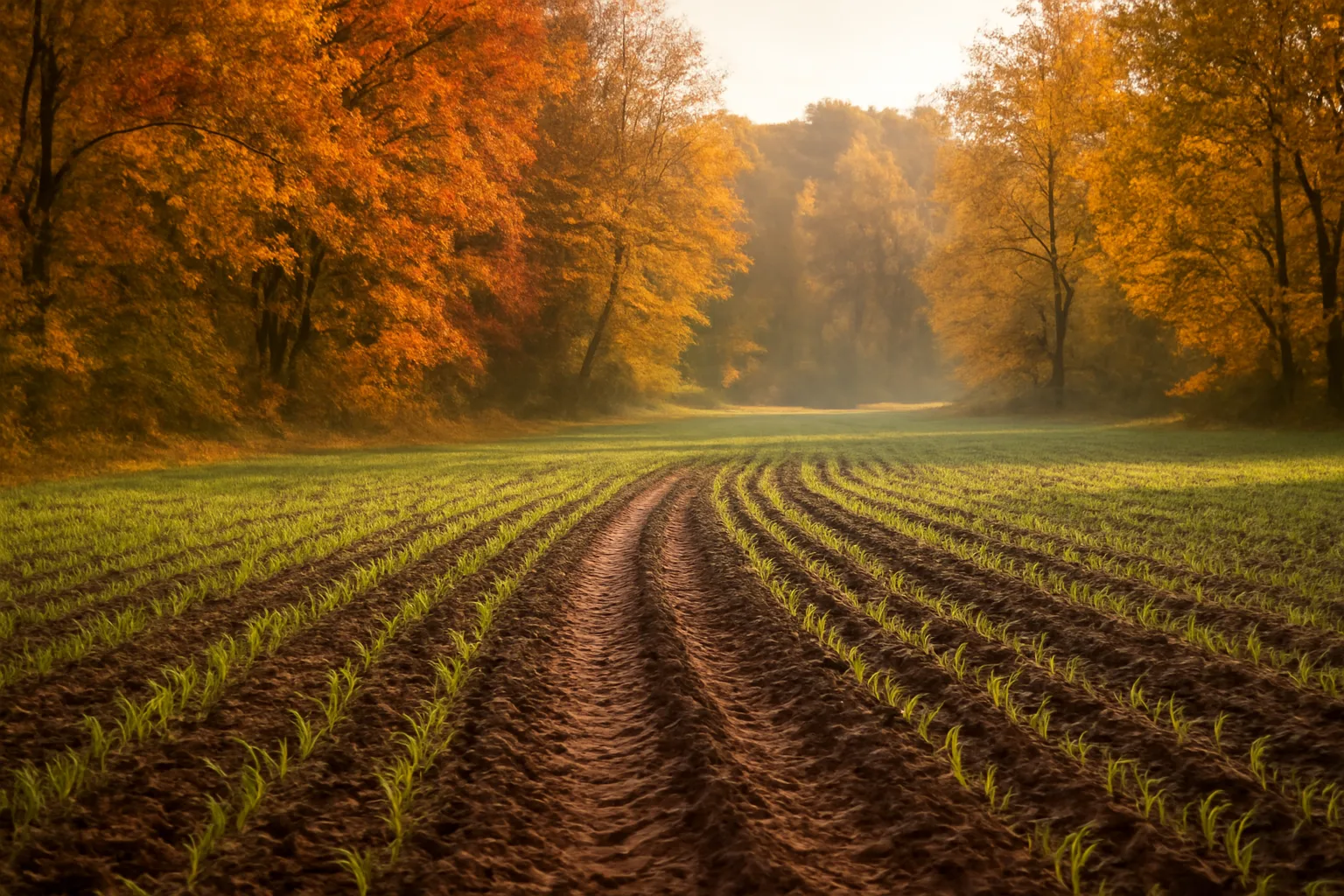
A food plot is a small planted field, usually somewhere between a quarter-acre and a few acres, put in specifically to feed deer or other wildlife rather than to harvest a cash crop. Landowners and hunters plant them on farm ground, timber cuts, old logging roads, or cleared patches inside woods. The goal varies by plot. Some are "destination" plots meant to hold deer during hunting season near a stand. Others are "nutrition" plots planted in spring and summer to help does through lactation and bucks through antler growth, when they're not necessarily hunted at all. A lot of serious plotters run both types on the same property [1]. State wildlife agencies generally treat food plots differently from bait piles. Baiting rules (piling corn, minerals, or feed to attract deer) vary a lot by state and are regulated separately from what you plant in the ground. Some states, like Michigan, restrict baiting heavily but don't regulate planted food plots the same way [2]. Always check your state wildlife agency's current regulations before assuming a food plot and a bait pile are treated the same, because in some states they aren't. If you want a rundown on plot styles and layout before you pick seed, the food plot whitetail guide covers shapes, sizes, and placement basics.
what are deer's favorite foods
| Soybeans (vegetative) | Very high | Protein, summer growth | |
|---|---|---|---|
| Clover | Very high | Protein, season-long | |
| Acorns (when present) | Very high | Fat, fall energy | |
| Brassicas (turnips, radish) | High, especially after frost | Carbs, late-season | |
| Oats | High in fall | Palatable cereal grain | |
| Grain sorghum | Moderate | Late-season energy, drought tolerance | There's no universal winner. A lot depends on what's already growing on and around your property, deer density, and how hungry they are relative to available native browse. |
Deer are opportunistic browsers, and their favorite foods shift by season and by what's locally available. In spring and summer, they lean hard on forbs, clover, soybeans, and other high-protein green growth. In fall, acorns often beat out anything you plant, when there's a good mast crop on the ground [3]. In late fall and winter, deer shift toward whatever's left standing: brassicas, cereal grains, and browse. Among planted forages, clover and soybeans consistently rank at the top of preference studies and grower experience alike, largely because of their high crude protein content, often 20-30% in clover during active growth [4]. Standing corn and grain sorghum matter more as energy sources late in the year, when deer need calories to get through cold stretches, not protein. Here's a rough ranking many plot managers and extension agronomists use, though local mast availability can flip this on any given year: | Forage type | Deer preference | Primary value |
do deer eat clover
Yes. Clover is one of the most reliable food plot crops, and deer eat it heavily through spring, summer, and fall wherever it's planted. Both white clover (Trifolium repens) and red clover (Trifolium pratense) show up constantly in food plot mixes because they regrow after grazing and tolerate repeated browsing better than most legumes. Extension research backs this up. The University of Tennessee and Mississippi State extension programs list clover among the top perennial forage choices for deer, citing its high digestibility and season-long availability once established [5]. Clover also fixes nitrogen in the soil, which is a real agronomic bonus if you rotate other crops through the same ground later. The catch with clover is establishment. It needs decent soil pH (most varieties want 6.0-6.5), good seed-to-soil contact, and it's slow the first few weeks. Weed competition can wipe out a thin clover stand fast if you don't spray or mow early. Once it's established though, a good clover stand can produce for 3-5 years with proper mowing and occasional overseeding. For a species-by-species rundown including clover varieties, see deer food plot seed.
do deer like clover more than other legumes
Deer generally prefer clover and soybeans over less palatable legumes like alfalfa or cowpeas, though preference studies show real variability by region and deer density. In areas with high deer pressure, plots get browsed down fast regardless of species, which can make it look like deer "prefer" whatever's left standing. White clover tends to edge out red clover in pure preference trials because it's lower-growing and easier for deer to graze repeatedly, while red clover often yields more total tonnage per acre. A lot of commercial food plot blends combine both for that reason: red clover for volume, white clover for grazing pressure tolerance. One honest caveat: nobody has a single definitive ranked preference study across all legumes and all regions. Most of what plot managers know comes from a mix of extension trial plots, camera data from individual properties, and decades of anecdotal grower experience. Treat rankings as a strong starting point, not gospel.
when to plant food plots for deer
| Clover, oats, brassicas | Mid-July to mid-August | Late August to mid-September | September through October | |
|---|---|---|---|---|
| Soybeans, sorghum | Mid-May to early June | Late April to mid-May | March through April | Check your state extension office for exact frost dates in your county; they're far more precise than any national chart. The seasonal calendars hub style planning is worth reviewing before you lock in dates. |
Timing depends entirely on whether you're planting a cool-season or warm-season crop, and both depend on your local frost dates. There is no single national planting date; it's regional. Cool-season plots (clover, oats, wheat, brassicas like turnips) generally go in late summer to early fall, roughly 60-90 days before your area's average first hard frost. That gives brassicas time to bulk up roots and bulbs before frost sweetens them, and gives clover and cereal grains time to establish a root system before winter dormancy. Warm-season plots (soybeans, cowpeas, grain sorghum, corn) go in after your last spring frost, typically April through June depending on latitude, when soil temperatures are reliably above 60°F. Here's a general planting window by crop type and region, using USDA plant hardiness zone bands as a rough proxy for frost timing: | Crop | Northern zones (3-5) | Transition zones (6-7) | Southern zones (8-9) |
when to plant oats for deer
Plant oats in late summer to early fall for the best fall and winter grazing window, generally 6-8 weeks before your first expected frost. Oats germinate fast, often within 5-7 days in warm, moist soil, and deer will hit young oat shoots almost as soon as they emerge. In northern states this often means a planting window from late July through mid-August. In the transition zone (much of Kentucky, Tennessee, Virginia) late August into September works well. In the deep South, oats can go in as late as October since hard freezes come later or not at all. Oats are a cool-season annual, meaning they'll die back with sustained hard freezes, so they're best treated as a fall-and-early-winter food source rather than a spring one. Some growers mix oats with winter wheat or triticale in the same plot, since wheat holds up to cold slightly better and stretches the plot's productive window into late winter. Mississippi State University Extension notes that cereal grains like oats and wheat are among the most attractive and reliable fall forages for deer because of high palatability right after germination [1].
when to plant turnips for deer
Plant turnips 90-100 days before your area's first hard frost, since they need that much time to develop both leafy tops and the underground bulb that deer switch to eating after frost. Planting too late means you get leaves but no bulb development, and planting too early in warm soil can bring on flea beetle damage before the plant establishes. For most of the whitetail's range, that translates to a planting window of mid-July through mid-August, adjusted for your local frost date. Turnips are part of the brassica family along with radishes and rape, and they behave differently from clover or oats in one key way: deer often ignore the leaves early in the season and only start hammering the plot hard after the first frost or two converts starches in the bulb to sugars, making it noticeably sweeter. That delayed-interest pattern trips up a lot of first-time plot growers who plant turnips, see no deer activity in September, and assume the plot failed. Give it until November or December in most of the country before judging a brassica plot's performance. Soil pH matters more for brassicas than people expect; most extension guidance recommends pH 6.0-7.5 for good bulb development. If your soil test comes back below that, lime well before planting, not after.
do deer eat sorghum
Yes, but sorghum ranks below clover, soybeans, and corn in most deer preference studies, and it's more valuable as a drought-tolerant, low-input grain crop than as a preferred forage. Deer will eat grain sorghum heads once they mature and dry down in fall, and they'll browse young sorghum shoots some in summer, but it's rarely the plot deer hit first when other options are standing nearby. Where sorghum earns its place is in tough growing conditions. It tolerates drought and poor soil far better than corn or soybeans, which makes it a solid choice for sandy ground, low-rainfall regions, or plots you can't irrigate or baby along. Many southern food plot mixes include grain sorghum specifically for that resilience, not because deer prefer it above other options [1]. Sorghum also holds up structurally through winter better than most grain crops, so it can function as standing late-season cover and a slow-release food source into January and February in areas where hunting season and deep winter overlap.
do deer like honey
No, honey isn't part of a deer's natural diet, and there's no credible wildlife research showing deer seek it out or that it has any place in food plot planning. Deer are herbivores that browse plants, forbs, mast, and agricultural crops; they don't forage for honey the way bears sometimes raid hives for both the honey and the grubs inside. This question comes up online occasionally, likely conflating deer attractants (mineral licks, some commercial scent products) with actual dietary preference. If you see a product claiming honey scent or flavor draws deer, treat that as a marketing claim, not an established feeding behavior backed by wildlife biology. Nothing in USDA or land-grant extension literature on deer nutrition lists honey or sugar syrup as a meaningful food source [3].
how do soil test results change what you plant
Your soil test lab's recommendations on lime and fertilizer are the actual authority here, not any general article, because soil chemistry varies field to field and even corner to corner on the same property. A general guide can tell you clover wants pH 6.0-6.5; only your test tells you how much lime your specific dirt needs to get there. Most land-grant extension soil labs (Penn State, Mississippi State, University of Tennessee, and others) run food plot soil tests for $10-20 and return pH, phosphorus, potassium, and lime recommendations within a couple weeks [6]. That's cheap insurance against wasting a season and a few hundred dollars in seed and fertilizer on ground that can't support the crop you picked. General pH targets by crop type, for reference before your test comes back: - Clover and other legumes: 6.0-6.5
- Brassicas (turnips, radish): 6.0-7.5
- Cereal grains (oats, wheat): 5.5-7.0
- Soybeans: 6.0-6.8 If your test comes back at pH 5.0 on ground you want in clover, don't skip the lime and hope for the best. Legumes especially fail to fix nitrogen properly in acidic soil, and you'll get a thin, yellow stand no matter how good the seed is [4]. Want a plan built around your soil test and property instead of general zone averages? Domain Outdoors builds a $99 one-time Custom Food Plot Plan around your actual soil test results and property goals; start at plot-plan-builder. It's general planning guidance, not site-specific agronomy from a certified agronomist, but it beats guessing at a bag label in the farm store.
how much seed and land do you actually need
Most seeding rates run by crop, and getting this wrong (too heavy or too light) is one of the most common ways new plotters waste money. Clover typically goes in at 6-10 lbs/acre for white clover blends. Oats run 100-140 lbs/acre. Brassica blends are often as light as 4-6 lbs/acre because the seed is tiny and a thick stand chokes itself out. As for acreage, there's no fixed rule, but a common starting guideline from wildlife biologists is roughly 1-5% of total property acreage in food plots, split between multiple smaller plots rather than one big field, to spread out browsing pressure and reduce the chance deer wipe out your only plot in three weeks [1]. A 40-acre property might reasonably carry 1-2 acres of plots split across 3-4 locations. Bigger tracts can support proportionally more, but plot size matters less than plot placement relative to bedding cover, water, and the habits of the deer already using the land.
food plot seed comparison: clover vs oats vs turnips vs sorghum
| Factor | Clover | Oats | Turnips/brassicas | Grain sorghum | |
|---|---|---|---|---|---|
| Planting window | Late summer/early fall (perennial) | 6-8 weeks pre-frost | 90-100 days pre-frost | Late spring, post-frost | |
| Deer preference | Very high | High | High (after frost) | Moderate | |
| Establishment speed | Slow (weeks) | Fast (5-7 days) | Moderate | Moderate | |
| Stand life | 3-5 years | Annual | Annual | Annual | |
| Drought tolerance | Moderate | Low-moderate | Moderate | High | |
| Soil pH target | 6.0-6.5 | 5.5-7.0 | 6.0-7.5 | 5.5-7.0 | No single crop wins on every factor, which is exactly why most experienced plotters plant a mix, clover for season-long protein, brassicas or oats for the late-season draw, and something drought-tolerant like sorghum on the rough ground that won't hold anything fussier. For a broader look at picking blends for your specific goals, deer food plots covers strategy beyond single-species choices, and food plot seed breaks down blend options in more depth. |
Frequently asked questions
Do deer eat sorghum?
Yes, deer eat grain sorghum, especially the mature seed heads in fall and winter, but it ranks below clover, soybeans, and corn in most preference studies. Sorghum earns its spot in food plot mixes mainly through drought tolerance and standing winter cover, not because deer seek it out first.
Do deer eat clover?
Yes, clover is one of the most consistently preferred food plot forages. Both white and red clover show up in nearly every serious food plot mix because of high crude protein (often 20-30%) and season-long regrowth after grazing, according to land-grant extension forage research.
When should I plant food plots for deer?
Cool-season crops like clover, oats, and turnips go in late summer to early fall, 60-100 days before your area's first hard frost. Warm-season crops like soybeans and sorghum go in after your last spring frost, typically April through June depending on latitude. Check your state extension office for local frost dates.
Do deer like clover better than other food plot crops?
Clover and soybeans generally top preference rankings alongside acorns when mast is available. Preference varies by region and deer density though, and there's no single definitive study ranking every legume against every other option nationally.
When should I plant oats for deer?
Plant oats 6-8 weeks before your area's first expected frost, generally late July through August in northern states and August through October further south. Oats germinate fast, often in 5-7 days, and deer hit young shoots almost immediately.
When should I plant turnips for deer food plots?
Plant turnips 90-100 days before your first hard frost so bulbs have time to develop, generally mid-July through mid-August across most of the whitetail range. Deer often ignore turnip plots until after the first frost sweetens the bulbs, so don't judge the plot before December.
What is a food plot?
A food plot is a planted area, usually a quarter-acre to a few acres, put in specifically to feed deer or other wildlife rather than for harvest. Plots range from small destination plots near stands to larger nutrition plots meant to support herd health through spring and summer.
What are deer's favorite foods?
Soybeans, clover, and acorns (when available) generally top deer preference, largely due to protein and fat content. Brassicas and cereal grains like oats become favorites in late fall and winter when deer shift toward carbohydrate and energy sources for cold weather.
Do deer like honey?
No, honey isn't part of a deer's natural diet and there's no wildlife research showing deer seek it out. Deer are herbivorous browsers; any product claiming honey attracts deer is a marketing claim, not documented feeding behavior.
How big should a deer food plot be?
Most wildlife biologists suggest keeping total food plot acreage around 1-5% of property size, split across multiple smaller plots rather than one large field. This spreads browsing pressure and reduces the risk of deer wiping out your only food source within a few weeks.
What soil pH do food plot crops need?
Most legumes like clover want pH 6.0-6.5, brassicas tolerate 6.0-7.5, and cereal grains like oats do fine from 5.5-7.0. Your soil test lab's specific lime recommendation should override any general pH target, since it accounts for your actual soil's buffering capacity.
Is it legal to bait deer with a food plot?
Food plots and bait piles are regulated differently in most states, but rules vary significantly by state wildlife agency, and some states restrict baiting heavily while treating planted plots separately. Always check your specific state wildlife agency's current regulations before hunting over or near a plot.
Can I plant clover and oats together?
Yes, many food plot mixes combine clover with a cereal grain like oats or wheat. The oats germinate fast and provide quick fall cover and food while the slower-establishing clover fills in underneath, and the oats can act as a nurse crop that reduces weed competition for young clover.
Sources
- Mississippi State University Extension, Food Plots for White-tailed Deer: Distinction between destination/hunting plots and nutrition plots, and general food plot planning practice
- Michigan DNR, Baiting and Feeding Regulations: State baiting/feeding restrictions vary and are regulated separately from planted food plots
- USDA Forest Service, White-tailed Deer Habitat and Food Habits: Deer diet composition shifts seasonally toward mast, forbs, and browse; no dietary role for honey or sugar
- University of Tennessee Extension, Establishing and Managing Wildlife Food Plots: Clover crude protein content and its ranking as a top perennial forage for deer
- Mississippi State University Extension, Clover for Wildlife Food Plots: White and red clover establishment, digestibility, and season-long deer use
- Penn State Extension, Agricultural Analytical Services Lab Soil Testing: Typical soil test costs and turnaround for pH, phosphorus, potassium, and lime recommendations