Last updated 2026-07-25
TL;DR
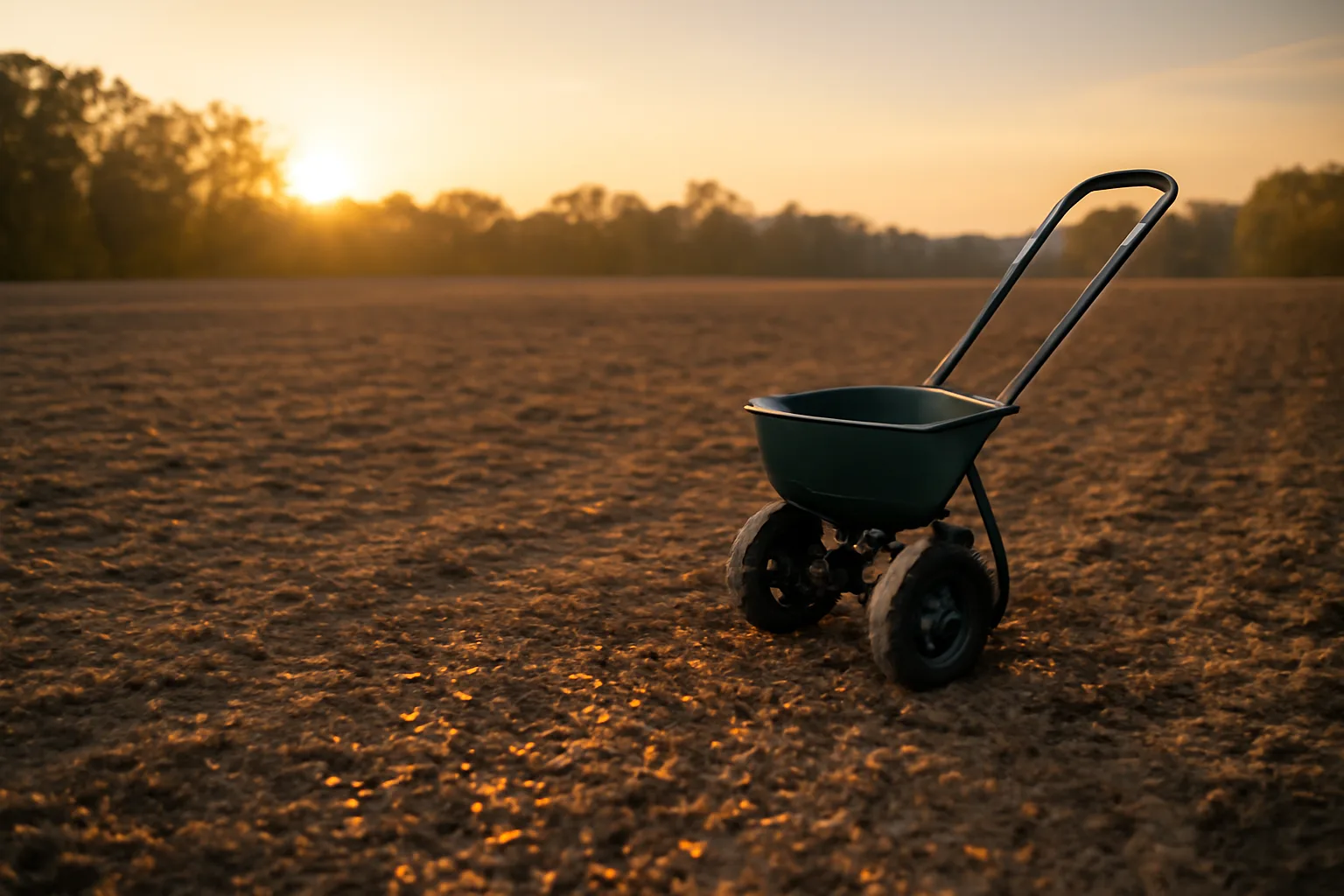
You can broadcast corn, but germination rates drop hard because corn needs 1.5 to 2 inches of soil coverage to sprout reliably. Surface-cast kernels feed birds, turkey, and rodents more than they feed your future plot. If you don't have a planter or drill, you're better off dragging or lightly disking corn in, or picking a different species entirely.
can you broadcast corn for food plots?
Technically yes, nothing stops you from throwing corn seed across a field. Practically, it's a bad plan if you want a stand of corn to show up in October. Corn is a big seed with a specific germination requirement: it needs to be buried, ideally 1.5 to 2 inches deep, in firm contact with soil that has enough moisture to swell the kernel [1]. Broadcast corn sits on top of the ground exposed to sun, wind, and every crow and turkey in the county. University extension planting guides for corn consistently specify drilling or planting at 1.5 to 2 inch depth, not surface application, because germination percentage falls off fast when seed isn't covered. If you broadcast corn with zero incorporation, expect a rough stand at best, more like scattered survivors than a plot. Some seed will find cracks, gopher holes, or get worked in by rain and freeze-thaw cycles, but you're leaving germination to chance instead of managing it.
why does corn need to be buried instead of broadcast?
Corn germination depends on soil contact and moisture retention around the seed, and a kernel sitting on bare ground dries out before it can imbibe enough water to sprout. Seed-to-soil contact is one of the most repeated points in university row-crop planting guidance, and it matters even more for a seed as large as corn compared to something like clover or brassica. There's also the predation problem. Corn kernels are a favorite target for crows, doves, turkey, and rodents. A broadcast application leaves every kernel exposed and easy to find. Bury it, and you cut way down on what gets picked off before it ever germinates. If you're set on planting corn, the better move is a corn planter or at minimum a drill set for the right depth. No planter? A disk pass to loosen soil, broadcast the seed, then a drag or cultipacker pass to cover it can work in a pinch, though your stand will still be less uniform than a planted field.
what happens if you just broadcast corn without covering it?
Some of it will grow, most of it won't, and a chunk of it becomes free bird feed. In trial and field settings, uncovered or shallow-planted corn shows sharply reduced emergence compared to properly depth-planted seed, and extension agronomists generally recommend against surface seeding corn at all. There's a practical middle ground worth knowing. If you broadcast corn and then run a light disk or a drag harrow over the field, you'll bury a decent portion of the seed even if the depth isn't perfectly uniform. That's not the same as a planter pass, but it beats nothing. Follow with a cultipacker or roller if you have one, to firm the soil back down and improve contact. One more practical note: check your state's baiting and feeding regulations before you plant anything with the intent of drawing deer to a spot for hunting. Rules on food plots versus bait piles vary by state, and some states have specific language about what counts as a legal food plot versus an illegal feeding site. Your state wildlife agency's hunting regulations page is the source to check, not a forum post.
is corn even a good food plot choice for most hunters?
For a lot of leased or owned ground, corn is overkill. It's expensive, it needs real equipment (a planter, ideally a row crop drill), fertility inputs are heavy, and it takes the whole growing season to mature into a fall food source. Corn also competes hard with weeds early on and often needs herbicide management that a lot of small food plot owners aren't set up to handle. Where corn earns its keep: large acreage plots, standing corn left for winter cover and a late-season food source, and situations where you've got the equipment and budget to do it right. If you're working an acre or two with a UTV and a hand spreader, your money and effort usually go further into clover, brassicas, or a cereal grain blend. For species selection and how it maps to your acreage and goals, the food plot whitetail guide breaks down which plants make sense for different setups, and deer food plot seed covers seed choices in more depth.
do deer eat sorghum?
Yes, deer eat sorghum, including grain sorghum (milo) and forage sorghum types. It's often used as a corn substitute in food plots because it's more drought tolerant and cheaper to establish in a lot of regions. Deer will browse young sorghum plants and eat the grain heads once they mature, and sorghum also draws turkey and other wildlife. Sorghum shares some of corn's planting logic: seed should be planted at a shallow but real depth (commonly around 1 to 1.5 inches depending on soil type) rather than left on the surface, per land-grant extension planting guides for grain sorghum [2]. It's a reasonable alternative if you want a standing grain crop but don't want corn's fertility and equipment demands.
do deer like clover, and do they actually eat it?
Yes, clover is one of the most consistently preferred forages for whitetail deer across seasons, and it's the default recommendation for a reason. Clover (white clover, red clover, and various blends) is high in protein, comes back year after year if managed right, and tolerates repeated grazing better than most annual food plot species. Extension forage research and wildlife habitat guides list clover among the top perennial food plot choices because of its protein content (often in the 20 to 25 percent crude protein range for quality stands) and its palatability to deer throughout spring, summer, and fall [3]. It's also relatively forgiving for first-time planters, since it doesn't need the depth precision that corn does. A light rake-in after broadcasting, or even just good seed-to-soil contact from rain, is usually enough. For a deeper look at clover varieties and blend options, deer food plots covers established perennial strategies.
when to plant food plots for deer?
| Perennial clover | Spring (after frost) or late summer | Establishes slow, lasts 2-4 years with maintenance | |
|---|---|---|---|
| Brassicas (turnips, radish) | Late July to early August in northern zones | Needs 80-90 days before hard frost | |
| Cereal grains (oats, wheat, rye) | Late summer to early fall | Fast growth, good early attraction | |
| Corn | Spring, after soil hits 50°F | Needs full season to mature | |
| Sorghum | Late spring | More drought tolerant than corn | These windows shift by several weeks depending on your zone, so treat this as a starting framework, not a fixed calendar. |
It depends entirely on what you're planting and where you are, which is why zone-based calendars matter more than a single date. Broadly, spring plots (clover, chicory, some warm-season annuals) go in after your last frost date, and fall plots (brassicas, cereal grains, clover overseed) go in roughly 60 to 90 days before your first fall frost so the plants mature before hunting season and cold weather. Your local NRCS/USDA plant hardiness zone and your state extension office's frost date data are the two things to check first. A plot planted in a zone 4 state on a zone 7 calendar is going to fail, and vice versa. Here's a rough framework by category: | Plot type | General planting window | Notes |
when to plant oats for deer?
Plant oats in late summer to early fall for a fall and early winter food plot, generally 6 to 10 weeks before your first expected hard frost. Oats grow fast, often showing green growth within a week or two of planting, and deer hit them hard as a fall attractant because the young shoots are tender and high in sugar content as temperatures cool. Spring oat plantings are also possible in some regions as a quick cover crop or early season plot, but the fall planting is the one most deer hunters use since oats pair well with hunting season timing. Oats winterkill in colder zones once temperatures drop into the teens or below for sustained periods, which is fine if you're using them as a fall attractant rather than trying to hold a stand through winter. Cereal grain blends including oats, wheat, and rye are commonly recommended by extension wildlife programs as reliable, lower-cost fall food plot options.
when to plant turnips for deer?
Plant turnips (and other brassicas like radish and rape) in mid to late summer, roughly 80 to 90 days before your first fall frost. That timing lets the plants bulb up and mature before deer season and cold weather hit. Turnips have an interesting quirk: deer often ignore the leafy tops early in the season and hit them hard after a couple of frosts convert starches in the plant to sugars, making them sweeter and more palatable [4]. That's why brassica plots sometimes look untouched in October and get hammered in December. If you're hunting early season, don't count on turnips alone. Extension brassica planting guides generally recommend a seeding depth of no more than a quarter to half inch, since brassica seed is tiny and easily buried too deep to emerge [4].
what is a food plot, exactly?
A food plot is a planted area of land, usually on hunting property, established specifically to provide forage for deer or other wildlife. Food plots range from a quarter acre hidden pocket plot to 10+ acre agricultural-style fields, and they serve two overlapping purposes: improving deer nutrition and health, and creating a predictable location to hunt. State wildlife agencies generally distinguish food plots from bait piles or feeders in their regulations, since a food plot is a growing crop rather than a pile of grain or feed placed on the ground. That distinction matters legally in states where baiting is restricted or banned but food plots are allowed. Always check your specific state wildlife agency's regulations, since baiting and feeding rules vary significantly by state and can change year to year [5]. If you're building a plan from scratch, that's exactly what a Custom Food Plot Plan is for. It's a $99 one-time plan built around your acreage, soil test results, and region, and it's meant as planning guidance, not a substitute for your soil lab's specific lime and fertilizer recommendations.
what are deer's favorite foods overall?
There's no single universal favorite since it shifts by season, region, and what's available, but research consistently puts a few categories at the top: acorns (especially white oak acorns), soybeans, clover, and various fruits like apples and persimmons rank high across multiple food habit studies. In food plot settings specifically, clover, soybeans, and brassicas after a frost tend to draw the most consistent use. Acorns deserve a specific mention because they're often preferred over planted food plots when they're available in quantity. Wildlife biologists have documented that in mast years (heavy acorn production years), deer will shift heavily toward acorns and food plot use can drop noticeably, which is a normal pattern, not a sign your plot failed. For a broader rundown of species options and how they rank for different goals, food plot seed and domain food plot seed both cover seed selection in more detail.
do deer like honey, or is that a myth?
There's no real evidence deer specifically seek out honey, and it's not a recognized food plot or attractant strategy in any wildlife agency or extension material. Deer are herbivores whose diet is built around forbs, browse, mast, and agricultural crops, not sweeteners like honey. Some commercial deer attractant products use sweet scents or molasses-based additives to appeal to a deer's preference for sugars, which might be where the honey question comes from, but straight honey isn't a documented or recommended food plot input. If you're chasing sugar content as an attractant angle, that's actually part of why brassicas work well after frost (the sugar conversion mentioned above) and why deer favor soft mast like apples and persimmons. That's a natural, documented pattern. Honey specifically isn't.
so what should you actually plant if not broadcast corn?
If you don't have a planter and want something you can broadcast with a hand spreader or ATV spreader and get real results, clover, cereal grains (oats, wheat, rye), and brassicas are your best bets. All three tolerate broadcast seeding reasonably well, especially with a light drag, cultipacker pass, or even just decent rainfall timing to press seed into contact with soil. Corn and soybeans are the two big seeds in the food plot world that really want to be planted with equipment, not broadcast. If corn is part of your plan because you want standing grain for late season, budget for either renting a planter, hiring the plot out, or accepting a much rougher stand from broadcast-and-drag methods. Matching the plant to your equipment, acreage, and zone is most of the battle in food plot planning. That's the exact gap a Custom Food Plot Plan is built to close: a $99 one-time plan based on your soil test and region, not a generic bag-of-seed recommendation.
Frequently asked questions
Can you broadcast corn for food plots and expect it to grow?
You can broadcast corn, but expect a poor, patchy stand. Corn germinates best when buried 1.5 to 2 inches deep with firm soil contact, per land-grant planting guides. Surface-cast kernels dry out and get eaten by birds and rodents before they sprout. Disking or dragging seed in after broadcasting improves results but still won't match a proper planter pass.
Do deer eat sorghum?
Yes. Deer browse young sorghum plants and eat the mature grain heads. Grain sorghum (milo) is a common corn substitute in food plots because it's more drought tolerant and less input-heavy. It's planted at a shallow depth, similar to corn but less demanding, per extension sorghum planting guidance.
Do deer like clover?
Yes, clover is one of the most consistently preferred food plot forages for whitetail deer. It's high in protein, often in the 20 to 25 percent crude protein range for good stands, and deer use it heavily across spring, summer, and fall. That's why it's the default recommendation for perennial food plots.
When to plant food plots for deer?
It depends on species and your zone. Spring plots go in after last frost; fall plots (brassicas, cereal grains) go in 60 to 90 days before first fall frost so plants mature before hunting season. Check your local NRCS plant hardiness zone and state extension frost dates before setting a date.
When to plant oats for deer?
Plant oats 6 to 10 weeks before your first expected hard frost, typically late summer to early fall in most whitetail range. Oats grow fast and provide strong early fall attraction. They generally winterkill in cold zones once sustained hard freezes hit, which is fine since they're meant as a fall food source, not a year-round stand.
When to plant turnips for deer?
Plant turnips roughly 80 to 90 days before your first fall frost, usually mid to late summer. Deer often ignore turnip tops early and hit them hard after a few frosts sweeten the plant through starch-to-sugar conversion. Seed depth should stay shallow, no more than a quarter to half inch.
What is a food plot?
A food plot is a planted area on hunting land established to provide deer forage and to create a predictable hunting location. Plots range from a quarter acre to many acres. State agencies generally treat a growing food plot differently from a bait pile under baiting and feeding regulations, though rules vary by state.
What are deer's favorite foods?
It varies by season and region, but acorns (especially white oak), soybeans, clover, and soft mast like apples consistently rank high in food habit studies. In mast years, deer often shift heavily toward acorns and food plot use can drop, which is normal and not a sign the plot failed.
Do deer like honey?
There's no real evidence deer seek out honey specifically. It's not a recognized food plot or attractant strategy in any wildlife agency material. The honey myth likely comes from confusion with sweet-scented commercial attractants or molasses-based products, which do appeal to deer's preference for sugars, unlike plain honey.
Is it legal to broadcast corn for a food plot?
Growing a food plot, including corn, is generally legal and treated differently from baiting or feeding piles, but rules vary significantly by state. Some states have specific definitions distinguishing a standing crop from a bait pile. Check your state wildlife agency's current hunting regulations before planting with hunting intent.
What depth should corn be planted at for a food plot?
University extension corn planting guides recommend a seeding depth of about 1.5 to 2 inches, adjusted slightly for soil moisture and texture. Shallower planting risks poor root anchoring and seed drying out; broadcasting with no coverage skips this depth requirement entirely and sharply reduces germination.
Can you drag or disk broadcast corn instead of using a planter?
Yes, disking or dragging after broadcasting corn is a reasonable workaround without a planter. It won't achieve uniform planting depth, so expect a rougher, less consistent stand than a proper planter pass, but it's far better than leaving seed fully exposed on the surface.
Sources
- Iowa State University Extension, Corn Planting Guide: Corn requires soil coverage and moisture contact at a specific depth to germinate reliably
- Kansas State University Extension, Grain Sorghum Production Handbook: Grain sorghum planting depth and establishment guidance
- USDA NRCS Plant Guide, White Clover: Clover's forage quality and use in wildlife plantings
- Mississippi State University Extension, Brassicas for Deer Food Plots: Brassica seeding depth and frost-driven palatability increase
- Pennsylvania Game Commission, Baiting Regulations: State wildlife agency distinction between food plots and bait piles