Last updated 2026-07-25
TL;DR
Chufa (Cyperus esculentus) is a sedge grown for its underground tubers, and it's mainly a wild turkey food, not a deer food. Plant 1-1.5 inches deep after soil hits 65-70F, usually April through June depending on zone, at 30-50 lbs per acre. Deer will eat the top growth some but rarely dig for nuts the way turkeys and hogs do.
What is chufa and is it actually a food plot seed?
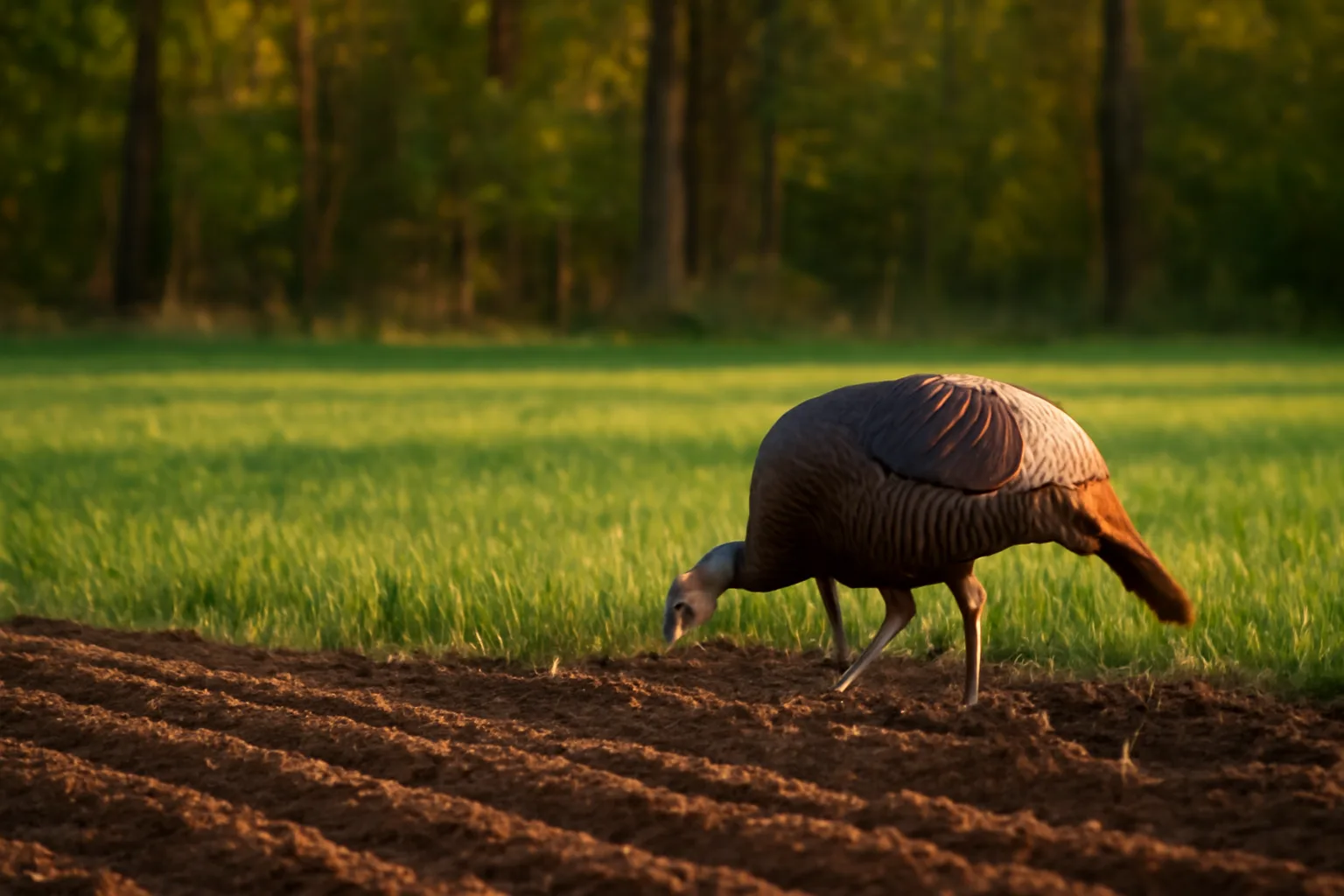
Chufa (Cyperus esculentus) isn't a grain or a legume. It's a sedge, a grass-like plant that grows small underground tubers, sometimes called nutgrass or nutsedge in its wild, weedy form. The cultivated variety sold for food plots produces bigger, sweeter tubers that wildlife dig up and eat. That's the whole appeal. Chufa doesn't feed animals through its leaves. It feeds them through what's buried a couple inches under the surface. Turkeys are the primary target species for chufa plots, and it's become a standard part of turkey management programs across the Southeast. Wild turkeys will scratch and dig for chufa tubers well into winter, which is exactly why land managers plant it as a fall and winter food source specifically for turkeys [1]. So yes, it's a real food plot seed, sold by most of the major plot seed companies. But if your goal is a deer plot, chufa isn't the right tool for the job. It's a turkey plot that deer happen to walk through.
Do deer eat chufa, or is this really a turkey food?
Deer will nibble chufa's grass-like top growth occasionally, especially early in the season before the plant matures, but they rarely dig for the tubers the way turkeys, hogs, and even raccoons do. The tubers form the actual food value, and deer aren't built to root them out of the ground the way a turkey's strong feet and beak can. Hogs are actually the bigger competitor for chufa in areas where feral hogs are present. Wild pigs will tear up a chufa plot faster than any other animal, digging the whole field over in a night if the population is heavy. If you're in hog country, don't plant chufa expecting it to last. For a plot that deer will actually eat heavily, look at clover, brassicas, or a cereal grain blend instead. If you want a mixed-species plot that pulls double duty for turkey and deer, chufa can work as one component in a larger planting, but don't build your whole deer strategy around it. For deer-specific plot seed choices, see our guide to deer food plot seed.
When should you plant chufa for turkeys?
Plant chufa after soil temperatures warm to 65-70F and the danger of frost has passed, since it's a warm-season plant that won't germinate in cold soil. In most of the whitetail range that lands somewhere between mid-April in the Deep South and early June in the northern tier. Chufa needs a full growing season, roughly 100 to 120 days, to bulk up tubers before the fall and winter feeding period. Plant too late and the tubers won't be mature enough to hold much food value by the time turkeys and deer start hitting the plot hard in late fall. Chufa needs full sun and well-drained soil. It tolerates a range of soil types but does best in sandy loam, which is part of why it's such a staple crop in the Southeast's turkey country. Heavy clay that stays wet will rot the tubers before they mature.
When to plant food plots for deer, in general
Deer food plot timing splits into two windows: spring/summer plantings for warm-season annuals and perennials, and late summer/fall plantings for cool-season annuals like brassicas, cereal grains, and clover. Most of the country falls into one of these general windows, though your local extension office and soil test lab know your exact frost dates better than any national guide. Spring plots (clover, chicory, warm-season annuals, chufa) typically go in after the last frost, once soil temps are consistently above 50-60F. Fall plots (brassicas, oats, wheat, rye) usually go in 60 to 90 days before your average first hard frost, timed so the plants mature right as hunting season opens. A soil test is a non-negotiable step here too, since lime and fertilizer needs vary a huge amount by field and region, and your soil test lab is the real authority on exact rates for your dirt. If you want a full walkthrough of building a plot plan around your specific property and zone, our food plot whitetail guide covers the bigger picture, and the $99 Custom Food Plot Plan builds a planting calendar and species list around your zip code, soil test, and equipment.
Do deer eat sorghum?
Yes, deer eat sorghum, particularly the grain heads once they mature, and sorghum also works well as a cover crop or a screening plant in a plot rotation. Grain sorghum is planted as a warm-season crop, similar timing to corn, and it tolerates drought and poor soil better than corn does. Sorghum isn't usually anyone's first choice for a dedicated deer attractant, but it shows up in a lot of wildlife blends because it's cheap, drought-tough, and provides both food and standing cover through the fall. Deer will browse young sorghum shoots and eat the mature grain, and it's a solid choice if you're planting a field on marginal ground where corn would struggle. If you're picking between sorghum, corn, and soybeans for a summer plot, soybeans generally draw more deer attention during the growing season because of the protein content in the leaves, but sorghum holds up better in dry years.
Do deer eat clover, and do they actually like it?
Deer eat clover heavily and it's consistently ranked as one of the most preferred food plot forages available, both in terms of tonnage consumed and crude protein content. Clover regrows after grazing, which makes it one of the few plot options that can handle real hunting pressure and repeated browsing all season. White clover and red clover are the two most common types planted for deer, and both can run in the 20-30% crude protein range in the right conditions, well above what most native browse offers. Clover is also a perennial in most zones, meaning a well-maintained stand can produce for 3-5 years before needing to be replanted, unlike annuals that need fresh seed every year. The tradeoff is establishment time and maintenance. Clover needs decent soil fertility, a pH usually in the 6.0-7.0 range, and it can get out-competed by weeds in the first year if you don't manage it. For more on clover and other perennial options, check deer food plots.
When to plant oats for deer
Plant oats for deer in late summer to early fall, typically 6 to 8 weeks before your first expected frost, so the plants have time to establish before cold weather slows growth. In most of the whitetail range that puts oat planting somewhere between mid-August and late September, though the Deep South can push into October. Oats are one of the fastest-germinating cereal grains, often showing green growth within a week of planting in warm soil, which makes them a popular choice for hunters who want a plot up and growing fast. Oats also tolerate a wider pH range than clover and don't need the same long-term soil-building investment. The downside is oats are less cold-hardy than wheat or rye. In northern zones a hard freeze can kill oats back completely, while wheat and rye will often survive and keep growing into winter. If you're in a zone with early, hard winters, consider blending oats with wheat or rye so you get fast fall growth from the oats and winter survival from the small grains.
When to plant turnips for deer
Plant turnips for deer 60 to 90 days before your area's first hard frost, which for most of the whitetail range lands between late July and early September. Turnips need that runway to bulb up and build sugar content before cold weather hits, since a hard frost actually improves palatability by converting starches to sugars in the bulb and leaves. Brassicas like turnips are best planted in late summer for fall and winter deer forage, and deer often ignore the bulbs early in the season before frost sweetens them, then switch to hammering the plot once temperatures drop. That's a common source of frustration for first-time brassica planters who see an untouched field in October and assume it failed, when really deer just haven't started eating it yet. Turnips work well in a blend with other brassicas (like radishes or rape) and sometimes with a cereal grain for structure and early cover. Plant too early in hot weather and you risk bolting or disease pressure; plant too late and the bulbs won't have size on them by hunting season.
What is a food plot, exactly?
A food plot is a planted area, usually somewhere between a quarter acre and several acres, intentionally seeded with forage to attract and hold wildlife, most commonly deer and turkey, on hunting property. Food plots are a form of habitat management, distinct from baiting, because they involve growing a standing crop rather than distributing loose feed or bait piles. That distinction matters legally in a lot of states. Baiting and supplemental feeding rules vary widely, and some states that ban baiting still allow food plots because the plant is rooted and growing rather than piled on the ground. Always check your state wildlife agency's current regulations before planting or hunting over any plot, since rules differ by state and sometimes by county or region within a state. Food plots range from simple single-species plantings, like a clover field or a chufa patch, to complex multi-species blends designed to provide food across multiple seasons. For a broader look at plot types and how to pick one for your land, see food plot whitetail and deer for food.
What are deer's favorite foods?
Deer preference studies and decades of extension research point to a consistent short list: acorns (especially white oak family acorns), soybeans, clover, and other high-protein legumes rank at or near the top of most deer food preference charts. Acorns are particularly important in fall, since the fat and carbohydrate content helps deer build body reserves heading into winter. Among planted forages, clover and soybeans consistently test as some of the most preferred and highest-protein options available to food plotters, often in the 20-30% crude protein range for young, actively growing plants. Brassicas like turnips and radishes become highly preferred later in the season, after frost sweetens them, but deer often walk past them earlier in fall in favor of acorns or standing beans. No single plant is a universal favorite everywhere. Regional food availability, soil fertility, and even local deer density change what shows up as preferred forage in any given study. That's part of why a soil test and a plan built around your specific ground beats copying a generic "top 10 deer foods" list from somewhere else.
Do deer like honey, and where does that question come from?
No, deer don't eat honey and there's no wildlife research suggesting honey has any role in deer nutrition or attraction. This question usually comes from confusion with "honey hole" hunting slang, or from mineral lick and attractant products that sometimes use "honey" branding or scent additives unrelated to actual bee honey. Deer are herbivores built to digest cellulose and plant material through a four-chambered rumen system, not the simple sugars in honey. If you're looking for a legitimate mineral or attractant supplement, look for actual salt/mineral lick products or check your state's baiting rules first, since mineral supplementation is treated as bait or feed in some states and restricted or banned during certain seasons. There's no credible extension or wildlife agency source recommending honey as a deer food, and it's not something worth spending money on for a plot or attractant strategy.
Chufa vs. clover vs. brassicas: which plot fits your goal?
| Plant | Primary target | Planting window | Soil/pH needs | Notes | |
|---|---|---|---|---|---|
| Chufa | Turkey (some deer browse) | Mid-April to June, after soil hits 65-70F | Sandy loam, well-drained, full sun | Tubers need 100-120 days to mature [2] | |
| White/red clover | Deer (perennial) | Early spring or late summer | pH 6.0-7.0, moderate fertility | Lasts 3-5 years with maintenance | |
| Turnips/brassicas | Deer (fall/winter) | 60-90 days before first frost | Tolerant of a range of soils | Palatability improves after frost | |
| Oats | Deer (fall annual) | 6-8 weeks before first frost | Wide pH tolerance | Fast germination, less cold-hardy than wheat/rye | |
| Sorghum | Deer (grain + cover) | Warm season, similar to corn | Drought and poor-soil tolerant | More of a cover/screening crop than top attractant | If your land already has a strong turkey population and you want a fall/winter food source specifically for them, chufa earns its place. If your main goal is deer, put your acreage and dollars into clover, brassicas, or a cereal grain blend first, and treat chufa as a bonus planting if you have the extra ground for it. |
How do you plant chufa correctly?
Plant chufa seed (which is really the tuber itself, sold as "seed") 1 to 1.5 inches deep, at a rate of roughly 30-50 lbs per acre depending on row spacing and drill setup, into a well-prepared, weed-free seedbed. Chufa competes poorly with weeds early on, so a clean seedbed matters more here than with a lot of other plot species. Most growers drill chufa in rows 18-36 inches apart to allow for cultivation or herbicide passes, though broadcast planting works too if you're willing to accept lower yield and more weed pressure. Cultipacking or light disking after planting helps ensure good seed-to-soil contact, since the tubers need consistent moisture to sprout. Once established, chufa needs very little additional care beyond weed control, and it doesn't typically require the fertility inputs that a heavy grain crop like corn does. Still, follow your soil test's recommendations on lime and starter fertilizer rather than guessing, since your soil test lab knows your specific field's baseline nutrient levels better than any general planting guide can.
Common mistakes people make with chufa plots
The single biggest mistake is planting chufa in heavy clay or poorly drained ground, where tubers rot before they mature and the whole plot fails. Chufa wants sandy, well-drained soil, and if that's not what you have, you're better off putting your effort into a different species. The second mistake is planting chufa expecting it to be a deer magnet on the same level as clover or soybeans. It can pull turkeys hard, and deer will use the field some, but if deer numbers are your main measure of success, you'll likely be disappointed comparing chufa's performance to a well-managed clover field. The third mistake is planting in hog country without a plan for it. Feral hogs will dig up a chufa plot in a matter of days once they find it, and there's not much practical way to stop them short of exclusion fencing, which usually isn't worth the cost for a food plot.
Frequently asked questions
Do deer eat sorghum?
Yes. Deer browse young sorghum shoots and eat the mature grain heads. It's not usually a top attractant on its own, but it's drought-tolerant and works well in blends or as a cover/screening crop on marginal ground where corn would struggle.
Do deer eat clover?
Deer eat clover heavily and it's one of the most preferred food plot forages available, often testing in the 20-30% crude protein range in actively growing plants. It regrows after grazing, so it holds up to repeated browsing better than most annuals do.
When should you plant food plots for deer?
It depends on the plant. Warm-season plots (clover, chufa, warm-season annuals) go in after last frost, once soil hits 50-60F. Fall plots (brassicas, oats, wheat) go in 60-90 days before your area's first hard frost. Check with your local extension office for planting dates specific to your county.
Do deer like clover more than other food plot options?
Clover consistently ranks near the top of deer forage preference lists, alongside soybeans and acorns. It's high in protein, regrows after grazing, and can persist for 3-5 years as a perennial stand, which makes it one of the most reliable deer plot choices available.
When should you plant oats for deer?
Plant oats 6 to 8 weeks before your first expected frost, usually mid-August through late September in most of the whitetail range. Oats germinate fast but aren't very cold-hardy, so in northern zones consider blending with wheat or rye for winter survival.
When should you plant turnips for deer?
Plant turnips 60 to 90 days before your area's first hard frost, generally late July through early September. Bulbs need that time to size up, and frost actually improves palatability, so don't panic if deer ignore the plot before temperatures drop.
What is a food plot?
A food plot is a planted patch of forage, usually a quarter acre to several acres, seeded to attract and hold deer or turkey on hunting land. It's a form of habitat management distinct from baiting since it's a growing crop, not a distributed feed pile, which matters under most state regulations.
What are deer's favorite foods?
Acorns, soybeans, and clover consistently rank at the top of deer food preference research. Brassicas become highly preferred after a hard frost sweetens the bulbs and leaves. Regional food availability and soil fertility shift preferences, so no single list applies everywhere.
Do deer like honey?
No. Deer are herbivores with a rumen built for digesting plant cellulose, not simple sugars like honey. There's no wildlife research supporting honey as a deer attractant, and the idea likely comes from confusion with hunting slang like 'honey hole' rather than actual bee honey.
Do deer actually eat chufa, or is it just for turkeys?
Deer will nibble chufa's top growth some, but the food value is in the underground tubers, and deer rarely dig for those the way turkeys and hogs do. Chufa is best planted as a turkey plot; for deer, clover, brassicas, or cereal grains are better investments.
How deep should you plant chufa seed?
Plant chufa 1 to 1.5 inches deep into a well-prepared, weed-free seedbed at 30-50 lbs per acre. It needs good seed-to-soil contact and consistent moisture to sprout, and it competes poorly with weeds early in the season.
Will feral hogs destroy a chufa food plot?
Likely, yes, if hogs are present in numbers. Feral hogs are strong diggers and will root up an entire chufa field faster than turkeys or deer can work it. There's no practical low-cost way to stop them short of exclusion fencing.
Can you plant chufa and deer clover together in the same field?
Not really as a mixed stand, since chufa is a warm-season plant that wants full sun and sandy, well-drained soil, and clover has different fertility and mowing needs. It's better to plant them as separate plots, even if adjacent, so each gets the management it needs.
Sources
- National Wild Turkey Federation research citation, wild turkey food habits (Journal of Wildlife Management, via Wiley Online Library): Chufa is listed as a reliable supplemental food source for wild turkeys in the Southeast.
- USDA NRCS Plant Guide, Yellow Nutsedge/Chufa (Cyperus esculentus): Chufa plant windows run spring through early summer, needing a full growing season of roughly 100-120 days to mature tubers.
- USDA Natural Resources Conservation Service, PLANTS Database profile for Cyperus esculentus: NRCS publishes species and planting guidance relevant to chufa and food plot timing.
- Oklahoma State University Extension Fact Sheet PSS-2585, Forage Legumes for Wildlife: Clover forages can test in the 20-30% crude protein range in actively growing conditions and are highly preferred by deer.
- Michigan Compiled Laws, Natural Resources and Environmental Protection Act 451 of 1994, Section 324.40111a (baiting and feeding of deer): Baiting and supplemental feeding rules for deer vary by state and can differ from food plot regulations.