Last updated 2026-07-24
TL;DR
A clover deer plot works because clover is high in protein (often 20-30% crude protein) and stays palatable for years, more than weeks. Success depends on soil pH near 6.0-6.5, proper inoculant, and planting in early spring or late summer depending on your zone. Frost-seeding and no-till drilling both work well.
What is a food plot, and why plant clover specifically?
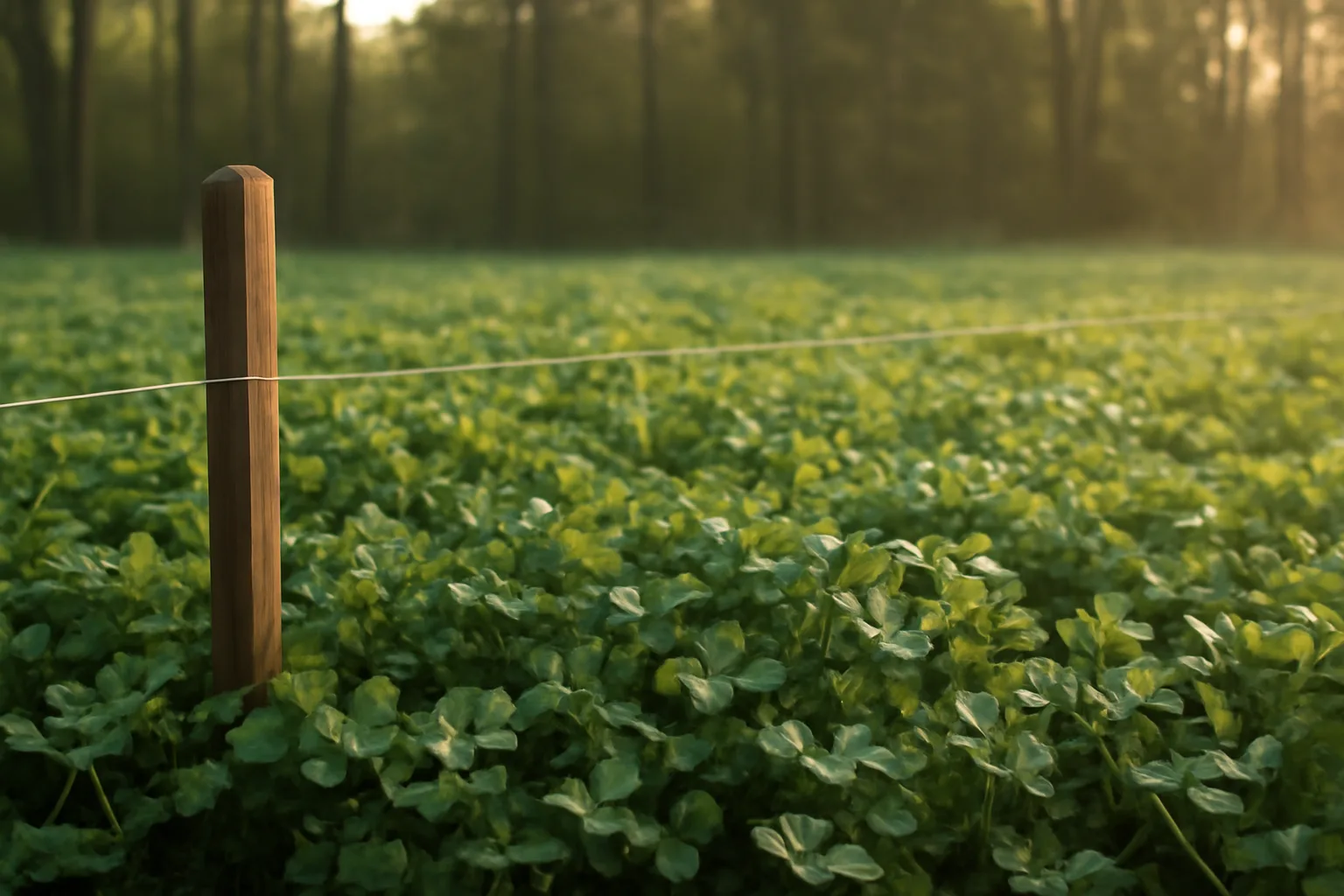
A food plot is a planted area on hunting land, usually a half acre to a few acres, seeded with forage that deer prefer over what's naturally growing nearby. Landowners plant them to concentrate deer activity for observation and hunting, and to add nutrition during stretches when native browse is thin. Clover is one of the most common food plot choices in North America, and for good reason. Clover is a perennial legume, which means a well-established stand can produce forage for three to five years or more before you need to replant. Compare that to annuals like brassicas or cereal grains that you're reseeding every single year. Clover also fixes nitrogen from the air through a relationship with soil bacteria, which cuts your fertilizer bill over time [1]. Most food plotters run either white clover (Trifolium repens) varieties like Durana or Ladino, or red clover (Trifolium pratense). White clover tends to be shorter, more tolerant of close mowing, and better suited to plots that get walked and hunted over. Red clover grows taller, handles heat and drought a bit better, and often gets used in mixes or as a nurse crop. If you're weighing clover against other plot types, it helps to look at the broader picture first. Our guide to food plot whitetail planning covers how clover fits alongside brassicas, cereal grains, and legume blends depending on your goals and soil.
Do deer actually like clover?
Yes. Clover consistently ranks as one of the most preferred forages in whitetail diet studies, and it's a staple recommendation from wildlife agencies and universities across the whitetail's range. Deer favor it because of the protein content and because it stays tender and digestible through spring, summer, and into fall, unlike many native plants that get woody or go to seed. Crude protein in quality white clover typically runs 20 to 30 percent, which lines up well with the roughly 16 percent minimum protein researchers associate with supporting antler growth and lactation in whitetail does, with higher levels providing more of a buffer during peak demand [2]. That's part of why clover shows up so often in spring and summer plot plans, right when does are nursing fawns and bucks are growing antlers. Clover isn't a magic bullet, though. In late summer, especially in the South, clover can go somewhat dormant or get grazed down hard if it's your only food source on the property. Deer will still hit it, but you'll notice pressure. That's one reason many food plotters pair clover with a fall annual, like oats or brassicas, in a nearby plot or a mixed planting.
When should you plant clover for a deer plot?
| Upper Midwest / North | Frost seed Feb-Apr | Late Aug-early Sept | |
|---|---|---|---|
| Mid-South / Transition | March-April | Late Aug-Sept | |
| Deep South | Late Feb-March | Sept-Oct | Check your local frost dates through your state's cooperative extension office before locking in a date. Extension soil temperature and frost data vary by county, and a two-week miss either direction can hurt establishment. |
Timing depends heavily on your region, and there's no single national answer. Clover seed is small, so you want firm, moist soil and a seedbed that isn't buried in residue. In northern states and Canada's whitetail range, frost seeding in late winter (roughly February through early April, depending on your latitude) is a favorite method. You broadcast seed onto snow or frozen ground and let the freeze-thaw cycle work it into the soil naturally. Many state extension programs and wildlife agencies recommend this window because it needs no tillage equipment and clover seed is tiny enough to work into cracked soil surfaces without deep planting. In the transition zone and mid-South, spring planting from March through April is common, once soil temperatures warm and frost risk drops. Fall planting, roughly August through September, is the other major window in many regions, timed so clover establishes before the first hard frost but benefits from cooler, wetter fall weather. Here's a rough seasonal breakdown by zone: | Region | Primary planting window | Alternate window |
What soil pH and fertility does clover need?
Clover is picky about pH in a way that a lot of other plot species aren't. Most extension guidance puts the target range at 6.0 to 6.5 for good nodulation and nutrient uptake [3]. Below pH 6.0, the rhizobium bacteria that fix nitrogen for the plant struggle, and you'll see pale, slow-growing clover no matter how much fertilizer you throw at it. A soil test is the only honest way to know where you stand. Send a sample to your state extension lab or a private agronomy lab before you plant, not after things look bad. Your soil test report is the real authority here, not a bag label or a blog post (including this one). If your results call for lime, get it applied and worked in months before planting if you can, since lime takes time to react with soil and shift pH. On phosphorus and potassium, clover generally wants moderate to high levels of both, and most soil test recommendations will spell out exact pounds per acre based on your specific results. Because clover fixes its own nitrogen once established, you typically skip heavy nitrogen applications after the first year, saving real money compared to annual grain plots that need repeated N applications. Inoculant matters too. Clover seed should be coated with the correct rhizobium inoculant strain for legumes (often labeled for clover specifically) unless it's already pre-inoculated from the supplier. Skipping this step in a field with no clover history can cut your nitrogen-fixing benefit substantially, and you'll see it in stunted, yellow-green plants.
How do you actually plant a clover plot, step by step?
Start with a clean seedbed. Kill existing vegetation with a labeled herbicide (glyphosate is common) two to three weeks before planting, or till it under if you're working ground that hasn't been sprayed. Clover seed is small and shallow-rooted at germination, so competition from weeds or old growth will smother it fast. Test and amend your soil first, following your lab's lime and fertilizer recommendations. Broadcast seed at roughly 6 to 10 pounds per acre for white clover, or check your specific variety's label, since rates vary by blend and germination rate. Red clover is often seeded a bit heavier, in the 10 to 15 pound range. Depth is the detail people get wrong most often. Clover wants to sit at 1/4 inch deep or less, basically just pressed into the soil surface, not buried. A cultipacker before and after broadcasting works well to firm the seedbed and ensure seed-to-soil contact without burying it too deep. If you're no-till drilling, make sure the drill is calibrated for small seed and set shallow. Water timing is out of your hands, but plant ahead of a rain window if the forecast gives you one. Clover germinates in 3 to 7 days under good moisture and warm soil, and a dry stretch right after planting is the single biggest killer of a new clover stand. If you want a plan built around your specific acreage, soil test numbers, and region rather than general rules of thumb, that's exactly the gap a Custom Food Plot Plan at PlotSeason fills. It's a $99 one-time plan, and it still leaves the lime and fertilizer call to your soil lab, since they have your actual numbers.
How do you maintain a clover plot once it's established?
Mowing is the main maintenance task, and it does more work than most people expect. Mow clover to about 4 to 6 inches whenever it starts to get tall, top out, or flower heavily. This resets growth to tender, high-protein regrowth and knocks back weed competition that would otherwise shade out the clover. Mow every 3 to 6 weeks during the growing season, more often in wetter years when everything grows fast, less often in drought. Never mow clover down to bare dirt. Cutting too short and too often stresses the stand and opens bare soil for weed seeds to move in. Spot-spray broadleaf weeds with a clover-safe herbicide (grass-selective herbicides are generally clover-safe, but read labels carefully since clover is a broadleaf itself and many broadleaf herbicides will kill it too). Grasses are usually the bigger threat to a clover stand over time, and a grass-selective herbicide applied once or twice a season keeps the stand cleaner without hurting the clover. Re-test soil every two to three years. Clover pulls potassium especially hard, and a stand that looked great in year one can slide in year three without a touch-up application based on a fresh test.
Can clover survive winter, and does it need replanting each year?
Perennial white and red clover varieties are winter-hardy across most of the whitetail's range and will green back up in spring without replanting, provided the stand wasn't overgrazed or drought-stressed going into winter. That's clover's biggest advantage over annual plots: you plant once and get multiple years of forage. A well-managed white clover stand commonly holds productive ground for three to five years before it thins out enough to need reseeding, and Ladino types in particular are known for good longevity when pH and fertility are kept in range [1]. Red clover tends to run a shorter productive life, often two to three years, before it declines and needs frost-seeding or overseeding to maintain stand density [4]. Deer pressure itself can shorten a stand's life. On smaller plots or high-density deer areas, constant close grazing without rest can weaken clover roots over a few seasons, similar to what happens with overgrazed pasture. Rotating hunting pressure and giving a plot the occasional rest period helps, though most food plotters just accept some thinning and overseed a bit of fresh clover seed into the stand every year or two as cheap insurance.
What about oats, turnips, and other fall companions for a clover plot?
Clover is a strong stand-alone plot, but a lot of experienced food plotters pair it with fall annuals either in rotation or in a nearby plot, since clover alone can thin out under heavy browse pressure in late summer and fall. Oats are typically planted in late summer through early fall, generally August through September in northern and transition zones, and into October in the Deep South, timed so plants get several weeks of growth before the first hard frost. Oats are a cool-season annual grain that deer hit hard right when they green up, and they winterkill in most northern climates, which is fine since you're replanting anyway. Turnips follow a similar fall-planting logic. Most extension guidance calls for planting turnips 60 to 90 days before your first expected fall frost, since they need that runway to bulb out before deer start digging into the roots [5]. Deer often ignore turnip tops early in the season and switch to eating both tops and bulbs hard after the first frost sweetens the plant's starches into sugars. Do deer eat sorghum? Yes, though it's more of a secondary or transition-zone forage than a first-choice plot species. Grain sorghum and forage sorghums get planted in some warm-season and Deep South food plot mixes, and deer will browse the leaves and grain heads, but sorghum shows up far less often in northern plot plans than clover, oats, or brassicas. If you're building a mixed rotation, our guide to deer food plot seed breaks down how species like sorghum, oats, and clover fit together across a season.
What are deer's favorite foods, and where does clover rank?
There's no single official ranking, since preference shifts by season, region, and what else is available, but clover shows up near the top of nearly every state and university food plot recommendation list, alongside soybeans, alfalfa, and native browse like acorns and forbs [2]. Acorns are often the single most sought-after fall food when they're dropping heavily, because of their fat content heading into winter. Soybeans and clover both rank high for protein-rich forage during spring and summer growth periods. Brassicas and turnips tend to climb the preference list specifically after frost, when sugars concentrate in the leaves and roots. Do deer like honey? This one comes up in searches, but there's no research or extension guidance suggesting deer seek out honey as a food source, and it's not a recommended or practical food plot or attractant strategy. Deer are herbivores built around browsing plants, forbs, and mast, not foraging for animal-produced sugars the way a bear might raid a hive. If you've seen a claim about deer and honey, treat it as internet folklore rather than a wildlife management practice. Bottom line: clover is a legitimate top-tier choice, not a gimmick, and it earns its spot in nearly every serious food plot rotation for a reason grounded in real protein numbers and real research, not marketing.
How does clover compare to other food plot options?
| White clover | Perennial legume | 3-5 years | Frost-seed or spring/fall | Mowing, spot spraying | |
|---|---|---|---|---|---|
| Red clover | Perennial legume | 2-3 years | Spring or fall | Moderate | |
| Oats | Annual grain | Single season | Late summer/early fall | Low, replant yearly | |
| Turnips/brassicas | Annual | Single season | 60-90 days pre-frost | Low, replant yearly | |
| Soybeans | Annual legume | Single season | Late spring | Fencing often needed young | Clover's real advantage is the multi-year stand life and lower replanting cost. Its downside is the strict pH requirement and the fact that it can get hammered by deer browsing pressure on small acreages before it has a chance to bulk up. If you're still deciding what to plant first, our broader breakdown of deer food plots walks through matching species to your soil, budget, and how much acreage you're working with, and food plot seed covers blend options if you'd rather not manage straight clover alone. |
Every plot species trades off differently on cost, labor, and how long it lasts. Here's how clover stacks up against the other most common choices. | Species | Type | Stand life | Best planting season | Relative maintenance |
Do you need to check any state rules before planting or hunting over a food plot?
Food plots themselves are legal everywhere and aren't considered baiting under federal law, but the line between a food plot and illegal baiting or feeding gets blurry in some states, especially around things like mineral licks, supplemental feed piles, or hunting too close to a recently disturbed or top-dressed plot. Rules vary widely by state. Some states have no restriction at all on hunting over a planted, growing food plot. Others regulate feeding and baiting separately from planted crops but still have specific distance or disturbance rules. Check your state wildlife agency's current hunting regulations before you plant or hunt, since these rules do change from year to year and enforcement details matter. This isn't a small detail to skip. A food plot is generally treated differently from a bait pile because it's a standing crop, but the specific legal definitions and any distance-from-stand requirements are entirely state-dependent, and getting this wrong can turn a legal hunt into a citation.
Frequently asked questions
Do deer eat sorghum?
Yes, deer browse sorghum leaves and grain heads, and it appears in some warm-season and Deep South food plot mixes. It's a secondary choice compared to clover, soybeans, or brassicas in most regional planting guides, and it's used more often as part of a mix than as a stand-alone plot species.
Do deer eat clover?
Yes, clover is one of deer's most preferred forages across nearly every whitetail range state, largely because of its high protein content, often 20 to 30 percent crude protein in well-managed stands, and its long growing season compared to many native plants.
When should you plant deer food plots?
It depends on species and region. Perennial clover often gets frost-seeded in late winter or planted in spring or late summer. Fall annuals like oats and brassicas typically go in 60 to 90 days before your area's first expected frost. Check your state extension office for local frost date guidance before locking in dates.
Do deer like clover more than other forages?
Clover ranks near the top of preferred forages in most university and state agency recommendations, competing closely with soybeans and alfalfa for spring and summer preference. Preference shifts seasonally though, and deer will favor acorns or frosted brassicas heavily when those become available.
When should you plant oats for deer?
Oats are generally planted in late summer to early fall, roughly August through September in northern and transition zones and into October in the Deep South. The goal is several weeks of growth before your area's first hard frost, since oats are a cool-season annual that deer hit hard once it greens up.
When is the best time to plant food plots for deer?
There's no single date since it depends on species and region. Spring plantings (clover, soybeans) generally go in March through May depending on frost risk. Fall plantings (oats, brassicas, turnips) generally go in 60 to 90 days before your area's first fall frost. Your state extension office has localized frost date charts.
When should turnips be planted for deer?
Most extension guidance recommends planting turnips 60 to 90 days before your area's expected first fall frost. This gives the plant enough time to bulb out before deer start digging into the roots, and deer preference for turnips often spikes right after the first frost sweetens the plant's sugars.
What exactly is a food plot?
A food plot is a planted patch of forage, usually a half acre to several acres, seeded specifically to attract and feed deer or other wildlife on hunting land. Plots use annual grains, brassicas, or perennial legumes like clover, chosen based on soil, region, and whether the goal is hunting season attraction or year-round nutrition.
What are deer's favorite foods in general?
Preference shifts by season and region, but acorns, clover, soybeans, and frosted brassicas or turnips consistently rank at the top across state and university food plot studies. Acorns are especially sought after in fall for their fat content heading into winter.
Do deer like honey?
There's no research or wildlife agency guidance suggesting deer seek out honey as a food source. Deer are herbivores that browse plants, forbs, and mast, not sugars from beehives. Claims about deer and honey aren't backed by any wildlife management source and shouldn't factor into food plot planning.
How much clover seed do you need per acre?
White clover is typically seeded at 6 to 10 pounds per acre, and red clover often runs 10 to 15 pounds per acre, though exact rates vary by variety and blend. Always check the specific seed label, since germination rates and seed size differ between cultivars like Durana, Ladino, or common red clover.
How long does a clover food plot last before you need to replant?
A well-managed white clover stand commonly produces for three to five years before thinning enough to need reseeding, assuming pH stays in the 6.0 to 6.5 range and the stand isn't overgrazed. Red clover has a shorter typical stand life, often two to three years.
Sources
- USDA NRCS Plant Guide, White Clover: Clover fixes atmospheric nitrogen through rhizobium bacteria, reducing fertilizer needs over time
- Mississippi State University Extension Publication P2085, Feeding and Nutrition of White-tailed Deer: Roughly 16 percent crude protein minimum supports antler growth and lactation, with clover providing 20-30 percent
- Oklahoma State University Extension PSS-2582, Clover Production and Utilization in Oklahoma: Clover requires soil pH of 6.0 to 6.5 for proper nodulation and nutrient uptake
- University of Tennessee Extension W391, Growing Brassicas for Wildlife Food Plots: Turnips and brassicas should be planted 60 to 90 days before the first expected fall frost
- USDA NRCS Plant Guide, Red Clover: Red clover is a shorter-lived perennial than white clover, typically productive for two to three years