Last updated 2026-07-24
TL;DR
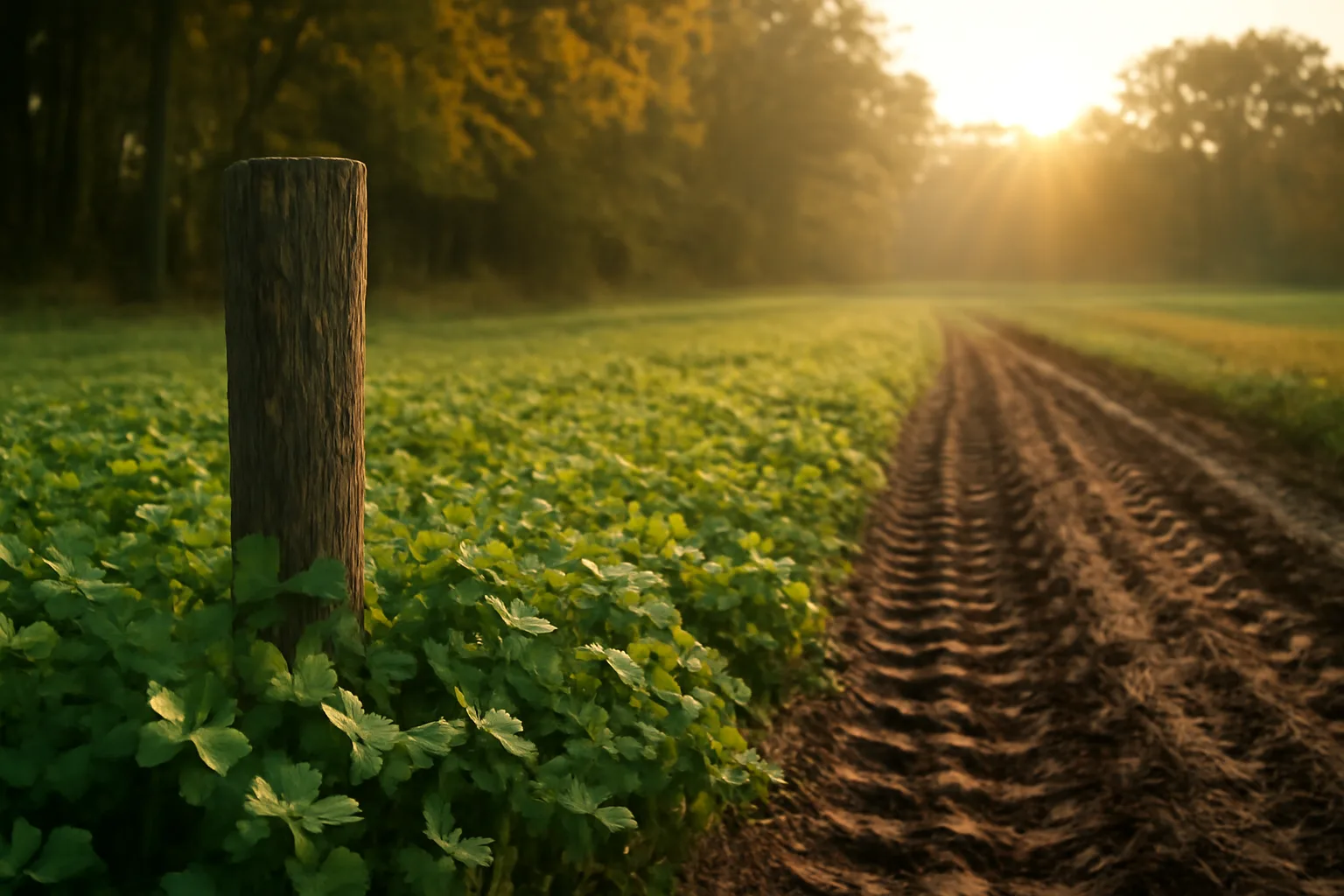
Clover is the backbone plot for most whitetail programs because it regrows after grazing, holds 25 to 30 percent crude protein, and lasts 3 to 5 years on one planting. Plant it in late summer to early fall in the North or early spring through fall in the South, on a mowed, limed seedbed no deeper than a quarter inch.
What is a food plot, exactly?
A food plot is a planted patch of forage or grain on hunting ground, meant to feed deer and other wildlife and, often, to give a hunter a place to sit with decent visibility. Plots range from quarter-acre kill plots tucked in timber to five-acre destination fields planted for tonnage. The idea isn't new. Wildlife agencies and land-grant universities have published food plot guidance for decades because planted forage can fill nutritional gaps that natural browse leaves open, especially in late summer and after a hard winter. Plots split into two rough categories: annuals you replant every year (brassicas, cereal grains, soybeans) and perennials you plant once and maintain for several seasons (clover, alfalfa, chicory). Clover falls in the perennial camp, which is exactly why it's the plot most landowners plant first. You do the hard work of soil prep once, then get years of forage if you keep up with mowing and fertility. A plot isn't a magic deer magnet. It's a supplemental piece of a habitat program that also includes cover, water, and native browse. University wildlife extension programs consistently frame food plots as one tool among several, not a replacement for good habitat management, since cover and native browse quality drive deer use of a property just as much as planted acreage [1].
Do deer like clover, and do they actually eat it?
Yes. Clover is one of the most consistently used forages in whitetail research and in the field. Deer graze it spring through fall and, in the South, sometimes through winter too if a hard freeze doesn't kill it back. It's soft, digestible, and high in protein, which matters most in spring green-up when does are recovering from winter and pushing into gestation, and in summer when bucks are growing antlers. Crude protein in well-managed clover plots commonly runs 25 to 30 percent, which is well above the roughly 16 percent minimum that deer nutrition research generally points to for supporting antler growth and lactation [2]. Compare that to native browse, which often falls short of that threshold in late summer when it matters most. Clover isn't the only thing deer want, and it isn't always their single favorite forage on a property with better options nearby (standing soybeans or acorns can pull deer off clover fast). But as a season-long, low-maintenance food source, nothing beats its combination of tonnage, protein, and regrowth after grazing pressure. That regrowth trait, called "grazing tolerance," is why clover survives heavy deer pressure that would wipe out a brassica plot in a few weeks.
What are deer's favorite foods overall?
Deer are opportunistic browsers, and preference shifts by season, region, and what's available. In general, acorns rank at or near the top wherever oaks are present, because of the fat content deer need heading into winter. Soybeans and cowpeas are heavily preferred in summer. Clover and chicory are preferred through spring, summer, and fall. Brassicas (turnips, radishes, rape) become highly attractive after a frost sweetens them up, and cereal grains like oats and wheat pull deer hard in fall and again in early spring. Researchers and extension agronomists generally agree there's no single "best" deer food, because preference changes with the calendar and with what natural forage is doing. A property heavy on ag fields will see different plot use than one deep in timber with no row crops nearby. This is part of why most food plot programs mix several plantings rather than betting everything on one species. For a broader look at how different plants stack up, see food plot seed and deer food plot seed.
Do deer eat sorghum, and where does it fit?
Deer will eat sorghum, mostly the grain heads once they mature, but it's not a top preference forage the way clover or beans are. Grain sorghum (milo) is used more often as a screening or standing-grain option for late-season cover and a fall/winter food source, and it's genuinely useful in dove field mixes and as a drought-tolerant option in the South and Plains. Deer browse the leaves some when young, then hit the seed heads as they dry down. If you're choosing between sorghum and something like clover or soybeans for a primary attractant plot, most extension agronomists and plot managers would put sorghum lower on the list. It has a real role as a standing cover crop or in a wildlife mix planted for turkey and quail too, but it's not the plant to reach for if your main goal is season-long deer nutrition.
Which clover variety should you plant?
| White/Ladino | 3-5 years | Kill plots, mixed sun/shade | Good | |
|---|---|---|---|---|
| Red clover | 2-3 years | Larger fields, tonnage | Moderate | |
| Arrowleaf | Annual/biennial, reseeds | Southern plots, poor soil | Low | Most commercial deer clover blends combine a Ladino variety with a small amount of chicory or red clover for a mix of persistence and tonnage. |
Three types cover almost every plot situation: white clover (including Ladino types), red clover, and arrowleaf clover. White/Ladino clover is the standard choice for shaded or partially shaded plots and small kill plots. It's shorter, spreads by stolons, tolerates mowing and grazing extremely well, and persists 3 to 5 years with maintenance. Varieties like Durana and Patriot were bred specifically for grazing tolerance and are common in deer-specific seed blends. Red clover grows taller, tolerates heat and drier soil better than white clover, and produces more tonnage per acre, but it's shorter-lived, usually 2 to 3 years, and less grazing-tolerant since it doesn't spread by stolons the same way. Arrowleaf clover is an annual to biennial reseeding clover, common in the South, that grows tall (up to 2 feet), handles poor soil fairly well, and reseeds itself if allowed to go to seed before mowing. | Clover type | Lifespan | Best use | Shade tolerance |
When to plant food plots for deer (general timing)
Timing depends on species and region more than any single calendar date. As a rule, perennials like clover go in during late summer to early fall in the North (roughly August to September) or in early spring as an alternative, while in the South, clover can go in fall (September through November) or late winter/early spring (February to March) [3]. Annual grains and brassicas follow their own separate windows, covered below. The safest way to nail your dates is to work backward from your first expected hard frost and your local extension office's planting calendar, since "North" and "South" cover a lot of ground. USDA's plant hardiness zone map is the standard free reference for identifying your zone and estimating local frost timing. A rough framework: - Zone 3-5 (Upper Midwest, Northeast): clover late July through early September
- Zone 6-7 (Mid-South, Mid-Atlantic): clover September through October, or March through April
- Zone 8-9 (Deep South): clover October through November, or February Check your soil temperature too. Clover germinates best when soil temps are consistently above 50°F, per most extension seeding guides.
When to plant clover specifically
For clover, late summer to early fall plantings generally outperform spring plantings in most of the whitetail's range, because fall-seeded clover gets a full spring and summer of growth before facing its first heat stress, and there's less competition from summer annual weeds. Spring plantings work fine too, especially in the Deep South or if a landowner missed the fall window, but expect more weed pressure to manage in year one. A practical target: plant clover 60 to 90 days before your first hard frost so seedlings have time to establish a root system before winter dormancy. That generally lines up with August in the northern tier and September through October further south. Don't plant clover into hot, dry August soil in the Deep South and expect much; wait for cooler fall rains, typically late September into November there.
When to plant oats for deer
Oats are a fall annual grain almost everywhere in whitetail country, planted 6 to 8 weeks before the first killing frost so they establish before cold shuts down growth. That generally means late August through September in the North, and September through October in the transition zone and mid-South. Oats are cold-tolerant compared to some cereal grains but will winterkill in hard northern winters; in much of the Midwest and North, expect oats to die back after repeated hard freezes, while in the South they can stay green much of the winter. That's a feature, not a flaw, in a fall food plot: oats pull deer hard in October and November when they're green and sweet, then a rye or wheat component in a mix can carry forage further into winter. Oats can also be planted in very early spring in northern climates as a fast, cheap forage or nurse crop for a clover seeding, though fall planting is the more common use case for deer.
When to plant turnips for deer
Turnips and other brassicas go in 80 to 100 days before your first expected hard frost, which generally lands in July through early August in the North and August through early September in the mid-South and transition zone. Timing is tight because turnips need a good stretch of warm growing weather to bulb up before frost, and frost is actually what you want next, since it converts starches to sugars and makes the greens and bulbs far more attractive to deer. A common mistake is planting turnips too late, chasing an early fall hunting date. Undersized turnips with little bulb development just don't pull deer the way a properly timed planting does. If you're set on a brassica plot for opening weekend of gun season, back the calculation up from that date, not the reverse. Deer often ignore turnip bulbs and tops early in the season, then hammer the plot after the first hard freeze, which is exactly why late-season brassica plots are a different tool than a clover plot meant to feed deer all summer.
How do you plant clover the right way?
Start with a soil test. Clover wants a soil pH between 6.0 and 7.0; below that, lime is non-negotiable because clover's nitrogen-fixing rhizobium bacteria don't function well in acidic soil. Your soil test lab's recommendation on lime and fertilizer rate is the specific number to follow for your dirt; a general article like this one can't tell you your field's exact lime rate. A basic clover planting sequence: 1. Test soil, apply lime according to your test results (often months ahead of planting, since lime takes time to move pH). 2. Kill existing vegetation with glyphosate or till/disk the seedbed clean. 3. Smooth the seedbed with a drag harrow, cultipacker, or the back of a disk. 4. Broadcast clover seed at 6 to 8 lb per acre for Ladino/white blends, or check your specific blend's tag rate. 5. Use an inoculant matched to clover if the seed isn't pre-inoculated; this step matters more than most people realize for nitrogen fixation. 6. Cultipack or drag lightly to press seed into soil no deeper than 1/4 inch. Clover seed is tiny and buried too deep, it won't emerge. 7. Apply starter fertilizer per your soil test (often light on nitrogen since clover fixes its own, heavier on phosphorus and potassium). Mowing every 4 to 6 weeks during the growing season, keeping clover at 4 to 6 inches, controls weeds and keeps growth tender and palatable. Skipping mowing for a season is the single most common reason a clover plot goes downhill early.
Do deer like honey (or honey-based attractants)?
This question usually comes up around commercial mineral licks, sprays, and "deer candy" style attractants that include molasses, honey, or sugar-based additives, not honey itself as a food source. There's not solid published wildlife research showing honey specifically as a preferred deer food; deer aren't documented raiding beehives the way bears do. What's better supported is that deer are drawn to high-sugar, high-carbohydrate foods generally, which is part of why frosted brassicas, apples, and standing corn pull deer hard in fall. Commercial attractant products banking on sugar or molasses scent are playing on that same preference, not on any specific honey behavior. One practical note that matters more than the honey question: many states regulate or ban baiting and supplemental feeding for deer, and rules vary sharply by state and even by county in places like Michigan and parts of the Midwest dealing with CWD management zones. Before using any mineral, feed, or attractant product, check your state wildlife agency's current baiting and feeding regulations, since a legal food plot and an illegal bait pile can look almost identical in some state statutes.
How does clover compare to other plot options?
| White clover | 3-5 yrs | 25-30% | Spring-fall | Low after establishment | |
|---|---|---|---|---|---|
| Alfalfa | 4-6 yrs | 20-25% | Spring-fall | High (needs good drainage, fertility) | |
| Brassicas (turnips) | Annual | 15-20% (bulb lower) | Fall/winter | Moderate, replant yearly | |
| Cereal grains (oats/wheat) | Annual | 12-15% | Fall-spring | Low, replant yearly | |
| Soybeans | Annual | 30%+ (forage stage) | Summer | High (needs acreage, deer pressure management) | Protein figures are general ranges reported across multiple state extension forage guides, not lab results for any specific field; your actual numbers depend on soil fertility and plant maturity at the time deer are grazing it [2]. For a side-by-side on how clover fits against other seed choices at a category level, see deer food plots and domain food plot seed. |
Clover isn't the right call for every situation. Here's how it stacks up against the other common perennial and annual choices. | Forage | Lifespan | Protein | Best season | Effort level |
How much does a clover plot cost to establish?
Seed alone typically runs $15 to $30 per acre-bag-equivalent depending on variety and whether it's a raw agricultural blend or a branded deer-specific mix, though branded whitetail clover blends often run higher per pound. Add lime (cost varies heavily by region and how much your soil test calls for, sometimes $30 to $60 per ton delivered and spread), starter fertilizer, and any equipment rental or fuel, and a half-acre to one-acre clover plot from bare ground often lands somewhere in the $150 to $400 range for the first year, with much lower costs (mowing, occasional fertilizer, minor overseeding) in years two through five. That upfront cost, spread over 3 to 5 years of production, is a big part of why clover is considered one of the better cost-per-year food plot investments compared to replanting an annual every single season. If you'd rather not guess at species mix, seeding rates, and lime tonnage for your specific field, a soil test result and a $99 one-time Custom Food Plot Plan can turn those numbers into an actual planting plan instead of a rough range like the one above.
What are the most common clover plot mistakes?
Skipping the soil test and lime is the biggest one. Clover simply won't fix nitrogen well or produce real tonnage in acidic soil, and no amount of fertilizer fixes a pH problem. Planting too deep is second. Clover seed is small; a quarter inch of soil coverage, or even just pressing it into the surface with a cultipacker, is plenty. Drilled too deep with a grain drill set for soybeans, it may never emerge. Not mowing is third. Left unmowed, clover gets shaded out by grasses and broadleaf weeds within a season or two, and deer use drops off as forage quality declines. Fourth, planting clover alone in heavy shade. White clover tolerates partial shade better than most legumes, but full-canopy hardwoods still starve it of light. In that situation, a shade-tolerant brassica or a clover/chicory mix bred for lower light does better. Last, expecting instant results. A fall-seeded clover plot won't hit full production until its first full spring and summer of growth. Patience through year one pays off in years two through five.
Frequently asked questions
Do deer eat sorghum?
Yes, but mostly the grain heads once mature, and it's a secondary choice compared to clover, soybeans, or brassicas for deer attraction. Sorghum works better as a screening crop, drought-tolerant option, or dove/wildlife mix component than as a primary deer nutrition plot.
Do deer eat clover?
Yes. Clover is one of the most reliably grazed food plot forages available, with crude protein commonly in the 25 to 30 percent range, well above the roughly 16 percent minimum generally cited for supporting antler growth and lactation in whitetail nutrition research.
When is the best time to plant deer food plots?
It depends on species. Perennial clover generally goes in late summer to early fall (August-October depending on region) or early spring. Annual brassicas need 80-100 days before first frost, oats need 6-8 weeks before first frost, and exact dates shift by USDA hardiness zone and local frost dates.
Do deer like clover better than other forages?
Deer consistently use clover heavily spring through fall, but preference shifts with what's available. Standing soybeans, acorns, and fresh brassicas after a frost can all pull deer away from clover temporarily. Clover's advantage is season-long availability and regrowth after grazing, not being the single top preference every week.
When should I plant oats for deer plots?
Plant oats 6 to 8 weeks before your area's first expected hard frost, typically late August through September in the North and September through October in the mid-South. Oats will winterkill in harder northern climates but often stay green through winter further south.
When should I plant food plots for deer overall?
There's no single date; work backward from your local first hard frost. Perennials like clover generally go in 60-90 days before frost in late summer/fall, brassicas need 80-100 days before frost, and cereal grains need 6-8 weeks before frost. Check your state land-grant extension's local planting calendar for exact dates.
When should I plant turnips for deer?
Plant turnips 80 to 100 days before your area's first expected hard frost, generally July through early August in the North and August through early September in the mid-South. Frost after planting is desirable, since it sweetens the bulbs and greens and increases deer use.
What exactly is a food plot?
A food plot is a planted area of forage or grain, often clover, brassicas, cereal grains, or soybeans, established on hunting land to supplement natural deer browse and give hunters a spot to observe or hunt over. Plots range from small quarter-acre kill plots to multi-acre destination fields.
What is a deer's favorite food?
There's no single universal favorite; it shifts by season and region. Acorns rank high wherever oaks are present, soybeans and cowpeas dominate in summer, clover and chicory hold appeal spring through fall, and frosted brassicas and cereal grains take over in late fall and winter.
Do deer like honey?
There's no solid wildlife research showing deer specifically seek out honey the way bears do. Deer are drawn to high-sugar, high-carbohydrate foods generally, which is why molasses or sugar-scented commercial attractants work on that broader preference, not on any documented honey-specific behavior.
How long does a clover food plot last once planted?
White/Ladino clover blends typically persist 3 to 5 years with proper mowing and fertility maintenance before needing to be reseeded or renovated. Red clover is shorter-lived, usually 2 to 3 years. Arrowleaf clover is an annual/biennial that reseeds itself if allowed to go to seed.
What pH does clover need to grow well?
Clover generally needs soil pH between 6.0 and 7.0 for good growth and effective nitrogen fixation by its symbiotic rhizobium bacteria. Below that range, lime application is necessary; your specific soil test lab's lime recommendation is the authority for your exact field, not a general rule of thumb.
Is it legal to plant a food plot near a bait pile or use attractants?
Food plot planting is generally legal everywhere, but baiting and supplemental feeding rules vary sharply by state and sometimes by county, especially in CWD management zones. Always check your state wildlife agency's current regulations before using minerals, feed, or attractant products near a hunting area.
Sources
- University of Georgia Extension, Circular 1028 "Establishing and Maintaining Wildlife Food Plots": Food plots work best as one tool in a broader habitat management program, not a standalone solution
- Mississippi State University Extension, Publication 2568 "Nutrition and Nutritional Diseases of Deer": Roughly 16 percent crude protein is a commonly cited minimum threshold supporting antler growth and lactation in whitetail deer
- University of Tennessee Extension, PB 1769 "Wildlife Food Plots": Clover planting windows differ between Northern (late summer/early fall) and Southern (fall or late winter/early spring) regions
- USDA NRCS Plant Guide, White Clover (Trifolium repens L.), PLANTS Database (symbol TRRE3): White clover spreads by stolons and tolerates repeated grazing or mowing better than upright legumes like red clover
- University of Georgia Extension, Circular 1027 "Forage Legume Establishment and Management": Clover seed should be planted no deeper than one-quarter inch because of its small seed size and limited energy reserves