Last updated 2026-07-26
TL;DR
Late season food plots (brassicas, cereal grains, clover) generally go in 60 to 90 days before your first killing frost, which for most of the whitetail range falls between late July and early September. Turnips and other brassicas need the cold to convert starch to sugar, which is what makes them attractive once snow flies.
what is a food plot, exactly
A food plot is a planted area on hunting or agricultural ground, usually somewhere between a quarter acre and several acres, seeded with forage that deer and other wildlife will eat. It's not a garden and it's not a crop field meant for sale, though the agronomy underneath it is identical. You're managing soil pH, fertility, seed selection, and planting timing the same way a row-crop farmer would, just at a smaller scale and with a different end customer. Most food plots fall into two broad categories: annuals you replant every year (brassicas, cereal grains, clover as an annual in some systems) and perennials that persist for 3 to 5 years with maintenance (clover, chicory, alfalfa). Late season plots are almost always annuals, because you're chasing a specific window of peak attraction tied to first frost, not building a stand that lasts multiple seasons. State wildlife agencies generally treat food plots as a normal agricultural practice separate from baiting, but the line matters. Piled corn, mineral blocks, and supplemental feed are regulated very differently from a planted, rooted crop in most states. Check your state wildlife agency's baiting and feeding regulations before you assume a practice is legal, because the definitions vary a lot state to state and some states have CWD-related feeding restrictions that also touch supplemental feeding rules in certain management zones [1].
when to plant deer food plots (the short answer)
| Zone 3-4 (northern MN, WI, upper MI) | mid-Sept | late July to mid-Aug | mid-Aug to early Sept | |
|---|---|---|---|---|
| Zone 5 (IA, southern WI/MI, PA) | early-mid Oct | early Aug to early Sept | late Aug to mid-Sept | |
| Zone 6 (KY, TN, VA, MO) | mid-late Oct | mid-Aug to mid-Sept | early-late Sept | |
| Zone 7-8 (AL, GA, MS, SC) | early-mid Nov | early Sept to early Oct | mid-Sept to mid-Oct | USDA plant hardiness zones are built from average annual extreme minimum temperature, not frost dates directly, so use them as a rough proxy alongside your local NOAA frost data, not a substitute for it. |
There's no single planting date because it depends on species and your last frost date, not the calendar. The reliable rule from university extension programs is to count backward from your average first killing frost date and match that to the seed's days-to-maturity [2]. For late season plots specifically, most guides land on late July through early September for the northern half of the whitetail range, and August into mid-September for the transition zone (Kentucky, Tennessee, southern Missouri). The deep South (Alabama, Georgia, Mississippi) often plants brassicas and cereal grains into late September or even October because frost arrives so much later. Here's a rough planting window table built from land-grant extension planting guides and USDA frost data. Treat this as a starting point, not gospel, since local microclimates (elevation, aspect, low ground that holds frost) shift things by two to three weeks in either direction. | Zone (USDA cold hardiness reference) | First frost (avg) | Brassica/turnip planting window | Cereal grain (oats/wheat/rye) window |
when to plant turnips for deer
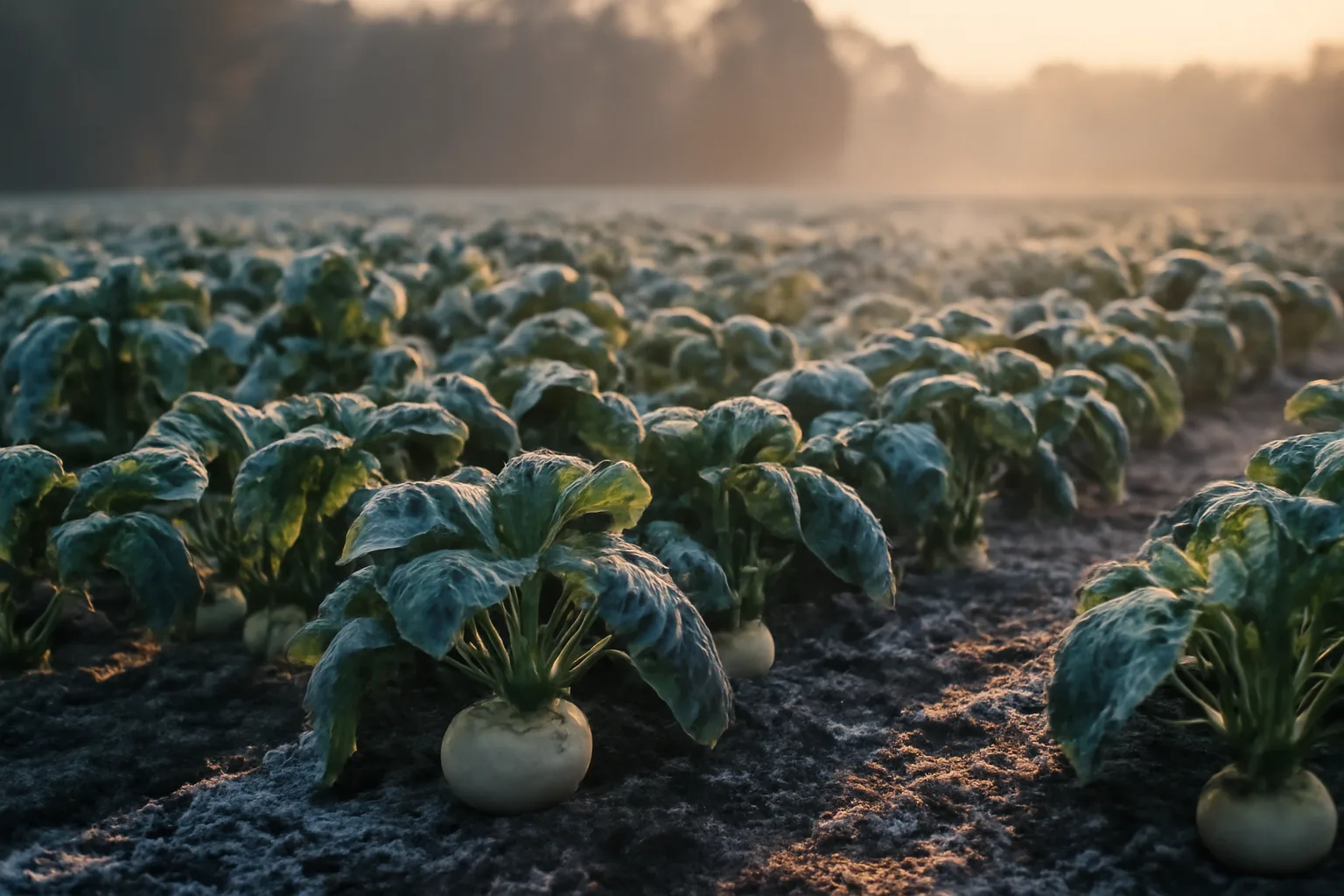
Plant turnips 80 to 90 days before your first expected hard frost. Turnips need that lead time to bulb out and build the root mass that makes them worth planting at all. If you plant too late, you get leafy tops and no bulb, which deer will still eat but you've wasted half the plot's potential. That starch-to-sugar shift after a hard frost is well documented in brassica forage research and is the whole reason turnips are a late-season plot staple rather than an early one. That conversion is why deer often ignore a turnip plot in October and hammer it in December. A practical target: if your first frost lands around October 15, get turnips in the ground by mid-July to late July. Wait too long and you're better off switching to a straight cereal grain blend instead, since a stunted, small-bulb turnip crop underperforms a well-timed oat or wheat planting. Seeding rate for turnips run alone is typically 4 to 6 lbs per acre; when blended with other brassicas (rape, radish) that number drops since you're splitting the rate across species. Broadcast into a firm, weed-free seedbed and cultipack afterward if you have the equipment, since turnip seed is tiny and needs good soil contact to germinate.
when to plant oats for deer
Oats go in 45 to 60 days before first frost, which makes them one of the more forgiving late-summer plantings if you're working around a delayed harvest or a rained-out planting window. Oats germinate fast (5 to 10 days in warm soil) and put on a lot of tonnage quickly, which is exactly what you want heading into fall. Oats are not frost-hardy the way winter wheat or cereal rye is. A hard freeze will kill oat plants outright, so in the coldest zones oats function as an early-to-mid fall food source rather than a true late-season (January) plot. If you need standing forage into January and February, cereal rye is the better call since it survives temperatures well below what kills oats and will green back up in late winter. Seeding rate for oats broadcast alone runs 100 to 150 lbs per acre (roughly double that of wheat, since oat seed is lighter and less dense per bushel). Drilled rates can run slightly lower since you get better seed-to-soil contact and less waste.
do deer like clover, and do deer eat clover
Yes, deer eat clover readily and it's one of the most consistently preferred forages across whitetail research, but clover is a perennial workhorse, not really a "late season" specialty plot. Clover's protein content, commonly cited in the 25 to 30% crude protein range for actively growing clover, makes it valuable primarily in spring and summer during antler growth and lactation [3]. Where clover fits into a late-season conversation is dormancy. In most of the whitetail range, clover goes dormant or semi-dormant once temperatures consistently drop below the mid-40s, so by December it's providing little to no forage value in the North. In the South, clover often stays green and available well into winter, which changes the calculus if you hunt Georgia versus Michigan. If you're planning a true late-season plot, established clover from a spring or late-summer planting can still pull double duty as a fall attractant early in the season, but don't count on it as your December food source north of the transition zone. Pair it with a frost-tolerant brassica or cereal grain block instead for the actual late-season push. For species selection across a whole property, a food plot whitetail plan usually blends a perennial clover field with one or two annual late-season plots rather than relying on one crop to do everything.
do deer eat sorghum
Yes, deer eat sorghum, mainly the grain heads once they mature and dry down, and standing grain sorghum (milo) is a legitimate late-season food source in states where it's grown as a screening and feeding crop. It's more common as a wildlife planting in the southern and central Great Plains and parts of the Midwest than in the Northeast. Sorghum's real value in a late-season plot is structural as much as nutritional: tall stalks left standing through winter provide cover and thermal break alongside a food source, which matters a lot in open country with little other winter cover. Deer will work sorghum heads through snow cover better than a lot of other grains simply because the heads sit up above the snow line longer. One caution: sorghum (and its relatives like Sudangrass and Johnsongrass) can produce prussic acid (cyanogenic compounds) under stress conditions like frost damage or drought, which is a documented livestock toxicity concern tracked by university extension forage programs [4]. This is primarily a livestock grazing issue rather than a deer food plot issue since deer aren't grazing fresh, stressed forage the way cattle do, but it's worth knowing if you're also running livestock on the same ground.
do deer like honey (and what that question is really asking)
Deer don't eat honey in any meaningful field sense, and it's not a food plot ingredient or attractant in any wildlife agency or extension guidance. This question usually comes from confusion with commercial deer attractant products that use molasses, sugar, or "honey-scented" branding, or from mash/fermented bait products marketed for deer. If you're looking at a molasses-based mineral or attractant product, remember it almost always falls under baiting and feeding regulations rather than food plot rules, because it's a supplemental additive, not a planted crop. Those rules vary widely: some states allow baiting for deer hunting outright, some ban it everywhere, and some allow it only in certain zones or outside CWD management areas. Check your state wildlife agency's current regulations before using any additive product, since this is one of the more frequently updated rule categories from year to year.
what are deer's favorite food (ranking real preference data)
There's no single universal "favorite," because preference shifts hard by season, region, and what's locally available, but repeated research on whitetail diet composition points to a consistent pattern: soft mast (acorns especially), followed by high-protein forbs and legumes in growing season, then agricultural crops and browse in winter. Acorns are the closest thing to a genuine favorite when they're available. Multiple state agency and university studies on whitetail diet show deer will shift heavily toward acorns during fall drop, sometimes making up a large share of fall diet in years with a good mast crop, because of the fat and carbohydrate density. In poor mast years, deer lean much harder on agricultural fields and planted plots, which is part of why plot performance looks so different year to year even with identical planting. For planted forages specifically, clover and alfalfa rank consistently high in preference trials during the growing season, while brassicas (turnips, radish, rape) become highly preferred specifically after frost due to the sugar conversion mentioned earlier. Soybeans and cowpeas rank high in summer. There isn't a clean single ranked list backed by rigorous, repeated field trials across regions, so treat any "top 10 deer foods" list, including this one, as directional rather than precise.
how do I pick species and timing for my specific zone
Start with your average first frost date, not a generic calendar month. Your county NOAA cooperative weather station data (accessible through NOAA's climate normals) or your state climatologist's office tracks average frost dates, and your land-grant extension office almost always has a planting guide built around those local dates [5]. From there, work backward using days-to-maturity for whatever you're planting: 80 to 90 days for turnips and most brassica blends, 45 to 60 days for oats, 60 to 75 days for winter wheat or cereal rye (though rye and wheat will also survive well past that window and just keep growing slowly through winter). If you're layering a multi-species blend, plant to the needs of the longest-maturing component in the mix. Soil test results should drive your lime and fertilizer decisions, not a generic bag recommendation. Your soil test lab's specific pH and nutrient recommendations for your field are the real authority here; general seed bag guidance is a reasonable starting point but it's not tailored to your dirt. Brassicas in particular are heavy nitrogen feeders and will disappoint on low-fertility ground even with perfect timing. If you want a plan built around your actual property, frost dates, soil test numbers, and huntable acreage rather than a generic calendar, that's the exact gap a Custom Food Plot Plan is built to fill: a one-time $99 planning document mapped to your zone and your dirt, not a subscription or a guess.
equipment and prep checklist for late-summer planting
Late-season plots usually go in during the hottest, driest stretch of the year, which makes seedbed prep and moisture management the real limiting factor, more than seed selection. A perfect turnip blend planted into cloddy, dry dirt with no rain in the forecast will underperform a mediocre blend planted into a firm, moist seedbed. Minimum viable equipment: a way to kill existing vegetation (herbicide and a sprayer, or disking), a way to work the seedbed (disk, tiller, or no-till drill), a broadcast spreader or drill for seed, and a cultipacker or drag to firm the seedbed after broadcasting small seed like brassicas and clover. A no-till drill is the single best upgrade if you're planting into standing residue or can't get equipment in during a dry window, since it gets seed to depth without needing a full tilled seedbed. If rain isn't in the 10-day forecast, it's often smarter to hold seed a week or two rather than plant into bone-dry ground and hope, especially for small-seeded brassicas that need consistent surface moisture to germinate. Cereal grains with larger seed and deeper planting depth (1 to 1.5 inches) tolerate a dry spell better than brassicas planted a quarter inch deep.
common late-season food plot mistakes
Planting brassicas too early is the most common one. Get turnips in the ground in June in a zone with an October frost and you'll get huge, leafy tops and small, woody bulbs, or worse, bolting and flowering before frost ever arrives. That defeats the entire point of a frost-triggered sugar conversion crop. The second mistake is ignoring soil pH. Brassicas tolerate a wider pH range than clover or alfalfa, but they still respond hard to lime on acidic ground. A soil test that comes back at 5.2 pH and gets planted without lime will grow a plot at a fraction of its potential, no matter how good the seed blend is. The third is treating "late season plot" as one plant instead of a system. A monoculture turnip plot is a single point of failure: if deer key on it hard in November, there may be nothing but stems left by late December. Staggering a brassica block, a cereal grain block, and standing beans or corn if you have the acreage spreads out pressure and extends the plot's useful window into the actual late season, which is usually the whole point of planting one in the first place. For picking blends suited to this kind of staggered system, browsing deer food plot seed options by species is a faster starting point than guessing off a bag label.
Frequently asked questions
When should I plant food plots for deer in general?
Plant annual food plots by counting backward from your area's average first frost date using the seed's days-to-maturity: 80-90 days for brassicas, 45-60 days for oats, 60-75 days for cereal rye or wheat. Spring plots (clover, soybeans) go in after your last spring frost instead, typically April through May depending on zone.
Do deer eat sorghum in food plots?
Yes, deer eat sorghum grain heads, and standing sorghum is a common late-season planting in the Midwest and Plains for its combination of grain and winter cover. Note that stressed or frosted sorghum can develop prussic acid, a documented concern for livestock grazing tracked by university forage extension programs, though it's less relevant to deer foraging on mature grain.
Do deer eat clover, and do deer like it?
Yes, deer eat clover readily and prefer it strongly during spring and summer growth, when crude protein commonly runs 25-30%. Clover is a perennial, though, and goes dormant in cold climates by early winter, so it's more of a spring/summer/early-fall food source than a true late-season plot in northern zones.
When should I plant oats for deer food plots?
Plant oats 45 to 60 days before your first expected frost. Oats germinate quickly and produce forage fast but aren't frost-hardy like cereal rye, so a hard freeze kills the plant. In northern zones, treat oats as an early-to-mid fall food source rather than a January standby.
When should I plant turnips for deer?
Plant turnips 80 to 90 days before your average first hard frost. That lead time lets the bulb develop before cold weather converts stored starches to sugar, which is what makes turnips attractive to deer in December and January, per extension guidance on brassica forages.
What exactly is a food plot?
A food plot is a planted, managed area of forage, typically a quarter acre to several acres, seeded specifically to feed deer or other wildlife rather than for commercial harvest. It uses the same soil testing, liming, and planting principles as row-crop agriculture, just scaled to hunting property.
What are deer's favorite foods overall?
Acorns are the closest thing to a universal favorite when available, due to their fat and carbohydrate density during fall drop. Among planted forages, clover and alfalfa rank high in growing season, brassicas rank high after frost, and soybeans rank high in summer. Preference shifts heavily by season and regional food availability.
Do deer like honey or honey-flavored attractants?
Deer don't eat honey as a field food source, and it isn't a food plot crop. This question usually stems from molasses or sugar-based commercial attractant products, which typically fall under baiting and feeding regulations rather than food plot rules, and those regulations vary significantly by state.
Is baiting or feeding deer near a food plot legal?
It depends entirely on your state. Planted, rooted food plots are generally treated as normal agriculture and are legal broadly, but piled feed, mineral blocks, and molasses attractants often fall under separate baiting/feeding statutes that vary by state and sometimes by CWD management zone. Check your state wildlife agency's current regulations before using any additive.
Can I plant a late-season plot without a soil test?
You can, but you're guessing on lime and fertilizer needs, which is often the single biggest factor limiting brassica and cereal grain yield. A basic soil test costs relatively little through most land-grant university extension labs and gives you a specific pH and nutrient recommendation instead of a generic bag rate.
What's the difference between a late-season plot and a regular fall plot?
A late-season plot is timed and species-selected specifically to still be attractive during the post-rut and winter stress period (December into February in northern zones), using frost-tolerant brassicas and cereal grains. A regular fall plot might just be timed to peak during archery season in October, using different species and an earlier planting window.
How many acres of late-season plot do I actually need?
There's no fixed formula, and it depends heavily on deer density, browse pressure, and how many plots you're running property-wide. Many land managers and extension wildlife programs suggest food plots make up somewhere around 1 to 5% of total huntable acreage as a rough starting benchmark, with late-season blocks often on the smaller end since they're a supplemental winter food source, not a primary one.
Sources
- Michigan DNR, Fish and Wildlife Order regulating baiting and feeding of deer and elk: Michigan has CWD-related feeding and baiting restrictions that affect supplemental feeding practices in certain zones
- University of Missouri Extension, Food Plots for Deer and Other Wildlife (G9421): Planting date should be calculated backward from average first frost date using species days-to-maturity
- Oklahoma State University Extension, Clover for Wildlife Habitat (NREM-9012): Actively growing clover commonly provides crude protein in the 25-30% range
- University of Nebraska-Lincoln Extension, Prussic Acid Poisoning in Livestock (G1745): Sorghum and related species can produce prussic acid under stress conditions such as frost or drought
- NOAA National Centers for Environmental Information, US Climate Normals: Average first frost dates vary by county and are tracked through NOAA climate normals