Last updated 2026-07-26
TL;DR
"5 card stud" isn't an official term, it's a nickname some seed companies and hunters use for a five-way blend (usually a brassica, a legume like clover, a cereal grain, and sometimes sorghum or chicory) planted together to cover multiple deer preferences and extend a plot's feeding window from early fall through late winter.
What is a 5 card stud deer food plot?
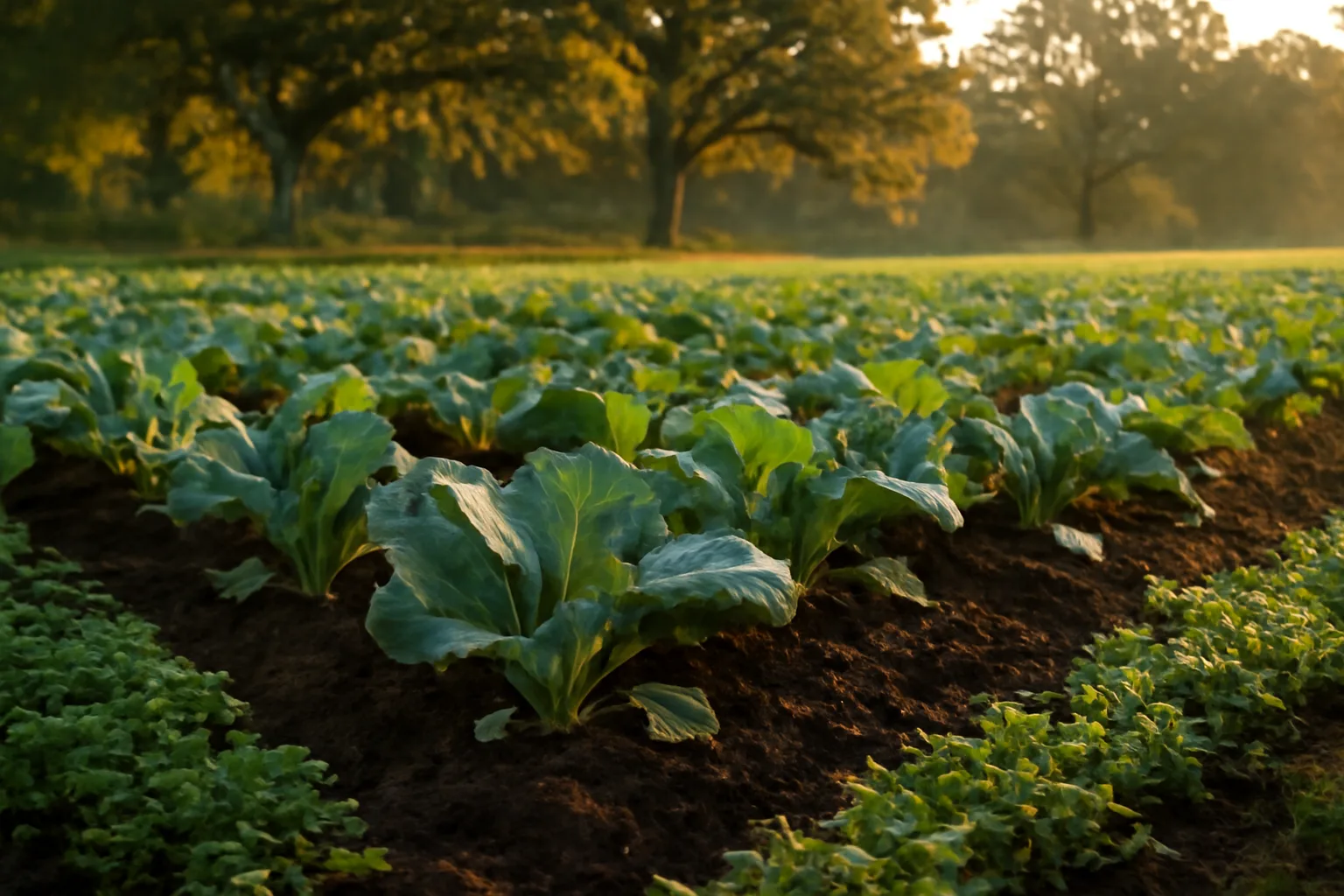
A 5 card stud food plot is a blend of five different plant species seeded together in the same plot, built to give deer several food types at once and to stagger maturity so something is palatable from September through January. It's not a registered seed product name or a university term. You'll see it used informally by seed dealers and hunting forums to describe a five-way mix, usually some combination of brassicas (turnip, radish, rape), clover, a cereal grain (oats, wheat, or rye), and sometimes sorghum or chicory thrown in as the fifth card. The logic borrows from poker: you're not betting on one card, you're holding a hand. A monoculture plot of just clover or just turnips has one strength and one weak season. A five-way blend tries to cover early season attraction (clover, oats), late season carbohydrate needs (brassicas after frost), and some drought or soil tolerance (sorghum, chicory) so the plot doesn't fail outright if one component struggles. For readers who want the general concept without the branding, this is really just a multi-species food plot, the kind of blend covered under food plot whitetail planning. The name is marketing. The underlying agronomy is standard cool-season and warm-season mixing that extension programs have written about for decades [1].
What's typically in a five-way deer plot blend?
| Brassica | turnip, radish, forage rape | late-season sugar and tuber food after frost | |
|---|---|---|---|
| Legume | clover (ladino, red), sometimes chicory | protein, early spring and summer regrowth | |
| Cereal grain | oats, wheat, or winter rye | fast germination, early attraction, soil cover | |
| Warm-season filler | grain sorghum or forage sorghum | tonnage, structure, drought tolerance | |
| Bonus / structure | sunflower, sunn hemp, or additional legume | seed head food, screening, or nitrogen fixing | This isn't a fixed formula. Some "5 card" mixes swap chicory in for sorghum, or drop the sunflower and add a second clover variety. If you're buying a bagged product with this kind of name, read the tag. That's the only place you'll get the real recipe. |
Most blends marketed this way lean on five categories: a brassica, a clover or other legume, a cereal grain, a chicory or forb, and a filler like sorghum or sunflower for tonnage and cover. The exact five vary by brand, region, and what the dealer had in the bin that year. A realistic breakdown looks like this: | Component | Example species | Role in the mix |
Do deer eat sorghum?
Yes, deer eat both grain sorghum and forage sorghum, though it's not usually their first choice compared to soybeans, clover, or standing corn. Sorghum works better as a structural and late-season component than as the plot's main draw. Whitetails will browse young sorghum shoots and eat the grain heads once they mature, and turkeys and other wildlife use the seed heads heavily too. Kansas State University's grain sorghum production guidance notes the crop's drought tolerance and its ability to produce grain on marginal soils where corn struggles, which is why it shows up as filler in mixed-species blends rather than a solo plot species [2]. If your goal is pure deer attraction, soybeans or a brassica blend will usually outperform sorghum head to head. If your goal is tonnage, cover, and some late-season grain in a low-input plot, sorghum earns its spot.
Do deer like clover, and is it worth including?
Yes, clover is one of the most consistently preferred food plot forages for whitetail deer, and it's a near-universal component of five-way blends for good reason. Ladino and red clover both regrow after grazing, fix nitrogen in the soil, and stay palatable through spring and summer when brassicas and grains are done. Clover is repeatedly listed among the top perennial forage choices for deer plots in land-grant extension guidance, largely because of its high crude protein content, often 25 to 30 percent in vegetative growth, and its tolerance for repeated browsing [3]. That protein matters most in late spring through summer, when does are lactating and bucks are growing antlers. The tradeoff is clover needs decent soil pH. University of Missouri Extension guidance on soil testing and liming generally targets a pH of 6.0 to 6.5 for productive forage stands, and lime takes real time to move that needle [4]. If your soil test comes back at pH 5.5 or lower, don't expect clover to perform until you've limed and let it work in, which can take months depending on the lime product and how well it's incorporated.
When to plant food plots for deer, generally
| Northern (MN, WI, ME, upper MI) | late July to mid-August | mid-September to early October | |
|---|---|---|---|
| Mid (southern IL, OH, PA, KS) | mid-August to early September | mid to late October | |
| Southern (TN, AR, GA, NC) | early September to early October | late October to mid-November | Soil temperature and moisture matter more than a calendar date. Brassicas need 45 to 60 days before a killing frost to bulb out properly, so back-plan from your area's average first frost. |
Timing splits into two windows: spring plots (May through June in most of the whitetail's range) for warm-season annuals and perennials, and late summer to early fall plots (mid-August through September) for cool-season annuals like brassicas, clover, and cereal grains. Which window you use depends entirely on what's in your blend and your USDA plant hardiness zone. A five-way blend with brassicas and clover is a fall planting, full stop. Sorghum and sunflower want warm soil and are spring or early summer plantings. If your "5 card stud" mix has both cold-tolerant and warm-season species bagged together, read the label closely, because some blends are designed to be split-planted (brassicas and clover in fall, sorghum and sunflower earlier in summer) rather than thrown down all at once. General fall planting windows by latitude, based on regional frost-date patterns tracked by NOAA's National Centers for Environmental Information [5]: | Zone (rough latitude) | Brassica/clover planting window | Typical first frost |
When to plant turnips for deer
Plant turnips 60 to 90 days before your area's first killing frost, which for most of the whitetail range lands between late July and early September. Turnips need that lead time to grow leafy tops and bulb up before cold weather triggers deer to start digging for the roots. Purdue Extension guidance on brassicas for deer food plots notes that palatability actually improves after frost, because cold converts starches to sugars in the plant tissue [3]. That's the whole point of planting them for a late-season plot: deer often ignore turnip tops in October and then hammer the bulbs in December and January once repeated frosts have sweetened them up. Seeding rate for turnips alone runs 4 to 6 pounds per acre broadcast, shallow (a quarter inch or less), into a prepared seedbed. In a five-way blend the turnip percentage is usually much lower since it's sharing the row with clover, grain, and other species.
When to plant oats for deer
Plant oats in early fall, generally 60 to 75 days before first frost, same general window as brassicas. Oats germinate fast (often visible in 5 to 7 days with decent moisture) and give deer an immediate green food source while slower components in the blend, like clover, are still establishing. Oats can also be spring-planted in northern climates as a quick warm-season cover or nurse crop, but for deer attraction purposes almost everyone plants them in fall alongside brassicas and clover. Oats are cold-tolerant to a point but will winterkill in hard freezes in northern zones, which is fine if you want them to serve as a fall attraction crop only. In milder southern zones oats can persist through much of winter. University of Kentucky forage extension guidance also flags a practical risk: oats planted too early in warm, dry conditions can bolt or get hammered by fall armyworms before deer even get to graze them, so don't jump the gun just because the calendar says August .
Do deer like honey, and does it belong in a food plot?
No, honey isn't a food plot ingredient and it isn't something deer seek out in the wild in any meaningful way. This question usually comes from confusion with "honey hole" (a hunter's term for a great stand location) or from mineral and attractant products that use molasses or sugar-based scents, not actual honey. If you're seeing bagged attractants marketed with sweet, syrupy smells, that's usually molasses, sugar beet extract, or apple flavoring, not honey. Deer are drawn to sugar and carbohydrate sources, which is part of why brassicas sweeten after frost and why corn and soybeans are such strong late-season draws. But there's no research or extension guidance suggesting deer forage on honey or that it has any place in a planted food plot. Skip it. Put that money into seed or lime instead.
What are deer's favorite foods, ranked by what the research shows?
Deer preference shifts by season, region, and what's locally available, but extension and wildlife agency research consistently ranks a handful of foods at the top: acorns (especially white oak family acorns, which are lower in tannins than red oak), soybeans, clover, and standing corn are repeatedly cited as top-tier whitetail foods across multiple states . A few things worth knowing about that ranking. Acorns beat almost every planted food plot species when they're on the ground, because they're calorie-dense and deer are hardwired to seek them out in fall. That's not something you can plant your way around; it's a mast crop dependent on existing oak trees. Among planted options, soybeans in the vegetative and pod stage are extremely high on deer preference lists, followed closely by clover. Brassicas rank lower for palatability in early fall but climb the list hard after frost, which is exactly why they're paired with clover and grain in blends like the "5 card stud" concept: no single planted species holds the top preference spot year-round, so a blend covers more of the calendar than any monoculture can. If you want a deeper species-by-species comparison, see deer food plot seed and deer food plots.
How do you plant a five-way blend correctly?
Start with a soil test, not a bag of seed. Every legitimate extension guide on food plots leads with soil pH and fertility, because clover and brassicas both stall out in acidic, nutrient-poor dirt regardless of how good the seed blend is . A basic soil test through your state land-grant university's soil lab typically costs somewhere in the 10 to 20 dollar range per sample, and turnaround is usually one to two weeks. Once you know your pH and nutrient levels, here's the general sequence: 1. Lime first if your test calls for it. Lime needs months to fully react in the soil, so apply it as early as your schedule allows, ideally the season before planting if you can. 2. Kill existing vegetation with tillage or herbicide 2 to 3 weeks before planting. 3. Broadcast or drill seed at the depths each species wants. Brassicas and clover want a shallow quarter inch, grains want closer to an inch. 4. Fertilize based on your soil test, not a generic bag rate. Different components in a five-way blend have different nitrogen needs; legumes fix their own, grains and brassicas need more from the bag or field. 5. Time the whole planting to your fall frost window so the brassica component has its 60 to 90 days. Because a five-species blend has components with different ideal planting depths, ideal soil pH, and different maturity windows, this is one of the trickier plots to get exactly right with a single broadcast pass. Some hunters split the plot: grain and brassica drilled at proper depth in one pass, clover broadcast shallow afterward. It's more work but it germinates far better than dumping everything in one bag and broadcasting it all at once.
Is a 5 card stud blend actually better than planting single species side by side?
Honestly, it depends on your acreage and your patience for managing separate plots. A five-way blend in one plot is convenient: one bag, one pass, done. But you give up control over each species' exact rate, planting depth, and timing, and you can't manage weeds selectively (a herbicide that kills broadleaf weeds will also kill your clover and brassicas, since they're broadleaves too). If you've got the acreage and equipment, planting separate plots (a clover plot, a brassica plot, a grain plot) gives you more control and lets you spray, mow, or interplant each one on its own schedule. If you're working a smaller property or a single half-acre opening, a five-way blend is a reasonable way to hedge your bets in one footprint. Either way, the plan should start from your specific soil test and your specific zone's frost dates, not from a bag's marketing copy. That's the whole idea behind a Custom Food Plot Plan: for a $99 one-time fee you get a plan built around your soil test results, your zone, and your acreage instead of a generic five-species bag that may or may not fit your ground. Build one at /plot-plan-builder.
Do you need to worry about baiting or feeding laws with a food plot?
Generally no, a properly planted and left-standing food plot is legal hunting over agriculture in nearly every state, but baiting and feeding rules vary sharply by state and you need to check your specific state wildlife agency's regulations before you hunt over anything unusual, especially if you're adding mineral, molasses-based attractants, or supplemental feed alongside the plot. Most states draw a clear line: a food plot grown in place is not bait, but piled corn, mineral blocks, or feeders often are regulated or banned depending on the state and sometimes the county (chronic wasting disease zones frequently have tighter feeding restrictions). Don't assume your neighboring state's rules apply to you. Pull up your own state wildlife agency's current baiting and feeding regulation page before the season, every year, since these rules shift as CWD zones expand or contract.
Frequently asked questions
Is "5 card stud" a real seed product or just a nickname?
It's mostly a nickname, not a standardized product name. Different dealers and hunters use it to describe a five-species blend, typically brassica, clover, cereal grain, and one or two fillers like sorghum or chicory. If you're buying a bagged product using this name, check the label for the actual species list and percentages by weight, since the recipe isn't standardized across brands.
Do deer eat sorghum readily?
Deer will eat sorghum, browsing young shoots and later the grain heads, but it's not usually their top preference compared to soybeans or clover. Sorghum's main food plot value is drought tolerance and tonnage on marginal soil, which is why it's typically included as a filler species in mixed blends rather than planted alone as a primary attractant.
Do deer like clover more than other food plot options?
Clover ranks among the most consistently preferred food plot forages, with crude protein often 25 to 30 percent in vegetative growth. It regrows after grazing and stays palatable spring through summer, which is why nearly every multi-species blend, including five-way mixes, includes at least one clover variety as a core component.
When should I plant food plots for deer overall?
Cool-season plots (clover, brassicas, cereal grains) go in mid-summer to early fall, generally 60 to 90 days before your area's first frost. Warm-season plots (soybeans, sorghum, sunflower) go in late spring to early summer after soil has warmed. Your exact window depends on your USDA hardiness zone and local first-frost date.
When is the best time to plant turnips for deer?
Plant turnips 60 to 90 days before your area's expected first killing frost, generally late July through early September depending on latitude. Turnips need that lead time to bulb out, and cold weather actually sweetens the bulbs by converting starches to sugars, which is why deer often ignore turnip tops early and hit the bulbs hard in December and January.
When should I plant oats for a deer plot?
Plant oats in early fall, roughly 60 to 75 days before first frost, the same general window as brassicas and clover. Oats germinate fast, often within 5 to 7 days, giving deer quick green forage while slower components of a blend establish. Oats can winterkill in hard northern freezes but often persist longer in milder southern climates.
What is a food plot, exactly?
A food plot is a planted area of forage or grain, usually a fraction of an acre up to several acres, established specifically to feed and attract wildlife like deer and turkey. Plots can be annual (replanted each season) or perennial (clover, alfalfa) that persist for multiple years with mowing and fertility maintenance.
What are deer's favorite foods overall?
Acorns, especially from white oak family trees, top most preference research, followed closely by soybeans and clover among planted options. Standing corn and brassicas after frost also rank high seasonally. No single food holds the top spot year-round, which is the entire argument for planting a multi-species blend rather than one crop.
Do deer like honey or sweet attractants?
No, honey itself isn't something deer seek in the wild and it's not a real food plot ingredient. Sweet-smelling attractant products typically use molasses, sugar beet extract, or apple flavoring, not honey. Deer are drawn to sugar and carbohydrates broadly, which is part of why frosted brassicas and standing grain are such strong late-season draws.
How big should a food plot be for a five-way blend?
There's no fixed rule, but half an acre to two acres is common for small private or leased ground. Bigger plots reduce the chance deer clean out one component before others mature. On very small acreage (under a quarter acre) a five-way blend can get overbrowsed fast since deer will hit their favorite component first and leave the rest.
Can I plant a five-species blend in one pass with a broadcast spreader?
You can, but germination suffers because brassica and clover want shallow seed depth (about a quarter inch) while grains want closer to an inch. Many experienced planters drill the grain and brassica components at proper depth first, then broadcast the clover shallow afterward, rather than mixing everything and broadcasting once.
Do I need a soil test before planting a blend like this?
Yes. Clover and brassicas both stall in acidic or nutrient-poor soil no matter how good the seed blend is. A basic soil test through your state land-grant extension lab usually costs 10 to 20 dollars and takes one to two weeks. Your test results, not a bag's fertilizer suggestion, should drive your lime and fertilizer rates.
Sources
- University of Missouri Extension, Managing Food Plots for Deer and Turkey: Multi-species food plot blends are standard practice covered in land-grant extension guidance
- Kansas State University Extension, Grain Sorghum Production Handbook (C-687): Sorghum tolerates drought and produces grain on marginal soils, making it useful in mixed wildlife plantings
- University of Missouri Extension, Soil Testing and Liming (Publication G9101): Clover establishment depends on soil pH generally targeted at 6.0 to 6.5, with lime taking time to fully react in soil
- NOAA National Centers for Environmental Information, U.S. Climate Normals: First frost dates vary by latitude, which determines regional food plot planting windows
- Purdue University Extension, Brassicas for Deer Food Plots (FNR-534-W): Brassica palatability improves after frost as cold converts plant starches to sugars