Last updated 2026-07-26
TL;DR
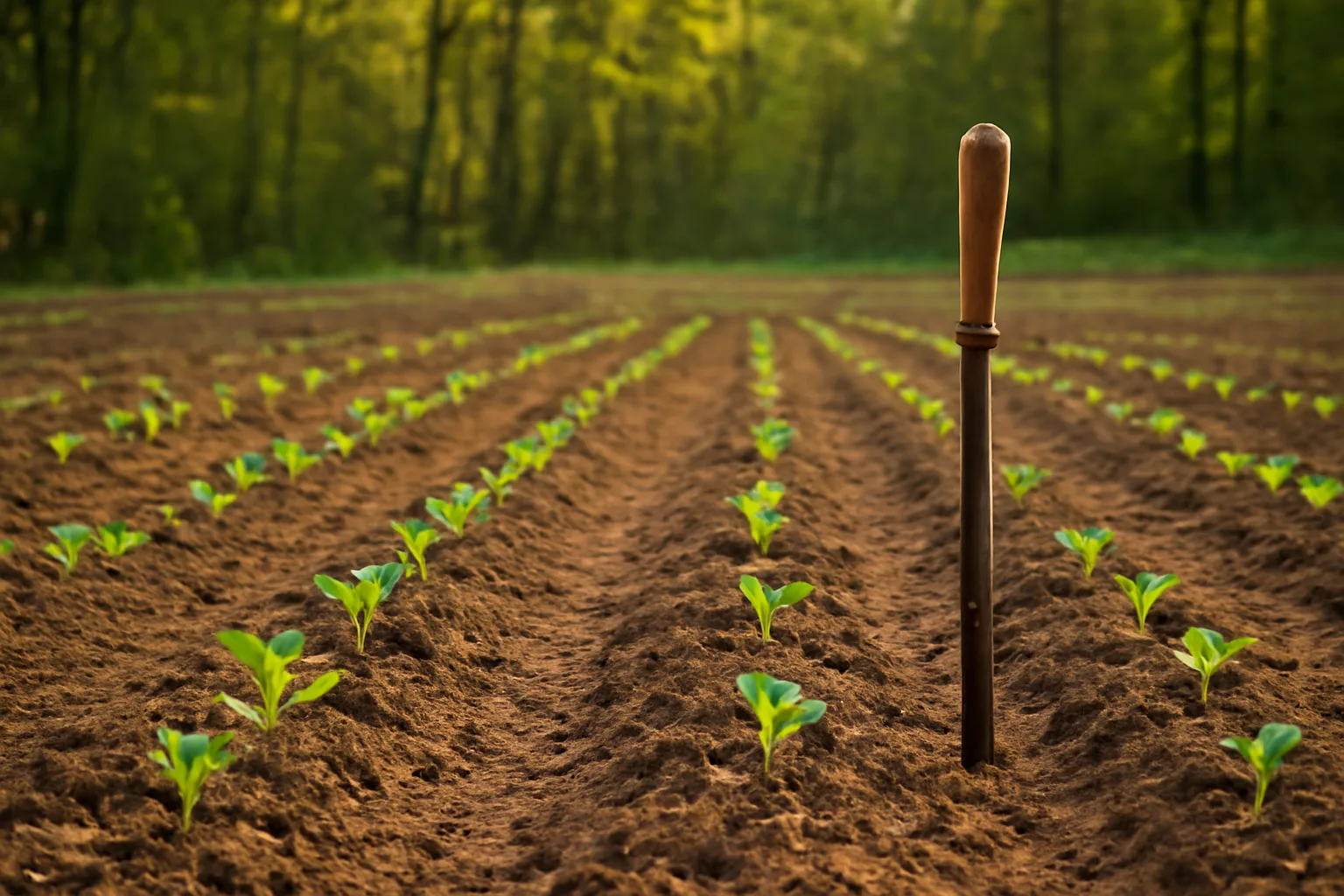
4S-type food plot seed is a multi-species blend, usually a mix of brassicas (turnips, radish), cereal grains (oats, wheat), and sometimes clover, sold under names like "4 Season" or "4S" by various seed companies. There's no single USDA-defined "4S" standard; check the bag's tag for exact species and percentages before you plant.
What is 4S food plot seed, exactly?
"4S" is a marketing name, not a botanical species or a regulated category. Different seed companies use "4S," "4 Season," or similar names for blends meant to feed deer across four seasons, or at least fall through late winter. There's no USDA standard defining what has to be in a bag labeled this way, so the actual contents vary by brand and even by year, depending on seed cost and availability. Most blends sold under this kind of name lean on a few workhorse plants: brassicas (turnips, radishes, or rape), cereal grains (oats or winter wheat), and sometimes a clover or chicory component for perennial coverage. The idea is succession. Grains and brassicas grow fast and get chewed on in fall, brassica bulbs and tubers sweeten after a frost and pull deer in during late fall and winter, and any clover in the mix carries into spring and summer if it's a perennial variety. Before you plant any bag labeled 4S, flip it over. The federal Seed Act requires every seed label sold in interstate commerce to list the kind and variety of each component, the percentage by weight, germination rate, and test date [1]. That tag tells you more than the marketing name ever will. If turnip is 40% of the mix by weight and oats are 35%, you're planting mostly turnips and oats, not some proprietary miracle blend. For general planning purposes, we cover full species breakdowns in food plot seed and deer food plot seed, which is worth reading if you're deciding between a bagged blend and building your own mix from bulk seed.
What's actually in a typical 4-season deer blend?
Read the tag, but here's what shows up most often in commercial multi-species blends aimed at year-round deer attraction. Brassicas: turnips, radishes (often daikon or forage radish types), and sometimes rape or kale. These germinate in 4 to 7 days under good moisture and hit peak palatability after a hard frost, when starches convert to sugars. Cereal grains: oats and winter wheat are the most common. Oats germinate fast and deer hit them early, but oats winterkill in cold zones. Winter wheat is more cold-hardy and holds green forage into winter and early spring in many regions. Legumes: some blends throw in a small percentage of clover (usually annual varieties like crimson or arrowleaf, since perennial clover needs different management) or occasionally soybeans for warm-season blends. A rough example tag might read: Forage Turnip 30%, Winter Wheat 25%, Oats 20%, Daikon Radish 15%, Crimson Clover 10%. Weigh that against your actual soil and goals. If you already have a standing clover field, you might not need a blend with 10% crimson clover duplicating that function. A straight brassica-grain mix might serve you better and cost less per acre.
When to plant food plots for deer (by zone and species)
| Upper Midwest / Northern zone | Late July to mid-August | |
|---|---|---|
| Mid-Atlantic / Ohio Valley | Mid-August to early September | |
| Southeast / Mid-South | September to early October | |
| Deep South / Gulf Coast | Late September to November | For a full zone-by-zone breakdown across species and regions, see our food plot whitetail planting calendar. |
Timing depends on what's in your blend and where you hunt, not a single calendar date. The two big windows are spring planting (for warm-season perennials and summer annuals) and late summer to early fall planting (for brassicas, cereal grains, and fall annuals), which is what most 4S-style blends are built for. For fall blends heavy in brassicas and cereal grains, most extension guidance points to planting 60 to 90 days before your area's average first hard frost. That gives turnips and radishes time to bulb up and cereal grains time to establish before cold slows growth. In the Upper Midwest and Northeast, that often means late July through August. In the Southeast and mid-South, growers can push into September, sometimes early October in the Deep South [2]. Penn State Extension recommends planting brassica-based fall plots "6 to 8 weeks before the first killing frost" for the Northeast, with earlier planting favoring bigger bulbs and more tonnage. Mississippi State University Extension similarly recommends September plantings for cool-season food plots across most of the state, adjusting later toward the coast [3]. Here's a rough planting window table for a typical fall 4-season blend. Always confirm against your local extension office, since microclimates and elevation shift these dates by two to three weeks in either direction. | Region | Fall blend planting window |
When to plant turnips for deer specifically
Turnips need 60 to 90 days from planting to reach good bulb size and peak sweetness, and they actually get better after a couple of frosts convert starches to sugar. Most guides recommend planting turnips 8 to 10 weeks before your first expected hard frost, which in most of the whitetail's range lands somewhere between late July and early September. The University of Tennessee Extension notes that brassica forages like turnips "should be planted 60 to 90 days prior to the anticipated hunting season or first killing frost" to allow full development [4]. Plant too late and you'll get small bulbs and thin leaf growth, which deer will still eat but in smaller quantity per acre. Seeding rate matters too. Turnips planted alone typically go down at 4 to 6 lbs per acre. In a blend, that percentage gets diluted by the other components, so check the bag's total seeding rate recommendation rather than assuming turnip rates apply.
When to plant oats for deer
Oats are one of the fastest-establishing cereal grains in a food plot mix, germinating in about 5 to 10 days under decent soil moisture and temperature. For fall food plots, most extension recommendations put oat planting at 6 to 8 weeks before the first killing frost, similar to the brassica window, since oats and brassicas are frequently seeded together. Oats are not cold-hardy the way winter wheat or rye is. A hard freeze in the teens or lower will typically kill oat forage, which is fine if you want fall attraction but a problem if you're hoping for a plot that lasts into February. That's part of why 4S-style blends often pair oats with winter wheat: oats bring fast early growth and quick attraction, wheat carries the plot through winter after the oats die back. Spring oat plantings are also possible in northern climates for a quick summer forage plot, but they're less common in deer-specific blends since spring/summer plots usually lean on soybeans, clover, or sunflowers instead.
Do deer eat sorghum?
Yes, deer eat sorghum, particularly grain sorghum heads and young sorghum shoots, though it's not typically their first choice when better forage is available nearby. Sorghum is more commonly planted as a screening or standing-corn-alternative crop, valued for height and cover as much as forage value. Sorghum shows up in some warm-season blends and is sometimes included in "4 season" mixes as a summer/fall component that also doubles as bedding cover or a wind break around a plot's edge. It's drought-tolerant, which makes it a reasonable choice in areas with sandy or low-fertility soil where corn struggles. Deer will browse the leaves and, once it heads out, the grain itself, especially into fall and winter when other food thins out. If attraction is your only goal, sorghum usually ranks behind brassicas, soybeans, and corn in preference studies and practical field observation, but as a mixed-purpose plant (cover plus late-season food), it earns its place in some blends.
Do deer eat clover, and do deer like clover?
Yes, deer eat clover readily, and it's consistently ranked among the most preferred and most planted food plot forages in the whitetail world. Clover offers high crude protein (often 25 to 30% in good stands) and stays palatable through most of the growing season, which is why perennial clover plots are a staple recommendation from extension services and seed companies alike. The Noble Research Institute lists clover as one of the primary cool-season perennial forages for deer food plots in the South-Central U.S., citing its combination of high protein and strong regrowth after grazing pressure [5]. White clover (Ladino types especially) and red clover are the most common varieties in bagged deer blends. One practical note: clover is slower to establish than brassicas or cereal grains and needs a full growing season to hit its stride. If your 4S blend includes clover at a small percentage, don't expect much from it in year one. It's a long-game component, better suited to standalone perennial plots than a one-and-done annual blend. For dedicated clover strategy, check deer food plots.
What are deer's favorite foods, really?
There's no single universal "favorite" because preference shifts by season, region, and what's locally available, but research and extension data point to a consistent short list: acorns (especially white oak group acorns, which are lower in tannins than red oak group), soybeans, clover, and agricultural crops like corn and alfalfa when available. A widely cited whitetail nutrition study from the Mississippi State University Deer Lab found that acorns can make up a large share of fall diet when available, since deer strongly prefer them over most planted forages once they start dropping. That's part of why food plots often see reduced deer activity in years with a heavy acorn crop, an oak masting event can pull deer away from your plot entirely for weeks. Outside of mast years, soybeans (both as a growing forage and later as dried beans/pods) and clover consistently rank at the top of preference trials, with brassicas gaining strong preference specifically after frost. Corn is high-energy and heavily used in late fall and winter but is lower in protein than legumes.
Do deer like honey?
This isn't a real food plot question in a practical sense: deer don't forage on honey in the wild, and it's not a food plot crop or attractant with any research behind it as a deer food source. It's likely conflated with "honeysuckle," which deer absolutely do browse. Japanese honeysuckle and native honeysuckle species are heavily browsed by whitetail deer, especially in winter when other browse is scarce, and honeysuckle is often cited by state wildlife agencies as both a preferred browse plant and, in the case of Japanese honeysuckle, an invasive species that land managers are told to control rather than plant [6]. If you're trying to add a woody browse component to your property, honeysuckle isn't something extension services recommend planting given its invasive status in many states. Better woody browse options include native shrubs recommended by your state forestry or wildlife agency.
What is a food plot, and how does it fit into deer management?
A food plot is a planted area, usually a fraction of an acre up to several acres, seeded with forage crops specifically to supplement natural deer nutrition, concentrate deer activity for observation or hunting, or both. Food plots are not a replacement for natural habitat, they're a supplement to it, and most wildlife agencies frame them that way in habitat management guidance. The basic categories are annual plots (replanted each year, like brassica/grain blends or soybeans) and perennial plots (clover, alfalfa, chicory, which persist for multiple years with mowing and fertility maintenance). A 4S-style blend is almost always an annual plot strategy, even if it has a small perennial clover component mixed in, because the brassica and grain components need replanting every season. State wildlife agencies generally treat food plots as a land management tool, separate from baiting or supplemental feeding, but the legal line between the two varies significantly by state. Some states regulate hunting over a food plot the same as hunting over bait if the plot doesn't meet certain size, visibility, or planting method standards, so check your specific state wildlife agency's regulations before you plant and hunt the same season. Pennsylvania Game Commission, for example, explicitly distinguishes food plots from bait piles in its regulations, but the exact definitions and any distance-from-stand rules vary by state, so don't assume your state follows the same rule as your neighbor's .
4S blend vs. single-species plot: which should you plant?
| Planting complexity | One pass, one bag | One pass, but may need separate plots for perennial vs annual | |
|---|---|---|---|
| Cost per acre | Often higher per lb of actual usable seed | Usually cheaper per acre for the same tonnage | |
| Attraction window | Broader, staggered across fall/winter | Narrower, tied to that crop's palatability window | |
| Fertility tuning | Compromise across species needs | Can tune lime/fertilizer exactly to one crop | |
| Best for | One-plot properties, first-time planters | Multi-plot properties, experienced growers | If you're not sure which fits your ground, get a soil test done first regardless of which route you pick. Your soil test lab is the authority on your actual lime and fertilizer needs, since pH and nutrient levels vary plot to plot even on the same farm. We build a $99 Custom Food Plot Plan that takes your soil test results, region, and equipment into account to recommend species and rates, general planning guidance, not a substitute for your lab's specific recommendations. |
A 4S-style blend trades precision for convenience. You get multiple growth stages and food types in one bag and one planting pass, which is genuinely useful if you've only got one plot and want it to produce something edible from September through February. The tradeoff is that you're locked into whatever ratio the company chose, and if your soil or region doesn't suit one of the components (say, oats winterkilling in your zone before wheat even gets established), that fraction of your seed and money is wasted. A single-species plot (straight brassicas, straight clover, straight cereal grain) lets you tune seeding rate, fertility, and timing to that one crop's needs exactly. If you've got two or three plots on a property, a common approach is to run one plot as a perennial clover stand, one as a fall brassica/grain blend, and skip the all-in-one bag entirely, building your own mix from bulk seed at the co-op. Here's a rough comparison: | Factor | 4S-style blend | Single-species plot |
How much seed do you actually need, and what's realistic to expect
Bagged blends usually cover somewhere between 0.25 and 1 acre per bag depending on brand, with recommended rates commonly landing in the 10 to 20 lbs per acre range for mixed brassica/grain blends (specific mixes vary, check your bag tag). Straight cereal grains like oats or wheat, planted alone, typically go down heavier, often 100 to 120 lbs per acre for wheat as a monoculture forage crop, per common agronomic seeding rates, so a blend's lighter rate reflects the smaller percentage of grain in the mix, not that you need less seed overall. Don't expect miracle attraction from any bag, blended or not. Deer use is affected by hunting pressure, surrounding ag, mast production, and weather in ways no seed company controls. A well-timed, well-fertilized plot with the right species for your region and soil will get used. A poorly timed plot planted into bad soil with no lime correction, blend or not, usually won't, no matter what's printed on the bag.
Frequently asked questions
Do deer eat sorghum?
Yes, though it's usually secondary to soybeans, brassicas, and corn in preference. Deer browse young sorghum shoots and eat the grain heads once they mature, especially in fall and winter when other food sources are scarce. Sorghum is often planted as much for height and screening cover as for direct forage value.
Do deer eat clover?
Yes, clover is one of the most consistently preferred food plot forages, offering 25 to 30% crude protein in well-managed stands according to research cited by the Noble Research Institute. Deer use clover heavily through spring, summer, and fall in regions where it stays green, making it a staple perennial plot choice.
When should I plant food plots for deer?
It depends on the crop. Fall brassica and cereal grain blends generally go in 60 to 90 days before your area's first hard frost. Spring/summer plots (soybeans, warm-season annuals) go in after your last frost date. Check your local cooperative extension office for exact dates, since they shift two to three weeks by region within the same state.
Do deer like clover more than other forages?
Clover ranks near the top of most preference studies and field observations, especially in spring and summer, though acorns during a mast year and standing soybeans can outcompete it for attention. Preference shifts with season and what else is locally available, so clover being a favorite doesn't mean it's always the top draw.
When should I plant oats for deer?
Plant oats 6 to 8 weeks before your area's first killing frost for a fall plot, the same general window as brassicas. Oats germinate in 5 to 10 days but aren't cold-hardy, so they typically winterkill in colder zones, which is why many blends pair oats with winter wheat for late-season coverage.
When should I plant turnips for deer?
Plant turnips 60 to 90 days before your area's first hard frost. The University of Tennessee Extension recommends this window so bulbs have time to fully develop and sweeten after a frost or two converts starches to sugar, which is when deer use spikes.
What is a food plot, exactly?
A food plot is a planted, managed area seeded with forage crops to supplement wild deer nutrition and concentrate deer activity for hunting or observation. It's not a replacement for natural habitat, it works alongside native browse, mast, and agricultural food sources, and most wildlife agencies treat it as a distinct habitat management tool separate from baiting.
What are deer's favorite foods overall?
Acorns (white oak group especially), soybeans, and clover consistently top preference research and field observation, though preference shifts by season and region. During a heavy acorn mast year, deer often abandon food plots almost entirely in favor of natural mast, which is a common frustration for plot managers in oak-heavy areas.
Do deer like honey?
This isn't a real food plot consideration, deer don't forage on honey. This question likely confuses honey with honeysuckle, which deer do heavily browse, especially in winter. Japanese honeysuckle is invasive in much of the U.S. though, so wildlife agencies generally recommend controlling it rather than planting it.
What's actually in a 4S or 4-season food plot blend?
There's no regulated standard for the name. Most blends combine brassicas (turnips, radishes), cereal grains (oats, winter wheat), and sometimes a small percentage of clover. Exact species and percentages vary by brand and even by production year, so always check the federally required seed tag on the bag rather than trusting the marketing name.
Is a food plot considered baiting under state law?
It depends on the state. Most wildlife agencies distinguish standing food plots from bait piles, but the specific rules on plot size, visibility, and hunting distance vary. Pennsylvania Game Commission, for example, explicitly separates the two in regulation, but you should confirm your own state's definition before hunting a plot the same season you plant it.
How many pounds of 4S seed blend do I need per acre?
Most bagged multi-species blends recommend 10 to 20 lbs per acre, though this varies by brand and the ratio of brassica to grain seed in the bag (brassica seed is tiny and needs far less weight per acre than grain). Always follow the specific rate printed on your bag's seed tag rather than a generic number.
Sources
- USDA Agricultural Marketing Service, Federal Seed Act: Seed labels sold in interstate commerce must list kind, variety, percentage by weight, and germination rate.
- USDA National Agricultural Statistics Service, first frost date data referenced via NOAA: First hard frost timing varies by region, driving fall food plot planting windows.
- University of Tennessee Extension, Brassica Forages for Deer: Brassica forages should be planted 60 to 90 days prior to the anticipated hunting season or first killing frost.
- Noble Research Institute, Cool-Season Food Plots for Deer: Clover is a primary cool-season perennial forage valued for high crude protein and regrowth after grazing.
- USDA Forest Service, Japanese Honeysuckle Fact Sheet: Japanese honeysuckle is heavily browsed by deer but is classified as invasive in many U.S. regions.
- Pennsylvania Game Commission, Hunting and Trapping Digest: State regulations distinguish food plots from bait piles under specific hunting rules.