Last updated 2026-07-26
TL;DR
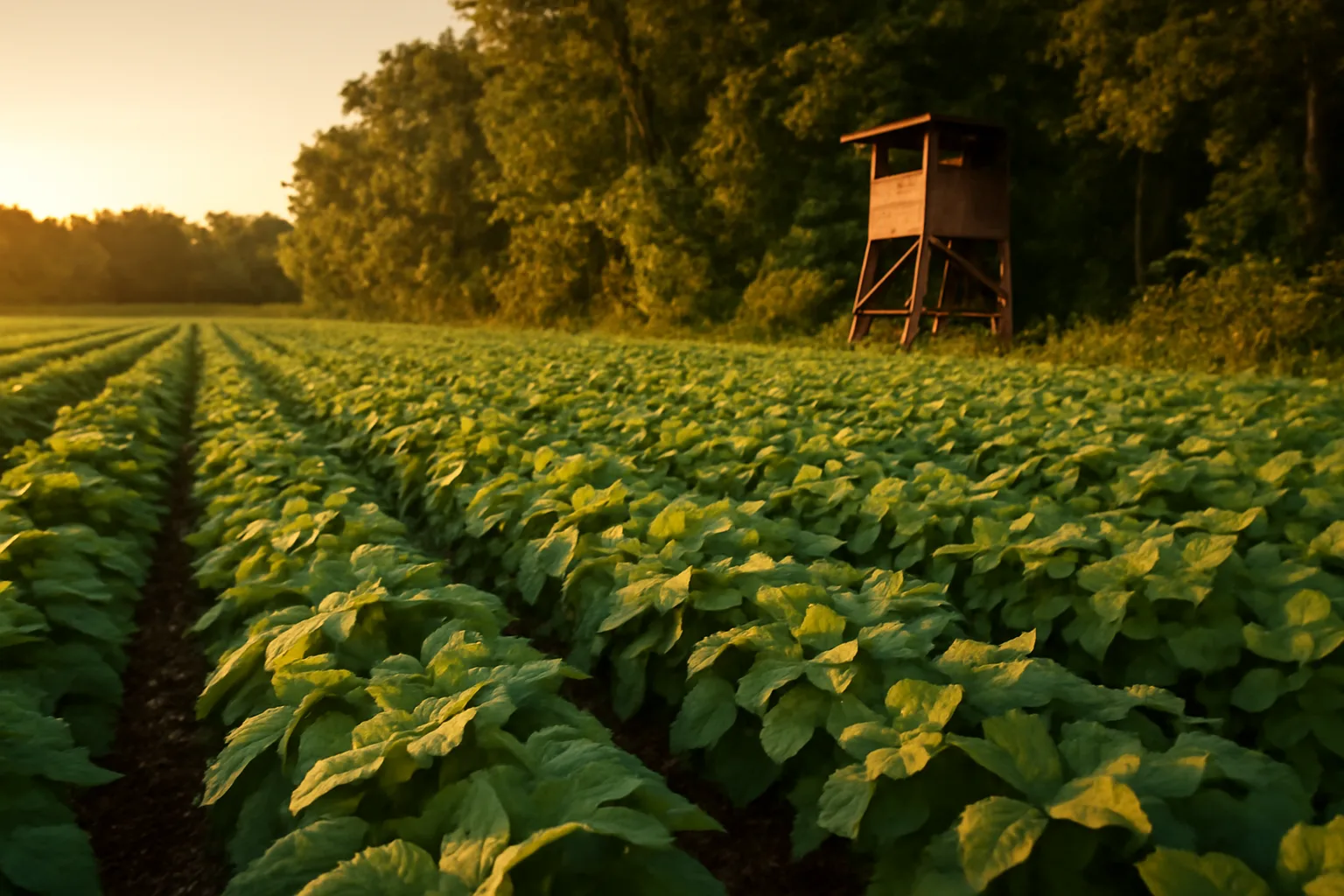
Plant soybean food plots after your last frost date, once soil hits about 60 to 65 degrees, in blocks of at least one to three acres to survive deer browsing. Aim for soil pH near 6.0 to 6.8, drill or broadcast 50 to 60 pounds per acre, and expect beans to feed deer all summer and again after leaf drop in fall.
what is a food plot, exactly
A food plot is a planted area of forage on hunting land, meant to feed deer and other wildlife while giving hunters a place to observe or intercept animals. It's not the same as a garden or a farm field, though the agronomy overlaps a lot. Most plots run anywhere from a quarter acre to several acres, depending on land size, equipment, and what the planter is trying to accomplish. Soybeans are one of the two big "grain crop" food plot options, the other being corn. Where clover or brassicas act like a salad bar, soybeans act more like a protein and fat source, especially through late summer when deer need energy for antler growth and lactation. The USDA National Agricultural Statistics Service tracks soybean plantings at the farm level nationally, and the same varieties (or close relatives) that go into commodity fields work fine in food plots [1]. The tradeoff with soybeans is acreage and patience. A half-acre bean plot in a high deer density area often gets grazed to stubble before it ever forms a pod. Most state extension guides and wildlife biologists recommend a minimum of one to three acres of solid beans to survive browsing pressure long enough to produce grain [2]. If you can't hit that size, corn, clover, or a brassica blend is usually a better use of a small plot.
when should you plant food plots for deer
Timing depends on what you're planting, not a single calendar date. Warm season plots like soybeans, corn, and sorghum go in after your last spring frost, when soil temperature is reliably above 60 degrees Fahrenheit. Cool season plots like clover, oats, and brassicas go in during late summer to early fall, six to eight weeks before your average first frost. Your local cooperative extension office publishes frost date tables by county, and that's the best source, better than a generic national chart. Purdue University Extension, for example, publishes Indiana planting windows tied to soil temperature and frost risk that growers use for both row crops and forage plantings [3]. As a rough national pattern: soybeans and corn go in April through June depending on latitude. Clover, oats, wheat, and brassicas go in August through early October. In the Deep South, cool season plots can go in as late as October or November because frost comes later. In the northern tier and Canada border states, cool season plots need to go in by early September or the plants won't establish before hard frost.
do deer eat soybeans, and how much do they actually use them
Yes, and it's not close. Soybeans rank among the highest-preference forages in whitetail diet studies, both as a growing green plant in summer and as dried grain and pods left standing into winter. A well-known preference study out of the Noble Research Institute, working with tame deer under controlled conditions, ranked forage soybeans among the top choices when deer had free selection across dozens of plot species [4]. The reason is nutritional. Soybean foliage runs 25 to 30 percent crude protein during the growing season, and mature beans left in the pod carry meaningful fat and carbohydrate content that helps deer through the fat-building months before winter. That's a big part of why soybean plots get hit so hard in July and August, right when antler growth and fawn nursing demand the most protein. The catch is exactly that popularity. In areas with dense deer herds, young soybean plants get browsed down to nothing within days of emerging unless the plot is large enough or fenced during establishment. A lot of first-time planters lose their whole plot to browsing in the first two to three weeks after planting. If you've fought this before, sizing up the plot or using a temporary electric exclusion fence around a small block until plants reach 12 to 18 inches tall solves most of the problem.
how big should a soybean plot be
Bigger than you think. One acre is the realistic floor for surviving browse pressure in most whitetail country, and three to five acres is a safer bet if your deer density is high or you're in a region with a lot of ag nearby (deer already keyed into beans will hit yours hard). Small plots under half an acre almost always get "grazed out," meaning the deer eat the plants faster than they can grow, and you never get pod set. If land is tight, a lot of experienced planters skip pure soybeans for anything under an acre and go with a soybean-corn mix, a brassica blend, or perennial clover instead, since those tolerate heavier pressure per square foot. Shape matters too. A long, narrow plot gets browsed edge-to-edge fast because every square foot is within easy reach of the woodline. A blockier, wider plot has an interior zone that takes deer longer to reach and clean out.
what soil and fertility do soybeans need
Soybeans want a soil pH between 6.0 and 6.8, and they fix their own nitrogen through rhizobia bacteria in root nodules, so heavy nitrogen fertilizer isn't needed once inoculated seed is used. Phosphorus and potassium matter more, and both should be based on an actual soil test rather than a bag rate guess. Your soil test lab is the real authority here, not a blanket internet number. University extension soil test labs (like Penn State's Agricultural Analytical Services Lab or Mississippi State's Extension soil testing lab) give pH, lime recommendation, and P and K recommendations specific to your sample [5]. If your test comes back below pH 6.0, lime months ahead of planting, since ag lime takes time to react with the soil, often three to six months for a meaningful pH shift depending on soil type and lime fineness, per Penn State Extension guidance on liming. If you've never pulled a soil test, do it before you buy a single bag of seed. Fertilizer and lime bought on guesswork is money wasted at best and wasted plus a poor stand at worst.
how do you plant soybeans in a food plot
Plant into a clean, weed-free seedbed after your last frost, once soil temperature holds above 60 degrees Fahrenheit for a few consecutive days. Seeding rate for food plot soybeans generally runs 50 to 60 pounds per acre drilled, or up to 90 pounds per acre broadcast and cultipacked, since broadcast seeding always needs a higher rate to compensate for uneven seed-to-soil contact. Planting depth is 1 to 1.5 inches. Too shallow and seed dries out before germinating; too deep and it never emerges. A drill gives the most consistent depth control. If you're broadcasting, drag or cultipack immediately after to press seed into contact with soil, then expect a slightly lower and less even stand than a drilled plot. Use an inoculated seed (soybean-specific rhizobia inoculant) if your field hasn't grown soybeans in the last three to five years. Nodulation is what lets the plant fix its own nitrogen, and fields without recent soybean history often lack enough native rhizobia in the soil. Weed control before planting matters as much as the planting itself. A burndown herbicide application or tillage pass two to three weeks ahead of planting knocks back competition long enough for beans to get a head start. For readers comparing seed blends and species, the food plot seed guide breaks down blend options, and deer food plot seed covers straight species choices in more depth.
when to plant oats for deer, and how do they fit with soybeans
Oats go in as a cool season planting, generally six to eight weeks before your first fall frost, which lands most planters in the August to early September window depending on latitude. Oats germinate fast, often within a week in warm late-summer soil, and they give deer a tender, high-sugar green forage through fall. A lot of plot managers use oats as a rotational partner with soybeans rather than a competitor. Beans feed deer through summer, then get replanted or overseeded with oats, wheat, or a clover/brassica mix once the growing season winds down, extending the plot's usefulness across two seasons instead of one. Oats also work well as a nurse crop mixed with clover, since the oats establish fast and protect young clover seedlings from erosion and weed pressure. Oats aren't frost-hardy the way winter wheat or rye is; hard freezes in the teens will kill oat foliage, though deer often hammer the dying, sugar-concentrated leaves right before that happens.
do deer eat sorghum, and how does it compare to soybeans
Deer do eat sorghum, both the green forage and the grain heads, but it's generally a lower preference food than soybeans or corn. Sorghum (including grain sorghum and forage sorghum types) shows up more often as a screening or structural plant in food plot mixes, planted for cover and wind blocking around a plot's edge, or as a drought-tolerant grain option in areas where corn struggles with dry summers. Where sorghum earns its keep is heat and drought tolerance. It handles dry, sandy, or marginal soils better than corn does, and it still puts on a grain head deer will hit hard once the seed matures and softens in fall. Some plot mixes use grain sorghum specifically as a corn substitute for that reason. If you're choosing between the two for a grain plot and your soil holds moisture reasonably well, soybeans and corn will out-attract sorghum most years. Sorghum makes more sense as a secondary structure plant or a fallback for tough ground.
do deer like clover, and how does it compare to soybeans
Yes, clover is one of the most consistently preferred forages in whitetail diet research, and it has an advantage soybeans don't: it's perennial. A properly established clover plot (white clover or red clover, often ladino types) can produce forage for three to five years before needing to be replanted, versus soybeans which are an annual, replanted every year. The difference is seasonal timing and nutrition profile. Clover gives protein-rich green forage nearly year-round in mild climates, spring through fall, with a dip in the hottest and coldest stretches. Soybeans peak in summer and then deliver a second wave of value in fall and winter as dried beans and pods, something clover can't replicate once its top growth is grazed. Many experienced plot managers run both: perennial clover for season-long grazing pressure tolerance and low annual labor, plus a soybean or bean/corn block for the summer protein push and a fall/winter standing grain source. For a deeper breakdown of clover strategy and variety choice, see deer food plots.
when to plant turnips for deer, and where do brassicas fit in a soybean rotation
Turnips and other brassicas (radishes, rape, kale) go in as a fall cool season planting, typically 60 to 90 days before your first hard frost, since brassicas need that window to bulb and sweeten before the frost that triggers the starch-to-sugar conversion deer find so attractive. Most extension guides put this window in the same August to September range as oats, depending on region. Brassicas work well as the fall half of a rotation that starts with spring-planted soybeans. Once beans are harvested down by deer or naturally senesce in fall, a lot of planters till or drill turnips and radishes into that same ground in late summer, effectively getting two crops and two feeding windows out of one field in one calendar year. Turnip tops (the leafy green growth) get hit earliest, often right after emergence, while the bulbs themselves often don't get much attention from deer until after a few hard frosts sweeten them, sometimes not until December or January in northern climates.
what are deer's actual favorite foods, and where does soy rank
There's no single universal "favorite," because preference shifts by season, region, and what's locally available, but research gives a reasonably consistent picture. Acorns rank extremely high wherever oaks are present, often preferred over planted forages entirely in a good mast year. Among planted food plot species, soybeans, clover, and cowpeas consistently rank near the top of preference trials. The Noble Research Institute's controlled forage preference trial, one of the more cited studies in food plot literature, found soybeans and other legumes ranked among the highest-preference planted forages tested, ahead of many grain and brassica options in that specific trial [4]. That said, preference trials use captive deer with unlimited choice, which doesn't always match how a wild, pressured deer behaves relative to available cover and predation risk in the real world. The honest answer: there's no data showing deer have a fixed favorite food nationwide. What shows up over and over in regional studies is that acorns, soybeans, and clover all rank near the top, and actual selection on your land depends heavily on what's locally available and what season it is.
do deer like honey, and should you use it as an attractant
There's no credible wildlife research showing deer seek out honey as a food source or that it works as an attractant beyond the general appeal of sugar. Deer are drawn to sweet, high-sugar substances in general (that's part of why frosted brassicas and ripe fruit attract them), and honey-based commercial deer attractant sprays lean on that same sugar appeal, but that's a marketing claim, not a documented dietary preference backed by peer-reviewed research. More relevant for planning purposes: many states regulate or ban baiting and supplemental feeding for deer hunting, and the rules vary a lot by state and sometimes by county within a state. Some states allow baiting outside a certain distance from a stand, some ban it outright, and some allow feeding but not hunting over bait. Before using any attractant, syrup, or feed product near a stand, check your state wildlife agency's current baiting and feeding regulations, since violating them can mean a real citation, more than a warning.
putting it together: a simple soybean plot planting calendar
| Soil test | Fall or winter before planting | Send to a university or certified ag lab, not a home kit, for accurate lime and fertilizer recs [5] | |
|---|---|---|---|
| Lime application | 3-6 months before planting | Ag lime needs time to react with soil pH | |
| Burndown / tillage | 2-3 weeks before planting | Clears competition ahead of seed | |
| Plant soybeans | After last frost, soil above 60°F | Drill 50-60 lb/acre or broadcast up to 90 lb/acre [3] | |
| Monitor browse pressure | First 2-3 weeks after emergence | Fence small plots if browsing is heavy | |
| Rotate to fall planting | 60-90 days before first fall frost | Oats, turnips, or clover overseed into same ground | If building a full plot plan feels like a lot to juggle across soil test results, seed selection, and regional timing, that's the exact gap a service like our $99 one-time Custom Food Plot Plan is built to close. It's general planning guidance based on your inputs, not site-specific agronomy, so your soil test lab still has the final word on lime and fertilizer rates. |
Here's a rough national framework. Always confirm against your local extension office and state wildlife agency, since actual dates shift a few weeks either direction depending on your specific latitude and elevation. | Step | Timing | Notes |
common mistakes that ruin soybean food plots
The single biggest mistake is planting too small a plot in a high deer density area and watching it get grazed to nothing before it ever pods. Size the plot to your local pressure, not to how much open ground you happen to have. Second most common: skipping the soil test and guessing on lime and fertilizer. Soybeans below pH 6.0 struggle to nodulate properly, which kills their whole nitrogen-fixing advantage, and you end up with a stunted, yellow-looking stand that never should have needed nitrogen fertilizer in the first place. Third: planting too early or too late relative to soil temperature. Cold, wet soil rots seed before it germinates; planting too late means beans don't mature before fall frost kills the plant back. Check soil temperature with an actual soil thermometer, not a guess based on air temperature, since the two can differ significantly for a week or more in spring. Last one worth naming: not scouting for pests early. Bean leaf beetles, deer themselves, and in some regions Japanese beetles can strip young plants fast. A quick walk-through in the first three weeks catches problems while there's still time to react. For readers weighing soybeans against other whitetail-focused plantings, food plot whitetail and deer for food cover broader species comparisons worth reading before you finalize a seed order.
Frequently asked questions
Do deer eat sorghum?
Yes, deer eat both the green forage and mature grain heads of sorghum, but it generally ranks below soybeans and corn in preference studies. Sorghum is often planted more for its drought tolerance and use as a screening or structure plant along plot edges than as a primary attractant crop.
Do deer eat clover?
Yes, clover is one of the most consistently preferred whitetail forages in wildlife research, and unlike soybeans it's a perennial, often producing forage for three to five years once established. Ladino white clover and red clover are the most common food plot types.
When should you plant food plots for deer?
Warm season plots like soybeans and corn go in after your last spring frost once soil holds above 60°F. Cool season plots like clover, oats, and brassicas go in six to eight weeks before your first fall frost, generally August through September in most of the U.S.
Do deer like clover more than soybeans?
There's no single answer; both rank near the top of preference research. Clover offers season-long, lower-effort perennial forage, while soybeans deliver a concentrated summer protein push plus a standing grain source into fall and winter that clover can't match once grazed down.
When should you plant oats for deer?
Oats go in as a fall cool season crop, roughly six to eight weeks before your average first frost, usually August into early September depending on latitude. They germinate fast and often work as a nurse crop for young clover plantings.
When is the best time to plant food plots overall?
It depends on the species: soybeans and corn go in spring after frost risk passes, while clover, oats, and brassicas go in late summer to early fall. Check your local cooperative extension office for exact frost dates in your county rather than relying on a national average.
When should turnips be planted for deer?
Plant turnips 60 to 90 days before your first hard fall frost, which lands in the August to September window for most of the country. The bulbs sweeten after a few frosts convert starches to sugar, so deer often don't hit them hard until later in the season.
What is a food plot?
A food plot is a planted patch of forage on hunting land grown specifically to feed deer and other wildlife, and often to give hunters a place to observe or hunt near feeding activity. Sizes range from a quarter acre to several acres depending on land and goals.
What are deer's favorite foods?
There's no single fixed favorite nationwide; it shifts by region and season. Acorns rank extremely high where oaks grow, and among planted forages, soybeans, clover, and cowpeas consistently rank near the top in preference research like the Noble Research Institute's forage trials.
Do deer like honey?
There's no credible research showing deer specifically seek out honey. Deer are attracted to sugar and sweetness generally, which is why frosted brassicas and ripe fruit draw them, but honey-based attractant marketing isn't backed by documented dietary preference studies.
How many acres of soybeans do you need for a deer food plot?
Most extension guidance and experienced planters recommend at least one to three acres of solid beans to survive browsing pressure long enough to reach pod maturity. Plots under half an acre in high deer density areas often get grazed out before they ever produce grain.
What soil pH do soybeans need for a food plot?
Soybeans grow best in soil with a pH between 6.0 and 6.8. Below that range, nodulation and nitrogen fixation suffer, leading to yellow, stunted plants. A real soil test from a university or certified lab is the only reliable way to know your starting pH.
Sources
- USDA National Agricultural Statistics Service, Crop Production reports: USDA NASS tracks national soybean planting and production data
- Purdue University Extension, Corn and Soybean Field Guide: Soybean planting timing tied to soil temperature and frost risk
- Noble Research Institute, forage preference research: Soybeans and other legumes rank among the highest-preference forages in controlled deer feeding trials
- Penn State Extension, Agricultural Analytical Services Lab soil testing: University soil test labs provide pH, lime, and fertilizer recommendations specific to a submitted sample
- University of Tennessee Extension, Establishing Wildlife Food Plots: Seeding rate guidance for drilled versus broadcast soybean food plots
- USDA NRCS Plant Guide, soybean (Glycine max): Soybean is a legume that fixes nitrogen through root nodule rhizobia bacteria