Last updated 2026-07-26
TL;DR
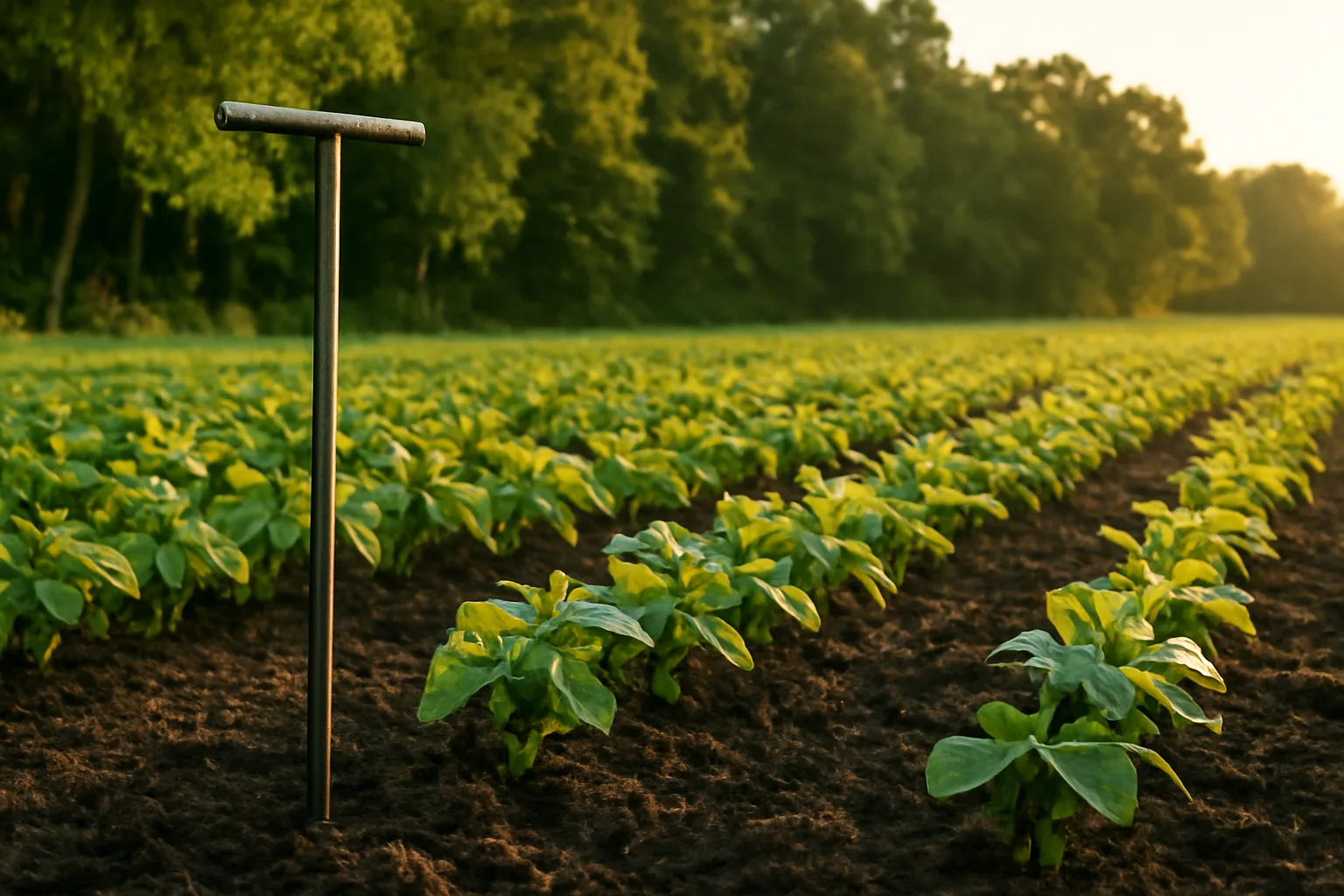
Plant soybeans for deer once soil hits 60-65 F, usually mid-May to mid-June depending on zone, drilled 1 to 1.5 inches deep at 50-60 lbs/acre in food-plot rate. Soybeans need 3-4 frost-free months to reach maturity and can't handle browse pressure on small plots under 3-5 acres without a fence or nurse crop.
what is a food plot, exactly
A food plot is a planted patch of ground, usually somewhere between a quarter acre and several acres, that's managed specifically to feed and attract deer or other wildlife. It's not a garden and it's not a pasture, though it borrows techniques from both. Most plots fall into two rough categories: annual plots planted fresh each year (soybeans, corn, brassicas, cereal grains) and perennial plots that persist for multiple seasons (clover, chicory, alfalfa). Soybeans are one of the most common annual summer plot choices because whitetails genuinely prefer them during the growing season, and the plant does double duty. Deer browse the leaves all summer, then the pods that remain into fall and winter become a high-fat, high-protein food source right when deer need it most for antler growth, lactation, and fat reserves before winter [1]. If you're new to plot planning generally, it helps to understand the broader landscape of options before committing acreage to beans. See our overview on food plot whitetail strategy and how species choice fits into a whole-property plan.
do deer like soybeans, and how much do they actually eat
Yes, and it's not close. Soybeans rank among the most preferred forages whitetails will eat, competing directly with native browse and often getting hammered so hard on small plots that the plants never make it past the cotyledon stage. Extension research from the University of Tennessee and other land-grant programs consistently lists soybeans as a top-tier summer forage for deer, both for the tonnage of digestible protein in the leaves and the fat content in mature pods [2]. That popularity is the whole problem with small soybean plots. A half-acre patch surrounded by heavy deer density can get browsed to stubble within two or three weeks of emergence, before the plants ever get tall enough to recover. Extension guidance and most experienced plotters agree that soybean plots need to be at least 3 to 5 acres, or protected by an electric exclusion fence for the first 6 to 8 weeks, to survive browse pressure long enough to produce grain [3]. If your property can't support that acreage, soybeans still work as a summer browse plot (deer eat the plants down and that's fine, that's the point) but you won't get pods left over for fall. Know which outcome you want before you plant.
when should you plant soybeans for deer
| Zone 8-9 (Deep South) | Late April - late May | |
|---|---|---|
| Zone 7 (Mid-South) | Mid-May - early June | |
| Zone 6 (Midwest/Mid-Atlantic) | Late May - mid-June | |
| Zone 4-5 (Upper Midwest/North) | Early - mid-June | Soybeans need roughly 100 to 140 frost-free days depending on the maturity group you plant, so back-plan from your area's average first fall frost date using your state extension's frost date tables [5]. If you're deciding when to plant food plots for deer more broadly across species, our deer food plots guide covers the full-season calendar, more than beans. |
Soil temperature is what matters, not the calendar. Soybeans need soil at a sustained 60 to 65 degrees Fahrenheit at planting depth to germinate reliably, and most university guidance recommends waiting until after the last frost date for your zone [4]. Planting too early into cold, wet soil is the single most common soybean-plot failure; the seed just rots. As a rough national window: Deep South zones (roughly USDA zones 8-9) can plant late April through May. Mid-South and transition zones (zone 7) usually plant mid-May. Midwest and Mid-Atlantic zones (zone 6) target late May into early June. Northern and Upper Midwest zones (zones 3-5) often wait until early to mid-June because of shorter frost-free windows and cooler spring soils. Here's a simple reference table. | Region (USDA zone) | Typical soybean planting window |
how do you plant soybeans in a food plot, step by step
Start with a soil test. Soybeans do best in soil with a pH between 6.0 and 6.8, and most food-plot failures trace back to skipping this step entirely. Your soil test lab is the real authority here on exact lime and fertilizer rates for your dirt; treat any generic number in this article as a starting point, not a prescription. Once your seedbed is ready (disked, cultipacked, or drilled into a clean, weed-suppressed field), here's the basic process: 1. Broadcast lime if your test calls for it, months ahead if possible since lime takes time to move pH. 2. Apply a starter fertilizer based on your soil test. Soybeans fix their own nitrogen through rhizobia bacteria, so heavy N applications are usually wasted money; phosphorus and potassium matter more [6]. 3. Inoculate seed with the correct soybean-specific rhizobium if your seed isn't pre-inoculated. This step gets skipped constantly and it costs almost nothing. 4. Plant 1 to 1.5 inches deep. Too shallow and birds or dry soil get it; too deep and it won't emerge. 5. Seeding rate for food plots runs heavier than row-crop agriculture, typically 50 to 100 lbs per acre depending on whether you're drilling (lower rate) or broadcasting (higher rate, since seed-to-soil contact is worse). 6. Cultipack after broadcasting to press seed into contact with soil. A drill gets far better results than broadcasting for soybeans specifically, because seed-to-soil contact drives germination rate hard. If you're broadcasting into a disked seedbed, plan on a heavier rate to compensate for the poorer stand you'll get.
what equipment do you actually need
You don't need a full row-crop planter. A no-till drill is the gold standard for food-plot soybeans and a lot of co-ops and conservation districts rent them out by the day, which is often the smartest $75 to $150 you'll spend on the whole plot. Absent a drill, an ATV or UTV with a broadcast spreader, followed by a drag harrow or cultipacker, works fine on a prepared seedbed. A soil pH tester or a mail-in soil test kit through your county extension office is nonnegotiable. Most state land-grant extension offices run soil test programs for $10 to $20 per sample and turn results around in one to two weeks. For weed control, a lot of plotters use Roundup Ready or Enlist soybean varieties specifically because they let you spray glyphosate post-emergence to knock back grass and broadleaf competition without hurting the beans. If you're planting conventional (non-GMO) beans, you'll need a pre-emergent herbicide plan instead, which is more finicky to time right.
which soybean varieties work best for deer plots
Forage soybean blends bred specifically for food plots (brands built around varieties like Eagle Seed's forage soybeans, for example) tend to produce more leaf tonnage and are bred to be more browse-tolerant than standard grain-type ag beans, which are bred to survive combine harvest, not deer teeth. That said, plain Roundup Ready ag beans from a local co-op work fine too and cost noticeably less per acre, especially on plots big enough that browse pressure isn't the limiting factor. Maturity group matters for your latitude. Southern growers generally want later maturity groups (5-7) while northern growers need earlier groups (0-3) to make sure the plant reaches full pod-fill before frost. Your local extension agronomy guide will list recommended maturity groups by county [5]. If you're comparing soybeans against other plot options for your specific property, our deer food plot seed breakdown and food plot seed comparison cover how beans stack up against corn, brassicas, and clover blends for cost and effort.
do deer eat sorghum
Yes, deer will eat sorghum, particularly the grain heads once they mature, though it's generally considered a lower-preference forage compared to soybeans, corn, or clover. Sorghum's real value in a plot mix is as a nurse crop or screening cover, tall stalks that hide a plot from road view or provide standing cover into winter, rather than as a primary attractant. Some plotters blend a little grain sorghum into soybean plots specifically to give the beans some structural cover from browse pressure while they establish.
do deer like clover, and how does it compare to soybeans
Deer strongly prefer clover, and it's arguably the most planted perennial food plot species in North America because it regrows after grazing and provides forage from spring through fall for 3 to 5 years on one planting [7]. White clover varieties (ladino types especially) and red clover both test consistently high in crude protein, often in the 25 to 30 percent range during active growth, which rivals or beats soybean forage protein content [2]. The tradeoff: clover can't match the fat content of mature soybean pods, and it needs mowing maintenance two or three times a season to stay vegetative and outcompete weeds. Soybeans are more work up front (annual planting, herbicide, browse-pressure management) but deliver a pod crop that clover simply doesn't produce. A lot of experienced plot managers run both: clover for spring-to-fall browse and low maintenance, soybeans or brassicas for the fat and protein push into late fall. If clover fits your plan better than beans, our domain food plot seed guide covers clover blend selection in more depth.
when to plant oats, turnips, and other fall companions
Oats are a cool-season cereal grain typically planted 60 to 90 days before your first fall frost, which lands most zones somewhere in the August-to-September window. Oats germinate fast, tolerate light frost, and are highly attractive to deer as a green forage right through early winter in most regions, though they'll eventually get killed off by hard freezes below the mid-20s F. Turnips (and other brassicas like radishes and rape) get planted on a similar late-summer schedule, generally 80 to 90 days ahead of your average first hard frost, because they need that runway to bulb out before cold weather hits. Extension guidance from Mississippi State and other land-grant programs commonly recommends late July through early September planting windows for brassicas depending on latitude [3]. A frost or two actually helps turnips, since cold triggers a starch-to-sugar conversion in the bulb and leaves that makes them sweeter and more attractive right when hunting season opens. A lot of properties run soybeans through summer, then drill oats, turnips, or a cereal-grain/brassica blend into the same ground (or an adjacent plot) in late summer for a fall-focused rotation. That two-season approach is one of the most common whole-property plans we help build.
what are deer's favorite foods overall
There's no single universal answer because preference shifts by season, region, and what's locally available, but research and decades of plot-manager experience converge on a short list: acorns (especially white oak family) rank at or near the top wherever they're available, since they deliver high fat content deer need for winter fat reserves. Soybeans, clover, and standing corn round out the top cultivated choices, while natural browse like honeysuckle, greenbrier, and forbs fill the gaps between plot seasons. Seasonally, spring and summer preference leans toward high-protein forage (clover, soybeans, alfalfa) to support antler growth and lactation. Fall and winter preference shifts hard toward high-fat, high-carbohydrate foods (acorns, corn, soybean pods, turnip bulbs) as deer prioritize energy storage over protein. This is exactly why a lot of plot plans stack multiple species across the calendar rather than betting everything on one crop.
do deer like honey, and other odd questions plotters ask
No, deer don't seek out honey and it has no real role in food plot planning. It shows up as a search question probably because of confusion with 'honeysuckle,' which deer genuinely do browse heavily as a native forage, or because of scent-based deer attractant products marketed with sweet or 'honey' branding that use it as a scent lure rather than a food source. Skip it; put your money into a soil test instead. On the topic of attractants and feed generally: check your state wildlife agency's baiting and feeding regulations before adding any supplemental feed, mineral, or attractant product near a plot. Rules vary widely by state, with some banning baiting for hunting purposes entirely, some restricting it seasonally, and some allowing it with distance or disease-zone restrictions tied to chronic wasting disease management [8]. Your state's rules are the only ones that matter for legal hunting over a plot, and a genuinely planted food plot is treated differently from a bait pile in most (not all) state statutes, so know the distinction where you hunt.
how a soybean plot fits into your season-long plot calendar
Soybeans are a summer commitment. They go in the ground in late spring, get browsed and grow through summer, and either get harvested by deer as standing forage or left to mature into a fall pod crop, depending on your acreage and browse pressure. That means your soybean plot decision has to get made months before hunting season even starts. A reasonable full-year plot calendar for most whitetail properties looks something like: soil test in late winter/early spring, lime and prep in spring, soybeans or another summer annual planted late spring once soil hits 60 F, a mid-summer mow or spray on any perennial clover plots, then oats/brassicas/cereal grain drilled in late summer for the fall push, timed to your first frost date. If mapping that whole calendar against your specific property, soil test, and region feels like more than you want to figure out alone, that's the exact gap our $99 one-time Custom Food Plot Plan is built to fill: a written plan matched to your zone, acreage, and soil test results, species by species and month by month. It's general planning guidance built off your inputs, not a site visit or a guarantee of deer activity; your soil test lab still has final say on lime and fertilizer rates for your dirt specifically.
Frequently asked questions
When should I plant soybeans for a deer food plot?
Plant once soil temperature is a sustained 60-65 F, which is roughly late April to May in zones 8-9, mid-May in zone 7, late May to mid-June in zone 6, and early-to-mid June in zones 4-5. Always plant after your local last frost date and confirm soil temp with a simple soil thermometer before drilling.
How many acres do I need for soybeans to survive deer browsing?
Most extension guidance and experienced plotters recommend at least 3 to 5 acres of soybeans to outlast browse pressure long enough to produce pods. Smaller plots usually get eaten to the ground before the plants mature, which is fine if you only want summer browse but won't leave a fall pod crop.
Do deer eat sorghum?
Yes, though it's a lower preference forage than soybeans, corn, or clover. Deer mostly eat sorghum grain heads once mature. Its bigger role in food plots is as a nurse crop or standing cover, giving young soybeans some physical screening from browse while they establish.
Do deer like clover?
Yes, clover is one of the most consistently preferred whitetail forages, testing at roughly 25-30% crude protein during active growth. It's a perennial that regrows after grazing and can produce forage for 3 to 5 years per planting with periodic mowing to keep it vegetative.
When should I plant oats for deer?
Oats go in 60 to 90 days before your area's average first fall frost, which lands most regions in the August to September window. Oats germinate quickly, tolerate light frost, and stay attractive as green forage into early winter until a hard freeze kills them off.
When should I plant turnips for deer?
Turnips need about 80 to 90 days before your first hard frost to bulb out properly, generally a late-July-to-early-September window depending on latitude. A frost or two actually improves palatability by converting starches to sugars in the leaves and bulb.
What is a food plot?
A food plot is a planted area, usually a quarter acre to several acres, managed specifically to provide forage for deer or other wildlife. Plots split into annuals like soybeans, corn, and brassicas planted fresh each year, and perennials like clover that persist for multiple growing seasons.
What is deer's favorite food?
There's no single universal favorite since preference shifts by season and region, but acorns (especially white oak) rank near the top wherever available for their fat content, with soybeans, clover, and standing corn rounding out preferred cultivated options depending on the time of year.
Do deer like honey?
No. Deer don't seek out honey as a food, and it has no real place in food plot planning. The search confusion likely comes from honeysuckle, a native browse plant deer do favor, or from sweet-scented commercial attractant products unrelated to actual honey.
When should I plant food plots for deer overall?
Timing depends on species: summer annuals like soybeans and corn go in late spring once soil hits 60 F, perennials like clover typically get planted spring or late summer, and fall annuals like oats, turnips, and cereal grains go in 60-90 days ahead of your first frost. Match each species to its own window rather than one blanket date.
Do soybeans need nitrogen fertilizer in a food plot?
Not much. Soybeans fix their own nitrogen through rhizobia bacteria in root nodules, so heavy nitrogen applications are usually wasted money. Focus your fertilizer budget on phosphorus and potassium based on your soil test, and make sure seed is properly inoculated with soybean-specific rhizobium if it isn't pre-treated.
Should I use a drill or broadcast soybean seed?
A no-till drill gives far better germination because it puts seed at a consistent 1 to 1.5 inch depth with solid soil contact. Broadcasting works on a prepared seedbed if followed immediately by a cultipacker or drag harrow, but plan on a heavier seeding rate to compensate for a weaker stand.
Sources
- USDA NRCS, Plant Fact Sheet: Soybean: Soybean forage and grain nutritional value for wildlife
- University of Tennessee Extension, Wildlife Food Plots: Soybeans and clover rank among top-tier deer forages by protein and preference
- Mississippi State University Extension Service, Establishing Wildlife Food Plots: Soybean food plots need larger acreage or exclusion fencing to survive browse pressure
- Iowa State University Extension and Outreach, Soybean Planting Date: Soybean germination requires sustained soil temperatures around 60 F and planting after frost risk passes
- University of Wisconsin-Madison Extension, Soybean Maturity Group Selection: Soybean maturity group selection depends on latitude and frost-free growing season length
- Iowa State University Extension and Outreach, Nitrogen Fertilization of Soybean: Soybeans fix atmospheric nitrogen via rhizobia and generally do not need supplemental nitrogen
- University of Kentucky Cooperative Extension, Clover for Wildlife Food Plots: Clover persists as a perennial forage for multiple growing seasons with periodic mowing
- Quality Deer Management Association / National Deer Association, state baiting and feeding law summaries: Baiting and feeding regulations for deer hunting vary significantly by state and disease-management zone