Last updated 2026-07-25
TL;DR
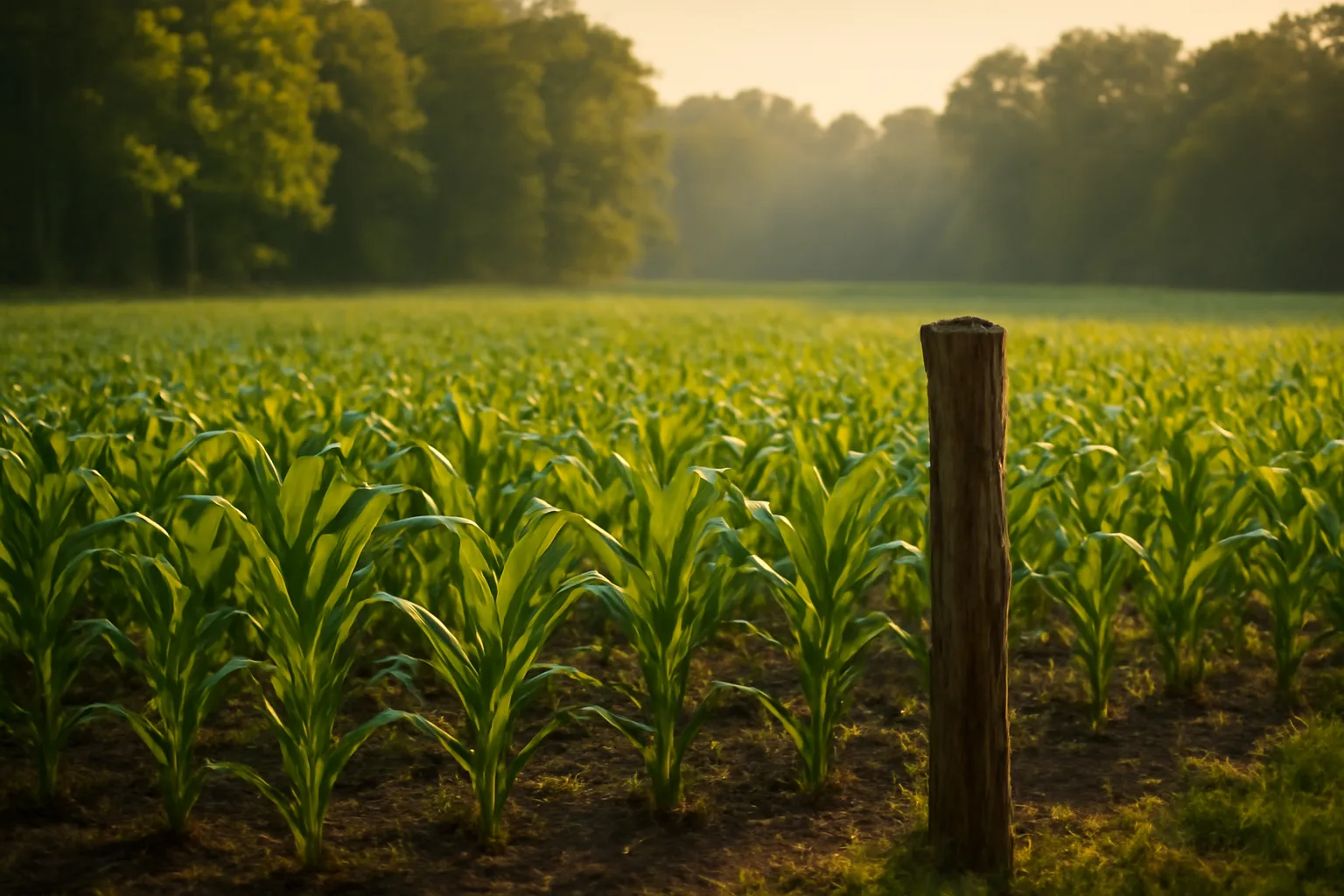
Plant corn food plots when soil hits 50°F and no frost is forecast for 10 days, usually late April to early June depending on zone. Drill or plant 28,000 to 32,000 seeds per acre in rows, feed it heavy with nitrogen (150-180 lbs/acre split-applied), and plant at least 1 to 3 acres in a block so deer don't wipe it out before it matures.
what is a food plot and why plant corn specifically
A food plot is a planted area on hunting land meant to feed and hold deer, and often to give hunters a spot to watch or intercept animals during season. Most plots run somewhere between a quarter acre and several acres, and species choice depends on soil, sunlight, budget, and what job you want the plot to do (early season attraction, late season calories, or both). Corn is a late-season specialist. It's not a great August draw crop the way soybeans or clover can be, but standing corn in December and January is calorie-dense cover and food at exactly the time when natural browse is gone and deer need carbs to survive cold nights. A bushel of corn (56 pounds) runs around 8,700 kcal of metabolizable energy for deer, which is why standing corn plots get hammered hard in the late season in northern states. The tradeoff: corn is expensive, fertilizer-hungry, and unforgiving of bad soil or a bad planting window. It's also one of the few food plot species deer can wipe out early if you plant too small an area, since young corn shoots get browsed to nothing before they ever tassel. If you're deciding between corn and other plot species, our food plot whitetail guide breaks down the tradeoffs across crop types.
when to plant corn for deer food plots
Corn needs soil temperatures at or above 50°F to germinate reliably, and most agronomists recommend waiting until soil hits 55-60°F for faster, more even emergence [1]. Planting into cold, wet soil is the single most common mistake: seed sits, rots, or germinates unevenly, and you end up with a spotty stand that never canopies. In practical terms this means: - Deep South (zone 8-9): late March to mid-April
- Transition zone (zone 6-7): late April to mid-May
- Upper Midwest and Northeast (zone 4-5): mid-May to early June
- Canada border states: late May to early June, with a hard eye on first frost dates in fall Corn needs 100-140 frost-free days depending on the hybrid's maturity rating (measured in "days to maturity"), so back-calculate from your average first fall frost date. If your first frost hits October 10 and you're planting a 110-day hybrid, you want it in the ground by mid-June at the latest, with margin for a cool stretch. NOAA's climate normals by station are the best free source for your local frost dates [2]. This question, when to plant food plots for deer more broadly, depends heavily on species. Brassicas and cereal grains go in late summer for fall growth; corn and soybeans go in spring because they need a full season to mature into a fall/winter food source.
how much seed and what planting rate for a corn food plot
For food plot purposes (not maximizing yield the way a row-crop farmer would), aim for 28,000 to 32,000 seeds per acre, planted 1.5 to 2 inches deep in rows spaced 30 to 36 inches apart if you're using a planter or drill. That's lower than commercial corn ground rates in some regions, which can run higher, but food plotters generally don't need max yield, they need a stand that survives browsing pressure and still produces ears. A 50-pound bag of corn seed typically contains 65,000 to 80,000 kernels depending on seed size, so one bag covers roughly 2 to 2.5 acres at food-plot rates. Budget accordingly: seed alone often runs $150-$300+ per bag for a treated food-plot-specific hybrid, more than double generic feed corn. Broadcasting corn (versus drilling or row-planting) wastes seed and gives worse depth control, so if you have access to a drill or planter, use it. If you're broadcasting because that's the equipment you have, increase seeding rate by 25-40% to compensate for poor seed-to-soil contact and expect a rougher stand.
how big should a corn food plot be
Size matters more with corn than almost any other plot species because young corn is extremely vulnerable to browsing. A study-backed rule of thumb from wildlife extension programs is to plant corn plots no smaller than 1 acre, and ideally 2-5 acres, in areas with moderate to high deer density [3]. Smaller plots on high-pressure ground can get grazed to the ground before the plants reach knee height. If you only have a half acre to work with, corn is usually the wrong crop. Soybeans, clover, or a brassica blend will tolerate browsing pressure on small acreage far better than corn will. Save corn for bigger fields or fields you can fence/exclude during the vulnerable early growth stage.
what soil and fertility does corn need
| Nitrogen | 150-180 lbs/acre | Split application recommended [1] | |
|---|---|---|---|
| Phosphorus (P2O5) | 40-60 lbs/acre | Based on soil test level | |
| Potassium (K2O) | 40-80 lbs/acre | Based on soil test level | |
| Lime | Per soil test | Target pH 6.0-6.8 | Our soil-and-fertility content covers how to read a soil test report if you've never seen one before. |
Corn is one of the heaviest feeders in food plot agriculture. It wants a soil pH between 6.0 and 6.8, and most land-grant extension guides recommend 150-180 lbs of nitrogen per acre for corn, applied in a split (some at planting, more as a sidedress when plants are knee-high) [1]. It also needs phosphorus and potassium according to your soil test, plus adequate lime if pH is low, since corn yield drops sharply below pH 5.8. Your soil test report is the actual authority here, not this article. Send a sample to your state extension lab or a private ag lab before you spend money on fertilizer. A $15-20 soil test can save you from over- or under-applying lime and fertilizer that costs many times that per acre. General fertility ranges for reference: | Nutrient | Typical food-plot corn need | Notes |
what equipment do i need to plant a corn food plot
At minimum you need a way to till or prep a seedbed, a way to plant seed at a controlled depth, and a way to fertilize. A no-till drill is the gold standard for food plots because it handles crop residue and reduces erosion, but plenty of hunters plant corn successfully with a disc, a cultipacker, and a simple push-behind or ATV-towed planter. Realistic gear paths: - Full setup: tractor, disc or tiller, row planter, boom sprayer for herbicide, cost easily $10,000+ used if you're buying everything
- Mid-range: ATV or UTV with a disc harrow, a broadcast spreader, and a drag or cultipacker, a few thousand dollars
- Minimal: rent or borrow a plot drill from a local co-op or wildlife group for a day, many county extension offices or NWTF/QDMA chapters have loaner programs Don't skip a soil test and a basic herbicide plan because you're focused on the planter. Weed competition, especially grasses, will choke out a corn stand faster than almost anything else.
do deer eat sorghum
Yes, deer readily eat grain sorghum (milo), and it's a common substitute or companion crop for corn in food plots, especially in drier regions where sorghum tolerates drought better than corn. Sorghum also tends to stand up better through winter weather in some regions and can be cheaper per acre than corn seed. Some food plotters blend sorghum with corn specifically because sorghum's smaller seed head structure means less shattering and it holds grain later into winter in certain climates. It's not a one-for-one swap agronomically (different herbicide programs, different planting depth), but as a deer food source, sorghum performs well and shows up in plenty of extension-recommended food plot mixes for late-season energy [4].
do deer eat clover, and do deer like clover
Yes, deer eat clover heavily, and it's one of the most consistently preferred food plot forages across whitetail range. Clover (white clover, red clover, and various perennial blends) offers 20-25% crude protein during active growth, which is why it's a staple spring and summer plot choice, especially for antler growth and lactation season nutrition [5]. Clover isn't a corn substitute though. It's a low-growing perennial forage, not a grain crop, so it fills a different role: season-long browse rather than a concentrated late-season energy source. Plenty of hunters run both, clover for spring/summer/early fall and corn or brassicas for late season. If you're building a multi-plot property, pairing a perennial clover plot with an annual corn or grain plot covers more of the calendar. See deer food plots for how to lay out a multi-species plot rotation.
when to plant oats for deer, and when to plant turnips for deer
Oats are a cool-season cereal grain, typically planted late summer to early fall, generally 6-8 weeks before your first expected frost, so deer can graze the tender growth through fall and into early winter in many regions. In the South, oats can also go in as a fall/winter annual since they tolerate cooler temps but not the deep freezes of the far North. Turnips (and other brassicas) follow a similar late-summer planting window, usually mid-July through August depending on zone, because brassicas need 80-90 days to bulb out and reach peak palatability, and a light frost actually sweetens them by converting starches to sugars, which is why deer often ignore turnips in September and hammer them in December [4]. Both oats and turnips are planted opposite of corn's calendar. Corn goes in during spring for a fall/winter harvest; oats and turnips go in during late summer for a fall/winter forage window. If you're planning a full-property calendar across species, our seasonal-calendars content lays out zone-by-zone windows for every major food plot species.
what are deer's favorite foods, and do deer like honey
Deer are opportunistic browsers, and their actual dietary preferences shift by season and region, but acorns, soybeans, clover, and various fruits (apples, persimmons) consistently rank as high-preference foods in feeding studies across whitetail range [6]. Corn ranks high too, particularly in fall and winter when the energy density matters most. Honey itself isn't a deer food and there's no real research on deer eating honey directly, it's not a natural or commonly offered food source in the wild or in food plot contexts. Deer will occasionally chew on honeycomb or beeswax if they encounter a damaged hive, drawn by the sugar content, but this isn't a meaningful food plot or feeding consideration and isn't something to plant or provide.
do i need to worry about baiting or feeding rules before planting corn
Standing food plots are legal to hunt over in the overwhelming majority of states because a planted, growing crop is treated differently from piled bait like a corn pile or feeder. But rules genuinely vary, and some states regulate things like partially harvested fields, mowed-down crops, or supplemental feeding differently than they regulate standing plots. Check your state wildlife agency's regulations before you hunt over any planted plot, especially if you're near a state line or your property uses a mix of standing crop and any supplemental feed. Baiting definitions differ enough state to state that assuming your neighbor's rules apply to you is a real way to get a citation. Michigan, for example, defines baiting explicitly and separately from normal agricultural food plot plantings under its Wildlife Conservation Order [7].
how does a corn food plot plan differ from a generic planting guide
Every property is different: soil type, drainage, sun exposure, deer density, and what neighboring land is planted in all change what actually works. A soil test tells you your pH and nutrient levels, but it doesn't tell you plot size, shape, species mix, or planting sequence for your specific acreage and goals. That's the gap a lot of food plotters hit after they've got a soil test in hand but still aren't sure how to turn it into an actual planting plan. PlotSeason's $99 Custom Food Plot Plan takes your soil test results, property details, and goals and builds out a species and planting plan suited to your ground, though your soil test lab remains the authority on exact lime and fertilizer rates for your soil. It's general planning guidance, not a replacement for site-specific agronomy advice from your extension office or lab.
common mistakes when planting a corn food plot
Planting too early into cold soil is the number one mistake. Corn seed sitting in 45°F soil for two weeks rots more than it germinates, and you'll think you have a bad seed lot when really you just planted too soon. Planting too small an area is second. A quarter-acre corn plot in decent deer country often gets browsed down before it tassels. If you can't commit at least an acre, consider soybeans or a brassica blend instead, both handle grazing pressure on small plots better. Skipping the soil test is third. Corn's nitrogen appetite means guessing on fertilizer either wastes money (over-applying) or caps your yield hard (under-applying). A $15-20 soil test is cheap insurance against a $200+ fertilizer bill spent on the wrong numbers. Weed control gets ignored too often. Grass weeds especially will out-compete young corn for nitrogen and light. A basic pre-emergent or timely mowing/spraying plan matters as much as the planting itself. For a broader look at what seed and species choices make sense across a whole property, check deer food plot seed and food plot seed.
Frequently asked questions
Do deer eat sorghum in food plots?
Yes. Grain sorghum (milo) is a common food plot grain that deer eat readily, especially in fall and winter. It's more drought-tolerant than corn and sometimes planted as a companion crop or corn substitute in drier regions, and it holds grain later into winter in some climates.
Do deer eat clover, and do deer like clover?
Deer eat clover heavily and generally prefer it among food plot forages. Clover runs 20-25% crude protein during active growth, making it valuable for antler development and lactation. It's a perennial forage though, not a grain, so it works best paired with a fall/winter crop like corn or brassicas.
When should I plant food plots for deer overall?
Timing depends entirely on species. Spring annuals like corn and soybeans go in once soil hits 50-60°F, generally April through early June depending on zone. Fall annuals like oats, turnips, and brassicas go in 6-10 weeks before first frost, usually mid to late summer.
When should I plant oats for deer?
Plant oats roughly 6-8 weeks before your area's first expected fall frost, so late summer to early fall in most regions. Oats grow fast and deer graze the tender shoots through fall into early winter until hard freezes shut growth down.
When should I plant turnips for deer?
Turnips generally go in mid-July through August depending on zone, since they need 80-90 days to bulb properly. A light frost sweetens the bulbs by converting starches to sugar, which is why deer often ignore turnip plots early and hit them hard after the first frost.
What is a food plot exactly?
A food plot is a planted area, usually somewhere between a quarter acre and several acres, established specifically to feed and hold deer or other wildlife on hunting land. Plots can run annual grains, perennial forages, or brassica blends depending on the season and goal (attraction, nutrition, or late-season calories).
What are deer's favorite foods?
Preferences shift by season and region, but acorns, soybeans, clover, and fruits like apples and persimmons consistently rank high in feeding studies. Corn and other grains rank high in fall and winter specifically because of their energy density when natural browse is scarce.
Do deer like honey?
Honey isn't a real deer food and there's no meaningful research on deer eating it. Deer might chew damaged honeycomb occasionally for the sugar content, but it's not something to plant, offer, or plan around in a food plot context.
How many seeds per acre should I plant for a corn food plot?
Aim for 28,000 to 32,000 seeds per acre if you're drilling or row-planting, which is typical food-plot-specific guidance rather than max commercial yield rates. Broadcasting instead of drilling means increasing that rate by roughly 25-40% to offset poor seed-to-soil contact.
How big does a corn food plot need to be?
At least 1 acre, ideally 2-5 acres in areas with moderate to high deer density. Young corn is highly vulnerable to browsing, and smaller plots often get grazed down before plants mature enough to tassel and produce ears.
What soil pH does corn need for a food plot?
Corn wants a soil pH between 6.0 and 6.8. Yield drops sharply below pH 5.8, so if your soil test comes back low, lime application before planting matters more for corn than for most other food plot species.
Can I hunt over a standing corn food plot legally?
In most states, yes, standing planted crops are treated differently from bait piles or feeders under state wildlife regulations. Rules vary though, especially around partially harvested or mowed-down plots, so check your state wildlife agency's current baiting and feeding definitions before hunting over any plot.
Sources
- Iowa State University Extension, Corn Planting Guide: Corn germinates reliably at soil temperatures of 50°F and above, with faster emergence at 55-60°F, and typical nitrogen recommendations
- NOAA National Centers for Environmental Information, Climate Normals: First and last frost dates by station, used to back-calculate corn planting windows
- Mississippi State University Extension, Food Plots for White-tailed Deer: Minimum plot size guidance for corn and other browse-vulnerable crops under deer pressure
- University of Tennessee Extension, Wildlife Food Plots: Grain sorghum as a food plot option for deer, particularly in drought-prone areas
- University of Georgia Extension, Warm Season Food Plots for Deer: Clover crude protein content during active growth and its role in food plot nutrition
- USDA Forest Service, Deer Habitat and Food Habits Research Summary: Whitetail deer food preference patterns across regions including acorns, soybeans, and fruit
- Michigan Department of Natural Resources, Wildlife Conservation Order: State definition distinguishing baiting/feeding from standing agricultural food plot plantings