Last updated 2026-07-25
TL;DR
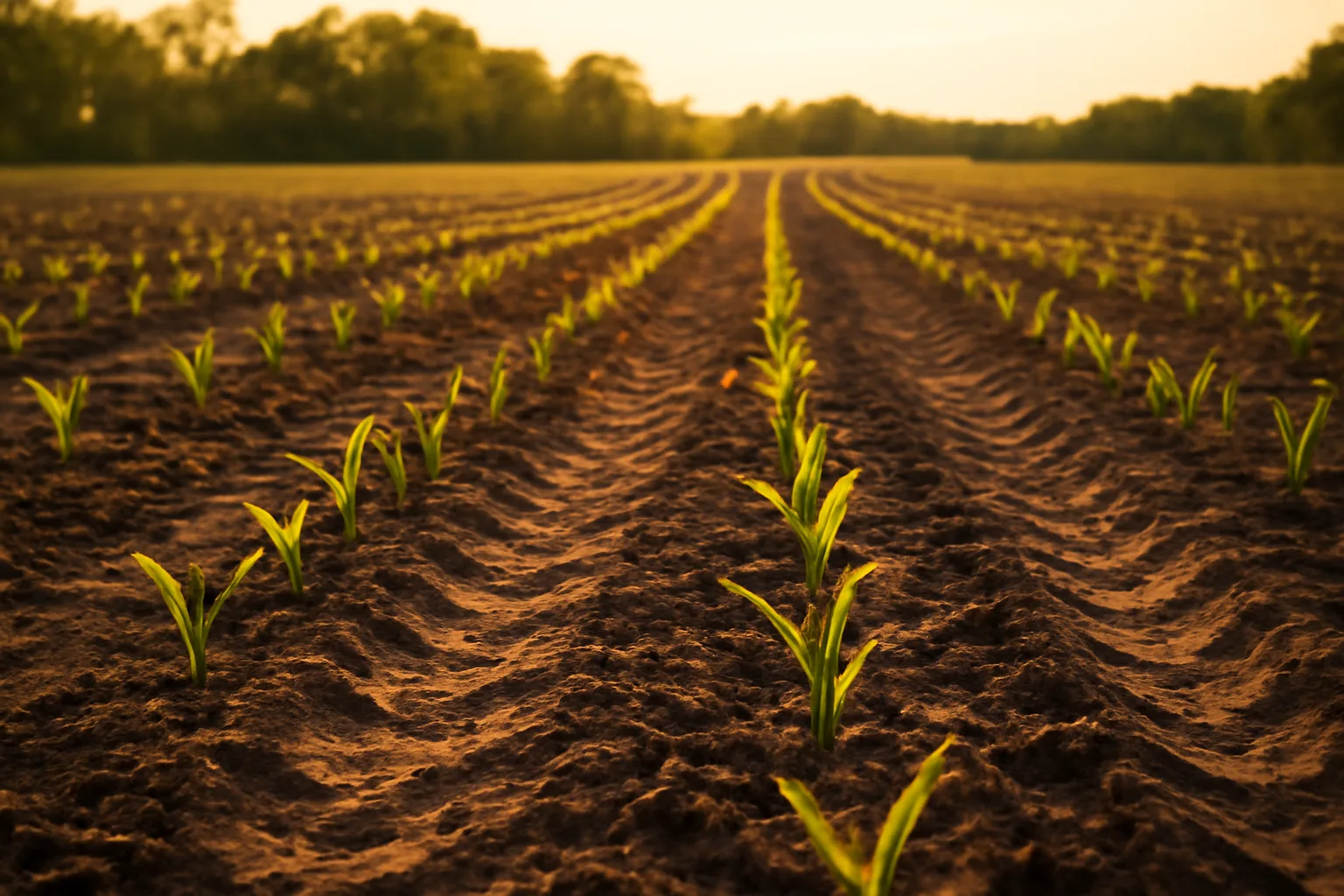
Plant corn for deer when soil hits 55-60 degrees F and frost risk has passed, usually late April to early June depending on your zone. Drill or plant 2 inches deep at 25,000 to 30,000 seeds per acre in blocks at least a half acre, and follow your soil test for lime and nitrogen. Corn is a heavy feeder that rewards fertility but punishes shortcuts.
what is a food plot and why plant corn in one
A food plot is a planted patch of forage or grain on hunting ground, built to feed deer through part of the year and to give hunters a predictable place to set up. Plots range from quarter-acre kill plots tucked in timber to multi-acre destination fields planted in beans, clover, brassicas, or corn. Corn earns a spot in a lot of plot programs because it does two jobs at once. It's a high-energy carbohydrate source that helps deer through the late fall rut grind and into winter, and standing corn is some of the best thermal and visual cover you can grow. A block of standing corn in January, when temperatures drop and other food sources are picked over or buried in snow, can pull deer from a long way off, especially in the Midwest and Northeast where winter stress is real. The tradeoff is cost and effort. Corn is not a shade-tolerant, drop-it-and-forget crop like some clover blends. It wants full sun, decent soil, real fertility, and enough acreage to survive deer browsing pressure while it's young. If you're working a small plot under an acre, corn can get hammered flat before it ever tassels. For a full rundown of species options and where each one fits, see food plot whitetail and deer food plots for planning basics.
when to plant food plots for deer, and where corn fits
| Deep South (zone 8-9) | late March to mid-April | |
|---|---|---|
| Mid-South / Transition | mid-April to mid-May | |
| Upper Midwest | early May to early June | |
| Northeast / New England | mid-May to early June | Corn needs 90 to 120 frost-free days to reach maturity depending on the hybrid's relative maturity rating, so back that number out from your first fall frost date to make sure it has time to dent and dry down before season [2]. If you're aiming for a standing corn plot to hunt in December or January, you want the corn mature and drying by early fall, not still green. |
Timing for any food plot comes down to your last frost date and your target season of use, and corn is more particular about this than almost anything else you'll plant. Corn needs soil temperatures at or above 50 degrees F to germinate reliably, and most agronomists recommend waiting for 55-60 degrees F for stronger emergence, per Iowa State University Extension guidance on corn planting [1]. In practice that means corn goes in the ground later than a lot of hunters expect. In the Upper Midwest and Northeast, that's typically mid-May into early June. In the transition zone and mid-South, late April through mid-May works. In the Deep South, corn can go in as early as late March. Check your local frost-free date through your state's cooperative extension frost date tables, and don't plant based on the calendar alone; a warm week doesn't mean the soil has caught up. Here's a rough planting window by region, based on standard extension recommendations for field corn (deer plot corn follows the same soil temperature rules): | Region | Typical planting window |
how do you prep soil for a corn food plot
Corn is one of the least forgiving crops out there for soil pH and fertility, so skipping the soil test is the single most expensive mistake you can make on a corn plot. A $15-20 soil test tells you your pH, phosphorus, potassium, and organic matter, and it should drive every lime and fertilizer decision you make. Corn wants a soil pH between 5.8 and 6.8, with most university programs targeting 6.0-6.5 for best nutrient availability, according to Penn State Extension's soil fertility guidance for corn. Below that range, lime becomes non-negotiable; corn planted into soil at pH 5.0 will struggle to use fertilizer no matter how much you put down, because aluminum toxicity and reduced nutrient availability start choking root development. Lime takes months to fully react with soil, so if your test comes back needing 1-2 tons per acre, get it down the fall before if you can. If you're planting late spring corn and just found out you need lime now, put it down anyway. Some correction beats none, and pelletized lime reacts faster than ag lime if you're in a time crunch. Your soil test report is the actual authority here, not a generic number in an article. Labs calibrate recommendations to your specific soil type, your target crop, and sometimes your buffer pH, so follow what your test says over any blanket rule of thumb.
what fertilizer does a corn food plot need
Corn is a nitrogen hog. It's one of the few food plot crops where under-fertilizing shows up fast, in pale, stunted plants and poor ear fill. A reasonable starting point many extension programs use for grain corn is around 1 to 1.3 pounds of actual nitrogen per bushel of yield goal, though food plot corn isn't chasing 200-bushel yields, so hunters typically apply less than full-rate commercial ag programs. A common food plot approach is 40-50 lbs of actual nitrogen at planting (often as a starter blend like 10-10-10 or similar), followed by a sidedress of 40-60 lbs more nitrogen (urea or ammonium nitrate) when corn is 12-18 inches tall, per Mississippi State University Extension deer forage guidance [3]. Phosphorus and potassium needs depend entirely on what your soil test shows; corn on ground that's already high in P and K needs a fraction of what depleted ground needs. Don't guess here. If your soil test says 60 lbs/acre of P2O5 and 80 lbs/acre of K2O, put that down, not some number you saw in a forum post. Split nitrogen applications matter for two reasons. First, corn can't use all of it early on, so a big chunk goes to waste or leaches. Second, sidedressing lets you adjust based on how the stand actually looks, rather than betting everything on one pass in April.
how deep and how thick should you plant corn seed
Plant corn seed 1.5 to 2 inches deep into moist soil, deeper if the topsoil is dry and you're chasing moisture, shallower in heavy clay that crusts easily. Seeding rate for food plot corn typically runs 22,000 to 30,000 seeds per acre, which is close to standard row-crop rates, according to Iowa State University Extension planting guidelines [1]. Row spacing of 30 inches is standard if you're using a row planter, though some food plot growers go narrower (15-20 inches) to get quicker canopy closure and better weed suppression, which also helps outcompete deer browsing pressure while plants are small. A broadcast-and-cultipack approach works in a pinch on small acreage, but it wastes seed and gives uneven stands compared to a planter or drill set up for corn. If you're going to invest in one piece of dedicated planting equipment for a corn program, a used row planter with corn plates is worth more than almost anything else in the shed. Seed treatment matters too. Most commercial corn seed comes pre-treated with fungicide and sometimes insecticide; if you're buying deer-specific corn blends, check the tag, because treated seed isn't legal or safe to feed to livestock and some hunters have concerns about it in a wildlife food source. Read the bag.
how big does a corn food plot need to be
Corn plots need to be bigger than clover or brassica plots to survive deer pressure, full stop. A quarter-acre clover plot can take a beating and bounce back because clover regrows from the crown. Corn doesn't regrow once deer browse the growing point off a young stalk. Most food plot programs recommend a minimum of a half acre to one acre of corn where deer density is moderate to high, and multiple acres in areas with heavy deer pressure or where the goal is a standing winter food source that lasts into February. Smaller plots often get grazed to nothing before the corn ever gets past knee height, especially in the first three weeks after emergence when deer can nip growing points and kill the plant outright. If you only have a small clearing, corn probably isn't your best pick. A brassica blend or a cereal grain like oats fits tighter spaces better and tolerates browsing pressure at a younger growth stage. Save corn for a field big enough to take a hit and still leave standing grain by fall.
do deer eat sorghum, and is it a substitute for corn
Yes, deer eat sorghum, and grain sorghum (milo) is a common substitute or companion planting for corn in food plot programs, especially in drier regions of the Great Plains and Southwest where sorghum tolerates heat and low rainfall better than corn does. Sorghum generally needs less water and less fertility than corn to produce a decent stand, and it's often cheaper per acre. The tradeoff is that deer preference studies and field observation generally rank corn and soybeans above sorghum in palatability once better options are available, so sorghum tends to get used later in winter after preferred foods are depleted, or it's blended into diverse plots as a hedge against drought. If you're in a low-rainfall area or worried about a corn crop failing from drought stress, a corn-sorghum mix or straight sorghum planting is a reasonable insurance policy. It won't pull deer the way standing corn does in a good year, but it's a lot better than a failed cornfield.
do deer eat clover, and do they actually like it
Yes, deer eat clover heavily, and it's one of the most consistently preferred forages in food plot programs across the whitetail's range. Clover (white clover, red clover, and ladino types) offers 20-30% crude protein in vegetative growth stages, which makes it a strong spring and summer forage for antler growth and lactation, according to university forage testing summarized by Mississippi State University Extension [3]. Deer do like clover, and it's often the answer when hunters ask what a deer's single favorite food is, though that answer depends heavily on season and what else is available. Clover's biggest advantage over corn is that it's a perennial; a well-maintained clover stand can produce for 3-5 years without replanting, while corn is an annual that costs you seed, fuel, and labor every single year. The knock on clover is that it doesn't hold up in a real winter. Once snow covers it or a hard freeze knocks growth dormant, clover offers nothing, which is exactly the gap corn and standing grain fill. A lot of good plot programs run clover for spring and summer nutrition and corn or brassicas for fall and winter draw. See deer food plot seed for blend options that combine both strategies.
what are deer's favorite foods, and where does corn rank
There's no single universal favorite food for deer; preference shifts by season, region, and what's locally available, but research and field data point to a consistent short list: acorns, soybeans, clover, and standing corn rank among the most preferred foods across most of the whitetail's range, according to forage preference work summarized by university extension wildlife programs [3] [4]. Acorns are often the top natural preference in fall because of their fat content, something no planted food plot crop matches. Among planted crops, soybeans and corn tend to top preference rankings for energy and volume, while clover and brassicas score high for palatability and season length. Corn's real advantage isn't necessarily that deer prefer it over everything else at every point in the season. It's that standing corn holds up through winter when almost nothing else does, and the raw carbohydrate content helps deer rebuild fat reserves burned through the rut. That's why so many food plot programs treat corn as a late-season anchor rather than the whole program.
when to plant oats for deer, and how they pair with corn
Oats are typically planted in late summer to early fall for deer food plots, generally 6-8 weeks before your first fall frost, so deer hit them during their most palatable, tender growth stage right as bow season opens, according to standard cereal grain planting guidance from university extension forage programs [3]. In most of the Midwest and Northeast that lands in mid-August through early September. In the South, oats can go in a bit later, into September or even October, since frost risk comes later. Oats can also be planted in early spring in some regions for a quick spring forage window, though fall planting is far more common in deer programs because it lines up with hunting season. Oats don't compete directly with corn in a plot rotation; they fill a completely different niche. Oats are a fast, cheap, cool-season annual that greens up in weeks, while corn is a slow, input-heavy summer crop that takes all season to mature into a fall and winter food source. A lot of hunters run oats in a brassica blend for early-season bow hunting and keep a separate corn block for late season. They're rarely planted in the same field at the same time because their planting windows don't overlap.
when to plant turnips for deer, and do they replace corn
Turnips go in the ground in late summer, generally 90-100 days before your first hard frost, which lands most of the Midwest and Northeast planting window in late July through August, per Mississippi State University Extension brassica planting recommendations [3]. Turnips need that lead time to bulb up and to build the tuber that becomes so attractive after a few hard frosts sweeten the starches into sugars. Turnips don't replace corn in a plot program; they solve a different problem. Turnips are cheap, fast, and forgiving of poor soil, and they provide both leafy forage in early fall and a energy-dense tuber deer dig up in late winter after frost. But a turnip plot doesn't offer the standing cover or the raw carbohydrate density of a mature cornfield, and turnip tubers get buried or frozen out in a hard winter the way standing corn doesn't. A lot of well-rounded plot plans run turnips or a full brassica blend alongside a corn block, treating them as complementary late-season food sources rather than either-or options. If you're not sure how to combine species across a property, a custom food plot plan built around your soil test and region is a fast way to get a planting map instead of guessing.
do deer like honey, and does it matter for food plots
There's no real food plot application here, so let's be direct: deer are not documented to specifically seek out honey in the wild, and it isn't a recognized deer attractant or food plot ingredient in any university extension or wildlife agency research. Deer diets are built around browse, forbs, mast, and agricultural crops, not honey or other bee products. What likely drives this question is confusion with commercial deer attractant products that use sweet, sugary scents (some marketed with names referencing honey or molasses) as mineral lick or scent-based attractants rather than food plot forage. Those products are a different category entirely from food plot planting and aren't something we'd cover as agronomy. If you're building an actual feeding program, your time and money are far better spent on soil-tested, planted forage than on scent attractants.
what equipment do you actually need to plant corn
At minimum, you need a way to work ground, a way to place seed at a consistent depth, and a way to firm the soil afterward. That's a disk or tiller, a planter or drill, and a cultipacker or roller, in that order. A dedicated row-crop planter with corn plates is the gold standard because it places seed at a consistent depth and spacing, which matters more for corn than almost any other food plot crop since uneven emergence creates gaps deer exploit. A used single or two-row planter runs anywhere from a few hundred dollars at auction up to a few thousand for something in good shape, and it pays for itself over a few seasons compared to buying a new broadcast seeder every year and dealing with poor stands. If a planter isn't in the budget, a broadcast seeder followed immediately by a light disking pass and a cultipacker can work, though expect a rougher, less even stand and plan on a heavier seeding rate to compensate for uneven depth placement. Check your state wildlife agency's baiting and feeding regulations before you plant, since some states regulate what counts as a food plot versus supplemental feeding, and rules vary widely by state [5]. A quick call to your state agency or a look at their food plot / baiting page saves a lot of headaches later. For more on which tools fit which budget, food plot seed and domain food plot seed cover seed selection alongside equipment basics.
Frequently asked questions
Do deer eat sorghum?
Yes. Deer eat grain sorghum (milo) readily, especially in late winter when preferred foods run out. Sorghum tolerates drought and low fertility better than corn, making it a common substitute or companion crop in dry regions, though it typically ranks below corn and soybeans in deer preference studies.
Do deer eat clover, and do deer like clover?
Yes, deer eat clover heavily and generally prefer it, especially in spring and summer. Clover runs 20-30% crude protein in vegetative stages, making it a top forage for antler growth and lactation. It goes dormant in hard winter, which is why many plot programs pair it with corn or brassicas for cold-season food.
When should you plant food plots for deer?
Timing depends on the crop and your region. Cool-season crops like oats, clover, and brassicas go in late summer (roughly 6-10 weeks before first frost). Corn and other warm-season crops go in after your last spring frost once soil hits 50-60 degrees F, typically April through early June depending on zone.
When should you plant corn for a deer food plot?
Plant corn once soil temperature reaches 55-60 degrees F and frost risk has passed. That's roughly late March to mid-April in the Deep South, mid-April to mid-May in the transition zone, and early May through early June in the Upper Midwest and Northeast, per Iowa State University Extension planting guidance.
When do you plant turnips for deer?
Plant turnips 90-100 days before your first expected fall frost, which lands in late July through August across most of the Midwest and Northeast. That lead time lets turnips bulb up before frost sweetens the tubers, which is when deer really start digging into them.
When do you plant oats for deer food plots?
Plant oats 6-8 weeks before your first fall frost, typically mid-August through early September in the Midwest and Northeast, and a few weeks later in the South. Fall planting lines oats up with bow season, when their tender growth is most attractive to deer.
What is a food plot?
A food plot is a planted area on hunting ground, usually a quarter acre to several acres, seeded in forage or grain crops to feed deer and other wildlife and to create a predictable location to hunt. Plots range from perennial clover fields to annual corn, soybeans, brassicas, and cereal grains.
What are deer's favorite foods?
Preference shifts by season and region, but acorns, soybeans, clover, and standing corn consistently rank among the most preferred foods for whitetail deer. Acorns often top the list in fall due to fat content; among planted crops, corn and soybeans lead for energy, and clover leads for season-long palatability.
Do deer like honey?
There's no research or wildlife agency data showing deer specifically seek out honey. It isn't a recognized food plot crop or natural deer food source. Confusion likely comes from commercial scent attractants marketed with honey or molasses branding, which are a different product category from planted forage.
How deep should you plant corn seed for a food plot?
Plant corn seed 1.5 to 2 inches deep into moist soil. Go shallower in heavy clay that crusts, deeper if you're chasing moisture in dry topsoil. Seeding rate typically runs 22,000 to 30,000 seeds per acre, similar to standard row-crop rates.
How big should a corn food plot be?
Plan on a half acre to one acre minimum in areas with moderate deer density, and multiple acres where deer pressure is heavy or the goal is standing winter food. Corn doesn't regrow once deer browse the growing point, so small plots often get wiped out before stalks reach knee height.
What fertilizer does corn need in a food plot?
Corn needs roughly 40-50 lbs of actual nitrogen at planting plus a sidedress of 40-60 lbs more when plants reach 12-18 inches tall, per Mississippi State University Extension guidance. Phosphorus and potassium rates should follow your soil test exactly, since needs vary widely by soil type.
What soil pH does corn need for a food plot?
Corn performs best at a soil pH of 5.8 to 6.8, with most extension programs targeting 6.0-6.5. Below that range, lime is necessary because nutrient availability and root development suffer. Lime takes months to fully react, so apply it well ahead of planting whenever possible.
Sources
- Iowa State University Extension, Corn Planting Guide: corn germination soil temperature thresholds and seeding rate/depth recommendations
- USDA National Agricultural Statistics Service / land-grant corn maturity guidance: corn requires 90-120 frost-free days depending on hybrid relative maturity
- Mississippi State University Extension, Wildlife Food Plot Establishment: nitrogen sidedress recommendations, clover crude protein content, turnip and oat planting windows
- Mississippi State University Extension, Deer Forage Preference research summary: acorns, soybeans, clover, and corn ranking among top deer forage preferences
- Association of Fish & Wildlife Agencies, state baiting and feeding regulation overview: baiting and feeding regulations for food plots vary by state and require checking state wildlife agency rules