Last updated 2026-07-25
TL;DR
Plant daikon radish 60 to 90 days before your first killing frost, broadcast at 6 to 10 lbs/acre or drill at 4 to 6 lbs/acre, 1/4 to 1/2 inch deep, into a soil-tested seedbed with pH near 6.0 to 6.5. Deer often ignore radish tops until frost sweetens them, then hit the roots hard through winter.
what is a food plot and where does daikon radish fit in
A food plot is a planted patch of forage, usually on private or leased hunting ground, meant to feed deer and other wildlife and to give hunters a predictable spot to watch or hunt over. Plots range from quarter-acre kill plots tucked in timber to multi-acre field plantings meant to hold deer all season. State wildlife agencies generally treat food plots as a form of habitat management distinct from baiting, though the line depends on state law, which is why checking your state agency's regulations before you plant (or hunt over one) matters. Daikon radish, sometimes sold as tillage radish or forage radish, is a brassica with a long white taproot that can push well over a foot into the soil. Penn State Extension describes forage radish (also called tillage radish or daikon radish) as a cover crop that grows a large taproot capable of penetrating compacted soil layers that a disk or plow can't reach, opening channels for water and root movement the following spring. Its job in a plot is twofold: it feeds deer, especially the root and regrowth after frost, and it breaks up that compaction. Most hunters don't plant straight radish. It's usually one component in a brassica blend with turnips, rape, or kale, or paired with a cereal grain like oats or winter wheat. Straight radish plots have a real weakness: once the roots rot out in late winter, you're left with bare dirt and open channels, which is great for soil, not so great if you wanted spring cover or forage. If you're planning a full-season rotation and want help deciding where radish fits against clover, brassica blends, or grain plots, that's exactly the kind of layout question a soil test and a written plan solve. Deer food plots covers the broader plot-type decision if you're still choosing what to plant where.
when should you plant daikon radish for deer
| Upper Midwest / Northeast | late July to early Aug | mid-Sept to early Oct | |
|---|---|---|---|
| Central Midwest / Mid-Atlantic | early to mid-Aug | early to mid-Oct | |
| Southern Appalachians / Mid-South | mid-Aug to early Sept | mid to late Oct | |
| Deep South / Gulf Coast | late Aug to mid-Sept | mid to late Nov | These are starting points, not guarantees. Local frost dates vary year to year and by elevation, so cross-check with your county extension office or the NOAA climate normals for your area before locking in a date. NOAA's National Centers for Environmental Information publishes 1991-2020 climate normals, including freeze dates, by station [1]. |
Plant daikon radish so it has 60 to 90 days of growing time before your area's first hard killing frost. That window lets the taproot bulk up before growth slows, and it times the sweetest, most attractive forage right around the first frosts of fall, which is when deer start hammering brassicas hard. In practical terms, that means late July into early August for the northern tier (Minnesota, Wisconsin, Michigan, northern New England), mid-August for the central Midwest and mid-Atlantic, and late August into September for the Deep South and Gulf states. Don't plant radish too early in hot, dry August conditions without a rain forecast. Seedlings that emerge into a drought stress out and rarely recover the way a cereal grain will. Don't plant it too late either. A radish planted 30 days before frost might germinate and grow leaves but never build the root mass that makes it worth the seed cost. Here's a rough zone-based planting window for daikon radish and brassica blends: | Region | Planting window | First frost (typical) |
how do you plant a daikon radish food plot step by step
Start with a soil test. This is the step most plots skip, and it's the one that decides whether your radish plot actually performs. Pull soil samples from 4 to 6 inches down, several spots per acre, and send them to your state land-grant extension lab or a private ag lab. Your results will tell you pH and phosphorus, potassium, and often lime requirement in tons per acre, numbers no article can guess for your dirt. Brassicas including daikon radish grow best in soil with a pH between 6.0 and 6.5. If your test comes back at 5.2, spreading fertilizer without lime is close to wasting money. Lime takes months to fully react in the soil, so ideally you apply it a season ahead, but even a late application before planting helps some. Here's the sequence: 1. Test soil 2 to 3 months ahead if you can swing it, so lime has time to work. 2. Kill existing vegetation with glyphosate 2 to 3 weeks before planting, or disk it under, depending on your equipment and whether you're going no-till or conventional. 3. Apply lime per your soil test recommendation. 4. Work the seedbed to a fine, firm surface. Radish seed is small and needs good soil contact; a rough, cloddy seedbed kills germination rates. 5. Broadcast seed at 6 to 10 lbs/acre for straight radish, or follow the blend rate on the bag if it's mixed with turnip, rape, or a cereal grain. Drilled seed can go lower, 4 to 6 lbs/acre, because drilling gets better seed-to-soil contact with less waste. 6. Cover seed lightly, 1/4 to 1/2 inch deep. Radish seed that's buried too deep won't emerge; too shallow and it dries out or gets picked off by birds. 7. Apply fertilizer per soil test, typically split so nitrogen isn't wasted on a legume-free brassica plot (radish isn't a nitrogen fixer, so it needs applied N, unlike clover). 8. Cultipack or roll if you have the equipment. It firms the seedbed and improves germination noticeably on broadcast plots. If you don't own a drill, a simple ATV broadcaster, a drag harrow, and a cultipacker (or even a chained section of chain-link fence dragged behind a truck) will get you a workable seedbed. For gear-specific guidance, food plot seed walks through blend options and deer food plot seed covers rate and coverage math in more depth.
what soil and fertilizer does daikon radish need
Daikon radish wants a well-drained loam or sandy loam with a pH near 6.0 to 6.5 and moderate to high phosphorus and potassium. It's not a nitrogen fixer, so unlike clover it needs applied nitrogen, generally 40 to 60 lbs of actual N per acre for a straight brassica plot, though your soil test may call for more or less depending on organic matter and prior crop history. Heavy clay that stays wet will rot radish roots before they bulk up, and it also makes the plot harder to work in fall when you want the ground firm enough to walk or drive on for hunting access. If your dirt is heavy clay, a blend with a cereal grain like oats or wheat gives you a fallback forage even in a wet year that stunts the radish. Don't skip lime if your test calls for it. A soil test that comes back needing 2 tons of lime per acre and gets zero isn't going to grow the same plot as one that got even half that. Penn State Extension's guidance on forage radish notes that its taproot can penetrate compacted soil layers a disk can't reach, but that benefit still depends on getting soil chemistry, especially pH, into range first, since nutrient availability drops off sharply in acidic soil. A quick soil-test literacy note: "P" and "K" on your report usually show as lbs/acre or as an index number depending on the lab. If you're not sure how to read your results, call the extension office that ran the test; most will walk you through it for free, and it beats guessing.
do deer eat sorghum, clover, and other common plot forages compared to radish
| Daikon radish | best after frost | annual | needs applied N | |
|---|---|---|---|---|
| White/red clover | spring through fall | perennial, 3-5 yrs | fixes its own N | |
| Oats | fall, before hard freeze | annual | needs applied N | |
| Grain sorghum | late summer/fall, mixed use | annual | needs applied N | |
| Turnips | fall through winter, tops then bulbs | annual (biennial) | needs applied N | Radish and clover aren't competing plans, they're often complementary: clover for season-long draw and soil-building perenniality, radish and brassicas for a fall/winter push when deer need calories most and other forage is dying back. If you're deciding between the two for a specific field, deer for food and food plot whitetail both cover forage selection by goal. |
Yes, deer eat sorghum, particularly grain sorghum heads and the tender regrowth, though it's more commonly planted as a summer annual for turkey and dove, or as a screening/cover crop, than as a preferred deer forage. Deer will browse young sorghum leaves and hit mature grain heads once they dry down, but it's not in the same tier as clover, soybeans, or brassicas for consistent deer attraction. Clover is a different story. Yes, deer like clover, and it's one of the most consistently used food plot forages across the whitetail's range. White clover and red clover offer high protein content, commonly cited in extension forage tables in the 20 to 30% crude protein range for young growth, and they regrow after grazing, unlike a brassica that gets eaten to the ground once. University of Missouri Extension's guide to deer food plots lists clover among the standard perennial forages for wildlife plots because of its protein content and grazing tolerance [2]. Here's a rough comparison of common plot forages against radish: | Forage | Deer preference timing | Lifespan | Nitrogen need |
when should you plant oats, turnips, and other fall plot components
Oats should go in 60 to 75 days before your first killing frost, similar timing to radish, which is why the two are often planted together. Oats germinate fast, usually within 5 to 10 days in warm soil, and give you quick green attraction while the slower brassicas bulk up underground. Winter-killed oats also leave a clean seedbed for spring, which some hunters prefer over a radish plot's rotted-root aftermath. Turnips follow almost the same calendar as radish: plant 60 to 90 days ahead of first frost so the bulb has time to size up. Deer tend to eat turnip tops first, often within weeks of planting, then switch to the bulbs after a few hard frosts convert starches to sugars, a pattern University of Missouri Extension's food plot guidance also notes for brassica forages generally [2]. Generally, the broader question of when to plant food plots for deer breaks into two seasons: spring plots (clover, chicory, soybeans, generally planted after last frost, April through June depending on zone) and fall plots (brassicas, cereal grains, generally planted 60 to 90 days before first frost, July through September depending on zone). Trying to plant a fall brassica blend in spring, or a soybean plot in September, wastes seed and a season. A reasonable rule most extension calendars converge on: work backward from your local average first frost date, then count back 8 to 12 weeks depending on the specific species' maturity window.
what do deer actually prefer to eat, and where does radish rank
Deer preference shifts by season, region, and what's available, so there's no single ranked list that holds everywhere, but extension research and forage studies consistently put a handful of foods near the top. Native browse like acorns, especially white oak acorns, is often described as a preferred fall food where available because of its fat and carbohydrate content, and agricultural crops like soybeans and corn draw heavily where they're grown. Among planted forages, clover, soybeans, and brassicas (radish, turnips, rape) show up repeatedly in preference studies and browse surveys as high-use plot species [2]. Radish specifically has an odd reputation: deer frequently ignore it early in the season, then hit it hard after a few frosts. That's not a planting mistake, it's the sugar conversion at work, the same one that affects turnips. If you're hunting a new radish plot in September and seeing no deer sign, don't assume the plot failed; check it again in November and December. Deer don't eat honey. This one comes up because people confuse mineral licks, molasses-based attractants, and "deer candy" products with honey itself, but honey isn't a natural or notably attractive deer food, and there's no wildlife agency or extension guidance recommending it as a food plot or attractant ingredient. Save it for your coffee. Worth remembering: preference also depends on regional deer density and food availability. A radish plot in an area thick with acorns and soybeans might get lighter pressure than the same plot in an area with little else growing by December.
what equipment do you need to plant a daikon radish plot
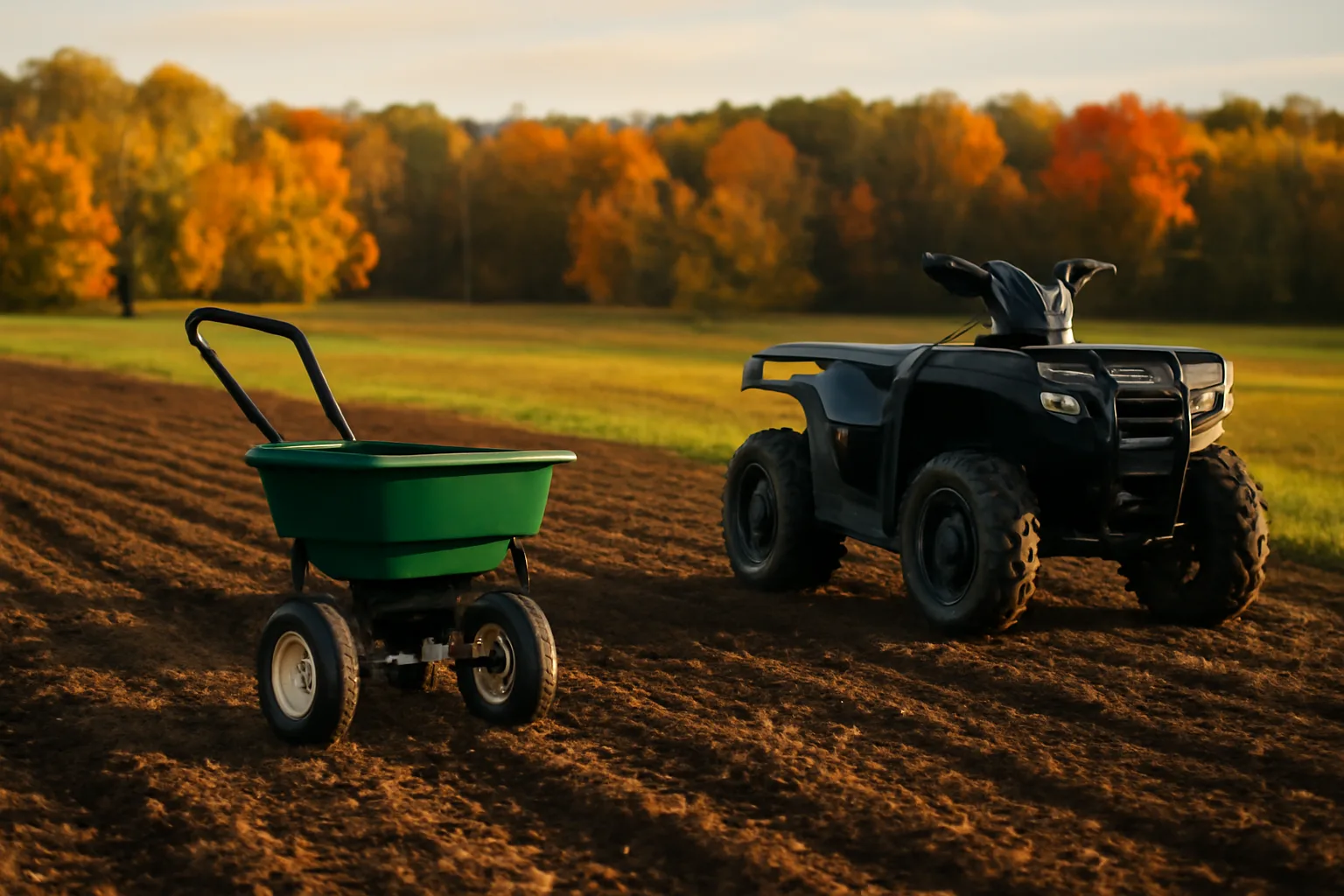
For a small plot (under 2 acres), you can get by with a rented or borrowed ATV/UTV, a broadcast spreader, a disk or tiller, and a drag harrow or cultipacker. Radish seed is cheap enough and small enough that hand-broadcasting a quarter-acre kill plot with a shoulder spreader is realistic if you don't have a tractor. For larger plots, a tractor with a disk, a grain drill (ideal, since it controls depth precisely), and a cultipacker speeds things up and improves germination consistency. A no-till drill is worth renting if your local co-op or conservation district has one available, since it lets you plant into standing residue or a herbicide-killed cover without a full tillage pass, which saves soil moisture in dry planting windows. Whatever you use, the goal is the same: a firm, fine seedbed, seed at the right shallow depth, and good seed-to-soil contact. A rough broadcast-and-walk-away job on cloddy dirt is the single most common reason a radish plot comes up thin.
how does a custom plot plan help with radish plantings
A soil test tells you what your dirt needs. A plot plan tells you how to turn that into a planting decision: how much radish versus turnip versus a cereal grain nurse crop, what seeding rate fits your acreage and equipment, and when to plant based on your specific zip code's frost dates rather than a regional guess. PlotSeason's $99 one-time Custom Food Plot Plan takes your soil test results, your acreage, your equipment list, and your region, and turns it into a written planting plan, species mix, rates, and calendar, so you're not guessing at a seed tag in a farm store aisle. It's general planning guidance built from your inputs, not a site visit or a substitute for your soil-test lab's specific lime and fertilizer recommendations, which remain the authority on your exact field chemistry. If you've got a soil test back and you're staring at three different brassica blends trying to figure out which one fits your acreage and your first-frost date, that's the exact gap a plan closes. Start at /plot-plan-builder.
Frequently asked questions
Do deer eat sorghum in food plots?
Yes, deer browse sorghum leaves and grain heads, but it's more commonly planted for dove, turkey, and cover than as a top-tier deer forage. Clover, soybeans, and brassicas like radish typically draw deer more consistently, so sorghum is often a secondary or mixed-use planting rather than a primary deer plot choice.
Do deer like clover?
Yes, clover is one of the most reliably used food plot forages for deer across most of the whitetail's range. White and red clover offer high protein, regrow after grazing since they're perennials, and extension guidance repeatedly lists clover among top plot species for spring-through-fall use.
When should you plant food plots for deer?
It depends on the species. Spring/summer plots (clover, soybeans, chicory) go in after your last frost, generally April through June. Fall plots (brassicas like radish and turnips, cereal grains like oats) go in 60 to 90 days before your first killing frost, typically July through September depending on your zone.
When should you plant turnips for deer?
Plant turnips 60 to 90 days before your area's first killing frost, the same general window as daikon radish. Deer eat the tops first, then switch to bulbs after a few frosts convert starches to sugars, the same frost-driven palatability pattern seen in radish.
What is a food plot?
A food plot is a planted area, usually on private or leased hunting land, established specifically to feed deer or other wildlife and to give hunters a predictable place to observe or hunt animals. Plots range from small hidden kill plots to large multi-acre fields and can use annual or perennial forage species.
What are deer's favorite foods?
There's no single universal ranking, since preference shifts by region and season, but acorns (especially white oak), soybeans, corn, clover, and brassicas like radish and turnips show up repeatedly in browse surveys and extension forage guidance as high-preference foods where available.
Do deer like honey?
No, honey isn't a recognized deer food or attractant. This confusion usually comes from molasses-based commercial attractant products, which are a different thing entirely. No wildlife agency or extension source recommends honey as a food plot or supplemental feed ingredient.
When should you plant oats for deer?
Plant oats 60 to 75 days before your area's first killing frost, similar to radish and turnip timing. Oats germinate quickly, often in 5 to 10 days, and give fast green growth while slower brassicas in the same plot bulk up their roots underground.
How deep should you plant daikon radish seed?
Plant daikon radish seed 1/4 to 1/2 inch deep. Seed buried deeper than that often fails to emerge, since radish seed is small and lacks the stored energy to push up through thick soil, while seed left on the surface dries out or gets eaten by birds.
What seeding rate is right for a daikon radish food plot?
Broadcast straight daikon radish at 6 to 10 lbs per acre. If you're drilling, which gives better seed-to-soil contact, 4 to 6 lbs per acre is usually enough. Blend bags with turnip, rape, or a cereal grain will list a different combined rate on the tag, so follow that instead.
Can you plant daikon radish with clover?
You can, though it's not the most common pairing since radish is a fast-growing annual that can shade out young clover seedlings. Most hunters instead plant radish in a dedicated fall brassica/grain blend and keep clover in a separate perennial plot for spring-through-fall use.
Why don't deer touch my radish plot until late fall?
This is normal, not a failure. Daikon radish and turnips convert starches to sugars after a few hard frosts, which makes them noticeably more palatable. This frost-driven sweetening is why deer use often spikes in November and December rather than at planting.
Sources
- NOAA National Centers for Environmental Information, U.S. Climate Normals 1991-2020: Local first frost and freeze dates vary by station and should be checked against current climate normals
- USDA Natural Resources Conservation Service, Plant Guide: Forage Radish (Raphanus sativus): Forage radish is used as a soil-conditioning cover crop with a deep taproot that helps break up compacted soil layers
- USDA Natural Resources Conservation Service, Cover Crop Termination Guidelines: Forage radish is used as a soil-conditioning cover crop that breaks compaction ahead of the following crop
- University of Missouri Extension, G9418, Deer Food Plots: Brassica forages become more palatable to deer after frost due to starch-to-sugar conversion, and clover ranks among standard perennial food plot forages
- Purdue University Extension, FNR-228-W, A Landowner's Guide to Wildlife Habitat Management: Food plots function as a wildlife habitat management tool distinct from supplemental feeding or baiting practices