Last updated 2026-07-26
TL;DR
Fall food plot seed should go in the ground 45 to 90 days before your area's first killing frost, depending on species. Brassicas and turnips need the longest lead time (about 80 to 90 days), oats and cereal rye need 60 days or less, and clover can be frost-seeded or planted alongside a cereal grain nurse crop in late summer.
what is a food plot, exactly
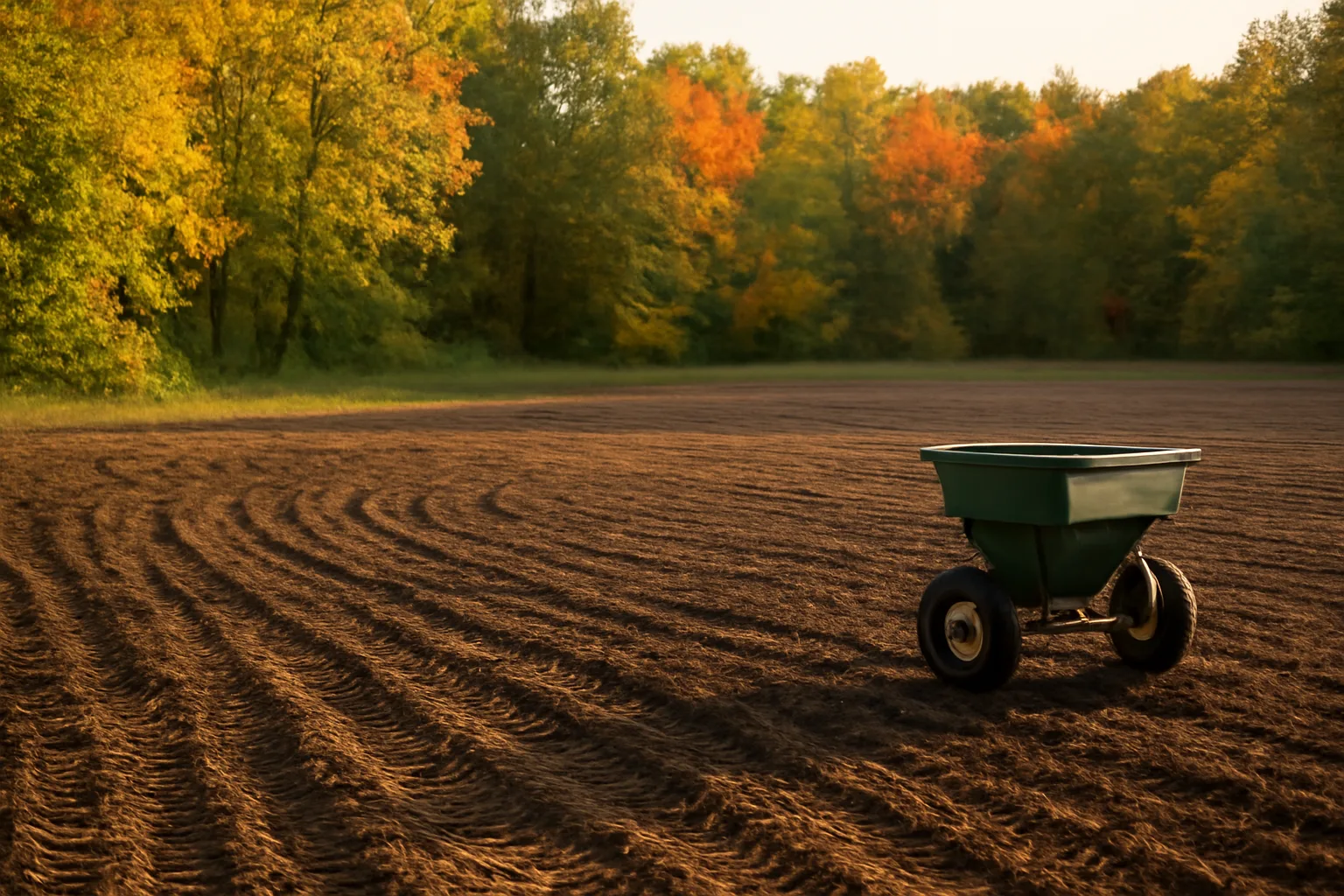
A food plot is a planted patch of forage, usually somewhere between a quarter acre and a few acres, put in specifically to feed deer and other wildlife and to give hunters a place to observe or hunt over. It's not the same as a farm field, even though the seed and the equipment overlap a lot. Most food plots are planted with a mix of annuals (things that grow, feed, and die in one season like oats or brassicas) and perennials (things that come back for two to five years like clover or chicory). Landowners plant food plots for a few different reasons. Some want to improve deer body condition and antler growth over a whole property. Others just want a reliable spot to sit a stand during rifle season. Most people want both. Either way, the plot only works if the soil underneath it can actually support what you're planting, which is why a soil test matters more than the seed bag label does. Cooperative extension offices in nearly every state offer soil testing for the cost of a sample kit and a few dollars in lab fees. If you're building a plot from scratch, it helps to understand the difference between plot types (throw-and-grow clover plots versus tilled brassica plots versus food plot systems built around cereal grains) before you pick seed. See food plot whitetail for a broader rundown of layout and design choices.
when to plant food plots for deer in the fall
| Brassicas (turnips, radish, rape) | 80-90 days | Late July to mid-August (north), Aug-Sept (south) | |
|---|---|---|---|
| Oats | 45-60 days | Late Aug to mid-Sept (north), Sept-Oct (south) | |
| Winter wheat / cereal rye | 30-45 days | Sept to early Oct | |
| Clover (with nurse crop) | 60-90 days | Aug to early Sept | These are starting points, not guarantees. A late-summer drought can push your window later even if the calendar says it's time, because seed sitting in dry dirt doesn't germinate any faster just because you planted it on schedule. Watch the ten-day forecast for a real rain chance before you drop seed, more than the calendar. |
The short answer: back up from your area's average first frost date and count backward by the number of days your chosen seed needs to establish before cold shuts growth down. That's the whole method. There's no single fall planting date that works nationwide because frost timing swings by six to eight weeks between the Deep South and the northern Midwest. As a rough national framework, most fall plots go in somewhere between mid-August (far north, short growing window) and early October (Deep South, long fall growing season). The USDA plant hardiness zone map is the standard reference for frost timing by region, and most state extension services publish a first-frost-date table alongside it. Here's a general planting window by species, based on land-grant extension planting guides: | Species | Plant this many days before first frost | Typical fall planting window (varies by zone) |
when to plant oats for deer
Oats are one of the most forgiving fall food plot options because deer hit them hard right when they're planted, and oats tolerate a decent range of soil types. Plant oats roughly 45 to 60 days before your first expected frost. That gives the plant time to put on 6 to 10 inches of leafy growth before growth slows. In the northern Corn Belt and upper Midwest, that usually means seeding oats in late August through mid-September. In the transition zone and mid-South, growers can wait until mid to late September. In the Deep South, oats can go in through October and still produce a strong fall and winter plot [1]. Oats winterkill in most of the northern half of the country once temperatures drop into the teens for sustained periods, which is actually part of their appeal: they green up fast, feed deer hard through October and November, then die back on their own without leaving a stand of grass you have to deal with in spring. In the South, oats can survive winter and act almost like a perennial, regrowing after frost if temperatures stay mild. Seeding rate for oats broadcast alone typically runs 80 to 100 pounds per acre; drilled rates run lower, around 60 to 80 pounds per acre, per most state extension forage guides [2]. Oats mixed with a brassica or clover blend get seeded at a reduced rate, usually 50 to 60 pounds per acre, to leave room for the companion species.
when to plant turnips for deer (and other brassicas)
Turnips and other brassicas (forage rape, radish, kale) need the earliest fall planting date of any common food plot species, because they need a long window to bulb out and build sugar content before frost. Plant turnips 80 to 90 days before your first killing frost. In much of the whitetail range that lands somewhere between late July and mid-August. This timing surprises a lot of first-time planters because August feels early for a "fall" plot. But turnips planted in September in northern states often never bulb properly, they just sit as thin, unappetizing leaves that deer walk past. The bulb is the payoff. Frost actually improves palatability of brassicas: cold temperatures convert starches to sugars in the bulb and leaves, which is why deer often ignore a turnip plot in October and then hammer it in December once a few hard frosts have hit [3]. Typical brassica seeding rates run small, 3 to 5 pounds per acre for straight turnips, because the seed is tiny and a heavy rate just wastes seed and crowds the stand. Brassicas need loose, well-drained soil and a pH close to neutral (6.0 to 7.0) to perform, and they're heavy nitrogen feeders, so a soil test result guiding your fertilizer choice matters more here than with almost any other food plot species.
do deer eat sorghum
Yes, deer eat sorghum, both the grain heads and the standing forage, though it's not typically planted as a primary fall food plot species in most whitetail regions. Sorghum (grain sorghum and forage sorghum types) is more common as a summer annual or as a screening/bedding cover crop than as a fall attractant, because it's a warm-season grass that needs to be planted in late spring or early summer to mature before frost. Where sorghum shows up in food plot planning, it's often paired with something like soybeans or cowpeas for summer tonnage, or left standing into fall and winter as both cover and a slow-release grain source once the heads dry down. Deer will browse young sorghum shoots and will eat the grain once it's mature, but sorghum isn't a preferred fall-planted forage the way oats, brassicas, or clover are, mostly because timing doesn't line up. If you plant sorghum in August expecting a fall food plot, it likely won't mature before frost kills the plant. If screening cover or a standing grain source through winter is the goal, sorghum can work well, but plant it in late May through June in most zones, not fall.
do deer eat clover, and do deer like clover
Yes, deer eat clover readily, and most wildlife biologists and extension forage specialists rank it among the most consistently used food plot forages available, largely because it's palatable across the entire growing season rather than just during one window. Clover regrows after grazing (unlike a lot of annuals), which means a single planting can feed deer for two to five years depending on the clover type and how well it's maintained. White clover (including Ladino types) and red clover are the two most common fall-planted options. Both can be seeded in late summer or early fall alongside a cereal grain nurse crop like oats, which shades and protects the tiny clover seedlings while they establish a root system. Clover seed is small and needs to be planted shallow, no deeper than a quarter inch, and needs decent seed-to-soil contact, which is why a cultipacker or roller after seeding improves germination noticeably over just broadcasting and walking away. University extension trial data consistently shows white clover holding up well under heavy deer browsing pressure compared to many annual forages, which is part of why it's a staple in perennial plot mixes across the whitetail range. Clover also fixes its own nitrogen through rhizobium bacteria in root nodules, which cuts your fertilizer bill over time compared to a plot that needs nitrogen every season. For species selection guidance beyond clover, see deer food plot seed.
what are deer's favorite food, according to research
There's no single universal answer, because deer preference shifts by season, region, and what's available on the surrounding landscape, but wildlife research consistently points to a handful of standouts. Acorns, when available, are typically preferred over almost anything planted, especially white oak acorns, which are lower in tannins and more palatable than red oak acorns [4]. Soybeans and cowpeas rank extremely high during the growing season. Clover ranks high nearly year-round in areas without heavy snow cover. Brassicas rank high specifically in late fall and winter, after frost sweetens them. A commonly cited food plot preference framework comes from forage testing done at Mississippi State University and other land-grant programs, which rank plant species by relative crude protein content and deer selection under controlled conditions [5]. But preference studies are done on specific properties with specific deer herds, so treat any single ranked list as a general guide, not gospel for your farm. What deer prefer on a property loaded with agricultural soybeans looks different from what they prefer on a property surrounded by hardwoods with no ag nearby. The honest answer for most hunters: whatever forage is scarce on the landscape at that moment is usually the deer's favorite food. A well-designed plot plan accounts for what's already growing nearby, more than what ranks highest on a nutrition chart. That's the core idea behind putting together a real plan for your specific property rather than copying a seed bag's suggested mix. A $99 Custom Food Plot Plan (see /plot-plan-builder) walks through species selection based on your soil test, region, and existing food sources rather than a generic list.
do deer like honey (and does honey have any place in a food plot)
Deer don't seek out honey the way they seek out plant forage, and honey has no real role in food plot planning. Deer are herbivores built to digest fibrous plant material through a four-chambered rumen system, not to process concentrated sugar the way an omnivore or a bear would [6]. Some hunters have tried honey-based attractant sprays or mineral mixes marketed with honey scent, and anecdotal reports vary, but there's no peer-reviewed wildlife research showing honey as a meaningful fall food plot input or attractant additive. What actually gets confused here is the difference between an attractant (something meant to draw a deer in for a short window, often near a stand) and a food plot (a planted forage crop meant to provide sustained nutrition over weeks or months). Honey, syrup-based sprays, and similar products fall into the attractant category if they do anything at all, not the food plot category. If a state's baiting regulations apply to your hunting method, that matters more here than any nutritional question, since many states classify sprayed or poured attractants differently from mineral blocks or planted crops, and some states restrict or ban baiting outright for firearm or archery seasons. Check your state wildlife agency's current baiting and feeding regulations before using any attractant product [7].
how do I prep soil before fall planting
Fall planting success depends more on soil prep than on which bag of seed you buy. Start with a soil test pulled 4 to 6 inches deep from multiple spots across the plot, mixed into one sample, sent to your state land-grant lab. Most state extension soil labs return results in one to two weeks and charge somewhere between $10 and $20 per sample as of recent published fee schedules . Your soil test result is the actual authority here, not a general article. It will tell you your current pH and whether you need lime, and it will give a fertilizer recommendation in pounds per acre for nitrogen, phosphorus, and potassium based on the crop you tell the lab you're planting. Lime takes months to fully adjust soil pH, so if your test comes back at 5.5 and your brassicas want 6.5, don't expect a bag of lime spread the week before planting to fix it in time. Get lime down as early in the season as you can manage, ideally the spring before a fall planting, though even a few months' head start helps more than none. Beyond chemistry, physical prep matters just as much. A firm, weed-free seedbed with good seed-to-soil contact beats a rough, weedy one every time, regardless of what's in the bag. Spray existing vegetation with glyphosate two to three weeks before planting if you're working ground that's grown up in weeds or sod, then till or disc lightly, broadcast seed, and cultipack or drag to firm the seedbed.
what equipment do I actually need for fall planting
You don't need a full tractor and disc setup to plant a decent fall plot, though it helps on larger acreage. Small plots (a half acre or less) can be worked with an ATV or UTV, a pull-behind disc or harrow, a broadcast spreader, and a cultipacker or drag section. Larger plots benefit from a tractor with a box blade, disc, and a no-till drill if you're working ground that's hard to till conventionally. For brassicas and small-seeded species like clover, seed depth matters more than most people expect. Planting turnip or clover seed a half inch too deep can cut germination sharply, since these seeds carry very little stored energy to push through heavy soil. A cultipacker after broadcasting fixes a lot of this by pressing seed into firm contact with soil without burying it. If equipment budget is tight, a no-till drill rented from a local co-op or conservation district often costs less than buying one outright and handles seed depth more consistently than broadcasting, especially on ground with existing residue or sod. Some conservation districts and NRCS field offices maintain equipment-sharing programs for exactly this reason .
putting a fall planting plan together for your property
Every piece above (frost date, species choice, soil test result, equipment on hand) feeds into one decision: what to plant, where, and when, on your specific piece of ground. A property in central Iowa with heavy clay and a mid-September frost date needs a different plan than a property in central Alabama with sandy loam and six more weeks of growing season. Generic seed bag instructions split the difference and end up wrong for almost everybody. A soil test from your state extension lab is the starting point for any real plan, since it tells you what your dirt can support before you spend money on seed and fertilizer. From there, matching species to your frost date, deer density, and existing food sources on the landscape (ag fields, mast, other plots) turns a guess into a plan. That's the whole idea behind a Custom Food Plot Plan built around your soil test, zone, and property specifics rather than a one-size list (/plot-plan-builder), and it's a one-time $99 cost rather than a subscription. Whatever route you take, building a plan rather than reacting to whatever's in stock at the farm store in September pays off every single fall after the first one, because perennials like clover carry over and you're not starting from zero every season. For more on matching seed types to your goals, see deer food plots and food plot seed.
Frequently asked questions
When is the best time to plant food plots for deer?
Timing depends on species and your region's first frost date. Brassicas need 80 to 90 days before frost, oats need 45 to 60 days, and clover with a nurse crop needs 60 to 90 days. In most of the whitetail range that puts brassica planting in late July to mid-August, and oats in late August through September.
When should I plant oats for deer food plots?
Plant oats 45 to 60 days before your area's first expected frost. That's typically late August to mid-September in the northern half of the country and mid-September through October in the South. Oats green up fast and often winterkill in the north, which many hunters actually prefer since it leaves clean ground for spring.
When should I plant turnips for a fall deer plot?
Turnips need 80 to 90 days before first frost to bulb out properly, which usually means planting in late July to mid-August in most whitetail states. Planting turnips too late (September in northern zones) often produces thin leaves without bulbs, since the plant runs out of growing season before it can store energy underground.
Do deer actually eat sorghum?
Yes, deer browse young sorghum shoots and eat mature grain heads, but sorghum is a warm-season crop planted in late spring or early summer, not a fall food plot species. It's more commonly used for summer tonnage or as standing winter cover and grain than as a fall-planted attractant.
Do deer eat clover, and is it worth planting?
Yes, deer eat clover heavily and it's one of the most consistently used food plot forages across seasons, since it regrows after grazing and can last two to five years once established. White and red clover are the most common fall-planted types, usually seeded alongside a cereal grain nurse crop.
What exactly is a food plot?
A food plot is a planted area, usually a quarter acre to a few acres, seeded with forage crops specifically to feed deer and other wildlife and give hunters a place to hunt or observe. Plots mix annuals like oats and brassicas with perennials like clover, and success depends heavily on matching seed choice to soil test results and local frost timing.
What is a deer's favorite food overall?
There's no single universal favorite; it shifts by season and region. Acorns, especially white oak, typically rank above planted forage when available. Among planted crops, soybeans and cowpeas rank high in the growing season, clover ranks high most of the year, and brassicas rank highest in late fall and winter after frost sweetens them.
Do deer like honey or honey-based attractants?
Not meaningfully. Deer are herbivores that process fibrous plant material through a rumen, not concentrated sugars the way omnivores do, and there's no peer-reviewed research supporting honey as a real food plot input. Honey-scented sprays function, if at all, as short-range attractants near a stand, not as sustained nutrition sources.
How deep should I plant fall food plot seed?
It depends on seed size. Small seeds like clover and brassicas need no more than a quarter inch of soil coverage, since they carry little stored energy to push through deeper soil. Larger seeds like oats and cereal rye can go three-quarters of an inch to 1.5 inches deep. Cultipacking after broadcasting improves seed-to-soil contact for all sizes.
Do I need a soil test before fall planting?
Yes, a soil test is the single most useful step before buying seed or fertilizer. State extension labs typically charge $10 to $20 per sample and return pH and nutrient recommendations tailored to the crop you plan to grow. Your lab's recommendation is the authority on lime and fertilizer rates, not a general planting guide.
Can I plant clover and oats together in the fall?
Yes, this is a common and effective combination. Oats act as a nurse crop, growing fast and shading young clover seedlings while their root systems establish. The oats typically winterkill or get grazed down over winter, leaving an established clover stand heading into spring.
How late is too late to plant a fall food plot?
It depends on species and your frost date, but once you're inside 30 days of your area's average first killing frost, most food plot species won't establish enough growth to be worth planting. Cereal rye is the exception; it can be planted quite late (into October in many zones) and still establish before hard freeze.
Do baiting rules affect fall food plot planting?
Planted food plots are generally treated differently from bait piles or poured attractants under most state regulations, but rules vary significantly by state and by season type (archery versus firearm). Always check your state wildlife agency's current baiting and feeding regulations before hunting over any plot or attractant, since some states restrict supplemental feeding separately from planted crops.
Sources
- University of Tennessee Extension, Wildlife Food Plot Establishment: Fall planting windows for oats and other cool-season forages shift by region and frost timing
- Oklahoma State University Extension, Oat Production Guide: Typical oat seeding rates run 60 to 100 pounds per acre depending on broadcast versus drilled planting
- University of Georgia Warnell School, Managing Oak Forests for Wildlife: White oak acorns are lower in tannins and more palatable to deer than red oak acorns
- USDA Natural Resources Conservation Service, White-tailed Deer Habitat: Deer are ruminant herbivores adapted to digest fibrous plant material rather than concentrated sugars
- Michigan Department of Natural Resources, Baiting and Feeding Regulations: State wildlife agencies set specific rules on baiting and feeding that vary by state and season type
- University of Missouri Extension, Soil Testing Fees and Services: State soil testing labs commonly charge in the range of $10 to $20 per standard sample
- USDA Natural Resources Conservation Service, Conservation Technical Assistance: NRCS field offices and conservation districts provide technical and equipment assistance for land management projects