Last updated 2026-07-25
TL;DR
A good fall deer plot seed mix blends a cereal grain (oats or winter wheat), a brassica (turnip or radish), and a clover or annual clover component. Plant 4 to 8 weeks before your area's first hard frost, usually mid-August through mid-September up north and September into early October in the transition zone and South.
what is a food plot, exactly
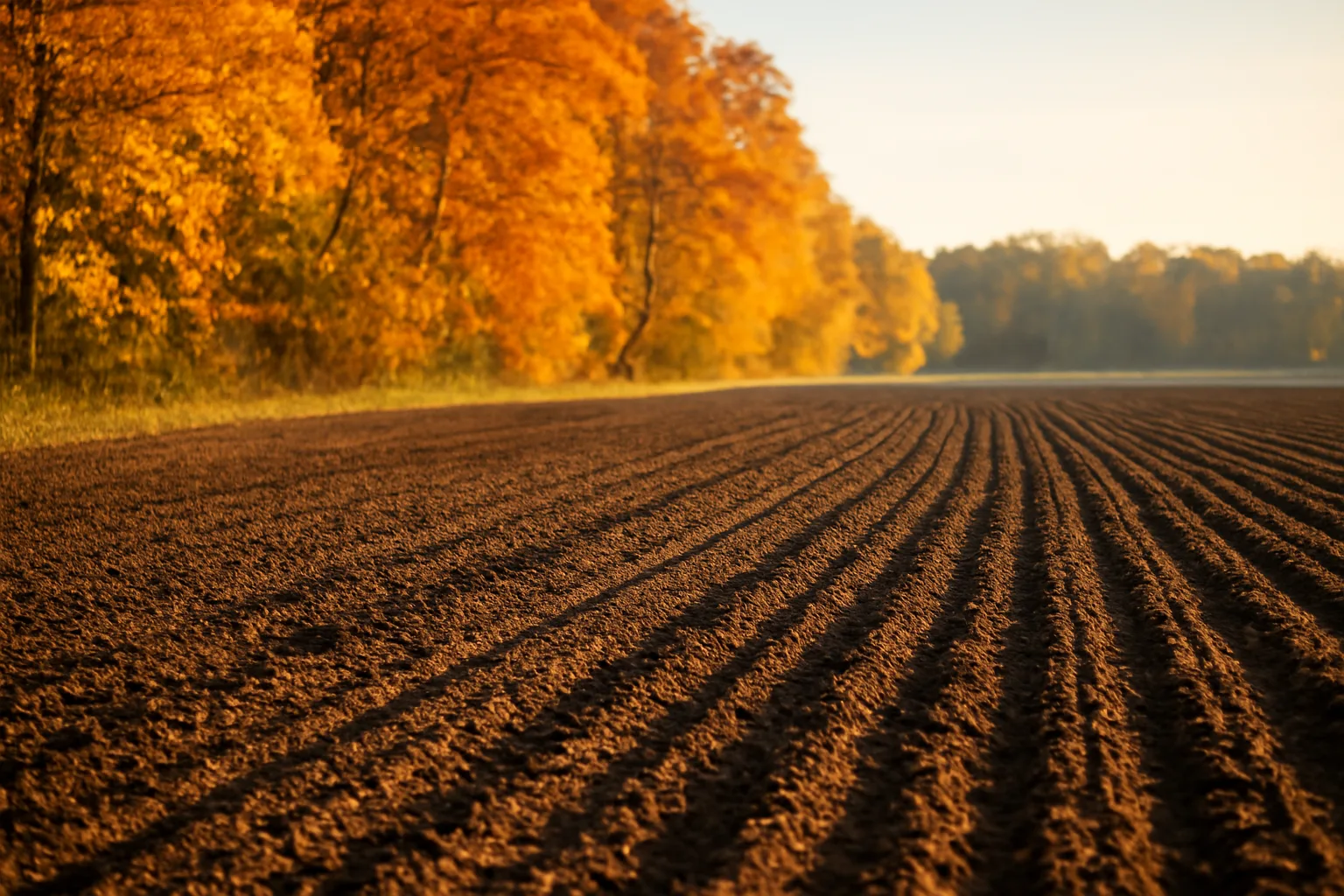
A food plot is a planted patch of ground, usually somewhere between a quarter acre and a few acres, put in specifically to feed and hold deer or other wildlife rather than to produce a crop for sale. Farmers plant corn to sell corn. Hunters plant food plots to give deer something good to eat near a stand, and to pull deer traffic in a direction they can hunt. Most food plots fall into one of two buckets: annual plots (planted fresh every year, usually brassicas, cereal grains, or annual clovers) and perennial plots (clover or alfalfa stands that can produce for 3 to 5 years with the right maintenance). Fall plots specifically are timed to be at peak palatability and tonnage during hunting season and into the late winter stress period, which is a different job than a spring plot meant to build herd health during antler growth and lactation. The USDA Natural Resources Conservation Service maintains Conservation Practice Standard 645, Upland Wildlife Habitat Management, which covers food plot type plantings and can be eligible for cost-share support through EQIP in some states [1]. That tells you something: this isn't a fringe hobby, it's a recognized wildlife management practice that state and federal agencies actively fund. If you want a plan built around your actual acreage, soil test, and region rather than a generic bag mix, that's exactly the gap our $99 Custom Food Plot Plan is built to fill. But you can build a smart fall mix yourself with the information below.
when to plant food plots for deer in the fall
| Upper Midwest / Northern tier | Mid-August to early September | Late Sept-early Oct | |
|---|---|---|---|
| Mid-South / Transition zone | Early Sept to early Oct | Mid-late Oct | |
| Deep South | Late Sept through October | Mid-late Nov | These are general windows, not guarantees. Your county extension office or state land-grant university publishes actual frost date tables for your specific area, and that's a better source than any national chart, including this one. University of Tennessee Extension publication W 308 recommends seeding brassica forage crops roughly 60 to 90 days before a killing frost specifically so plants can bulk up root and leaf tissue before growth stops [2]. If you're planting in the transition zone or further south, you have more flexibility, but don't get lazy about it. A plot planted too late just sits there thin and small right when deer season opens. |
The short answer: plant fall plots 6 to 10 weeks before your area's average first hard frost, adjusted down for brassicas (which want more like 8 to 10 weeks) and up for pure cereal grains (which can go in closer to frost, 4 to 6 weeks out). This timing rule exists because brassicas like turnips need real leaf and root development before cold weather locks growth down, while a frost actually improves palatability in brassicas by converting starches to sugars. Cereal grains like oats and wheat germinate fast and can still put on usable forage even planted later into September. Regionally, that shakes out roughly like this: | Region | Typical planting window | First frost reference |
when to plant oats for deer
Plant oats for deer 6 to 8 weeks before your first fall frost, which lines up with late August through mid-September for most of the whitetail's range, and into early October in the Deep South. Oats germinate fast, usually within 5 to 10 days in warm soil, and they green up quickly, which makes them one of the most forgiving fall plot components if you're running behind schedule. Deer hit young oats hard, sometimes almost like candy, because the leaf tissue is soft and high in sugar early in its growth. The tradeoff: oats aren't very winter-hardy. In much of the northern whitetail range, oats will winterkill after a handful of hard freezes, usually somewhere in the mid-teens to single digits Fahrenheit depending on the variety and how established the stand is. That's actually fine for a lot of hunters, because oats are doing their job in October and November when they're being planted for hunting season attraction, not necessarily as a February food source. If you want late-winter tonnage too, pair oats with winter wheat or winter rye in the same mix, since both of those cereal grains are considerably more cold-tolerant and will often green back up in early spring.
when to plant turnips for deer
Plant turnips for deer 8 to 10 weeks before your area's first hard frost, which typically means late July through August in northern states, and into early-mid September in the transition zone. Turnips need that longer runway because they're building both a bulb and a leaf canopy, and rushing the timeline gives you small, spindly plants that don't hold up to grazing pressure. University of Tennessee Extension publication W 308 recommends planting brassica forage crops like turnips 60 to 90 days ahead of the first expected frost for best results [2]. Here's the part a lot of first-time planters get wrong: deer often ignore turnip bulbs and even leaves for the first month or two after planting, then switch over hard once cold weather hits and sugar content rises in the tissue. Don't panic if your turnip plot looks untouched in September. That's normal, and it's actually a good sign the plot is going to hit its stride exactly when firearms season opens in most states. One real limitation: turnips alone are a boom-or-bust play. If deer density is high relative to plot size, they can hammer a pure turnip plot to bare dirt by late fall and leave you with nothing in January. Mixing turnips with a cereal grain and a small amount of clover spreads out that grazing pressure and gives you a fallback if the turnips get hit early.
do deer eat sorghum
Yes, deer eat sorghum, particularly the grain heads once they mature and the plant dries down, but sorghum is a secondary fall food source, not a primary attractant like a brassica or cereal grain plot. Grain sorghum (milo) is more commonly planted as a standing grain crop for wildlife food plots aimed at turkey, dove, and deer combined, and it's popular in the South and parts of the Midwest partly because it tolerates drought and poor soil better than corn. Deer will browse young sorghum leaves in summer and hit the grain heads in fall and winter, especially after a frost softens the seed coat. Where sorghum earns its keep is as a standing winter food source and screening cover, not as an early-season attraction plot. It's tall (often 3 to 6 feet), it holds its structure through winter storms better than most broadleaf plants, and it gives deer a place to feed with overhead cover from hawks and human eyes. If your goal is a hunting plot deer bed down near and hit at dusk in October, sorghum isn't the tool. If your goal is late-winter groceries and screening along a field edge, it's worth a look, particularly grain sorghum varieties bred for wildlife plantings rather than commercial grain production.
do deer eat clover and do deer like clover
Yes, deer eat clover readily, and most wildlife biologists and extension agronomists rank it among the most consistently preferred forages available to plant, alongside soybeans and alfalfa. Clover is a legume, meaning it fixes nitrogen from the air with help from soil bacteria, which is a big reason it's a favorite among experienced plot managers: it needs less nitrogen fertilizer than grasses or brassicas and it improves the soil for whatever gets planted after it. The Mississippi State University Extension guide to wildlife food plots (Publication 2111) lists white clover, including Ladino types, as one of the primary cool-season forages for deer food plots, noting it provides high-quality forage across multiple seasons once established [3]. The catch with clover in a fall mix: pure perennial clover (white, red, ladino) is slow to establish from seed, generally taking 60 to 90 days to build a real stand, so a fall-only clover planting in the North risks getting caught by frost before it's fully rooted in. That's why fall mixes often lean on annual clovers like crimson or arrowleaf, which germinate faster and are designed to be a one-season play, or use perennial clover as a spring planting instead and let the fall mix carry the cereal grain and brassica load. If you already have an established perennial clover plot, fall is a great time to frost-seed or overseed thin spots and to knock back weed competition with a fall mowing, rather than starting from bare dirt.
what are deer's favorite foods, really
There's no single universal favorite. Deer preference shifts by season, region, and what's locally available, but across extension research and deer diet studies, a handful of foods consistently rank at the top: acorns (especially white oak family acorns, which are lower in tannins and more palatable than red oak acorns), soybeans, clover, and standing corn. Whitetail food habits research consistently finds that when acorns are dropping heavily in a given fall, deer will shift a large share of their diet to acorns even with food plots and agricultural fields nearby, because acorns are extremely high in fat and carbohydrate energy going into winter. That's a real management headwind: in a heavy mast year, your beautiful brassica plot might get largely ignored until the acorns run out. Outside of mast years, soybeans (both standing and as a food plot planting) and clover are the most reliably preferred plantings across most of the whitetail's range, according to forage preference work summarized by university extension programs. Brassicas and cereal grains rank as strong secondary choices, particularly valuable because they hit peak palatability in late fall and winter when clover growth has slowed and acorns may be gone. Bottom line: "favorite food" is really "best food available right now," and a smart fall plot plan accounts for the fact that deer will vote with their feet based on what else is on the landscape that season.
do deer like honey (and other odd attractant questions)
Deer don't seek out honey in the wild the way people sometimes assume, and there's no research support for honey as a meaningful deer attractant or food plot additive. Deer are drawn to sugar and carbohydrate-dense foods, which is part of why frost-sweetened brassicas and ripening fruit get hit hard, but honey isn't part of a whitetail's natural foraging pattern and it isn't a legitimate plot ingredient. Where this question usually comes from is confusion with commercial mineral licks, molasses-based attractant sprays, and apple or persimmon scent products, all of which are marketed heavily but vary wildly in actual effectiveness and, more importantly, in legality. A lot of states classify sprayed or poured attractants, salt/mineral blocks, and supplemental feed under baiting rules, and the definitions and penalties differ significantly state to state. This is the one part of food plot planning where you genuinely need to check your own state wildlife agency's current regulations before you do anything, because a planted food plot is legal essentially everywhere as a normal agricultural/habitat practice, while baiting with piles of feed, minerals, or scent products is restricted or banned for hunting purposes in a long list of states. Michigan, for example, prohibits baiting and feeding of deer statewide under the state's Wildlife Conservation Order administered by the Michigan Department of Natural Resources, with limited exceptions written into that order [4]. Your own state's wildlife agency page is the only source you should trust on this, since the rules change and vary by county in some states.
building the actual fall mix: what goes in the bag
| Cereal grain | Oats, winter wheat, or winter rye | 50-100 lbs/acre if solo, less in a blend | Fast germination, early attraction, winter tonnage (wheat/rye) | |
|---|---|---|---|---|
| Brassica | Purple top turnip, forage radish | 3-6 lbs/acre | Late fall/winter tonnage, frost-sweetened palatability | |
| Legume | Crimson clover, arrowleaf clover | 8-15 lbs/acre | Nitrogen fixation, protein, early spring carryover | Seeding rates above are general ranges pulled from common extension forage guidance and typical wildlife seed blend labels; always follow the specific product's label rate, since blends are formulated with lower per-species rates than a monoculture planting of that same species. A soil test should come before any of this. Most cereal grains and brassicas want soil pH in the 6.0 to 7.0 range and respond well to phosphorus and potassium, while clover is more pH-sensitive and often struggles below pH 6.0 without lime correction. Your state land-grant extension soil lab (Penn State, Mississippi State, Michigan State, and most others run affordable public soil testing programs) is the authority on exactly how much lime and fertilizer your specific field needs. A national article like this one can give you rules of thumb; it cannot replace your own soil test results. If you want that plan mapped to your soil test numbers and your specific hunting goals rather than guessing at ratios, that's what the Custom Food Plot Plan is for. It's a $99 one-time plan, not a subscription, and it's built around your actual dirt. |
A solid, broadly applicable fall deer plot seed mix has three working parts: a fast cereal grain, a brassica, and a nitrogen-fixing legume. Here's a reasonable starting template, understanding your soil test and region will shift the exact ratios. | Component | Example species | Seeding rate (mix component) | Job it does |
equipment and site prep for a fall planting
You don't need a tractor and a no-till drill to grow a good fall plot, but you do need to match your prep to what equipment you actually have. Broadcast-and-cultipack (ATV sprayer, hand or tow-behind spreader, then a cultipacker or drag) works fine for small brassica and clover plantings, since those seeds are small and don't need to be buried deep, generally a quarter inch or less. Cereal grains want a bit more soil contact and slightly deeper placement, around half an inch to an inch, so a drill or at minimum a decent disking-and-drag pass helps germination rates considerably. If you're working reclaimed ground or a plot with heavy existing sod or weed pressure, plan on spraying a burndown herbicide (commonly glyphosate) 2 to 3 weeks before planting, then working the ground or drilling directly into the dead residue if you're set up for no-till. Skipping weed suppression is one of the most common reasons a fall plot underperforms: brassicas and clover seedlings simply can't compete with established grass and ragweed for light and moisture in the first few weeks.
how a fall mix differs from a spring plot
Fall and spring plots are solving different problems, and mixing up the timing is one of the most common mistakes new plotters make. Spring plots (soybeans, cowpeas, clover establishment, chicory) are built to feed does through lactation and bucks through antler growth, both of which are high-protein, high-demand periods roughly May through August. Fall plots (oats, wheat, brassicas, annual clover) are built to be at peak tonnage and palatability during hunting season, roughly September through January, and to help carry deer through the late-winter stress period when natural browse is thin. A lot of experienced plot managers run both: a perennial clover field that gets planted once in spring or late summer and maintained for years, plus annual fall plots rotated through smaller kill plots near stand sites. If you're only planting once a year and want the biggest bang for hunting season specifically, the fall annual mix described above is the higher-priority planting.
Frequently asked questions
Do deer eat sorghum?
Yes. Deer browse young sorghum leaves and eat the grain heads once mature, especially after frost softens the seed. It's more useful as a standing winter food source and screening cover than as an early-season attraction plot, and it's commonly planted alongside corn or milo blends in wildlife plantings across the South and Midwest.
Do deer like clover?
Yes, clover is one of the most consistently preferred forages for whitetails, ranked by university extension programs alongside soybeans and alfalfa. It's a legume that fixes its own nitrogen, needs less fertilizer than grasses, and provides high-protein forage across multiple seasons once established, according to Mississippi State University Extension guidance on wildlife food plots.
When should I plant oats for deer?
Plant oats 6 to 8 weeks before your area's first fall frost, roughly late August through mid-September in most of the whitetail range and into early October in the Deep South. Oats germinate fast (5 to 10 days) but aren't very winter-hardy, so pair them with winter wheat or rye if you want tonnage into late winter.
When should I plant turnips for deer?
Plant turnips 8 to 10 weeks before your first hard frost, generally late July through August up north and into early-mid September in the transition zone. University of Tennessee Extension recommends 60 to 90 days ahead of frost for brassica forages so plants can build bulb and leaf mass before cold shuts growth down.
When is the best time to plant food plots for deer overall?
Time fall plots 6 to 10 weeks before your local first hard frost date, adjusting earlier (8 to 10 weeks) for brassicas and later (4 to 6 weeks) for pure cereal grains like oats. Check your county or state land-grant extension office for the actual average frost date in your area rather than relying on a national estimate.
What is a food plot?
A food plot is a planted area, typically a quarter acre to several acres, seeded specifically to feed and hold deer or other wildlife rather than for commercial crop sale. The USDA Natural Resources Conservation Service covers food plot type plantings under Conservation Practice Standard 645, which can be eligible for cost-share funding in some states.
What do deer like to eat most?
There's no single universal favorite; it shifts by season and region. Acorns, especially white oak acorns, soybeans, and clover consistently rank as top preferences in deer diet research, with deer often shifting heavily to acorns in a big mast year even when food plots are available nearby.
Do deer like honey?
No, honey isn't a natural or effective deer attractant, and there's no research supporting it as a food plot ingredient. Deer are drawn to sugar-dense natural foods like frost-sweetened brassicas and ripening fruit, but honey itself doesn't factor into normal whitetail foraging behavior.
Can I mix oats, turnips, and clover in the same fall plot?
Yes, and it's a common, effective approach. Oats give fast early attraction, turnips provide late fall and winter tonnage that sweetens after frost, and an annual clover like crimson adds protein and nitrogen fixation. Follow blend label seeding rates since they're lower per species than planting each alone.
Is it too late to plant a fall food plot in October?
It depends on your region and species. In northern states, October is usually too late for turnips and often too late for oats to establish well before frost. In the transition zone and Deep South, October can still work fine for cereal grains and even brassicas, since first frost often doesn't hit until mid-to-late November.
Do I need a soil test before planting a fall plot?
Yes, strongly recommended. Most fall plot species want soil pH between 6.0 and 7.0, and clover in particular struggles below pH 6.0 without lime correction. Your state land-grant extension soil lab is the authority on your specific lime and fertilizer needs; a generic seeding guide can't replace an actual soil test result.
Are food plot baiting rules different by state?
Yes, significantly. A planted food plot is legal nationwide as normal agricultural and habitat practice, but baiting with piled feed, minerals, or scent attractants is restricted or banned in many states for hunting purposes. Michigan, for example, prohibits baiting and feeding of deer statewide with limited exceptions under its Wildlife Conservation Order. Always check your state wildlife agency's current regulations.
Sources
- USDA Natural Resources Conservation Service, Conservation Practice Standard, Code 645, Upland Wildlife Habitat Management: Food plots fall under USDA's recognized wildlife habitat practice standard and are eligible for cost-share support in some states
- University of Tennessee Extension, Publication W 308, "Establishing and Managing Wildlife Food Plots": Brassica forage crops like turnips should be planted 60 to 90 days ahead of expected first frost to build root and leaf tissue
- Michigan Department of Natural Resources, 2023 Wildlife Conservation Order, Part 4 (Baiting and Feeding): Michigan prohibits baiting and feeding of deer statewide, with limited exceptions defined in the state's Wildlife Conservation Order
- Penn State Extension, "Cover Crops for Pennsylvania Field Crops": Cereal grains like oats and wheat germinate quickly and can be seeded closer to frost than brassicas
- USDA NRCS Environmental Quality Incentives Program (EQIP) overview, 7 CFR Part 1466: EQIP cost-share funding is authorized and regulated under a specific federal program structure that can support wildlife habitat practices like food plots