Last updated 2026-07-26
TL;DR
Barricade is a branded food plot seed blend, usually a mix of brassicas (turnips, radish), cereal grains (oats, wheat, or sorghum), and sometimes clover or peas, sold as an all-in-one fall plot. It works fine on decent ground, but the blend ratio matters more than the brand name, and a soil test still beats guessing.
what is barricade food plot seed
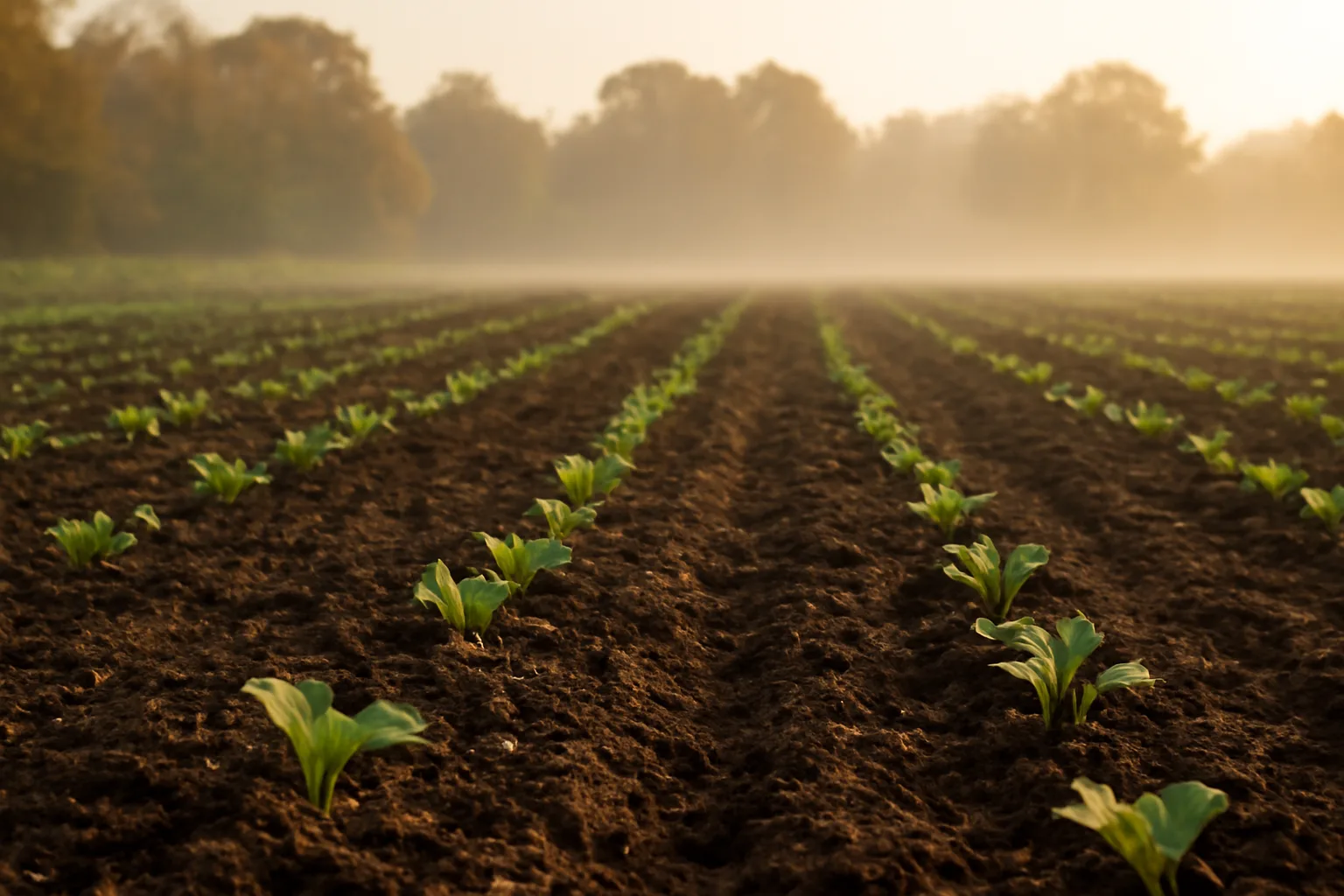
Barricade is a commercial food plot seed blend marketed for fall planting, typically built around brassicas like turnips and radish, mixed with a cereal grain such as oats, wheat, or sometimes forage sorghum, and occasionally a legume like clover or forage peas thrown in for early season attraction. It's sold in bags at farm stores and online, positioned as a single-bag answer to a fall plot rather than something you build yourself from separate species. The idea behind any blend like this is simple: brassicas grow a big leafy top early and get sweeter after frost, cereal grains germinate fast and hold soil, and legumes add tonnage and protein. Put them in one bag and a guy with forty-five minutes on a Saturday can throw seed and walk away with something growing in a week. The catch is that "blend" doesn't mean "balanced for your dirt." Every blend is a compromise. If you want to know exactly what species and ratio a specific bag contains, read the tag, brassica and grain blends vary a lot by brand and by year. What matters more than the label name is whether the mix fits your soil, your rainfall, and your hunting timeline. For a broader look at how brassica and grain blends stack up against straight clover or single-species plots, see our food plot seed breakdown.
what is a food plot, exactly
A food plot is a planted area of forage, grain, or browse on hunting land, established specifically to feed and attract deer or other wildlife rather than for commercial harvest. State wildlife agencies generally treat food plots as a wildlife management practice separate from agricultural crops, though the line matters for baiting law purposes in some states. Most food plots fall into two buckets: annuals like brassicas, cereal grains, and forage soybeans that you replant every year, and perennials like clover and chicory that can produce for three to five years off one planting if you maintain them. A lot of hunters run both. A perennial clover plot handles spring and summer. An annual brassica/grain plot, which is what Barricade and similar blends target, gets timed to peak right before and during hunting season. The USDA Natural Resources Conservation Service and most land-grant extension offices treat food plots as a supplemental habitat tool, not a replacement for natural browse. Michigan State University Extension's wildlife habitat guidance puts it plainly: food plots "should be considered a supplement to, not a substitute for, natural food sources" and work best alongside cover and browse management rather than as a standalone fix [1]. If you're building your first plot and want species pointers matched to your region, our deer food plot seed guide covers the basics before you buy any specific blend.
do deer eat sorghum
Yes, deer eat sorghum, both the leaves and grain heads, and it's a common component in fall blends because it grows tall, tolerates poor soil and drought better than corn, and provides cover along with food. Grain sorghum (sometimes called milo) matures in roughly 90 to 120 days depending on variety, and deer will hit the standing grain heavily once it dries down and other food sources thin out in late fall. Deer preference for sorghum is generally lower than for soybeans, corn, or brassicas when those are available, but it becomes a strong late-season draw once softer forages are gone or covered by snow. Sorghum's real value in a blend is drought tolerance and biomass, not top-tier preference. If a Barricade-style bag lists sorghum as a filler component, treat it as insurance for dry years rather than the main attraction.
do deer eat clover, and do deer like clover
Deer eat clover readily and it's consistently ranked among the most preferred food plot forages by wildlife biologists, largely because it's high in protein (often 20 to 25 percent crude protein in good stands) and stays palatable through most of the growing season. Yes, deer like clover, and it's one of the few plot species that gets used spring through fall rather than just during a short window. White clover varieties (Ladino, medium white/Dutch types) and red clover are the most common plot choices. Clover is a perennial that, once established, can produce for three to five years with proper mowing and fertility maintenance, a persistence pattern documented in university extension forage variety trials [2]. That's a big cost advantage over annual replanting. The tradeoff: clover needs decent soil pH (extension guidance generally recommends 6.0 to 6.5) and won't tolerate standing water or heavy shade. It's also slower to establish than brassicas or grains, typically needing a full season before it's a strong stand. That's part of why blends like Barricade lean on fast annuals for a quick fall plot rather than clover, which is more of a spring planting play. For species-specific planting windows and rates, see our deer food plots page.
when to plant food plots for deer
Timing depends entirely on what you're planting and where you live. Spring plots (clover, chicory, soybeans, alfalfa) generally go in after your last frost date, typically April through May in the Midwest and Northeast, and March through April in the Southeast. Fall plots (brassicas, cereal grains, sorghum-based blends like Barricade) go in 60 to 90 days before your first hard frost so they mature right as hunting season opens. The simplest rule of thumb from most extension planting calendars: count backward from your average first frost date. Brassicas need about 60 to 90 days to bulb and sweeten, cereal grains like oats and wheat need less, often 45 to 60 days to reach good grazing height. Planting too early in hot, dry conditions risks poor germination; planting too late means your plot never matures before deer season ends. Because frost dates vary by 6 to 8 weeks across latitude, there's no single national planting date. A hunter in southern Georgia might plant brassicas in late August, while someone in northern Minnesota needs seed in the ground by late July. Check your state extension's frost date maps or NOAA climate normals for your county before committing to a date [3]. Our food plot whitetail planting calendar breaks this down by zone if you want specific date ranges instead of a rule of thumb.
when to plant oats for deer
Oats for deer plots go in either as a spring planting (March to April in the South, April to May further north) or, more commonly for hunting plots, as a fall planting 6 to 10 weeks before your first frost. Fall-planted oats are the workhorse of a lot of blends because they germinate fast, often within 7 to 10 days in warm soil, and stay palatable and green well into cold weather, sometimes surviving light frosts down into the low 20s Fahrenheit before browning out. Oats don't handle deep winter cold as well as winter wheat or cereal rye. So in northern zones (much of the Upper Midwest and Northeast) a lot of planters mix oats with wheat or rye specifically so something is still green after the oats die back. That's exactly the logic behind most cereal-grain components in blends like Barricade: oats for fast early attraction, a hardier grain as backup.
when to plant turnips for deer
Turnips for deer plots go in 60 to 90 days before your first expected fall frost, which lands roughly late July through August in northern states and August through early September in the mid-South. Turnips need that lead time to bulb out and to go through at least one frost, since cold weather converts starches to sugars and makes the tops and bulbs much more palatable to deer. Seeding rate for pure turnip stands typically runs 4 to 6 pounds per acre, and they're commonly broadcast rather than drilled since the seed is small. Penn State Extension's food plot forage guidance notes that brassica tops draw deer heavily in early fall, with attention shifting to the bulbs after a hard freeze once other browse thins out. That's the whole reason brassica blends like Barricade lean on turnips: two feeding windows out of one planting, tops early, bulbs late.
what are deer's favorite foods, and do deer like honey
Deer preference studies and extension forage trials consistently rank soybeans, clover, alfalfa, and cowpeas among the most preferred plot forages, with brassicas like turnips and radish close behind, especially after frost. In natural habitat, acorns (especially white oak acorns, which are lower in tannins than red oak) are often the single most sought-after fall food source where available, sometimes pulling deer away from planted plots entirely during a good mast year. Do deer like honey? Deer aren't drawn to honey itself in any meaningful documented way, this isn't a real food plot or attractant category backed by wildlife research. If you've seen "honey" show up around deer hunting content, it's almost always confused with molasses-based mineral licks or scent products, not an actual forage or bait ingredient used in food plots. There's no credible wildlife agency or extension guidance recommending honey as deer attractant, and it doesn't belong in the same conversation as clover, soybeans, or brassicas.
does a barricade-style blend actually work better than planting species separately
| Pre-mixed blend (Barricade-type) | Fast, one pass | Often $25-50/acre depending on bag rate | Low, fixed by manufacturer | Good on average soil, mediocre on poor or excellent soil | |
|---|---|---|---|---|---|
| Straight brassica (turnip/radish) | Fast if soil is fertile | $15-30/acre | High | Best on fertile, well-limed ground | |
| Cereal grain only (oats/wheat) | Fastest germination | $10-20/acre | High | Reliable but lower tonnage than brassica mix | |
| Custom-built blend | Fast, requires mixing seed yourself | Varies, usually similar to buying components separately | Full control | Best overall if soil test-driven | Seed cost ranges are rough estimates based on typical per-acre seeding rates and current farm store pricing; check your local supplier for exact numbers, prices shift with grain markets year to year. |
A pre-mixed blend like Barricade works fine as a low-effort, one-pass fall plot, especially on smaller acreage or for hunters who don't want to buy and calibrate three separate seed bags. The tradeoff is control: you can't adjust the ratio of brassica to grain to legume for your specific soil and moisture, you're stuck with whatever the bag gives you. On better ground with decent fertility and moisture, straight brassica stands or a brassica/cereal grain mix you build yourself generally out-produce a generic blend because you can weight the mix toward what your deer actually prefer and what your soil supports. On poor, dry, or unimproved ground, the cereal grain component in a blend like Barricade often becomes the plot's backbone anyway, since brassicas need more fertility and moisture to bulb well. Here's a rough comparison of what typically shows up in fall blends versus planting straight species: | Approach | Establishment speed | Cost per acre (seed only) | Control over ratio | Typical fall performance |
how do I know if my soil can grow a good barricade-style plot
Pull a soil test before you plant anything, whether it's a blend or a custom mix. Most land-grant extension soil labs charge somewhere between $10 and $20 per sample and turn results around in one to two weeks, and the report tells you pH, phosphorus, potassium, and organic matter, the things that actually determine whether brassicas will bulb or just sit there stunted. Brassicas in particular are heavy feeders and want a pH close to 6.0 to 6.5 with adequate phosphorus and potassium. Below that range, yields drop noticeably even if germination looks fine at first, which is why extension soil labs push lime correction ahead of seeding rather than after. If your soil test comes back at pH 5.5 or lower, lime it before you plant a brassica-heavy blend, or you're wasting seed money. Your soil test lab is the real authority here on lime and fertilizer rates for your specific dirt, not a seed bag label. The label gives you a planting rate and a generic "works everywhere" pitch; your test tells you what your dirt actually needs. If you want help translating a soil test into an actual planting plan (species picks, seeding rates, timing) for your specific property, that's the exact gap our $99 Custom Food Plot Plan is built to fill, you upload your test and we build the plan around it instead of guessing off a bag label.
what should I check before I plant any fall blend on leased or owned ground
Check your state's baiting and feeding regulations before you plant anything that could be read as supplemental feed rather than a legitimate agricultural planting. Rules vary hard by state: some states define a food plot as legal as long as seed is planted and more than piled on the ground, others have specific distance-from-stand rules or restrict certain crops during firearms season. Your state wildlife agency's hunting regulations page is the only source you should trust on this, not a seed company's marketing copy. Also confirm you're not planting in a spot that violates a lease agreement, easement, or (for larger properties) any CRP or conservation program restriction, since food plots on CRP acreage often have specific rules about size and location tied to USDA Farm Service Agency contracts. Finally, don't assume a bag that worked great for a hunter three states away will perform the same on your ground. Rainfall, frost timing, and soil type all shift the calculus, which is the whole reason a generic blend is a starting point, not a finished plan. For a wider look at how different plot types (annual grain, brassica, perennial clover, food source blends) fit different property goals, our deer for food overview is a good next stop before you commit acreage to any one approach.
Frequently asked questions
Do deer eat sorghum?
Yes. Deer eat both the leaves and grain heads of sorghum, and it's common in fall blends for its drought tolerance and cover value. Deer preference is generally lower than for soybeans or brassicas, but sorghum becomes a strong late-season food source once the grain dries down and softer forages disappear.
Do deer like clover?
Yes, clover is one of the most consistently preferred food plot forages, often testing at 20 to 25 percent crude protein in a healthy stand. It's used by deer spring through fall, unlike most annual plots that peak in one short window.
When should I plant food plots for deer?
Spring plots like clover and soybeans go in after your last frost date. Fall plots like brassicas and cereal grains go in 60 to 90 days before your first expected frost so they mature right as hunting season starts. Exact dates depend heavily on your latitude and local extension frost date data.
When do you plant oats for deer plots?
Plant oats for fall attraction 6 to 10 weeks before your first frost; they germinate in about 7 to 10 days in warm soil. Spring oat plantings go in March to May depending on region. Oats brown out in hard cold, so many hunters mix them with wheat or rye for winter longevity.
When should turnips be planted for deer?
Turnips go in 60 to 90 days before your first fall frost, typically late July through September depending on your region. They need that lead time to bulb, and a hard frost sweetens both the tops and the bulbs, which is when deer really key in on them.
What exactly is a food plot?
A food plot is a planted area of forage or grain established on hunting land specifically to feed and attract deer, distinct from a commercial crop field. It can be an annual planting (brassicas, grains) or a perennial (clover, chicory) and works best alongside natural browse and cover, not as a standalone habitat fix.
What are deer's favorite foods in a food plot?
Extension forage trials and preference studies most often rank soybeans, clover, alfalfa, and cowpeas at the top, with brassicas close behind after frost. In the woods, white oak acorns frequently out-draw planted plots entirely during a strong mast year.
Do deer like honey?
No, there's no real evidence deer are drawn to honey as a food or attractant. This mix-up usually comes from confusing honey with molasses-based mineral licks, which are a different product entirely. Honey has no place in legitimate food plot planning.
What's actually in Barricade food plot seed?
Barricade-style blends typically combine brassicas (turnips, radish) with a cereal grain (oats, wheat, or sorghum) and sometimes a legume like clover or forage peas. Exact ratios vary by bag and year, so read the seed tag rather than assuming based on the product name.
Is a pre-mixed blend better than planting brassicas and grain separately?
It depends on your ground. A blend is faster and lower-effort, good for average soil and smaller acreage. On very fertile or very poor soil, a custom ratio built around a soil test usually outperforms a fixed generic mix, because you can weight species toward what your dirt and deer actually favor.
What soil pH do brassica-heavy blends need?
Most extension guidance puts the ideal range at pH 6.0 to 6.5 for good brassica bulbing. Below pH 5.5, yields drop noticeably even with good rainfall and fertilizer, so lime ahead of planting if your soil test comes back acidic.
Can I plant a fall blend on CRP or leased ground?
Check your specific lease terms or USDA Farm Service Agency CRP contract first; food plots on CRP acreage often have size and location restrictions. On leased hunting ground, confirm with the landowner and check your state wildlife agency's baiting and feeding rules, since they vary significantly by state.
How much does it cost to soil test before planting a food plot?
Most land-grant university extension soil labs charge roughly $10 to $20 per sample, with results back in one to two weeks. It's the cheapest insurance you can buy against wasting an entire bag of seed on ground that needs lime first.
Sources
- Michigan State University Extension: Food plots work best as a supplement to natural food sources rather than a standalone practice
- University of Wisconsin-Madison Extension, Team Forage: White clover is a perennial that can persist multiple years with proper management and provides high crude protein forage
- NOAA National Centers for Environmental Information, Climate Normals: Frost date and climate normal data varies by county and should be checked locally before setting planting dates
- USDA Natural Resources Conservation Service, National Plant Data Team: Grain sorghum tolerates drought and poor soil better than corn and provides both forage and cover value
- USDA Farm Service Agency, Conservation Reserve Program: Food plots and habitat plantings on CRP acreage are subject to specific size and location rules under CRP contracts