Last updated 2026-07-26
TL;DR
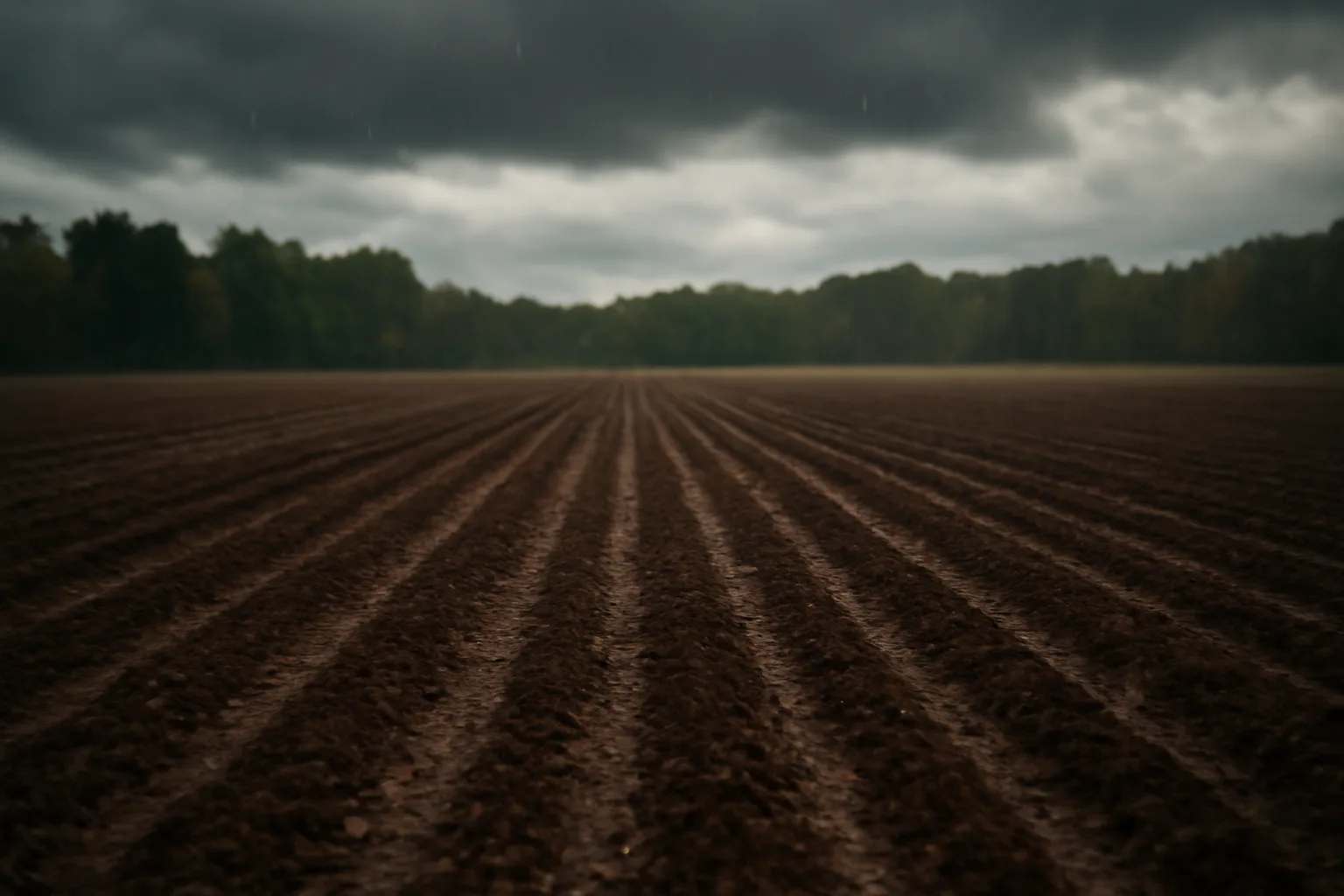
Planting food plots right before or during a light, steady rain is often ideal, since it helps seed-to-soil contact and germination. But heavy downpours on freshly worked ground can wash small seed away and cause soil crusting. The best move is planting into moist soil ahead of a forecasted 0.5 to 1 inch rain event, not during a deluge.
is it good to plant food plots in the rain
Yes, generally, as long as the rain is gentle and not a gully-washer. Most food plot seeds, whether it's clover, brassicas, or a cereal grain, need consistent soil moisture to germinate. A light rain right after planting settles seed into the soil and starts the germination clock without you doing anything else. The catch is intensity. A slow half-inch over several hours is a gift. A two-inch thunderstorm that dumps in 30 minutes on bare, tilled dirt is a different story entirely. That kind of rain can cause sheet erosion, wash small seeds like clover or brassica into low spots, and leave you with a plot that's thick in the ditches and bare on the high ground. Soil type matters too. Heavy clay soils crust over after hard rain, which can actually block emergence for small-seeded species trying to push through. Sandy soils drain fast enough that even a hard rain usually doesn't cause much washing, but they also dry out fast between rain events, so timing still matters. The short version: plant ahead of forecasted rain when you can, but check the forecast for intensity, more than totals. A 40% chance of scattered showers is a very different bet than a slow-moving frontal system predicted to drop steady rain over 12 hours.
when to plant food plots for deer
Timing depends mostly on your USDA plant hardiness zone and whether you're planting a spring/summer plot or a fall plot. There's no single national date, and anyone who gives you one calendar date for the whole country is guessing. For fall plots (brassicas, cereal grains, clover establishment), most of the whitetail range plants somewhere between mid-August and early October. Northern states (zones 3-5) usually start mid-August through early September so brassicas have time to bulb up before hard frost. Southern states (zones 7-8) can wait until late September or even October since the growing season runs longer. For spring/summer plots (soybeans, cowpeas, sorghum, warm-season annuals), planting typically runs late April through June, after your last expected frost date. Check your state extension office's frost date tables, since "last frost" varies by 3-4 weeks even within a single state. Perennial clover and chicory are usually planted in early spring or late summer, giving the plant a full growing season or a mild fall window to establish roots before winter dormancy or summer heat stress. Regardless of species, soil moisture at planting is often more important than the calendar date. A perfectly timed planting into bone-dry dirt will sit ungerminated for weeks, while a planting a week "late" ahead of a rain system will often outperform it. Watch the 10-day forecast as much as the calendar.
when to plant oats for deer
Oats are one of the most forgiving food plot cereal grains, and timing them right maximizes both tonnage and attraction. Plant oats 4 to 6 weeks before your average first fall frost, which for most of the whitetail's range lands somewhere in late August through mid-September. Oats germinate fast (often within 5-7 days in warm, moist soil) and can be grazed within 3-4 weeks of planting under good conditions. That fast turnaround makes oats a good choice if you're planting later than you wanted, or if you want green growth on the ground before archery season opens. Oats aren't very cold-hardy on their own, and a hard freeze in the teens will usually kill them outright. That's why a lot of planters mix oats with winter wheat or cereal rye, since the rye or wheat will carry the plot through winter after the oats die back. If you're in a northern zone and want oats to survive into late season, plant earlier rather than later so the plant has more root mass built up before the cold hits. A light rain right after planting oats is close to ideal, since the seed is large enough to resist washing but still benefits from quick moisture for that fast germination window.
when to plant turnips for deer
Turnips are a brassica, and brassicas are unusual among food plot species because deer often don't touch them heavily until after a hard frost sweetens the leaves and bulbs by converting starches to sugars. Plant turnips 60 to 90 days before your first killing frost, which for most of the Midwest and Northeast lands in late July through August [1]. That 60-90 day window matters because turnips need real time to build bulb mass. Plant too late and you'll get leafy green with a pencil-sized root, not the big bulb deer will dig for in December and January. Turnip seed is tiny (about 220,000 seeds per pound for some varieties) and should be planted shallow, about a quarter inch deep or even just broadcast and lightly cultipacked. That shallow depth means turnip seed is genuinely vulnerable to washing in a hard rain right after planting. A drizzle helps them, a downpour on loose soil can move them into clumps or wash them off a slope entirely. Southern hunters (zones 7-8) can push the planting window into September since frost comes later, but check your local extension office's frost date charts rather than guessing, since a few weeks either direction changes bulb size significantly.
do deer eat sorghum
Yes, deer eat both the grain and the young foliage of grain sorghum, though it's usually treated as a secondary food source rather than a primary attractant plot. Sorghum is more commonly planted as a screening/cover crop or as part of a mixed summer blend with soybeans and cowpeas, since it tolerates drought and poor soil better than most food plot options. Whitetails will browse young sorghum shoots, and once the grain heads mature, deer, turkey, and a long list of other wildlife will feed on the seed heads through fall and winter. That said, sorghum's main food plot value is often more about the cover and structure it provides (tall stalks that screen plot activity and hold snow load for winter thermal cover) than as a headline food source. If your goal is pure attraction during hunting season, sorghum isn't the first thing to reach for. If you want a drought-tolerant summer planting that doubles as screening between your stand and a road or a neighbor's property line, it's a solid, cheap option.
do deer eat clover and do deer like clover
Yes on both counts, and it's not close. Clover is one of the most consistently preferred food plot forages for whitetail deer across nearly every region of the country, and it's often the backbone planting for hunters who want a low-maintenance perennial plot [2]. White clover varieties (like Ladino) and red clover both show up constantly in university extension food plot guides because they combine high crude protein (often 25-30% in vegetative growth) with strong regrowth after grazing pressure. That regrowth is the real value: unlike an annual that gets eaten down once and done, a healthy clover stand can get hit hard by deer in spring and still bounce back for summer and fall browsing. Clover does have limits. It goes dormant or gets buried under snow in northern winters, and in the deep South it can struggle through hot, dry summer stretches without irrigation. That's why most food plot systems pair clover with something for winter (brassicas or cereal grains) rather than relying on clover as a stand-alone, year-round plan. If you're building your first perennial plot, clover is close to the safest bet on the list. For species combinations and specific blend recommendations, deer food plot seed options are worth comparing against your soil test results before buying.
what is a food plot
A food plot is a planted area, usually somewhere between a quarter-acre and several acres, established specifically to provide supplemental forage for deer and other wildlife. Food plots are planted with a mix of annuals (brassicas, cereal grains, soybeans) and perennials (clover, chicory, alfalfa) chosen for the region, soil type, and hunting goals of the landowner. Food plots serve a few distinct purposes depending on how they're designed. Some are meant purely as nutrition sources, boosting body weight and antler growth on a herd over the full year. Others are designed as hunting plots, small, strategically placed plantings meant to draw deer into bow range during specific hunting windows. The practice has roots in wildlife management going back decades, and today it's supported by a wide network of state wildlife agencies and university extension programs that publish region-specific planting guides, since what works in Alabama clay looks nothing like what works in Minnesota sand [3]. A food plot is not the same thing as baiting, though the line matters legally in some states. Broadcasting seed and letting it grow into standing forage is planting; dumping corn or mineral piles in a pile is baiting, and several states restrict or ban that practice outright, so check your state wildlife agency regulations before assuming a practice is legal where you hunt.
what are deer's favorite foods
Deer are opportunistic browsers, and "favorite" changes by season, region, and what's actually available. That said, a few patterns show up consistently across state wildlife agency and extension research. In spring and summer, deer favor high-protein forbs and legumes: clover, soybeans, cowpeas, and native forbs when available. In fall, acorns often become the dominant food source when they're dropping, and deer will shift almost entirely off a food plot and into an oak stand during a heavy mast year, something a lot of frustrated hunters discover the hard way [4]. In winter, deer lean on browse (woody stems, buds) and whatever standing crop is left, which is exactly why brassicas and standing corn matter so much for late-season hunting. Across food plot species specifically, clover, soybeans (in the vegetative stage), and brassicas after a frost tend to rank at the top of preference studies and field observation. Corn and cereal grains provide bulk carbohydrate but usually rank lower in raw preference compared to a lush clover or soybean field, at least until other food sources dry up. The honest answer is that deer food preference is a moving target tied to nutritional need, availability, and time of year, which is exactly why a lot of experienced planters use multiple plot types across a property rather than betting everything on one species.
do deer like honey
There's no research or wildlife agency guidance suggesting deer seek out honey as a natural food source, and it's not part of any established food plot or supplemental feeding recommendation. Deer are herbivores built around a rumen digestive system suited to browse, forbs, and grasses, not the concentrated sugars in honey. This question sometimes comes up because of "deer candy" style attractant products that use sugar, molasses, or scent-based sweeteners to draw deer to a specific spot, not because deer naturally forage for honey in the wild. Those products are attractants, not food plots, and they carry their own legal wrinkles since several states classify concentrated sugar or scent-based feed products under baiting restrictions [5]. If you're trying to draw deer with something sweet, standing brassicas after a frost or a soybean field in August will do far more real nutritional and behavioral work than any honey-based product, and they won't put you on the wrong side of a baiting statute.
how does rain affect food plot germination
Germination for almost every food plot species depends on consistent soil moisture over a period of days to a couple weeks, and rain is usually the single biggest variable in whether a planting succeeds or fails. Seed needs to imbibe (absorb) water to trigger the germination process, then needs continued moisture to push a root down and a shoot up before the seed's internal energy reserves run out. A seed that gets one good rain and then three weeks of drought often does worse than a seed that sits dry and germinates two weeks later into a real moisture pattern. That's because partial germination followed by drying out (sometimes called "false germination") can kill the seedling before it establishes a root system deep enough to reach subsoil moisture. This is why a lot of experienced food plotters watch the extended forecast more than the calendar date. Planting into dry dirt ahead of a single rain event is a gamble. Planting into a forecast showing several rain chances over 10-14 days gives small-seeded species like clover and brassicas a much better shot at establishing before conditions turn dry again. Soil type changes the math too. A clay-heavy soil holds moisture longer between rains but can crust and seal under hard rain, physically blocking small seedlings from emerging. Sandy soil drains fast, so it needs more frequent rain to keep seedlings alive through the first two weeks, but it rarely crusts.
should you plant food plots before or after it rains
Before, generally, and specifically right before a forecasted light-to-moderate rain, not during a heavy one. Planting into slightly moist soil and having rain arrive within a day or two gives the seed the fastest, most even germination. Planting during an active heavy rain is usually a mistake for two practical reasons. First, wet, saturated soil compacts under tractor or ATV tires and disc/drill equipment, which can ruin soil structure for the whole season, a problem soil scientists call "working wet ground" and generally advise against [6]. Second, heavy rain on freshly disturbed, loose soil is exactly the condition that causes seed washing and erosion, since there's no root structure yet to hold soil or seed in place. The better sequence is: prep the seedbed (till, disc, or drill) when soil is workable, not muddy, then plant your seed a day or two ahead of a forecasted rain event of a half-inch to an inch. That gives you dry-enough conditions to run equipment properly and still catches the moisture window for germination. If you're stuck between a drought stretch and only heavy-rain events in the forecast, broadcasting into standing residue or a lightly tilled seedbed (rather than bare, fully worked dirt) reduces washing risk somewhat, since the residue slows water movement across the surface.
how much rain is too much for a newly planted food plot
There's no single official threshold, but as a practical rule, anything over an inch of rain in a short burst (under an hour) on bare, freshly worked soil creates real risk of seed washing and surface erosion, especially on any kind of slope. Steady rain spread over many hours, even if the daily total is higher, causes far less damage than the same total dumped fast. Slope matters as much as rainfall total. A flat bottom field can absorb a two-inch rain with minimal washing. The same two inches on a 5-10% grade plot can strip topsoil and seed right down to the low corner. If you're planting on any kind of slope, contour planting or leaving a grass buffer strip at the bottom of the plot is a real, practical way to catch washed seed and sediment before it leaves the field entirely, a practice recommended in NRCS conservation planning guidance for erosion control [7]. If a heavy rain does hit right after planting, walk the plot once it dries out enough to check for exposed seed pooled in low spots or ruts. Sometimes a light rake or a pass with a cultipacker can redistribute concentrated seed enough to still get a usable stand, though it won't be as even as an undisturbed planting.
Frequently asked questions
Do deer eat sorghum?
Yes, deer browse young sorghum shoots and eat mature grain heads, but sorghum is usually planted more for drought tolerance and screening cover than as a primary attractant, since deer generally prefer clover, soybeans, or frosted brassicas when those options are available.
Do deer eat clover?
Yes, clover is one of the most consistently preferred food plot forages for whitetail deer nationwide. It offers high crude protein (often 25-30% in vegetative growth) and regrows well after grazing, which is why it's a foundation species in most perennial food plot systems.
When should you plant food plots for deer?
Timing depends on species and your USDA hardiness zone. Fall plots (brassicas, cereal grains) generally go in mid-August through early October. Spring/summer plots (soybeans, cowpeas) go in after last frost, typically late April through June. Check your state extension office's frost date charts for local timing.
Do deer like clover more than other forages?
Field observation and extension research consistently rank clover near the top of deer forage preference, especially white clover varieties like Ladino. Preference shifts seasonally though; deer will favor acorns over clover during a heavy mast fall, and shift to browse in deep winter.
When should you plant oats for deer food plots?
Plant oats 4 to 6 weeks before your area's average first fall frost, generally late August through mid-September across most of the whitetail range. Oats germinate fast, often within 5-7 days, and can be grazed within a month under good moisture conditions.
When should you plant turnips for deer?
Plant turnips 60 to 90 days before your first expected killing frost, typically late July through August in most of the Midwest and Northeast. That window lets the bulb build real mass before deer preference for turnips increases after a hard frost sweetens the plant.
What exactly is a food plot?
A food plot is a planted area, usually a quarter-acre to several acres, established to provide supplemental deer forage. It uses annuals like brassicas and cereal grains or perennials like clover and chicory, chosen based on regional climate, soil test results, and whether the goal is herd nutrition or hunting access.
What are a deer's favorite foods overall?
It changes by season. Spring and summer favorites are clover, soybeans, and native forbs. Fall preference often shifts hard to acorns when they're dropping. Winter relies on woody browse and whatever standing crop, like brassicas or standing corn, remains available in the field.
Do deer like honey?
No credible wildlife research shows deer seeking out honey as a food source. Deer are herbivores adapted to browse, forbs, and grasses. Sugar or molasses-based "deer candy" attractants are a separate product category and may fall under state baiting restrictions depending on where you hunt.
Is it better to plant food plots right before rain or right after?
Right before a forecasted light-to-moderate rain is generally best. This lets seed settle into moist soil and germinate quickly. Planting during a heavy, active downpour risks seed washing on loose soil and can compact wet ground under equipment tires, which can hurt the whole season's soil structure.
Can too much rain ruin a newly planted food plot?
Yes. A hard, fast rain (over an inch in under an hour) on freshly worked, bare soil can wash small seed like clover or brassica into low spots and cause erosion, especially on slopes. Steady rain spread over many hours does far less damage than the same total dumped quickly.
Should I till before or after it rains for a food plot?
Till or disc when soil is workable, not saturated. Running equipment on wet, muddy ground compacts soil and can create ruts and hardpan that hurt root growth all season. Prep the seedbed when it's dry enough to crumble, then plant ahead of the next forecasted rain.
Sources
- University of Tennessee Extension, Brassica Food Plots for Deer: Turnips need 60-90 days before a killing frost to develop adequate bulb size
- Mississippi State University Extension, Establishing Wildlife Food Plots: Clover is one of the most preferred and widely recommended perennial forages in food plot systems
- Auburn University Extension, Wildlife Food Plots: Food plot design and species selection varies significantly by regional soil type and climate
- USDA Forest Service, Wildlife Habitat Management: Oak Mast: Deer shift heavily toward acorns as a food source during heavy mast production years
- Pennsylvania Game Commission, Baiting and Feeding Regulations: Several states restrict or ban feeding and baiting practices, including scent or sugar-based attractants
- Iowa State University Extension, Soil Compaction Management: Operating field equipment on saturated soil causes compaction that damages soil structure for the growing season
- USDA NRCS, Conservation Practice Standard: Contour Buffer Strips: Buffer strips and contour planting reduce erosion and sediment movement on sloped planted ground