Last updated 2026-07-25
TL;DR
Seeding food plots means matching species to your planting window: spring for clover and warm-season annuals, late summer (roughly 60-90 days before first frost) for brassicas like turnips, and early fall for cereal grains like oats and wheat. Soil test first, correct pH with lime, and drill or broadcast at the label rate into a firm seedbed.
What is a food plot, exactly?
A food plot is a planted patch of forage, usually on private or leased ground, grown specifically to feed and attract deer or other wildlife. It's not a lawn and it's not a crop field meant for harvest and sale. The goal is nutrition and, for hunters, a place to intercept deer during shooting hours. Food plots range from quarter-acre kill plots tucked into timber to multi-acre destination fields planted in clover, brassicas, or grain. State wildlife agencies generally treat food plots as a legal form of habitat management, distinct from baiting, but the line between the two varies by state. Some states restrict hunting over plots that are freshly disturbed or treat certain plot practices as bait if deer are hunted directly over broadcast seed or exposed feed. Check your state wildlife agency's regulations before you plant near a stand, because rules on baiting and standing crops differ a lot state to state [1]. USDA's Natural Resources Conservation Service maintains Upland Wildlife Habitat Management as Conservation Practice Standard Code 645, which tells you these plantings are recognized as a legitimate land management tool, more than a hunting gimmick [2]. If you're new to plots, start by reading up on food plot whitetail basics and deer food plots design before you buy seed.
When to plant food plots for deer
| North (3-5) | Mid-May to early June | Late July to mid-August | Late August to mid-September | |
|---|---|---|---|---|
| Transition (6-7) | Late April to May | Mid-August to early September | Mid-September to early October | |
| South (8-9) | March to April | Early September to early October | Late September to November | These are general windows, not guarantees; local frost dates, elevation, and rainfall shift things by a couple weeks in either direction. Your county extension office has the most accurate local frost data. |
Timing depends on species and your USDA plant hardiness zone, not a single calendar date. Spring plots (clover, chicory, warm-season annuals like soybeans or sorghum) go in after your last frost date, typically April through May in the North and March through April in the South. Fall plots (brassicas, cereal grains, fall clover) go in 60 to 90 days before your area's average first frost so plants have time to establish before growth slows. The single biggest timing mistake is planting brassicas or cereal grains too early or too late. Too early and Japanese beetles or grasshoppers can hammer young turnips in August heat. Too late and cold shuts down growth before the plant builds a root or reaches grazable height. Cooperative extension services publish frost date maps and planting windows by county, and most guidance for fall brassica blends points to roughly 80 to 90 days from planting to reach full maturity for tuber development. Here's a rough framework by region: | Region (USDA zones) | Spring annuals/clover | Fall brassicas/turnips | Cereal grains (oats, wheat, rye) |
When to plant turnips for deer
Plant turnips 60 to 90 days before your first expected fall frost, which for most of the whitetail's range lands somewhere between late July and early September. Turnips need that lead time to grow a bulb and enough leaf mass before cold slows them down. Deer usually ignore turnip bulbs early in the season and hit the leaves first. The bulbs become more attractive after a hard frost converts starches to sugars, which is why turnip plots often get hot in late November and December, well after bow season opener in many states. If you're planting turnips as a late-season draw, that delayed bulb interest is a feature, not a problem. Seeding rate for turnips alone runs about 2 to 4 pounds per acre broadcast, a range consistent with land-grant brassica seeding tables, and turnips do best drilled a quarter inch deep or broadcast onto a firm, well-prepared seedbed with light cultipacking afterward. Blends with turnips, radishes, and rape are common and usually seeded at a slightly different combined rate depending on the mix ratio, so follow the bag rate rather than the single-species number if you're using a commercial blend.
When to plant oats for deer
Plant oats in early fall, generally 6 to 8 weeks before your first killing frost, so seedlings establish before winter dormancy. In the North that's often late August to mid-September; in the transition zone and South it can run into October. Oats are a cool-season annual grain that deer readily browse in the fall as a high-carb, high-palatability food source, and they're a common component of fall food plot blends alongside wheat, rye, and clover. Oats seeded alone typically go down at 2 to 3 bushels (roughly 64-96 pounds) per acre broadcast, per University of Wisconsin-Madison Extension guidance on oat forage plantings, though rates in wildlife blends run lower when oats are mixed with clover or brassicas. One tradeoff: oats winterkill in the coldest zones (generally below about 0 to -10 degrees F sustained), so in the far North they act as a fall annual rather than a plant that carries deer through to spring. Winter rye or wheat is the better choice if you want green forage available after a hard winter, since both tolerate much colder temperatures and often green back up in early spring.
Do deer eat sorghum?
Yes, deer eat both the grain and the young foliage of sorghum, though it's more commonly planted as a summer screening or cover crop in food plot systems than as a primary forage. Grain sorghum heads provide a fall and winter food source once they mature and dry down, and deer will also browse young sorghum shoots. Sorghum is a warm-season annual, planted after soil temperatures reach about 60-65°F, similar timing to corn. It tolerates drought and poor soil better than corn, which is part of why it shows up in food plot mixes on marginal ground. Some hunters plant sorghum or milo specifically for screening cover along field edges and stand access routes, since it grows 5 to 8 feet tall and blocks sightlines through the growing season. It's not usually anyone's top forage pick when clover, soybeans, or brassicas are options, but on drought-prone or sandy soils where those other species struggle, sorghum earns a spot in the rotation.
Do deer eat clover and do deer like clover?
Yes, deer eat clover readily, and it's one of the most consistently preferred food plot forages available. Both white clover (Ladino, Durana, etc.) and red clover show up on virtually every list of top whitetail food plot species from state agencies and universities. Clover's appeal comes down to protein and season length. Quality white clover stands can run 20 to 25% crude protein during active growth, according to forage data summarized by University of Georgia Extension, which is well above what most browse or acorns offer [3]. It's also a perennial that, with good management (mowing, occasional herbicide for grass and weed control, and periodic reseeding), can produce for 3 to 5 years or more from a single planting. The tradeoff is establishment patience. Clover germinates slowly compared to annuals and needs a firm, weed-free seedbed with correct pH (most extension guides recommend 6.0 to 6.5) to really perform. Broadcast clover seed at roughly 6 to 8 pounds per acre for white clover, into a firm bed no deeper than a quarter inch, since clover seed germinates from light and shallow planting [4]. Deep planting is the single most common reason clover plots fail to establish. If you want a plot that produces spring through fall without replanting every year, clover is usually the answer. Check deer food plot seed options if you're comparing clover blends against other perennials.
What are deer's favorite foods, and do deer like honey?
Deer preference isn't one fixed list; it shifts by season, region, and what else is available on the landscape. That said, extension research and browse studies consistently rank a handful of foods high: acorns (especially white oak group acorns, which are lower in tannins and more palatable than red oak acorns), soybeans, clover, and agricultural crops like corn and alfalfa when available [5]. In food plot terms, soybeans and clover top most preference trials during the growing season, while standing corn, brassicas, and cereal grains take over as cold-season staples once frost sweetens them or drops leaves. Acorn crops, when they fall heavy in a given year, can pull deer off food plots entirely, which is why plot performance varies year to year even with identical planting. As for honey: deer are not drawn to honey itself, and it isn't a food plot or attractant ingredient in any meaningful agronomic sense. Some commercial deer attractant sprays include sweet or fermented scents (including honey-based or molasses-based products) meant to appeal to a deer's sense of smell and curiosity, but this is a scent-attractant category, not a forage or food plot topic, and there's no forage crop involving honey. If you see "honey" mentioned near food plots, it's almost always about a spray attractant product, not anything you seed.
How do you prepare the seedbed before seeding a food plot?
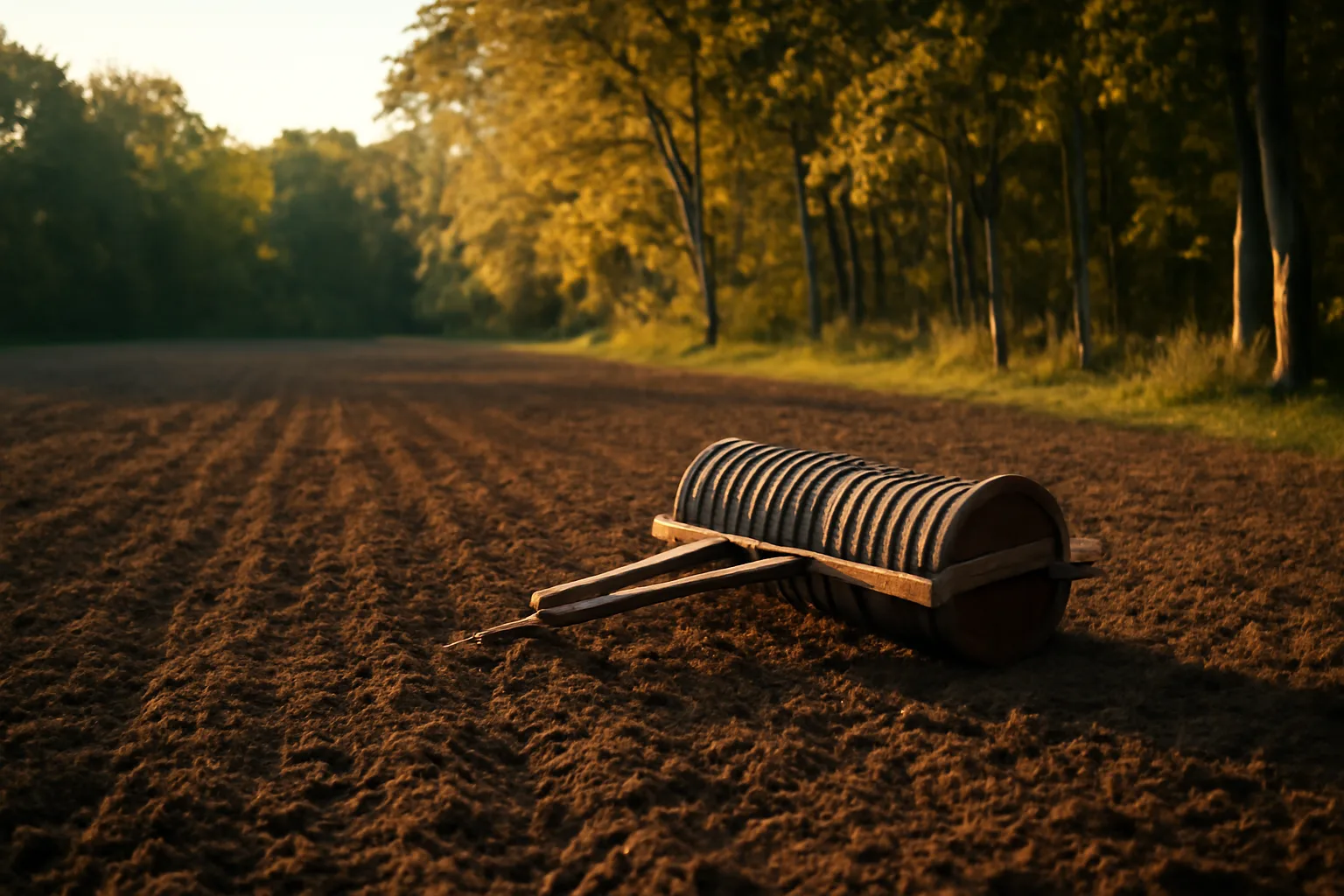
Start with a soil test, not a guess. A basic soil test from your county extension office or a private ag lab tells you pH and nutrient levels (phosphorus, potassium, and sometimes micronutrients), and it's the only reliable way to know how much lime and fertilizer your ground actually needs. Your soil test lab's recommendations are the real authority here; generic seeding guides can't know your specific field chemistry. Most food plot species want a pH between 6.0 and 7.0. If your test comes back below that, lime is non-negotiable, and it's slow-acting, often taking 6 months or more to fully adjust soil pH, so applying it months ahead of planting (fall lime for a spring plot, for instance) pays off. Oklahoma State University Extension notes that agricultural lime reactions in soil generally take several months to a year for full effect depending on particle size, lime source, and soil moisture, which is why agronomists recommend applying it a season ahead of planting rather than at seeding time [6]. After lime and fertilizer are worked in, you want a firm, weed-free seedbed. For small plots, that might mean disking, then dragging or cultipacking to firm the soil before broadcasting seed. Small-seeded species like clover and brassicas need that firm surface and shallow planting depth; if you can see your boot print sink in more than an inch, the ground's too loose. Larger seeds like beans, corn, and cereal grains tolerate deeper planting, generally half an inch to an inch and a half depending on species.
Broadcast or drill: which seeding method actually works better?
| Broadcast + cultipack | Clover, brassicas, cereal grains | ATV spreader, cultipacker or drag | Good, uneven in spots | |
|---|---|---|---|---|
| No-till drill | Any species, especially beans/corn | Drill (own or rented) | Most consistent stand | |
| Disk and cover | Beans, corn, sorghum | Disk, planter or seeder | Good on worked ground | If you're outfitting a small property from scratch, see food plot seed and domain food plot seed for species-specific seeding rate references before you buy a spreader load's worth of seed. |
Both work, but the right method depends on seed size, plot size, and equipment on hand. Drilling gives more consistent seed depth and generally better germination rates, especially for small seed, but it requires a drill (often a rented or shared no-till drill for small landowners). Broadcasting is cheaper and faster, works fine for small-seeded species like clover and brassicas when followed by a cultipacker or light drag to press seed into contact with soil, and it's the realistic choice for most hunters working an ATV or UTV with a spreader. Larger seed (beans, corn, peas) generally needs to be planted deeper than broadcasting alone achieves well, so for those species a drill, planter, or at minimum a disk-and-cover pass works better. A rough comparison: | Method | Best for | Equipment needed | Typical result |
How much seed do you actually need per acre?
Seeding rates vary a lot by species, and using the wrong rate wastes money either way (too little seed leaves gaps for weeds, too much wastes cash and can even reduce yield through overcrowding). A few commonly cited extension rates for solo plantings: - White clover: 6-8 lbs/acre broadcast [4]
- Oats: 2-3 bushels (64-96 lbs)/acre broadcast
- Turnips (alone): 2-4 lbs/acre broadcast
- Soybeans (forage type): 50-90 lbs/acre depending on row spacing, per land-grant forage soybean guidance
- Winter wheat: 90-120 lbs/acre drilled Commercial food plot blends print a bag rate that already accounts for the mix ratio, so always follow the bag's stated rate over a single-species number when you're using a blend. Overseeding a blend to "make sure it takes" is one of the more common wastes of money in this hobby; more seed doesn't fix a bad pH or a poor seedbed.
What fertilizer and lime does a food plot actually need?
Whatever your soil test says, not a flat number pulled off a bag. A soil test typically reports pH, phosphorus (P), and potassium (K) in parts per million or pounds per acre, and a lab recommendation converts that into pounds of lime and pounds of N-P-K fertilizer per acre for your specific target crop. As a rough reference point, extension soil test guidance for food plot forages generally recommends applying lime to bring pH into the 6.0-6.5 range before planting clover or brassicas, since nutrient uptake (especially phosphorus) drops off sharply in acidic soil regardless of how much fertilizer you apply [6]. Nitrogen needs vary hugely: legumes like clover and soybeans fix their own nitrogen once established and need little to none, while brassicas and cereal grains are nitrogen-hungry and often need 40-100 lbs of actual nitrogen per acre depending on soil organic matter. This is exactly the kind of number where a printed guide can only give you a range; your soil test lab knows your field, we don't. If you want a plan built around your specific soil test results, species goals, and property size, that's what a $99 Custom Food Plot Plan from PlotSeason is for. It's general guidance built from your numbers, not site-specific agronomy in place of your lab's recommendation, but it saves the guesswork of matching species, rates, and timing to what your soil test actually says. Start at /plot-plan-builder.
What mistakes ruin a food plot before it ever gets a chance?
Planting into a rough, cloddy seedbed is probably the single biggest one. Small seed needs seed-to-soil contact; if it's sitting in an air pocket under a clod, it never germinates. Skipping the soil test is a close second. Guessing at lime and fertilizer means you might be feeding a nutrient the soil already has plenty of while starving the one it actually lacks, which is money spent for no result. Planting too early or too late for the species is third. Warm-season annuals planted before soil warms up rot in the ground; brassicas planted too late never bulb up before frost. And overseeding, dumping way more seed per acre than the label calls for, doesn't fix any of the above; it just costs more and can crowd out the stand you do get. Last one: not checking your state's baiting and supplemental feeding regulations before hunting over a plot. Standing food plots planted and left to grow are legal to hunt over in essentially every state, but rules about disturbed or freshly broadcast seed, mineral use near plots, and supplemental feed vary, so a quick check of your state wildlife agency's hunting regulations page before season is worth the ten minutes [1].
Frequently asked questions
Do deer eat sorghum?
Yes. Deer browse young sorghum foliage and eat the grain once heads mature and dry, though it's more often planted for its drought tolerance and use as tall screening cover than as a primary forage crop in food plot systems.
Do deer eat clover?
Yes, clover is one of the most preferred food plot forages available, running roughly 20-25% crude protein during active growth according to University of Georgia Extension forage data, and both white and red clover varieties are widely planted for whitetail.
When should I plant deer food plots?
It depends on species: spring annuals and clover go in after last frost (April-May in most regions), while fall brassicas and cereal grains go in 60-90 days before first frost, generally late July through September depending on your zone.
Do deer like clover more than other food plot options?
Clover consistently ranks among the top-preferred forages in extension and browse studies, largely due to high protein content and long growing season, though preference shifts seasonally; deer often favor soybeans in summer and brassicas or acorns once frost hits.
When should I plant oats for deer?
Plant oats 6 to 8 weeks before your area's first killing frost, generally late August to mid-September in northern zones and into October farther south, so the stand establishes before cold slows growth.
When is the best time to plant food plots for deer overall?
There's no single best date; it's species and zone dependent. Cool-season plots (brassicas, cereal grains) go in late summer to early fall, while warm-season plots (clover, soybeans, sorghum) go in spring after your last frost date.
When should turnips be planted for deer?
Plant turnips 60 to 90 days before your expected first fall frost, typically late July through early September depending on region. Deer usually favor the bulbs most after a hard frost sweetens them.
What exactly is a food plot?
A food plot is a planted area, usually on private hunting land, grown specifically to provide deer forage and, for hunters, a place to intercept deer during legal shooting hours. It's recognized by USDA NRCS as a wildlife habitat management practice, distinct from a commercial crop field.
What is a deer's favorite food overall?
There's no single universal favorite; it shifts by season and region. White oak acorns, soybeans, and clover consistently rank high in browse and preference studies, with standing corn and brassicas becoming more attractive after frost and leaf-drop in fall.
Do deer like honey?
No, honey isn't a natural deer food or forage crop. Some commercial scent attractant sprays use honey or molasses-based scents to draw curiosity, but that's a separate product category from food plot seeding and isn't something you plant.
How deep should food plot seed be planted?
Small seed like clover and brassicas should go no deeper than a quarter inch, ideally broadcast onto a firm bed and lightly cultipacked. Larger seed like beans, corn, and cereal grains typically goes a half inch to an inch and a half deep.
Should I broadcast or drill food plot seed?
Broadcasting followed by cultipacking works fine for small-seeded species like clover and brassicas and is realistic for most landowners with an ATV spreader. A no-till drill gives more consistent depth and germination, especially valuable for larger seed like beans and corn.
Is it legal to hunt over a food plot?
Generally yes, standing planted food plots are legal to hunt over in essentially every state, but rules on freshly disturbed ground, broadcast seed, and supplemental feed vary by state. Always check your state wildlife agency's current baiting and feeding regulations before season.
Sources
- Michigan Department of Natural Resources, Baiting and Feeding Order summary, Wildlife Conservation Order Amendment No. 2 of 2019: Baiting and feeding rules for hunting near food sources vary significantly by state
- USDA NRCS Conservation Practice Standard, Upland Wildlife Habitat Management, Code 645: Upland Wildlife Habitat Management (Practice Code 645) is a recognized wildlife habitat practice under USDA conservation programs
- Oklahoma State University Extension, PSS-2226, Soil pH and Liming: Lime takes months to fully react and raise soil pH, so it should be applied well ahead of planting
- Mississippi State University Extension, Publication 2111, Establishing and Managing Wildlife Food Plots: Turnip seeding rates and planting depth for deer food plots
- University of Georgia Extension, Circular B1251, Clover and Special Purpose Legumes for Georgia: White clover crude protein content during active growth
- USDA NRCS Plant Guide, White Clover (Trifolium repens L.): White clover broadcast seeding rate and shallow planting depth requirement
- USDA Forest Service, Fire Effects Information System, Odocoileus virginianus species review: White oak acorns are more palatable to deer than red oak acorns due to lower tannin content, and deer preference shifts seasonally among forages