Last updated 2026-07-26
TL;DR
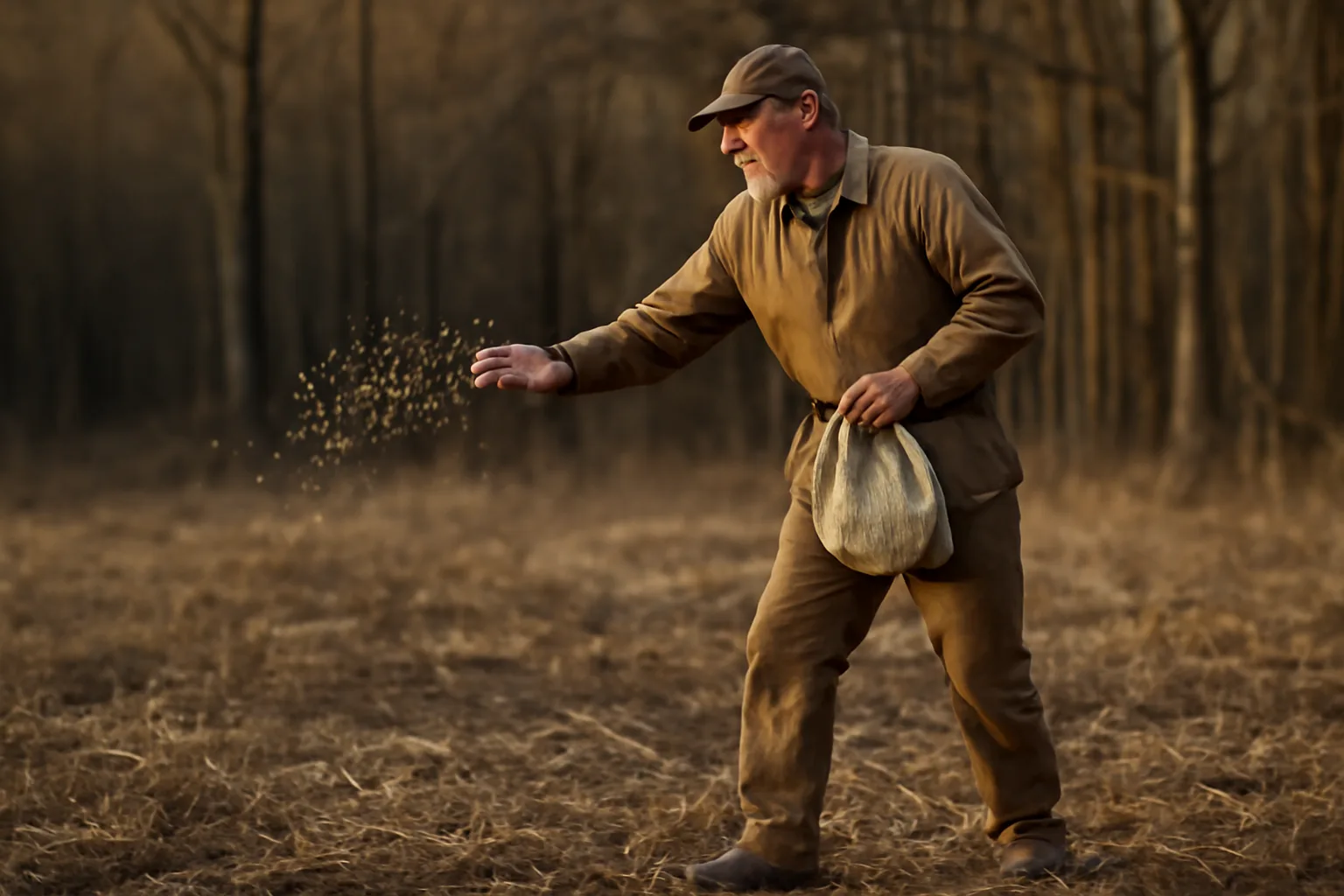
You can plant a solid food plot without a tractor. Kill existing vegetation with glyphosate, broadcast seed by hand or with a $30 spreader, drag it in with a section of chain-link fence or a leaf rake, and pack it down by driving an ATV or walking it. Clover, oats, and brassicas all work well with this method.
what is a food plot, exactly
A food plot is a planted area, usually somewhere between a quarter acre and a few acres, seeded with forage that deer and other wildlife will eat. That's it. It's not a garden and it's not a lawn. The goal is to grow something deer want to eat, on ground you control, at a time when it does the most good for hunting or herd health. Most food plots fall into two categories: annuals you replant every year (oats, brassicas, cereal grains, some clovers) and perennials that come back for two to five years with maintenance (red and white clover, chicory, alfalfa). Cooperative extension programs across whitetail country, including Penn State Extension, describe food plots as a wildlife habitat management tool meant to supplement natural browse, not replace it. The equipment most people picture, a tractor, a disc harrow, a no-till drill, a cultipacker, is genuinely helpful for plots over an acre or two on tough ground. But none of it is required. Small plots, food plots in tight timber openings, and clover strips along field edges get planted every year with nothing more than a backpack sprayer, a hand spreader, and some sweat.
can you really plant a food plot without a tractor or ATV
Yes, and for plots under an acre it's often easier than people expect. The limiting factor isn't horsepower, it's soil-to-seed contact. Seeds need to touch bare soil, get lightly covered, and stay moist enough to germinate. A tractor and disc do that by tearing up ground and burying seed. You can get the same result with a rake, a chain drag, or by broadcasting onto soil that's already been knocked loose by rain, frost, or foot traffic. The basic hand-tool method looks like this: spray existing vegetation with glyphosate two to three weeks ahead of planting, let it die back completely, broadcast your seed by hand or with a $25 to $40 hand-crank spreader, then drag something over the seed to work it into the top quarter inch to half inch of soil. A section of chain-link fence, a bed frame, a piece of carpet, or even a leaf rake dragged behind you all work. Follow up by walking the plot or driving an ATV over it in a grid pattern to firm the seed down. Good soil contact matters more than a perfectly smooth seedbed. Small grains like oats and cereal rye are especially forgiving of this method because the seed is large and doesn't need to be buried deep, a quarter inch to an inch is fine according to standard planting guidance from university extension row-crop programs. Clover and brassica seed is tiny and only needs the lightest covering, sometimes none at all if you plant right before a rain.
what tools do you actually need
Here's a realistic no-tractor kit for a plot between a quarter acre and one acre: - A backpack or ATV-mount sprayer (or even a pump garden sprayer for very small plots) for glyphosate
- A hand-crank broadcast seeder, sometimes called a bag spreader, $20 to $50
- A soil test kit or mail-in test through your state land-grant university
- Lime and fertilizer according to that soil test
- A drag: chain-link fence scrap, a box spring, a homemade harrow made from a pallet, or just a heavy rake
- A weed-eater or brush cutter to knock down tall existing growth before spraying
- Gloves, eye protection, and a mask when handling glyphosate concentrate Total cost for the tools, if you're buying everything new, usually lands between $150 and $300, most of it in the sprayer and spreader. Seed and lime are separate costs and vary by plot size. A lot of hunters already own half this list from yard work. What you don't need: a disc, a cultipacker, a no-till drill, or a UTV with an implement hitch. Those speed up planting three or four-fold on bigger acreage, but they're not what makes a plot succeed or fail. Seed-to-soil contact, correct planting depth, and pH are what matter, and you can control all three by hand.
when to plant food plots for deer
Timing depends on species and region far more than it depends on equipment. Broadly, food plot planting falls into two windows: late summer to early fall for cool-season annuals and perennials (clover, brassicas, oats, cereal rye) and spring to early summer for warm-season plots (soybeans, cowpeas, sorghum, corn). Most hunters in the whitetail range are planting fall plots between mid-August and early October, timed so brassicas and clover have 60 to 90 days of growth before hard frost and hunting season. State wildlife agencies generally publish regional planting windows; the Pennsylvania Game Commission and similar agencies recommend late summer plantings for fall attraction plots, timed to local first-frost dates [1]. If you're in the Deep South, that window slides later, often into September or even October, because summer heat lingers longer. Spring plots, if you're growing them, go in after your last frost date, generally April through June depending on latitude. Check your local frost date through NOAA's Climate.gov historical data or your state extension's planting calendar before locking in a date [2]. The short version: figure out your first fall frost date, count backward 60 to 90 days depending on the species, and that's your planting window. No-till or hand-planting doesn't change this calendar. It only changes how you get seed in the ground.
when to plant oats for deer
Oats go in the ground in late summer for a fall/winter plot, typically six to eight weeks before your area's first hard frost. In much of the Midwest and Northeast that lands between mid-August and mid-September. In the South, growers often wait until September or early October. Oats germinate fast, usually within a week under decent moisture, and deer hit them hard as soon as the first tender shoots come up, sometimes within two to three weeks of planting. That fast germination is actually an advantage for the no-equipment crowd: because the seed is large, it forgives sloppy broadcasting and light coverage far better than tiny-seeded clover does. Oats will winterkill in cold climates once temperatures drop into the low teens or below for extended periods, so in the North they function as a fall-only annual. Farther south, oats can persist and provide green forage into winter. Either way, plant them alone or blend them with brassicas or cereal rye for a mixed fall plot; a lot of hunters run oats and turnips together in the same broadcast pass.
when to plant turnips for deer
Turnips, like other brassicas, need roughly 80 to 90 days before a killing frost to bulb out and reach peak palatability, so most guidance points to a planting window of late July through mid-August in the northern half of whitetail country, and August into early September farther south. Get them in too late and you'll get leafy green tops but small, underdeveloped bulbs. Here's the part that surprises new plotters: deer often ignore turnip tops and bulbs for the first month or two after planting, then switch hard once a few frosts convert the plant's starches to sugars. That's a documented pattern discussed in wildlife extension brassica guidance, where freezing temperatures sweeten the forage and trigger heavier browsing pressure in late fall and winter. If your plot gets hit before frost, don't panic. It's not being wasted, it's building root and leaf mass for the payoff later. Turnip seed is tiny, roughly 2 to 3 pounds per acre broadcast rate, and needs only the lightest soil covering, a quarter inch at most. That makes it one of the easiest crops to hand-broadcast successfully, since a light rain after planting will work the seed in almost as well as dragging would.
do deer like clover, and do deer eat clover
Yes, clover is one of the most consistently preferred food plot forages for whitetail deer across nearly every region they inhabit. It's high in protein, typically 20 to 25 percent crude protein in vegetative growth stages, and it's available spring through fall as a perennial, unlike single-season annuals [3]. White clover blends (Ladino types) and red clover both see heavy, repeated browsing. Clover's real advantage for the no-equipment planter is that it's a perennial. Plant it once, correctly, and with mowing and a top-dress of fertilizer you can get two to four more years of production without replanting or reworking soil. That's a huge win if you don't have a tractor, because establishing a new plot from bare dirt is the labor-intensive part. Maintaining an existing clover stand with a hand mower or brush cutter is not. Clover seed is extremely small and light, which is both good and bad for hand planting. Good, because it needs almost no soil covering, a light rake pass or cultipacking-by-foot is plenty. Bad, because it's easy to broadcast unevenly by hand; walking a slow, deliberate grid pattern and going over the plot twice in opposite directions helps even it out. Clover also needs decent soil pH, generally 6.0 to 6.5 or higher, so a soil test before planting really matters here more than with most other species [4].
do deer eat sorghum
Yes, deer eat sorghum, both the grain heads and the young leafy growth, though it's more commonly grown as a screening and late-season food source than a primary attractant crop. Grain sorghum stands tall, provides cover, and the seed heads mature into a high-carbohydrate food source that deer, turkeys, and other wildlife use into winter, similar in some respects to how they use standing corn. Sorghum is a warm-season crop, planted after soil temperatures warm into the 60s, generally late spring, and it's more equipment-intensive to establish well because seed depth (about half an inch to an inch) and row spacing matter more for stand density than they do with a broadcast clover or brassica plot. It's doable by hand on a small plot, but it's not usually anyone's first choice for a no-tractor setup. If you want a low-labor warm-season option, cowpeas or soybeans broadcast into worked ground are generally easier for hand planters to establish successfully.
what are deer's favorite food plot foods
| Clover (white/red) | Spring-fall (perennial) | High protein, 20-25% crude protein, long growing window [3] | |
|---|---|---|---|
| Brassicas (turnips, radishes) | Fall/winter | Sweeten after frost, high in carbs when deer need it most | |
| Soybeans | Summer-fall | High protein forage and pods; also a preferred ag crop nationwide | |
| Oats/cereal rye | Fall (some overwinter) | Fast germination, tender early growth, easy for hand planting | |
| Standing corn | Fall/winter | High energy density, cover value | In practice, the food plot that gets hit hardest on your specific property is often whatever forage is scarcest in the surrounding landscape. A clover plot in the middle of a corn-and-bean farm belt might get less attention than the same plot dropped into a solid-timber property with little agriculture nearby. Local food availability matters as much as species choice. |
There's no single universal answer, deer preference shifts by season, region, and what's already growing wild nearby, but a few crops show up again and again in food plot research and field experience as consistent favorites: | Forage | Season | Why deer favor it |
do deer like honey (and does it belong in a food plot)
Deer aren't drawn to honey the way people sometimes assume from mineral-and-attractant marketing. Honey isn't a natural forage item for deer and there's no established wildlife research showing it as an effective attractant on its own. What people are usually thinking of is honeysuckle, specifically Japanese honeysuckle and native honeysuckle species, which deer do browse readily, especially in winter when other browse is scarce. Some commercial mineral and attractant products include sweeteners, molasses being the most common, to increase palatability and draw deer to a mineral site. That's a different thing from a food plot. If your goal is a planted forage plot, skip honey or sweetener-based products entirely and put your effort into clover, brassicas, or cereal grains, all of which have real documented value as deer forage. Mineral supplementation is also regulated or restricted in some states as a form of baiting, so check your state wildlife agency's rules before setting out any mineral or attractant product.
step-by-step: planting a plot with zero equipment
Here's the actual sequence, start to finish, for a quarter-acre to one-acre plot with hand tools only. 1. Soil test first. Pull samples from six to eight spots across the plot, mix them, and send to your state land-grant extension lab or use a home kit. Your results tell you lime and fertilizer needs; follow the lab's recommendation over any generic rule of thumb [4]. 2. Kill existing vegetation. Spray glyphosate on a calm, dry day when weeds are actively growing, at least two to three weeks before your planting date. Mow first if growth is over a foot tall so the spray reaches new growth. 3. Wait for die-off. You want vegetation brown and dead, more than wilted, before planting. 4. Apply lime and fertilizer per your soil test. Broadcast by hand or with the same spreader you'll use for seed. 5. Broadcast seed at the recommended rate for your species (check the seed tag or supplier guidance; rates vary widely, from 2-3 lbs/acre for turnips to 15-20 lbs/acre for oats). 6. Work seed into the soil. Drag a chain section, harrow, or rake over the plot, or simply walk it in a tight grid if seed is very fine. 7. Firm the seedbed. Walk it again, or drive an ATV over it in a crisscross pattern, to ensure good seed-to-soil contact. 8. Water is out of your hands, but timing planting ahead of forecast rain does more for germination than any tool you could buy. If you want a written plan built around your specific soil test results, planting window, and acreage before you commit to seed and lime purchases, PlotSeason's $99 Custom Food Plot Plan gives you species picks and a planting calendar based on what you send in. Your soil lab's fertilizer and lime numbers are still the final word on what your dirt actually needs; the plan is general planning guidance, not site-specific agronomy.
how big can a hand-planted plot realistically be
Most hand-tool plotters top out somewhere between a half acre and two acres before the labor tips from reasonable to miserable. Spraying, broadcasting, and dragging a quarter acre takes maybe an hour, start to finish, on a nice day. A full acre with a hand spreader and a drag takes a half day of real work, more if the ground is rough or overgrown. Beyond two acres, most people start looking at renting equipment for a day rather than doing it all by hand. Local farm co-ops, tractor rental yards, and some state agencies (including cost-share and habitat programs run through NRCS and state wildlife agencies) sometimes offer disc or drill rental or cost-share support for wildlife plantings [5]. It's worth a call before assuming you have to buy a tractor to go bigger. A lot of successful plotters run several small hand-planted plots, a quarter acre here, a half acre there, tucked into timber openings and field edges, rather than one big plot. Small plots scattered across a property often produce better hunting setups anyway, since they create more entry and exit options and less pressure on any single spot.
mistakes that sink a no-equipment plot
The single biggest failure point is skipping the kill step. Broadcasting seed into standing grass and weeds without spraying first almost never works; your new seedlings can't compete with established root systems and canopy shade. Give glyphosate its full two to three weeks to work, and don't rush planting just because the calendar says it's time. Second most common mistake: planting too deep or not covering seed at all when it needed light coverage. Read the seed tag. Oats and cereal grains want a quarter inch to one inch of soil over them. Clover and brassica seed want barely a dusting, sometimes nothing beyond a firm cultipack-by-foot. Third: ignoring pH. A soil pH below 6.0 will tank clover and alfalfa establishment regardless of how well you handle everything else; extension soil fertility guidance consistently flags pH correction as the highest-return input before fertilizer even enters the picture [4]. Lime takes months to fully react in soil, so if your test calls for it, get it down as early as possible, ideally the season before you plant if you can swing it. Fourth: not checking your state's baiting and feeding regulations before adding any supplemental feed, mineral, or attractant near your plot. Rules vary widely by state and some prohibit baiting for hunting purposes even if food plots themselves are legal; check your state wildlife agency's current regulations before combining a plot with any feeder or mineral station.
Frequently asked questions
Do deer eat sorghum?
Yes. Deer browse young sorghum leaves and eat the mature grain heads, especially in fall and winter when other food is scarce. It's more often planted for cover and late-season energy than as a primary spring/summer attractant, and it takes more precise seed depth than broadcast crops like clover or turnips.
Do deer eat clover?
Yes, clover is one of the most consistently preferred deer forages, with 20 to 25 percent crude protein in active growth stages according to forage research summarized by university extension programs. It's available much of the growing season as a perennial, which makes it a top pick for hunters who want repeat production from one planting.
When to plant deer food plots?
Fall annuals and perennials (clover, brassicas, oats) go in 60 to 90 days before your area's first hard frost, usually mid-August through September depending on region. Warm-season plots (soybeans, sorghum, cowpeas) go in after your last spring frost, generally April through June. Check your state extension's local frost dates before locking a date.
Do deer like clover more than other food plot options?
There's no single universal favorite, but clover ranks consistently high because of its protein content and long availability window compared to single-season crops. Preference also shifts with what's scarce nearby; a clover plot surrounded by agricultural fields may get less pressure than the same plot on a heavily wooded property with little other browse.
When to plant oats for deer?
Plant oats six to eight weeks before your area's first hard frost, typically mid-August to mid-September in the North and September into October farther south. Oats germinate within about a week and deer often browse the tender shoots within two to three weeks of planting, making them one of the fastest-producing fall food plot options.
When to plant food plots for deer in general?
Most fall food plot species go in late summer, generally 60 to 90 days ahead of the first killing frost so plants mature before hunting season and cold weather. Spring/summer plots go in after the last frost date. Exact windows shift by two to six weeks depending on your latitude, so use your state extension's local frost date data.
When to plant turnips for deer?
Plant turnips 80 to 90 days before your area's first killing frost, usually late July through mid-August in northern regions and August into early September farther south. Deer often ignore turnips until after the first hard frosts convert plant starches to sugars, so don't judge the plot's success until winter.
What is a food plot?
A food plot is a planted patch, typically a quarter acre to several acres, seeded with forage like clover, brassicas, or cereal grains to supplement natural browse for deer and other wildlife. It's a wildlife habitat management tool used by hunters and land managers, not a replacement for natural forage across a property.
What are deer's favorite foods in a food plot setting?
Clover, soybeans, brassicas like turnips and radishes, and cereal grains such as oats consistently rank among the most heavily browsed food plot crops across whitetail range. Actual preference on any given property depends heavily on what native browse and agriculture already surrounds the plot, so results vary by location and season.
Do deer like honey?
No, honey isn't a natural deer forage and there's no wildlife research supporting it as an effective standalone attractant. People are often thinking of honeysuckle, which deer do browse readily. Some mineral products use molasses as a sweetener, but that's separate from food plot forage, and mineral use is regulated as baiting in some states.
Can you plant a food plot with just a sprayer and hand spreader?
Yes. Kill existing vegetation with glyphosate, broadcast seed with a $20 to $50 hand-crank spreader, then work it into the soil with a drag (chain-link fence section, rake, or harrowed pallet) and firm it down by walking or driving an ATV over it. This method works well for plots up to about one to two acres.
How much does it cost to plant a food plot without a tractor?
Expect $150 to $300 for tools (sprayer, spreader, drag material) if buying everything new, plus separate costs for seed, lime, and fertilizer that scale with plot size. Many hunters already own a sprayer or spreader from yard work, which lowers the real out-of-pocket cost significantly.
Do I need to soil test before hand-planting a food plot?
Yes, strongly recommended. Soil pH below 6.0 will limit clover and alfalfa establishment regardless of planting method, and lime takes months to fully adjust pH once applied. Send samples to your state land-grant extension lab and follow their specific lime and fertilizer recommendations for your results.
Sources
- Pennsylvania Game Commission, Food and Cover Corps / Habitat Management: state wildlife agency guidance on timing fall food plot plantings ahead of first frost
- NOAA Climate.gov, First and Last Freeze Dates: historical frost date data used to time spring and fall plantings
- USDA NRCS Plant Guide, White Clover (Trifolium repens): clover's crude protein content and value as wildlife forage
- University of Missouri Extension, Soil Testing and Liming: soil pH correction and lime recommendations as the primary driver of forage establishment success
- USDA NRCS, Environmental Quality Incentives Program (EQIP): cost-share and equipment support programs available for wildlife habitat plantings