Last updated 2026-07-26
TL;DR
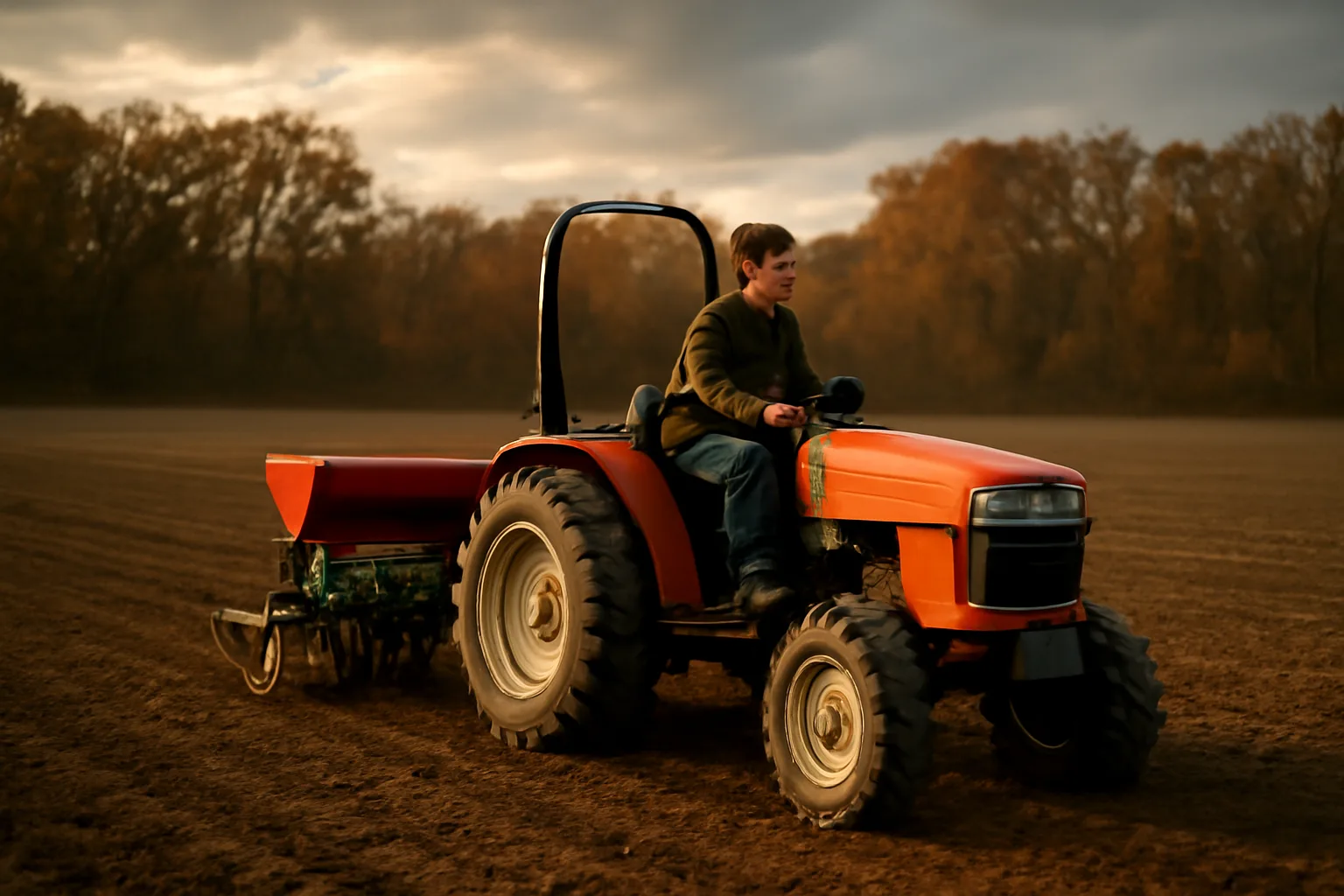
A 3-point food plot planter mounts to your tractor's 3-point hitch and drills or broadcasts seed at a controlled rate and depth. Small no-till drills for plots under 5 acres run roughly $2,500 to $6,000 new; simple broadcast/cultipacker units start under $1,000. The right choice depends on acreage, tractor horsepower, and whether you're planting brassicas, clover, or grain.
what is a food plot planter and do you need a 3-point one?
A food plot planter is any implement that puts seed into the ground at a set rate and depth, then usually covers it. The 3-point version bolts to your tractor's 3-point hitch (the standard set of lower lift arms and top link found on most compact and utility tractors) instead of being towed on a drawbar. That matters because a 3-point mount lets you lift the implement fully off the ground for transport, and it lets the tractor's hydraulics control depth more precisely than a pull-behind unit bouncing on its own wheels. For most food plotters working 1 to 10 acres, a 3-point unit in the 4 to 6 foot working width range is the sweet spot. Go much wider than that and you need a tractor with real lift capacity and horsepower, usually 35 to 50 PTO horsepower minimum, plus enough weight on the tractor to keep the front end down. You don't strictly need a 3-point planter. Plenty of good plots get planted with a hand broadcaster and a drag harrow, or an ATV-pulled spreader and cultipacker. But if you already own a tractor with a 3-point hitch, a dedicated planter saves time and gives you better seed-to-soil contact, which is the single biggest driver of germination success according to university turf and forage agronomy guidance.
what's the difference between a no-till drill, a broadcast seeder, and a cultipacker seeder?
These are the three basic tool types you'll see marketed as 'food plot planters,' and they do different jobs. A no-till drill cuts a narrow slot in undisturbed or lightly worked soil, drops seed at a set depth, and closes the slot behind it. This is the gold standard for grain crops like oats, wheat, and cereal rye, and for beans planted into standing residue. No-till drills cost more (roughly $3,000 to $8,000 new for small food-plot-scale units, more for used ag-grade drills adapted to 3-point) but they give the most consistent depth control, which matters a lot for larger seeds like soybeans or corn. A broadcast seeder just throws seed across the surface, either with a spinner disc or a drop mechanism. It's cheap (many 3-point and ATV units run $150 to $600) but it puts all seed at the same depth: zero. That's fine for tiny seeds like clover or brassica that need light and shallow placement, but it's a poor match for anything that needs to be buried an inch or more deep. A cultipacker seeder (sometimes called a Brillion-style seeder) combines a seed box with a corrugated roller. It broadcasts seed onto a firmed seedbed and then presses it in with the packer wheels, giving decent seed-to-soil contact without true depth placement. These run $1,500 to $4,000+ for 3-point compatible models and work well for clover, chicory, and brassica blends where a firm, shallow seedbed is what you want. Many experienced plotters end up owning two tools: a cheap broadcast spreader for small seeds and food plot mixes, and a no-till drill (owned, borrowed, or rented from a conservation district) for grain and legume plantings that need depth control.
how much does a 3-point food plot planter cost?
| Broadcast spreader, 3-point | N/A (spinner) | $150 to $600 | |
|---|---|---|---|
| Cultipacker/Brillion-style seeder | 4 to 6 ft | $1,500 to $4,000 | |
| Compact no-till drill | 4 to 6 ft | $3,000 to $8,000 | |
| Used farm-scale drill (retrofitted) | 6 to 10 ft | $2,000 to $6,000 used | Budget plotters often start with a used disc, a drag harrow made from chain-link fence and rebar, and a hand-crank or ATV broadcast spreader. That combination can cost under $300 total and, on a well-limed, well-fertilized seedbed, produces a fine stand of clover or brassica. The planter is a convenience and consistency upgrade, not a requirement for a good plot. |
Here's a rough range based on typical retail pricing for small ag and food-plot-branded equipment as of the last few planting seasons. Prices move with steel and shipping costs, so treat these as ballpark figures, not quotes. | Implement type | Typical width | Price range (new) |
what is a food plot, exactly, and why does the planting method matter?
A food plot is a planted area, usually somewhere between a quarter acre and several acres, established specifically to provide forage for deer and other wildlife on hunted ground. It's distinct from agricultural fields grown for harvest and sale, though the agronomy underneath is the same: soil pH, fertility, seed selection, and planting timing all follow the same rules row-crop farmers use. Planting method matters because seed depth is one of the top two or three factors in germination failure. Clover and brassica seed is tiny and needs to sit at or near the surface, roughly 1/4 inch deep or less, with firm soil contact. Bury it an inch deep with a drill set for soybeans and it may never emerge. Conversely, cereal grains and beans planted too shallow with a broadcaster and light harrow can dry out and fail if rain doesn't come within a few days. Matching the tool to the seed is the actual skill here, more than the horsepower of your tractor.
when should you plant food plots for deer?
Timing splits into two windows almost everywhere in whitetail range: a spring/summer window for warm-season plots and a late-summer window for fall/winter plots. The exact dates depend heavily on your USDA plant hardiness zone and your first fall frost date, so check your local cooperative extension office for a frost-date table specific to your county. Spring plantings (clover frost-seeding, warm-season annuals like soybeans or sorghum) generally go in after your last frost date, often April through June depending on latitude. Fall plantings (brassicas, cereal grains, winter peas) are timed backward from your first expected frost, because most fall blends need 60 to 90 days of growth before a hard freeze locks things down. As a rough national guide: in the northern tier (zones 3 to 5), fall plots typically go in late July through August. In the mid-latitudes (zones 6 to 7), late August into September works. In the Deep South (zone 8 and warmer), you can often wait until late September or even October. These are generalities; your state extension service publishes actual planting date windows for your specific counties, and that's the source to check before you buy seed [1].
when do you plant oats for deer?
Oats are a fall annual grain in almost every deer hunting context, planted 60 to 90 days before your first killing frost so they can establish a leafy stand before cold weather. In practice that means late July to early September across most of the whitetail's range, with northern states planting earlier in that window and southern states later [1]. Oats germinate fast, often within 5 to 10 days in warm soil, and deer hit them hard as soon as they're a few inches tall. They're not winter-hardy in most of the country the way winter wheat or cereal rye is, so oats will typically die back after a hard freeze in zones 5 and colder, which is exactly when hunters want the tenderest, most attractive forage anyway. If you want a plot that survives into late winter, blend oats with wheat, rye, or clover rather than planting a pure oat stand.
when do you plant turnips for deer?
Turnips, like other brassicas, go in during the same late-summer window as fall grains: roughly 60 to 90 days ahead of your first fall frost, per land-grant extension brassica planting guides [2]. Plant too early in hot, dry conditions and seedlings can struggle or get eaten by flea beetles before they establish; plant too late and the bulbs and tops won't have time to size up before deer need them most. Turnips are broadcast-seeded, not drilled, because the seed is small and needs shallow placement, around 1/4 to 1/2 inch deep. A cultipacker seeder or a simple broadcaster followed by a light cultipacking or dragging works well. One quirk worth knowing: turnip forage often becomes more palatable to deer after the first hard frost, because cold temperatures convert starches to sugars in the leaves and bulbs. That's why turnip plots frequently see the heaviest deer use in December and January rather than October, well after other plots have been picked over.
do deer eat sorghum?
Yes, deer eat both the leaves and the grain heads of sorghum, and it's a common component in warm-season food plot blends and wildlife cover mixes. Grain sorghum (milo) also has real value as a standing winter food source in colder climates, because the seed heads persist above snow long after other annuals have been grazed down or buried [3]. Sorghum is planted like corn, as a warm-season crop after soil temperatures reach the mid-60s Fahrenheit, and it tolerates drought and poor soil better than corn does, which is part of why it shows up in wildlife plantings on marginal ground. It's usually drilled or planted with row equipment rather than broadcast, since seed depth (roughly 1 to 1.5 inches) matters for even emergence.
do deer eat clover, and do deer like clover?
Yes, deer eat clover readily, and it's one of the most consistently preferred food plot forages across the whitetail's range. Clover is a perennial legume, meaning a single planting can produce forage for 3 to 5 years with proper mowing and fertility maintenance, which makes it one of the better cost-per-year options for plotters willing to do upkeep. It's also high in crude protein, commonly tested in the 20 to 25% range for well-maintained stands, which matters most during spring green-up and antler and fawn development [4]. Deer preference research and decades of food plot practice both point to clover as a top-tier choice, especially white clover varieties like Ladino, and red clover for its heat and drought tolerance. Clover establishes well with a cultipacker seeder or a simple broadcast-and-cultipack approach; it does not need a drill and, in fact, drilling clover too deep is a common cause of stand failure.
what are deer's favorite foods, and is there one best plot crop?
There's no single universal favorite; deer preference shifts by season, region, and what else is available on the landscape. That said, several crops show up again and again as high-preference choices in food plot literature and wildlife extension guidance: soybeans and clover during the growing season, and brassicas (turnips, radishes, rape) plus cereal grains in fall and winter [5]. Acorns deserve a mention too. In years with a good acorn crop, deer will often ignore food plots almost entirely in favor of mast, which is a frustration a lot of hunters run into every few seasons. That's not a planting mistake, it's just deer following the calorie-dense, low-effort food source, the same way they'd choose standing corn over young clover shoots if given the choice. A good food plot program plans for multiple crop types and multiple planting windows precisely because no single species holds deer attention year-round. If you're building out a full-season plan rather than a single plot, it helps to think in terms of a rotation: something for spring and summer growth like clover, something for fall like brassicas or grain, and maybe a standing grain plot for late-season cover and calories. For help sorting out what actually fits your soil, region, and acreage, a Custom Food Plot Plan from PlotSeason runs a flat $99 and gives you a species and planting-date plan built around your specific ground rather than a generic bag-of-seed recommendation.
do deer like honey, and does that matter for food plots?
No, this isn't a real food plot consideration. Deer are herbivores that browse plants, forbs, mast, and agricultural crops; honey isn't part of their diet and isn't something wildlife agencies or extension programs discuss in deer nutrition guidance. If you've seen this question paired with food plot searches, it's likely confused with deer attractant products (some of which use sugar or molasses-based scents) rather than an actual dietary component. Stick to real forage crops: clover, brassicas, cereal grains, soybeans, and chicory are the backbone of almost every serious food plot program, and none of them involve honey.
which 3-point implement setup should you actually buy first?
If you're buying one implement and one only, most experienced plotters would tell you to start with a cultipacker-style seeder, or even just a heavy drag harrow plus a decent broadcast spreader, before spending money on a no-till drill. Here's why: the majority of popular food plot species (clover, chicory, brassicas, most fall blends) are small-seeded and shallow-planted, which plays to a broadcast/cultipack setup's strengths, not a drill's. Save the no-till drill purchase (or a rental from your county soil and water conservation district, many of which rent drills at low daily rates) for the years you're planting soybeans, corn, or a heavy grain program where depth control actually changes your outcome. Check with your local NRCS or conservation district office; many have drill rental or loan programs specifically to support small-acreage plantings [6]. Whatever you buy, match tractor size to implement width and weight. A 4-foot cultipacker seeder is comfortable behind a 25 horsepower compact tractor; a 6-foot no-till drill loaded with seed can weigh 800 to 1,500 pounds and needs real lift capacity and, often, rear wheel weights or ballast to keep the tractor safe and controllable, especially on sloped ground.
what should you check before you plant, no matter what tool you use?
Get a soil test first. This is the step people skip and regret. Your county extension office or a private ag lab can run a soil test for somewhere between $10 and $20 in most states, and the results tell you your exact lime and fertilizer needs rather than leaving you guessing. Your soil test lab is the authority on your specific lime and fertilizer recommendations; nobody writing general advice online can replace a lab result pulled from your actual dirt. Second, check your state's baiting and supplemental feeding regulations before you plant anything you're not sure qualifies as a legitimate agricultural planting versus a bait pile in the eyes of your state wildlife agency. Rules vary a lot: some states draw a hard line between a planted, unharvested food plot (generally legal) and scattered grain or mineral (often illegal during hunting season). Check your state wildlife agency's current regulations before the season, since these rules do change . Third, match your seeding rate and depth to the bag's instructions, not to habit. Every seed company prints a rate in pounds per acre and a target depth, and food plot failures trace back to ignoring those numbers more often than to bad luck with weather.
Frequently asked questions
Do deer eat sorghum?
Yes. Deer browse sorghum leaves and eat the grain heads, and grain sorghum (milo) is valued in wildlife plantings because seed heads stand above snow into winter, giving deer a food source when other annuals are gone. It's planted like corn, after soil warms into the mid-60s Fahrenheit, usually with row equipment rather than a broadcaster.
Do deer eat clover?
Yes, clover is one of the most consistently preferred food plot forages for whitetails. It's a perennial legume that can produce forage for 3 to 5 years from one planting, with crude protein commonly in the 20 to 25% range for well-managed stands, making it especially valuable during spring green-up and antler growth.
Do deer like clover more than other plot crops?
Clover ranks among the top preferred crops across most research and field experience, but 'favorite' shifts by season. Deer often prefer soybeans and clover in summer, brassicas and grain in fall and winter, and will choose acorns over any planted crop in a heavy mast year. No single crop holds top preference year-round.
When should you plant food plots for deer?
Fall plots (brassicas, cereal grains) go in 60 to 90 days before your area's first fall frost, so timing shifts by latitude: late July/August in northern states, September in mid-latitude states, and late September into October in the Deep South. Spring/summer plots go in after your last frost date. Check your state or county extension office for exact local dates.
When do you plant oats for deer?
Oats are planted in late summer, generally 60 to 90 days before your area's first killing frost, which typically means late July through early September depending on your region. Oats germinate quickly, often within 5 to 10 days, and are usually blended with wheat, rye, or clover since pure oats winterkill in colder zones.
When do you plant turnips for deer?
Plant turnips 60 to 90 days before your first fall frost, matching the same window as other brassica and fall grain plantings. Broadcast the seed shallow, about 1/4 to 1/2 inch deep, and cultipack or lightly drag it in. Turnip palatability often improves after the first hard frost converts starches to sugars.
What is a food plot?
A food plot is a planted area, usually a quarter acre to several acres, established to provide forage for deer and other wildlife on hunted land. It follows standard row-crop agronomy (soil pH, fertility, seed selection, timing) but the goal is wildlife nutrition and hunting opportunity rather than a harvested cash crop.
What are deer's favorite foods?
There's no single universal favorite. Clover and soybeans rank high during the growing season, brassicas and cereal grains rank high in fall and winter, and acorns often outrank every planted crop in years with a strong mast crop. A good plot program plants multiple species across multiple seasons rather than betting on one crop.
Do deer like honey?
No. Deer are herbivores that browse plants, forbs, mast, and crops; honey isn't part of their natural diet and isn't discussed in any wildlife agency or extension nutrition guidance. This question likely gets confused with sugar or molasses-based deer attractant scent products, which are unrelated to actual food plot planting.
How much does a 3-point food plot planter cost?
Broadcast spreaders start around $150 to $600. Cultipacker-style seeders run $1,500 to $4,000. Compact no-till drills cost $3,000 to $8,000 new, though used farm-scale drills retrofitted for 3-point mounting can be found for $2,000 to $6,000. Most plotters under 5 acres do fine with a cultipacker seeder or even a broadcast spreader and drag harrow.
Do you need a no-till drill for a small food plot?
Usually not. No-till drills earn their cost for grain and bean plantings where depth control changes germination outcomes. For clover, brassicas, and most fall blends, a cultipacker seeder or broadcast spreader with a drag harrow gives comparable results for far less money, since those seeds are small and shallow-planted anyway.
What tractor size do you need for a 3-point food plot planter?
A 4-foot cultipacker seeder works fine behind a 25 horsepower compact tractor. A loaded 6-foot no-till drill can weigh 800 to 1,500 pounds and needs more lift capacity, often 35 to 50 PTO horsepower plus rear ballast, especially on hills. Always check the implement's weight and your tractor's rated lift capacity before buying.
Sources
- University of Tennessee Extension, Wildlife Food Plots: fall food plot species are planted 60 to 90 days before first frost, with regional timing differences
- Auburn University Extension, Wildlife Food Plots for Deer: grain sorghum provides standing winter forage after other annuals are depleted
- University of Georgia Extension, Clover for Wildlife: clover forage crude protein commonly tests in the 20 to 25 percent range
- USDA NRCS, Wildlife Habitat Management practice guidance: USDA NRCS supports wildlife habitat plantings and equipment access programs for landowners
- USDA NRCS, Equipment lending and conservation district programs: local conservation districts and NRCS offices support small-acreage planting equipment access
- Pennsylvania Game Commission, Baiting and Feeding regulations: state wildlife agencies set specific rules distinguishing planted food plots from bait or supplemental feed