Last updated 2026-07-24
TL;DR
A "food plot machine" usually means either the full system for growing deer plots (soil test, species pick, planting window) or the compact tractor/ATV implements that till and seed them. Deer eat clover, oats, turnips, sorghum grain, and dozens of other plants; clover and brassicas top most preference studies. Planting dates run from March in the Deep South to July for brassicas up north.
what is a food plot, exactly?
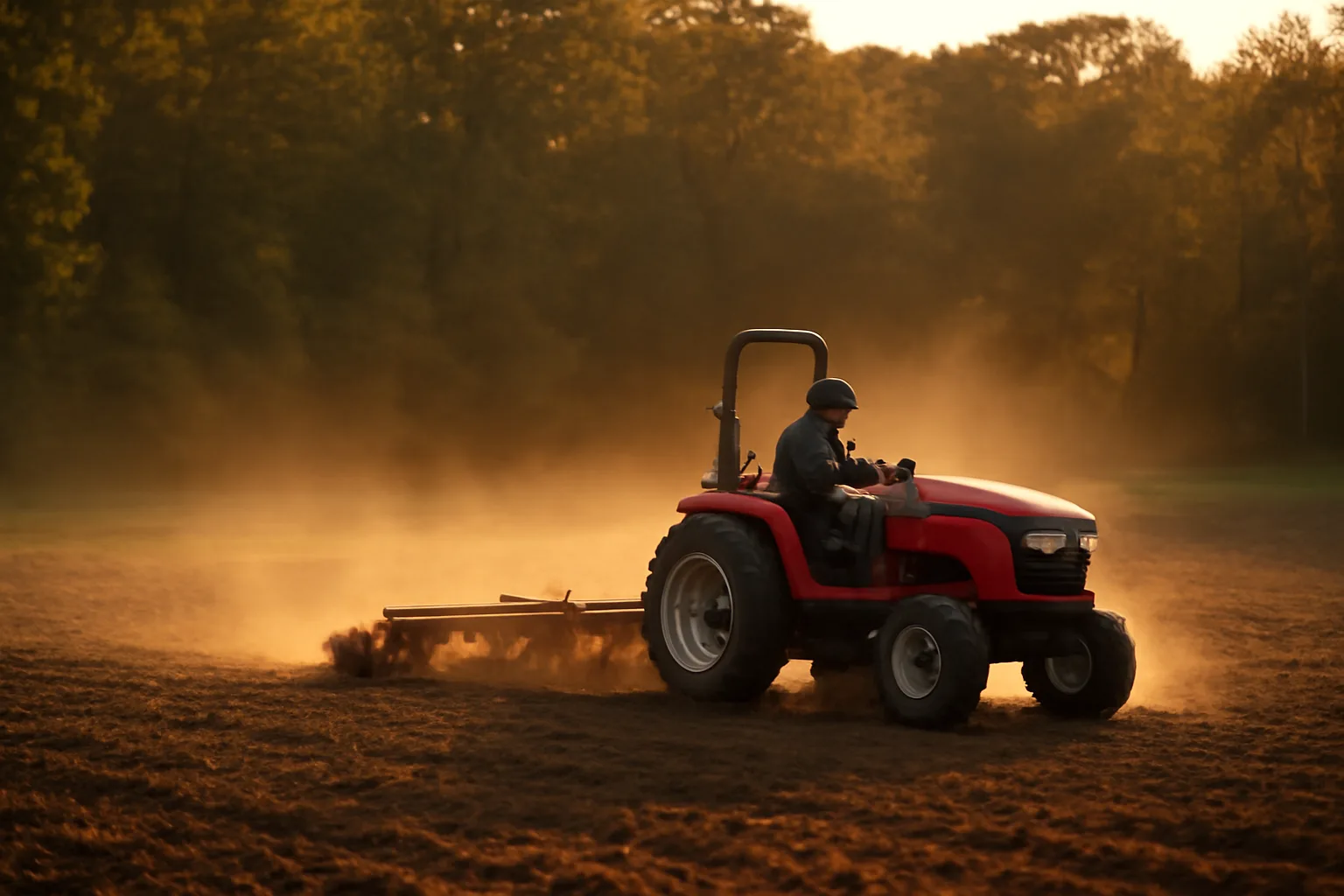
A food plot is a small planted field, usually somewhere between a quarter acre and five acres, put in specifically to feed and hold deer or other wildlife on a property. It is not a garden and it is not a crop field meant to turn a profit. The goal is nutrition and attraction, sometimes both at once. Most state wildlife agencies and universities treat food plots as a habitat management tool, distinct from baiting because the food is grown in place rather than hauled in and dumped. The USDA Natural Resources Conservation Service and university extension programs both publish plot-specific guidance because plots interact with soil health, erosion control, and wildlife food availability in ways that matter beyond just deer season [1]. When people say "food plot machine" they usually mean one of two things. Some mean the physical equipment: a compact tractor, ATV, or UTV pulling a disc, cultipacker, or seeder built for small plots. Others mean the whole system, the soil test, species selection, and calendar that turns a patch of dirt into something deer actually use. This article covers both, but leans toward the planning side because that's where most plots succeed or fail before a single seed goes in the ground. If you want a walkthrough of plot types and layouts before you get into species, food plot whitetail is a good next stop.
what do deer actually eat, and what's their favorite food?
Deer are ruminants with a strong preference for young, tender, high-protein forage. There is no single universal favorite, it shifts by season, region, and what's available, but clover, soybeans, and browse from woody plants show up at the top of nearly every preference study. Research out of the Mississippi State University Deer Lab and similar university programs consistently ranks clover, alfalfa, and soybeans among the most preferred and most nutritious plantings, with crude protein often running 20 to 30 percent in vegetative clover, well above native browse in most seasons. Brassicas (turnips, radishes, rape) get heavily hit after the first hard frost, when the cold converts starches to sugars and makes the leaves and bulbs sweeter. Acorns, when available, often outcompete anything you plant. Deer will walk past a lush clover plot for a good white oak drop. That's not a planting failure, it's just deer being deer. A realistic plot plan accounts for this instead of fighting it. For a broader rundown on species options and mixes, see deer food plot seed and food plot seed.
do deer like clover?
Yes, and by most measures it is the single best all-around food plot perennial for whitetails. Clover (white clover, red clover, and ladino types) is high in protein, regrows after grazing, and stays palatable through spring, summer, and fall in most regions. Clover's biggest strength is that it keeps producing after deer hit it hard, unlike an annual grain that gets grazed out and doesn't come back. University extension guidance from Penn State and others notes clover plots can persist three to five years with proper mowing and fertility maintenance before they need to be renovated or reseeded. The tradeoff is establishment. Clover seed is tiny, needs good seed-to-soil contact, and struggles in acidic soil below about pH 6.0. That's where a soil test earns its keep. If your soil test comes back at pH 5.4, clover is going to sulk no matter how good the seed is, and lime takes months to fully react in the soil, so timing that application ahead of planting matters.
do deer eat sorghum?
Yes, deer eat both the grain and the green forage of grain sorghum (milo), and whole sorghum heads left standing through fall and winter are a solid late-season food source, especially in the South and Midwest where sorghum handles heat and drought better than corn. Sorghum is often planted less as a primary attractant and more as a standing grain source or screen/cover crop that also feeds deer, turkey, and other wildlife once it matures. It is not usually the first choice for early-season attraction because deer prefer softer, higher-protein forage when it's available, but as a fall and winter carbohydrate source it holds its own next to corn at a fraction of the fertility cost. One real limitation: sorghum can be highly attractive to blackbirds and other seed-eating birds, which sometimes strip a plot before deer season even opens. Extension agronomists in sorghum-growing states note this bird pressure as one of the main practical downsides compared to corn [2].
when to plant food plots for deer
| Deep South (zones 8-9) | March-April | September-October | |
|---|---|---|---|
| Mid-South/Transition (zones 7) | April-May | August-September | |
| Midwest/Mid-Atlantic (zones 5-6) | May-June | August | |
| Northern tier (zones 3-4) | Late May-June | Late July-August | These windows shift year to year with weather, and a late frost or a dry spell can push things a couple weeks either direction. The USDA Plant Hardiness Zone Map is the standard reference for figuring out which zone you're in. For a full month-by-month breakdown by region, deer food plots covers regional calendars in more depth. |
There is no single planting date. It depends on species, your USDA Plant Hardiness Zone, and whether you're planting a spring/summer annual, a fall annual, or a perennial. The rule of thumb: warm-season plots go in after your last frost, cool-season plots go in 60 to 90 days before your first fall frost. Here's a general framework, though your local extension office's frost dates are the real authority: | Region (USDA zone) | Spring/summer plot window | Fall plot window |
when to plant oats for deer
Oats go in as a cool-season annual, typically 6 to 8 weeks before your first expected fall frost, so deer get lush green growth right as bow season opens. In most of the whitetail's range that lands somewhere between mid-August and mid-September. Oats germinate fast (often within a week in warm soil) and deer hit young oat shoots hard, sometimes before anything else in the plot has a chance to establish. That's a double-edged sword: great early attraction, but if deer numbers are high, oats can get grazed to the dirt before they mature. Spring oat plantings work too, mostly as a nurse crop for slower-establishing perennials like clover, planted a few weeks after your last frost. Oats aren't cold-hardy long-term, most varieties die back hard once temperatures drop into the low 20s Fahrenheit, so don't count on them as a winter standing crop in northern climates.
when to plant turnips for deer
Turnips and other brassicas need roughly 80 to 90 days from planting to reach full maturity and peak palatability, so the target is planting in mid-to-late summer for a fall/winter food source. In the Midwest and mid-South that's typically late July through mid-August; further north, aim for late July; in the Deep South you can push into early September. The timing math matters more with turnips than almost any other plot species. Plant too early and the bulbs mature and get grazed down before the cold-sweetening effect kicks in. Plant too late and a hard freeze stops growth before the plant reaches size. Brassicas are famous for a slow start. Deer often ignore turnip plots for the first month, then hit them hard after the first frost converts starches to sugar. Extension research from Mississippi State's deer program and others documents this frost-triggered palatability shift as one of the more reliable, well-observed patterns in food plot species. Don't panic if your turnips sit untouched in September, that's normal, not a failure.
do deer like honey?
There's no real evidence deer seek out honey in the wild or that it's a meaningful food plot additive. Deer are herbivores built around a rumen designed for fibrous plant material, not concentrated sugars from an animal source, and honey isn't part of any published wildlife food plot research or state agency feeding guidance. This question usually comes from confusion with mineral licks, molasses-based deer attractant products, or "honey hole" hunting slang, none of which is the same thing as feeding deer honey. Deer will sometimes lick or chew on sugary substances out of curiosity, the way they'll gnaw on a salt block, but there's no data suggesting honey has any nutritional value to them or draws them in reliably compared to actual forage. If you're looking for a legitimate sweet attractant angle, sugar beets and some brassica varieties get genuinely sweeter after frost and have real research behind their palatability. Honey doesn't.
what equipment do you actually need (the "machine" part)?
| Compact tractor (25-45 hp) | $18,000-35,000 | $8,000-18,000 | |
|---|---|---|---|
| ATV/UTV disc (4-5 ft) | $600-1,500 | $200-600 | |
| Cultipacker | $800-2,000 | $300-800 | |
| Broadcast seeder (tow-behind) | $150-500 | $50-200 | |
| No-till drill (small plot size) | $3,000-8,000 | $1,500-4,000 | A no-till drill is the single biggest upgrade for consistency, since it puts seed at a controlled depth instead of relying on rainfall to wash broadcast seed in. It's also the hardest piece to justify buying for one or two plots a year; a lot of hunters rent one or split the cost with neighbors instead. If you're leaning on ATV-scale gear rather than a tractor, don't skip the cultipacker step. Broadcasting seed onto loose, freshly tilled dirt without packing it down is one of the most common reasons plots fail to germinate evenly. |
For plots under half an acre, hand tools and a UTV with a small drag harrow can work. For anything from a half acre up to a few acres, most hunters end up with some version of a compact tractor (25-45 horsepower is a common sweet spot), a disc or tiller, a cultipacker or cultimulcher, and a broadcast seeder. Here's roughly what that setup costs new versus used, based on typical dealer and marketplace pricing as of recent seasons: | Equipment | New (approx.) | Used (approx.) |
how do soil tests and fertility fit into the plan?
A soil test is the starting point, not an optional add-on. It tells you pH and nutrient levels (phosphorus, potassium, and sometimes micronutrients), and those numbers drive how much lime and fertilizer you actually need, if any. Most land-grant university extension labs run food-plot-specific soil tests for $10 to $20 and turn results around in a week or two [3]. Skipping this step and guessing at lime and fertilizer rates is one of the most expensive mistakes a landowner can make, because a $40 bag of the wrong fertilizer blend does nothing if your pH is the actual limiting factor. Your soil test lab is the real authority here. Their recommendations are calibrated to your actual soil, not a generic national average, so when their numbers differ from a bag's label instructions or a general guide like this one, follow the lab. This is also where a $99 Custom Food Plot Plan can help if you'd rather not build the plan yourself: you enter your soil test numbers, region, and goals, and get species and timing recommendations back without hiring an agronomist. It's general guidance built from your inputs, not site-specific agronomy advice, and it doesn't replace your soil lab's lime and fertilizer recommendations.
how do I pick species for my region and soil?
Start with your soil test, then match species to your region's frost dates and your goals (early-season attraction, late-season food, or both). A simple decision path: acidic, sandy soil in the Deep South points toward cereal grains and clover blends that tolerate lower pH better than brassicas; heavier, better-drained soil almost anywhere supports brassicas and soybeans well. Most successful plots aren't single-species. A common approach is a cereal grain (oats or winter wheat) mixed with a brassica (turnips or radish) for a fall plot that gives early green growth plus a post-frost sugar spike, or a clover/chicory perennial mix for season-long coverage that doesn't need replanting every year. For a deeper look at seed blend options and how they're built, domain food plot seed and deer for food both go into specific mixes and use cases.
legal and practical things to check before you plant
Check your state wildlife agency's baiting and feeding regulations before you plant anything, because rules on supplemental feeding and even some plot practices vary a lot by state and can change year to year. Some states restrict feeding but explicitly exempt food plots grown in place; others have separate rules for baiting during hunting season versus habitat plantings. As one example, Pennsylvania's Game Commission draws a clear legal line: feeding wildlife is restricted in Chronic Wasting Disease Management Areas, but the agency's own guidance distinguishes between hauled-in feed and "normal agricultural practices," which includes food plots [4]. Other states, like Michigan, have separate baiting bans tied to CWD zones that hunters need to check annually [5]. Don't assume last year's rules still apply; check your state agency's current page before the season. Also worth confirming locally: any restrictions near property lines, road right-of-ways, or public land boundaries, since some states also regulate hunting over plots near roads or adjoining land differently than plots deep in a property's interior.
Frequently asked questions
Do deer eat sorghum?
Yes. Deer eat both green sorghum forage and mature grain heads, and standing sorghum is a decent late-season carbohydrate source, especially in hot, dry regions where corn struggles. It's less preferred than soft, high-protein forage early in the season, and birds often strip seed heads before deer get to them.
Do deer like clover?
Yes, clover is one of the most preferred and highest-protein food plot plantings available, often 20-30% crude protein in its vegetative stage. It regrows after grazing and can last three to five years as a perennial plot with proper mowing and fertility, according to university extension guidance.
When should I plant food plots for deer?
It depends on species and region. Warm-season annuals go in after your last spring frost; cool-season annuals and perennials go in 60-90 days before your first fall frost. In most of the whitetail range that's roughly March-June for spring plots and July-September for fall plots.
When should I plant oats for deer?
Plant oats 6 to 8 weeks before your first fall frost, generally mid-August to mid-September across most of the whitetail's range. Oats germinate fast and provide quick green growth right as bow season opens, but they aren't cold-hardy long-term in northern climates.
When should I plant turnips for deer?
Turnips need 80-90 days to mature, so plant in mid-to-late summer, roughly late July through mid-August in most regions, earlier further north and later in the Deep South. Deer often ignore turnips until after the first hard frost sweetens the leaves and bulbs.
What is a food plot?
A food plot is a small planted area, usually a quarter acre to a few acres, seeded specifically to feed and attract deer or other wildlife on a property. It's a habitat management tool distinct from baiting, since the food grows in place rather than being hauled in.
What is deer's favorite food?
There's no single universal favorite. Clover, soybeans, and alfalfa consistently rank as the most preferred planted forages in university studies, but acorns often beat anything planted when they're dropping. Preference shifts by season, region, and what else is available nearby.
Do deer like honey?
No real evidence supports this. Deer are herbivores with a rumen built for fibrous plant material, not concentrated sugar, and honey isn't part of any published food plot or wildlife feeding research. The idea likely comes from confusion with molasses-based attractants or hunting slang like "honey hole."
What does a food plot machine actually mean?
It usually refers to either the tillage and seeding equipment (compact tractor, disc, cultipacker, seeder) used to plant food plots, or more broadly to the full system of soil testing, species selection, and timing that makes a plot succeed. Both meanings show up regularly in hunter conversation.
How much does food plot equipment cost?
A basic ATV setup with a small disc, drag, and broadcast seeder can run $1,000-3,000 total. A compact tractor setup with a disc, cultipacker, and seeder runs $10,000-40,000 new, less for used equipment. A no-till drill, the biggest upgrade for consistency, adds $1,500-8,000 depending on size and condition.
Do I need a soil test before planting a food plot?
Yes, it's the single most valuable step before planting. Most university extension labs run soil tests for $10-20 and return results in one to two weeks, telling you exact lime and fertilizer needs instead of guessing, which prevents wasted money on the wrong amendments.
Can I plant a food plot without a tractor?
Yes, for plots under half an acre, hand tools, a rake, a hand seeder, and a UTV-pulled drag or cultipacker can work fine. Larger plots benefit from a compact tractor, but plenty of hunters successfully run small plots entirely with ATV or UTV attachments.
Is it legal to plant food plots everywhere?
Food plots are legal in all states, but supplemental feeding and baiting rules near plots vary and change, especially in Chronic Wasting Disease management zones. Check your state wildlife agency's current baiting and feeding regulations before hunting over or near a plot, since rules differ from general habitat planting.
Sources
- USDA Natural Resources Conservation Service: Food plots are treated as a wildlife habitat management practice tied to soil and land management guidance
- University of Georgia Extension, Grain Sorghum Production Guide: Grain sorghum is vulnerable to bird depredation, a key practical downside compared to corn
- University of Kentucky Cooperative Extension, Soil Testing: University extension soil labs typically charge roughly $10-20 per sample with turnaround of one to two weeks
- Pennsylvania Game Commission, Chronic Wasting Disease Management: Pennsylvania restricts feeding wildlife in CWD Management Areas but distinguishes it from normal agricultural practices such as food plots
- Michigan Department of Natural Resources, Baiting and Feeding Regulations: Michigan enforces separate baiting and feeding bans tied to CWD-affected areas that hunters must check annually