Last updated 2026-07-26
TL;DR
The best turkey food plots combine chufa (a favorite), clover, and small grains like oats or wheat, plus insects in open, sunny plots. Chufa alone is the closest thing to a turkey-specific plot. Most hunters get better turkey use by managing existing clover and grain plots well than by planting something separate.
What is the best food plot for turkeys, really?
There's no single crop that beats everything else for turkeys the way soybeans or brassicas dominate deer plot talk. Turkeys are omnivores. They eat seeds, grain, greens, and a lot of insects, especially in spring and summer when hens need protein for egg laying and poults need bugs to survive their first few weeks. That changes how you should think about a turkey plot. If you want the closest thing to a true turkey plot, plant chufa (Cyperus esculentus). It's a sedge that produces underground tubers turkeys dig for, and it's become the go-to turkey plot crop across the Southeast where wild turkey populations and hunting pressure are both high. The Mississippi State University Extension Service publication on wildlife food plots covers chufa as a warm-season option planted for wild turkey, noting turkeys scratch up the tubers well into winter [1]. Outside of chufa, your best move is usually not a dedicated turkey plot at all. It's managing the clover, grain, and forb mix you already have for deer so it also grows the insects and greens turkeys want. A clean clover field cut short in spring, bordered by some standing grain, does more for turkey activity than a small isolated turkey-only plot most years. If you're building out a broader planting plan and want it to pull double duty for deer and turkey, our food plot whitetail guide covers species selection in more depth.
Do turkeys actually use food plots, or is that overstated?
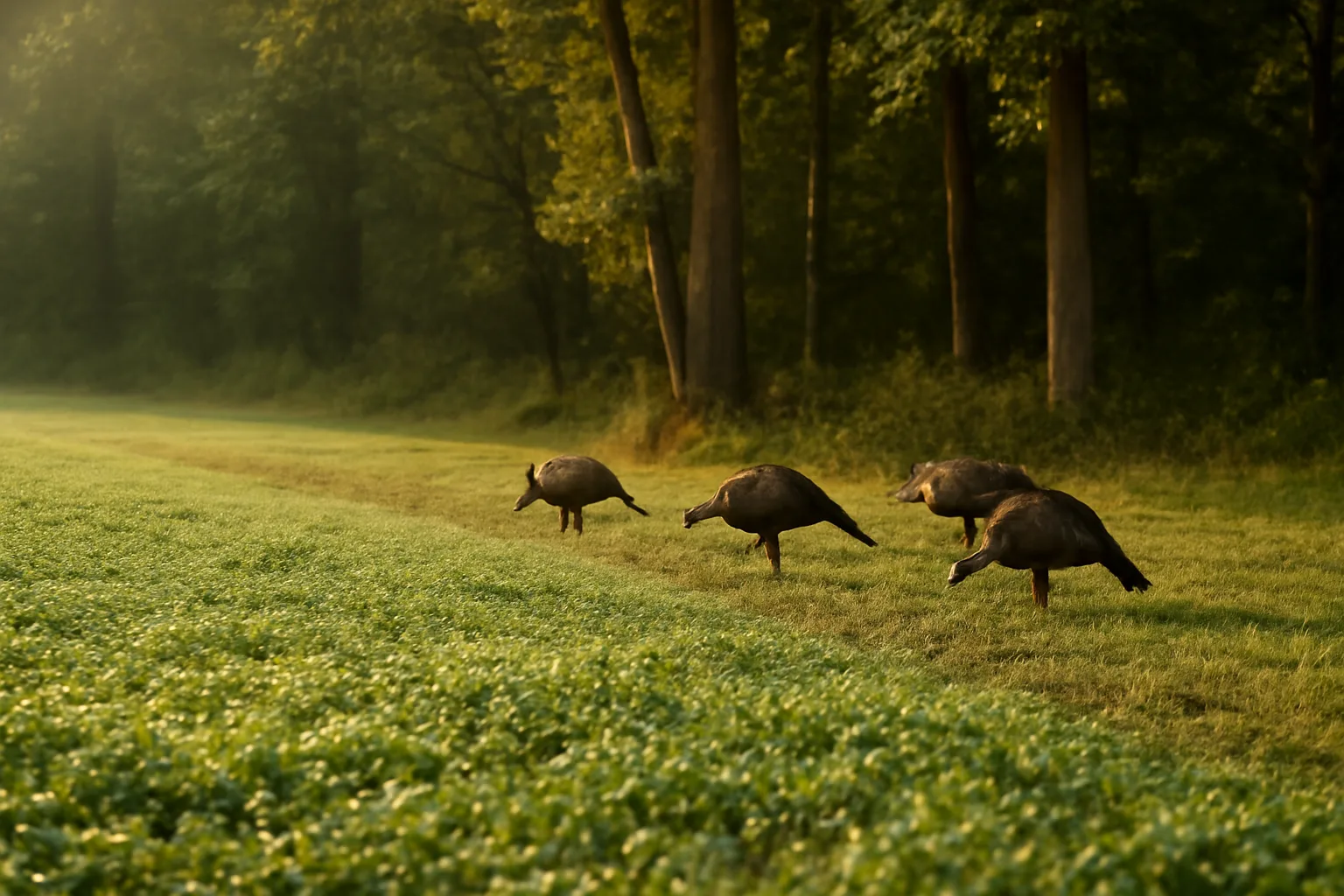
Turkeys use food plots, but not the way deer do. Deer come to a plot to eat the plant itself. Turkeys often come to a plot because it's open, sunny ground that grows bugs and tender greens, and because it gives them visibility from predators while they feed. That's an important distinction if you're deciding where to put a plot for turkey hunting. Open, low-growing plots (clover, chufa, cut small grains) get far more turkey traffic than tall, thick plots like standing corn or sorghum. Turkeys are ground feeders with a strong instinct to see danger coming. A half-acre clover plot mowed to 4-6 inches next to timber edge is a magnet. A five-acre unmowed switchgrass field is not, even though it might hold more insects in absolute terms. The National Wild Turkey Federation's technical bulletin on early successional habitat management describes brood-rearing habitat, open ground with high insect availability and enough overhead screening cover for poults, as one of the more limiting habitat factors for wild turkey productivity, and treats food plots as one tool within that broader habitat mix rather than a fix on their own [2].
Do deer eat sorghum, and does it help turkeys too?
Yes, deer eat sorghum, particularly grain sorghum (milo) heads once they mature, and it's a common late-season standing grain crop in food plot mixes. It's more drought tolerant than corn, which is why it shows up a lot in the southern Plains and parts of the Southeast. For turkeys, sorghum is a mixed bag. The seed heads feed turkeys in fall and winter once they shatter or get knocked down, and turkeys will work a sorghum field edge for both grain and the bugs in the understory. But standing sorghum is tall and thick, which cuts against the open-visibility preference turkeys have. If you're planting sorghum with turkeys in mind, keep some open edge or mow strips through it rather than planting a solid block. Mississippi State University Extension's food plot publication lists grain sorghum among the warm-season grain options suited to drier, sandier soils where corn performs poorly, planted at depths of about 1 to 1.5 inches [1]. It's a deer-first crop that turkeys will use opportunistically, not a turkey-first choice.
Do deer eat clover, and do turkeys like it too?
Deer eat clover heavily, it's one of the most planted food plot crops in the country, and yes, turkeys use clover plots as well, just for different reasons. Deer eat the clover leaf itself as forage. Turkeys use clover fields mainly because mowed, thin clover stands are loaded with insects, and turkeys will strip through a plot picking off grasshoppers, crickets, and other bugs while also eating some of the tender clover growth and clover seed heads. This dual-use is why clover is often the best practical answer to "what's the best turkey food plot" for someone who already runs deer plots. You don't need a separate turkey plot. Keep your clover mowed on a rotation through spring and summer (every 3-4 weeks is a common recommendation from extension turkey and forage guides) and you'll get strong turkey use without planting anything extra. The National Wild Turkey Federation's habitat bulletin notes that legume-based openings such as clover generate the insect biomass that poults depend on for their first several weeks of life, tying a standard deer clover plot directly to turkey brood survival [2]. If you're picking clover varieties, our deer food plot seed breakdown covers ladino, white, and red clover differences and which holds up best to regular mowing.
When to plant food plots for deer (and does the same timing work for turkey)?
Timing depends heavily on your zone and what you're planting. Broadly: - Spring/summer annuals and perennials (clover, chicory, soybeans, cowpeas): plant after your last frost date, typically April through May in northern zones, March in the transition zone, and as early as February-March in the Deep South.
- Fall annuals (brassicas, cereal grains, winter wheat, oats): plant roughly 6-10 weeks before your average first frost, so this ranges from mid-August in the upper Midwest to late September/October in the South. The USDA Plant Hardiness Zone Map is the standard reference for figuring out your general frost windows, and most state extension planting calendars key off it. For turkey use specifically, timing matters less about the plot species and more about keeping something green and open through spring nesting and brood season (April through July in most of the whitetail's range) and having grain or mast available in fall and winter. A perennial clover plot handles both jobs if you maintain it. A single fall-planted annual plot won't help turkeys much in spring because it'll be gone or mature and thick by then. Our seasonal calendars hub has zone-specific planting windows if you want exact dates for your area.
When to plant oats for deer (and turkey benefit from the same planting)
Oats are typically planted in late summer to early fall for deer, generally 6-8 weeks before your first expected frost, which lands most hunters somewhere between late August (northern states) and late September to early October (mid-South and transition zone). Oats germinate fast, tolerate cooler soil better than most grains, and put on a lot of tonnage quickly, which is why they're a staple in fall deer blends. Oats aren't a turkey draw crop in the way chufa or clover is, but a fall oat plot that's grazed down and thin by late winter, then followed by natural green-up, can bring turkeys through in late winter and early spring picking at waste grain and bugs in the disturbed soil. That's a secondary benefit, not the reason to plant them. University of Kentucky's forage extension program commonly recommends a seeding rate around 2-3 bushels (roughly 96-144 lbs) per acre for oats in forage and food plot settings, drilled 1-2 inches deep [3]. Check your own soil test recommendations before adding nitrogen. Extension guidance and your lab's report should be the final word on lime and fertilizer rates, not a general article like this one.
When to plant turnips for deer, and are they any use to turkeys?
Turnips are a fall brassica, planted in most of the whitetail's range from late July through early September, timed so they mature before the first hard frost but still get several weeks of cool, wet fall weather to bulb out and sweeten. Ohio State University Extension's forage and food plot guidance generally puts brassica planting windows at 60-90 days before the first killing frost, which is why most guides land on a late-summer target [4]. Turnips are a deer crop, full stop. The bulbs and tops are not something turkeys target. Where turnip plots help turkeys at all is indirectly: a mowed strip or disked edge around a brassica field can grow weeds and insects turkeys will work, and turkeys will sometimes scratch through a turnip field in late winter picking at exposed bulbs deer have already chewed on, mostly for the insects underneath, not the turnip itself. If turkeys are your priority for a given plot, brassicas are near the bottom of the list. Put your turnip acreage toward deer and put your turkey effort into clover, chufa, or grain.
What is a food plot, exactly?
A food plot is a planted opening, usually somewhere between a quarter-acre and several acres, established specifically to grow food for wildlife rather than for harvest and sale. On deer and turkey ground, that means selecting crops (clover, brassicas, grains, chufa, soybeans) based on what species you're managing for, then managing soil fertility, weeds, and mowing to keep that plot productive year to year. Food plots aren't a substitute for natural habitat. State wildlife agencies and university extension programs generally frame them as a supplement to native forage and cover, useful for concentrating animals for observation or hunting and for filling seasonal nutrition gaps, not as the core of a habitat plan. The Mississippi State University Extension Service publication on wildlife food plots frames it directly, describing food plots as a supplemental tool that works alongside habitat management rather than replacing it, and only one part of an overall wildlife management program [1]. For turkeys specifically, that means a food plot is one tool among several. Nesting cover, brood habitat with insects, and mast trees matter as much or more than any planted plot.
What are deer's favorite foods, and how does that compare to turkey favorites?
| Clover | High | Moderate (mostly for insects it grows) | |
|---|---|---|---|
| Soybeans | High | Low to moderate (grain in fall/winter) | |
| Chufa | Not a target crop | High | |
| Sorghum/grain | Moderate to high | Moderate | |
| Acorns (white oak) | Very high | High | |
| Brassicas/turnips | High | Low | |
| Insects (in-plot) | Not applicable | Very high, especially spring/summer | If you're planning acreage and trying to split it between deer and turkey priorities, that's exactly the kind of decision a Custom Food Plot Plan is built for. It's a one-time $99 plan that factors your region, soil test, and target species mix rather than guessing off a generic list. It's general planning guidance though, not site-specific agronomy. Your soil lab's lime and fertilizer recommendations still take priority over anything in a generic plan. |
Deer preference varies by region and season, but extension research consistently ranks a short list at the top: soybeans, clover, and cowpeas in the growing season, and brassicas, cereal grains, and acorns in fall and winter. Acorns in particular are heavily preferred when available. Multiple state deer research programs, including work summarized by the National Deer Association (formerly the Quality Deer Management Association), rank white oak acorns among the most preferred natural deer foods because of their lower tannin content compared to red oak acorns. Turkeys don't overlap with deer as much as people assume. Their top foods run more toward insects (especially for poults), acorns and other hard mast, seeds and grain (corn, sorghum, wheat), and soft mast like dogwood and wild grape berries. Adult turkeys also eat greens, including clover, but insects make up a much larger share of the diet than for deer, especially April through August. | Food | Deer preference | Turkey preference |
Do deer like honey, or is that a myth worth clearing up?
No, deer don't seek out honey, and it's not a real food plot or attractant strategy backed by any wildlife agency or extension program. This question shows up online because of "honey hole" hunting slang and because some mineral and attractant products use sweet, molasses-based scents that people confuse with actual honey attraction. Deer are drawn to sugar and salt in general (which is why mineral licks and molasses-tubs work), but there's no research or extension guidance suggesting honey itself is a deer food source or plot additive. If you're chasing sweetness as an attractant strategy, standard mineral supplementation (where legal) or a molasses-based lick product does the job extension programs actually document, rather than raw honey, which has no track record and isn't something deer encounter or key on in the wild in any meaningful volume.
Should you check state rules before adding a turkey-focused plot?
Yes, always check your state wildlife agency's regulations before you plant, especially if you're combining food plots with any supplemental feeding, corn piles, or attractants for turkey hunting. Baiting rules vary a lot state to state. Some states draw a hard legal line between a food plot (a planted, growing crop, generally legal) and bait (grain, corn, or other food placed or distributed to attract game, often illegal for turkey hunting even where it's allowed for deer). For example, several states that allow baiting for deer in certain zones still prohibit it for turkey season, or define "bait" broadly enough that leftover grain from a harvested plot can create a gray area near a blind. Because these rules change by state and sometimes by season or zone, the only reliable source is your state wildlife agency's current regulations booklet, checked every year, not a national article like this one.
How do you actually build a turkey-friendly plot plan without wasting acreage?
Start with what you already have. If you run clover or grain plots for deer, keep them mowed and weed-free through spring and summer and you've already built strong turkey habitat, no extra planting required. If you want to add something turkey-specific, chufa in a sunny, well-drained half-acre to acre is the single best dedicated addition, especially in the Southeast where it's an established fall-through-spring turkey draw. Pair it with an open, mowed edge rather than planting it as a dense solid block. Beyond that, think in layers: nesting cover (native grass or fallow edges) near your plots, brood habitat (open, bug-rich ground) adjacent to those, and mast trees or grain plots for fall and winter. No single seed bag solves all of that. That's the honest answer, and it's why most experienced managers treat turkey habitat as a byproduct of good overall land management rather than a standalone plot decision. For seed selection across species, deer food plot seed and food plot seed both cover blend options that work double duty. If you're starting from scratch, deer food plots walks through the basics of plot placement and sizing.
Frequently asked questions
What is the single best food plot crop for turkeys?
Chufa is the closest thing to a turkey-specific food plot crop, especially in the Southeast, because turkeys dig the underground tubers through fall and winter. For most hunters though, a well-maintained clover plot (mowed regularly) does more overall turkey good because it grows the insects poults and adult hens both rely on.
Do deer eat sorghum?
Yes. Deer eat grain sorghum (milo) heads, especially once they mature in fall, and it's a common food plot grain in drier soils where corn struggles. It's more a deer crop than a turkey crop, though turkeys will use sorghum field edges opportunistically for grain and insects.
Do deer eat clover?
Yes, clover is one of the most heavily used food plot crops for deer in the country, valued for its protein content and long growing season. It also indirectly benefits turkeys, since mowed clover stands grow the insects that make up a large share of a turkey's spring and summer diet.
When should you plant food plots for deer?
Spring/summer annuals and perennials like clover and soybeans go in after your last frost, typically March in the South to May in northern zones. Fall annuals like brassicas and cereal grains go in 6-10 weeks before your first frost, ranging from mid-August up north to October in the Deep South, per USDA zone guidance.
Do deer like clover?
Yes, clover is a top-tier deer forage, especially ladino and white clover varieties used in perennial food plots. It provides high protein forage through most of the growing season and regrows quickly after grazing or mowing, which is part of why it's a food plot staple nationwide.
When should you plant oats for deer?
Oats are typically planted in late summer to early fall, generally 6-8 weeks before your first expected frost. That lands most hunters between late August in northern states and late September to early October in the mid-South and transition zone, drilled about 1-2 inches deep.
When should you plant turnips for deer?
Turnips go in late summer, generally 60-90 days before your first hard frost, so most of the whitetail range plants them from late July through early September. That timing lets the bulbs and tops mature during cooler fall weather, which improves palatability.
What is a food plot?
A food plot is a planted opening, usually a quarter-acre to several acres, established specifically to grow supplemental food for deer, turkey, or other wildlife. It's meant to add to natural habitat and forage, not replace it, and typically involves species selection based on soil type, region, and target wildlife.
What are deer's favorite foods?
Soybeans, clover, and cowpeas top the list during the growing season, with brassicas, cereal grains, and acorns (especially white oak) preferred in fall and winter. White oak acorns rank especially high due to lower tannin content compared to red oak acorns, based on regional deer research summaries.
Do deer like honey?
No. There's no wildlife agency or extension research showing deer seek out honey specifically. Confusion comes from "honey hole" hunting slang and sweet, molasses-based mineral products, which deer do respond to, but raw honey itself isn't a documented deer attractant or food source.
Is chufa legal to plant for turkey hunting in every state?
Chufa itself is legal to plant nationwide as a crop, but how you hunt over it (mowing, disking, timing relative to season) can fall under state baiting definitions in some places. Always check your state wildlife agency's current turkey hunting regulations before hunting a chufa plot, since baiting rules for turkey often differ from deer rules in the same state.
Can one food plot work for both deer and turkey?
Yes, in most cases. A well-managed clover or clover/grain mix plot, kept mowed and weed-free, draws deer for forage and turkeys for the insects and greens it grows. You generally don't need separate deer and turkey plots unless you're specifically adding chufa as a turkey-focused addition.
Sources
- Mississippi State University Extension Service, Wildlife Food Plots (Publication 2111): Chufa and grain sorghum are listed as food plot options for wildlife, and food plots are framed as a supplement to habitat management, not a substitute
- National Wild Turkey Federation, Technical Bulletin on early successional habitat and brood-rearing habitat for wild turkeys: Open, insect-rich early successional habitat, including food plots, supports brood-rearing and poult survival
- USDA National Agricultural Statistics Service, Field Crops Usual Planting and Harvesting Dates: Regional planting date ranges for grain crops such as sorghum and oats used in food plot timing
- USDA Natural Resources Conservation Service, Plant Fact Sheet: Chufa (Cyperus esculentus): Chufa produces underground tubers that wild turkeys dig for and forage on through fall and winter
- University of Kentucky Cooperative Extension, Extension Publication AGR-18, A Comprehensive Guide to Wildlife Food Plots: Oat seeding rate guidance around 2-3 bushels per acre drilled 1-2 inches deep for forage/food plot use
- Ohio State University Extension, Fact Sheet: Brassicas for Deer Food Plots (F-78): Brassica planting windows generally set at 60-90 days before first killing frost