Last updated 2026-07-25
TL;DR
The best turkey food plots mix clover for spring bugging and greens, chufa or grain sorghum for fall tubers and seed, and small grains like oats or wheat for cool-season browse. Clover alone covers most of the year. Add chufa if you hunt fall turkeys and want a plot that pulls them in like a magnet.
What is a food plot, and does it work for turkeys the same way it works for deer?
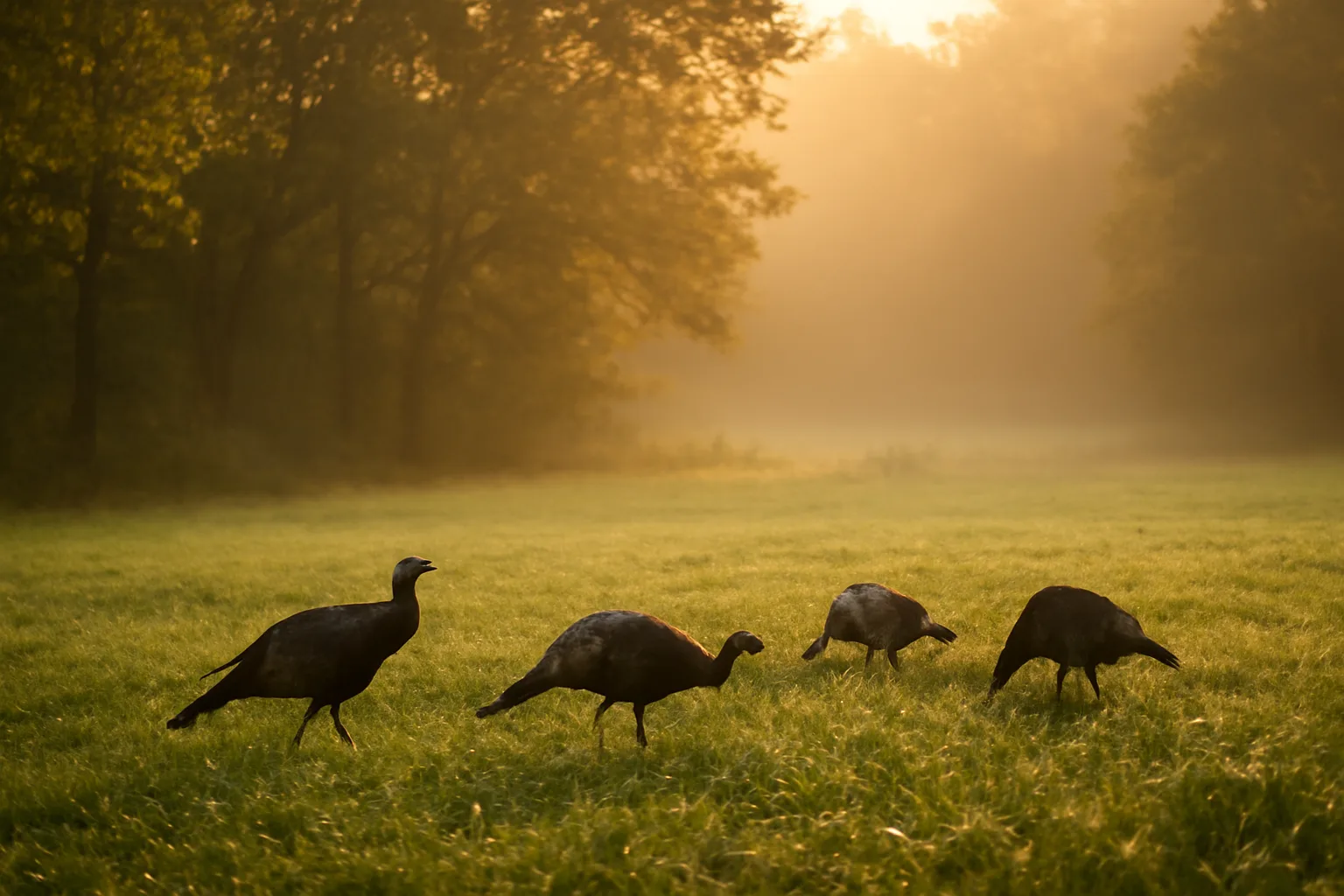
A food plot is any planted patch of ground meant to feed wildlife, usually somewhere between a quarter acre and a few acres, planted with something more nutritious or attractive than whatever native vegetation was growing there before. Most food plot writing (including most of what's on this site) is aimed at whitetails, but turkeys use plots too, just differently. Deer plots are mostly about tonnage. Turkeys don't need tonnage. A hen with poults doesn't care about a lush half acre of forage soybeans the way a deer does. Turkeys care about bugs, seed heads, and open ground where they can see a hawk or coyote coming. A good turkey plot is often as much about structure (short, open, easy to walk) as it is about what's actually growing in it [1]. That means the best turkey plots tend to double as good turkey habitat: clover fields cut short, grain plots left standing into winter, and food plots bordering openings or logging roads where poults can dry off after a rain. If you already have deer food plots on your place, you likely already have decent turkey ground. You just might need to tweak species mix or mowing schedule.
What do turkeys actually eat, and what's their favorite food?
Turkeys are opportunistic omnivores. Adult diet studies show a heavy lean toward mast (acorns, especially), seeds, waste grain, and green forage, while poults in their first few weeks eat mostly insects, grasshoppers, beetles, and other invertebrates, because they need protein to grow fast [1]. There isn't one single favorite food. What a flock eats shifts hard by season and by what's locally available. If you had to name the highest-value single plot component, it's probably not a plant at all, it's bugs, and clover is the best plant for producing them. Clover fields host huge numbers of grasshoppers and other insects that hens walk poults through in May and June [2]. After that, acorns and other hard mast usually beat anything you can plant once fall hits. Waste corn, soybeans, and grain sorghum left in a field after harvest are also huge late-season draws, which is part of why chufa and grain plots work so well for fall hunters.
Do turkeys like clover, and is it the single best turkey food plot?
Yes. Clover is arguably the single best all-around turkey plot, mostly because of what lives in it rather than the plant itself. Ladino and red clover stay green through most of the growing season, tolerate close mowing, and host the insect populations poults depend on for protein in their first six to eight weeks [2]. Clover also has a long window of usefulness. It greens up early in spring when there's not much else growing, stays productive through summer if you mow it a couple times to knock back weeds and keep it tender, and often survives into fall depending on your zone. That's a longer season of use than almost anything else you could plant. The catch: clover alone doesn't do much for turkeys once you're deep into fall and winter, especially north of the Mason-Dixon line where it can go dormant. That's why most experienced managers pair a perennial clover plot with a fall grain or chufa plot rather than relying on clover for everything.
What is chufa, and why do turkey hunters treat it like a secret weapon?
Chufa (Cyperus esculentus) is a sedge that produces small underground tubers, sometimes called tiger nuts, that turkeys dig up and eat with real enthusiasm. It's been a staple of southeastern turkey food plotting for decades, popularized heavily through wildlife management programs in states like Georgia and Mississippi [2]. The appeal is simple. Turkeys will scratch up a chufa plot repeatedly through fall and into winter because the tubers stay in the ground and don't spoil the way surface grain does. A well-established chufa plot can hold a flock's attention for months, and scratched-up dirt is an easy, honest sign you've got turkeys using the ground. Chufa needs a full growing season to bulk up tubers, so it goes in the ground in late spring, typically May through June depending on your zone, and isn't ready to be scratched up hard until fall. It also needs decent, well-drained soil and full sun. It's not a fast fix. If you want turkeys on a plot by October, plant chufa in May, not August.
Do turkeys eat sorghum, and how does grain sorghum compare to corn or wheat?
Yes, turkeys eat grain sorghum readily, especially once seed heads mature and start dropping in fall. Grain sorghum (milo) is a common component of wildlife food plot blends specifically because it's drought tolerant, cheap per acre, and produces a seed head turkeys and other birds work over for months [3]. Compared to corn, sorghum is usually cheaper to plant and more forgiving of poor soil, though it typically yields less tonnage. Compared to wheat or oats, sorghum matures later and holds seed into winter better, since the seed head stays up rather than lodging into the mud. A lot of southeastern food plot mixes marketed for turkeys and quail combine chufa, sorghum, and millet in the same plot, giving you tuber, seed head, and grain all in one spot. If you're planting from scratch and want a single fall plot that pulls double duty for deer and turkeys, a sorghum and clover combination on separate halves of the same field is a reasonable, low cost approach.
When should you plant oats for turkeys, and do they actually help?
Oats are best planted in late summer to early fall for a fall and winter grazing plot, or very early spring for a short-lived spring plot, depending on your zone and whether you want fall or spring forage [2]. Oats are a cool-season annual grain, and turkeys will use them as tender green forage, especially right after emergence when the shoots are young and soft. Oats aren't a turkey magnet the way clover or chufa are, but they're a solid, cheap addition to a mixed cool-season plot, and they establish fast, often showing green growth within a week or two under decent moisture. Many hunters plant oats mixed with wheat or clover as a nurse crop, since the oats come up fast and give some early cover while slower clover gets established underneath. If your goal is specifically turkeys and you only have one planting window, oats are a supporting player, not the headline. Put your effort into clover or chufa first and treat oats as a cheap filler.
When should you plant turnips for deer, and are they any good for turkeys?
Turnips for deer plots are typically planted in late summer, roughly July through early September depending on zone, so the bulb has time to size up before frost sweetens the greens [2]. That's a deer-focused answer because turnips are, honestly, mostly a deer food. Turkeys have little interest in a turnip bulb and only mild interest in the greens. Where turnips help turkeys indirectly is through the same insect boost that any leafy green field provides, plus the fact that a mixed brassica and clover plot keeps some open, huntable ground through fall. If turkeys are your main target, don't build a plot around turnips. If you're already planting turnips for deer, don't expect it to be your turkey draw, plant chufa or clover somewhere nearby instead.
When should you plant food plots for turkeys and deer together?
| Clover | Late summer/early fall or early spring | High (bugs, greens) | High | |
|---|---|---|---|---|
| Chufa | Late spring (May-June) | High (tubers, fall/winter) | Low | |
| Grain sorghum | Late spring (May-June) | Medium-high (seed heads) | Medium | |
| Oats | Late summer/fall, or early spring | Low-medium (tender greens) | Medium | |
| Turnips/brassicas | Late summer (July-Sept) | Low | High | |
| Winter wheat | Fall (Sept-Oct) | Medium (greens, waste grain) | Medium | For a plot doing double duty, a fall-planted clover and brassica mix pulls deer hard and gives turkeys bugs and greens into winter, while a spring-planted chufa and sorghum plot builds a fall turkey draw that most deer will also nibble on around the edges. Check your county extension office's planting date guide before locking in dates, since a hard frost date in northern Wisconsin and coastal Alabama can be six or more weeks apart. |
Timing depends heavily on your zone, but the short version: cool-season plots (clover, oats, wheat, brassicas) generally go in late summer to early fall in the North, and August through October in the South, while warm-season plots (chufa, soybeans, sorghum) go in late spring after your last frost date, roughly May through June across most of the whitetail's range [2]. | Species | Best planting window | Turkey value | Deer value |
Do turkeys like honey (honeysuckle or honey locust), and is it worth planting?
If the question means honey the substance, no, turkeys don't eat honey, they're not visiting bee hives for it. If it means honey locust or Japanese honeysuckle, the answer is more useful: turkeys do eat honey locust seed pods and will browse honeysuckle berries and tender growth, but neither is something hunters typically plant on purpose as a food plot species. Honey locust pods drop in fall and can hold turkey interest similarly to soft mast, and honeysuckle, while often considered invasive and actively controlled on many properties, does get used by turkeys where it already grows thick along field edges. Neither belongs on a shopping list next to clover seed and chufa. If you've got mature honey locust trees near a field edge, treat them as a bonus, not a planting plan.
What's the single best turkey food plot setup if you can only plant one thing?
If you can only manage one plot, plant a ladino or medium red clover blend, mow it two or three times a season to keep it short and bug-friendly, and let it run 3 to 5 years before you need to reseed. Clover covers the longest stretch of the calendar (spring green-up through summer bugging season, into fall in many zones) and it also happens to be one of the best all-around deer plots, so you're not sacrificing deer season to chase turkeys [2]. If you can manage two plots, add a chufa or sorghum plot planted in late spring specifically for fall turkey hunting. That combination, clover for spring and summer, chufa or grain for fall, covers essentially the whole turkey calendar with two relatively low-maintenance species. Soil testing matters here as much as it does for deer plots. Clover in particular is sensitive to soil pH, and most clover species want a pH in the 6.0 to 6.5 range with adequate phosphorus and potassium, according to land-grant extension guidance on forage legume establishment [4]. Get a soil test through your local extension office before you spend money on seed, and let that lab's recommendation drive your lime and fertilizer decisions. This article is general guidance, not a substitute for your specific soil report.
Legal and practical things to check before you plant a turkey plot
Food plots are legal in every state as a wildlife management practice, but the line between a food plot and illegal baiting gets fuzzy for turkey hunting specifically, and rules vary state by state. Baiting for turkeys generally means placing shelled corn, grain, or other feed to attract birds to a hunting spot, which is illegal in most states even where the same rules allow baiting for other species, or vice versa. A standing, planted food plot is almost universally treated differently than scattered bait, because the crop is growing in place rather than dumped as attractant, but the details (how long after harvest a field counts as bait, whether hunting over a food plot within a certain distance is restricted) differ by state. Check your state wildlife agency's turkey hunting regulations before the season, not after you've already hunted a plot . If you want a plan built around your specific property, soil test results, and region instead of general advice, that's exactly the gap a Custom Food Plot Plan is meant to fill: a $99 one-time plan built off your soil test and location rather than a blanket seed bag recommendation. For general species and blend options, deer food plot seed and food plot seed cover what's commercially available.
Frequently asked questions
Do deer eat sorghum?
Yes, deer eat grain sorghum, especially the seed heads once they mature in fall, though most deer studies rank it below corn or soybeans in preference and tonnage per acre. It's mainly valued in mixed plots for its drought tolerance and the fact that turkeys and quail use it heavily alongside deer [5].
Do deer eat clover?
Yes, clover is one of the most heavily used food plot forages for whitetails, and ladino or red clover blends rank among the top perennial plot choices in most extension and wildlife agency guidance because of high crude protein and long grazing seasons [3].
When to plant deer food plots?
Cool-season plots (clover, brassicas, wheat) generally go in late summer to early fall; warm-season plots (soybeans, chufa, sorghum) go in late spring after your last frost. Exact dates vary widely by state, so check your local extension office's planting calendar [8].
Do deer like clover?
Yes, clover is consistently one of the highest-preference food plot forages for whitetails, valued for its high protein content and long growing season, and it's a staple recommendation across state wildlife agency food plot guides [3].
When to plant oats for deer?
Oats are typically planted in late summer to early fall for a fall/winter forage plot, or very early spring for a short spring plot. They establish fast, often showing green growth within one to two weeks under good moisture [6].
When to plant food plots for deer?
Timing splits by crop type: cool-season species go in late summer to early fall, warm-season species go in late spring after frost risk passes. Your state's cooperative extension office publishes zone-specific planting windows, and those dates should override general national advice [8].
When to plant turnips for deer?
Plant turnips in late summer, roughly July through early September depending on your zone, so the bulb has time to size up before a hard frost sweetens the greens and bulb. Planting too early in hot weather often leads to poor germination or bolting [7].
What is a food plot?
A food plot is a planted area, usually a fraction of an acre to a few acres, seeded with forage or grain specifically to feed and attract wildlife like deer and turkeys, as opposed to relying only on native vegetation.
What are deer's favorite foods?
Deer preference studies and extension forage trials consistently rank soybeans, clover, and cowpeas near the top for warm-season plots, with brassicas, cereal grains, and winter wheat rated highly for cool-season plots, though local mast availability (acorns) often outcompetes any planted plot in fall.
Do deer like honey?
Deer don't eat honey itself, but they do browse honeysuckle vines and berries where they grow along field edges. Honeysuckle isn't a food plot species anyone plants on purpose; it's usually a wild edge plant deer use opportunistically.
Do turkeys eat sorghum?
Yes, turkeys eat grain sorghum readily once seed heads mature in fall, and sorghum is a common component in southeastern wildlife plot mixes aimed partly at turkeys and quail alongside deer [5].
What is the best food plot plant specifically for spring turkey season?
Clover is the top pick for spring turkey plots because it greens up early, tolerates mowing, and hosts the insects that hens and poults depend on for protein in their first weeks of life [3]. Few other plot species offer that early-season combination.
How big should a turkey food plot be?
There's no fixed rule, but many managers use quarter-acre to one-acre plots for turkeys, smaller than typical deer plots, since turkeys value open, huntable ground and predator visibility over sheer forage tonnage. Multiple small plots often work better than one large one.
Is chufa or clover better for turkeys?
They serve different seasons rather than competing directly. Clover is better spring through summer for insects and greens; chufa is better fall through winter for tubers turkeys scratch up repeatedly. Most serious turkey plotters plant both rather than choosing one [3][4].
Sources
- USDA Forest Service, Fire Effects Information System, Wild Turkey species account: Turkey habitat and plot structure preferences (open, huntable ground)
- University of Georgia Cooperative Extension, Wildlife Food Plots (Bulletin 1347): Clover's role in supporting insect populations for poults and its use as a top forage plot species
- Oklahoma State University Extension, Grain Sorghum Production Guide (PSS-2132): Grain sorghum use in wildlife food plot mixes and turkey/quail use of seed heads
- University of Kentucky Cooperative Extension, Soil pH and Liming for Agronomic Crops (AGR-1): Clover establishment requiring soil pH in the 6.0 to 6.5 range with adequate P and K
- U.S. Fish and Wildlife Service: Legal considerations under the Migratory Bird Treaty Act relevant to baiting and hunting practices near food plots for turkeys.