Last updated 2026-07-25
TL;DR
The best spring food plots for deer center on perennial clover (frost-seeded or spring-planted) plus warm-season annuals like soybeans, cowpeas, or forage sorghum planted after your last frost date. Test soil first, hit pH 6.0 to 6.5, and plant clover March through May depending on your zone, soybeans once soil hits 60 degrees.
what is a food plot, exactly
A food plot is a planted patch of forage on hunting land, usually somewhere between a quarter acre and several acres, grown specifically to feed deer and other wildlife rather than to sell as a cash crop. Landowners plant them for two overlapping reasons: to supplement a deer herd's nutrition during stress periods, and to concentrate deer activity somewhere you can hunt them. They range from tiny hidden "kill plots" tucked into timber, meant to draw a deer past a stand at close range, to large "destination" or "feeding" plots of several acres meant to hold does and build antler growth over a season. Most state wildlife agencies and universities treat food plots as a habitat management tool, not a substitute for natural browse. The USDA Natural Resources Conservation Service supports food plot plantings under some wildlife habitat programs as one piece of a broader habitat plan, not a standalone fix [1]. Spring food plots specifically target the March through June window, when does are pregnant or nursing fawns and bucks are starting antler growth, both of which demand more protein than winter browse provides. That's the agronomic case for spring planting. The hunting case is that a well established plot from spring gives you a mature, seeded stand by the time fall hunting season opens, especially with perennials like clover.
when to plant food plots for deer
| Deep South (zone 8-9) | Feb-March | mid-April to May | May | |
|---|---|---|---|---|
| Mid-South / Transition (zone 7) | March-April | late April to mid-May | mid-May to June | |
| Midwest / Upper South (zone 6) | March-April | mid-May to early June | late May to June | |
| North / Upper Midwest (zone 4-5) | April-May | late May to mid-June | June | If you're planning both a spring and fall plot rotation, spring is also when you should pull soil samples for the fall planting, since lime takes months to adjust pH. |
Timing splits into two seasons, and spring plots are not one-size-fits-all across the country. Cool-season perennials like clover can go in as early as late winter via frost-seeding, or in early-to-mid spring as a conventional planting. Warm-season annuals (soybeans, cowpeas, forage sorghum, sunflowers) need to wait until soil has warmed and the frost risk has passed, because a late freeze kills tender seedlings outright. The practical rule extension agronomists use: plant warm-season annuals after your area's average last frost date, once soil temperature at planting depth reaches about 60 degrees Fahrenheit for beans and cowpeas. Clover tolerates cooler soil and light frost, so it can go in weeks earlier. Here's a rough regional planting window. Treat these as starting points, not gospel, your local extension office has the real numbers for your county. | Region | Clover (spring seeding) | Soybeans / cowpeas | Forage sorghum |
do deer like clover, and is it worth planting
Yes, deer readily eat clover, and it's one of the most planted food plot species in the country for good reason. White clover and red clover both deliver crude protein in the 25 to 30 percent range during active growth, according to forage testing summarized by university extension programs [2], which rivals or beats most other plot options. Clover's real advantage is duration. A properly limed and maintained clover stand can produce from spring through fall and come back for three to five years before needing renovation, unlike annuals that you replant every season. That makes the per-year cost lower even though the upfront seed and lime cost is real money. The tradeoff: clover needs decent soil moisture and doesn't love full shade or waterlogged ground, and it needs mowing two or three times a season to keep weeds down and encourage new tender growth. It's also more forgiving of grazing pressure than most annuals, since deer can hammer a clover plot hard in spring and it'll recover, whereas a soybean plot grazed to the ground in June may be finished for the year. For a dedicated clover plot, see food plot whitetail for planting depth and mix specifics.
do deer eat sorghum
Yes. Deer browse forage sorghum and grain sorghum (milo), both the leaves and, once mature, the grain heads, though it's generally considered a secondary food plot choice rather than a top pick. Sorghum's real value in a spring/summer plot plan is structure and drought tolerance, not raw palatability. Forage sorghum grows tall (six to ten feet) and thick, so it's often used as a screening or bedding cover component, or blended into a summer plot mix with soybeans and cowpeas to give deer something browsable even if drought stresses the beans. It's notably more drought tolerant than soybeans or corn, which matters if you're in a region with unreliable summer rain. One caution worth flagging: young sorghum and sudangrass regrowth after stress (drought, frost, or heavy grazing) can accumulate prussic acid (cyanide) compounds at levels that are toxic to ruminants, a concern documented by university forage extension programs for cattle grazing sorghum-sudangrass hybrids. Deer browsing a mature, established plot in normal conditions face low risk, but it's a reason not to rely on sorghum as a monoculture, and not to let livestock graze a stressed sorghum plot.
when to plant oats for deer
Oats are mostly a fall food plot crop, not a spring one, and that trips up a lot of first-time planters. Oats are a cool-season annual that grows fast, tolerates light frost, and deer love the tender green shoots, but it doesn't handle summer heat well and will die out or go to seed and toughen up once temperatures climb. Most extension planting guides list oats for fall plots, seeded roughly six to eight weeks before your area's first hard frost, so deer have fresh green forage through fall and into early winter [3]. A spring oat planting is possible in northern zones with a short, cool spring, but you're racing the calendar before summer heat shuts it down, and most hunters get more value from spring clover or brassicas instead. If oats are part of your rotation, plant them in fall alongside or ahead of your clover, and let spring belong to the perennials and warm-season annuals covered elsewhere in this piece.
when to plant turnips for deer, and do they fit spring plots
Turnips, like oats, are a fall-planted brassica, not a spring one. They need 80 to 90 days to bulb up and reach peak sweetness after a frost converts starches to sugars, which is why extension guidance almost universally recommends planting turnips in late summer, roughly July through early August depending on zone, for a fall and winter food source. Planting turnips in spring doesn't work well: they'll bolt to seed quickly in the lengthening daylight and warming soil of late spring instead of building the root bulb deer actually want. Save turnips, radishes, and other brassicas for your late-summer planting and use spring for clover, beans, and sorghum-type warm-season plants. This is one of the most common mistakes new plotters make, planting a brassica blend in April and wondering why the deer ignore it all summer. The plant isn't sweet yet because it hasn't gone through a frost cycle.
best species for a spring plot: clover, beans, cowpeas, or a mix
| White/red clover | Late winter frost-seed or early spring | 25-30% [2] | High | Perennial base plot, 3-5 year stand | |
|---|---|---|---|---|---|
| Soybeans (forage type) | After last frost, soil 60F+ | 30%+ in vegetative stage | Very high | Summer protein, needs deer pressure managed early | |
| Cowpeas (iron/clay) | Same as soybeans | 20-25% | High | More heat/drought tolerant than beans | |
| Forage sorghum | After frost, into early summer | Moderate | Moderate | Drought backup, screening, bulk tonnage | |
| Chicory | Early spring with clover | 15-20%+ | High | Drought-tolerant companion to clover | Soybeans deserve a specific warning: young soybean plants can get grazed to nothing by deer before they ever establish, especially on small plots or in areas with high deer density. Extension guidance and food plot programs commonly suggest planting soybean plots larger than an acre where possible, or using an electric exclusion fence for the first four to six weeks, to let plants get past the vulnerable seedling stage [4]. For species selection built around your specific acreage and region, deer food plot seed covers blends, and food plot seed breaks down straight species options. |
For most hunters, the best spring plot is a perennial clover base plus a warm-season annual planted in a separate plot or blended in, because that combination covers both early spring green-up and mid-summer high-protein forage through August. Here's how the main options stack up. | Species | Plant when | Crude protein (approx) | Deer preference | Best use |
what are deer's favorite foods, spring through fall
Deer are opportunistic browsers, and their favorites shift by season based on what's available and what delivers the most energy or protein at that moment. In spring, deer key in on new green growth: clover, forbs, and tender agricultural crops. In summer, they want high-protein browse and soybeans or cowpeas. In fall, acorns and other mast often outcompete anything you plant, and in winter, deer shift to woody browse and stored fat reserves. Across food plot species specifically, university and state agency observation consistently ranks a short list at the top: soybeans and clover for palatability and protein, brassicas (turnips, radishes) for late fall and winter after frost sweetens them, and corn mostly for its late-season carbohydrate and standing cover value rather than as a preferred browse. Natural forage still typically outweighs plot forage in a deer's overall diet across most of the year; food plots are a supplement and a hunting tool, not the bulk of what a herd eats. State wildlife agencies, including guidance from agencies like the Pennsylvania Game Commission and Mississippi State University Extension, frame plots as one part of a habitat plan alongside natural browse, mast production, and cover [5] [6].
do deer like honey, or anything sweet
There's no real evidence deer specifically seek out honey, and it's not a food plot or attractant question in the way clover or soybeans are. Deer do have a documented preference for higher-sugar forage, which is exactly why frost-sweetened brassicas like turnips get eaten hard in late fall, the frost converts starches to sugars and makes the bulbs and leaves noticeably sweeter. Some hunters pour honey, molasses, or sugar-based products on mineral sites or use them in homemade attractant mixes, but this isn't backed by extension research the way plot forage is, and in many states pouring any food substance to attract deer for hunting purposes legally counts as baiting, which is restricted or banned depending on the state. Check your state wildlife agency's baiting and feeding regulations before using anything like that near a stand, since rules vary widely and violations can carry real penalties. If you want deer to key in on sweetness, plant brassicas for fall and let a frost do the work, that's the legitimate, agronomic version of the same idea.
how to prep soil for a spring plot
Every spring plot decision should start with a soil test, not a species choice. Extension soil labs typically charge somewhere in the 10 to 20 dollar range per sample and return results in one to two weeks, and the report tells you your current pH and phosphorus/potassium levels along with lime and fertilizer recommendations specific to the crop you tell them you're planting [7]. Most food plot species, including clover and soybeans, want soil pH between 6.0 and 6.5. Below that, nutrients like phosphorus become less available to the plant no matter how much fertilizer you add, which is the single most common reason a food plot underperforms. Lime takes months to fully react with soil, so a spring soil test that reveals a pH problem should get you liming as early as you can, even if the correction won't finish before this year's planting. Your soil test report is the actual authority here, not a blog article or seed bag label, since your dirt, your county, and your target crop all change the numbers. If you've already got a test in hand and want a straightforward plan built around your acreage, region, and equipment, PlotSeason's $99 one-time Custom Food Plot Plan turns that report into a specific species and timing plan rather than a generic one.
what equipment do you actually need for a spring plot
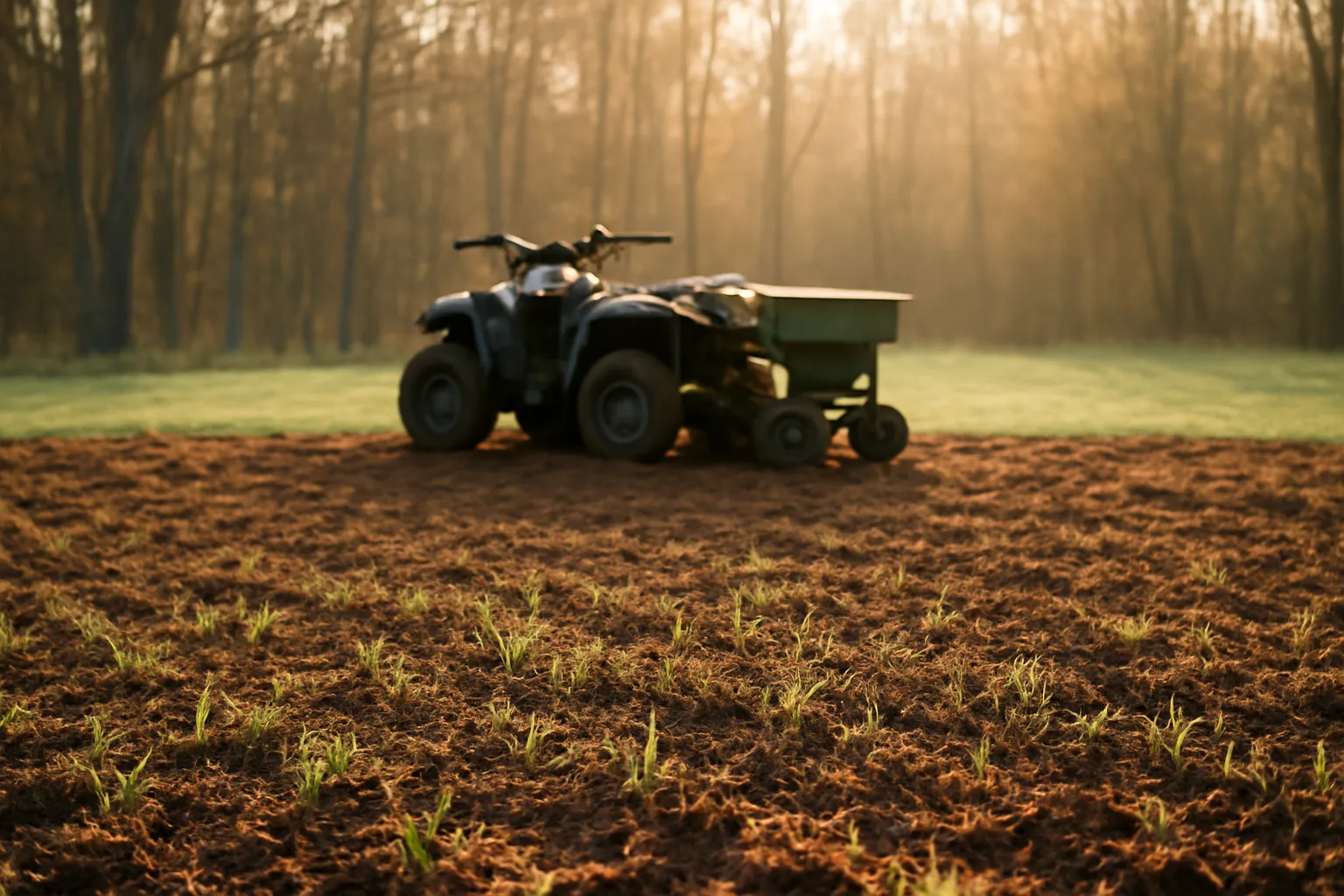
You don't need a tractor to plant a good spring plot, but you do need a way to break ground, spread lime and seed, and pack the seed in. A four-wheeler with a disc harrow or tiller attachment, a broadcast spreader, and a cultipacker or drag (even a piece of chain-link fence weighted down works) covers most small to mid-size plots. For no-till spring plantings into an existing clover or grass field, a no-till drill is worth renting if you're doing several acres, since it seeds at the correct depth without full tillage, which conserves soil moisture and reduces erosion on sloped ground. Broadcasting seed by hand or spreader still works fine for clover and small-seeded species, since good soil-to-seed contact matters more than perfect depth for clover specifically. Check a soil test before you buy fertilizer or lime in bulk. Buying lime you don't need, or skipping lime you do need, wastes more money than any equipment decision you'll make this spring.
Frequently asked questions
Do deer eat sorghum?
Yes, deer browse both forage and grain sorghum, though it's a secondary choice compared to clover or soybeans. It works well as a drought-tolerant, tall screening plant or bulk component in a summer mix. Watch for prussic acid risk in stressed or frosted sorghum regrowth, mainly a livestock concern, but a reason not to rely on it alone.
Do deer like clover?
Yes, clover is one of deer's preferred food plot forages, delivering 25 to 30 percent crude protein during active growth according to university forage data. It's palatable spring through fall and, once established, can produce for three to five years, making it the backbone perennial for most spring plot plans.
When should I plant food plots for deer?
It depends on species. Clover can go in as early as late winter (frost-seeding) through mid-spring. Warm-season annuals like soybeans, cowpeas, and sorghum need to wait until after your last frost date and soil temps near 60 degrees. Brassicas like turnips wait until late summer for a fall plot.
When should I plant oats for deer?
Oats are a fall food plot crop, typically seeded six to eight weeks before the first hard frost in your area. They don't handle summer heat well, so a spring planting mostly wastes the seed except in short-season northern climates. Plant clover or warm-season annuals in spring instead.
When should I plant turnips for deer?
Plant turnips in late summer, roughly July through early August depending on your zone, so they have 80 to 90 days to bulb before a fall frost sweetens them. Spring-planted turnips bolt to seed in lengthening daylight instead of forming the sugar-rich bulb deer prefer, so they're not a spring plot option.
What is a food plot?
A food plot is a planted patch of forage, often a quarter acre to several acres, grown on hunting land specifically to feed deer and concentrate their activity somewhere huntable. Plots range from small hidden kill plots to large destination fields, and function as a habitat supplement, not a full replacement for natural browse.
What are deer's favorite foods?
Favorites shift by season: spring green-up (clover, forbs), summer protein sources (soybeans, cowpeas), fall mast (acorns often beat anything planted), and winter woody browse. Among plot species specifically, soybeans and clover consistently rank highest for palatability, with frost-sweetened brassicas like turnips taking over in late fall.
Do deer like honey?
There's no solid evidence deer specifically seek out honey as a food source. They do prefer sweeter forage, which is why frost-converted sugars in turnips and other brassicas get hammered in late fall. Pouring honey or sugar products to attract deer may also violate state baiting laws, so check your state wildlife agency first.
How big should a spring food plot be?
There's no fixed rule; small kill plots run a quarter acre to half an acre near stands, while destination or feeding plots often run one to five acres or more. Soybean plots specifically benefit from being larger (an acre-plus) or fenced early, since deer can graze small bean plots to nothing before they establish.
Can I plant clover and soybeans together in spring?
You can, but they're usually better as separate plots or a rotational mix rather than mixed at planting, since soybeans need soil to warm past 60 degrees while clover can go in weeks earlier. A common approach is a permanent clover plot plus a separate warm-season annual plot planted after frost risk passes.
Do I need to test soil before planting a spring food plot?
Yes. A soil test, usually 10 to 20 dollars through your local extension lab, tells you pH and nutrient levels and gives lime and fertilizer recommendations specific to your target crop. Most food plot species want pH 6.0 to 6.5, and skipping the test is the most common reason plots underperform.
Is corn a good spring food plot for deer?
Corn is planted in late spring in most regions but isn't primarily a preferred browse crop; its main value is standing cover and a late-season carbohydrate source once it dries down. Most hunters get more from clover, soybeans, or cowpeas as the main spring plot species and treat corn as a secondary or cover crop.
Sources
- USDA Natural Resources Conservation Service, Wildlife Habitat Management practice standards: Food plots are supported as one component of broader wildlife habitat management, not a standalone practice
- University of Tennessee Extension, forage nutritive value data for clover: White and red clover typically test in the 25-30% crude protein range during active growth
- Mississippi State University Extension, Establishing Fall Food Plots: Oats and other cool-season annuals are typically planted six to eight weeks before first frost for fall plots
- Mississippi State University Extension, Soybean Food Plots for Deer: Soybean plots benefit from larger acreage or temporary fencing to survive early deer grazing pressure
- Pennsylvania Game Commission, food plot and habitat guidance: State wildlife agencies frame food plots as a supplement to natural browse and habitat, not a replacement
- Mississippi State University Extension, Deer Nutrition and Food Plots: Natural forage and mast typically make up the majority of a deer's diet across the year
- University of Missouri Extension, Soil Testing for Lawns and Gardens/Food Plots: Soil test costs and typical turnaround for extension soil labs, and pH targets for common food plot crops