Last updated 2026-07-25
TL;DR
The best spring deer food plot is usually a clover blend, planted from late March through May once soil temps hit 50-55°F, with oats or a clover/oat mix for quick early cover. Get a soil test first. Deer eat clover, oats, and turnips readily; sorghum is more a summer screening crop than a preferred forage.
what is a food plot, exactly
A food plot is a planted patch of forage, usually somewhere between a quarter acre and a few acres, put in specifically to feed and hold deer (or attract them for observation and hunting) rather than to sell as a farm crop. It's a wildlife management tool, not agriculture in the commercial sense, though the planting mechanics borrow heavily from farming. Most hunters run two kinds: perennial plots that stay in the ground for 3-5 years (clover, chicory, alfalfa) and annual plots replanted each season (oats, brassicas, soybeans, corn). Spring plots skew toward perennials and quick-growing annuals because you're trying to get green tonnage on the ground fast, both to feed does through lactation and to build soil and stand structure before summer heat hits. State wildlife agencies generally treat food plots as a form of habitat management distinct from baiting, but the line varies. Some states regulate what counts as a natural agricultural practice versus bait, especially around hunting over the plot itself. Michigan, for instance, defines baiting and feeding restrictions directly in its administrative rules for deer hunting, and standing food plots are generally treated differently than piled bait, but the exact line depends on the state [1]. Check your state agency's regulations before you assume a plot is legal to hunt over in every situation. If you want a plan built around your specific soil test and region rather than general advice, that's the whole reason a Custom Food Plot Plan exists. A $99 plan is guidance, not a substitute for that. Soil test numbers and your extension office are still the final word on lime and fertilizer rates.
when to plant food plots for deer in spring
| 3-4 | Late April - early June | Oats, clover, peas | |
|---|---|---|---|
| 5-6 | Mid-April - mid-May | Clover, oats, brassica mix | |
| 7 | Late March - April | Clover, oats | |
| 8-9 | February - March | Clover, cool-season annuals | Zone lookup is free through the USDA Plant Hardiness Zone Map, and it's worth checking your exact county because zones shift more than people expect across a single state. |
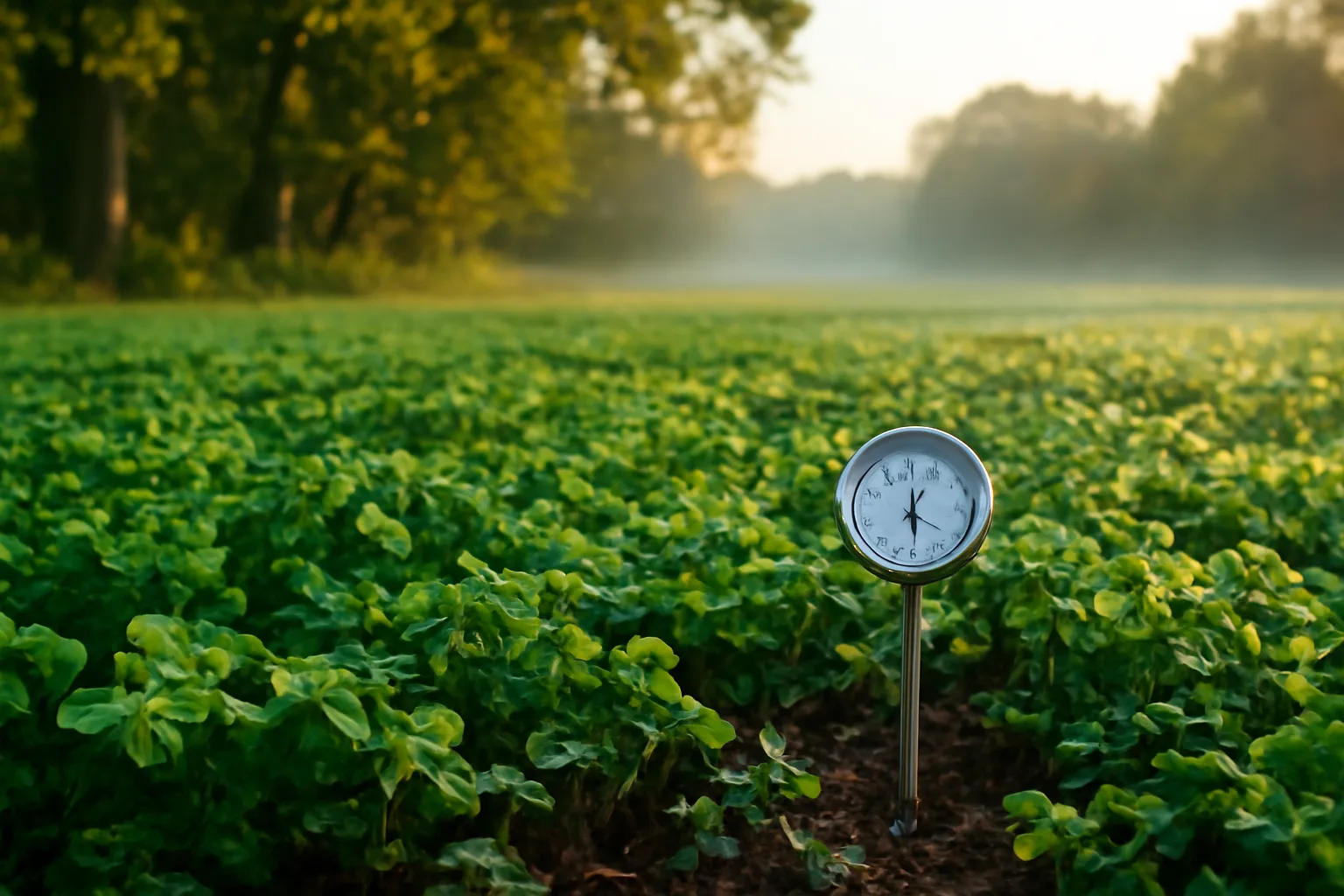
Spring planting windows are set by soil temperature, not the calendar date. Most cool-season legumes like clover germinate reliably once soil temps hit 50°F and hold, and most extension guides recommend planting from late winter through mid-spring depending on your zone [2]. In the Deep South (zones 8-9), that can mean late February through March. In the mid-South and transition zone (zones 6-7), late March into April is typical. Northern states (zones 3-5) usually wait until late April or May, sometimes into early June at higher elevations, because a late frost can wipe out a tender seedling stand. The practical rule most plotters use: wait until soil temp at a 2-inch depth holds above 50°F for about a week straight, then plant. A $10 soil thermometer from a hardware store tells you more than any regional calendar. Rain in the 7-10 days after seeding matters more than the exact date. A perfect-timing plot with no rain behind it will sit dormant or fail. Here's a rough spring planting window by USDA plant hardiness zone, built from land-grant extension planting guides [2]: | USDA Zone | Typical spring plot window | Common picks |
do deer like clover, and is it worth planting
Yes, clover is one of the most consistently preferred forages in food plot research and one of the easiest perennials to keep alive. White clover and red clover both show up repeatedly in university deer forage studies as high-preference, high-protein food sources, often tested at 20-30% crude protein in vegetative growth stages [3]. Clover's real advantage in spring is timing. It's already established if you planted last fall or the year before, and it greens up fast as soil warms, right when does need protein for lactation and bucks are starting antler growth. A well-maintained clover stand can produce for 3-5 years before it needs to be renovated or replanted, which makes the per-year cost lower than most annuals once you're past the first season. The tradeoff: clover needs decent drainage and a soil pH close to neutral (most guides target 6.0-7.0) to really perform, and it struggles in standing water or heavy shade. It also needs mowing 2-4 times a season to keep it from getting stemmy and to knock back competing weeds. If you're not willing to mow, clover will still grow. It just won't look as good or hold deer as long into summer. For a straightforward, low-drama spring plot, a clover or clover/chicory blend is hard to beat. Pair it with an annual grain like oats in year one to get quick cover while the clover establishes underneath, a technique called a nurse crop.
when to plant oats for deer, and are they worth it in spring
Oats can go in the ground in spring or fall, but most plotters get more value from fall oats because oats are a cool-season annual that thrives in the 60-75°F range and bolts to seed fast once summer heat arrives [4]. Spring-planted oats still work, especially in northern zones with a longer cool spring, but expect a shorter window of high-quality forage before they mature and lose palatability. Oats germinate fast, usually within 7-14 days under good moisture, which makes them a good nurse crop for slower perennials like clover. Plant them together and the oats give deer something to eat and give the soil surface cover while clover seedlings get established underneath. Deer do eat oats readily, especially in the leafy vegetative stage. If you're planting oats specifically for a spring plot rather than fall, do it early enough that deer get several weeks of vegetative growth before the plant heads out and the leaves toughen up. Once oats reach the reproductive stage, palatability drops fast, and deer will shift back to whatever else is greening up nearby.
when to plant turnips for deer, and do deer actually eat them
Turnips are a fall food, not a spring one, and that trips up a lot of first-time planters. Turnips need 80-90 days to bulb and get sweet, and they're bred to be planted in mid to late summer (roughly July through early August in most whitetail range) so the tops mature going into cooler fall weather, which is when deer switch to eating the bulbs. Deer will eat turnip greens readily once established, but they largely ignore the bulbs until after a hard frost converts starches to sugars, which is why turnip plots peak in late fall and winter, not spring. Planting turnips in spring wastes the seed. The plant will grow leaves in the heat, likely bolt to flower, and never sweeten the way a fall-planted turnip does because it never gets the frost trigger. If you want a brassica in your spring rotation, that's fine, but plan on turnips for your fall plot and stick with clover, oats, peas, or a spring-specific annual for the March-May window. For readers building out a full-year plan rather than a single spring plot, our guide to food plot whitetail strategy walks through the fall side of the calendar.
do deer eat sorghum
Yes, but sorghum is a middling forage choice, not a top pick, and most experienced plotters use it more for screening cover and bird/wildlife food than as a primary deer attractant. Grain sorghum produces a seed head deer and other wildlife will eat once it matures, and whole plants provide decent summer/fall cover height (often 4-6 feet), but it's planted as a warm-season crop, not spring . Sorghum needs warm soil, generally above 60-65°F, to germinate well, so it goes in the ground in late spring to early summer in most of whitetail range, not in the true early-spring window this article focuses on. If your goal is spring green forage that deer prioritize, sorghum isn't the play. Save it for a summer screening strip or a fall grain component mixed with something like soybeans.
what is deer's favorite food, really
There's no single universal answer because preference shifts by season, region, and what's locally available, but repeated forage studies point to a consistent pattern: deer favor high-protein legumes and soft mast when they're available, and fall back on browse and acorns when they aren't [3]. In spring specifically, deer prioritize new green growth high in protein and low in fiber, which is exactly why clover, alfalfa, and fresh grass shoots rank so high in observed browsing. Acorns deserve a mention because they're often cited as one of the most preferred fall foods where oaks are present, but that's a fall dynamic, not spring. In spring, with acorns long gone, the diet shifts hard toward green forage, and that's the gap a spring food plot is built to fill.
do deer like honey, and does it matter for food plots
There's no credible research or wildlife agency guidance suggesting deer specifically seek out honey, and it's not part of any standard food plot mix or attractant backed by extension research. The honey question usually comes from confusion with commercial deer attractant products that use sugary or scented additives, which are a separate category from actual food plot forage and are restricted or banned outright as bait in a lot of states. Deer are drawn to sugar and carbohydrates in general, which is part of why they hit fruit, acorns, and sweetened mineral licks. But honey itself isn't a documented food plot ingredient or a researched attractant, and pouring honey out is functionally closer to baiting (concentrated sugar source, not a growing plant) than food plot management. If you're unsure whether an attractant crosses into bait territory in your state, your state wildlife agency's baiting and feeding regulations page is the source to check, not a forum post [1].
how do I pick between clover, oats, and other spring options
| White/red clover | Perennial | 6-10 weeks | 3-5 years | Mow 2-4x/season | |
|---|---|---|---|---|---|
| Oats | Annual | 3-5 weeks | One season | Low | |
| Chicory | Perennial | 6-10 weeks | 3-5 years | Mow, some drought tolerance | |
| Forage peas | Annual | 4-6 weeks | One season | Low, good nurse crop partner | |
| Brassicas (spring-sown) | Annual | Poor fit for spring | N/A | Not recommended in spring | If you've only got room or budget for one spring plot and want the best long-term return, clover (or a clover/chicory blend) wins on cost-per-year once it's established. If you want something in and growing within a few weeks with minimal commitment, an oat/pea mix does that job well and can be tilled under or followed by a fall crop later in the year. A lot of the best spring plots aren't one species at all, they're a blend: clover as the perennial base with oats or peas as a nurse crop the first year. That combination shows up constantly in extension planting guides because it solves two problems at once, fast cover and long-term forage [2]. |
The honest answer is: it depends on whether you want a multi-year stand or a one-season fix, and how much mowing and maintenance you're willing to do. Here's a straight comparison of the main spring options. | Forage | Plant type | Time to first grazing | Stand life | Maintenance |
what soil prep actually matters before spring planting
Soil test first, every time, before you buy seed. A soil test from your state land-grant extension lab typically costs $10-20 and tells you your actual pH and nutrient levels rather than guessing . Clover in particular is sensitive to low pH; most guides recommend liming to bring soil to somewhere around 6.0-7.0 for clover and most food plot species, and lime takes months to fully react in the soil, so fall liming for a spring plot is ideal if you can plan that far ahead . Beyond pH, a firm, weed-free seedbed matters more for small-seeded species like clover than almost anything else. Clover seed is tiny; if it's not making solid soil contact (planted 1/4 inch or shallower, sometimes just broadcast and cultipacked) it either doesn't germinate or gets outcompeted by whatever weeds are already established. Oats and other larger-seeded grains are more forgiving and can be drilled deeper, around 1-1.5 inches. Your soil test results and county extension office are the real authority here, not a blanket rule from an article like this one. Fertility needs shift a lot by region and by what your specific field has already been through.
how spring plots fit into a full-year strategy
A spring plot alone rarely does the job a serious property plan needs. Spring plots feed does through lactation and bucks through early antler growth, but hunting season itself falls in the late summer through winter window in most states, which means your fall plot (brassicas, cereal grains, soybeans left standing) is what you're actually hunting over. Think of spring planting as the maintenance and habitat-building half of the calendar, and fall planting as the hunting half. A clover plot put in this spring is also setting up your fall hunting plot for next year if it's a perennial stand, since it just needs mowing and maybe a top-dress of fertilizer rather than a full replant. For readers weighing full plot layouts, species combinations, and seed sourcing across the whole year rather than just spring, it's worth looking at deer food plots and deer food plot seed for the broader picture, and food plot seed if you're comparing specific product options before you buy.
Frequently asked questions
Do deer eat sorghum in food plots?
Yes, deer will eat sorghum seed heads and browse the plant some, but it's a warm-season summer crop, not a spring one, and it ranks below clover, soybeans, and brassicas in most preference studies. Most plotters use sorghum for screening cover or as part of a fall grain mix rather than a primary spring forage.
Do deer like clover more than other food plot options?
Clover consistently ranks among the most preferred food plot forages in university deer studies, often testing at 20-30% crude protein in vegetative growth. It's a top pick for spring because it's already established from prior plantings and greens up fast when soil warms, right when lactating does and antler-growing bucks need protein most.
When is the best time to plant food plots for deer?
Timing depends on species and zone. Spring plots (clover, oats) generally go in once soil temps hold above 50°F, which ranges from February in the Deep South to late May in the northern tier. Fall plots (brassicas, cereal grains) go in mid to late summer instead, timed to mature as temperatures cool.
When should I plant oats for deer?
Oats can be planted spring or fall. Fall plantings usually give more total value because oats thrive in 60-75°F weather and bolt fast in summer heat. Spring oats work in northern zones with a longer cool season and are commonly used as a fast-growing nurse crop alongside slower perennials like clover.
When do you plant turnips for deer?
Turnips are a fall crop, planted roughly mid-July through early August in most whitetail range so the bulbs mature and sweeten after the first hard frost. Spring-planted turnips generally bolt in the heat and never develop the sugar content that makes them attractive later in the season.
What exactly is a food plot?
A food plot is a planted area, usually a quarter acre to a few acres, seeded specifically to provide forage for deer and other wildlife rather than for commercial harvest. Plots can be perennial (clover, alfalfa, chicory) lasting several years, or annual (oats, brassicas, soybeans) replanted each season.
What is a deer's favorite food overall?
There's no single universal favorite; it shifts by season and region. In fall, acorns and soft mast often top the list where available. In spring, deer prioritize high-protein new growth, which is why clover, alfalfa, and fresh forbs rank highest in observed spring diet studies.
Do deer like honey or sweet attractants?
There's no research or agency guidance showing deer specifically seek honey, and it isn't part of any standard food plot mix. Deer are drawn to sugar generally (fruit, acorns, sweetened mineral), but pouring out honey functions more like a concentrated bait source than forage, and may cross into baiting rules depending on your state.
Is spring or fall a better time to plant a food plot?
Neither is universally better; they serve different purposes. Spring plots support does through lactation and bucks through early antler growth. Fall plots are what most hunters actually hunt over during archery and firearm seasons. A full plan usually includes both, not one or the other.
How much does a soil test cost before planting a food plot?
Most land-grant university soil testing labs charge $10-20 per sample, and results typically include pH, phosphorus, potassium, and lime recommendations. Your state extension office or soil test lab is the authority on exact fertilizer and lime rates for your specific field, not a general online guide.
Can I plant clover and oats together in spring?
Yes, this is a common and effective combination. Oats germinate in 7-14 days and act as a nurse crop, giving deer forage and the soil surface cover while the slower-establishing clover seedlings take root underneath. Once oats mature or die back, the clover stand carries the plot for years.
Do brassicas work as a spring food plot?
Not well. Brassicas like turnips and radishes are bred to mature and sweeten after a fall frost, and spring planting usually causes them to bolt to seed in summer heat instead of bulbing properly. Save brassicas for a mid to late summer planting timed toward your fall hunting season.
Sources
- Michigan Department of Natural Resources, Hunting Regulation Summary: Baiting and feeding regulations vary by state and affect whether hunting over certain plots or attractants is legal
- University of Missouri Extension, Food Plots for Deer: Spring planting windows for clover, oats, and other food plot species depend on soil temperature and regional timing
- Noble Research Institute, Cool-Season Annuals for Deer Food Plots: Oats and other cool-season annuals are palatable to deer in vegetative growth stages but lose quality once they mature and head out
- USDA NRCS Plant Guide, Grain Sorghum: Grain sorghum is a warm-season crop requiring warm soil temperatures and is used for wildlife food and cover
- University of Missouri Extension, Soil Testing for Lawn and Garden and Food Plots: Soil testing costs roughly 10-20 dollars per sample and provides pH and lime recommendations specific to the field tested