Last updated 2026-07-25
TL;DR
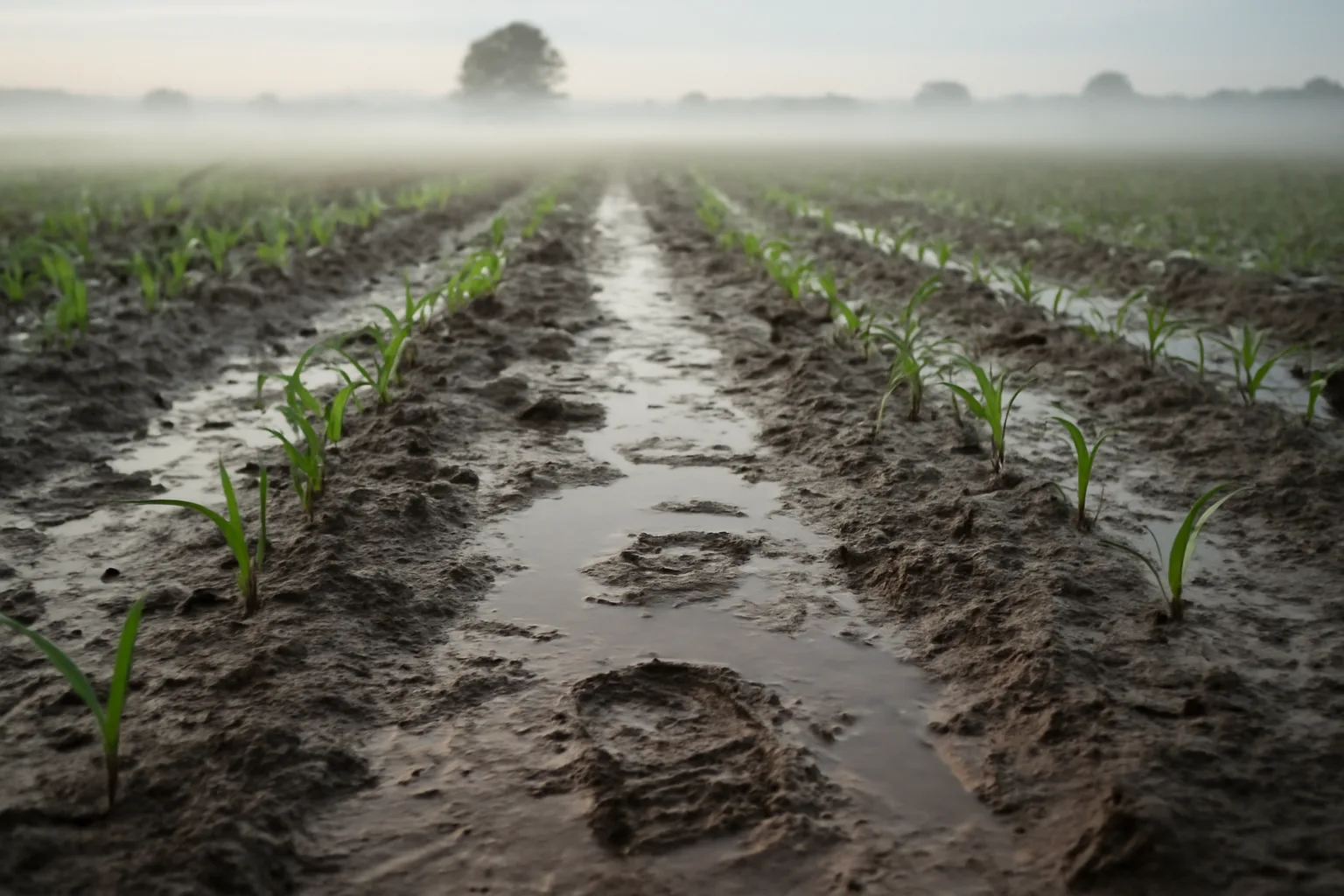
For soggy bottoms, plant wet-tolerant species like arrowleaf clover, ladino clover, certain brassicas (turnip, forage rape), and grain sorghum instead of corn or soybeans. None of these tolerate weeks of standing water, but they handle saturated soil and periodic flooding far better. Improve drainage where you can, and match planting dates to when the ground actually dries out, not the calendar.
why do food plots fail in soggy bottoms in the first place
Most food plot seed dies in wet ground because roots need oxygen just as much as the leaves need sunlight. When soil pores fill with water, roots suffocate, and the plant either rots at the crown or just stalls out and gets outcompeted by weeds that tolerate wet feet better. Corn and soybeans are especially bad in these spots. Both crops are sensitive to what agronomists call 'ponding' or saturated soil during germination and early growth, and university trial data consistently shows yield loss climbing fast once soil stays saturated more than 2 to 4 days during the seedling stage [1]. Bottoms are also usually your best dirt on paper. They collect organic matter and often test high in fertility because decades of runoff drop nutrients there. That's the frustrating part. You've got great soil chemistry sitting in a spot that drowns your plot every wet spring. The fix isn't always a different seed. Sometimes it's tile, a ditch, or just accepting the low third of the field will be planted two weeks later than the rest. But if drainage work isn't in the budget this year, species selection matters more in a soggy bottom than almost anywhere else on the property.
what food plot seed actually tolerates wet soil
| Corn | Low | Yield loss climbs fast after 2-4 days saturated [1] |
|---|---|---|
| Soybeans | Low-moderate | Sensitive during germination |
| Grain sorghum (milo) | Moderate-high | Common bottomland choice |
| Arrowleaf clover | Moderate-high | Suited to wetter Southeast soils [2] |
| Ladino clover | Moderate | Better than red clover on wet ground |
| Red clover | Low-moderate | Wants decent drainage |
| Forage turnip/rape | Moderate | Needs dry enough seedbed to germinate |
| Wheat/oats | Moderate | Better than corn, not a wetland crop |
No food plot seed loves standing water. But some species handle saturated soil, periodic flooding, and heavy clay far better than others. Arrowleaf clover is one of the more flood-tolerant clovers commonly planted for deer, and it's often recommended for the wetter soils of the Southeast where other clovers rot out [2]. Ladino (white) clover also handles moderately wet, poorly drained soil better than red clover, which wants better drainage. Brassicas, specifically forage turnips and forage rape, tolerate wet soil reasonably well once established, though they still need the ground to drain enough for germination. Grain sorghum (milo) is notably more flood and wet-soil tolerant than corn, which is one reason it shows up in bottomland wildlife plantings across the South and Midwest. Wheat and oats have moderate tolerance to wet soil, better than corn, worse than clover. None of these species tolerate weeks of standing water. 'Tolerant' here means they survive a few days of saturation or shallow flooding and bounce back, not that they thrive in a pond. Here's a rough comparison based on common extension guidance and practical field experience: | Species | Wet soil tolerance | Notes |
do deer eat sorghum
Yes. Deer eat grain sorghum, both the standing grain heads and the young foliage, though it's not usually their first choice when better forage is available. Sorghum's real value in a soggy bottom plot is agronomic, not palatability. It germinates and grows in conditions that would rot out corn, and the grain heads persist into winter, giving you standing forage after a lot of other plots have been grazed down or gone dormant. Some hunters plant sorghum as a nurse crop mixed with clover or brassicas, using its tolerance for wet, heavy soil to get some cover established while the other species catch up. Sorghum also contains dhurrin, a compound that can convert to cyanide-like compounds under stress conditions like frost or drought. This is a known livestock concern called prussic acid poisoning, and it's a much bigger issue for cattle grazing large volumes of stressed sorghum than for deer browsing occasionally [3]. Still, it's worth knowing if you're managing a mixed-use property with both cattle and deer on the same ground.
do deer eat clover, and do deer like clover
Yes, deer eat clover readily, and most whitetail forage guides rank it among the most consistently used food plot forages available, especially through spring and summer when deer need protein for antler growth and lactation. Clover regrows after grazing, which is exactly why it holds up to repeated browsing pressure better than a lot of annuals. Do deer 'like' clover in the sense of preferring it over everything else? It's complicated. Deer will often select clover over lower-protein forages, but they'll also hit acorns, standing corn, and soybeans hard when those are available and clover isn't as tender. Preference shifts seasonally and by what else is on the landscape. In a soggy bottom specifically, arrowleaf and ladino clover give you both the wet tolerance and the preference deer show for legumes during the growing season. That makes clover one of the better default choices for these spots. For a broader rundown on picking clover varieties and blends for different plot conditions, see food plot seed.
when to plant food plots for deer, and does that change in a wet bottom
General food plot timing follows two windows: spring planting for warm-season annuals and perennials (roughly April through June depending on region), and late summer to early fall planting for cool-season annuals like brassicas, cereal grains, and clover (roughly late July through September, again depending on frost dates and region). In a soggy bottom, the calendar matters less than the ground itself. You cannot drive equipment or get decent seed-to-soil contact in mud, and seed planted into saturated soil either washes out or rots before it germinates. The honest answer for wet bottoms is: plant when the ground firms up enough to work, even if that's two or three weeks behind your upland plots. Watch the field, not the date on a planting chart. A lot of guys planting bottomland plots also shift toward a slightly later fall planting window on purpose, banking on autumn rains tapering off enough for the ground to dry, rather than fighting a wet spring.
when to plant oats for deer
Oats are a cool-season annual, typically planted in late summer to early fall, generally 60 to 90 days before your area's average first hard frost, so deer have a tender, high-value forage window through fall and into early winter. Exact dates vary widely by state; check your state extension's small grains planting guide for local frost date ranges. Oats have moderate cold tolerance compared to wheat or rye and tend to winterkill sooner in northern climates, which is why a lot of northern plotters lean on wheat or cereal rye for late-winter forage and treat oats as an early-fall draw crop instead. In a soggy bottom, oats germinate fine once the seedbed has dried enough to work, but a late-summer planting window often lines up nicely with drier late-summer conditions in a lot of regions, before fall rains return. That's a practical advantage of oats in wet ground: you're often planting into a naturally drier stretch of the year.
when to plant turnips for deer
Turnips are planted in mid to late summer, generally 80 to 100 days before your first expected hard frost, since they need that runway to bulb out and reach peak tonnage and palatability by the time cold weather sets deer onto them. Frost actually helps turnips: cold converts starches to sugars, which is why deer often ignore turnip plots in September and hammer them in December. In wet bottoms, get turnips in as soon as the ground is workable within that window rather than waiting for a perfect calendar date, since a late-planted turnip crop that doesn't bulb before frost gives you a lot of leaf and not much root. Turnips tolerate moderately wet soil once established but the seed still needs a reasonably dry, firm seedbed to germinate evenly. Broadcasting into mud usually gives you a spotty, thin stand. For more on blending brassicas with other species for fall plots, see deer food plot seed.
what is a food plot, exactly
A food plot is a planted area, usually somewhere between a quarter acre and several acres, established specifically to provide supplemental forage or attraction for deer and other wildlife, distinct from agricultural fields grown for commercial harvest. Food plots typically use annual or perennial forage species like clover, brassicas, cereal grains, corn, or soybeans planted with the goal of drawing and holding deer, improving herd nutrition, and giving hunters a place to observe or harvest animals. State wildlife agencies generally treat food plots as a legal land management practice distinct from baiting, though the line between the two can get blurry and rules vary a lot by state. Some states regulate how food plots can be hunted over relative to bait piles or feeders, so it's worth checking your state wildlife agency's specific baiting and feeding regulations before you assume a plot is automatically legal to hunt in every situation. For a general overview of food plot planning basics, see food plot whitetail.
what are deer's favorite foods, and do soggy bottom plots fit that list
Deer browse studies generally rank natural mast (acorns especially) and agricultural crops like corn and soybeans near the top of whitetail diet preference when those foods are available, with clover, alfalfa, and brassicas providing high-value forage especially outside mast season. Preference isn't fixed; it shifts by season, region, and what else is on the landscape, and a lot of it comes down to available energy and protein relative to effort spent foraging. Soggy bottoms rarely support corn or soybeans well, so you're not going to plant a bottom into deer's absolute top preference. What you can do is plant the best wet-tolerant options (clover, brassicas, sorghum) and let the bottom's natural fertility work in your favor once the stand actually establishes. A thriving clover plot in a fertile bottom often outperforms a thin, stressed corn plot in the same spot, even though corn ranks higher on a generic preference list. Establishment and stand health beat theoretical preference rankings almost every time. A soil test is still the starting point for any of this. Wet bottom soils often run acidic and can be phosphorus-locked in poorly drained conditions, so your local lab's lime and fertilizer recommendation is the real authority here, not a generic chart. If you want a starting framework for species selection and planting windows across a whole property including tricky spots like wet bottoms, a service like PlotSeason's $99 Custom Food Plot Plan can give you a general starting point, though your soil test results and site conditions should always have the final say.
do deer like honey, and does it matter for food plots
There's no meaningful evidence deer seek out honey as a natural forage source, and it doesn't factor into food plot planning at all. This question shows up in search mostly from curiosity or confusion with commercial deer attractant products that use sweet, sugary scents (sometimes marketed with names referencing honey or molasses) to draw deer to a mineral site or bait station, not because deer are raiding beehives in the wild. If you're trying to increase attraction to a plot, the more useful lever is species selection and stand health, not sugar-based attractants. A thick, actively growing clover or brassica plot draws and holds deer through forage value and habitat, which is a fundamentally different mechanism than a scent-based attractant product.
how do you actually plant a wet bottom without it turning into a mess
Get the timing right first. Watch the ground, not the calendar. Wait until you can walk across the plot without sinking past your boot before you bring equipment in. Second, consider raised or ridged planting if the bottom floods repeatedly. Even a shallow crown or slight grade toward a drainage path can be the difference between a plot that survives a 2-inch rain event and one that drowns. Third, broadcast-and-cultipack rather than deep-drilling in heavier wet soils, since compacted, saturated clay doesn't take a drill seed well and can leave seed sitting in a wet furrow that never dries. A cultipacker after broadcasting gives you seed-to-soil contact without burying seed too deep in soil that's already low on oxygen. Fourth, don't fight the site every year. If a bottom floods more years than not, that's a signal to either invest in drainage (tile, a diversion ditch, grading) or accept it as a wet-tolerant clover or sorghum spot permanently rather than replanting corn into it every spring hoping this year is different.
should you just skip planting the wettest part of the bottom
Sometimes, yes. If a section floods for weeks at a time or holds standing water into June most years, it's probably not worth planting anything there. That ground is better left as a natural wetland edge, which often provides its own browse and cover value, or converted into a pond or water feature if you're already reshaping the property. The better return on effort is usually drawing a line around the true swamp and planting your wet-tolerant species in the moderately wet fringe around it, where soil stays saturated but doesn't actually pond for extended periods. That fringe is where arrowleaf clover, brassicas, and sorghum earn their keep. Trying to force a stand in the true low spot usually just wastes seed and fertilizer year after year. For more on matching specific seed blends to site conditions across a whole property, see deer food plots and domain food plot seed.
Frequently asked questions
Do deer eat sorghum?
Yes, deer eat grain sorghum's foliage and grain heads, though it's usually not their top preference. Sorghum's real advantage in food plots is that it tolerates wet, heavy soil far better than corn, making it a common choice for soggy bottomland plots where corn would drown out.
Do deer eat clover, and do deer like clover?
Yes, deer eat and generally prefer clover, especially during spring and summer when they need protein for growth and lactation. Extension forage guides consistently list clover among the most reliably used food plot species, though preference shifts seasonally depending on what else, like acorns or standing crops, is available.
When should you plant food plots for deer?
Warm-season plots (corn, soybeans, some clovers) generally go in spring, roughly April through June. Cool-season plots (brassicas, cereal grains, clover) go in late summer to early fall, roughly late July through September. Exact dates depend heavily on your region and frost dates, so check your state extension's planting guide.
When should you plant oats for deer?
Plant oats in late summer to early fall, generally 60 to 90 days before your area's first hard frost. This gives deer a tender fall forage window. Oats have less cold tolerance than wheat or cereal rye, so they winterkill earlier in northern climates.
When should you plant turnips for deer?
Plant turnips 80 to 100 days before your area's first hard frost, typically mid to late summer. Frost sweetens turnips by converting starches to sugars, so deer often ignore a turnip plot in early fall and hit it hard after the first hard freeze.
What is a food plot?
A food plot is a planted area, usually a fraction of an acre to several acres, established specifically to provide supplemental forage or attraction for deer, distinct from commercial agricultural fields. Common species include clover, brassicas, cereal grains, corn, and soybeans, chosen based on soil, region, and season.
What are deer's favorite foods?
Natural mast, especially acorns, and agricultural crops like corn and soybeans generally rank highest in whitetail diet preference when available. Clover, alfalfa, and brassicas provide strong alternative forage, especially outside mast season. Preference shifts by season and by what's actually available on the landscape.
Do deer like honey?
There's no real evidence deer seek out honey in the wild, and it has no role in food plot planning. The question usually comes from confusion with commercial sweet-scented deer attractant products, which are a different category from forage-based food plots entirely.
What food plot seed tolerates wet or soggy soil best?
Arrowleaf clover, ladino clover, forage brassicas (turnip, rape), and grain sorghum tolerate saturated or periodically flooded soil noticeably better than corn or soybeans. None of these tolerate weeks of standing water, but they handle a few days of saturation and heavy clay far better.
Can you plant corn in a wet bottom food plot?
You can, but corn is one of the more flood- and wet-soil-intolerant common food plot crops. University trial data shows corn yield loss accelerating once soil stays saturated more than a few days during early growth. In a genuinely soggy bottom, sorghum is a more reliable grain option.
Should you plant food plots on a calendar date or wait for the soil to dry?
In a wet bottom, wait for the soil to be workable rather than following a fixed calendar date. Planting into saturated ground causes seed to rot or wash out. It's normal for bottomland plots to go in two to three weeks later than upland plots on the same property.
Is it worth planting the lowest, wettest part of a bottom at all?
Often, no. If an area floods for weeks or holds standing water into early summer most years, it's usually better left unplanted as natural wetland edge. Focus wet-tolerant species like clover, brassicas, and sorghum on the moderately wet fringe around the true low spot instead.
Sources
- Purdue University Extension, Corn & Soybean Field Guide 2020 (excess water and flooding injury in corn): Corn yield loss accelerates once soil stays saturated more than 2 to 4 days during seedling stage
- University of Georgia Extension Bulletin 1350, Arrowleaf Clover: Arrowleaf clover is suited to wetter, poorly drained soils common in the Southeast
- Oklahoma State University Extension PSS-2904, Prussic Acid Poisoning: Sorghum contains dhurrin, which can convert to cyanide-like compounds under stress conditions like frost or drought
- Mississippi State University Extension Publication 2111, Growing Quality Food Plots for White-tailed Deer: Clover and legumes rank among the most consistently used forages for whitetail deer, especially during spring and summer
- University of Kentucky Cooperative Extension AGR-160, Wheat Production in Kentucky: Cereal grains like oats are typically planted roughly 60 to 90 days before first hard frost and have lower cold tolerance than wheat or rye
- Association of Fish & Wildlife Agencies, Baiting and Feeding of Wildlife: A Review of the Issues (2016): States regulate baiting and feeding differently and food plots may be treated distinctly from bait piles depending on state law