Last updated 2026-07-26
TL;DR
A food plot is a planted patch of forage, usually clover, brassicas, or grain, meant to feed and hold deer on your land. Plant cool-season plots (clover, oats, turnips) in late summer to early fall, and warm-season plots (soybeans, sorghum, corn) after your last frost. Soil test first; it changes everything else.
What is a food plot, exactly?
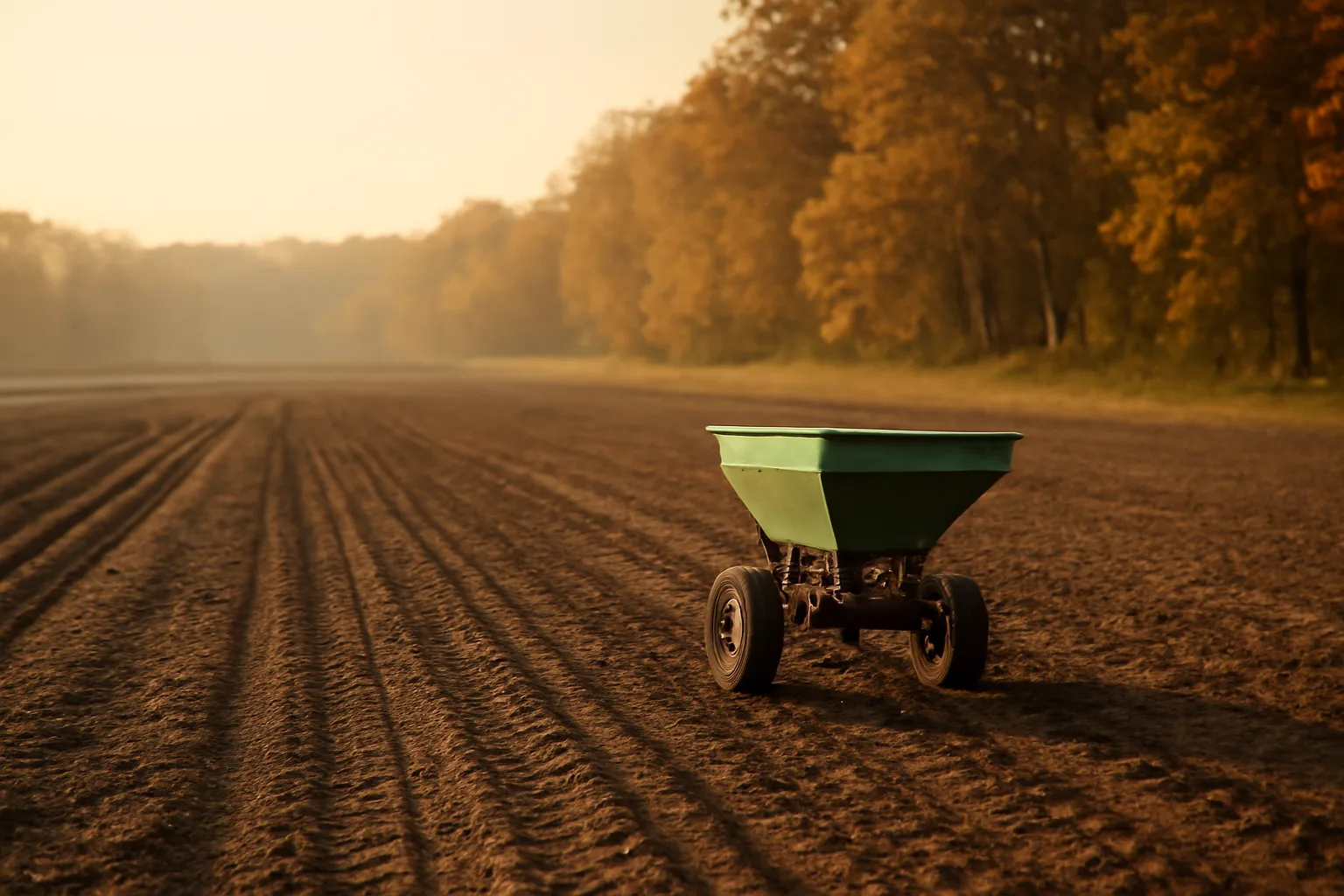
A food plot is a planted area, usually somewhere between a quarter acre and a few acres, seeded with forage that deer (and often turkey, rabbits, and other wildlife) will eat. It's more than "throwing seed in a field." A real plot involves picking a species suited to your soil and season, testing and amending that soil, controlling weeds, and timing planting so the forage is palatable and available when deer need it most. Plots generally fall into two buckets: annuals you replant every year (clover isn't one of these, it's a perennial, more on that below) and perennials that persist for two to five years with maintenance. People plant food plots for a few reasons: to supplement natural browse during stress periods (late summer drought, deep winter), to hold deer on their property longer during hunting season, and to just grow healthier deer with better nutrition across the herd. The USDA's National Agroforestry Center and state wildlife agencies both treat food plots as a habitat management tool, not a shortcut. Missouri Department of Conservation notes food plots should make up roughly 1 to 5 percent of a property's acreage to be effective without replacing natural habitat [1]. If you're brand new to this, start by reading up on food plot whitetail basics before you buy a bag of seed.
When to plant food plots for deer?
| Zone 3-4 (Upper Midwest, Northeast) | Late July to mid-August | Mid-May to early June | |
|---|---|---|---|
| Zone 5-6 (Mid-Atlantic, Midwest) | Mid-August to mid-September | Late April to late May | |
| Zone 7-8 (Southeast, lower Midwest) | September to mid-October | Late March to April | Source ranges are drawn from land-grant extension planting calendars; Penn State Extension and Mississippi State University Extension both publish specific date windows by species [3]. |
Timing depends on your climate zone and whether you're planting a cool-season or warm-season species, not a single calendar date that works nationwide. Cool-season plots (clover, brassicas, cereal grains) generally go in from late July through September in northern states, and August through October further south. Warm-season plots (soybeans, cowpeas, sorghum, corn) go in after your last frost date, typically April through June depending on latitude. The simplest rule: work backward from your first hard frost. Brassicas like turnips need 80 to 100 days to mature and taste best after a frost sweetens the leaves and bulbs, so many Midwest growers aim for a mid to late August planting for an October/November hunting season payoff [2]. Clover, by contrast, can be frost-seeded in very early spring (broadcast onto frozen or thawing ground so freeze-thaw cycles work seed into the soil) or planted in late summer with irrigation or reliable rain. Here's a rough zone-based planting window. These are generalized; always cross-check with your state's cooperative extension planting guide, since microclimates and elevation shift things by two to three weeks easily. | Zone (USDA Hardiness) | Cool-season plot window | Warm-season plot window |
Do deer like clover, and is it worth planting?
Yes, whitetails consistently prefer clover among common food plot forages, and it's one of the most planted species in the country for good reason. Clover (white clover, red clover, and ladino varieties are most common) is high in protein, typically 25 to 30 percent crude protein in vegetative growth, according to forage testing summarized by University of Tennessee Extension [4]. It also regrows repeatedly after grazing, unlike a lot of annuals that get mowed down once and don't come back. Clover's real strength is season length. A well-maintained ladino clover plot can produce palatable forage from April through November in much of the whitetail's range, and persist for three to five years before you need to reseed. That's a big deal if you're trying to build a plot program you don't have to redo every single year. The tradeoff: clover needs decent soil pH (most varieties want 6.0 to 7.0) and it's slow to establish, often 60 to 90 days before it's really productive. It also doesn't compete well with weeds in year one, so a clean seedbed and sometimes a grass-selective herbicide matter more here than with a fast-growing annual like oats. If you want species options beyond clover, browse deer food plot seed options built for your region.
When to plant oats for deer, and how do they perform?
Plant oats 60 to 90 days before your first expected frost, which lands most of the Midwest and Northeast in the August to early September window, and the Southeast in September through early October. Oats are a cereal grain, fast to germinate (often visible in 5 to 7 days), and they're one of the most attractive early-season annuals you can plant because deer hit new growth hard. Oats work well as a nurse crop mixed with clover, since the oats come up fast and give deer something to eat while the slower clover establishes underneath. They winterkill in most of the northern half of the country once temperatures drop into the teens for extended periods, so don't expect them to carry a plot through January in Minnesota. In the transition zone and Southeast, oats can survive milder winters and provide grazing into December or later. Seeding rate matters more than people think: broadcast oats typically go down at 100 to 128 lbs per acre according to Kansas State University Research and Extension agronomy guides for forage oats, considerably heavier than a grain-only crop since you want a thick stand for grazing tolerance [5].
When to plant turnips for deer, and will they actually eat them?
Plant turnips 80 to 100 days before your first killing frost, which usually means late July through August across most of the whitetail's range. Turnips are a brassica, and here's the thing about brassicas: deer often ignore them for the first month or two, then hit them hard once a frost converts starches to sugars in the leaves and bulbs. That frost-triggered palatability shift is well documented; University of Tennessee Extension notes brassica forage quality and deer preference improve markedly after a hard frost [2]. This timing quirk trips up a lot of first-year plotters. They plant turnips in August, see zero deer activity in September, panic, and think the plot failed. Then late October or November hits, temperatures drop, and the same plot gets hammered. Patience matters here more than with almost any other species. Turnips also produce two food sources in one plant: the leafy top (available almost immediately) and the bulb (available once deer start digging, usually after several frosts soften the ground and sweeten the bulb). A mix of turnips with radish and cereal grain is a common Midwest fall blend, giving you early-season leaf grazing and late-season bulb grazing in the same plot.
Do deer eat sorghum, and where does it fit in a plot plan?
Yes, deer eat sorghum, both the foliage while it's growing and the grain heads once they mature, though it's more commonly planted as a warm-season cover and food source than a primary attractant crop. Grain sorghum (milo) is planted after soil temperatures hit 60 F, generally May through June depending on zone, and it matures in 90 to 120 days. Sorghum's real value in a plot rotation is dual-purpose: it provides summer browse for deer and, if left standing, grain heads that hold through fall and winter as a high-energy food source when other plots are picked over. It's also drought-tolerant compared to corn, which matters if you're in a region with unreliable summer rain and don't want to irrigate. One caution: sorghum (and its relative, sudangrass) can develop dangerously high levels of prussic acid (cyanide) in young, frost-stressed, or drought-stressed plants. Purdue University Extension warns that livestock and wildlife grazing stressed sorghum or sudangrass can be at risk of prussic acid poisoning, particularly after a light frost that damages but doesn't kill the plant [6]. It's not a common problem in food plot settings with light deer pressure, but it's worth knowing if you're planting sorghum-sudangrass hybrids specifically for grazing tonnage.
Do deer like honey, and is it worth using as an attractant?
Deer aren't drawn to honey the way people assume, and there's no real agronomic or wildlife research supporting honey as a food plot ingredient or standalone attractant. Deer are highly attracted to sugar and carbohydrates broadly, which is why molasses-based mineral licks and sugar beets show up in attractant products, but honey specifically isn't a documented deer food source in any extension or wildlife agency literature. What actually works, according to state agency and extension guidance, is straightforward: high-carbohydrate, high-protein forage crops (clover, brassicas, soybeans, cereal grains) and mineral supplementation where legal. If you're seeing "deer honey" or similar branded attractant sprays marketed online, treat that as a commercial product claim, not a research-backed strategy. Save your money for soil amendments instead; a $20 bag of lime will do more for your plot's deer traffic than any spray attractant. One more thing worth flagging: many states regulate or outright ban baiting and supplemental feeding for deer hunting, and the line between a "food plot" and "bait" can get blurry depending on how a state defines it. Michigan, for example, restricts baiting statewide with specific exceptions, and food plots are generally treated differently from bait piles, but you need to check your state's specific definition before assuming anything is legal [7]. Always check your state wildlife agency's current regulations before hunting over any planted or supplemental food source.
What are deer's favorite foods, ranked by preference and season?
| Spring/Summer | Soybeans, cowpeas, clover | High protein for antler growth and lactation | |
|---|---|---|---|
| Early fall | Clover, oats, soybeans (pods) | Still palatable, high in protein | |
| Late fall/Winter | Brassicas (post-frost), corn, cereal grains | Sugar conversion in brassicas, high energy in grain | If natural mast is heavy in a given year, expect plot traffic to drop temporarily. This is normal and doesn't mean your plot failed. |
Deer preference shifts by season, but across food plot research and extension forage trials, a few species consistently rank at the top: clover, soybeans, and brassicas (turnips, radish, rape) show up as high-preference forages in whitetail studies, while corn and cereal grains rank as strong secondary or late-season options. Natural browse still matters more than people think. Acorns, when available, are often preferred over planted forage entirely; a mast year (heavy acorn drop) can pull deer off your plots completely regardless of what you planted. That's not a failure of your plot, it's just deer behaving like deer. Here's a rough seasonal preference breakdown based on common food plot species and their growth timing: | Season | High-preference species | Why |
How does soil testing change what and when you plant?
A soil test tells you your pH and nutrient levels (phosphorus, potassium, and often organic matter), and those numbers determine whether your seed choice will actually establish or just rot in the ground. Most food plot species want a pH between 6.0 and 7.0; below 5.5, clover and brassicas struggle badly regardless of how good your seed is. Your extension office or a private ag lab runs the test, usually for $10 to $20, and gives you a lime and fertilizer recommendation specific to your soil and intended crop. This is not a step to skip. Penn State Extension puts it plainly in their food plot guidance: soil testing is the foundation step, and lime applied to correct pH can take three to six months to fully react in the soil, meaning fall plots often need lime applied the prior spring for full benefit. That lag is the part people miss. If your test comes back at pH 5.4 and you're planting clover in three weeks, lime won't have time to work. You might still get a stand, just a stunted, low-vigor one. Plan lime applications a full season ahead of your target planting when you can. Your soil test results are specific to your dirt, your field history, and your sample depth. Treat the lab's recommendation as the final word on lime and fertilizer rates; a general planting guide (including this one) can tell you what's typical, but it can't replace a report pulled from your own field.
What equipment do you actually need to plant a food plot?
At minimum: something to kill existing vegetation (herbicide and a sprayer, or a disc), something to work the seedbed (disc, tiller, or no-till drill), a way to spread seed (broadcast spreader, ATV spreader, or a drill), and a way to pack the seed in (cultipacker, ATV tires, or roller). You don't need all of this owned outright; a lot of plotters rent or borrow a disc and drill for a weekend. For small plots (under an acre), a hand-crank or ATV-mounted broadcast spreader, a bit of Roundup, and a rented cultipacker will get you through. For larger acreage or heavier clay soils, a tractor with a disc harrow and a no-till drill saves enormous time and gets much better seed-to-soil contact, which directly affects germination rates. Don't skip the packing step. Seed sitting on top of loose soil, especially small seed like clover or brassica, dries out and fails to germinate at a much higher rate than seed pressed into firm contact with soil. A cultipacker or even driving over the plot with a four-wheeler and low tire pressure works in a pinch.
How do you plan a rotation across a full plot season?
Most serious plotters run at least two plot types: a perennial clover plot that persists for years, and one or two annual plots (brassica/cereal grain blend for fall, soybeans or a summer blend for growing season) that get replanted on a schedule. Rotating annual plots between different families (legume one year, brassica the next) also helps break weed and disease cycles, similar to row-crop agriculture practice recommended by USDA NRCS guidance on cover crop rotation . A simple two-plot program might look like this: one acre of ladino clover as your perennial anchor, reseeded or overseeded every 3 to 4 years, plus a half-acre annual plot alternating between a spring soybean/cowpea blend and a fall brassica/oat blend. That gives you spring and summer protein, early fall grazing, and late-season high-energy forage, all from two plots. If you'd rather not guess at species mixes and timing for your specific property, that's the exact gap a service like PlotSeason's $99 one-time Custom Food Plot Plan is built to fill: you get a planting plan matched to your zone, soil test results, and equipment, without needing to piece together extension bulletins from six different states. It's guidance, not a guarantee of deer activity or a replacement for your soil lab's specific lime and fertilizer numbers.
What mistakes cost plotters the most time and money?
Skipping the soil test is the single most common and costly mistake. Planting into a pH of 5.0 with no lime applied wastes seed money regardless of species; clover and brassicas both stall out hard below pH 5.5, per Mississippi State University Extension forage guidance [3]. Planting too early or too late for brassicas is the second big one. Brassicas planted too early (June, for instance, in most zones) mature and get tough or bolt to seed before deer season even opens. Planted too late, they don't have the 80 to 100 days needed to bulb up before frost. Getting this window right matters more for brassicas than almost any other species. Other recurring mistakes: seeding rate too light (thin stands lose the weed-competition battle fast), skipping the packing/cultipacking step on small seed, and planting a shade-intolerant species like clover in a plot that gets less than 6 hours of direct sun. None of these are expensive fixes, they just take knowing about them before you plant, not after. For a broader look at species options and how to match seed to your specific goals, deer food plots and food plot seed are good next reads.
Frequently asked questions
Do deer eat sorghum?
Yes. Deer browse sorghum foliage in summer and eat mature grain heads in fall and winter. It's more often used as a drought-tolerant, dual-purpose summer plot than a primary attractant. Watch for prussic acid risk in frost-stressed or drought-stressed sorghum and sudangrass, per Purdue Extension warnings on grazing stressed plants [8].
Do deer eat clover?
Yes, clover is one of the most preferred food plot forages for whitetails, running 25 to 30 percent crude protein in vegetative growth according to University of Tennessee Extension forage data [5]. It regrows after grazing and can produce forage from spring through late fall in a well-maintained stand.
When to plant deer food plots?
Cool-season plots (clover, oats, brassicas) generally go in late July through September depending on your zone. Warm-season plots (soybeans, sorghum, corn) go in after your last spring frost, typically April through June. Work backward from your first fall frost date for brassicas specifically, since they need 80 to 100 days to mature.
Do deer like clover?
Yes, clover consistently ranks among the top-preferred food plot species in whitetail research and extension trials. It's high protein, persists for three to five years as a perennial, and regrows after grazing, unlike most annuals. It does need pH 6.0 to 7.0 and good sun to establish well.
When to plant oats for deer?
Plant oats 60 to 90 days before your first expected frost, roughly August to early September in the Midwest and Northeast, and September through early October in the Southeast. Oats germinate fast (5 to 7 days) and work well mixed with clover as a nurse crop for the slower-establishing legume.
When to plant food plots for deer, by region?
Zone 3-4 (Upper Midwest/Northeast): cool-season late July to mid-August, warm-season mid-May to early June. Zone 5-6 (Mid-Atlantic/Midwest): cool-season mid-August to mid-September, warm-season late April to late May. Zone 7-8 (Southeast): cool-season September to mid-October, warm-season late March to April. Confirm with your local extension calendar.
When to plant turnips for deer?
Plant turnips 80 to 100 days before your first killing frost, usually late July through August in most of the whitetail range. Deer often ignore turnips at first and hit them hard only after a frost sweetens the leaves and bulbs, so don't judge the plot's success until late fall.
What is a food plot?
A food plot is a planted patch, often a quarter acre to several acres, seeded with forage like clover, brassicas, soybeans, or cereal grain to feed deer and other wildlife. State agencies like Missouri Department of Conservation recommend plots make up roughly 1 to 5 percent of total property acreage [1].
What are deer's favorite foods?
Among planted species, clover, soybeans, and brassicas (post-frost) rank highest in preference across extension forage trials. But natural browse, especially acorns during a mast year, can outrank any food plot. Corn and cereal grains matter most as high-energy late-season foods once softer forage is gone.
Do deer like honey?
No documented wildlife research supports honey as a deer attractant or food plot ingredient. Deer are drawn to sugar and carbohydrates broadly, which is why molasses-based products exist, but honey specifically has no basis in extension or state agency food plot guidance. Skip it and put that money toward lime instead.
Can I plant a food plot without a soil test?
You can, but you're guessing. Most plot species need pH 6.0 to 7.0, and Penn State Extension notes lime can take three to six months to fully correct pH, so testing ahead of planting season matters [3]. A test costs roughly $10 to $20 through most extension offices.
Is it legal to hunt over a food plot?
Usually yes, but rules vary sharply by state, and the line between a food plot and illegal bait can be technical. States like Michigan regulate baiting with specific statewide restrictions and exceptions [9]. Always check your state wildlife agency's current baiting and feeding regulations before hunting near any planted plot.
How big should a food plot be?
There's no single right size; it depends on your goals and total acreage. Missouri Department of Conservation suggests food plots total roughly 1 to 5 percent of a property to supplement, not replace, natural habitat [1]. A quarter acre to one acre per plot is common on smaller leases.
Sources
- Missouri Department of Conservation, food plot management guidance: Food plots should generally make up roughly 1 to 5 percent of a property's acreage
- University of Tennessee Extension, brassica forage for deer: Brassicas need 80 to 100 days to mature and improve in palatability after frost
- University of Tennessee Extension, clover forage quality: Clover in vegetative growth runs approximately 25 to 30 percent crude protein
- Kansas State University Research and Extension, forage oats seeding rates: Broadcast oat seeding rates typically run 100 to 128 lbs per acre for forage stands
- Purdue University Extension, prussic acid poisoning in sorghum species: Frost-stressed or drought-stressed sorghum and sudangrass can develop dangerous prussic acid levels
- Michigan Department of Natural Resources, baiting and feeding regulations: Michigan restricts baiting statewide with specific defined exceptions
- USDA Natural Resources Conservation Service, cover crop and rotation guidance: Rotating crop families helps break weed and disease cycles in planted plots