Last updated 2026-07-26
TL;DR
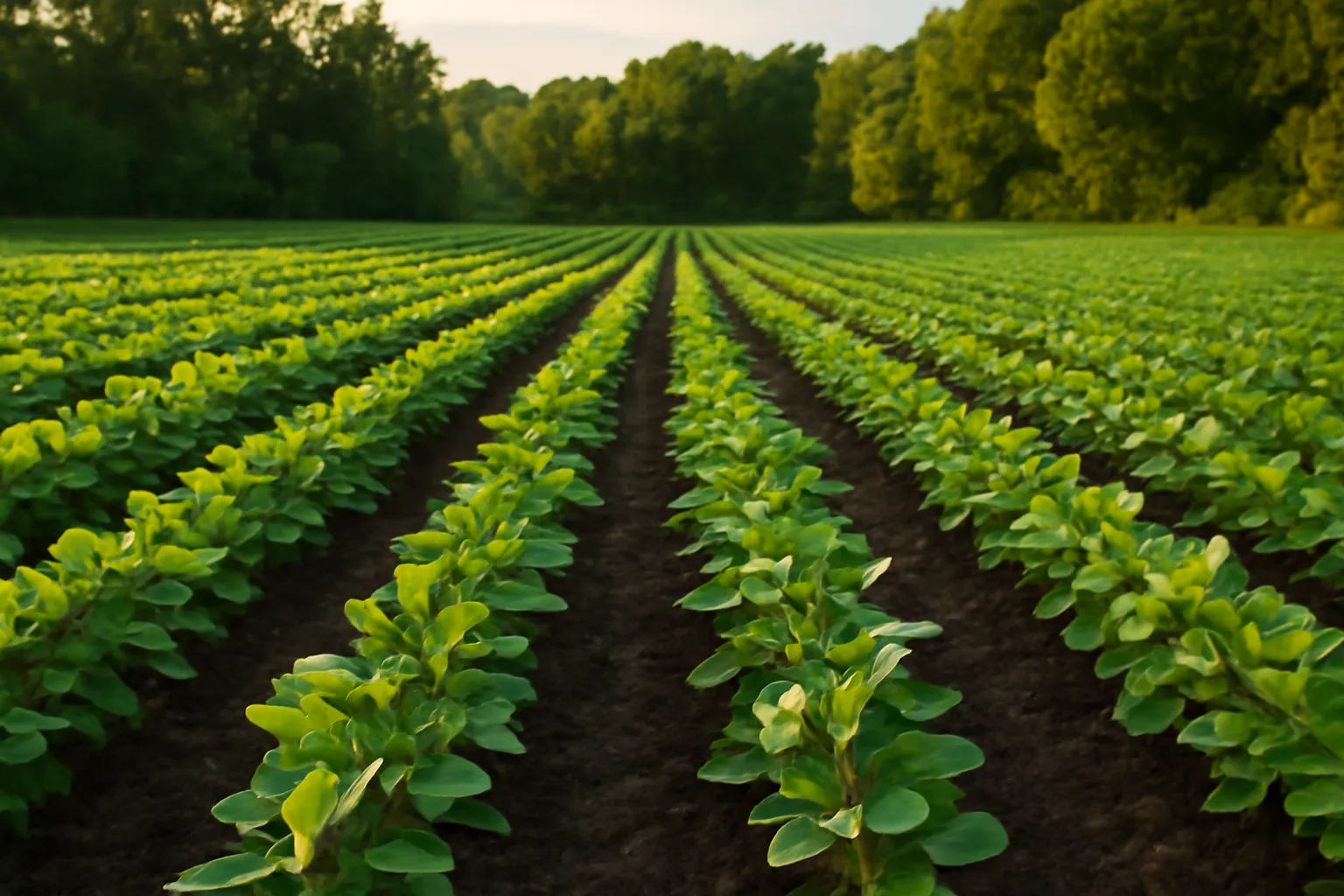
Soybeans are a top-tier deer food plot crop, offering high protein forage in summer and a standing grain crop in fall. Plant after last frost, in May or June depending on zone, at 6.0-6.8 soil pH. They need 3+ acres or fencing to survive early browse pressure, since deer will hammer young plants before they establish.
what makes soybeans a good food plot choice
Soybeans give you two food sources in one planting: tender, high-protein forage from June through August, and standing grain pods that hold nutrition into late fall and winter. Whitetails eat the leaves aggressively during the growing season, and forage soybean varieties commonly test at 30-40% crude protein in leaf tissue, according to forage testing summaries from university agronomy programs [1]. That's some of the highest protein content available in any food plot crop, ahead of most clover blends and well ahead of brassicas. The catch is that soybeans are slow to establish and deer love them from the day they sprout. A small plot, anything under 2 to 3 acres in moderate to high deer density areas, can get grazed to nubs before the plants ever get a real root system going. That's the single biggest reason soybean plots fail. It isn't soil, it isn't seed quality, it's acreage versus deer pressure. If you've only got a half-acre clearing, soybeans alone are probably not your best bet unless you're willing to fence the plot for the first 6 to 8 weeks. Bigger properties with 5+ acres to dedicate, or plots tucked well off the beaten path, are where soybeans really shine. For smaller plots, something like clover or a brassica blend tolerates browse pressure better early on.
when to plant soybeans for deer food plots
Plant soybeans after your last spring frost date, once soil temperatures hit at least 55-60°F, which is typically mid-May in the Midwest and Upper South, and early to mid-June in the northern tier of whitetail range. Soybeans need 90 to 120 frost-free days to mature into grain, so working backward from your first fall frost date matters as much as your last spring frost date. USDA Plant Hardiness Zone maps are a decent starting reference for frost timing, though your local NOAA or state climate office frost data is more precise for actual planting windows [2]. In Zone 5 (much of the northern Midwest and interior Northeast), that's usually a late May planting. In Zone 6 and 7 (Mid-South, transition zone), late April through May works. In Zone 8 and warmer (Deep South), you can push planting into June and still get a mature crop before frost. Don't rush this. Planting into cold, wet soil is one of the most common soybean food plot mistakes. Seed will rot before it germinates, and you'll be reseeding in June anyway. Wait for consistent soil temps, more than a warm week.
how do I prep soil for a soybean plot
Pull a soil test before you do anything else. Soybeans grow best in soil with a pH between 6.0 and 6.8, and most food plot failures trace back to skipping this step, according to Penn State Extension's forage and soil fertility guidance [3]. If your test comes back at 5.2, no amount of fertilizer fixes that until lime raises the pH, and ag lime takes months to fully react in the soil, so apply it as early in the season as you can, ideally the fall before planting. Your soil test report is the actual authority here, not a blanket recommendation. Labs vary in what they test for and how they present lime and fertilizer rates (some report in tons per acre, others in pounds), so follow what your specific lab tells you rather than a generic rule of thumb. Soybeans fix their own nitrogen through rhizobia bacteria in root nodules, so you generally don't need heavy nitrogen fertilizer once the crop is established. Most soybean seed sold for food plots or agriculture comes pre-inoculated with the right rhizobia strain. Phosphorus and potassium are where soybeans actually respond to fertilizer, and your soil test will tell you exact rates. A basic starter blend or your soil test's recommended P and K rate at planting is usually enough.
what's the right seeding rate and depth for soybeans
Broadcast soybean seeding rates for food plots typically run 60 to 100 pounds per acre, while drilled rates can be lower, around 50 to 70 pounds per acre, because drilling gets better seed-to-soil contact and needs less seed to hit the same stand count [4]. If you're broadcasting into a tilled seedbed, err toward the higher end of that range since germination rates on broadcast seed run lower than drilled seed. Plant depth matters more with soybeans than most food plot seeds. Drill or cover seed at 1 to 1.5 inches deep. Too shallow and the seed dries out or gets picked off by birds and rodents. Too deep and the seedling can't push through, especially in heavier clay soils. Row spacing isn't something most food plot growers worry about since you're broadcasting or drilling solid stands rather than row-cropping, but if you do have access to a planter, 15 to 30 inch rows are standard in ag production and work fine for plots too.
should I plant soybeans alone or in a blend
A lot of experienced plotters mix soybeans with a small amount of grain sorghum, corn, or sunflowers, not for the deer to eat the companion crop necessarily, but because taller plants give the soybeans some structural support and a bit of cover from aerial browse pressure. It's a minor benefit, not a magic fix for deer pressure. Some blends also mix soybeans with forage-type varieties bred specifically for grazing tolerance rather than grain yield. These "forage soybeans" regrow faster after being browsed compared to standard ag-variety beans, which are bred to put energy into pod production, not leaf regrowth. If your plot gets hit hard early and often, a forage-blend soybean is worth the extra seed cost. For readers comparing crop options across a whole property, it helps to look at food plot seed options side by side rather than picking soybeans in isolation. A one-species plot is simpler to manage but riskier if that one species has a bad year from drought, disease, or overbrowsing.
how much acreage do soybeans need to survive deer pressure
This is the number one soybean food plot mistake, undersized plots. Mississippi State University Extension guidance on food plots for white-tailed deer generally recommends soybean plots be at least 3 to 5 acres in areas with moderate to high deer density, specifically because young soybean plants get browsed faster than they can grow back [5]. In low-density deer areas, smaller plots of 1 to 2 acres can work. If you don't have that much open ground, your options are: fence the plot temporarily with electric or poly fencing until plants reach 12 to 18 inches tall, plant a sacrificial perimeter of a cheaper, faster-growing crop to buffer browse pressure, or just accept that soybeans aren't the right call for that particular plot and go with a more browse-tolerant option instead. There's no shortcut here. Soybeans in a small, exposed plot surrounded by heavy deer numbers get eaten to the dirt, often within two to three weeks of emergence. It's not a seed quality issue or a fertility issue, it's math: more mouths than the plant can outgrow.
when to plant food plots for deer overall (soybeans vs other crops)
| Soybeans | Spring/summer | Mid-April to June | |
|---|---|---|---|
| Corn | Spring | April to May | |
| Clover | Late summer/fall (or spring) | August-September, or April-May | |
| Oats | Late summer/fall | August-September | |
| Brassicas (turnips, etc.) | Late summer | Late July to early September | |
| Winter wheat/rye | Fall | September-October | A lot of the best deer plotting plans combine both: a spring-planted soybean or corn plot for summer forage and fall standing grain, paired with a fall-planted brassica or clover plot for late-season browse when soybeans are already picked clean or frozen down. That one-two combination covers deer nutrition needs across most of the year rather than betting everything on one planting window. |
The right planting window depends entirely on what you're growing, and that's the part a lot of first-time planters get backward. Soybeans, corn, and other warm-season summer annuals go in after your last spring frost, generally April through June depending on your zone. Cool-season crops like clover, oats, and brassicas go in during late summer to early fall, timed so plants establish before the first hard frost slows growth [6]. Here's a rough national comparison: | Crop | Planting Season | Typical Window (varies by zone) |
when to plant oats for deer food plots
Oats are a cool-season annual, planted in late summer to early fall, generally August through September in northern climates and September through early October farther south [7]. Oats germinate fast, often within 5 to 7 days in warm, moist soil, and they're one of the most attractive early fall food sources for whitetails because the young growth is tender and sugar-rich. Oats don't survive hard winters well in most of the whitetail range, so they're primarily an early-to-mid fall attractant rather than a late-season food source. If you want food standing into December and January, pair oats with turnips, brassicas, or winter wheat and rye, which tolerate cold far better. A simple oat and clover or oat and brassica blend is a common, low-cost combo for hunters planting a single fall plot who want fast germination plus longer-season coverage.
when to plant turnips for deer food plots
Turnips are planted in mid to late summer, generally late July through early September depending on your frost date, since they need roughly 80 to 90 days to reach full bulb size before a hard freeze [8]. Deer often ignore turnip bulbs and tops early in the fall, then switch to hammering them hard after the first couple of frosts convert starches to sugars in the plant tissue, a pattern documented in university brassica forage trials. That delayed-attraction pattern surprises a lot of first-time turnip planters who think their plot failed because deer aren't touching it in October. Give it time. By late November and into December, that same plot often gets worked hard, especially in years with an early, sharp frost. Turnips pair well with oats or cereal rye in a blend, giving you fast fall attraction from the grain component and long-season tonnage from the turnip bulbs and tops once cold weather hits.
what is a food plot, exactly
A food plot is a planted area of forage crops, usually somewhere between a quarter acre and several acres, established specifically to provide supplemental nutrition and hunting opportunity for deer and other wildlife. Food plots are common on private and leased hunting land throughout whitetail range, and they range from small hunting plots (a quarter to half acre, tucked near a stand for close-range hunting) to large destination or nutrition plots (multiple acres, meant to provide bulk forage across the growing season). Food plots aren't the same as baiting, though the legal line between the two varies significantly by state. Baiting generally refers to placing loose feed, grain piles, or feeders to attract animals for hunting, while a food plot is an established, growing crop. Some states regulate or restrict hunting over food plots under certain conditions, and rules on baiting versus plots differ enough between states that you need to check your specific state wildlife agency's regulations before you hunt over any planted or supplemental food source [9]. What's legal in Iowa may not be legal in Michigan or Pennsylvania. Most hunters run a combination of plot types, matching plot size and crop choice to plot purpose. A food plot for whitetail hunting setup near a stand looks different from a large nutritional plot meant to hold deer on the property through summer stress and antler growth.
do deer eat sorghum
Yes, deer eat grain sorghum, particularly the seed heads once they mature and dry down in fall, and sorghum is a common companion crop planted alongside soybeans for structural support and additional fall/winter grain . Sorghum is also more drought-tolerant than corn, which makes it a useful substitute in areas with sandy soil or inconsistent summer rainfall. Deer generally aren't as aggressive on sorghum as they are on soybeans or corn, especially early in the season, but the standing grain heads become a solid late-season food source, especially for turkey and other wildlife as well as deer. It's rarely planted as a standalone deer food plot crop and more often used as 10-20% of a mixed summer blend.
do deer eat clover and do deer like clover
Yes, deer eat clover readily and it's one of the most consistently preferred food plot forages across whitetail range. Clover regrows after grazing faster than almost any other food plot crop, which is exactly why it holds up under heavy deer pressure where soybeans or corn would get wiped out. White clover varieties like Ladino and red clover both test high in protein, often in the 20-25% crude protein range depending on growth stage and soil fertility . Clover's biggest advantage is its perennial nature. A well-maintained clover plot can produce forage for 3 to 5 years before it needs to be replanted, compared to annual replanting required for soybeans, corn, and brassicas. That makes clover a lower long-term cost option even though seed itself isn't necessarily cheaper per pound. The tradeoff is clover goes dormant or grows very slowly in cold winter months and during summer drought stress, so it's not a standalone answer for late-season hunting in the way standing corn or soybean pods are.
what are deer's favorite foods, and do deer like honey
There's no single scientifically ranked "favorite food" list for deer, because preference shifts constantly based on season, regional food availability, and what's most nutritionally needed at that moment. That said, food plot crops that consistently rank as high-preference across most research and field observation include soybeans, clover, and standing corn during the growing season, and brassicas, winter wheat, and turnips once cold weather hits and sugars concentrate in plant tissue. Acorns are arguably the biggest natural competitor to any food plot in fall, and in a heavy mast year, deer will often bypass planted plots entirely in favor of white oak acorns, which are lower in tannins and more palatable than red oak acorns. That's not a plot failure, that's just deer doing what deer do when free, high-energy food is on the ground. As for honey: deer are not typically attracted to honey itself, and there's no meaningful field or extension research suggesting honey is an effective deer attractant. Deer are herbivores with digestive systems built around browse, forbs, and mast, not concentrated sugars like honey. Some hunters use sweet liquid scents or mineral licks with molasses-based additives, which is a different thing entirely from honey itself, and even those products' effectiveness is mostly anecdotal rather than backed by controlled studies.
where do I get a soybean planting plan for my specific property
Everything above covers the general rules, but soil type, deer density, rainfall, and frost dates vary enough county to county that a generic plan only gets you so far. If you want something built around your actual property, a soil test result, and your specific zone, the $99 one-time Custom Food Plot Plan walks through species selection, seeding rates, and a planting calendar tailored to your inputs, not a one-size-fits-all national recommendation. Either way, treat your soil test lab as the final word on lime and fertilizer rates for your specific field. Plans and articles like this one give you the framework and the reasoning; your soil test gives you the exact numbers for your dirt.
Frequently asked questions
Do deer eat sorghum in food plots?
Yes. Deer eat grain sorghum, especially mature seed heads in fall and winter. It's more often planted as a companion crop with soybeans (10-20% of the mix) than as a standalone plot, and it's more drought-tolerant than corn, making it useful in sandy or dry soil.
Do deer eat clover, and do deer actually like it?
Yes, clover is one of the most consistently preferred food plot forages. White and red clover regrow fast after grazing, test at roughly 20-25% crude protein, and can produce forage for 3-5 years from one planting before needing replanting, unlike annual crops like soybeans or brassicas.
When should I plant food plots for deer?
It depends on the crop. Warm-season crops like soybeans and corn go in after your last spring frost, roughly April through June. Cool-season crops like clover, oats, and brassicas go in late summer to early fall, typically August through October, so they establish before the first hard freeze.
When do I plant oats for deer food plots?
Plant oats in late summer to early fall, generally August through September in the North and September into early October farther south. Oats germinate in about 5-7 days and give fast early-fall attraction, but they don't survive hard winters well, so pair them with brassicas or winter rye for late-season food.
When do I plant turnips for deer?
Plant turnips late July through early September, since they need about 80-90 days to bulb up before a hard freeze. Deer often ignore turnips in early fall, then hit them hard after a couple of frosts convert starches to sugar, usually late November into December.
What exactly is a food plot?
A food plot is a planted area, typically a quarter-acre to several acres, established to provide supplemental forage for deer and other wildlife on hunting land. It's different from baiting (loose feed or grain piles), though rules distinguishing the two vary by state, so check your state wildlife agency's regulations before hunting over one.
What are deer's favorite foods overall?
There's no fixed ranking since preference shifts by season and region, but soybeans, clover, and standing corn rank high during the growing season, while brassicas, turnips, and winter wheat rank high in late fall and winter. Acorns, especially white oak, often outcompete any planted food plot in a heavy mast year.
Do deer like honey or sweet attractants?
No solid evidence supports honey as a deer attractant. Deer are herbivores built around browse, forbs, and mast, not concentrated sugars. Some molasses-based mineral products exist, but their effectiveness is mostly anecdotal, not backed by controlled wildlife research.
How many acres of soybeans does a food plot need?
Mississippi State University Extension guidance generally recommends 3-5 acres minimum in moderate to high deer density areas, since young soybean plants get browsed faster than they regrow. Smaller plots of 1-2 acres can work only in areas with low deer density or with temporary fencing during establishment.
What soil pH do soybeans need for food plots?
Soybeans grow best between pH 6.0 and 6.8. Below that range, nutrient uptake drops significantly regardless of how much fertilizer you apply. A soil test tells you exact lime needs; apply lime as early as possible, ideally the fall before planting, since it takes months to fully adjust soil pH.
What's the seeding rate for soybean food plots?
Broadcast rates typically run 60-100 pounds per acre, while drilled rates run lower, about 50-70 pounds per acre, since drilling gets better seed-to-soil contact. Plant seed 1 to 1.5 inches deep; shallower risks drying out or bird predation, deeper risks poor emergence.
Can I plant soybeans and clover together in one plot?
Not typically as a direct mix, since soybeans are an annual warm-season crop and clover is a perennial cool-season crop with different planting windows. Many hunters instead run separate plots, a spring soybean plot and a fall-planted clover plot, to cover forage needs across different seasons.
Why did my soybean food plot fail?
The most common reason is undersized acreage relative to deer density; young soybeans get browsed down before they establish. Other causes include planting into cold soil, wrong soil pH, or skipping a soil test. Fencing small plots temporarily or choosing a more browse-tolerant crop solves the pressure issue.
Sources
- Purdue University Extension, Corn and Soybean Field Guide (ID-179): Soybeans require roughly 90-120 frost-free days to reach maturity
- Penn State Extension, Agronomy Guide: Soil Fertility Management: Soybeans grow best in soil pH between 6.0 and 6.8
- Iowa State University Extension and Outreach, PM 1851 Soybean Planting Guide: Drilled soybean seeding rates are generally lower than broadcast rates due to improved seed-to-soil contact
- University of Georgia Extension, Circular 1265: Wildlife Food Plots: Cool-season food plot crops are planted in late summer to early fall, warm-season crops in spring
- University of Georgia Extension, Publication B1362: Fall and Winter Food Plots: Oats are typically planted in late summer to early fall for deer food plots
- Oklahoma State University Extension, PSS-2914: Brassicas for Deer Food Plots: Brassica turnips need roughly 80-90 days to mature and become more palatable after frost
- Pennsylvania Game Commission, Baiting and Feeding Regulations: States regulate baiting and feeding of deer differently, and food plots are treated distinctly from bait under some state rules
- University of Missouri Extension, G4364: Grain Sorghum for Wildlife: Grain sorghum is used as a deer food plot crop, often as a companion planting with soybeans
- USDA Natural Resources Conservation Service, Plant Fact Sheet: White Clover: White clover is a high-protein perennial forage commonly used in wildlife plantings