Last updated 2026-07-26
TL;DR
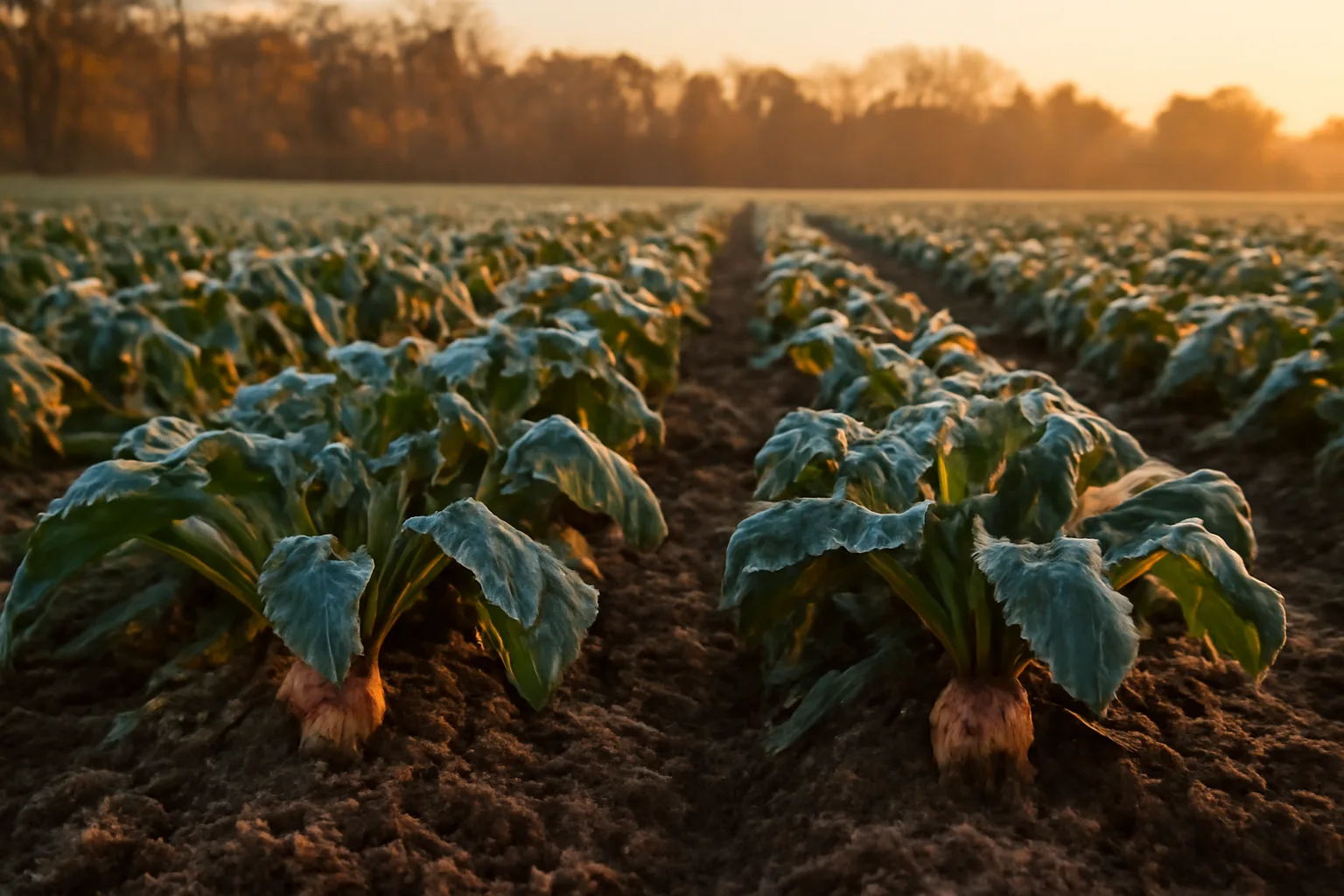
Sugar beets make a high-energy fall and winter deer food plot, best planted late spring to early summer (May-June in most zones) once soil hits 50°F, in fertile, well-drained soil with pH 6.0-7.5. They take 4-5 months to bulb up and shine most in northern climates where a hard frost sweetens the roots before deer dig in.
what is a food plot, and where do sugar beets fit in?
A food plot is a planted patch of forage on hunting land, grown specifically to feed and hold deer or other wildlife, and often to create a hunting opportunity nearby. Plots range from quarter-acre kill plots tucked in timber to multi-acre destination fields planted in clover, brassicas, or grain. Sugar beets fall into the brassica-adjacent, high-energy root crop category. They're not a brassica botanically (they're in the Amaranthaceae family, related to table beets and Swiss chard), but hunters plant and manage them like a specialty fall/winter food source alongside turnips and radishes. The appeal is simple: a mature sugar beet plot can produce an enormous amount of tonnage per acre, both in leafy tops early and in dense, sugar-packed roots later. Compared to soybeans or corn, sugar beets cost less per acre in seed and don't need the same equipment investment, but they demand more attention to soil fertility and weed control early in the season. If you're weighing sugar beets against other plot options for your ground, it helps to look at the broader picture first; see food plot whitetail for a rundown of plot types and how they fit different acreages and goals.
when should you plant sugar beets for a deer food plot?
Plant sugar beets in late spring to early summer, generally May through June across most of the whitetail range, once soil temperatures reach at least 50°F. Commercial sugar beet growers in states like Minnesota and North Dakota, the country's leading sugar beet production region, typically plant in April, but food plotters usually plant a few weeks later since they want peak tonnage and palatability lined up with fall hunting season rather than a summer harvest [1]. Sugar beets need a long growing season, roughly 120 to 150 days from seed to a mature, bulbed root [2]. Count backward from your first expected hard frost or your opening hunting dates to land on a planting window. If you're in the Upper Midwest or Northeast with a first frost in late September or early October, that puts ideal planting in late May to mid-June. In the transition zone or mid-South, you have more flexibility and can push planting into late June or even early July and still finish before a killing frost. Don't rush it. Sugar beet seedlings are slow starters and don't compete well with weeds in cool, wet soil. A late May planting into warm, workable ground almost always outperforms an April planting that sits and sulks.
when should you plant food plots for deer in general?
Timing depends entirely on what you're planting and what season you want it to peak in. Cool-season plots (clover, brassicas, oats, wheat) generally go in late summer to early fall, from mid-August through September in northern states and into October in the South. Warm-season plots (soybeans, corn, sugar beets, sorghum) go in spring to early summer. A simple way to think about it: if you want the plot at its best in October and November for gun and bow season, ask how long that crop needs to mature and count backward. Brassicas like turnips need about 80 to 90 days and get planted in July or August. Sugar beets need 120+ days and go in the ground in late spring. Perennial clover gets planted in spring or fall depending on your region and soil moisture. Your local NRCS office or state extension service publishes planting date guidance tuned to your specific frost dates, and that's a better source than any national calendar. For a broader breakdown of what to plant when across zones, check deer food plots.
when should you plant turnips for deer, and how do they compare to sugar beets?
Turnips go in the ground much later than sugar beets, typically late July through August in the North and into early September in the South, giving them 80 to 90 days to mature before a hard frost sweetens the bulbs and tops. That's a completely different planting window than sugar beets, which need to go in months earlier because of their longer maturity period. Both crops share a similar payoff: cold weather converts starches to sugars, making the plant more palatable right when deer need calories most. But turnips mature faster and forgive a later planting date, which makes them a good fit for hunters who don't get into their plot ground until midsummer. Sugar beets reward hunters who can commit a field to a long-season crop starting in late spring. If your schedule or soil prep doesn't allow for a May or June planting window, turnips or a turnip/radish blend are the more forgiving choice. Sugar beets are less forgiving of a late start; miss the window and you'll end up with small, spindly roots that never bulb properly before frost.
what soil and fertility do sugar beets need?
Sugar beets are heavy feeders and want fertile, well-drained soil with a pH between 6.0 and 7.5, University of Minnesota Extension notes that sugar beet yield and quality drop noticeably in acidic soils below pH 6.0 [2]. If your soil test comes back below that, plan on lime application months ahead of planting since lime takes time to move pH. Nitrogen matters, but more isn't always better with sugar beets. Excess nitrogen pushes leafy top growth at the expense of root sugar content and can actually reduce quality, which is why commercial growers manage nitrogen rates carefully based on soil nitrate tests and yield goals [3]. For a food plot, a soil test-based approach beats guessing; your soil test lab is the authority on exact lime and fertilizer rates for your specific field, since results vary block to block even on the same farm. Boron deficiency is a real risk with sugar beets specifically. Beets have a higher boron requirement than most row crops, and deficient soils produce a condition called "heart rot" where the root core turns black and hollow [4]. A standard soil test panel usually includes boron; if yours doesn't, ask your lab to add it. This is one of the few crops where skipping that test line item can tank your whole plot. Phosphorus and potassium needs run moderate to high depending on your existing soil levels; again, defer to your soil test recommendations rather than a blanket rate, since a field that's already high in phosphorus from past manure or fertilizer applications needs a lot less than a field that's never been fertilized. If you want a starting point for building a full fertility and seed plan around your test results, that's exactly the kind of thing a Custom Food Plot Plan is built to help with, it takes your soil test and turns it into a seed and fertilizer game plan for around $99, though your lab's specific lime and fertilizer recommendations should always take priority over generic advice.
how do you plant sugar beets in a food plot?
Start with a clean seedbed. Sugar beets have small seeds and don't compete with weeds or thick residue, so you want a firm, fine seedbed, either tilled conventionally or no-till drilled into a well-terminated cover crop or dead sod. Plant seed shallow, about half an inch to one inch deep, and aim for a seeding rate around 4 to 6 pounds per acre if broadcasting, or check your specific seed blend's label since many food plot sugar beet products are sold pre-mixed with other brassicas or forage additives and carry their own recommended rate. Row spacing for drilled plantings commonly runs 20 to 30 inches, similar to commercial sugar beet production, though food plot broadcast plantings skip row spacing entirely. Weed control in the first 4 to 6 weeks is the single biggest driver of success or failure. Sugar beet seedlings grow slowly and get shaded out fast by grasses and broadleaf weeds. A clean field going in, followed by a timely herbicide application labeled for sugar beets or careful mowing/cultivation, makes or breaks the stand. If you don't have herbicide options or the willingness to spray, sugar beets are a tougher crop to grow clean than turnips or clover, and that's worth being honest with yourself about before you commit a whole field to them. For equipment, a cultipacker before and after planting helps ensure good seed-to-soil contact, which sugar beets need more than larger-seeded crops like corn or soybeans.
do deer eat sugar beets, and when do they start hitting the plot?
Yes, deer readily eat both the tops and the roots of sugar beets, though the feeding pattern shifts through the season. Early on, deer graze the leafy tops much like they would turnip greens or brassica leaves. It's the roots that create the real draw later in the year. Deer typically don't dig into the roots heavily until after several hard frosts convert starches to sugars, making the roots sweeter and softer. In much of the whitetail range, that means the plot really turns on in November and December, sometimes stretching into January and February in northern climates where the ground stays soft enough for deer to root them up. This late-season timing is exactly why sugar beets get planted as a late fall and winter food source rather than an early season draw. One practical note: deer can't dig through frozen, snow-covered ground as easily as loose soil, so in areas with hard freezes and deep snow, the roots may go untouched until a thaw softens the ground again. That's actually a feature for late-season hunters, since it means the food source holds through the coldest stretch rather than getting cleaned out in October.
what are deer's favorite foods, and how do sugar beets rank?
There's no single scientifically ranked "favorite food" list for whitetails, since preference shifts by season, region, and what else is available, but research consistently shows deer prioritize easily digestible, high-energy or high-protein forage when it's accessible. Agricultural crops like soybeans, corn, and various food plot plantings routinely rank among heavily used forages in studies of deer diet composition [5]. Clover is one of the most consistently preferred food plot forages across seasons; deer readily eat both white and red clover, and it remains a foundation crop for spring and summer nutrition in most plot programs [6]. Brassicas and root crops like sugar beets, turnips, and radishes tend to be preferred more heavily in fall and winter, once frost sweetens them and other food sources (soybean pods, acorns, natural browse) become scarcer. Acorns, when available, often outcompete planted food plots for deer attention in a heavy mast year, which is one reason food plot performance varies so much from year to year on the same piece of ground. Sugar beets don't top most "favorite food" comparisons in summer, but in late fall and winter, they compete well with any other food source on the landscape simply because of the sheer tonnage and energy density available per acre.
do deer eat sorghum, clover, or oats, and how do those compare to sugar beets?
Yes to all three, and each fills a different role than sugar beets in a plot program. Deer eat sorghum, particularly grain sorghum heads and, to a lesser extent, the foliage, and it's commonly planted as a warm-season grain crop or as a component in dove and wildlife food plot mixes; it also provides good screening cover due to its height. It doesn't carry the same late-season sugar spike that beets or brassicas do, so it plays more of a supplemental summer/fall role, similar to corn but on a smaller equipment budget. Do deer like clover? Very much so. Clover is a perennial, high-protein forage that deer graze heavily from spring green-up through fall, and it's one of the lowest-maintenance, most reliable food plot options once established, typically lasting 3 to 5 years or more with proper mowing and fertility upkeep. Unlike sugar beets, clover doesn't need replanting every year, which makes it a strong complementary plot alongside an annual sugar beet or brassica field. When to plant oats for deer: oats are a cool-season annual grain, typically planted in late summer to early fall (August to September in most of the whitetail range), similar timing to brassicas and winter wheat. Oats germinate fast and provide quick, tender, high-attraction forage within a few weeks, which makes them popular in fall blend mixes alongside clover or brassicas. They don't survive hard winters as well as wheat or rye, so oats tend to get grazed hard and then die back with sustained cold, unlike sugar beets which persist as a root reserve through winter. A sugar beet field paired with an oat/clover fall blend nearby gives you both quick early attraction (oats, clover) and a long-season winter food bank (beets). If you're building out a multi-plot system with different crops for different seasons, deer food plot seed and food plot seed cover blend options and how to match species to your plot's role.
do deer like honey, and does it matter for food plots?
Deer aren't drawn to honey the way they are to natural forage, and it has no real place in food plot planning. There's no research or extension guidance supporting honey as a deer attractant, and it's not something wildlife agencies or seed companies recommend using in a plot setting. Where this question usually comes from is confusion with mineral or attractant products, some of which are molasses-based or use sugar to increase palatability of a mineral lick, not honey specifically. Molasses and sugar additives do show up in some commercial deer attractant and mineral products, and deer are drawn to concentrated sugar and salt sources, but that's a different thing from planting or pouring honey in a plot. One important note here: many states regulate or outright ban baiting and supplemental feeding of deer, and the definition of "bait" often includes minerals, salt, and processed attractants, more than corn piles. Rules vary widely by state and sometimes by county or region within a state, so check your state wildlife agency's current regulations before using any attractant product, mineral, or feed source separate from a planted food plot. A legitimate food plot, planted and grown in the ground, is treated differently under most states' baiting laws than a poured or dispersed attractant, but the specifics vary enough that it's worth a direct check of your state's regulations rather than assuming.
how much sugar beet forage can you expect per acre?
Commercial sugar beet yields in the top-producing states run high. USDA NASS reported average U.S. sugar beet yields around 30 to 35 tons per acre in recent years under full commercial management with irrigation and precision fertility [1]. Food plot yields won't match that since you're not irrigating, precision-planting, or applying the same fertility program, but a well-managed food plot can still produce several tons of forage per acre between tops and roots. A rough, honest expectation for a food plot setting: several tons per acre of combined leaf and root biomass is realistic with good soil, adequate fertility (including boron), and decent weed control, though exact tonnage depends heavily on your soil, rainfall, and how well the stand established. Don't plan around commercial-scale yield numbers; plan around what your specific field, fertility program, and rainfall can realistically support, and treat any yield estimate as a ballpark, not a guarantee. The tonnage advantage over turnips or radishes shows up mostly in total biomass and how long the food source lasts into winter, since the dense root holds up under repeated freeze-thaw cycles better than a turnip bulb does.
sugar beets vs. turnips vs. clover: which fits your plot?
| Crop | Planting window | Days to maturity | Peak use season | Perennial or annual | |
|---|---|---|---|---|---|
| Sugar beets | Late spring to early summer (May-June) | 120-150 days | Late fall / winter | Annual | |
| Turnips | Mid to late summer (July-August) | 80-90 days | Fall / early winter | Annual | |
| Clover (white/red) | Spring or late summer | Established in 60-90 days, lasts years | Spring through fall | Perennial (3-5+ yrs) | |
| Oats | Late summer (August-September) | 30-60 days to grazeable | Fall | Annual, winterkills | If you only have one field and want season-long coverage, a lot of experienced plotters split it: clover as the perennial anchor, with a smaller annual block rotated between sugar beets, brassicas, or a fall grain blend. That gives you spring/summer nutrition from the clover and a late-season energy source from the annual block, without betting the whole property on one crop's success or failure in a given year. |
is a sugar beet plot worth the effort compared to easier options?
Honestly, it depends on your goals and how much work you're willing to put in. Sugar beets take more soil fertility management (especially boron), a longer commitment to weed control, and a longer growing season than turnips, radishes, or clover. If your soil test comes back needing significant lime or boron correction and you can't get that done well ahead of a May/June planting, you're setting yourself up for a mediocre stand. Where sugar beets earn their keep is late-season hunting pressure and cold-climate herds. If your area gets consistent hard frosts and snow, and you're hunting into December or January, a beet field can hold deer and provide calories when almost nothing else on the landscape is green or palatable. In milder climates without hard winters, the sugar-conversion benefit is less pronounced, and a simpler brassica or clover program may deliver more return for less risk. If you're not sure which crop fits your soil, climate, and hunting calendar, that's the exact kind of decision a soil test and a season-by-season plan help sort out; a Custom Food Plot Plan takes your soil test results and turns them into species and fertility recommendations for around $99, though it's general guidance built from your test results, not a site visit or a guarantee of deer activity. For more on matching species to your specific acreage and goals, see species and strategy and domain food plot seed.
Frequently asked questions
Do deer eat sorghum?
Yes. Deer eat grain sorghum heads and some foliage, and it's used in warm-season food plot mixes and dove/wildlife plantings. It doesn't sweeten with frost like sugar beets or brassicas, so it plays more of a summer/fall supplemental role rather than a late-season draw.
Do deer eat clover?
Yes, clover is one of the most consistently preferred food plot forages for whitetails, grazed heavily from spring through fall. It's high in protein, perennial (lasting 3-5+ years with maintenance), and forms the backbone of most long-term food plot programs alongside annual crops like sugar beets or brassicas.
When should I plant deer food plots?
It depends on the crop. Cool-season plots (clover, brassicas, oats, wheat) go in mid-August through September in most areas. Warm-season plots (soybeans, corn, sugar beets) go in spring, generally May through June, once soil hits about 50°F. Always count backward from your first frost date and the crop's maturity period.
Do deer like clover more than other food plot crops?
Clover ranks among the most heavily used food plot forages across most of the year, especially spring through fall, but preference shifts seasonally. In late fall and winter, deer often prioritize high-energy root crops and brassicas like sugar beets and turnips over clover once frost sweetens them.
When should I plant oats for a deer food plot?
Plant oats in late summer to early fall, typically August through September in most whitetail range, alongside other cool-season annuals. Oats germinate fast and provide quick, attractive forage within weeks but generally winterkill with sustained hard freezes, unlike sugar beets or wheat.
When is the best time to plant food plots for deer overall?
There's no single best date; it depends on species and your region's frost dates. Warm-season crops like sugar beets, soybeans, and corn go in spring to early summer. Cool-season crops like clover, brassicas, and oats go in late summer to early fall. Check your local extension office's frost date guidance for exact windows.
When should turnips be planted for deer?
Plant turnips in mid to late summer, roughly July through August in the North and into early September in the South, giving them 80 to 90 days to mature before a hard frost. That's a much later window than sugar beets, which need a longer growing season and go in the ground months earlier.
What exactly is a food plot?
A food plot is a planted area on hunting land, usually a fraction of an acre up to several acres, grown specifically to feed wildlife (most often deer) and to create predictable feeding activity for hunting. Plots can be annual crops like brassicas or beets, or perennials like clover, depending on the season and goal.
What are deer's favorite foods?
There's no single fixed favorite; preference shifts by season and availability. Deer prioritize easily digestible, high-energy forage: clover and soybeans in spring/summer, acorns when mast is available, and brassicas or root crops like sugar beets and turnips in late fall and winter once frost sweetens them.
Do deer like honey?
No meaningful evidence supports honey as a deer attractant, and it has no real role in food plot planning. Some mineral and attractant products use molasses or sugar for palatability, which is a different thing. Check your state's baiting and feeding regulations before using any attractant product.
How long do sugar beets take to grow in a food plot?
Sugar beets need roughly 120 to 150 days from planting to a mature, bulbed root. That long season is why they're planted in late spring to early summer (May-June in most zones) rather than midsummer like turnips or brassicas.
Do sugar beet food plots need special fertilizer?
Sugar beets are heavy feeders and need fertile soil with pH 6.0-7.5, plus attention to boron, since beets have a higher boron requirement than most crops and deficiency can cause root heart rot. A soil test that includes boron, read by your testing lab, is the best guide for exact rates on your field.
Can deer dig up frozen sugar beets in winter?
Deer struggle to dig through frozen or snow-covered ground, so beet roots often go untouched during the hardest freezes and get eaten more heavily during thaws. This can actually extend the plot's usefulness deeper into winter compared to crops deer clean out earlier in fall.
Sources
- USDA NASS, Sugar Beet production statistics: Minnesota and North Dakota are top U.S. sugar beet production states with commercial planting typically in April
- University of Minnesota Extension, Sugarbeet production guide: Sugar beets require roughly 120-150 days from planting to mature root
- North Dakota State University Extension, Sugarbeet production guide: Excess nitrogen in sugar beet production can reduce root sugar content and quality
- University of Minnesota Extension, Micronutrients for crop production: Sugar beets have a higher boron requirement than most row crops and deficiency can cause heart rot
- USDA Forest Service, Fire Effects Information System, White-tailed deer food habits: Deer diet studies show agricultural crops and forbs rank among heavily used forage sources depending on season and availability
- Mississippi State University Extension, Deer food plot forages: Clover is one of the most reliable and heavily used food plot forages for white-tailed deer