Last updated 2026-07-26
TL;DR
In South Carolina, the best food plot mix is usually a perennial clover for spring/summer plus an annual fall blend of oats, wheat, and brassicas like turnips, planted Sept 15 to Oct 15 in the Piedmont and slightly later on the Coast. Clover feeds deer nearly year-round; oats and turnips pull deer hard once frost hits.
what is a food plot, exactly?
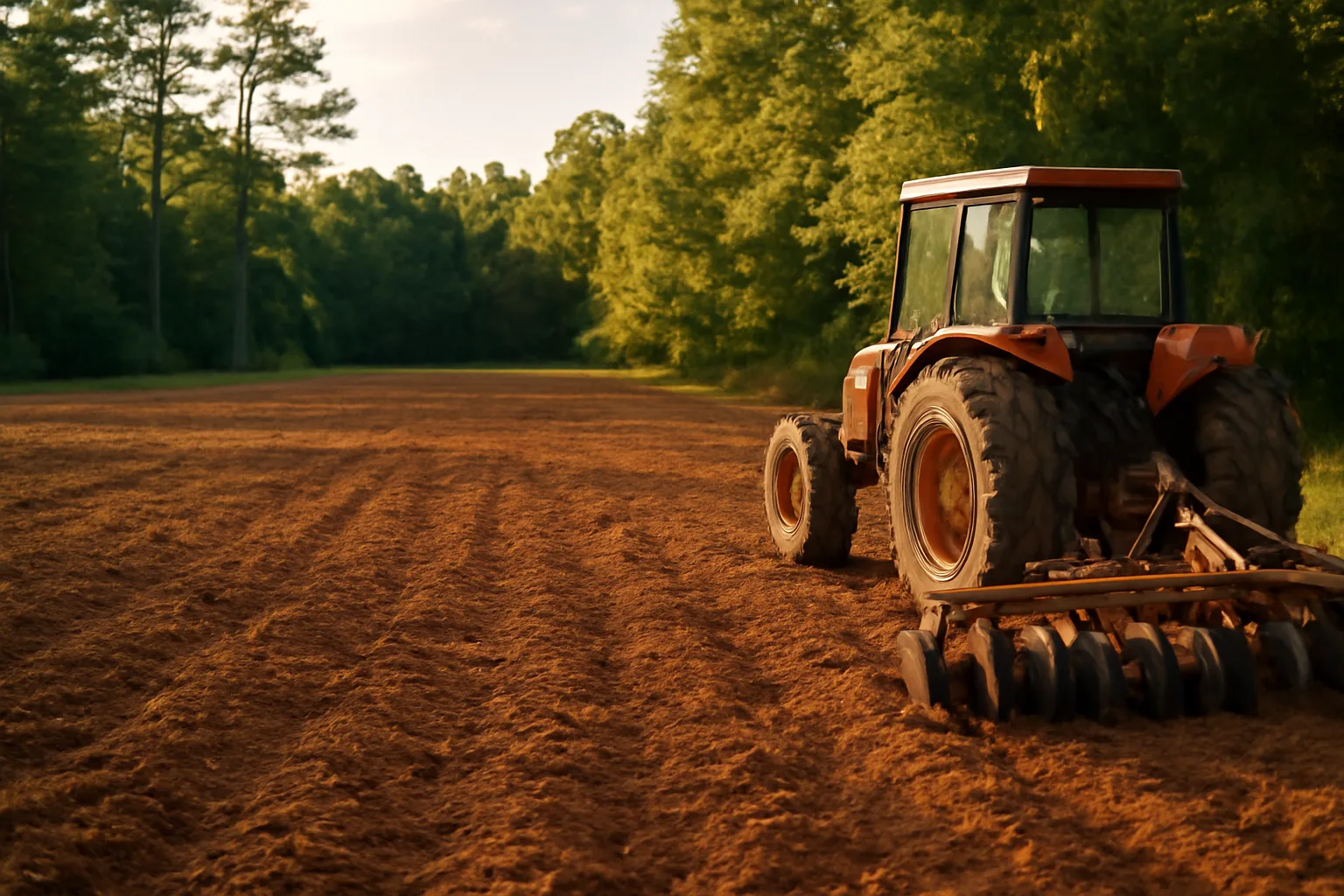
A food plot is a planted patch of forage, usually somewhere between a quarter acre and a few acres, put in specifically to feed deer and other wildlife rather than to harvest a crop for sale. It's not the same thing as a garden or a farm field, even though the equipment and seed can overlap. Most plots fall into two buckets. Annuals are planted fresh each season (oats, wheat, brassicas, sorghum, soybeans) and die out after a few months. Perennials (clover, chicory, alfalfa) come back for two to five years off a single planting if you manage them right. In South Carolina, a lot of successful plotters run both: a perennial clover plot for spring through fall grazing pressure, and an annual fall blend timed to peak during hunting season. Clemson Cooperative Extension frames food plots as a supplemental tool, not a replacement for natural habitat management. Their wildlife guidance notes that plots work best alongside native browse and mast production, not instead of it [1]. If your property has zero natural cover or forage diversity, a plot alone won't fix that. One more thing worth saying plainly: food plots are legal to hunt over in South Carolina because they're an agricultural planting, not bait. The South Carolina Department of Natural Resources treats planted food plots differently from piled feed, corn, or minerals, which fall under the state's baiting restrictions for deer. Check the current SCDNR hunting regulations before you assume a practice is legal, because bait rules and dates get updated [2].
what's the single best food plot for deer in South Carolina?
There isn't one plot that wins everywhere in the state, and anyone who tells you otherwise is selling something. South Carolina runs from the Blue Ridge foothills in the northwest down through the Piedmont clay belt to the sandy Coastal Plain, and soil, rainfall, and deer pressure differ enough across those zones that a single "best" mix is a myth. That said, if forced to pick the most reliable combination for most of the state, it's a perennial white clover base (Ladino or a durable blend) for spring and summer, paired with an annual fall mix of oats or wheat plus a brassica like turnips or radish. Clover carries the plot from green-up in March through summer, and the fall annuals take over as clover growth slows with shorter days and cooler soil. Why this combo works here specifically: clover tolerates the Piedmont's clay soils reasonably well once pH is corrected, and it survives the state's mild winters without dying back completely in most years. Brassicas and cereal grains germinate fast in the Coastal Plain's sandy soil with good fall rain, and they become more palatable after the first frost, which usually hits South Carolina sometime between mid-October in the Upstate and mid-to-late November on the coast, according to NOAA climate normals for the region [3]. For a one-acre plot with average deer density, expect the annual seed and soil amendment cost to run somewhere in the $150 to $400 range depending on what your soil test calls for and whether you're buying premium blends or straight commodity seed. That's a rough field estimate, not a guaranteed budget. Your actual lime and fertilizer bill depends entirely on your soil test results.
do deer like clover, and is it worth planting?
Yes. Clover is one of the most consistently preferred food plot forages for whitetail deer across the Southeast, and it's a mainstay recommendation from university extension programs precisely because deer hit it hard and it keeps producing for years. Mississippi State University Extension lists white clover among the top perennial forage choices for deer plots in the region, citing its high protein content (often 25 to 30 percent crude protein in vegetative growth) and strong regrowth after grazing [4]. The appeal for deer is simple: clover is soft, high in protein, and available for months at a stretch rather than a few weeks. A well-maintained clover plot in South Carolina can produce usable forage from March into November in most years, with a slowdown during the hottest, driest stretches of July and August. The catch is maintenance. Clover needs a soil pH close to 6.0 to 6.5 to perform well, and it needs mowing two or three times a season to keep weeds down and encourage tender regrowth. Skip the mowing and a clover plot turns into a broomsedge and ragweed patch within two seasons. It also needs decent drainage; clover sitting in standing water in a low Coastal Plain field will rot out. If you want one low-maintenance perennial plot on the property, clover earns its spot. If you're not willing to mow it a few times a year and re-test soil every couple of seasons, you'll be disappointed in year three.
when to plant food plots for deer in South Carolina
| Upstate/Piedmont | Sept 1 - Oct 15 | Late March - April | |
|---|---|---|---|
| Midlands | Sept 10 - Oct 20 | Mid-March - April | |
| Coastal Plain/Lowcountry | Sept 20 - Nov 1 | Early March - April | These are general windows, not hard deadlines. Local rainfall matters more than the calendar. Planting brassicas or clover into bone-dry soil in September because "that's when the guide said to" is a waste of seed. Wait a few days for a real rain event if the forecast shows one coming. |
South Carolina has two distinct planting windows: a spring window for warm-season annuals and perennials, and a fall window for cool-season annuals, which is the one most hunters care about most because it lines up with archery and gun seasons. Fall planting generally runs from early September through mid-October in the Upstate and Piedmont, and can push into late October or even early November on the Coastal Plain where first frost comes later. Clemson Extension's forage planting guides put small grains like oats and wheat in the September 15 to November 1 window for the state, adjusting earlier or later by region. Spring planting for warm-season plots (soybeans, sorghum, cowpeas, or establishing new clover) generally runs from mid-March through May, after soil temperatures warm past 55-60°F and the frost risk has passed. The Piedmont typically has a slightly later last-frost date than the coast, so Upstate hunters should lean toward late March or April rather than early March. | Region | Fall planting window | Spring planting window |
when to plant oats for deer in South Carolina
Plant oats in South Carolina between September 1 and October 15 for most of the state, aiming for 6 to 8 weeks before your first hard frost so plants establish a strong root system before growth slows. Oats germinate fast, usually within 5 to 10 days given adequate moisture, and they're one of the most reliably attractive early-season annual grains for deer in the Southeast. Oats have a real weakness here: they're less cold-tolerant than wheat or cereal rye. In a mild South Carolina winter they'll often survive and keep producing green forage into December or January, especially in the Coastal Plain. But a hard freeze in the Upstate can knock oats back harder than it would wheat. If you're planting in the mountains or upper Piedmont and want a plot that survives deep into winter, blend oats with wheat or rye rather than planting oats alone. Seeding rate for oats as a monoculture plot typically runs 2 to 3 bushels per acre (roughly 64 to 96 lbs), though most hunters plant oats as part of a blend with clover, wheat, or brassicas rather than solo, which changes the per-species rate. Broadcast oats need light disking or dragging to get seed-to-soil contact; oats left sitting on top of hard, dry ground germinate poorly.
when to plant turnips (and other brassicas) for deer
Plant turnips for deer in South Carolina between late August and mid-September, giving the crop 90 to 100 days to bulb out before the first hard freeze locks up growth. Turnips are a longer-season crop than oats, and planting too late means you get leafy green top growth but skinny or absent bulbs by the time deer season opens. Brassicas including turnips, radish, and rape work through a two-stage attraction pattern that trips up first-time planters. Early in the fall, deer often ignore brassica leaves almost entirely, especially if there's other forage around. Then, usually after the first hard frost converts starches to sugars in the plant tissue, deer switch on and can strip a brassica plot down to bare dirt within a couple of weeks. Don't judge a brassica plot's success in October; judge it in December. Soil pH matters more for brassicas than almost any other food plot species. They perform best in the 6.0 to 6.5 range and struggle badly below 5.5, which is common in unlimed South Carolina Piedmont clay. A soil test before planting isn't optional here; it's the difference between a plot that bulbs out and one that doesn't. Seeding rate for turnips alone runs about 4 to 6 lbs per acre; they're a small, light seed and it's easy to over-apply. Most blends mix turnips with a cereal grain like oats or wheat both for early cover and for the grain component that fills in before the brassicas mature.
do deer eat sorghum?
Yes, deer eat sorghum, both the grain heads and the young leafy growth, but it's more of a secondary or supporting species in a food plot rather than a primary deer attractant on its own. Sorghum (grain sorghum, sometimes called milo) is planted more for its drought tolerance and its value as cover and a grain source for turkey and dove than as the headline deer forage. Where sorghum earns its place in a South Carolina plot is on droughty, sandy Coastal Plain ground where corn or soybeans would struggle in a dry summer. It's more heat and drought tolerant than corn, and it still puts on a grain head deer will browse, especially once it dries down in fall. USDA NRCS lists grain sorghum among recommended wildlife planting species for the Southeast specifically for its drought tolerance and multi-species value. If your goal is maximum deer attraction on a limited-acreage plot, sorghum isn't the first thing to plant. Clover, soybeans, and brassicas outperform it for pure deer draw. If you've got marginal, sandy, dry ground and want a plot that survives a rough summer while still giving deer and other wildlife something, sorghum is a reasonable choice.
do deer like honey (locust, that is), and what about other native trees?
If the question is about honey the substance, no, deer don't eat honey or seek it out; it's not part of their diet and there's no wildlife research suggesting otherwise. Deer are herbivores built around browse, forbs, mast, and forage, not sugars from insect byproducts. What's almost certainly meant is honey locust (Gleditsia triacanthos), a native tree common across South Carolina, and yes, deer do eat honey locust pods, sometimes heavily. The pods drop in fall and contain a sweet pulp deer find attractive, and honey locust is often left standing or even planted along field edges specifically for that late-season pod drop. Clemson Extension's forest and wildlife resources note honey locust and similar legume trees as valuable soft mast and browse sources on managed timberland [5]. If you've got mature honey locust trees on the property, that's free deer food dropping every fall with zero planting or fertilizer cost. It won't replace a planted plot, since pod drop is short-lived and unpredictable year to year, but it's worth identifying and protecting those trees rather than clearing them out.
what are deer's favorite foods, food plot species and otherwise?
| Soybeans (forage type) | Very high | Summer | |
|---|---|---|---|
| White clover | Very high | Spring-fall | |
| Brassicas (turnips, radish) | High, delayed | Late fall-winter | |
| Oats/wheat | High | Fall-early winter | |
| Cowpeas/iron clay peas | High | Summer | |
| Grain sorghum | Moderate | Fall | |
| Standing corn | Moderate | Late fall-winter | One honest caveat: none of these rankings are guarantees on any specific property. Deer density, hunting pressure, surrounding ag fields, and mast crops all shift what a herd prefers on your specific ground in a specific year. |
Deer preference isn't fixed; it shifts by season, by region, and by what else is available. That said, a few patterns hold up across most of the whitetail's range, South Carolina included. Acorns are usually the top natural preference in fall, when available. White oak acorns in particular are lower in tannins and more palatable than red oak acorns, and deer will often abandon a food plot entirely during a heavy white oak mast year. This is well documented in Southeastern deer research and is one reason plot performance varies so much year to year even with identical planting and fertility . Among planted food plot species, soybeans and clover are consistently at the top of preference studies and hunter-reported attraction, both because of high protein content and because deer key in on tender, high-moisture forage. Brassicas rank high but on a delay, as covered above. Corn and grain sorghum rank lower for pure attraction but offer energy and standing cover late into winter. Here's a rough attraction ranking that holds up reasonably well for South Carolina plots, though local mast conditions can flip this in any given year: | Forage type | Typical attraction rank | Best season |
how do soil type and region change what you should plant in South Carolina?
South Carolina's three major land regions (Blue Ridge/Upstate, Piedmont, and Coastal Plain) have genuinely different soils, and what performs in one often struggles in another without amendment. The Piedmont, which covers a big chunk of the middle of the state, is mostly clay-based soil that's often acidic, sometimes down to a pH of 5.0 to 5.5 in unmanaged ground. Clay holds nutrients and moisture well once you correct the pH, which makes it decent long-term clover and alfalfa ground, but it drains slowly and can drown seedlings after heavy rain. USDA soil survey data for the Piedmont region consistently shows Cecil and Pacolet series soils, both clay-heavy and naturally acidic, dominating the plantable acreage . The Coastal Plain, covering the southern and eastern two-thirds of the state, runs sandy and well-drained, sometimes too well-drained. Sandy soil warms up faster in spring, drains fast after rain, and needs more frequent, lighter fertilizer applications because nutrients leach through faster. Brassicas, cowpeas, and sorghum tend to do well here; clover can struggle in the driest, sandiest spots without irrigation or a wet year. The Upstate and Blue Ridge foothills are the smallest region but have more mixed soils and the coolest temperatures in the state, meaning frost comes earlier and plant a bit sooner in fall compared to the coast. In every region, the soil test is the actual authority, not a regional rule of thumb. Clemson University's Agricultural Service Laboratory runs soil tests for South Carolina landowners and returns pH, phosphorus, potassium, and lime/fertilizer recommendations specific to your sample . A $6 to $10 soil test fee is a rounding error compared to the cost of guessing wrong on lime and fertilizer for an acre or more of plot ground.
how much does it cost to plant a food plot in South Carolina?
For a one-acre plot, budget roughly $150 to $450 depending on seed choice, whether you need lime, and whether you already own equipment or need to rent/hire a disk and drill. Lime is often the biggest single line item people underestimate. Agricultural lime typically runs $30 to $60 per ton delivered and spread in the Southeast, and a Piedmont plot starting at pH 5.0 might need 1 to 2 tons per acre to reach the 6.0 to 6.5 range clover and brassicas want. That's a one-time or every-few-years cost, not annual, but it can double your first-year plot budget if your soil test comes back acidic, which is common in South Carolina clay. Seed costs vary widely: straight cereal grains like oats or wheat run cheap, often $15 to $25 for enough seed to cover an acre at standard rates, while premium perennial clover blends or proprietary brassica mixes can run $30 to $70 for a bag covering a half-acre to an acre. Fertilizer, again driven by your soil test, typically adds another $40 to $100 per acre depending on what nutrients are short. Equipment is the wildcard. If you've got a tractor, disk, and seeder already, your marginal cost per plot is just seed, lime, and fuel. If you're starting from zero, renting equipment or hiring a local ag service to disk and drill a plot can add $100 to $300 depending on your area and plot size.
how do you actually plan a food plot without guessing?
Start with the soil test, not the seed bag. Pull a sample from your plot area, send it to a lab (Clemson's service or a private ag lab both work), and let the results tell you pH and nutrient needs before you buy anything . Guessing at lime and fertilizer rates is the single most common way hunters waste money on a plot that underperforms. Second, match species to your region and your goals honestly. A half-acre shaded plot in the Upstate mountains isn't the place for sun-hungry soybeans. A sandy, exposed Coastal Plain field with deer pressure needs something that survives grazing without irrigation. There's no universal blend that solves every property. Third, plan your calendar around your actual local frost dates and rainfall patterns, not a generic national planting chart. The windows given earlier in this piece are a solid starting point for South Carolina, but a wet or dry September in a given year should push your planting date more than the calendar does. If you want a plan built around your specific soil test results, acreage, region, and goals rather than a generic seed bag label, that's exactly the gap our $99 one-time Custom Food Plot Plan is built to close. It's general planning guidance based on your inputs, not a site visit or a replacement for your soil lab's specific lime and fertilizer recommendations, but it saves the guesswork on species mix and timing. You can start one at /plot-plan-builder. For background on plot types and how to choose between annuals, perennials, and blends before you commit acreage, see food plot whitetail and deer food plots.
what mistakes do South Carolina food plot growers make most often?
Skipping the soil test is the number one mistake, full stop. Planting clover or brassicas into a pH 5.0 Piedmont field without lime is planting a plot that will disappoint you regardless of how good the seed is. Planting too early or too late relative to local frost dates is next. Brassicas planted in October instead of late August won't have time to bulb before frost. Oats planted in November in the Upstate may not establish before the ground cools too much for good root development. Overdoing the plot size relative to deer pressure is a subtler mistake. A quarter-acre plot in a high-density deer area, especially one surrounded by little other forage, can get grazed to the dirt in weeks. If that's happening on your ground, either expand the plot, add a second plot to split pressure, or accept that heavy browsing is actually a sign the plot is working exactly as intended, just not lasting as long as hoped. Last, ignoring maintenance on perennial plots. Clover and chicory plots need mowing and, in later years, possibly overseeding or renovation. A clover plot planted once and never touched again for four years is usually a weed patch by year three. For seed selection specifics across species, deer food plot seed and food plot seed cover blend options in more depth.
Frequently asked questions
Do deer eat sorghum in South Carolina food plots?
Yes, deer eat both sorghum grain heads and young leaf growth, but it's a secondary attractant compared to clover or soybeans. Sorghum earns its spot mainly on droughty, sandy Coastal Plain ground where it survives summer heat better than corn while still offering deer and other wildlife a grain source.
Do deer eat clover, and is it the best choice for South Carolina?
Yes, clover is one of the most consistently preferred food plot forages for deer, offering 25 to 30 percent crude protein in vegetative growth. It's a strong choice for most of South Carolina as a perennial base plot, though it needs pH corrected to 6.0-6.5 and regular mowing to stay productive.
When should I plant deer food plots in South Carolina?
Fall annuals go in September 1 to October 15 for most of the state, later (to early November) on the Coastal Plain. Spring plantings for warm-season crops and new clover stands run mid-March through April. Local rainfall should shift these dates more than the calendar alone.
Do deer like clover more than other food plot options?
Clover consistently ranks at or near the top in preference alongside soybeans, largely because of its high protein and long growing season. It's not universally "favorite" though; during a heavy acorn drop, deer will often bypass a clover plot for natural mast entirely.
When should I plant oats for deer in South Carolina?
Plant oats between September 1 and October 15, aiming for 6 to 8 weeks of growth before the first hard frost. Oats germinate in 5 to 10 days with good moisture but are less cold-hardy than wheat or rye, so blend them with a hardier grain in colder Upstate areas.
When is the best time to plant food plots for deer overall?
South Carolina has two windows: fall (September through mid-October, later on the coast) for cool-season annuals like oats, wheat, and brassicas, and spring (mid-March through April) for warm-season plantings and new perennial clover establishment. Adjust a week or two either direction based on actual rainfall.
When should turnips be planted for deer?
Plant turnips between late August and mid-September, giving the crop 90 to 100 days before hard frost to bulb properly. Plant too late and you'll get leafy top growth with no bulb development, which cuts your late-season food value significantly.
What exactly is a food plot?
A food plot is a planted patch, typically a quarter-acre to several acres, of forage crops grown specifically to feed deer and other wildlife rather than for commercial harvest. Plots use annuals (oats, brassicas) that die each season, perennials (clover, chicory) that persist for years, or a combination of both.
What are deer's favorite foods in South Carolina?
Acorns, especially white oak, are usually the top natural preference when available. Among planted species, soybeans and white clover rank highest for attraction, with brassicas close behind but only after a hard frost sweetens the plant tissue. Preference shifts year to year based on mast production.
Do deer like honey?
No, deer don't eat honey the substance; it's not part of their diet. If the question means honey locust trees, yes, deer readily eat the sweet fall pods from honey locust, a native South Carolina species often left standing on managed timberland for that late-season food source.
Is it legal to hunt over a food plot in South Carolina?
Generally yes; planted food plots are treated as normal agricultural practice, distinct from baiting with piled feed, corn, or minerals, which South Carolina regulates separately. Rules and enforcement details can change, so check current SCDNR hunting regulations before you plant or hunt over any plot.
How much does a South Carolina food plot cost to plant per acre?
Budget roughly $150 to $450 per acre, covering seed, fertilizer, and lime if your soil test calls for it. Lime is often the biggest variable; acidic Piedmont clay can need 1 to 2 tons per acre at $30 to $60 per ton, which can double a first-year budget.
Do I need a soil test before planting a South Carolina food plot?
Yes, strongly recommended. Clemson's Agricultural Service Laboratory and similar labs test pH, phosphorus, and potassium for a small fee (often $6 to $10) and tell you exactly how much lime and fertilizer your specific plot needs, rather than guessing based on a bag label's generic recommendation.
Sources
- Clemson Cooperative Extension, wildlife food plot guidance: Food plots work best as a supplement to natural habitat, not a replacement for native browse and mast
- NOAA National Centers for Environmental Information, South Carolina climate normals: First frost dates vary from mid-October in the Upstate to mid/late November on the coast
- Clemson Cooperative Extension, small grain forage planting guides: Recommended fall planting window for oats and wheat in South Carolina is roughly September 15 to November 1
- Clemson Cooperative Extension, forestry and wildlife resources: Honey locust and similar legume trees provide valuable soft mast and browse for deer
- Clemson University Agricultural Service Laboratory, soil testing: Clemson's Ag Service Lab provides soil pH and nutrient testing with lime/fertilizer recommendations for South Carolina landowners