Last updated 2026-07-25
TL;DR
Plot seed choice depends on your zone, soil test, and season. Clover and oats work as spring/late-summer plantings, brassicas like turnips go in 60-90 days before first frost, and deer readily eat sorghum grain and clover forage. There's no single best seed, only the right seed for your soil pH, rainfall, and planting window.
what is a food plot, exactly?
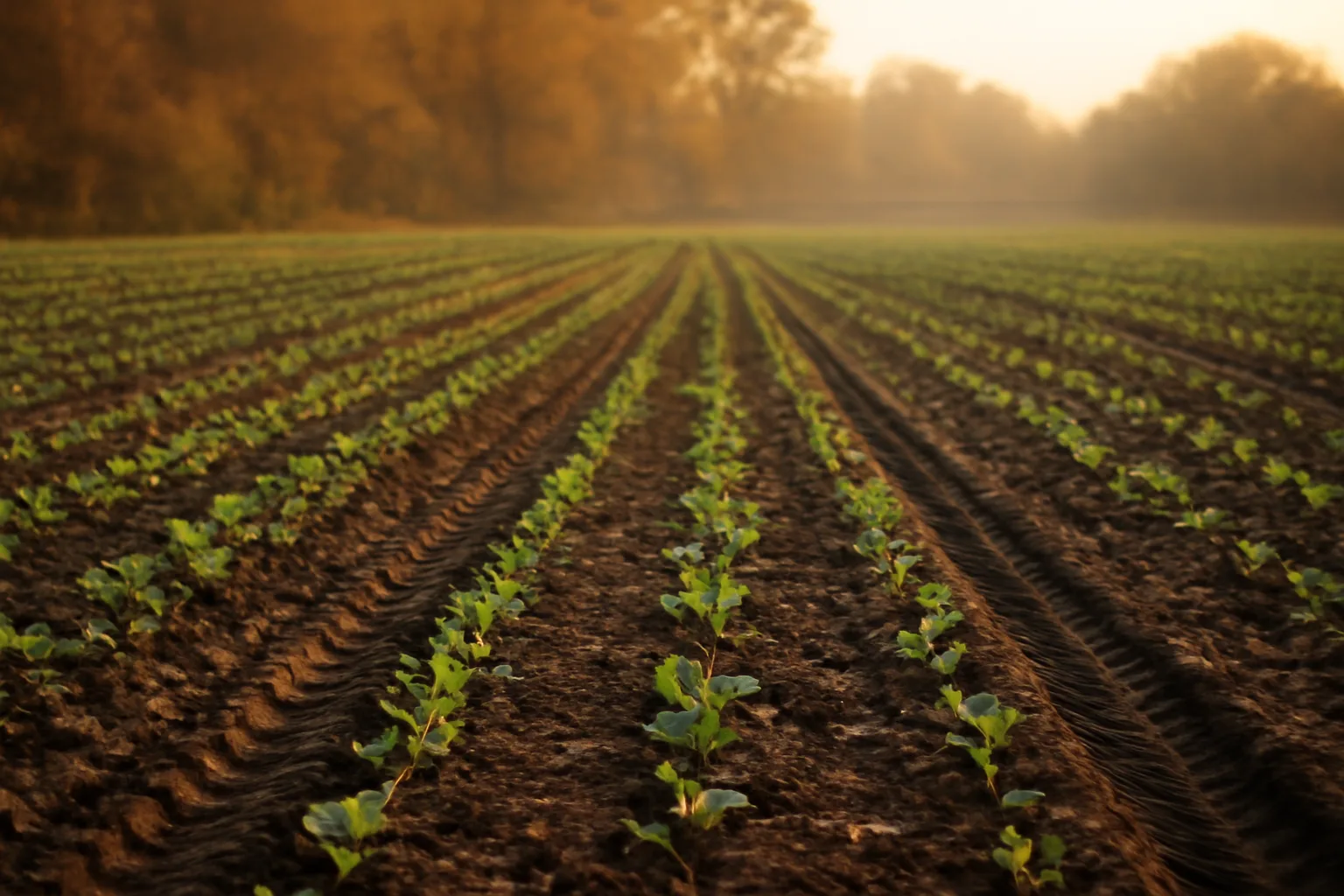
A food plot is a planted patch of forage or grain on hunting land, meant to feed deer and other wildlife and to concentrate animal activity in a spot you can hunt or observe. It's not a garden and it's not a lawn. Most plots run anywhere from a quarter acre to several acres, planted with species like clover, brassicas, cereal grains, or soybeans depending on the goal. Some plots are built for tonnage, meaning you want as much digestible food on the ground as possible to help deer through winter or support antler growth. Others are built as hunting plots, small and positioned near bedding cover so you can catch deer moving through at legal shooting light. The seed you buy should match which job the plot is doing. Before any of that, a soil test matters more than the seed bag. The USDA Natural Resources Conservation Service and land-grant universities both push soil testing as the first step in any planting program because pH drives nutrient availability more than fertilizer rate does [1]. If your soil sits at pH 5.0, clover and brassicas won't take up the nitrogen and potassium you spread, no matter how much you spread. Get the test done, follow what the lab tells you on lime and fertilizer, because that lab knows your dirt better than any generic guide, including this one.
when to plant food plots for deer?
| Spring/summer | Clover, chicory, soybeans | April to June | |
|---|---|---|---|
| Late summer/fall | Brassicas, turnips, radish | Late July to early Sept | |
| Fall | Cereal grains (oats, wheat, rye) | Aug to Oct | |
| Fall (overseed) | Annual clover, winter peas | Sept to Oct | If you want a plan built around your actual zip code and frost dates instead of a general table, that's exactly what a Custom Food Plot Plan is for, it takes your soil test results and location and gives you specific planting windows instead of a national average. |
Timing splits into two windows: spring plots and fall plots. Spring plantings (April through June depending on zone) usually target clover, chicory, or warm-season annuals like soybeans and sunn hemp. Fall plantings (August through October depending on zone) target brassicas, cereal grains, and annual clovers meant to be attractive during hunting season. The actual calendar date depends heavily on your last frost date and first frost date, which vary by hundreds of miles across whitetail range. A grower in central Alabama might plant brassicas in late August. A grower in northern Minnesota needs to get seed down by early August to have enough growing season before frost locks things up. The Midwest Cover Crop Council's planting date tool and your state extension office both publish local guidance based on average frost dates [2]. A rough framework that holds across most of the whitetail range: | Season | Species | Typical window |
when to plant oats for deer?
Oats go in as a cool-season annual, either in early spring (as soon as soil can be worked) or in late summer to early fall for a hunting-season plot. Fall planting is far more common for deer hunters because oats put on soft, palatable growth in the six to eight weeks after planting, right when bow season opens across most of the country. A good target is 60 to 90 days before your first hard frost. That gives oats time to establish before growth slows. Oats aren't very winter-hardy compared to wheat or cereal rye, they'll often get knocked back hard or die outright after a string of nights in the low 20s, so in northern zones oats work better as an early-fall attractant than a food source that lasts through January. If you need something to survive into late winter, winter wheat or cereal rye holds up better in cold soil. Seeding rate for oats in food plot use typically runs 2 to 3 bushels per acre (roughly 60 to 96 lbs per acre) when drilled, a bit heavier when broadcast, per land-grant extension forage guides [3].
when to plant turnips for deer?
Turnips and other brassicas need roughly 80 to 90 days of growing season before a killing frost, and go in the ground anywhere from mid-July in the far north to early September in the deep South. Planting too early in hot, dry conditions can cause poor germination; planting too late means the bulb never sizes up before frost stops growth. Brassicas are famous for the delayed-interest problem. Deer often ignore turnips and radish for the first month or two, then hit them hard after the first few frosts convert starches to sugars, making the greens and bulbs sweeter. That means a turnip plot planted in August might not get touched until November or December, which is actually good news if you're trying to hold deer on your property through late season. Seeding rate for turnips alone runs about 4 to 6 lbs per acre; in a brassica blend with radish and rape, rates vary by mix. Broadcast on a firm, prepared seedbed and cover lightly, brassica seed is tiny and doesn't want to be buried deep.
do deer eat clover?
Yes, clover is one of the most consistently eaten forages in whitetail range, and it's eaten across almost the entire growing season, more than one part of the year. White clover and red clover both show up repeatedly in deer diet studies as preferred forage when actively growing [4]. Clover's advantage is that it's a perennial (in most varieties), so a well-limed, well-fertilized clover plot can produce forage for three to five years before needing to be reseeded, which makes it cheaper per year of production than annual replanting. The tradeoff is establishment: clover seed is small, needs good seed-to-soil contact, and is slow to get going compared to a cereal grain. Weed competition in the first year is the single biggest killer of new clover plots. Most clover plantings go in either early spring (frost-seeded onto existing ground, or drilled after soil is workable) or late summer to early fall. Spring is generally the more forgiving window because summer heat and drought stress newly emerged clover seedlings hard in June and July across much of the country.
do deer like clover, or is it just filler forage?
Deer don't just tolerate clover, they actively select for it in a lot of feeding studies, especially in spring and early summer when protein demand is highest for lactating does and antler-growing bucks. Clover regularly runs 25 to 30% crude protein in vegetative growth stages, which is high compared to most native browse [5]. That said, deer preference shifts by season and by what else is available. In a year with a heavy acorn drop, deer will often walk past a clover plot to hit the woods, because acorns deliver a lot of fat and carbohydrate cheaply. Clover is a spring and summer staple more than a late-season one in the northern half of the range, since it goes dormant or gets buried under snow. If you're deciding between species, know that clover's real strength is season-long grazing pressure tolerance. Deer can hit a clover plot hard, all summer, and it keeps regrowing, which very few other plantings can do.
do deer eat sorghum?
Yes. Deer eat both the grain heads and the leafy forage of grain sorghum, and it shows up in food plot mixes marketed for both deer and turkey. Sorghum is more common in southern and central food plot programs because it's drought-tolerant and handles heat better than corn on marginal soils [4]. Sorghum isn't usually the headline species in a plot, it's more often planted as a component of a fall blend, or as a standalone grain plot meant to stand through winter and get knocked down or left standing for deer to work through snow and cold. Grain sorghum also draws dove and turkey, so a sorghum plot often pulls double duty for a multi-species hunting property. One practical note: check your state's baiting and feeding regulations before you plant a standing grain plot you intend to hunt over. Standing crops planted and left in place are treated differently than piled or scattered grain in most states, but the line differs state to state, and some states regulate proximity to a stand or blind separately from whether the crop was planted normally as agriculture [6]. Your state wildlife agency's hunting regulations page is the actual authority here, not a seed catalog or a forum post.
what do deer like to eat most, and does that mean anything for plot seed?
There's no single favorite food for deer across the whole country, because whitetail diet studies consistently show the answer depends on region, season, and what's locally available. That said, a few things show up again and again in feeding studies as high-preference: acorns (especially white oak group acorns, which are lower in tannins than red oak group), soybeans, and clover . Acorns often beat every planted food plot species when they're falling, simply because of the calorie density and because deer evolved eating them for thousands of years before anyone planted a food plot. That's not a knock on plots, it's a reason to think of your plot as one part of the property's food system, not the whole system. Among planted crops, soybeans in the growing stage are extremely high preference, deer will graze soybean plots down to bare stems in July if plot size isn't large enough relative to deer density. Standing corn and soybean grain are both heavily used in fall and winter where legal and available. If you're picking one annual and one perennial to build a plot program around, soybeans (annual, needs acreage and deer-density awareness) and clover (perennial, more forgiving of small plot size) are a defensible starting pair, backed up by a fall brassica or cereal grain plot for late season.
do deer like honey?
This isn't a real food plot question in the sense of anything you'd plant, but it comes up because of "deer attractant" products marketed with honey or molasses scent. There's no meaningful research showing deer seek out honey in the wild the way they seek browse, mast, or forbs; deer aren't pollinators or nectar feeders and honey isn't part of any documented whitetail diet study. Sweet-smelling minerals and molasses-based attractants are a different category from food plots entirely, and many states regulate them the same as bait piles, meaning legality varies by state and sometimes by hunting method (bow vs. gun) within the same state [6]. If you're trying to feed deer or draw them for hunting, planted forage and grain plots are the tool with actual research behind them. Save the honey for your coffee.
how do I pick the right plot seed for my soil and zone?
Start with the soil test, not the seed bag. Your local cooperative extension office or a private ag lab can run a test for somewhere between $10 and $20 in most states, and it'll tell you pH, phosphorus, potassium, and organic matter, the numbers that actually determine whether clover or brassicas will perform [1]. Lime takes months to fully react in the soil, so if your test comes back needing lime, get it applied as early as possible relative to planting, ideally the season before if you can swing it. After the soil test, match species to your rainfall pattern and growing season length. Clover and chicory want decent moisture and do best where summers aren't brutally hot and dry. Brassicas want a full 80 to 90 day window before frost and don't love heavy clay that stays wet. Cereal grains like oats, wheat, and rye are the most forgiving across soil types and are a reasonable default if you're not sure what else to plant. Equipment matters too. A no-till drill gets much better seed-to-soil contact for small seeds like clover than broadcasting onto rough ground, and germination rates reflect that difference directly. If you're broadcasting, a cultipacker or drag afterward to press seed into contact with soil measurably improves emergence for small-seeded species like clover and brassica. For a plan that actually accounts for your soil test numbers and your zone's frost dates instead of a one-size-fits-all planting calendar, the $99 Custom Food Plot Plan walks through species selection and planting windows specific to your property. It's general guidance built from your inputs, not a site visit or a replacement for what your soil lab tells you on lime and fertilizer rates.
how much seed do I actually need per acre?
| White clover | 2-3 lbs/acre | 4-6 lbs/acre | |
|---|---|---|---|
| Oats | 60-96 lbs/acre (2-3 bu) | 96-128 lbs/acre | |
| Winter wheat | 90-120 lbs/acre | 120-150 lbs/acre | |
| Turnip/brassica blend | 4-6 lbs/acre | 5-8 lbs/acre | |
| Soybeans (forage type) | 50-60 lbs/acre | 60-90 lbs/acre | These are general ranges pulled from land-grant forage seeding guides, not a single universal number [3]. Always check the specific rate on the seed tag or the university guide for the exact variety and blend you bought, since brassica blends especially vary a lot depending on the ratio of turnip, radish, and rape in the bag. |
Seeding rates vary a lot by species and by whether you're drilling or broadcasting. Broadcasting generally needs a higher rate than drilling because germination and seed-to-soil contact are less reliable. | Species | Drilled rate | Broadcast rate |
Frequently asked questions
Do deer eat sorghum?
Yes. Deer eat sorghum grain heads and leafy forage, and it's a common component in fall food plot blends, especially in the South and Midwest where it handles heat and drought better than corn. It also draws dove and turkey, making it a useful multi-species planting on mixed-game properties.
Do deer eat clover?
Yes, clover is one of the most reliably eaten forages across whitetail range, especially spring through fall while actively growing. It regularly tests at 25 to 30% crude protein in vegetative stages, which is high compared to most native browse, making it valuable during antler growth and lactation.
When should I plant food plots for deer?
Spring plots (clover, soybeans, chicory) go in April through June. Fall plots (brassicas, cereal grains, annual clovers) go in late July through October, timed backward from your area's first frost date. Exact dates depend on your zone, so check your state extension office or a frost-date planting tool for local timing.
Do deer like clover more than other food plot species?
Deer show strong seasonal preference for clover, especially in spring and summer, but preference shifts when acorns or other high-calorie mast is available. Clover's real advantage is that it tolerates repeated grazing and keeps regrowing all season, something few annual plantings can match.
When should I plant oats for deer?
Oats go in either early spring or, more commonly for hunting plots, in late summer to early fall, roughly 60 to 90 days before your area's first hard frost. Oats aren't very winter-hardy, so in northern zones they work better as an early-fall attractant than a food source lasting into deep winter.
When should I plant turnips for deer?
Turnips need about 80 to 90 days before a killing frost, so plant mid-July in northern zones down to early September in the deep South. Deer often ignore turnips until after the first hard frosts sweeten the greens and bulbs, so don't be discouraged by low interest early on.
What is a food plot?
A food plot is a planted area, usually a quarter acre to several acres, seeded with forage or grain crops to feed deer and concentrate their activity for hunting or observation. Plots can be built for tonnage (winter nutrition) or as small hunting plots positioned near bedding cover.
What is a deer's favorite food?
There's no single universal favorite; it depends on region and season. Acorns, especially from the white oak group, consistently rank as high preference where available, along with soybeans and clover in growing stages. Deer diet studies show preference shifts heavily based on what's locally abundant.
Do deer like honey?
There's no real evidence deer seek out honey the way they seek browse or mast; it's not part of documented whitetail diet studies. Honey and molasses-based products are marketed as attractant scents, a different category from food plots, and many states regulate them under baiting rules.
What's the difference between a spring and fall food plot?
Spring plots target perennials and warm-season forage like clover and soybeans, planted April through June for summer nutrition. Fall plots target brassicas and cereal grains, planted late summer through fall, timed to be attractive and available during hunting season and into early winter.
How much clover seed do I need per acre?
White clover typically runs 2 to 3 lbs per acre when drilled and 4 to 6 lbs per acre when broadcast, since broadcasting has lower germination success from reduced seed-to-soil contact. Always check the specific seed tag, since clover blends and inoculant coatings can change the recommended rate.
Is it legal to hunt over a planted food plot?
In most states, a planted and properly maintained crop is treated differently than piled or scattered bait, but rules on stand proximity, standing crops, and what counts as normal agriculture vary by state. Check your state wildlife agency's current hunting regulations before planting a plot you intend to hunt over.
Sources
- USDA Natural Resources Conservation Service, Soil Quality Indicators: pH: Soil pH drives nutrient availability and is the recommended first step before fertilizing
- Midwest Cover Crop Council, Cover Crop Decision Tool: Planting dates for cover crop species vary by region and are based on local frost dates
- University of Kentucky Cooperative Extension, Forage Seeding Rates: Seeding rates for oats, wheat, and other forage species per acre for drilled vs broadcast planting
- University of Tennessee Extension, Establishing and Managing Wildlife Food Plots: Clover forage commonly tests in the 25 to 30 percent crude protein range during active growth
- Example state wildlife agency baiting regulation reference (verify current state-specific rule before hunting): States regulate baiting and feeding differently, and standing crops are treated differently than piled bait in many jurisdictions
- USDA Forest Service, Wildlife Habitat Management for Oak Forests: White oak group acorns are lower in tannins and more preferred by deer than red oak group acorns